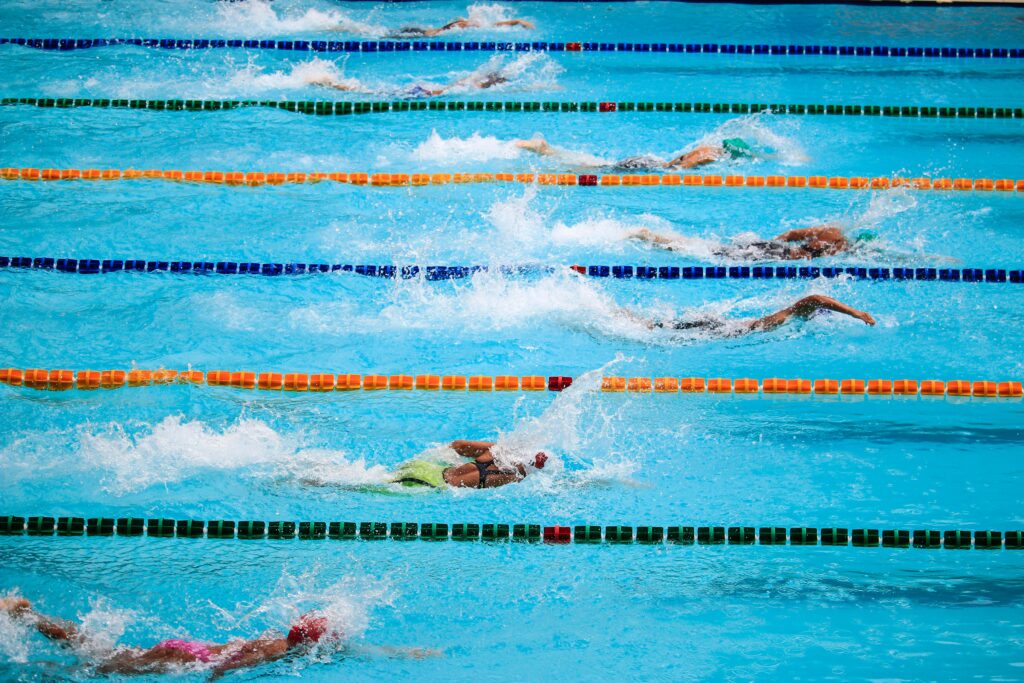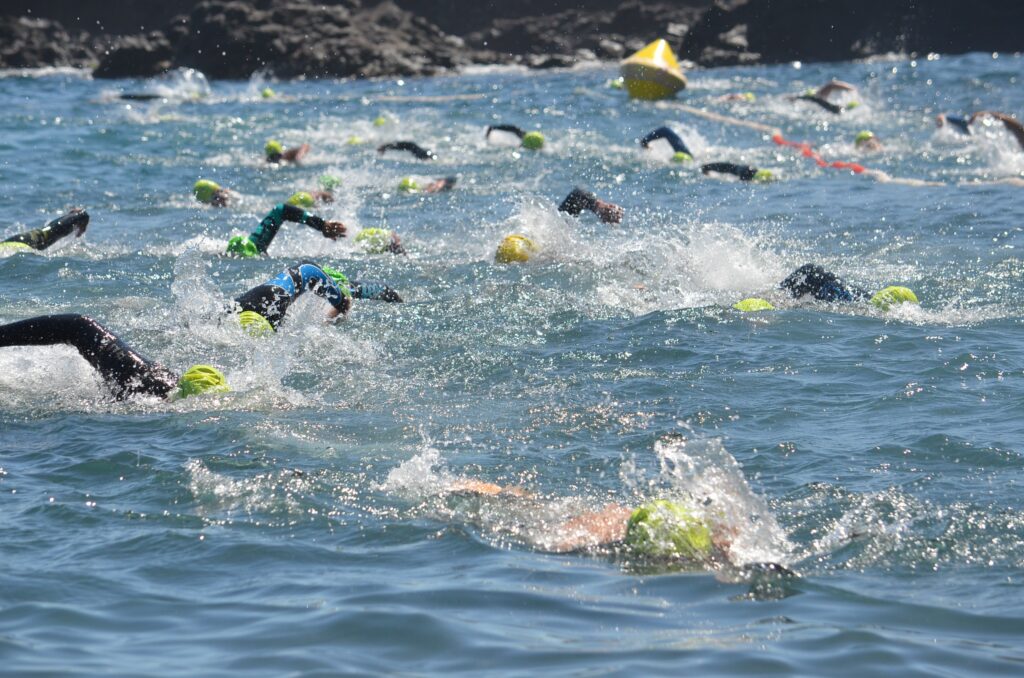

If you have ever hit the 1,200m mark of a 1,500m set and felt your legs turn to concrete, you already know what running low on fuel feels like. Complex carbohydrates are the answer to that problem. They break down slowly, top up the glycogen in your muscles and liver, and give you the steady energy long-distance swimming demands.
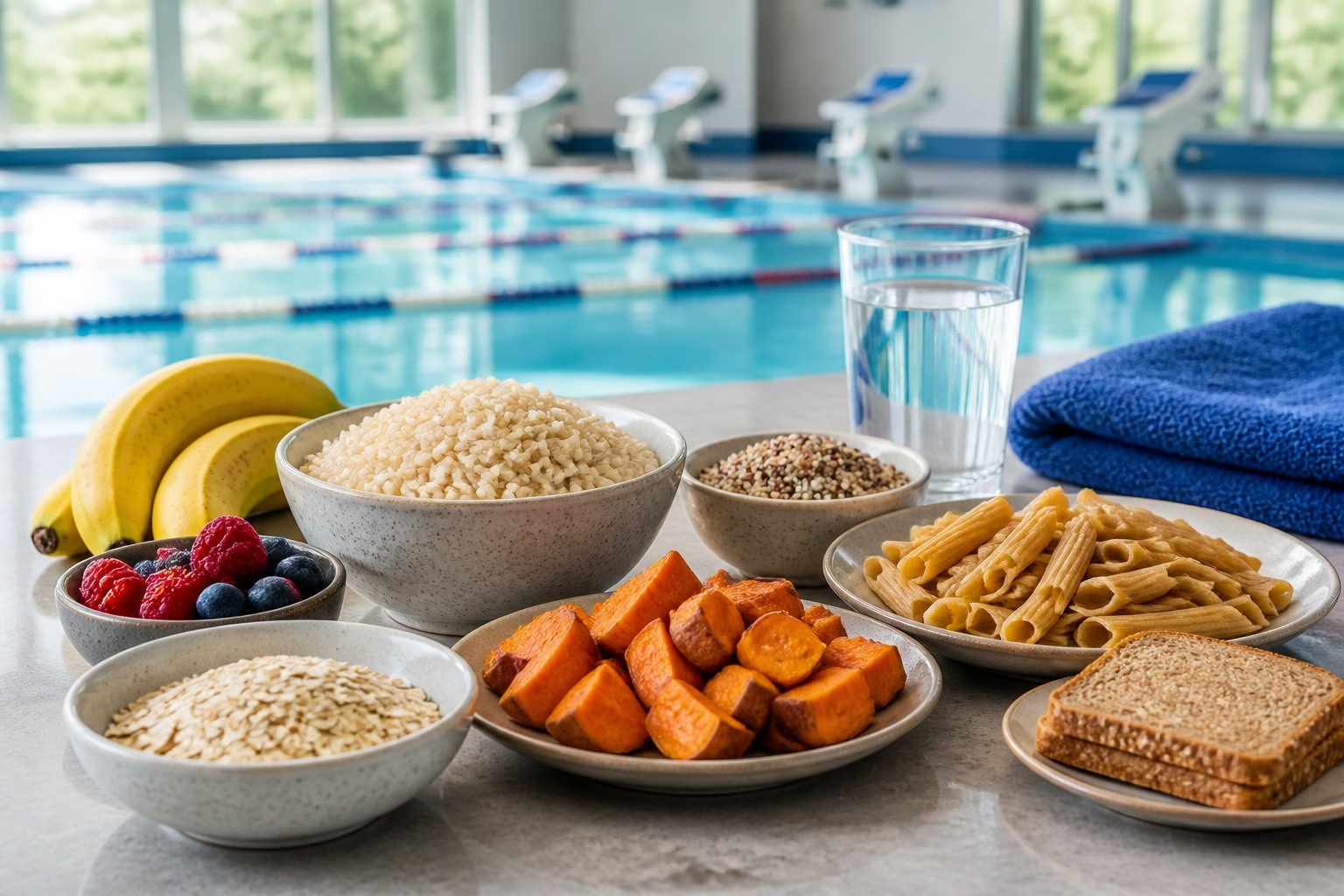
For competitive swimmers, complex carbohydrates should make up the base of nearly every meal, because they refill glycogen stores that heavy training empties fast. Simple carbs still have a job, but that job is small and very specific: quick energy right before or during a race.
The energy demands of swimming are unusual. You are working against water resistance, holding your breath, and staying warm, often for two hours at a time. That combination burns through stored carbohydrate quicker than most land sports at the same effort level.
This guide walks you through how carbohydrate becomes usable energy, which foods work best, and when to eat them for training, racing and recovery. If you want more on the training side, the swim technique and race pace guides here at Swimmers World pair nicely with what you eat.
Why Long Swims Rely on Steady Fuel
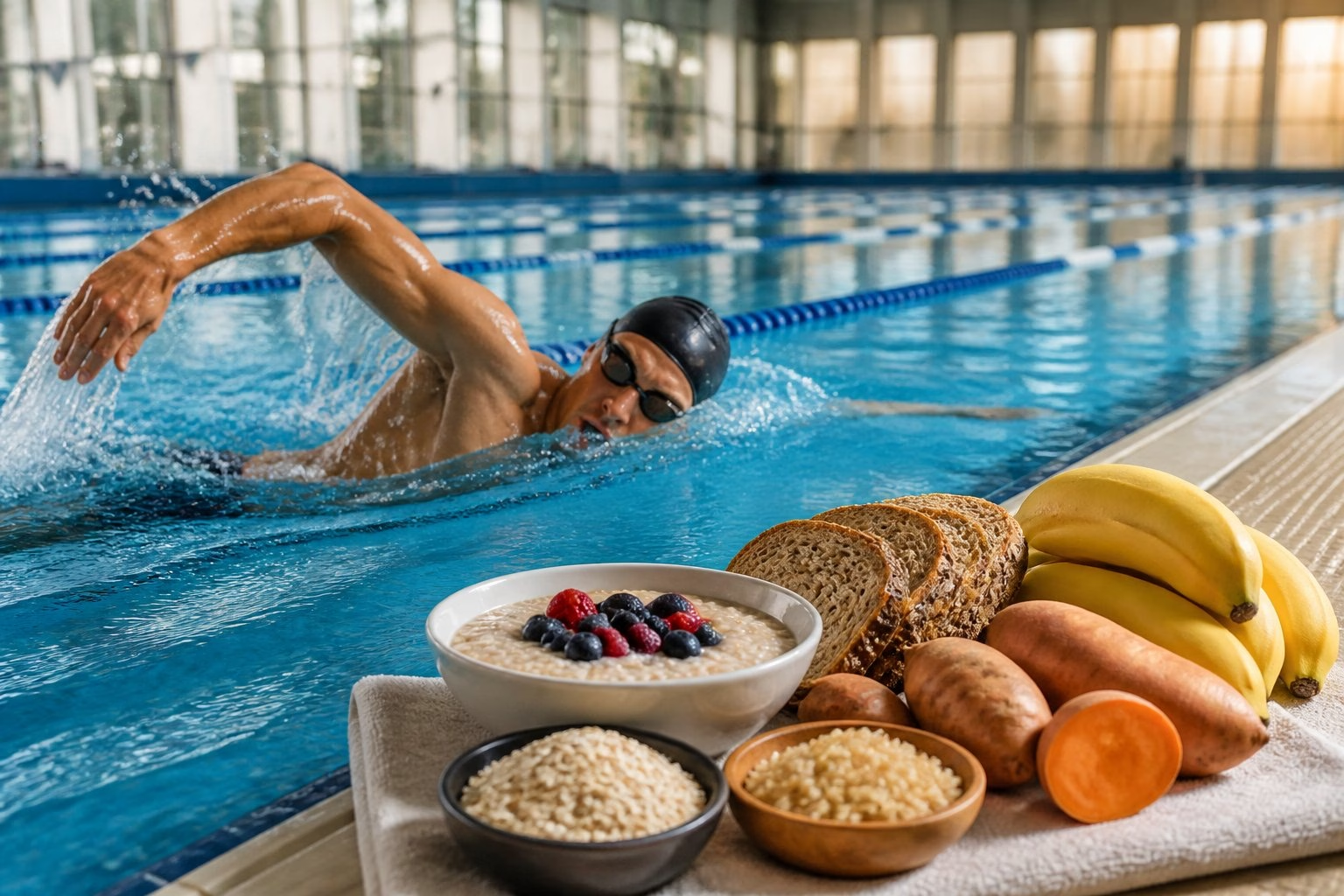
Your body stores only a limited amount of carbohydrate, and a hard 90-minute session can use most of it. Once glycogen runs low, your pace drops whether you want it to or not.
From Carbohydrate to Glucose and Glycogen
Every carbohydrate you eat gets broken down into glucose. Some goes straight into your bloodstream for immediate use. The rest gets packed away as glycogen in your muscles and liver.
Muscle glycogen powers the actual stroke. Liver glycogen keeps your blood sugar steady between meals and during long efforts. According to NewSwimmer, the average athlete can store around 2,000 calories as carbohydrate, which sounds like plenty until you count how fast a distance set burns it.
Eating enough carbohydrate also spares protein. When you are underfuelled, your body starts breaking down muscle for energy, which is the opposite of what you want mid-season.
Glycogen Depletion, Fatigue and Pace Control
Glycogen depletion rarely feels dramatic. It feels like your stroke getting shorter, your kick going quiet, and your splits drifting by a second or two per 100m without any change in effort.
You may also notice your technique falling apart before your breathing does. That is a classic fuel problem, not a fitness problem.
Watch for these warning signs during long sets:
- Splits slipping despite the same perceived effort
- Legs feeling heavy or “empty” rather than sore
- Trouble concentrating on stroke count or pacing
- Feeling unusually cold in a normal pool
How Endurance Events Change Energy Demands
A 50m sprint runs almost entirely on stored fuel already sitting in the muscle. An 800m freestyle, a 1500m, or an open water swim is a different job entirely.
Once you cross roughly 90 minutes of continuous work, stored glycogen becomes the limiting factor, which is why carb loading is especially useful before long endurance events. Training intensity matters too: a threshold set eats glycogen far quicker than a steady aerobic swim of the same distance.
Slow-Releasing Carbs Versus Quick Race Fuel
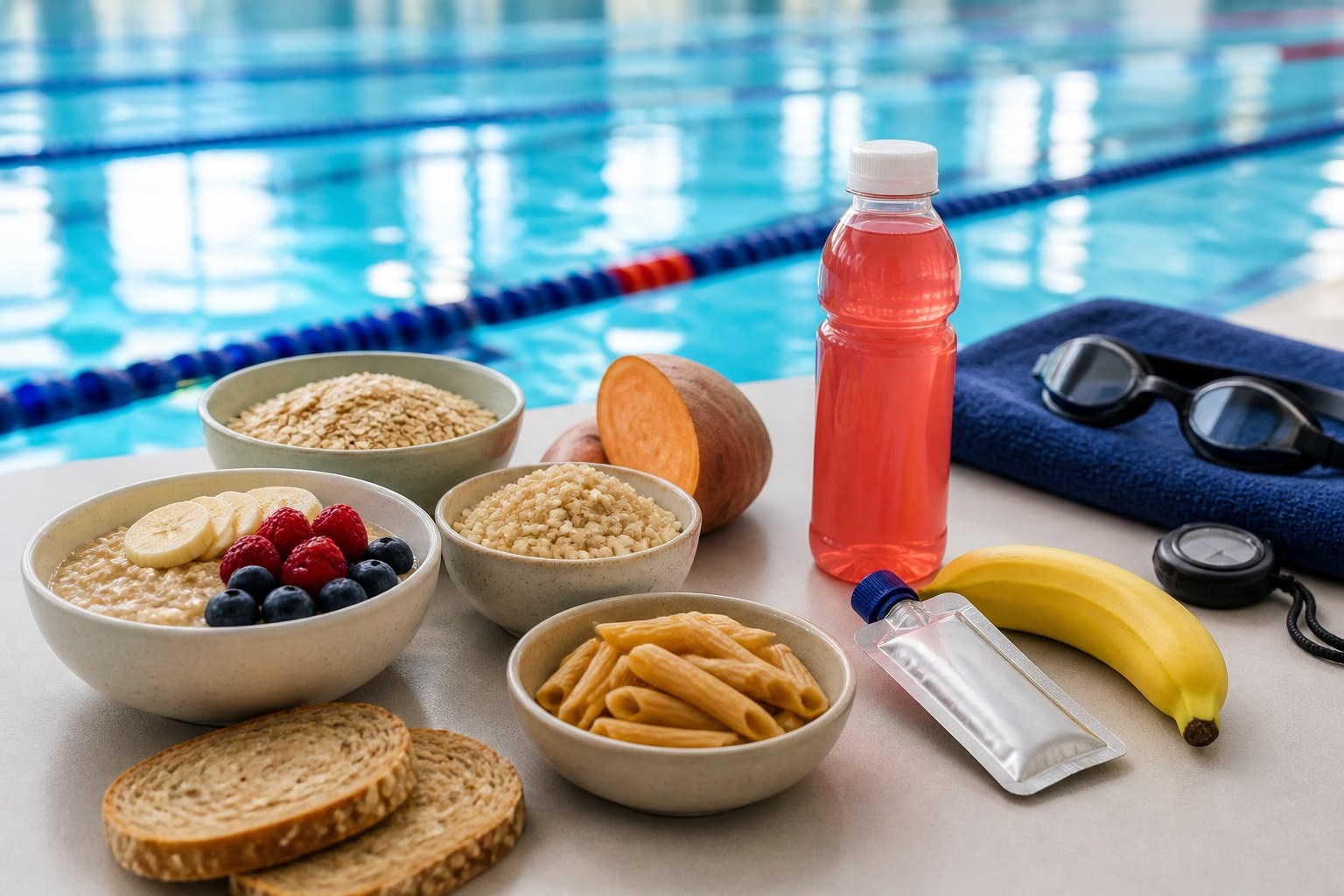
Both carbohydrate types belong in a swimmer’s diet, but they do opposite jobs. Complex carbs build the tank; simple carbs give you a short, sharp top-up when there is no time to digest.
What Makes a Carbohydrate Complex
Complex carbohydrates have longer chains of sugar molecules, plus fibre and other nutrients still attached. Your gut has to work harder to break them apart, so glucose trickles into your blood instead of flooding it.
Whole foods are where you find them: whole grains, beans, root vegetables and most fruit. Processed foods have usually had the fibre stripped out, which is exactly what makes them behave more like simple sugars.
| Complex carbs | Simple carbs | |
|---|---|---|
| Release speed | Slow and steady | Fast |
| Best for | Daily fuelling, base training | 30 minutes before or during racing |
| Examples | Oats, brown rice, sweet potato, lentils | Sports drink, energy gel, jelly sweets |
| Fibre | Usually high | Very low |
When Simple Carbohydrates Are Useful
Simple sugars shine in a narrow window. In the 30 minutes before a race, during a swim longer than an hour, and in the first half hour after a hard session, they get into your bloodstream fast.
For open water events, a carbohydrate solution in a drink bottle at the feed station beats solid food every time. As swim coaches note on feeding strategy, a carb-rich drink combined with a gel works well in cold water.
Fibre, Blood Sugar and Digestive Comfort
Fibre keeps blood sugar levels stable, which is brilliant on a Tuesday and a nuisance on race morning. A big bowl of bran before a 1500m is asking for stitch, bloating and digestive issues.
The rule that works in practice: high fibre in your everyday meals, low fibre in the two hours before you race. Swap wholemeal toast for white toast on the morning of a big swim if your stomach is sensitive.
Best Food Sources for Swimmers
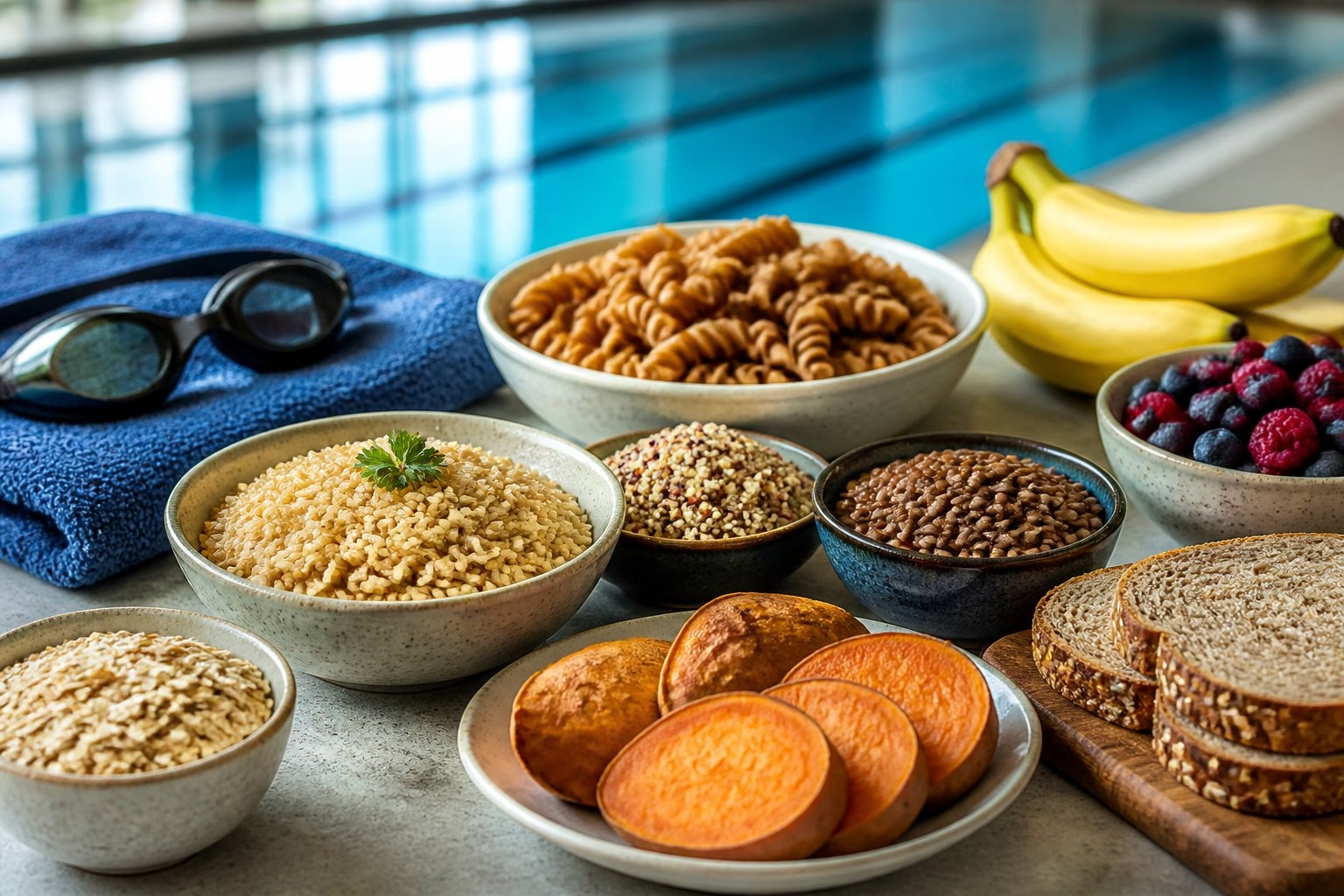
Good fuelling is boring on purpose. The same handful of reliable foods, eaten often, will do far more for your 800m than anything clever or expensive.
Breakfast and Pre-Session Staples
Early morning sessions are the hardest to fuel, since you often have an hour between alarm and warm-up. Oats are the standout choice because they sit well and release energy across the whole session.
- Porridge oats with banana and a spoon of honey
- Overnight oats made the night before for 5am starts
- Wholegrain toast with peanut butter
- Granola with Greek yoghurt and berries
A banana and a small glass of juice work if you genuinely cannot eat much before dawn. It is not ideal, but swimming on nothing is worse.
Main-Meal Carbohydrates for Heavy Training
Lunch and dinner are where you rebuild the tank properly. Aim for a fist-sized portion of starch minimum, and more on double-session days.
Brown rice, quinoa, wholewheat pasta, potatoes and sweet potatoes all do the job well. Legumes like lentils, chickpeas and black beans add carbohydrate plus iron and protein, which makes them excellent value for a swimmer’s plate.
Do not forget vegetables and fruit. They contribute carbohydrate along with the potassium and micronutrients that heavy sweating drains away.
Portable Options for School, Work and Poolside
Smart snacking closes the gap between meals when your training day is long. Keep something in your kit bag permanently so an empty tank never catches you out.
- Trail mix with nuts, seeds and dried fruit
- Oat-based granola bars
- Bananas or a small tub of dried apricots
- Rice cakes with nut butter
- Flax seed stirred into a fruit smoothie
Two bananas in a bag before an evening session has rescued more sets than any supplement.
Timing Meals for Training, Racing and Recovery

What you eat matters, but when you eat it decides whether the food is actually available when the whistle blows. Meal timing is the piece most swimmers get wrong.
The Night Before a Long Set or Race
This is your main chance to top up glycogen. Build the plate around carbohydrate: a generous serving of pasta, rice or potatoes with a modest portion of lean protein and cooked vegetables.
Keep fat and heavy sauces light so digestion is finished before bed. Full carbohydrate loading over two or three days makes sense for a marathon swim, but for a 1500m a single carb-focused evening meal is usually enough.
Never trial a brand new meal the night before competing. Race week is for repeating what you already know works.
Eating Two to Three Hours Before Swimming
A meal two to three hours out gives you time to digest while leaving your blood sugar steady. Think chicken with rice, a jacket potato with tuna, or pasta with a light tomato sauce.
Portion size should shrink as the swim gets closer. Sitting on the blocks with a full stomach is uncomfortable and slow.
Small Top-Ups Before and Between Events
Long galas mean hours between heats and finals. Small, low-fibre carbohydrate snacks every 60 to 90 minutes keep energy levels level without weighing you down.
Good between-swim options include a banana, a plain cereal bar, a few crackers, or sips of a sports drink. For swims over an hour, aim to take on carbohydrate roughly every 20 to 30 minutes.
Refuelling After the Final Swim
The first 30 to 60 minutes after training is when your muscles absorb glucose most readily. Aim for a carbohydrate-to-protein ratio of around 3:1 or 4:1.
Fast, proven recovery options:
- Chocolate milk, the classic for a reason
- A protein smoothie with banana, oats and milk
- Greek yoghurt with granola and fruit
- Wholegrain toast with peanut butter and a glass of milk
Aquatics GB describes recovery as three jobs at once: refuelling carbohydrate stores, rebuilding muscle, and rehydrating. Do all three and tomorrow’s session will feel noticeably better.
Building a Balanced Performance Plate
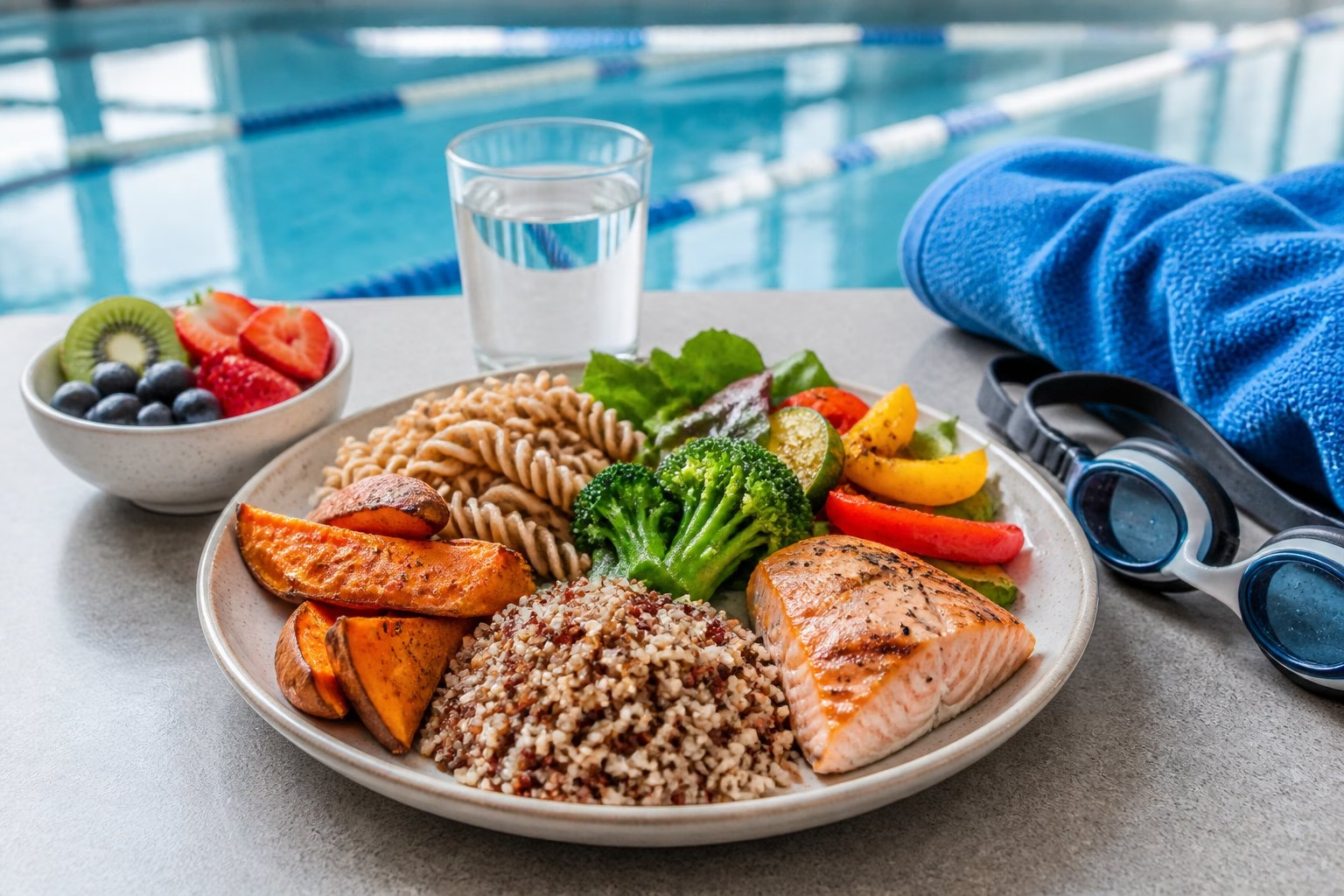
Carbohydrate is the fuel, but it does not work alone. A performance plate pairs it with protein, fats and micronutrients so your body can actually adapt to the training you are doing.
Protein for Muscle Repair and Growth
Protein rebuilds the muscle fibres that hard sets break down. Most guidance for swimmers lands around 1.2 to 1.7 grams of protein per kilogram of body weight daily, spread across meals rather than piled into one.
Lean proteins do the job well: chicken breast, eggs, salmon, white fish, Greek yoghurt, stir-fried tofu and beans. Roughly 20 to 30g per meal is a sensible target.
Healthy Fats, Micronutrients and Bone Health
Healthy fats support hormones, joints and long-term energy. Avocados, olive oil, nuts and oily fish supply the omega-3 and essential fatty acids swimmers benefit from.
Micronutrients matter more than most swimmers realise:
- Iron for oxygen transport, from red meat, lentils and dark leafy greens
- Calcium and vitamin D for bone health, especially important in a non-weight-bearing sport
- Potassium for muscle function, from bananas, potatoes and beans
Indoor training plus British winters make vitamin D worth a conversation with your GP.
Adjusting Portions to Training Load
Your nutrient requirements are not fixed. A double-session day with a 6km main set needs far more carbohydrate than a rest day or a taper week.
Practical approach for a daily meal plan: keep protein and vegetables roughly constant, and flex your carbohydrate portions up or down with training volume. Heavy week, bigger bowls of rice. Taper week, smaller ones.
Hydration, Supplements and Individual Needs
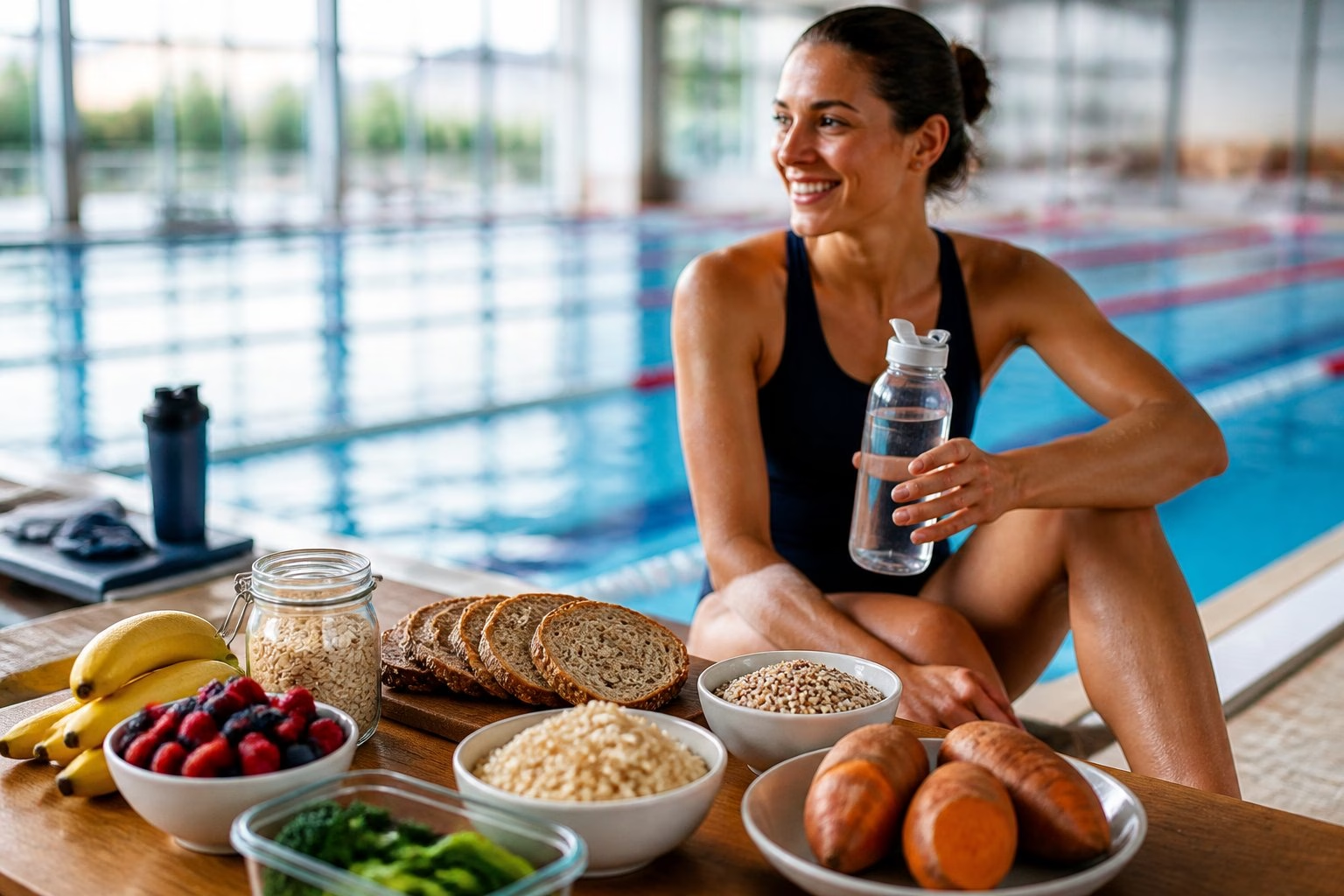
You sweat in the pool even though you cannot feel it. Fluid and electrolyte losses over a two-hour session are real, and dehydration will blunt your pace long before it makes you thirsty.
Water, Electrolytes and Recognising Dehydration
Keep a bottle on the blocks and drink at every set break, not just when you feel like it. A few hundred millilitres per hour of training is a sensible baseline for most swimmers.
Signs of dehydration to watch for:
- Dark yellow urine
- Headache after training
- Unusual heaviness in the arms
- Cramping in the calves or feet
Sodium and potassium are lost in sweat too, so add a pinch of salt to meals during heavy weeks and keep potassium-rich foods on the plate.
When Sports Drinks Can Help
Sports drinks are genuinely useful during sessions over an hour, at long galas, and for open water swims where you need fluid and carbohydrate together. Coconut water is a gentler option if commercial drinks upset your stomach.
Outside those windows, plain water is fine. NewSwimmer sensibly suggests limiting sports drinks in the off-season and using them for rehydration and electrolyte replacement rather than as an everyday drink.
When to Seek Personalised Nutrition Advice
Whole food should always come first. Protein powder or whey protein is a convenience, not a requirement, and creatine has limited relevance for distance swimmers compared with sprinters.
Speak to a registered dietitian if you are a junior swimmer, have a medical condition, follow a vegan diet, or keep feeling flat despite eating well. Individual needs vary far more than any general guide can cover.
Frequently Asked Questions
What are the best complex carbohydrates for swimmers?
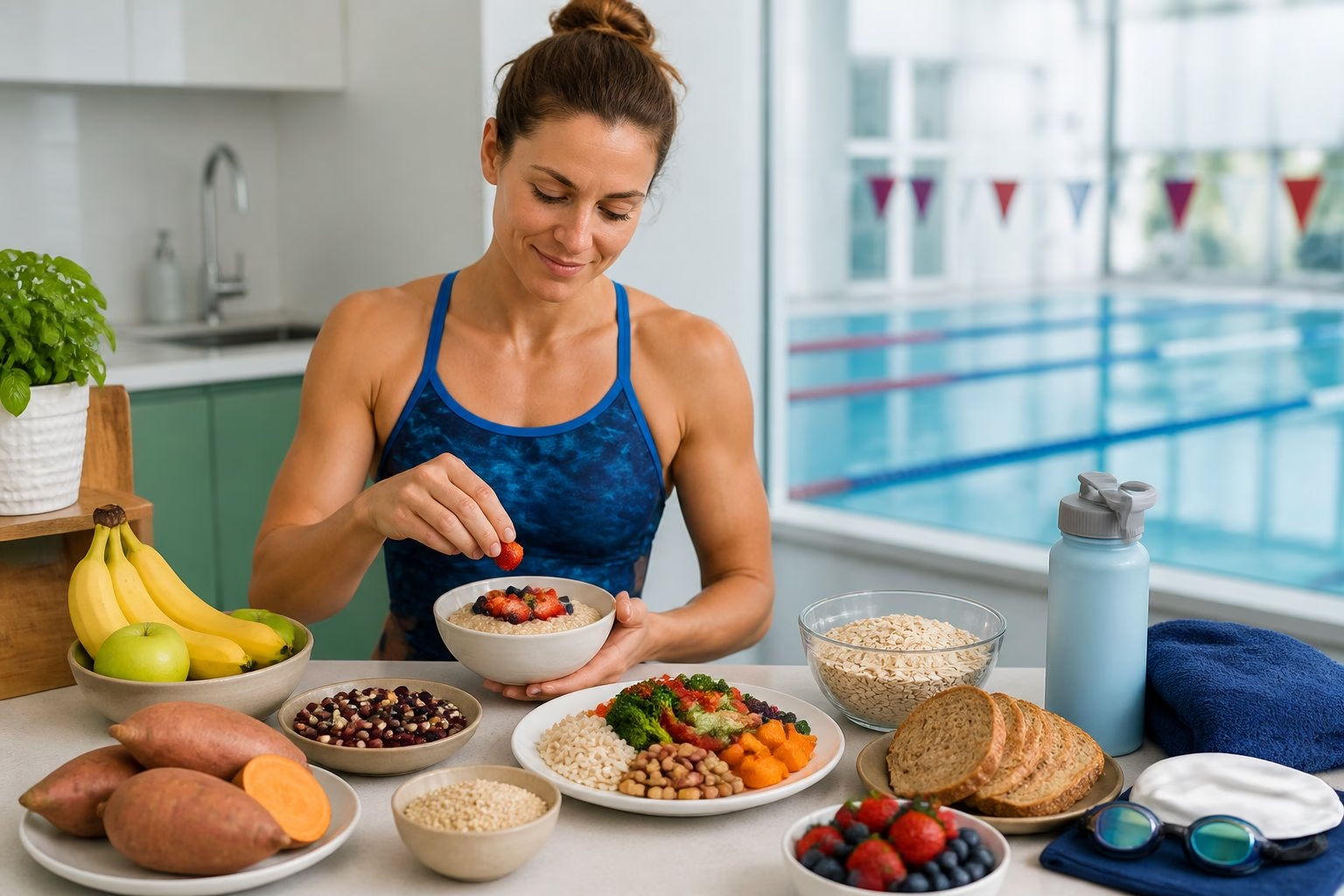
Oats, brown rice, quinoa, wholewheat pasta, potatoes and sweet potatoes are the most reliable staples. Legumes such as lentils and chickpeas add carbohydrate plus iron and protein, which makes them especially useful during heavy training blocks.
How much carbohydrate should a competitive swimmer eat each day?
Carbohydrate typically makes up around 55 to 65% of a distance swimmer’s total intake, with the exact amount rising and falling with training volume. On a heavy double-session day you will need noticeably larger portions than on a rest or taper day.
What should swimmers eat before a training session or race?
Aim for a carbohydrate-based meal two to three hours beforehand, such as porridge, a jacket potato or pasta with a light sauce. If you only have 30 minutes, keep it small and simple: a banana, a plain cereal bar or a sports drink.
Which carbohydrate-rich foods are best for post-swim recovery?
Combine carbohydrate with protein at roughly a 3:1 or 4:1 ratio within the first hour. Chocolate milk, a banana and oat smoothie, or Greek yoghurt with granola all refuel glycogen while giving your muscles what they need to repair.
Can a swimmer’s diet plan include complex carbohydrates for a full week?
Yes, and it should. Complex carbs belong in nearly every meal, with portions flexed up on high-volume days and trimmed slightly on rest days, while simple carbs stay reserved for the hours immediately around racing.
What foods should swimmers avoid before competing?
Skip high-fibre, high-fat and very spicy foods in the two hours before a race, since they slow digestion and can cause stitch or bloating. Race day is also the worst possible time to try an unfamiliar meal or a new gel brand.