The 200m butterfly stands as one of swimming’s most demanding events, requiring swimmers to balance speed with endurance over eight grueling lengths of the pool. The key to success lies in executing a well-planned pacing strategy that prevents early burnout while maintaining competitive speed throughout all four 50-meter segments. Many swimmers struggle with this race because they either start too fast and fade dramatically, or swim too conservatively and lose valuable time.
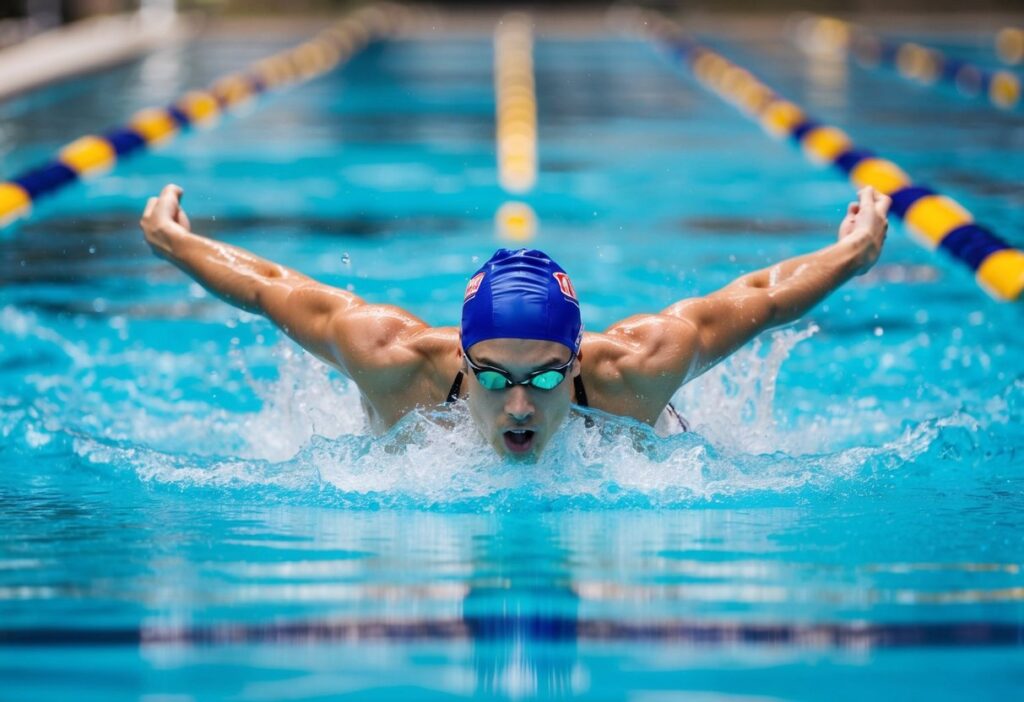
Pacing the 200m butterfly correctly requires understanding how fatigue affects stroke mechanics and developing the aerobic speed needed to maintain technique under pressure. The race demands a unique approach compared to other 200-meter events, as the butterfly stroke‘s high energy cost makes strategic planning essential for peak performance.
This guide examines proven pacing strategies used by elite swimmers, breaks down optimal execution for each lap, and explores the breathing patterns that support sustained speed. Swimmers will learn how to avoid common tactical errors while developing race-specific training methods that build the fitness needed to execute their race plan successfully.
Understanding the 200m Butterfly Race
The 200 butterfly is considered one of the most difficult races in competitive swimming due to its unique combination of technical precision and intense physical demands. Success requires swimmers to balance explosive power with endurance while maintaining stroke technique throughout four grueling lengths.
Key Physiological Demands
The 200m butterfly places extreme stress on multiple energy systems simultaneously. Swimmers must generate power through their core, shoulders, and legs while maintaining oxygen efficiency.
Energy System Requirements:
- 30% anaerobic power (explosive starts and finishes)
- 70% aerobic capacity (sustained pace maintenance)
The stroke itself burns more calories than any other swimming technique. This creates rapid lactate buildup in the muscles, particularly during the final 100 meters.
Upper body fatigue becomes critical around the 150-meter mark. The large muscle groups in the chest, shoulders, and back begin to fail without proper conditioning.
Core stability plays a vital role in maintaining the undulating body motion. Weak core muscles lead to decreased stroke efficiency and slower times.
Breathing patterns significantly impact oxygen delivery. Most elite swimmers breathe every 2-3 strokes to maintain adequate oxygen while preserving rhythm.
Race Structure and Lap Breakdown
The race consists of four 50-meter lengths, each presenting distinct tactical challenges. Elite swimmers typically follow specific pacing strategies based on their strengths.
Standard Race Breakdown:
- First 50m: Controlled aggression off the start
- Second 50m: Settle into race pace rhythm
- Third 50m: Maintain technique under fatigue
- Fourth 50m: Maximum effort with deteriorating form
Most 200 swimmers achieve fastest times when they pace evenly, keeping 50-meter splits nearly identical. This differs from sprint events where negative splitting often proves effective.
The turns become increasingly important as fatigue sets in. Poor underwater dolphin kicks in the final 100 meters can cost swimmers several seconds.
Stroke count typically increases throughout the race as technique breaks down. Maintaining consistent distance per stroke becomes the primary technical focus.
Common Challenges Faced by Swimmers
Technical breakdown represents the biggest obstacle in 200m butterfly racing. As muscles fatigue, swimmers often resort to survival techniques that slow their progress.
Primary Technical Failures:
- Shortened stroke length
- Reduced catch effectiveness
- Poor body position and timing
- Inconsistent breathing patterns
Stroke rate management proves difficult for many swimmers. They either start too fast and fade dramatically or swim too conservatively early and cannot make up time.
Mental barriers often emerge around the 150-meter wall. The combination of physical pain and oxygen debt creates psychological pressure that affects performance.
Pacing errors frequently occur when swimmers focus on faster practice paces they cannot maintain in competition. This leads to dramatic time drops in the final 50 meters.
Training specificity becomes crucial for addressing these challenges. Swimmers need targeted sets that replicate race conditions and physiological demands.
Optimal Pacing Strategies for the 200m Butterfly
The 200m butterfly demands careful energy management across four demanding 50-meter segments. Elite swimmers typically employ front-end loading strategies while maintaining consistent stroke mechanics and breathing patterns throughout the race.
Even Splitting vs. Front-End Loading
Most successful 200 butterfly swimmers use a front-end loading approach rather than even splitting. Olympic data shows that butterfly swimmers tend to get out to a stronger start compared to freestyle and backstroke events.
The typical elite split pattern follows this structure:
- First 50: Fastest split (race pace minus 1-2 seconds)
- Second 50: Controlled pace (race pace plus 1-3 seconds)
- Third 50: Maintenance phase (race pace plus 2-4 seconds)
- Fourth 50: Survival mode (race pace plus 3-5 seconds)
Front-end loading works because butterfly becomes less efficient as fatigue sets in. The stroke’s demanding nature makes it harder to maintain aerobic pace compared to other strokes.
Training for the 200m butterfly typically includes broken 200s to practice this pacing strategy. Swimmers practice their opening 50 speed repeatedly to dial in the perfect aggressive start.
Negative Splitting Techniques
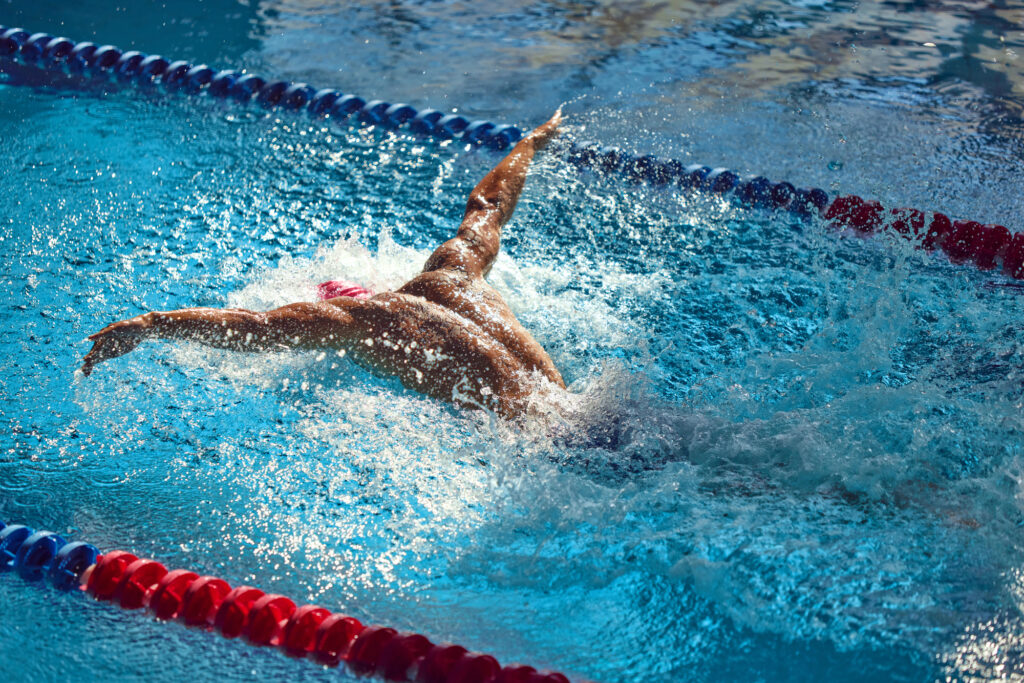
True negative splitting in the 200 butterfly is rare at elite levels. However, swimmers can minimize their drop-off in the back half through specific techniques.
Stroke Rate Management becomes critical. Maintaining consistent stroke count per length helps preserve efficiency. Elite swimmers often hold 17-20 strokes per 50 throughout the race.
Breathing Pattern Control prevents oxygen debt. Most swimmers breathe every stroke in the final 100 meters. Some use a 2-up, 1-down pattern early and switch to every stroke breathing later.
Underwater Dolphin Kicks offer opportunities to maintain speed. Consistent 12-15 meter underwater distances on each turn help offset stroke deterioration.
The closest approach to negative splitting involves a strong third 50. Olympic analysis reveals that swimmers with the fastest third 50 consistently earned medals.
Identifying Personal Pacing Type
Swimmers must determine their optimal pacing through systematic testing and analysis. Individual factors like stroke efficiency, aerobic capacity, and race experience influence the best approach.
Testing Protocol:
- Swim multiple 200s with different pacing strategies
- Record splits and rate of perceived exertion
- Note which approach yields fastest times
- Practice the chosen strategy in training sets
Physical Indicators help identify pacing type. Swimmers with strong sprint speed but limited endurance benefit from aggressive front-end loading. Those with better aerobic development can attempt more conservative starts.
Pacing strategies vary based on fitness, nutrition, and mental state. Swimmers should adjust their approach based on training phase and competition importance.
Most swimmers discover their optimal splits fall within 3-5 seconds difference between fastest and slowest 50s. Larger variations typically indicate pacing errors or insufficient race-specific training.
Lap-by-Lap Execution Guide
The 200 butterfly requires precise pacing across four distinct phases, with each 50-meter segment demanding specific focus points. Swimmers must balance controlled aggression early with strategic energy management through the middle laps and finishing power.
First 50 Meters: Controlled Speed
The opening 50 sets the foundation for the entire race without depleting crucial energy reserves. Swimmers should aim for approximately 85-90% of their maximum sprint effort during this phase.
Key Focus Points:
- Maintain long, powerful strokes with full extension
- Keep dolphin kicks to 3-5 per stroke cycle
- Establish breathing pattern (every 2-3 strokes)
The start and underwater phase prove critical here. Swimmers should utilize 4-6 strong dolphin kicks off each wall. This creates early speed without the metabolic cost of surface swimming.
Stroke rate should remain controlled at 28-32 strokes per minute. Higher rates lead to premature fatigue and shortened stroke length. The goal involves building a slight lead or staying with the field while preserving energy.
Breathing technique becomes essential during this phase. Swimmers who establish consistent bilateral breathing create better oxygen flow for later stages. Late breathing (after the hands enter) helps maintain forward momentum.
Second 50 Meters: Settling Into Rhythm
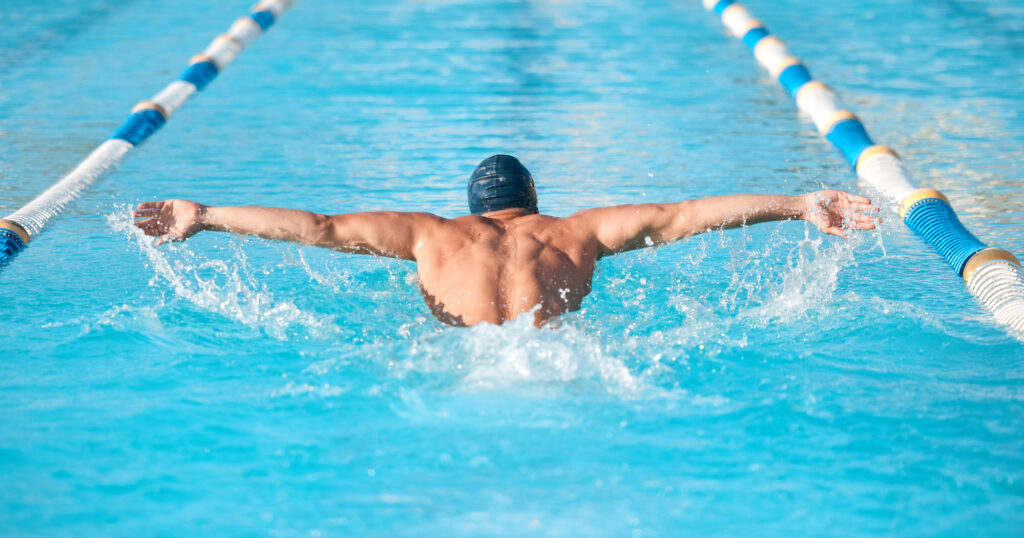
The second lap requires finding sustainable race pace while maintaining technique quality. This phase often determines overall race success through proper energy distribution.
Swimmers should focus on stroke efficiency over raw speed. Stroke count typically increases by 2-4 strokes compared to the opening 50. This slight increase reflects natural pace progression rather than technique breakdown.
Technical Priorities:
- Maintain catch depth and pull pattern
- Keep core engaged throughout stroke cycle
- Preserve underwater distance off the turn
The 100-meter split should fall within 2-3 seconds of the swimmer’s best 100 butterfly time. Faster splits often indicate unsustainable pacing that leads to significant slowdown.
Breathing becomes more frequent as oxygen demand increases. Most swimmers transition to breathing every other stroke during this phase. This provides adequate oxygen while maintaining stroke rhythm.
Wall preparation grows important as fatigue begins. Clean turns with consistent dolphin kick distance help maintain momentum into the second half.
Third 50 Meters: Managing Fatigue
The third 50 represents the race’s most challenging segment where Olympic swimmers emphasize strong third splits as crucial for medal performance. Technique preservation becomes the primary focus as lactate buildup intensifies.
Stroke Adjustments:
- Slightly increase stroke rate (30-34 strokes per minute)
- Maintain stroke length despite fatigue
- Focus on complete catch and pull-through
Body position often deteriorates during this phase. Swimmers must consciously engage core muscles and maintain proper head position. Lifting the head too high creates drag and disrupts stroke timing.
Breathing frequency typically increases to every stroke as oxygen debt accumulates. However, swimmers should avoid gasping or rushing the breathing motion. Controlled exhalation underwater helps maintain rhythm.
The turn at 150 meters requires special attention. Tired swimmers often lose underwater distance here. Maintaining 3-4 strong dolphin kicks prevents significant time loss.
Mental focus becomes critical during this phase. Swimmers who concentrate on technical cues rather than discomfort maintain better stroke quality and speed.
Final 50 Meters: Strong Finish
The final 50 demands maximum effort while maintaining enough technique to prevent complete breakdown. Successful swimmers increase stroke rate without sacrificing distance per stroke.
Stroke rate should increase to 32-36 strokes per minute during this phase. This acceleration helps generate closing speed despite accumulated fatigue. However, frantically spinning the arms creates inefficient movement.
Finishing Strategy:
- Maintain catch pressure throughout the pull
- Keep kick timing synchronized with arm stroke
- Breathe every stroke if needed for oxygen
The final turn presents the last opportunity for underwater advantage. Even exhausted swimmers should attempt 2-3 quality dolphin kicks to maintain speed into the final length.
Wall preparation begins at the 15-meter mark. Swimmers should count strokes to avoid breathing on the final stroke. A clean finish often determines close races and personal best times.
Many swimmers benefit from a slight technique modification during the final 25 meters. Shortening the stroke slightly while increasing rate can maintain speed when full-length strokes become impossible due to fatigue.
Breathing Patterns and Stroke Efficiency
Swimmers must balance oxygen intake with stroke mechanics to maintain speed throughout the 200 butterfly. The right breathing frequency, consistent technique execution, and strategic underwater phases create the foundation for race success.
Determining the Right Breathing Frequency
Breathing patterns in butterfly races require strategic planning for the 200m distance. Elite swimmers often breathe every stroke during the first 100 meters to build oxygen reserves.
This approach helps establish aerobic capacity early in the race. The increased oxygen intake supports both immediate energy needs and prepares the body for the demanding final half.
First 100m Strategy:
- Breathe every stroke cycle
- Focus on quick, low head position
- Maintain forward breathing direction
During the second 100 meters, swimmers typically shift to breathing every other stroke. This pattern reduces drag while still providing adequate oxygen for the race finish.
The transition between breathing patterns should happen gradually around the 100-meter mark. Swimmers who master this shift maintain better stroke rhythm and conserve energy for their final push.
Maintaining Stroke Technique Under Fatigue
Butterfly breathing technique becomes more challenging as fatigue sets in during the 200 butterfly. Swimmers must resist the urge to lift their heads too high when oxygen demand increases.
Proper head position remains critical even when breathing becomes labored. The chin should stay near the water surface to minimize drag and maintain streamlined body position.
Key Technique Points:
- Keep head low during breathing
- Exhale completely underwater
- Time breaths with arm recovery phase
As stroke rate may decrease due to fatigue, swimmers should focus on maintaining stroke length. Longer, more powerful strokes become more efficient than rapid, shortened movements in the race’s final stages.
The pull phase must remain strong even when breathing frequently. Swimmers should catch the water early and maintain an effective pull pattern throughout each stroke cycle.
Dolphin Kick Utilization
Underwater dolphin kicks provide speed advantages during turns and can complement breathing strategies in the 200 butterfly. Swimmers can use longer underwater phases to delay the need for immediate breathing after turns.
The 15-meter underwater limit allows swimmers to maintain higher speeds before surfacing. This technique is particularly valuable at the 100-meter turn when transitioning between breathing patterns.
Underwater Strategy:
- Use 12-15 meters after start and turns
- Maintain tight streamlined position
- Execute powerful kicks from core
Strong dolphin kicks between strokes also enhance overall stroke efficiency. These kicks should coordinate with the arm movements to maximize propulsion throughout the stroke cycle.
Swimmers who integrate effective dolphin kicks can reduce their total stroke count per length. This efficiency becomes increasingly important as the race progresses and energy conservation matters most.
Race Preparation and Training Methods
Effective 200 butterfly preparation requires specific training sets that simulate race conditions, targeted strength development, and mental readiness strategies. These elements work together to build the aerobic speed and psychological resilience needed for this demanding event.
Race Pace Sets and Simulations
Broken 200s in long course pools help swimmers practice race pacing and transitions. Swimmers complete 3-4 rounds of 50m from a dive at goal pace, followed by 100m at middle race pace, then 50m all-out.
Short course training allows swimmers to complete more yardage at race speed. 25-yard pool training becomes essential for developing stroke technique under fatigue.
Key Race Pace Sets:
- 20-40 x 25m butterfly at best average on 20-second intervals
- 8-24 x 50m butterfly from alternating dive and push starts
- 3 rounds of 10 x 50m at controlled pace followed by 5 x 50m all-out
Swimmers should adjust target times based on their turn speed. If a swimmer’s goal pace is 30.00 seconds and their butterfly turn takes 1.1 seconds, they need to train 50m repeats at 28.9 seconds.
Strength and Endurance Building
The 200 butterfly demands aerobic speed that maintains stroke quality throughout the race. Training focuses on building endurance while preserving technique under fatigue.
Endurance Development Sets:
- 3 rounds of 4 x 100m butterfly holding under 60 seconds
- 1 x 100m all-out after each round with 300m recovery
- Progressive distance sets with consistent stroke count
Dryland training targets the specific muscle groups used in butterfly. Core strength exercises help maintain body position during the final 50 meters when fatigue peaks.
Swimmers need consistent stroke mechanics even when tired. Training at high intensities with short rest periods teaches the body to maintain form under stress.
Mental Preparation for Race Day
Mental preparation involves rehearsing race scenarios and developing strategies for different parts of the race. Swimmers practice visualization of their ideal race splits and stroke patterns.
Race Strategy Elements:
- Opening 50m pacing to avoid early oxygen debt
- Maintaining stroke length during the middle 100m
- Final 50m mental cues for stroke rate increase
Swimmers should practice different pacing strategies during training. Some races require negative splitting, while others benefit from even pacing depending on the swimmer’s strengths.
Breathing pattern rehearsal helps swimmers stay calm during races. Consistent breathing every second or third stroke prevents panic when fatigue increases.
Race simulation includes practicing starts, turns, and finishes under time pressure. This builds confidence for competition situations.
Common Mistakes and How to Avoid Them
Most swimmers struggle with the 200 butterfly because they go out too fast in the first 50 meters and fail to maintain proper technique through turns. Poor recovery habits between races also hurt performance when swimming multiple events.
Over-Pacing the Early Laps
The biggest mistake swimmers make is treating the first 50 meters like a sprint. They push too hard early and pay the price in the final 100 meters.
Split time goals should follow a controlled build pattern. The first 50 should be only 1-2 seconds faster than the swimmer’s goal pace for the remaining splits.
Many swimmers go out 3-4 seconds too fast on their opening length. This creates oxygen debt that becomes impossible to recover from.
The secret to pacing 200m events is even splits throughout the race. Swimmers should aim for consistent lap times after the initial faster start.
Proper pacing strategy:
- First 50m: 2-3% faster than goal pace
- Second 50m: Goal pace
- Third 50m: Hold goal pace
- Fourth 50m: All remaining energy
Swimmers who maintain discipline in the early stages have energy reserves for a strong finish.
Inefficient Turns and Underwater Work
Poor turns waste precious seconds and energy in the 200 butterfly. Swimmers often surface too early or take weak underwater dolphin kicks.
The approach to each wall should maintain stroke rhythm. Swimmers should not glide into turns or take extra short strokes.
Turn technique breakdown:
- Touch with both hands simultaneously
- Quick flip with tight core rotation
- Strong push-off at 12-15 inches deep
- 4-6 powerful dolphin kicks underwater
- Surface before the 15-meter mark
Underwater dolphin kicks should generate forward momentum, not just fulfill rule requirements. Each kick should be explosive from the core.
Breathing patterns affect turn preparation. Swimmers should plan their last breath 2-3 strokes before the wall to maintain speed through the touch.
Practice turns at race pace during training. Many swimmers perfect their turns at easy speeds but struggle when fatigued.
Neglecting Recovery Between Heats
Swimmers often make critical errors in how they prepare between preliminary and final races. Poor recovery leads to tight muscles and slower times.
Active recovery works better than complete rest. Light swimming keeps muscles loose and blood flowing.
The time between races should include:
- 10-15 minutes easy swimming
- Dynamic stretching for shoulders and core
- Proper hydration with small sips of water
- Mental preparation and race visualization
Swimmers should avoid heavy meals or new foods between sessions. Stick to familiar snacks that provide steady energy.
Warm-up for finals should be shorter than the morning session. Muscles are already activated and need only light preparation.
Temperature regulation matters between races. Swimmers should stay warm with dry clothes and avoid air conditioning that can tighten muscles.
Mental focus during recovery time prevents anxiety from building before the final race.
Frequently Asked Questions
Swimmers often have specific questions about breathing patterns, strength training methods, and technique refinement for the 200m butterfly. These concerns focus on maintaining energy throughout the race and building the physical capacity needed for this demanding event.
What are effective breathing techniques for maintaining energy in the 200m butterfly?
Swimmers should establish a consistent breathing pattern early in the race to maintain oxygen flow. A pattern of breathing every two strokes works well for most swimmers during the first 100 meters.
During the third 50 meters, swimmers can switch to breathing every stroke if needed. This helps maintain oxygen levels when fatigue begins to set in.
The optimum breathing pattern varies between swimmers but should be practiced consistently in training. Swimmers who wait too long to breathe often struggle with the final 50 meters.
Bilateral breathing can help maintain stroke balance. This technique prevents the swimmer from favoring one side throughout the race.
What type of strength training exercises improve performance in the 200m butterfly?
Pull-ups and lat pulldowns build the back muscles needed for powerful butterfly strokes. These exercises target the latissimus dorsi muscles that drive the pull phase.
Core strengthening exercises like planks and Russian twists improve body position. A strong core helps maintain the undulating motion required for efficient butterfly swimming.
Shoulder stability exercises prevent injury during high-volume training. Resistance band exercises and rotator cuff strengthening protect the shoulders from overuse.
Push-ups and bench press build chest and tricep strength for the stroke’s recovery phase. These muscles help drive the arms forward and prepare for the next stroke cycle.
How can a swimmer develop back-end speed for the 200m butterfly event?
Swimmers need to practice negative split training where the second 100 meters is faster than the first. This teaches the body to maintain speed when fatigue sets in.
Broken 200-meter sets help swimmers practice race pace while managing fatigue. Training with broken 200s helps simulate goal pace and serves as race rehearsal.
Descending sets of 50-meter repeats build the ability to increase speed gradually. Swimmers start at a moderate pace and drop time with each repeat.
High-intensity threshold training improves the body’s ability to clear lactate. This helps swimmers maintain technique and speed during the final 50 meters.
Which swimming drills are best for perfecting the butterfly stroke technique?
Single-arm butterfly drill helps swimmers focus on proper hand entry and catch. Swimmers alternate arms while maintaining the dolphin kick rhythm.
Three-right, three-left, three-double drill builds coordination and timing. This drill progression starts each 50 and drops single arm strokes until the final 50 is full stroke.
Dolphin kick on back strengthens the core and improves kick timing. This drill helps swimmers feel the proper undulation through their entire body.
Two-kick, one-pull drill emphasizes the relationship between kicks and arm strokes. Most swimmers should use two kicks per arm cycle for maximum efficiency.
What are the key components of a training set designed for competitive 200m butterfly swimmers?
Race pace training should include two focused sessions per week during peak training. One session focuses on dedicated race pace sets while the other incorporates pace into aerobic training.
Long course training with extended rest periods helps simulate race conditions. Swimmers practice goal pace with adequate recovery to maintain technique quality.
Turn time consideration is crucial for accurate pace training. Swimmers must subtract their turn time from target pace to train at the correct speed for 50-meter repeats.
Volume training includes longer distances like 300-meter and 400-meter repeats. These sets build the aerobic base needed for the 200-meter event.
How should swimmers structure their tapering period before competing in the 200m butterfly?
Training volume should decrease by 60-70 percent during the final two weeks before competition. Swimmers maintain intensity while allowing their bodies to recover from heavy training loads.
Race pace work continues but with longer rest intervals between repeats. This maintains the feel for goal pace without accumulating fatigue.
Technique refinement becomes the primary focus during taper. Swimmers spend more time on drill work and perfect their stroke mechanics.
Sleep and nutrition become critical factors during the taper period. Swimmers need 8-9 hours of sleep per night and should focus on carbohydrate loading in the final days before competition.