Intermediate swimmers often find themselves stuck between basic competency and advanced performance, particularly when trying to master all four competitive strokes. Many swimmers excel at freestyle but struggle with the technical demands of butterfly, backstroke, and breaststroke, creating an uneven skill set that limits overall swimming development.
A structured training programme that focuses on stroke-specific drills, technique refinement, and progressive conditioning can transform an intermediate swimmer’s ability across all four strokes within 12 weeks. This comprehensive approach addresses the unique biomechanics of each stroke whilst building the endurance and strength needed for consistent performance.
The key lies in understanding that each stroke requires distinct muscle memory patterns, breathing techniques, and timing coordination. Rather than attempting to improve everything simultaneously, successful intermediate swimmers benefit from targeted drills designed to improve technique, endurance, and pace combined with specific conditioning work that supports stroke development across butterfly, backstroke, breaststroke, and freestyle.
Overview of the Training Programme
This comprehensive programme spans 8-12 weeks with structured sessions focusing on stroke technique, endurance, and speed development. The training incorporates specific equipment and systematic progress tracking to ensure measurable improvements across all four swimming strokes.
Programme Structure and Duration
The intermediate swimming improvement training plan typically runs for 8-12 weeks with 3-4 training sessions per week. Each session lasts 45-75 minutes depending on the swimmer’s current fitness level.
The programme follows a progressive structure. Week 1-3 focus on technique refinement for each stroke. Weeks 4-6 build endurance through longer sets. Weeks 7-9 introduce speed work and stroke combinations.
Each training session includes four main components:
| Component | Duration | Purpose |
|---|---|---|
| Warm-up | 10-15 minutes | Prepare muscles and joints |
| Technique drills | 15-20 minutes | Improve stroke mechanics |
| Main set | 20-30 minutes | Build fitness and speed |
| Cool-down | 5-10 minutes | Recovery and flexibility |
The 20-session pool training programme provides structured swim workouts that progress systematically. Each week builds upon previous skills whilst introducing new challenges.
Essential Equipment for Effective Training
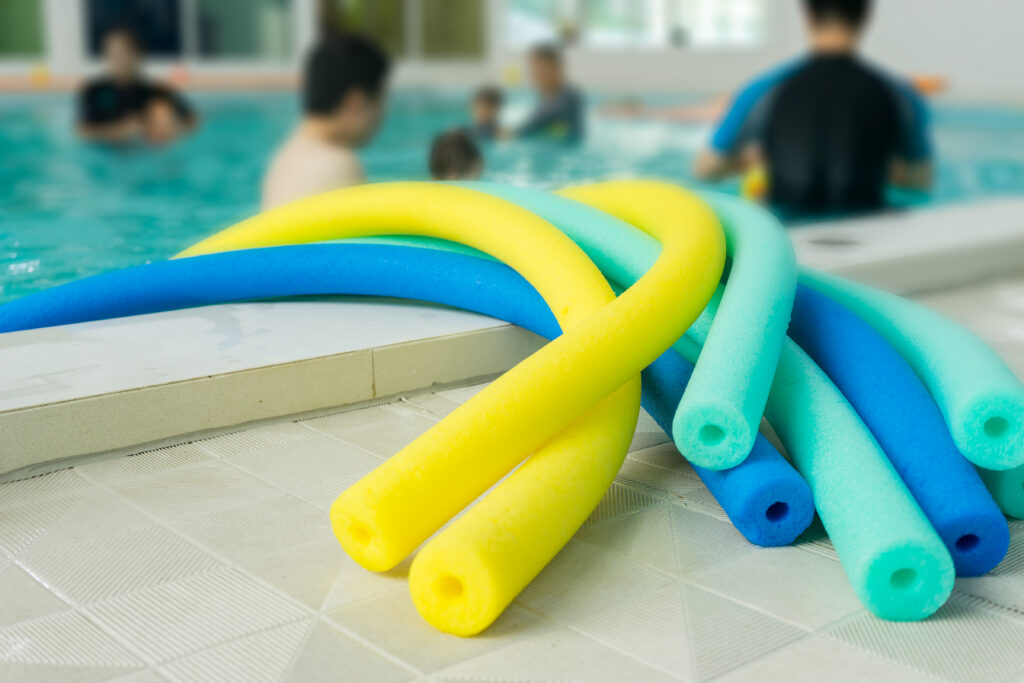
Basic equipment enhances training effectiveness and targets specific muscle groups. A pull buoy isolates the upper body during freestyle and backstroke sets. This equipment forces swimmers to focus on arm technique whilst maintaining proper body position.
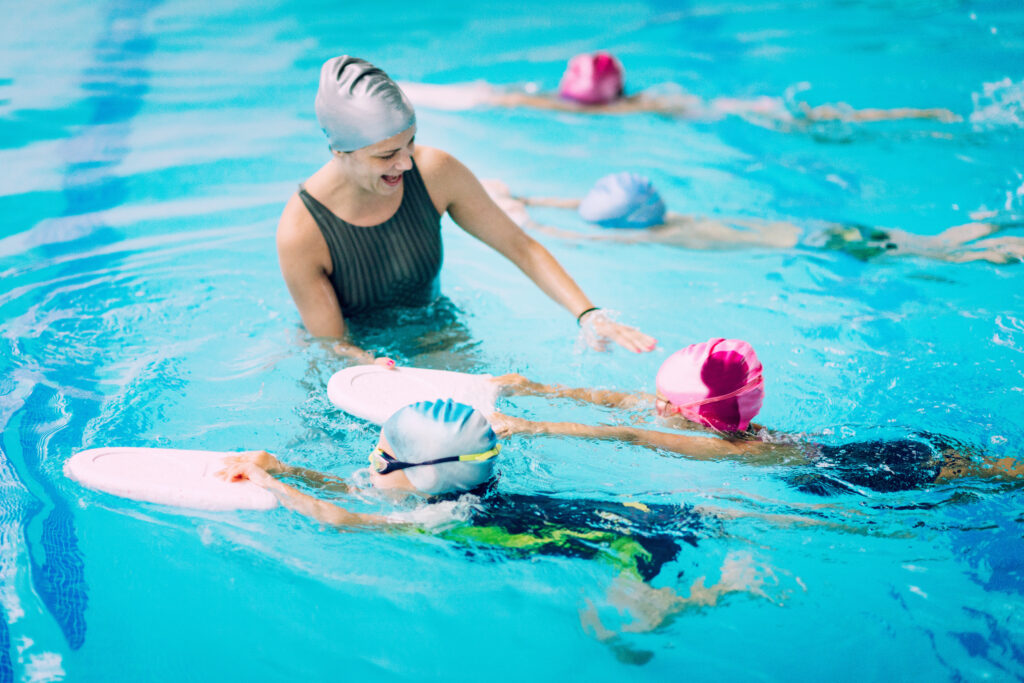
A kickboard develops leg strength across all four strokes. Swimmers use it for butterfly, backstroke, breaststroke, and freestyle kick sets. The board supports the upper body whilst legs work independently.
Additional useful equipment includes:
- Fins – build leg strength and improve body position
- Hand paddles – increase resistance for arm strength
- Swimming goggles – essential for clear underwater vision
- Waterproof watch – tracks intervals and rest periods
Most pools provide basic equipment for members. Swimmers should check availability before purchasing personal items.
Weekly Planning and Progress Tracking
A typical training week alternates between stroke-specific sessions and endurance swimming workouts. Monday focuses on freestyle technique. Wednesday combines backstroke and breaststroke. Friday emphasises butterfly and individual medley work.
Progress tracking uses measurable metrics:
- Distance per session – gradually increases weekly
- Stroke count per length – should decrease as efficiency improves
- Time for set distances – monitors speed development
- Technique scores – self-assessment on a 1-10 scale
The intermediate training plan recommends recording workout data in a training diary. This helps identify patterns and areas needing improvement.
Weekly volume typically starts at 3,000-4,000 metres and builds to 5,000-6,500 metres by programme completion. Rest days between sessions allow proper recovery and adaptation.
Fundamentals for Improving All Four Strokes
Mastering proper breathing patterns, maintaining optimal body position, and developing coordinated kick and pull techniques form the foundation for stroke improvement across butterfly, backstroke, breaststroke, and freestyle. These core elements directly impact speed, efficiency, and endurance in the water.
Breathing and Breath Control Essentials
Proper breathing technique varies significantly between strokes but follows consistent principles. Swimmers must exhale completely underwater to create space for fresh air intake during breathing windows.
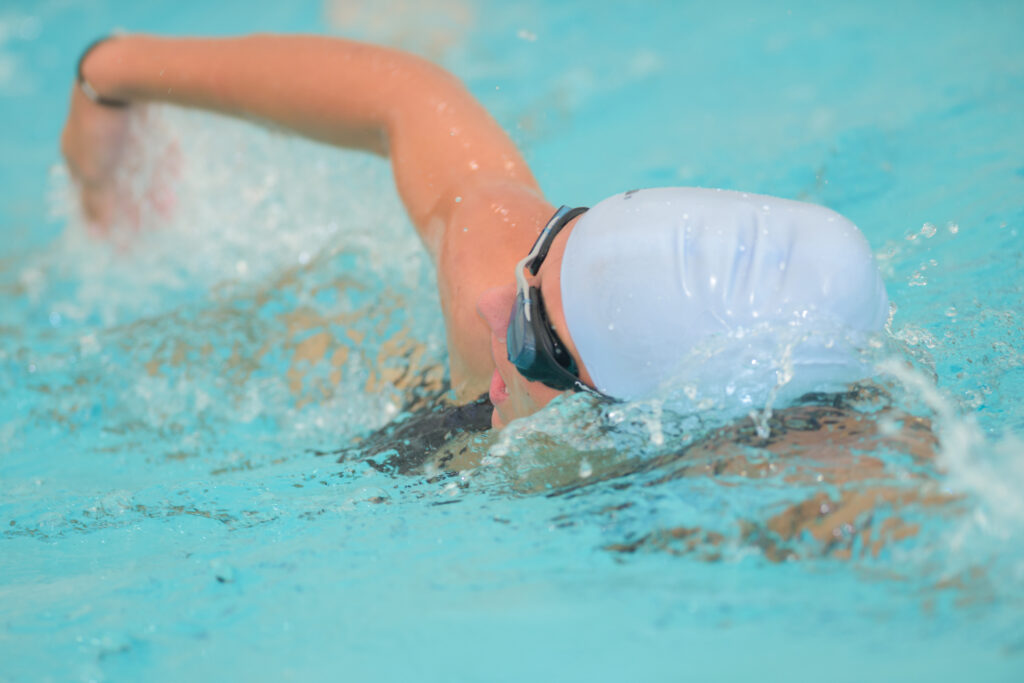
Freestyle breathing occurs every 2-3 strokes with the head rotating to the side rather than lifting up. The mouth should clear the water’s surface just enough for air intake. Advanced swimmers develop bilateral breathing to maintain balanced stroke mechanics.
Butterfly breathing happens during the arm recovery phase when the head naturally rises with the body’s undulation. Swimmers breathe forward or slightly forward-up, keeping chin close to the water surface.
Breaststroke breathing occurs during each stroke cycle as the head lifts naturally with the arm pull. The breathing window is brief, requiring quick inhalation before the head returns underwater.
Backstroke allows continuous breathing since the face remains above water. However, swimmers must avoid excessive head movement that disrupts body position and creates drag.
Breath control exercises improve lung capacity and oxygen efficiency. Swimmers practice breathing every 5, 7, or 9 strokes during freestyle sets to build tolerance.
Body Position and Streamlining
Optimal body position reduces drag and maximises propulsion across all strokes. The core muscles maintain alignment whilst allowing necessary stroke-specific movements.
Horizontal body position keeps hips near the surface in freestyle and backstroke. Swimmers engage their core to prevent hip drop, which creates significant drag. The head remains in neutral position with eyes looking down (freestyle) or straight up (backstroke).
Undulating body position characterises butterfly and breaststroke. The chest presses down as hips rise, creating a wave-like motion that propels the body forward. This undulation must coordinate with arm and leg movements.
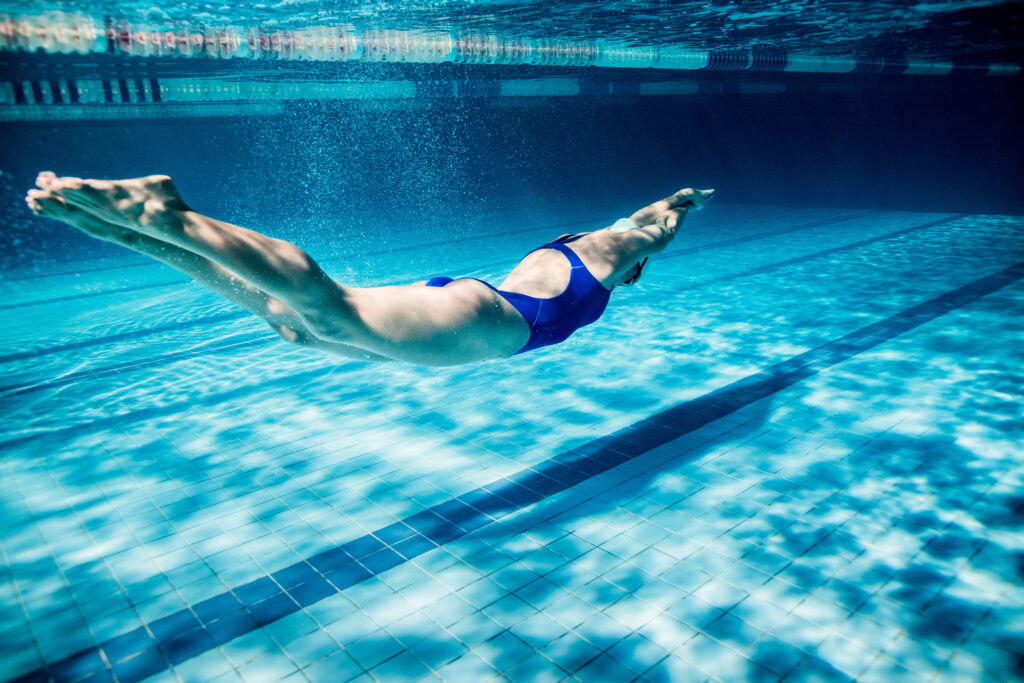
Streamline position occurs during starts, turns, and underwater phases. Arms extend overhead with hands overlapped, biceps squeeze against ears, and the body forms a straight line from fingertips to toes.
Body rotation in freestyle and backstroke generates power whilst maintaining streamline. The torso rotates 30-45 degrees on each side, allowing for stronger arm pulls and reduced shoulder stress.
Regular drill practice for stroke technique reinforces proper body positioning through repetitive movement patterns.

Kick and Pull Technique Basics
Effective propulsion combines coordinated arm pulls and leg kicks specific to each stroke’s requirements. Both elements must work together rather than independently.
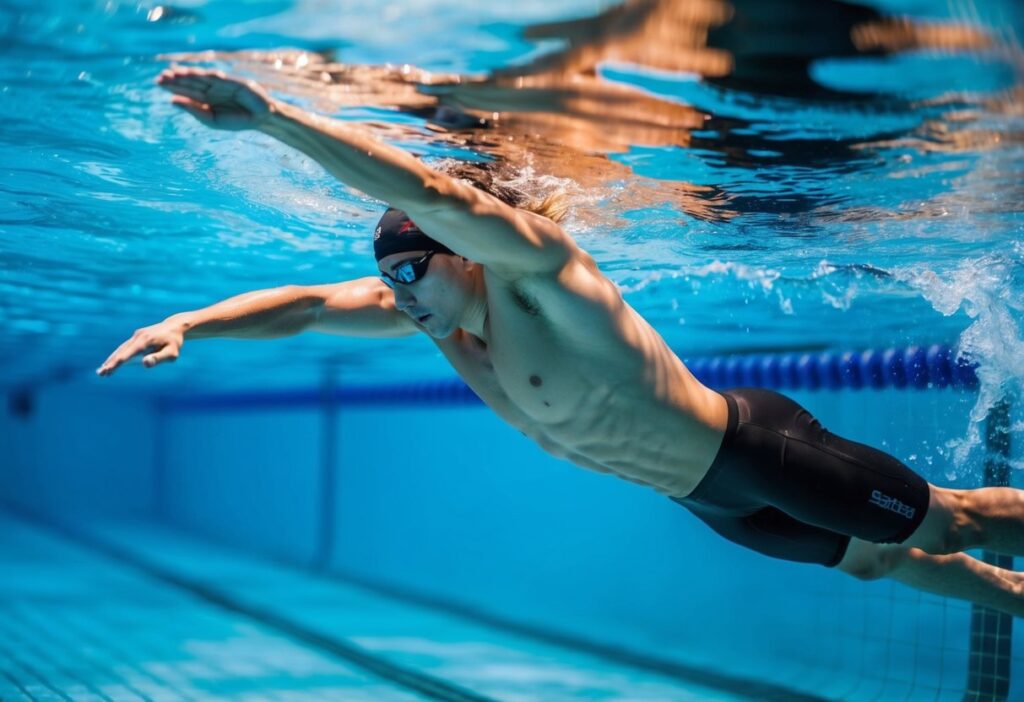
Flutter kick powers freestyle and backstroke with alternating up-and-down leg movements. The kick originates from the hips with slight knee bend and loose ankles. Kick rate typically matches arm stroke rate with 2, 4, or 6 kicks per arm cycle.
Dolphin kick drives butterfly through simultaneous up-and-down leg movements. The motion starts from the core, travels through the hips, and finishes with a whip-like ankle snap. Timing coordinates with arm entry and exit phases.
Breaststroke kick uses simultaneous leg movements with knees drawing up, feet turning outward, then pushing back and together. The kick provides most of the stroke’s propulsion and must synchronise with the arm pull.
Arm pull patterns vary between strokes but follow catch-pull-recovery phases. The catch positions the hand and forearm as a paddle, the pull pushes water backward, and recovery prepares for the next stroke cycle.
Kick and pull coordination determines stroke efficiency. Poor timing wastes energy and reduces speed, whilst proper coordination maximises each movement’s contribution to forward propulsion.
Freestyle: Skills and Drills for Intermediates
Intermediate swimmers need to focus on refining their catch mechanics, developing consistent flutter kick rhythm, mastering bilateral breathing patterns, and correcting common technical errors that limit speed and efficiency.
Improving Catch and Pull Efficiency
The catch phase determines how much water a swimmer grabs with each stroke. Poor catch technique wastes energy and reduces forward momentum.
High Elbow Catch Position Swimmers should enter the water with fingertips first, then drop the hand down whilst keeping the elbow high. The forearm and hand should form a paddle shape underwater.
Practice the catch using these drills:
- Single arm freestyle with opposite arm extended
- Fist swimming to feel water pressure on forearms
- Catch-up drill pausing when arms meet in front
Pull Phase Mechanics After the catch, swimmers pull water straight back along their body line. The hand should stay close to the centre line underneath the body.
Freestyle drills for technique improvement help swimmers develop proper pulling patterns. The pull should accelerate from catch to finish, with maximum force applied in the middle phase.
Optimising Flutter Kick Technique
Flutter kick provides stability and propulsion in freestyle. Intermediate swimmers often kick too hard or use incorrect leg positioning.
Proper Kick Mechanics Legs should kick from the hips, not the knees. Toes stay pointed and ankles remain flexible. The kick should be rhythmic and consistent.
Key flutter kick elements:
- 6-beat kick: Six kicks per stroke cycle
- 2-beat kick: Two kicks per stroke cycle
- Depth: Kicks stay within body’s shadow
- Timing: Coordinated with arm strokes
Kick Training Methods Use a pull buoy between legs to isolate arm work, then remove it to feel the difference. Kickboard sets help build leg strength and endurance.
Practice vertical kicking in deep water. This drill forces proper hip-driven kicking motion without forward momentum assistance.
Breathing Patterns and Bilateral Breathing
Breathing technique affects body position and stroke rhythm. Many intermediate swimmers hold their breath or breathe only on one side.
Bilateral Breathing Benefits Breathing on both sides creates balanced stroke mechanics. It prevents muscle imbalances and improves navigation during open water swimming.
Start with breathing every three strokes (left-right-left pattern). This ensures equal development on both sides of the body.
Breathing Timing Begin exhaling underwater immediately after taking a breath. This ensures lungs are empty when the head turns to breathe again.
The head should rotate with the body’s roll, not lift up independently. Eyes should look to the side, not forward, when breathing.
Progressive Breathing Patterns
- Every 2 strokes (single side)
- Every 3 strokes (bilateral)
- Every 5 strokes (advanced bilateral)
- Mixed patterns during longer sets
Common Freestyle Mistakes and Corrections
Intermediate swimmers often struggle with specific technical issues that limit their progress.
Crossing Over Centre Line Arms should not cross the body’s centre line during the pull phase. This creates drag and reduces efficiency.
Correction: Swim with a pull buoy whilst focusing on straight-arm pulls. Practice single-arm freestyle to feel proper hand positioning.
Low Elbow Position Dropping the elbow during the catch reduces pulling power significantly. The elbow should stay higher than the hand throughout the underwater phase.
Correction: Use sculling drills and doggy paddle to develop elbow awareness. Focus on pressing water backwards, not downwards.
Over-Rotation Excessive body roll disrupts timing and creates unnecessary drag. Body rotation should be controlled and purposeful.
Body Position Issues Hips and legs sinking create additional drag. Core engagement and proper head position maintain horizontal alignment.
Correction: Practice streamline position and use tempo trainer devices to maintain consistent stroke rates.
Backstroke: Technique Refinement
Backstroke improvement centres on three critical elements: precise kick mechanics that drive forward propulsion, smooth arm movements that maximise catch efficiency, and coordinated timing that maintains body stability throughout each stroke cycle.
Kick Dynamics and Alignment
The backstroke flutter kick generates primary propulsion through alternating leg movements originating from the hips. Swimmers must keep their legs relatively straight with slight knee flexion during the downward phase.
Proper kick technique requires:
- Toes pointed and feet turned slightly inward
- Kicks initiated from the hips, not the knees
- Legs staying within the body’s shadow
- Water breaking at the toes, not the knees
The kick rhythm typically follows a six-beat pattern per arm cycle. Each leg performs three kicks whilst one arm completes its full stroke sequence.
Body alignment remains crucial for effective kicking. The head should rest in a neutral position with water covering the ears. Hips stay near the surface to prevent drag from sinking lower body position.
Many swimmers make the error of excessive knee bending during flutter kicks. This creates resistance rather than propulsion. The backstroke training programmes emphasise maintaining leg extension throughout the kick cycle.
Effective Arm Recovery and Entry
Arm recovery in backstroke begins as the hand exits the water near the thigh. The arm travels in a straight vertical path with the thumb leading initially, then rotating so the little finger enters first.
Key recovery elements include:
- Straight arm path over the shoulder
- Relaxed hand and wrist during recovery
- Little finger entry prevents shoulder impingement
- Entry point directly behind the shoulder
The catch phase starts immediately after hand entry. The arm extends underwater whilst the hand pitches downward to grab water. This creates the high elbow position essential for effective pulling.
Body rotation coordinates with arm movement. As one arm enters, the opposite shoulder lifts slightly. This rotation reduces drag and increases stroke length.
The 4-week backstroke technique training plan focuses on these precise movements through structured practice sessions.
Maintaining Rhythm and Balance
Stroke timing coordinates all backstroke elements into fluid movement. The arms work in direct opposition – as one arm enters the water, the other exits near the thigh.
The six-beat kick pattern synchronises with arm strokes. Three kicks occur during each arm’s stroke cycle. This timing maintains body position and provides consistent propulsion.
Rhythm maintenance involves:
- Consistent arm stroke rate
- Steady kick tempo throughout the swim workout
- Coordinated body rotation with arm movements
- Breathing pattern that doesn’t disrupt timing
Balance comes from core stability and proper weight distribution. Swimmers should feel their body floating level with minimal effort. Excessive head movement or improper kick depth disrupts this balance.
Practice with tempo trainers helps establish consistent rhythm. Many swimmers naturally speed up their stroke rate when fatigued, which reduces efficiency and increases energy expenditure.
Breaststroke: Enhancing Power and Timing
Breaststroke requires precise coordination between the pull, kick, and breathing phases to generate maximum power whilst maintaining efficiency. Proper timing and technique in each component directly impacts speed and reduces energy waste during longer sets.
Mastering the Pull and Glide Phase
The pull phase generates forward momentum through proper hand positioning and stroke mechanics. Swimmers should begin with hands slightly wider than shoulder width, fingers pointing downward at a 45-degree angle.
The catch phase involves pressing water backward rather than pulling arms wide. Elbows remain high throughout the pull, creating an effective paddle surface with the forearms and hands.
Advanced breaststroke techniques focus on maximising the glide phase after each stroke. This streamlined position reduces drag and allows swimmers to maintain momentum between strokes.
Key Pull Technique Points:
- Keep elbows higher than hands during the catch
- Pull straight back toward the chest, not outward
- Finish with hands together under the chin
- Extend arms forward in a streamlined position
The glide should last approximately one to two seconds. Swimmers who rush this phase lose the efficiency gained from proper stroke mechanics.
Kick Technique and Streamlining
The breaststroke kick provides the majority of propulsive force in this stroke. Proper foot position during the kick phase is crucial for generating power whilst minimising resistance.
Feet should flex upward during the recovery phase, creating large surface areas to push against the water. The kick motion resembles a frog’s movement, with knees staying narrower than the feet throughout the action.
Sprint breaststroke training emphasises leg power development through specific kick sets. The whip-like motion of the feet creates thrust by accelerating water backward.
Effective Kick Sequence:
- Draw heels toward the glutes, keeping knees close together
- Rotate feet outward and flex ankles
- Snap feet together in a circular, whipping motion
- Hold streamlined position during the glide
Timing between the kick and arm stroke determines overall efficiency. The kick should begin as the hands start moving forward from the chest position.
Synchronising Breathing and Stroke Timing
Breathing coordination separates efficient breaststroke swimmers from those who struggle with rhythm and timing. The head should lift naturally as the arms complete the pull phase, not through forced neck extension.
Eyes look forward during breathing, with the head returning to a neutral position as arms extend forward. This timing prevents excessive body oscillation that creates drag and reduces speed.
Breaststroke timing drills help swimmers develop the one-breath-per-stroke rhythm essential for proper technique. Late or early breathing disrupts the stroke’s natural flow and timing.
The breathing phase should coincide with the strongest part of the pull. As hands sweep inward toward the chest, the shoulders naturally rise, making breathing easier and more efficient.
Breathing Timing Checklist:
- Inhale as hands pull toward chest
- Keep breathing quick and efficient
- Lower head as arms extend forward
- Maintain streamlined position during glide phase
Swimmers should practice breathing patterns during endurance breaststroke sets to maintain consistent timing when fatigued.

Endurance, Conditioning, and Sample Workouts
Building stamina through structured interval training, incorporating equipment like kickboards and pull buoys, and following comprehensive workout plans will develop all four strokes whilst improving cardiovascular fitness. These training methods create the foundation for sustained swimming performance across freestyle, backstroke, breaststroke, and butterfly.
Interval Training for Stamina
Interval training builds endurance by alternating between high-intensity efforts and recovery periods. This method improves the body’s ability to deliver oxygen to muscles whilst removing waste products efficiently.
Basic Interval Structure:
- Work intervals: 30 seconds to 3 minutes at high intensity
- Rest intervals: 15 seconds to 2 minutes at easy pace
- Sets: 4-8 repetitions depending on fitness level
A typical endurance set might include 8 x 100m freestyle with 20 seconds rest between each repeat. The swimmer maintains consistent times across all repetitions whilst building lactate tolerance.
Stroke-specific intervals help develop technique under fatigue. For butterfly, shorter intervals of 25m or 50m work best due to the stroke’s demanding nature. Breaststroke intervals can extend to 100m or 200m repeats.
Swimming endurance workouts emphasise gradual progression. Swimmers begin with shorter distances and longer rest periods, then advance to longer efforts with reduced recovery time.
Comprehensive Swimming Workouts
A complete swim workout incorporates warm-up, main sets, and cool-down phases. Each session should target different energy systems whilst maintaining stroke technique across all four strokes.
Sample Intermediate Workout (2000m total):
| Phase | Distance | Stroke | Intensity |
|---|---|---|---|
| Warm-up | 400m | Choice | Easy |
| Drill Set | 200m | All strokes | Technical |
| Main Set | 1200m | Mixed | Moderate-Hard |
| Cool-down | 200m | Easy freestyle | Recovery |
The main set might include individual medley swim workouts combining all four strokes. This approach develops stroke versatility whilst maintaining cardiovascular challenge.
Swimming workouts for intermediate swimmers typically range from 1500m to 3000m per session. Sessions occur 3-4 times weekly with varying intensities to prevent overtraining.
Progression occurs through increased volume, intensity, or technical complexity. Swimmers might advance from 4 x 200m freestyle to 6 x 200m, or add stroke restrictions to increase difficulty.
Using Equipment to Build Strength
Swimming equipment isolates specific muscle groups and enhances stroke development. Kickboards, pull buoys, and paddles create targeted training opportunities that complement regular swimming.
Kickboard Training: Kickboards isolate leg muscles whilst maintaining proper body position. Flutter kick sets of 6 x 50m develop freestyle and backstroke leg strength. Breaststroke kick requires shorter distances due to the movement’s intensity.
Pull Buoy Applications: Pull buoys eliminate leg kick to focus on upper body strength and stroke technique. Sets of 8 x 75m with pull buoy build arm endurance whilst encouraging proper catch and pull phases.
Equipment Rotation Schedule:
- Week 1-2: Focus on kickboard sets
- Week 3-4: Emphasise pull buoy training
- Week 5-6: Combine equipment within sessions
Equipment sessions should comprise 20-30% of total training volume. Overuse can create stroke imbalances, so regular freestyle swimming maintains natural coordination between arms and legs.
Resistance equipment like drag suits or parachutes increases stroke power. These tools work best during shorter, high-intensity sets rather than endurance-focused training.
Frequently Asked Questions
Intermediate swimmers often need specific guidance on drill selection, training frequency, and progress measurement when working to improve all four competitive strokes. Proper technique development requires targeted exercises, consistent scheduling, and complementary strength work outside the pool.
What are effective drills for enhancing technique in butterfly stroke for intermediate swimmers?
The pulsing drill helps master butterfly timing and body position by focusing on core movement without arm pulls. Swimmers float in a superman position with arms shoulder-width apart and pulse their chest and hips up and down.
This drill teaches the essential wave-like motion that drives butterfly stroke efficiency. The chest presses down towards the pool bottom whilst the hips lift, then the movement reverses.
Single-arm butterfly drills allow swimmers to focus on proper catch and pull mechanics. They alternate between one-arm strokes and full butterfly strokes to build coordination.
Body dolphin underwater work strengthens the core muscles needed for powerful undulation. Swimmers perform dolphin kicks whilst maintaining tight streamline position.
How frequently should intermediate swimmers train to see improvement across all strokes?
Intermediate swimmers typically benefit from training three times per week to allow adequate recovery whilst maintaining consistent progress. This frequency provides sufficient stimulus for stroke development without overtraining.
Each training session should focus on different stroke combinations or specific technique elements. Swimmers can dedicate one session to butterfly and backstroke, another to breaststroke and freestyle, and a third to individual medley work.
Recovery days between sessions allow muscle adaptation and technique consolidation. Active recovery through light stretching or walking helps maintain flexibility.
Progressive overload occurs by gradually increasing distance, intensity, or technical complexity. Swimmers might add 100-200 metres to their weekly volume or incorporate more challenging drill variations.
What strength and conditioning exercises complement in-pool training for all four swim strokes?
Core strengthening exercises support the body rotation needed for backstroke and freestyle. Planks, Russian twists, and dead bugs build the stability required for efficient stroke mechanics.
Pull-ups and lat pulldowns develop the latissimus dorsi muscles crucial for all stroke pulling phases. These exercises mirror the underwater pull patterns used in competitive swimming.
Shoulder stability work prevents injury whilst improving catch position. External rotation exercises with resistance bands strengthen the rotator cuff muscles.
Leg strength training supports powerful kicks across all strokes. Squats and lunges build the quadriceps and gluteal strength needed for breaststroke and butterfly kicks.
Flexibility work through dynamic stretching improves range of motion. Shoulder circles and leg swings prepare joints for the full movement patterns required in swimming.
Can you outline a balanced weekly training schedule for intermediate swimmers focusing on all strokes?
Monday sessions focus on freestyle and backstroke technique development. Swimmers complete 2000-2500 metres including warm-up, drill work, and main sets combining both strokes.
Wednesday training emphasises breaststroke and butterfly skills. The session includes specific drills like double kick breaststroke to improve timing and body position.
Friday workouts integrate all four strokes through individual medley training. Swimmers practice stroke transitions and complete shorter IM sets to maintain technique under fatigue.
Each session includes 400-500 metres of warm-up swimming. The main set varies between 1200-1600 metres depending on the training focus.
Cool-down consists of 200-300 metres easy swimming. This allows heart rate recovery whilst maintaining stroke feel.
What are the key focus areas for improving backstroke for intermediate swimmers at an intermediate level?
Body rotation forms the foundation of efficient backstroke technique. Swimmers should spend equal time on each side rather than remaining flat on their backs throughout the stroke cycle.
Hip-initiated rotation drives proper stroke mechanics. The hips lead the rotational movement whilst the shoulders follow naturally.
One-arm backstroke drills improve timing and body position. Swimmers alternate between three single-arm strokes and three normal backstroke strokes to develop rhythm.
Hand entry and catch require attention to avoid common technical errors. The pinky finger enters first with the arm extended straight above the shoulder.
Kick timing coordinates with arm movements to maintain body position. The legs provide stability whilst the arms generate propulsion.
How can an intermediate swimmer effectively measure progress in stroke improvement over time?
Stroke count provides an objective measure of efficiency improvements. Swimmers count strokes per 25-metre length and track reductions over time as technique improves.
Time trials over standard distances show speed development. Monthly 100-metre tests for each stroke reveal progress in both technique and fitness.
Video analysis reveals technical improvements not visible during swimming. Underwater footage shows catch position, body rotation, and kick timing changes.
Coach feedback sessions provide qualitative assessment of stroke development. Regular technique evaluations identify specific areas requiring continued focus.
Training log data tracks volume, intensity, and perceived effort levels. Swimmers note when distances feel easier or stroke rates become more sustainable.
Heart rate monitoring during set efforts shows cardiovascular adaptation. Lower heart rates at similar swimming speeds indicate improved efficiency and fitness.