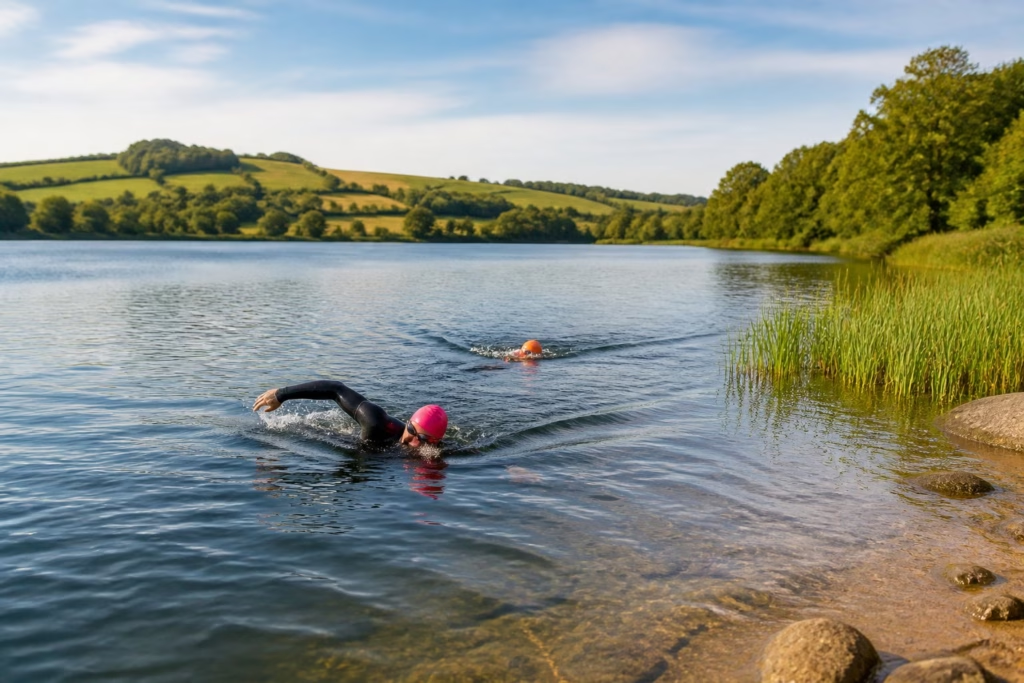
Open water swimming around Leeds gives you a proper taste of West Yorkshire water without driving for hours. Managed sessions run on lakes, docks and quarry sites within easy reach of the city, with lifeguard cover, marked courses and a briefing before you get in.
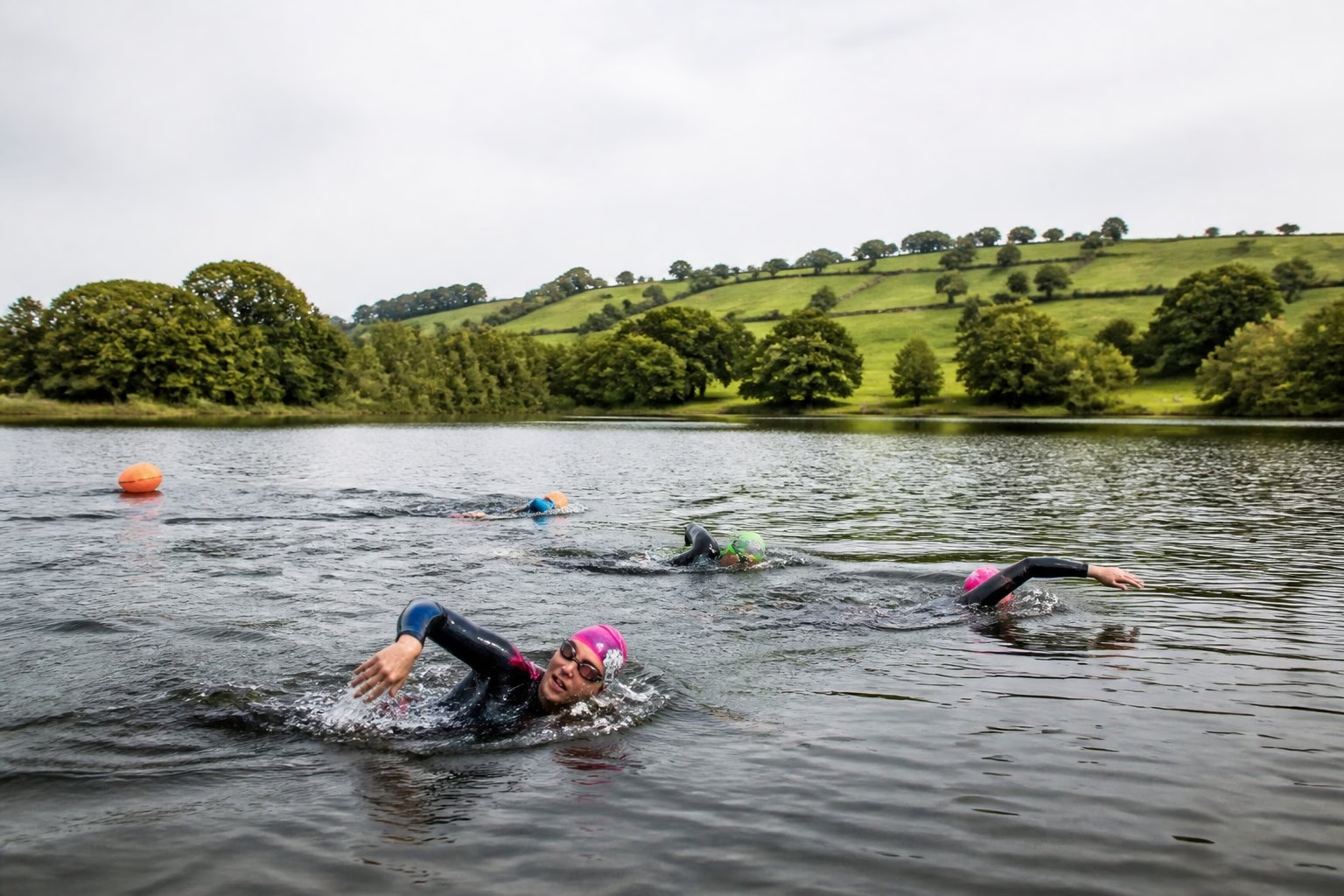
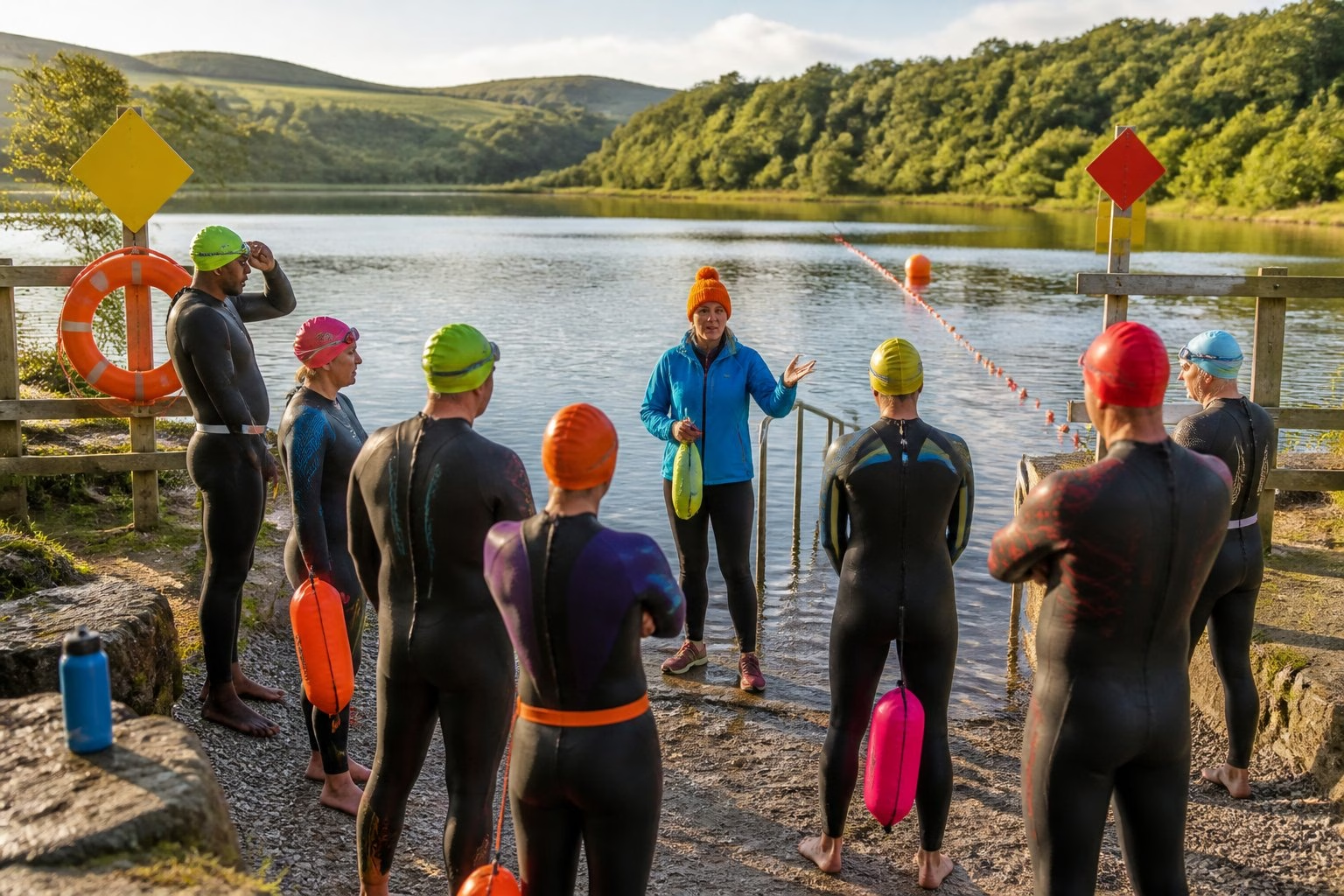
Sessions are built around supported swimming, so a safety team watches the water while you swim a marked loop. You book a slot, sign in, get a bright hat, and swim your own distance at your own pace.
Every venue listed here is a managed or sanctioned site, so you are swimming with supervision and a check-in system rather than taking your chances at an unlit riverbank. That single choice removes most of the risk that makes wild swimming in Leeds newsworthy for the wrong reasons.
Whether you are training for a triathlon, easing into cold water for the first time, or just want a regular outdoor swim near home, you can pick a venue, check the current conditions, and book in with confidence.
Book a Managed Outdoor Swim Session
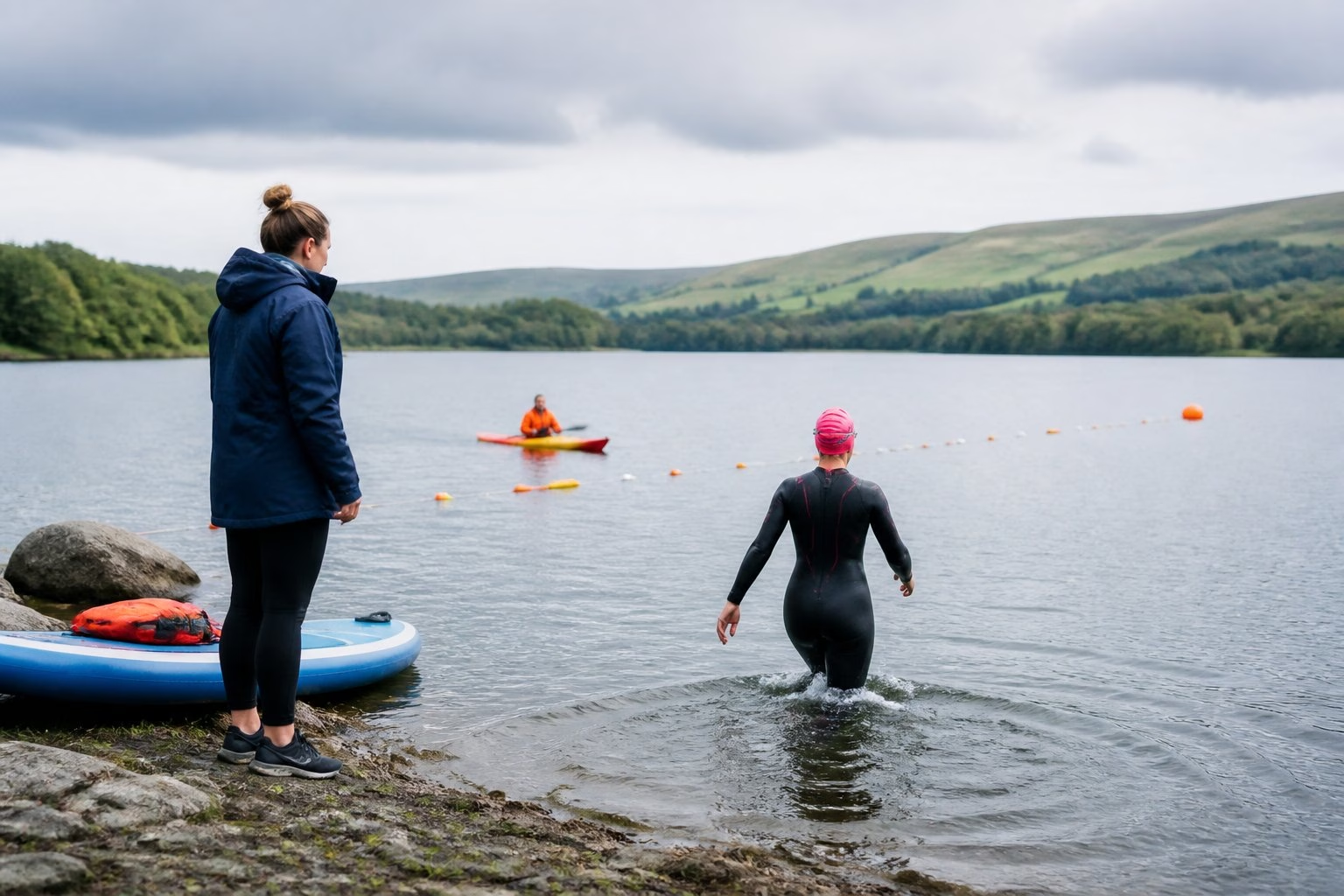
A managed swim session means supervised water, a fixed time slot, and a record of who is in the lake and who has come out. Most venues across Leeds and West Yorkshire run on that model, and it is the safest way to swim outdoors on a regular basis.
What Is Included in a Supported Swim?
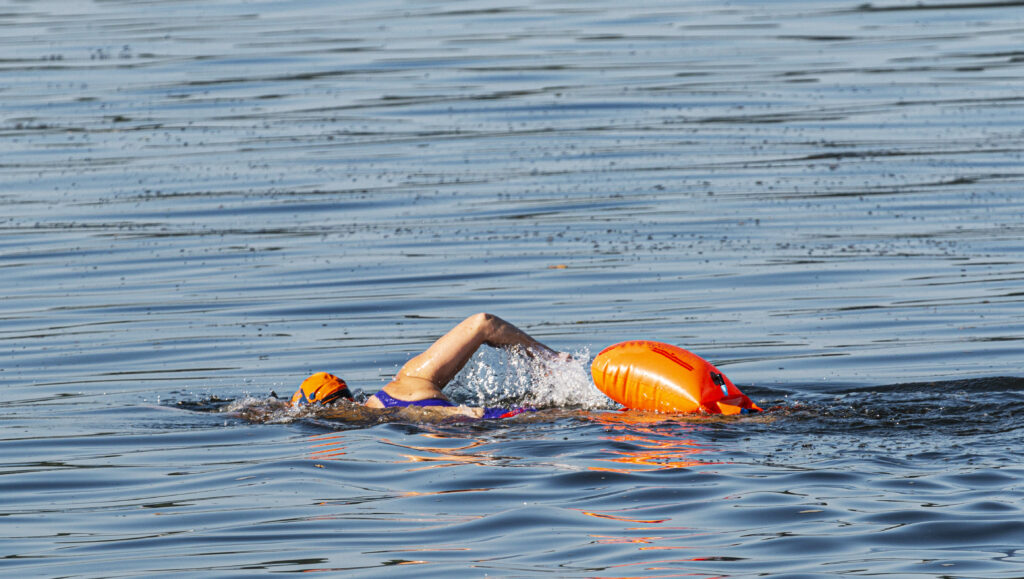
Swim sessions at managed venues come with safety paddlers on kayaks or paddleboards, a marked course of buoys, and a briefing that covers entry points, the loop distance and the exit signal.
You get a bright coloured swim hat, which is compulsory at nearly every site. Staff hold Royal Life Saving Society qualifications and watch from both the bank and the water.
Course loops are usually set at fixed distances so triathlon swimmers can count laps without guessing. Many venues also allow non-wetsuit swimming in a separate area or wave.
Who Can Join Our Sessions?
Sessions suit confident swimmers who can complete 200 metres continuously in a pool without stopping. That is a common minimum across managed open water swimming (OWS) venues.
Beginners are welcome at introductory sessions, where a coach stays in the shallow water with you. Triathletes, club swimmers and casual dippers share the same venues, with separate lanes or waves keeping paces apart.
Most sites set a minimum age of 16 for unaccompanied swimmers, with younger swimmers needing an adult in the water. Check the venue’s own rule before you travel.
How Do Booking and Check-In Work?
Nearly all managed venues in the region use NOWCA, which issues a wristband tag linked to your profile. You tap in before you swim and tap out afterwards, so the safety team knows the exact count in the water.
NOWCA membership is an annual fee paid once, then you book individual sessions on top. Booking is done online or through an app, and slots for popular evening sessions fill days ahead in peak summer.
Bring your own tag if you already swim elsewhere, since it works across venues in the network. Arrive 20 minutes early for the briefing.
How Much Do Sessions Cost?
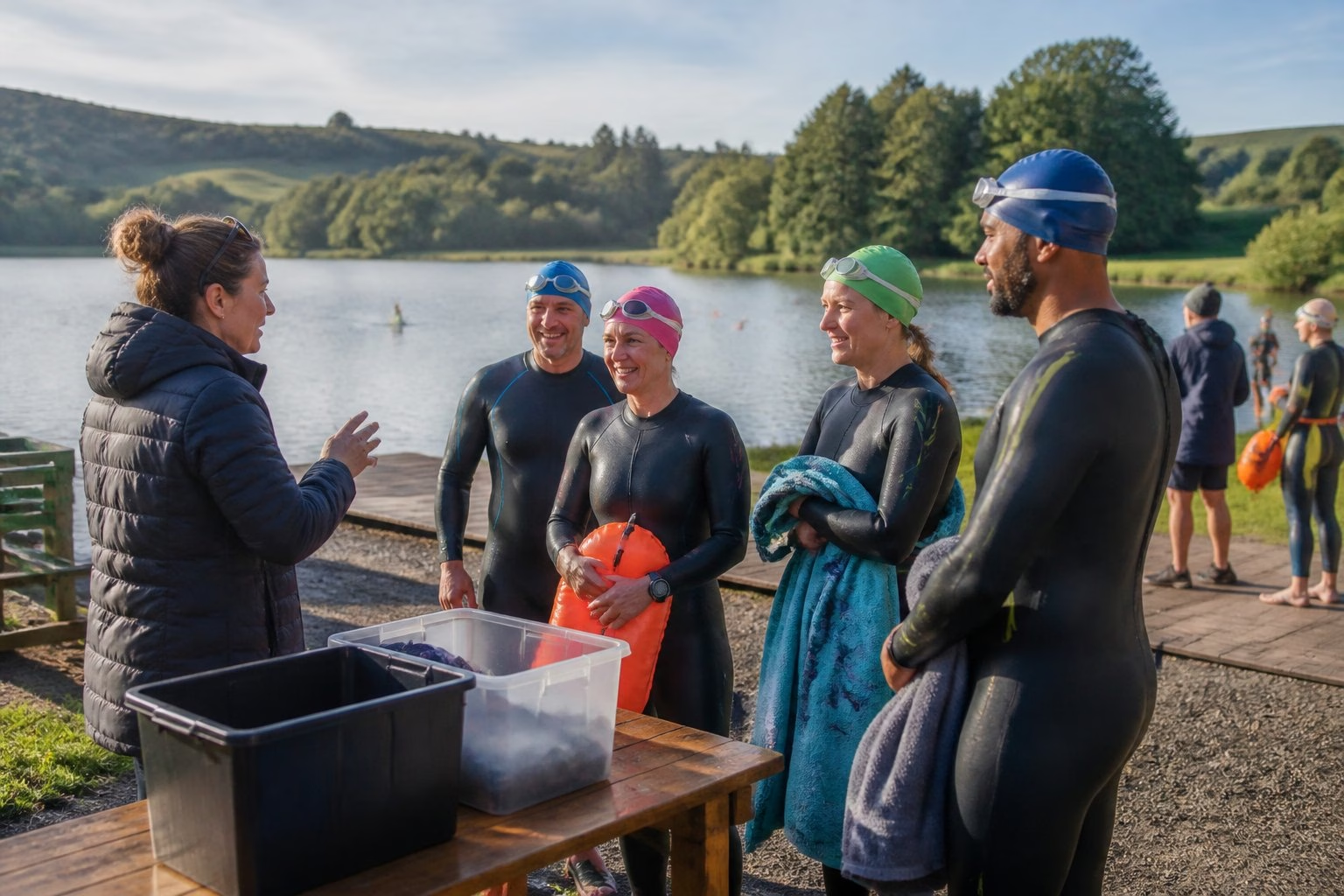
Expect to pay an annual membership fee plus a per-session charge at most managed venues around Leeds. Published rates in the area have included a £15 annual NOWCA membership with sessions booked at £7 each, and open sessions for non-members at £5 at some Yorkshire sites.
Single-Swim and Membership Options
| Option | Typical published rate |
|---|---|
| Annual NOWCA membership | £15 per year |
| Session for members | £7 per swim |
| Open session, non-members | £5 per swim |
| Wetsuit hire | £5 per session |
Those figures come from venue listings and change between seasons and sites, so treat them as a guide and confirm the current rate at the point of booking. Some venues sell multi-swim bundles or season passes that work out cheaper if you swim twice a week through summer.
If you are ready to swim, check the venue’s booking page for this week’s slots, buy your membership online first, then reserve the session time you want. Popular Wednesday evening and Saturday morning slots go quickly from May onwards.
What Equipment Can You Hire?
Wetsuit hire is available at most sites, including tri wetsuit hire with the flexible shoulder panels triathletes prefer. Hire suits come in standard neoprene thicknesses and staff will size you on arrival.
You will need a tow float, and many venues sell them on site. A bright swim hat is provided or sold cheaply. Gloves, socks and a thermal cap help in shoulder-season water, and a safety buoy float is worth owning if you swim regularly.
For autumn and winter swimming, a long wetsuit changes how long you can stay in far more than any other single item of kit.
How to Check Current Prices and Availability
Prices shift each season, so always check the venue’s own booking system on the day you plan to book. Session times also change with daylight, with some venues dropping midweek evening swims from October.
Call ahead if the website has not been updated recently. A quick phone check confirms whether wetsuit hire stock is available in your size and whether the session is already full.
Choose the Right Leeds-Area Swim Setting
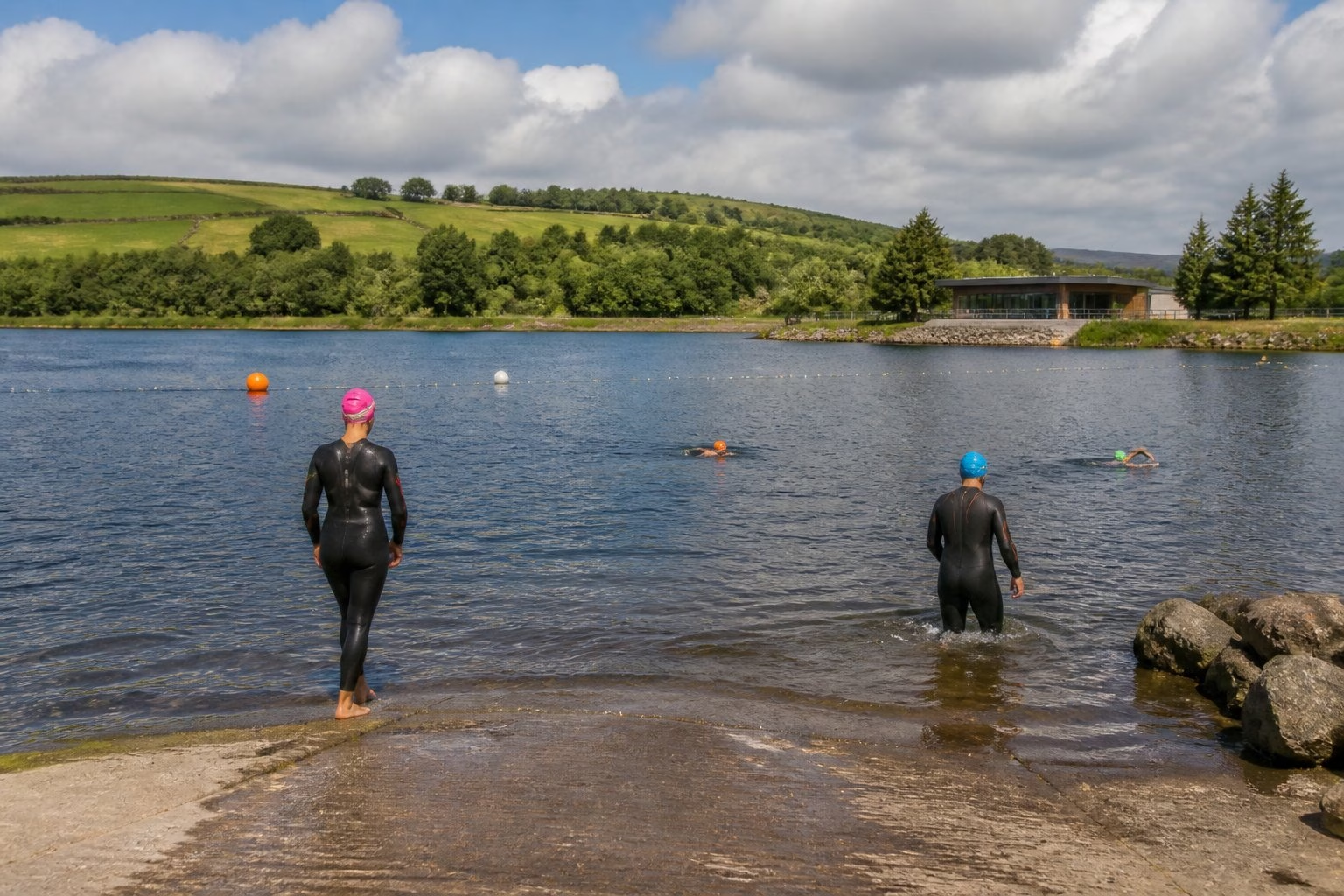
The Leeds area offers managed lakes, urban dock swimming, river spots and heated lidos, and each suits a different kind of swim. Picking the right one depends on your distance, your travel time and whether you need supervision.
Managed Urban and Lake Swimming
Leeds Dock hosted the city’s only licensed open water swimming spot, run under a management agreement with a lifeguard on duty. That arrangement ended when the site’s leaseholders entered administration, and the protest over the closure of open water swimming at Leeds Dock drew around 25 swimmers into the water in September. Leeds City Council confirmed it has no control over the privately owned site but remains open to talks about restoring access.
Outside the city centre, the Blue Lagoon quarry site has run open water swimming since 2009. The water is spring fed through surrounding limestone, which filters it and keeps it notably clear. The Blue Lagooners community there mixes triathlon training with social swimming.
Bridge End Quarry and similar managed sites in West Yorkshire follow the same model, with buoyed courses and tap-in systems.
River Swimming Around Otley and Wetherby
The River Wharfe gives Leeds swimmers their nearest wild swimming water, with popular spots near Otley, Wetherby, Wharfebank Mills and Manor Garth Park. These are unsupervised, so river level and flow rate decide whether a swim is sensible on any given day.
Otley Sailing Club provides open water access for the Leeds & Bradford Triathlon Club (LBT), on a lake also used by British elite squad swimmers. The site doubles as a base for sailing, kayaking and windsurfing, so swim times are scheduled around other water sports.
River swimming after heavy rain is a poor idea anywhere on the Wharfe. Give it two or three dry days before you consider getting in.
Lidos, Pools and Other Training Options
Ilkley Pool and Lido offers a 27-metre heated outdoor pool, a reliable option when lake water drops below your tolerance or conditions close a venue. It is a straightforward drive from Leeds and useful for early-season conditioning.
Pool sessions with a club build the stroke you need before you swim a buoyed loop. If you are stepping up from indoor lanes, outdoor and wild swimming makes different demands on sighting and breathing.
For weekend trips further afield, the Yorkshire Dales has some of the best lakes for open swimming in the UK within 90 minutes of Leeds.
Prepare Safely for Cold and Open Water
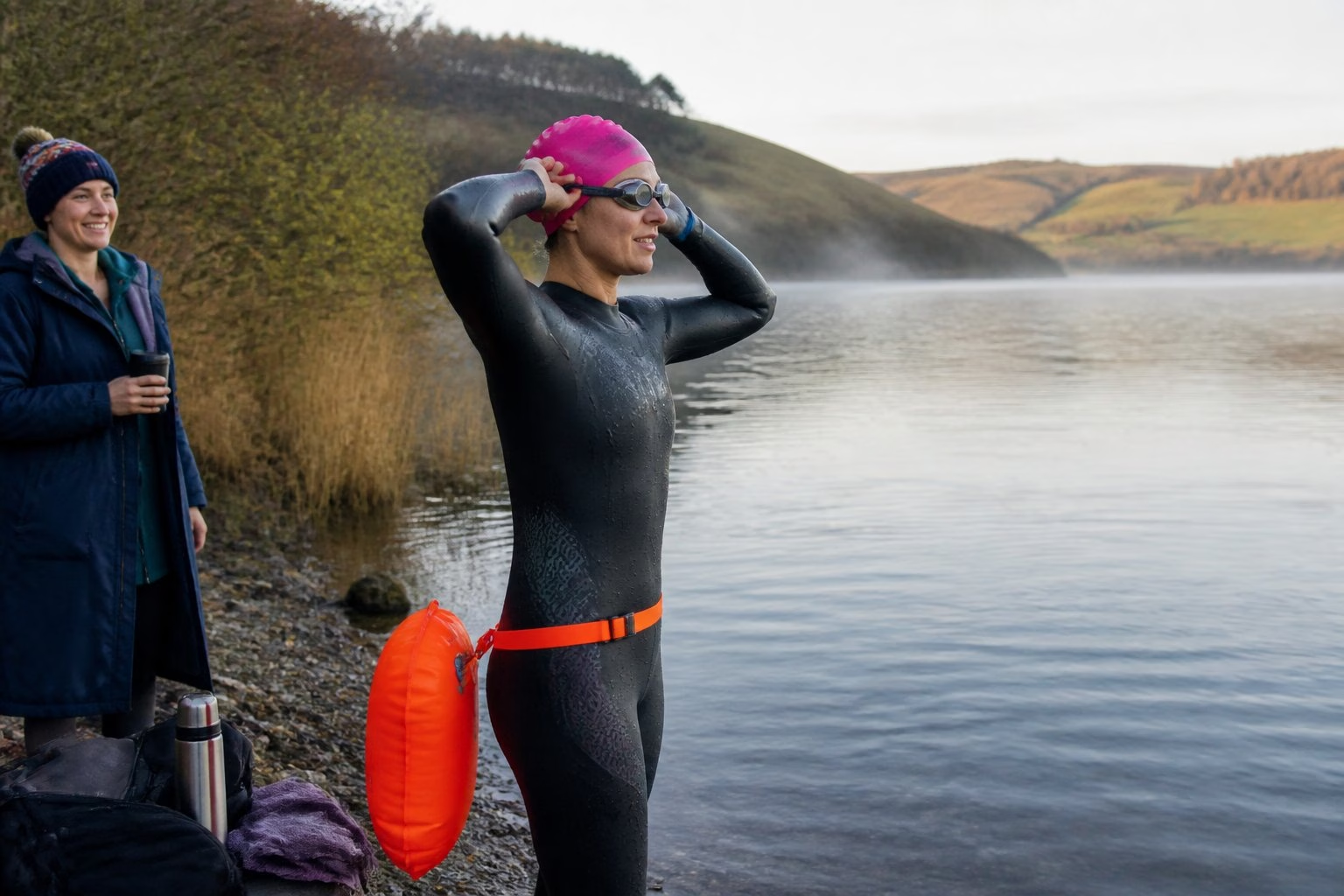
Cold water shock kills far more swimmers than tiredness does, and it hits within the first 60 seconds of entry. Preparing for the temperature is the single most useful thing you can do before a Leeds open water swim.
How to Read Water Temperature and Weather Conditions
Water temperature in West Yorkshire lakes sits around 5-8°C in February and peaks near 18-20°C in late August. Air temperature tells you almost nothing, since a hot day in May often sits over 11°C water.
Most managed venues post the morning’s water temperature on their website or social feed. Check wind too, because chop across an exposed lake makes sighting harder and raises your effort level.
Rain in the previous 48 hours affects river clarity and flow on the Wharfe more than it affects a quarry lake.
Why Cold Water Induction Matters
Cold water induction means building tolerance gradually over several weeks of short, repeated dips at the same temperature. Swimmers who acclimatise through autumn handle a 9°C swim far better than someone jumping in once in January.
Enter slowly, splash water on your face and neck first, and focus on breathing out. Your body will gasp on its own. Keep the first swim short and get out while you still feel fine.
Advice on how to start cold water swimming is worth reading before your first shoulder-season session. Hypothermia creeps up after you exit, so change fast and drink something warm.
What to Do If You Get Into Difficulty
Float to Live is the response taught by the Royal Life Saving Society: lean back, spread your arms and legs, and let your body float until the gasping stops. Fighting the water in the first minute is what exhausts people.
Once your breathing settles, call for help or swim to safety. A tow float keeps you visible and gives you something to hold. Swimming with a partner, even at a supervised venue, cuts your risk further. More on staying warm and safe in open water covers post-swim rewarming.
Local Knowledge, Access and Responsible Swimming
Knowing which Leeds water you are allowed in, and which you are not, saves you a wasted journey and a confrontation. Access rules vary between council land, RSPB reserves and private sites.
How We Assess Conditions Before Each Session
Conditions are checked on the morning of every session: water temperature, visibility, wind speed and any recent rainfall. Blue-green algae blooms are looked for along the shoreline and in still corners, since they appear fast in warm, calm spells.
If water quality testing has lapsed at a site, sessions do not run there. Leeds Dock water had not been quality checked since 31 July before the closure, which is exactly the situation a managed venue avoids.
Sessions are cancelled for thunder, heavy silt after storms, or visible algae. You get told before you set off.
Respecting Wildlife, Access Rules and Water Quality Alerts
St Aidan’s near Astley Lane, Swillington, LS26 8AL, is an RSPB reserve, and Bowers Lake sits within it. The RSPB does not permit swimming there, and the lakes are managed for breeding and wintering birds.
Leeds City Council guidance discourages swimming in unsupervised council waters, canals and reservoirs. Wood Lane and similar access points lead to water with no lifeguard cover and no water quality monitoring.
Use what3words to share your exact position with a swim partner or emergency services at any rural site. Safe wild swimming spots in Leeds and West Yorkshire are the ones with a landowner agreement and a safety plan.
Areas We Serve Across Leeds and West Yorkshire
Sessions run within reach of Leeds city centre, Otley, Wetherby, Swillington, Rothwell, Garforth, Horsforth and Ilkley. Swimmers travel in from Bradford, Wakefield and Harrogate for evening slots.
Most venues sit within a 30 minute drive of central Leeds, with parking on site. Check the venue’s booking page for this week’s session times, confirm the current water temperature before you leave home, and book your slot online so the safety team has you on the list.
Frequently Asked Questions
Where is the best place for open water swimming in Leeds?
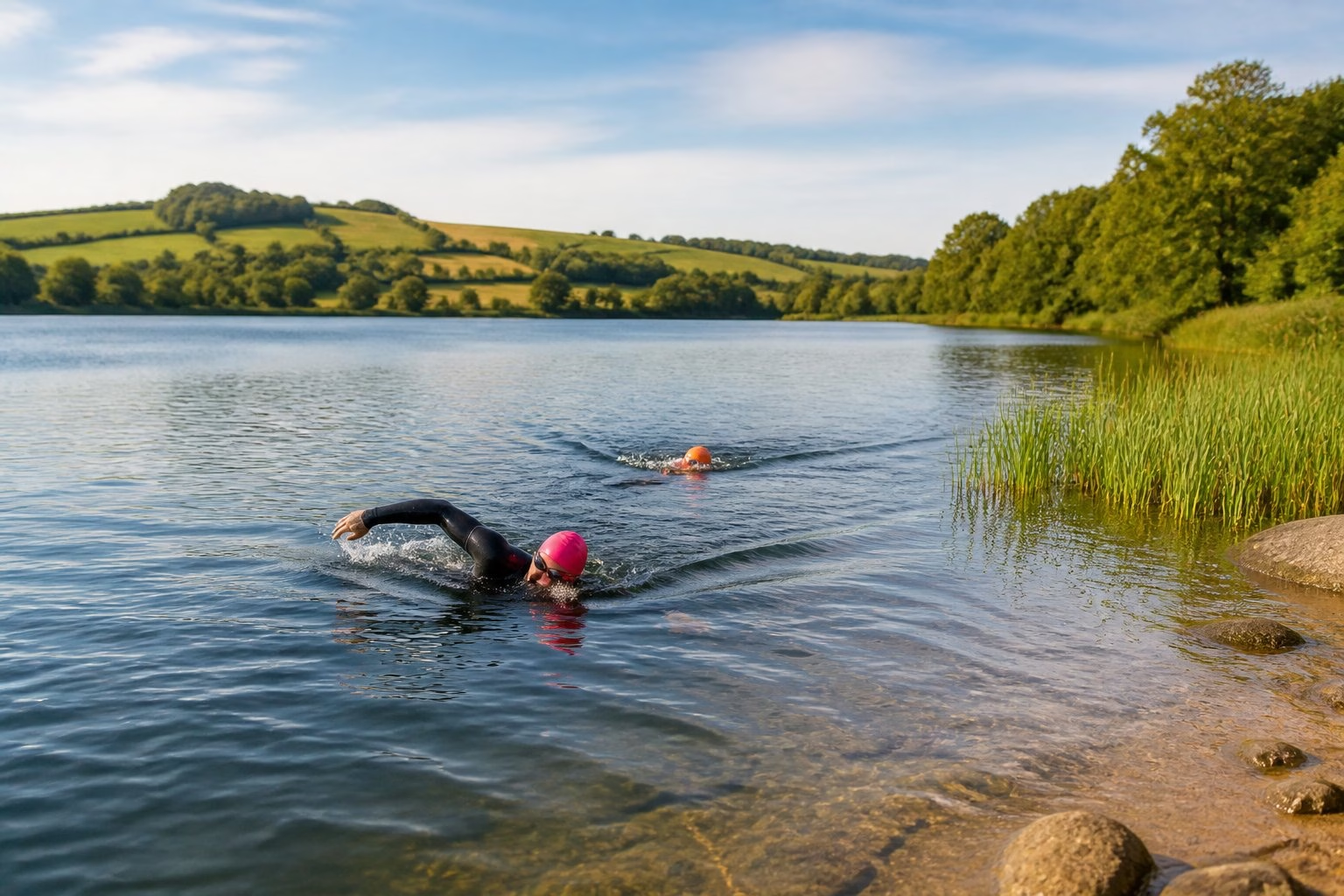
Managed venues with lifeguard cover and a buoyed course are the best places to swim, including the spring-fed quarry lake sites in the wider Leeds area and the sailing club lake at Otley. Leeds Dock ran the city’s only licensed urban swim until the site’s leaseholders entered administration. Choose a venue with a current water quality testing schedule.
Do I need a wetsuit for open water swimming in Leeds?
A wetsuit is required at most Leeds-area venues when water temperature falls below roughly 14°C, and strongly recommended year round. Some sites run a separate non-wetsuit wave in summer for acclimatised swimmers. Hire is available on site at around £5 per session at several venues.
Can beginners join an open water swimming session?
Yes, provided you can swim 200 metres continuously in a pool. Most managed venues run introductory sessions with a coach in the shallow water and a shorter loop close to the bank. Tell the safety team it is your first open water swim when you check in.
Can you swim at Bowers Lake or St Aidan’s?
No. Bowers Lake sits within the RSPB reserve at St Aidan’s, Astley Lane, Swillington, LS26 8AL, and swimming is not permitted there. The site is managed for wildlife, has no lifeguard cover and no routine water quality monitoring for swimmers.
Can you swim in the Leeds and Liverpool Canal or Roundhay Park?
No. Leeds City Council guidance advises against swimming in canals, park lakes and reservoirs across the city, and Roundhay Park lakes are not sanctioned swim sites. Canal water carries boat traffic, poor visibility and steep, slippery banks with no easy exit.
How do I check water conditions before travelling?
Check the venue’s website or social feed on the morning of your swim, where daily water temperature and any cancellations are posted. Look at rainfall over the previous 48 hours if you are heading to a river spot on the Wharfe, and call the venue if the page has not been updated.