Most swimmers who plateau are not short of fitness. They are short of feedback. Swimming drills break your stroke into small pieces so you can feel one thing at a time, fix it, then put the whole stroke back together.
The 12 drills below are grouped by the skill they build: body position, catch, breathing, kick, and timing. Work through them in that order, because a sloppy body position will undo any catch work you do on top of it.
Pick one skill per session, spend 200 to 400 metres on it, and always swim a few lengths of normal stroke straight afterwards so your brain links the drill to the real thing.
Every drill here can be done in a 20 to 25 metre pool with no kit beyond goggles, though a pull buoy and fins make a few of them easier to hold. If you want structured sessions to slot these into, the swim workouts for intermediate swimmers on Swimmers World give you ready-made sets to drop them into this week.
1) Streamline Glide Drill for Body Position
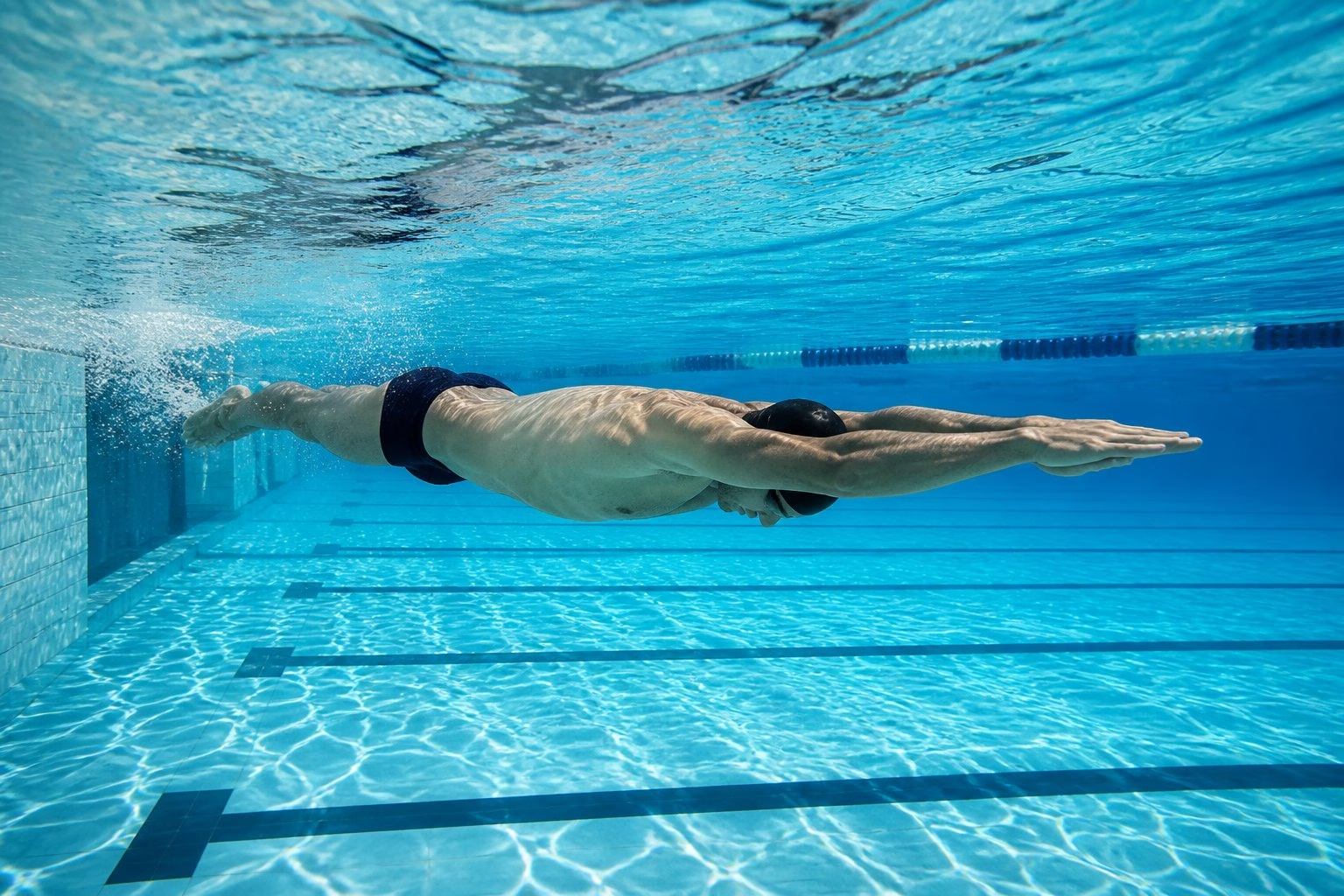
This drill teaches you how little effort it takes to move when your body stops fighting the water.
Setup: Stand in the shallow end, facing down the lane. No kit needed.
Steps:
- Stack one hand over the other, thumb locking the top hand in place.
- Squeeze your arms behind your ears and press your head into your arms.
- Push off the wall or floor, hold everything still, and glide until you slow to a stop.
- Note where you stopped. Repeat six times and try to beat that mark.
Common mistakes: Lifting the head, which drops the hips and doubles your drag. Arms drifting apart. Kicking too early, which hides the glide you are meant to feel.
Who should use it: Everyone, from first-timers to club swimmers. It is also the foundation for every push-off and turn, so it pays back on tumble turns too.
Aim for 5 to 7 metres off a gentle push. Getting there is usually about the head, not strength.
2) 6-1-6 Drill for Body Position
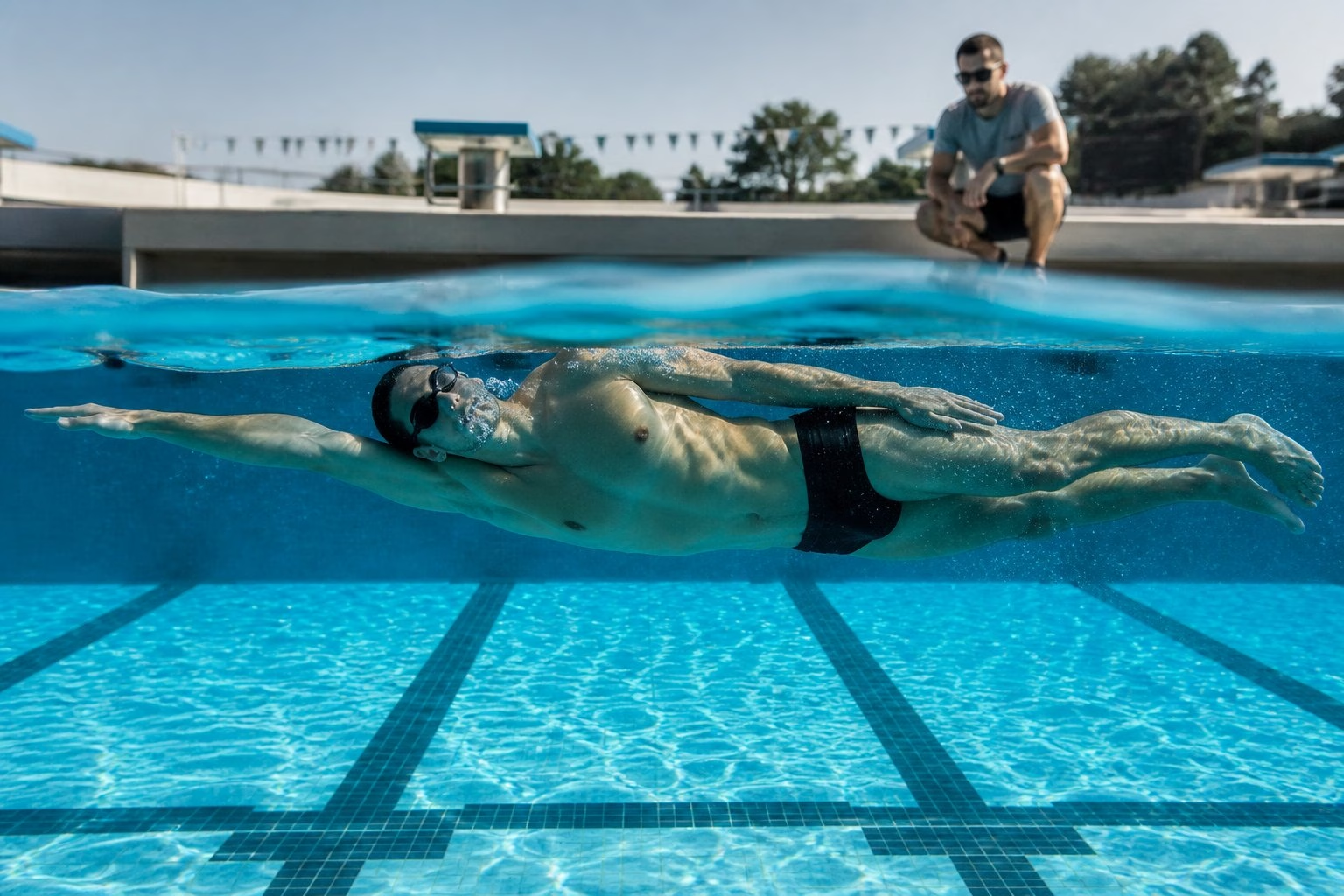
The 6-1-6 drill trains the rotation that makes front crawl feel long and easy instead of flat and splashy.
Setup: One length at a time, fins optional. Start on your left side, lower arm stretched ahead, top arm resting on your hip.
Steps:
- Kick six times on your left side, one ear in the water, eyes looking at the pool wall beside you.
- Take one full freestyle stroke with the leading arm.
- Arrive on your right side and kick six more times.
- Repeat down the length, counting out loud in your head to keep the rhythm honest.
Common mistakes: Rolling the whole body flat rather than balancing on one shoulder. Dropping the lead arm below the waterline. Rushing the single stroke so you never settle on the new side.
Who should use it: Swimmers who feel like they sink from the hips down, and anyone told they “swim flat”. Skip it for now if you cannot yet breathe comfortably on both sides.
3) Side-Kick Drill for Body Position
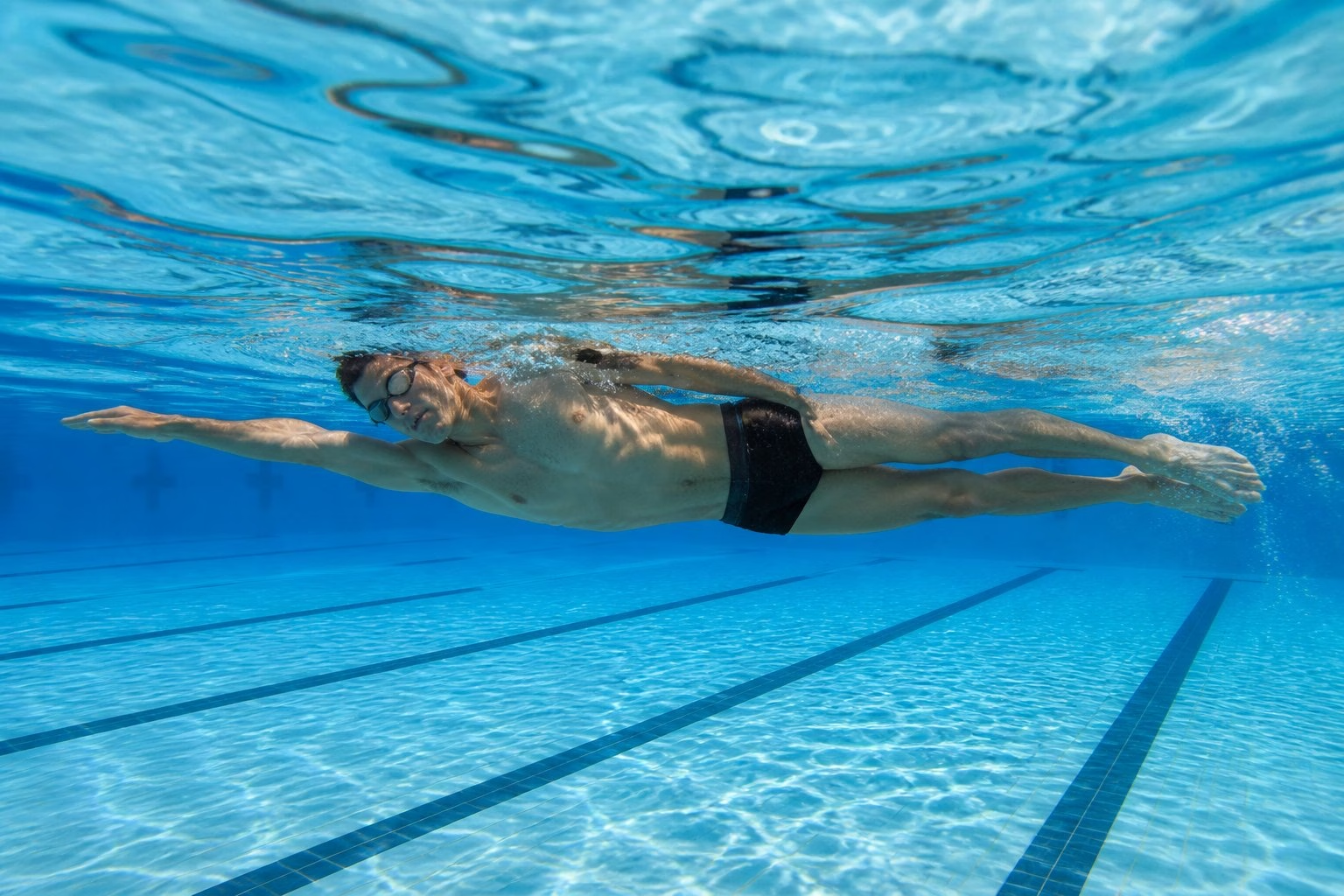
Side-kick holds you in the rotated position long enough for your core to learn it.
Setup: Push off on your right side, right arm extended, left arm flat along your side. No board.
Steps:
- Kick a full length on the right side, keeping your hips and shoulders stacked in a vertical line.
- Breathe by rolling your face a few centimetres up, then returning it to the water.
- Swim the next length on the left side.
- Build to 4 x 50m, alternating sides each length.
Common mistakes: Twisting at the waist instead of rotating as one unit. Looking forward, which folds the body. Letting the top shoulder fall back towards the water.
Who should use it: Anyone whose 6-1-6 feels wobbly, and backstrokers, since the same stacked position drives backstroke technique. Side-lying work builds the oblique strength that keeps rotation coming from the trunk, as this breakdown of core-focused side kicking explains.
4) Front Scull Drill for a Better Catch
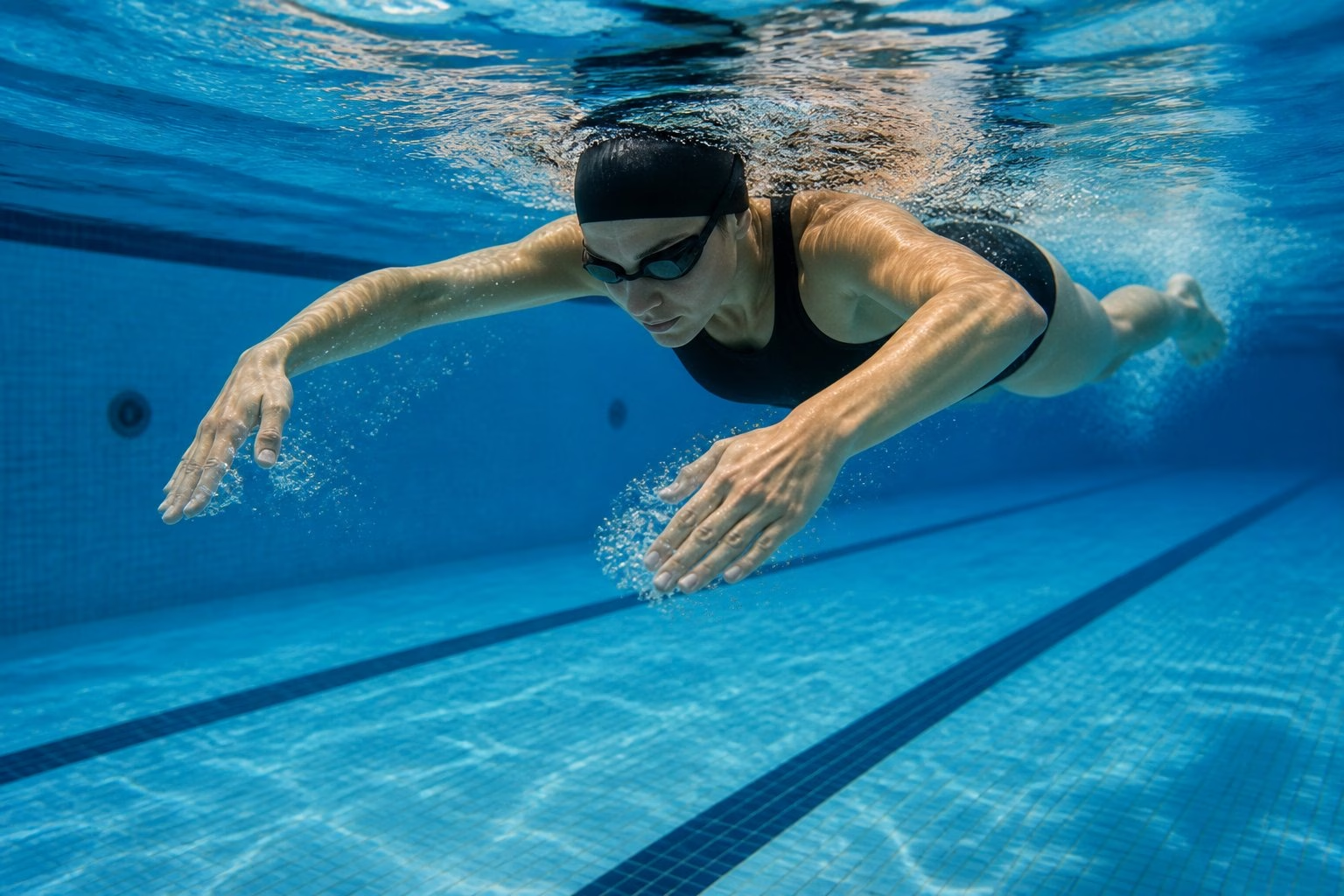
Sculling teaches your hands to press water backwards instead of slicing through it.
Setup: Pull buoy between your thighs, face in the water, arms extended in front at about 20cm depth. Snorkel helps if you have one.
Steps:
- Keep elbows high and still.
- Sweep your hands out and in, palms angled so you always feel pressure on the palm side.
- Move forward slowly. Speed is not the point.
- Do 6 x 25m, resting 15 seconds.
Common mistakes: Bending at the elbow and turning it into a small pull. Flat, loose hands with no angle. Holding your breath and tensing the shoulders.
Who should use it: Swimmers whose arms feel like they slip at the front of the stroke. It is the best starting point before any high-elbow catch work.
You should feel forearm burn, not shoulder strain. If the shoulders complain, your elbows have dropped.
5) Fist Drill for Feel of the Water
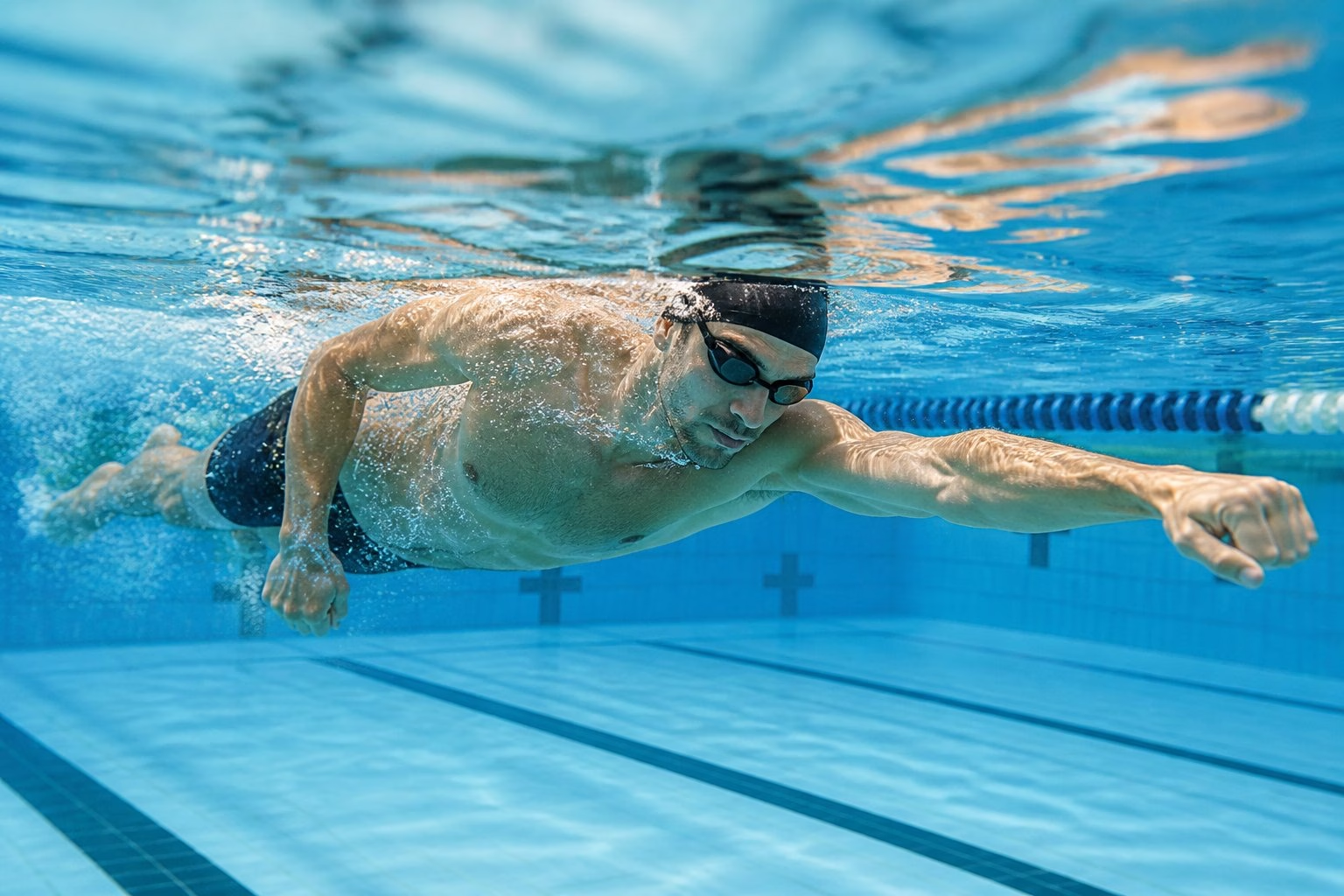
Closing your fists removes your paddles, so your forearm has to do the gripping.
Setup: Normal freestyle, hands clenched. Pull buoy optional.
Steps:
- Swim 25m with both fists closed, holding your usual stroke rate.
- Open your hands and swim 25m normally.
- Notice how much bigger the water feels against your palms.
- Repeat 4 to 6 times.
Common mistakes: Dropping the elbow to compensate, which is the opposite of what you want. Letting stroke rate collapse. Fists so tight that the forearms cramp.
Who should use it: Swimmers who pull with straight arms or wide elbows. The reduced hand surface encourages a high elbow position naturally, one reason fist swimming is popular for building catch strength.
Do this one at the start of a set, while your feel for the water is still sharp.
6) Single-Arm Freestyle Drill for Catch Mechanics
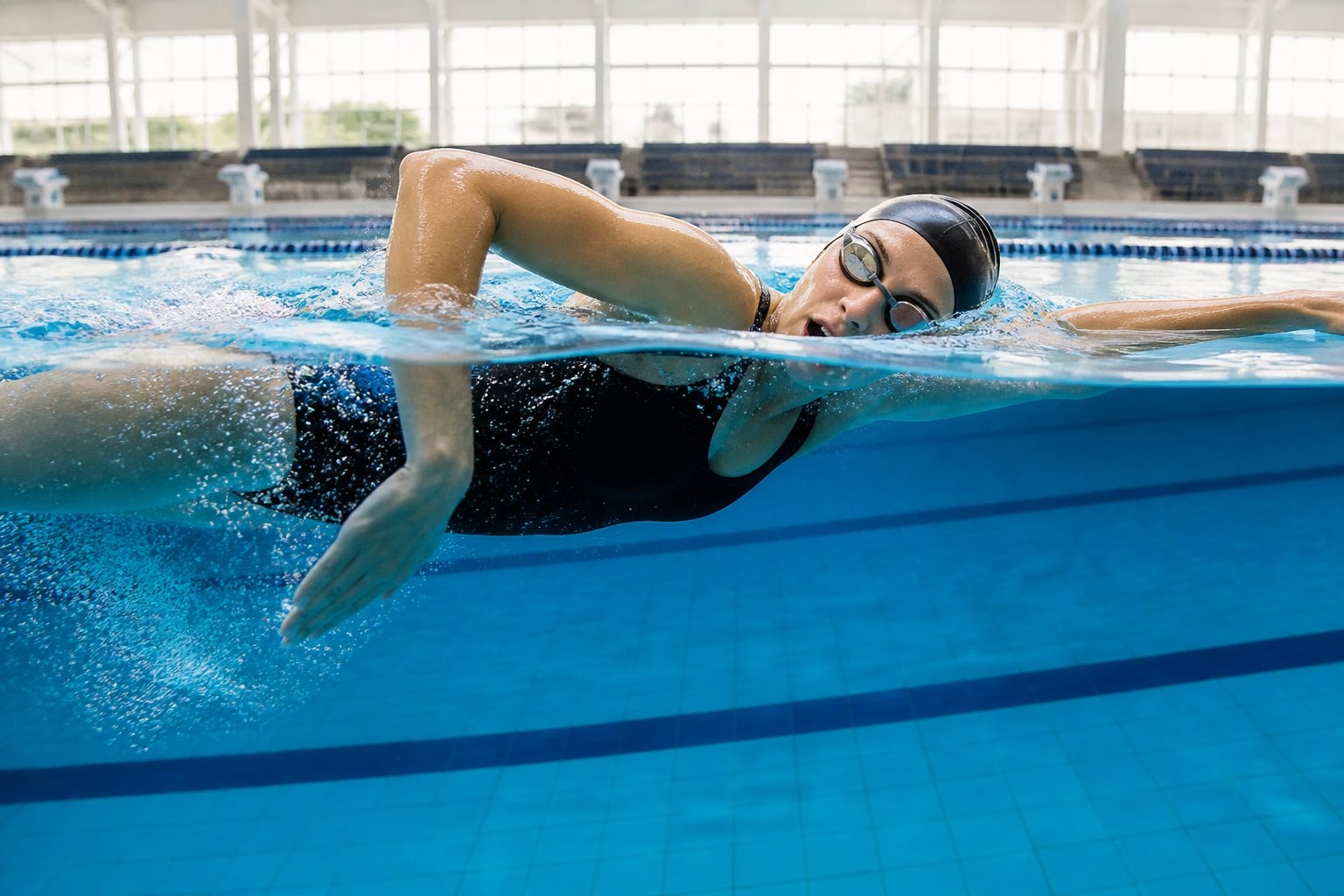
Isolating one arm shows you exactly what each side is doing wrong.
Setup: Fins on, one arm stretched in front, the other doing the work. Breathe to the side of the working arm.
Steps:
- Swim 25m using only your right arm, left arm held forward.
- Set the catch deliberately: fingertips down, elbow high, then press straight back to the hip.
- Swim the next 25m with the left arm.
- Finish with 25m full stroke, keeping that same catch shape.
Common mistakes: The resting arm sinking or wandering. Pulling with a straight arm to get more power. Breathing so late that the body flattens.
Who should use it: Anyone with a clear strong and weak side, or swimmers fixing a crossover entry. It also builds bilateral breathing confidence, which pairs well with the tips in this guide to front crawl breathing technique.
7) Bobbing Drill for Breathing Control
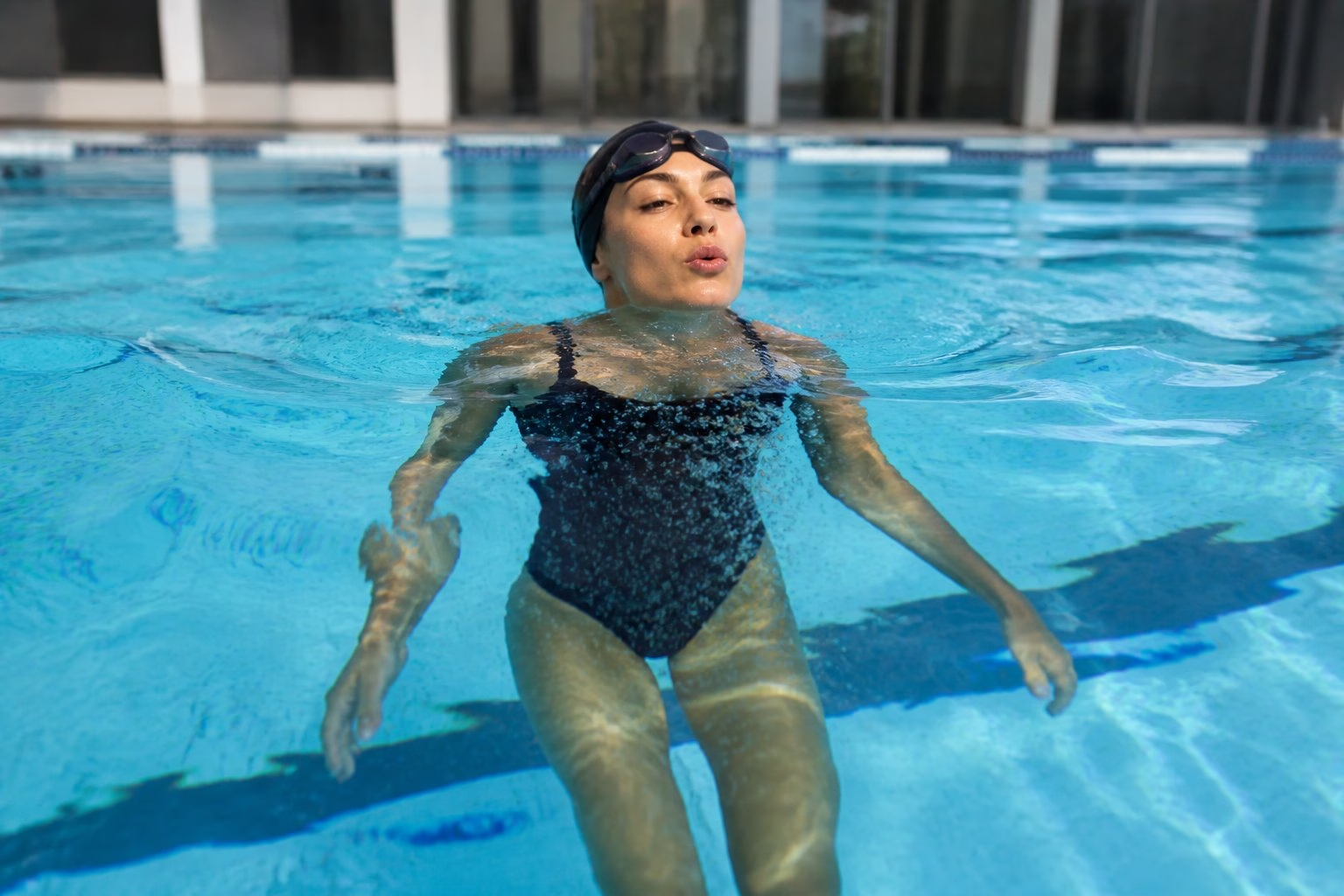
Bobbing fixes panicked breathing by teaching you to empty your lungs fully underwater.
Setup: Shallow end, feet on the bottom, hands on the pool edge or free.
Steps:
- Sink until your shoulders are under, then breathe out through mouth and nose.
- Push off the bottom, break the surface, and take a quick breath in.
- Sink straight back down and blow out again.
- Do 3 sets of 15 bobs, resting 30 seconds.
Common mistakes: Holding air in, which leaves no room for the next breath. Gasping a huge breath instead of a quick one. Wiping the face, which wastes time.
Who should use it: New swimmers, nervous swimmers, and anyone who runs out of air by the second length. It is a staple in adult swimming lessons for good reason.
Long exhale, short inhale. That ratio is the whole drill.
8) Bubble-Bubble-Breathe Drill for Freestyle Breathing
This drill moves bobbing into your actual stroke, so breathing stops interrupting your rhythm.
Setup: Kickboard held at arm’s length, or full freestyle if you are confident.
Steps:
- Face in the water, blow out a steady stream of bubbles for two counts.
- On the third count, roll your head to the side and breathe in.
- Return your face down immediately and start blowing again.
- Swim 4 x 50m keeping the pattern unbroken.
Common mistakes: Lifting the head instead of rotating it. One goggle should stay in the water. Holding the breath in for one count then rushing the exhale.
Who should use it: Swimmers who breathe every two strokes and still feel breathless. Once it clicks, experiment with longer patterns such as the 3-5-7 breathing pattern.
9) Flutter Kick Drill for Kick Efficiency
Flutter kick on a board exposes how much of your kick is drag and how much is drive.
Setup: Kickboard held with straight arms, head down between reps to keep hips high.
Steps:
- Kick 25m with a small, fast action from the hips, ankles loose and toes pointed.
- Count how many kicks per length.
- Kick the next 25m with the board under your chest and face in the water.
- Build to 8 x 25m with 15 seconds rest.
Common mistakes: Bending the knees like cycling. Stiff ankles, which stop the foot from acting as a fin. Kicking so wide the feet break the surface with a splash.
Who should use it: Swimmers whose legs sink, triathletes coming from running, and anyone with tight ankles. Ankle mobility work from a dryland training routine makes a noticeable difference within a few weeks.
Keep the kick inside the width of your body. Anything wider costs you speed.
10) Vertical Kick Drill for Kick Technique
Kicking upright removes the board and forces your legs to produce real propulsion.
Setup: Deep water, arms crossed over your chest, body vertical. Fins optional at first.
Steps:
- Flutter kick hard enough to keep your chin at the surface.
- Hold 20 seconds, then rest 20 seconds at the wall.
- Progress to arms raised out of the water for 6 x 20 seconds.
- Add a quarter turn every five kicks to challenge your balance.
Common mistakes: Sculling with the hands to cheat. Leaning back so the kick becomes a bicycle. Tucking the chin, which sinks the hips.
Who should use it: Confident swimmers and anyone who can tread water comfortably. It is demanding, so 4 minutes of total work is plenty in one session.
11) Catch-Up Drill for Stroke Timing
Catch-up slows your stroke until timing faults become obvious.
Setup: Full freestyle, no kit. Some swimmers pass a small kickboard between hands to enforce the touch.
Steps:
- Extend both arms in front, hands almost touching.
- Pull with one arm through to the hip and recover it all the way forward.
- Touch the waiting hand before the other arm starts.
- Swim 4 x 50m, then 50m normal stroke to feel the difference.
Common mistakes: Letting the front arm sink while you wait. Pausing so long the body stalls and the hips drop. Turning the touch into a slap.
Who should use it: Swimmers who rush the front of the stroke or cross the centre line on entry. The forward-extended arm lifts the body and cuts drag, one of the reasons coaches use catch-up for rhythm and balance.
Use a shortened version, touching thumb to the opposite wrist, once you have the feel.
12) Three-Stroke-and-Glide Drill for Rhythm
This drill stitches body position, catch, and timing into one continuous feel.
Setup: Full freestyle, no kit, 50m repeats.
Steps:
- Take three strong strokes with your normal breathing.
- Stop with one arm forward and glide in the side-lying position for two seconds.
- Kick gently through the glide, then start the next three strokes.
- Swim 6 x 50m, then finish with 200m steady swimming.
Common mistakes: Gliding until you stall, which teaches deceleration. Holding the breath through the glide. Letting the three strokes get lazy because the glide is coming.
Who should use it: Intermediate swimmers working on stroke count and distance per stroke. It is a good final drill in a session, since it sends you into your main set with rhythm already dialled in.
Count strokes per length before and after. Dropping one or two is a real gain.
How to Use Swimming Drills in a Session
Drills work when they sit inside a normal swim, not when they replace it. Slot them after your warm-up while you are fresh but loose, and always follow drill work with whole-stroke swimming at a decent effort so the new movement gets tested at speed.
A simple structure that works for most pool sessions:
| Part of session | Distance | What to do |
|---|---|---|
| Warm-up | 200 to 400m | Easy swim, kick, and one streamline glide set |
| Drill block | 200 to 600m | One or two drills from a single skill group |
| Main set | 800 to 1,500m | Whole stroke, with the drill cue in mind |
| Cool-down | 100 to 200m | Easy swimming, relaxed breathing |
Pick one skill group per session. Chasing body position, catch, and breathing in the same 45 minutes leaves you with no clear cue to hold on to. If you want a full weekly plan, the training programme for intermediate swimmers shows how drill blocks rotate across the four strokes.
How Much of a Swim Session Should Be Drills?
Around 15 to 25 per cent of your total distance is a sensible drill share for most swimmers. In a 2,000m session that is 300 to 500m, which is enough to change a habit without wrecking your fitness work. Beginners can push towards 40 per cent, because skill is the limiting factor rather than aerobic capacity.
How Many Repeats Should You Do Before Returning to Full Stroke?
Four to six repeats of 25m or 50m, then a length of normal swimming. Long unbroken drill sets feel productive and rarely transfer, because the brain needs the comparison between drill and stroke to make the link. A clean pattern is 3 x (2 x 50m drill + 50m swim).
How Can You Tell Whether a Drill Is Improving Your Technique?
Count strokes per 25m and time a 100m at a fixed effort, then repeat the same test every two to three weeks. A drill is working when your stroke count drops while your time stays level or improves. Video from the poolside is the other honest check, since most faults feel fine from the inside.
Frequently Asked Questions
What are the best swimming drills for beginners?
Start with the streamline glide, bobbing, and flutter kick on a board. These three build the position, breathing, and leg drive that every other drill depends on, and they can all be done in shallow water. Add side-kick once you can hold a stable glide for 5 metres.
What is the 6-1-6 swim drill and how do you perform it?
The 6-1-6 drill means six kicks on one side, one freestyle stroke, then six kicks on the other side. You stay balanced on one shoulder with the lead arm extended and the top arm on your hip, using the single stroke to rotate across. Use fins at first if your legs sink during the six-kick hold.
How often should I include swimming drills in my training?
Include some drill work in every session, with a longer dedicated block in two of your weekly swims. Short, frequent doses beat one long drill session because skill fades quickly without repetition. Ten minutes of focused drilling, three times a week, changes a stroke within a month.
Which swimming drills help improve freestyle speed?
Front scull, fist drill, and vertical kick give the biggest speed return for freestyle. The first two sharpen your catch so each stroke moves more water, while vertical kick raises the leg drive you need over shorter distances. Pair them with the pacing work in this guide to getting quicker at your 50m freestyle.
Why does the catch-up drill make my freestyle feel slower?
Catch-up feels slower because the pause between strokes removes the overlap that keeps you moving. That is the point: the drill trades speed for time to feel your entry, extension, and rotation. Swim 50m of normal freestyle straight after and the timing should carry over without the dead spot.