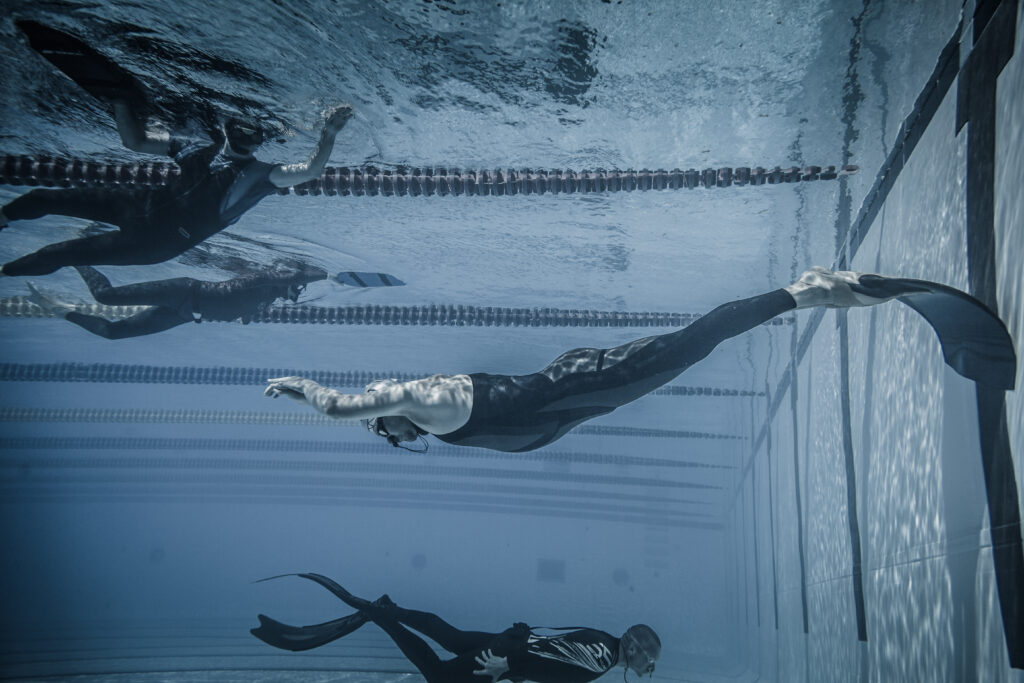
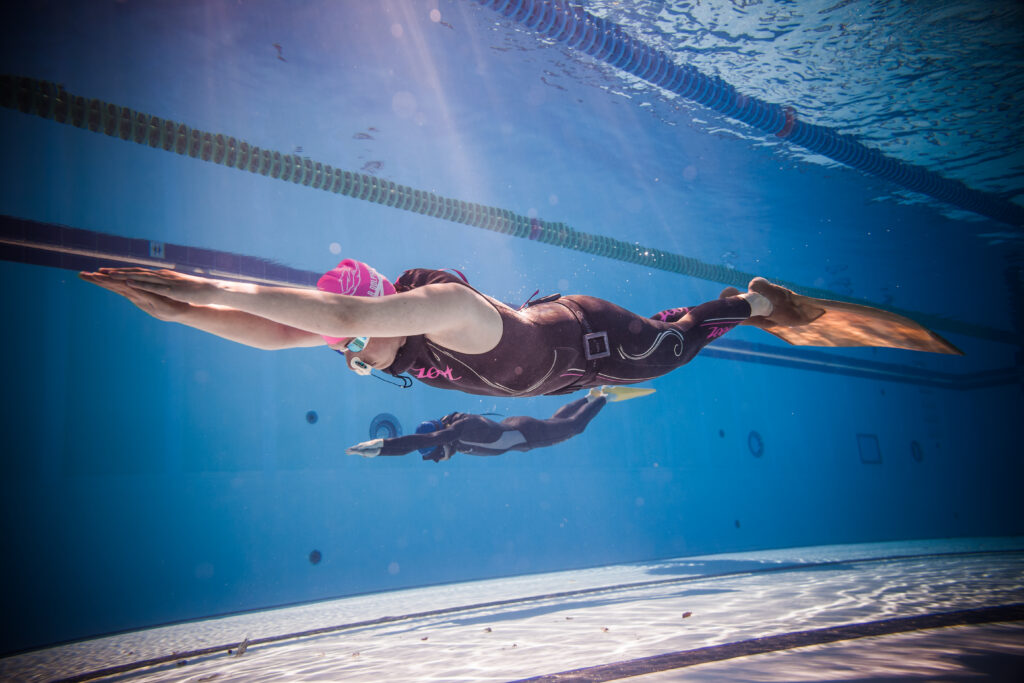
Swimming with fins transforms regular pool workouts into powerful muscle-building and speed-enhancing sessions. Many swimmers wonder if those rubber extensions on their feet actually deliver real results beyond just making them feel faster in the water.
Swimming with fins builds muscle by adding resistance to leg movements, particularly strengthening the hamstrings, glutes, calves, and lower back muscles while simultaneously improving swimming speed through enhanced propulsion and better body positioning. The fins add resistance to the up-kick motion, which targets muscle groups that regular swimming often misses.
Beyond the obvious speed boost, fins offer multiple training benefits that extend far beyond simple propulsion. They help swimmers develop proper technique, increase ankle flexibility, and provide targeted strength training while reducing strain on the upper body. Understanding how to choose the right fins and incorporate them into training routines can unlock significant improvements in both power and swimming performance.
How Swimming With Fins Builds Muscle and Boosts Speed
Swimming with fins creates added water resistance that forces muscles to work harder while providing extra propulsion for increased speed. This combination targets leg muscles, engages the core, and improves heart health through intense cardiovascular training.
Role of Resistance and Propulsion
Fins add significant resistance to every kick stroke in the water. This resistance makes leg muscles work much harder than normal swimming.
The extra effort needed to move fins through water builds strength in major leg muscles. Swimmers must push against more water with each kick.
At the same time, fins provide powerful propulsion forward. This lets swimmers move faster through the water with less effort from their arms.
The combination creates a unique training effect. Muscles work harder while the body moves faster through the pool.
Key resistance benefits:
- Forces legs to push against more water
- Makes every kick stroke more challenging
- Creates strength-building workout for lower body
- Improves kick power and technique

Impact on Leg Strength and Core Muscles
Swimming with fins targets specific leg muscles including quadriceps, hamstrings, glutes, and calves. The resistance makes these muscles contract harder with each kick.
The quadriceps work during the downward kick motion. Hamstrings and glutes activate during the upward kick phase.
Core muscles also engage more when using fins. The body needs extra stability to control the increased power and speed.
Primary muscles worked:
- Quadriceps – front thigh muscles
- Hamstrings – back thigh muscles
- Glutes – buttock muscles
- Calves – lower leg muscles
- Core – abdominal and back muscles
Ankle flexibility improves as fins require greater range of motion. This leads to stronger, more flexible kicks over time.
Enhancing Cardiovascular Endurance
Fins allow swimmers to maintain longer training sessions without getting tired as quickly. The extra speed means covering more distance in the same time.
Heart rate increases due to the added muscle work required. This creates excellent cardiovascular training benefits.
Swimming with fins promotes muscle endurance through sustained activity. Swimmers can train at higher intensities for longer periods.
The combination of muscle work and propulsion creates intense full-body exercise. Blood circulation improves as the heart pumps harder to supply working muscles.
Regular fin training builds both speed and stamina together. Swimmers develop the ability to maintain faster paces for extended periods.
Effect on Swimming Technique and Form
Swimming fins create significant changes in how swimmers move through water by adding propulsion and resistance. They help swimmers develop better kick mechanics, maintain proper body alignment, and create more efficient stroke patterns.
Improving Kick Technique and Mechanics
Swimming with fins enhances kick technique by providing additional resistance that forces leg muscles to work harder. The increased surface area of fins requires swimmers to use proper kicking form to generate effective propulsion.
Fins help swimmers feel the correct up-kick motion that engages hamstrings, glutes, and lower back muscles. This creates better muscle memory for proper kicking technique.
The resistance from fins slows down the kick cycle. This gives swimmers more time to focus on proper ankle flexibility and leg positioning during each kick.
Key kick improvements with fins:
- Stronger up-kick motion
- Better ankle flexibility
- More controlled kick timing
- Increased leg muscle engagement
Swimmers develop a more balanced kick pattern when using fins. The equipment prevents the common mistake of kicking too quickly with shallow movements.

Enhancing Body Position
Fins provide extra lift and forward momentum that helps swimmers maintain better horizontal body position in the water. The additional propulsion from fins reduces the tendency to sink or drag through the water.
Swimmers experience improved body alignment because fins generate enough forward speed to keep hips and legs closer to the surface. This creates the proper streamlined position needed for efficient swimming.
The extra propulsion allows swimmers to focus on keeping their head in neutral position. They don’t need to lift their head as much to breathe because their body stays higher in the water.
Body position benefits:
- Higher hip position
- Better horizontal alignment
- Reduced drag
- Improved streamlining
Core muscles engage more effectively when swimmers maintain proper body position with fins. This creates better stability and control throughout each stroke cycle.
Developing Efficient Stroke Patterns
Fins affect stroke technique by allowing swimmers to maintain higher speeds while focusing on arm movement efficiency. The extra leg propulsion gives swimmers more time to concentrate on proper hand entry and catch phases.
Swimmers can practice longer stroke distances with fins because they maintain speed more easily. This helps develop the muscle memory needed for efficient pulling patterns.
The increased speed from fins helps swimmers feel proper body rotation timing. They learn to coordinate their stroke with their kick more effectively.
Stroke pattern improvements:
- Better hand entry technique
- Improved catch phase timing
- Enhanced body rotation
- Longer stroke distance
Fins allow swimmers to practice advanced stroke techniques at higher speeds. This creates better coordination between arm movements and overall body position throughout the stroke cycle.
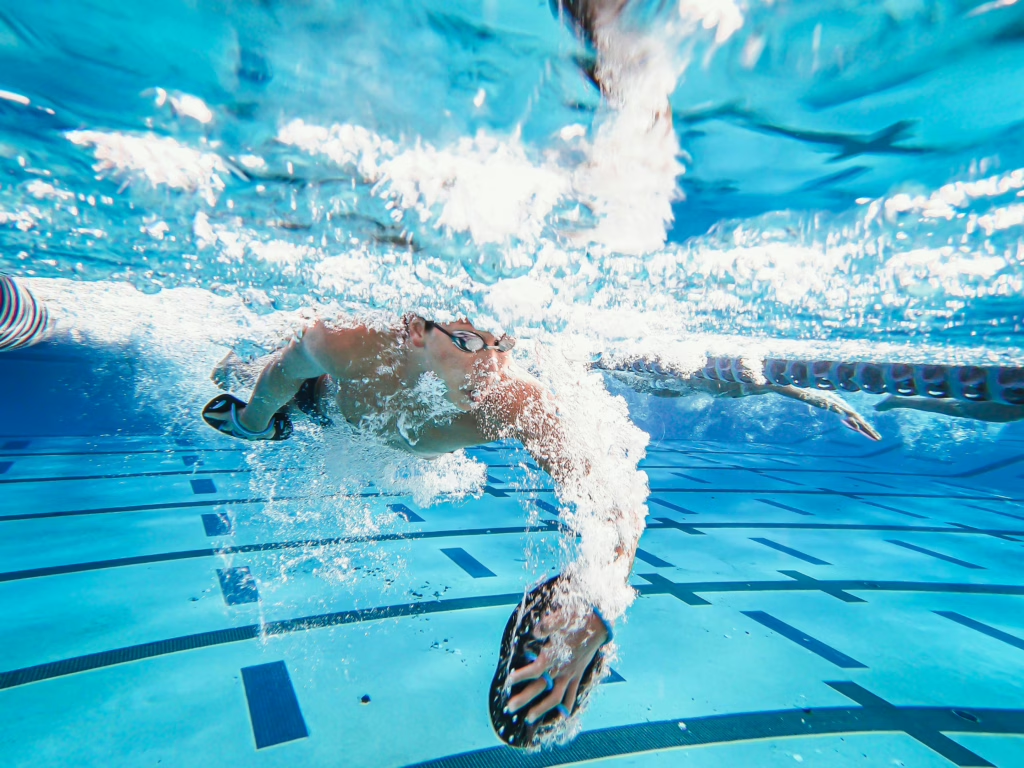
Types of Swimming Fins and Their Benefits
Different fin designs serve specific training purposes and swimming goals. Short fins favor quick bursts of speed while long fins enhance muscle development and natural kick movement patterns.
Short Fins for Technique and Speed
Short fins work best for swimmers who want to improve their kick technique without changing their natural stroke rhythm. These fins typically measure 6-12 inches in length.
They allow for faster kick rates that match normal swimming patterns. Swimmers can practice proper body position while maintaining their usual stroke tempo.
Short fins are ideal for sprinting or practicing stroke techniques because they provide moderate propulsion. The design helps swimmers focus on quick, efficient kicks rather than power.
Key benefits include:
- Improved ankle flexibility
- Better kick timing
- Enhanced body position
- Faster turnover rates
Sprint swimmers often prefer short fins during technique work. They provide enough resistance to strengthen leg muscles without overwhelming the natural kick pattern.
Long Fins for Endurance and Strength
Long fins measure 12-20 inches and create more surface area for propulsion. They enhance muscle development and promote natural kick movement during distance training.
These fins force swimmers to use slower, more powerful kicks. The increased resistance targets the quadriceps, hamstrings, and calf muscles more intensely.
Distance swimmers benefit most from long fin training. The fins help maintain proper body line while building leg strength and endurance.
Training advantages:
- Muscle strength: Greater resistance builds power in leg muscles
- Body position: Higher propulsion keeps swimmers on top of the water
- Endurance: Longer training sessions become possible
- Kick efficiency: Develops stronger, more controlled kicks
Long fins also improve cardiovascular fitness through sustained swimming efforts. The added resistance challenges both muscles and heart rate.
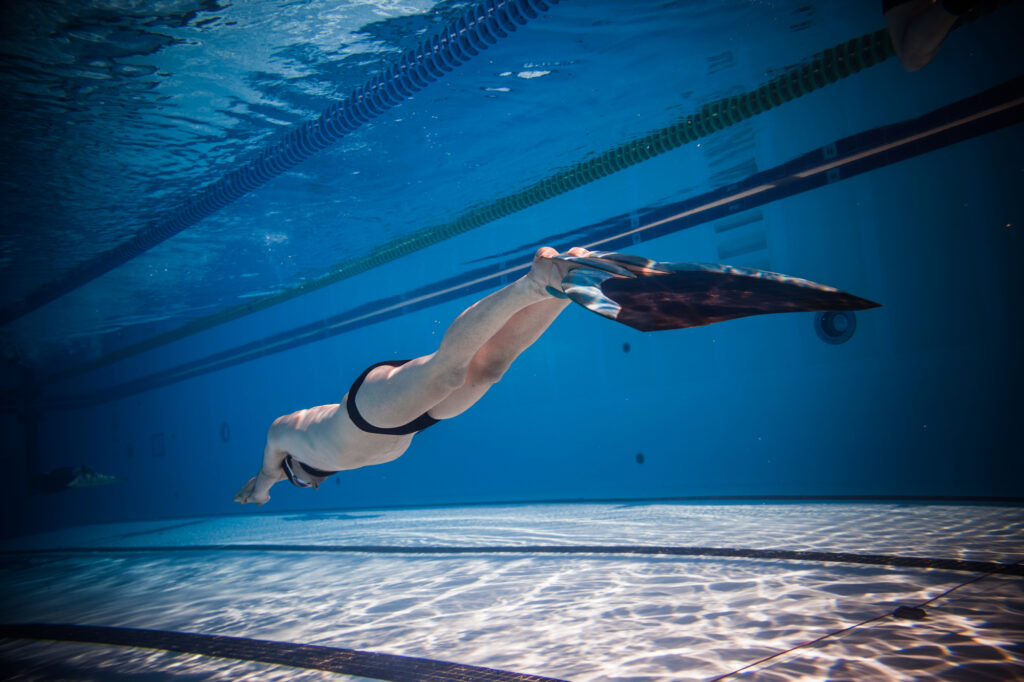
Monofins and Specialty Fins
Monofins combine both feet into one large fin surface. They create a dolphin-like swimming motion that engages the entire body.
These specialty fins develop core strength and undulating body movement. Swimmers must coordinate their whole body to generate propulsion effectively.
Monofin benefits:
- Full-body muscle engagement
- Core strength development
- Improved body wave technique
- Enhanced flexibility
Other specialty fins include training fins with specific resistance levels. Some feature drainage holes or adjustable blade angles for customized workouts.
Training fins often have unique designs for specific skill development. They may include resistance chambers or modified blade shapes to target particular muscle groups or movement patterns.
Training Methods: Incorporating Fins for Maximum Results
The most effective fin training combines targeted sprint intervals, technique-focused drills, and kickboard exercises to maximize muscle development and speed gains. Strategic workout design allows swimmers to build leg strength while improving body position and stroke mechanics.
Sprint Sets and Interval Workouts
Sprint training with fins creates the ideal environment for building explosive leg power and cardiovascular endurance. The added resistance from fins forces muscles to work harder during each kick cycle.
High-Intensity Interval Structure:
- 4 x 50m freestyle sprints with fins (30 seconds rest)
- 6 x 25m maximum effort kicks (45 seconds recovery)
- 200m steady pace with fins (easy recovery)
Sprint sets should focus on maintaining proper kick technique even at high speeds. Swimmers generate more power when they kick from the hips rather than bending at the knees.
Swimming with fins during workouts builds strength in legs and increases cardiovascular endurance. The resistance created during the up-kick motion specifically targets hamstrings, glutes, and lower back muscles.
Recovery periods between intervals allow muscles to partially recover while maintaining elevated heart rate. This pattern builds both anaerobic power and aerobic capacity simultaneously.

Drills for Technique Improvement
Fins make technical drills more effective by allowing swimmers to focus on form without struggling to maintain body position. The extra propulsion helps maintain speed during stroke breakdowns.
Essential Fin Drills:
- Single-arm freestyle (25m each arm)
- Catch-up drill with extended glide
- Body rotation emphasis strokes
- Vertical kicking for core strength
Swimming drills with fins help maintain stroke and body position with less effort from arms and legs. This allows swimmers to slow down their stroke and focus more on technique improvements.
The increased ankle flexibility developed through fin training translates directly to improved kick efficiency without fins. Swimmers can practice maintaining higher leg position in the water.
Drill sessions should emphasize quality over quantity. Three perfect repetitions teach better muscle memory than ten sloppy attempts.
Combining Fins with Kickboards
Kickboard training with fins isolates leg muscles and builds targeted strength in the lower body. This combination allows swimmers to focus entirely on kick mechanics and power development.
Kickboard Progression Workout:
- 200m easy kick (establish rhythm)
- 4 x 50m moderate intensity (20 seconds rest)
- 4 x 25m strong kick (15 seconds rest)
- 100m cool-down kick
When kicking with a kickboard and fins, swimmers should hold the board at the edge with arms extended. The head stays down in water with a long neck position for proper alignment.
Fins should stay mostly underwater during kickboard sets for maximum propulsion. Breaking the surface reduces effectiveness and can cause splashing that disrupts rhythm.
The isolated leg work builds endurance in hip flexors and strengthens the entire kinetic chain from core to toes. This targeted approach develops kick power more efficiently than full-stroke swimming alone.
Improving Ankle Flexibility and Injury Prevention
Swimming with fins creates better ankle flexibility while reducing stress on shoulders and upper body joints. This dual benefit helps swimmers train longer with less risk of common swimming injuries.
Benefits for Ankle Mobility
Fins force swimmers to use a greater range of motion in their ankles during each kick. This extended movement gradually increases ankle flexibility over time.
Flexible ankles are crucial for swimmers because they allow a wider range of motion during kicking. Better ankle flexibility means less drag in the water.
The added surface area from fins makes swimmers work their ankles through fuller extension and flexion. Each kick cycle stretches the ankle joint more than swimming without fins.
Fins encourage greater ankle range of motion, helping develop the flexibility needed for an efficient flutter kick. This improved flexibility translates to smoother movement through the water.
Regular fin training helps swimmers develop the ankle mobility that elite swimmers naturally possess. The increased flexibility reduces awkward kicking patterns that create drag.
Reducing Upper Body Strain
Fins provide extra propulsion that takes pressure off shoulder joints during training. This allows swimmers to focus on technique without overworking their upper body.
Swimming with fins relieves stress on shoulder joints that most swimmers experience from repetitive stroke motions. The added leg power reduces the workload on arms and shoulders.
Swimmers can maintain higher speeds with less upper body effort when wearing fins. This helps prevent overuse injuries in the shoulders, which are common in swim training.
The reduced shoulder strain allows swimmers to train longer distances without fatigue. They can focus on perfecting their stroke technique instead of just trying to maintain speed.
Fins also help swimmers with shoulder injuries continue training their legs and cardiovascular system. The extra propulsion compensates for reduced arm power during recovery periods.
Choosing and Using Fins Effectively
The right fin type and proper fit directly impact training effectiveness and comfort. Safe training practices maximize muscle building and speed gains while preventing injury.
Selecting the Right Fin Type and Fit
Short fins work best for beginners and technique development. They provide moderate resistance without overwhelming leg muscles. These swimming fins allow swimmers to maintain proper kick frequency.
Long blade fins generate more power and speed. They suit advanced swimmers who want to build strength effectively but require good fitness levels to prevent fatigue.
Fit guidelines:
- Fins should feel snug but not tight
- No pressure points on toes or heels
- Slight wiggle room prevents blisters
- Heel should sit securely without slipping
Material matters for comfort and durability. Silicone offers flexibility and comfort. Rubber provides more structure and power transfer. Harder materials create more resistance for strength training.
Foot pocket design affects performance. Open-heel swim fins with straps adjust better to different foot shapes. Full-foot fins offer direct power transfer but require precise sizing.
Tips for Safe and Productive Fin Training
Start gradually with 10-15 minute sessions. Fins create extra stress on leg muscles and joints. Building up time slowly prevents overuse injuries and muscle strain.
Focus on technique before intensity. Proper kick mechanics matter more than power. Keep legs relatively straight with movement from hips. Avoid excessive knee bending.
Vary training types:
- Kick sets for pure leg strength
- Full stroke swimming for speed development
- Vertical kicking for core stability
Monitor fatigue levels closely. Cramping or excessive soreness signals overwork. Swimming with fins builds muscle most effectively with consistent moderate training rather than sporadic intense sessions.
Alternate fin and non-fin training. This prevents dependency and maintains natural swimming feel. Use fins for 30-50% of total training time for best results.
Frequently Asked Questions
Swimming with fins creates specific muscle adaptations and performance improvements that swimmers often have questions about. The equipment affects everything from kick technique to cardiovascular conditioning while targeting distinct muscle groups in the legs and core.
What are the benefits and drawbacks of using fins during swim workouts?
Swimming with fins builds strength in hamstrings, glutes, and lower back muscles through added resistance during the up-kick motion. The equipment also increases ankle flexibility and helps swimmers maintain better body position at the water surface.
Fins allow swimmers to give their upper body a rest while continuing to build fitness. This prevents overexertion in the shoulders, arms, chest, and back during training sessions.
The main drawback is potential over-reliance on fins for speed and technique. Swimmers may struggle to maintain proper form when they remove the fins.
Some swimmers also experience ankle or foot discomfort when first using fins. This usually improves as the muscles adapt to the new movement patterns.
What should beginners know before starting to swim with fins?
Beginners should start with shorter fins that provide moderate resistance rather than long, powerful fins. This allows the muscles to adapt gradually without causing strain or injury.
New swimmers with fins should kick from their hips rather than their knees to develop proper technique. The kick should remain narrow and consistent to reduce drag.
Beginners need to keep their fins mostly underwater for maximum propulsion. Breaking the surface creates splash without forward movement.
Starting with basic freestyle kicks using a kickboard helps beginners focus on leg movement. They can progress to full strokes once the kick motion feels natural.
Which muscle groups are primarily engaged when swimming with fins?
Swimming with fins targets quadriceps, hamstrings, glutes, and calves more intensely than regular swimming. The added resistance forces these muscles to work harder during each kick cycle.
The up-kick motion specifically engages hamstrings, glutes, and lower back muscles that are often underdeveloped in swimmers. This creates better muscle balance throughout the legs and core.
Hip flexors and core muscles also activate more when swimming with fins. These muscles help maintain proper body position and generate power from the hips.
The equipment conditions leg muscles in a different way than running or biking. This cross-training effect benefits overall athletic performance.
Can swimming with fins significantly improve my swim speed, and if so, how?
Swimming with fins makes swimmers faster both while wearing them and after removing them. The resistance training strengthens the muscles that generate propulsion during regular swimming.
Fins help swimmers train at faster speeds during workouts. This allows the nervous system to adapt to quicker stroke rates and improved timing.
The equipment improves ankle flexibility and kick efficiency. More flexible ankles create better propulsion during the kick phase of each stroke.
Fins also teach swimmers to kick more narrowly and consistently. This reduces drag and makes the overall stroke more streamlined.
In what ways can swimming with fins contribute to weight loss and overall fitness?
Swimming with fins increases cardiovascular endurance by allowing swimmers to maintain higher intensities for longer periods. This burns more calories during each workout session.
The added resistance creates a more challenging workout that elevates heart rate. Higher intensity exercise leads to increased calorie burn both during and after the workout.
Fins enable swimmers to work out longer without upper body fatigue. This extends workout duration and total energy expenditure.
The equipment also builds lean muscle mass in the legs. More muscle tissue increases resting metabolic rate, which burns more calories throughout the day.
What are the best techniques for swimming with fins to maximize muscle development and efficiency?
Swimmers should focus on kicking from the hips with straight legs and pointed toes. This engages the largest muscle groups and creates the most propulsion.
The kick should remain compact and controlled rather than wide or splashing. Narrow kicks reduce drag and target the muscles more effectively.
Swimmers can use fins during drill work to focus on technique while maintaining speed. This allows them to perfect stroke mechanics without slowing down.
Alternating between fin and non-fin swimming helps swimmers feel the difference in technique. This builds awareness of proper body position and kick timing.
Progressive training with gradually longer or stiffer fins increases strength over time. Swimmers should increase resistance only when they can maintain proper form.