
Every New Year’s Day across the United Kingdom, thousands of brave souls plunge into icy waters to mark the start of a fresh year. New Year’s Day sea swimming is a cherished British tradition that dates back nearly 140 years, with fisher folk of Broughty Ferry amongst the first communities to establish this invigorating custom. What began as small gatherings of hardy locals has transformed into massive community events that attract participants and spectators from across the nation.
The tradition has experienced remarkable growth in recent years, evolving from something reserved for the crazy or hardened lone sea swimmer into mainstream celebrations that draw thousands. Modern New Year’s Day swims combine charitable fundraising, fancy dress competitions, and community spirit, creating festive atmospheres that extend well beyond the brief moments spent in freezing waters.
From Scotland’s traditional “dooks” to Wales’ record-breaking events, these swims have become integral to British New Year celebrations. The Saundersfoot event has developed into the biggest festive dip in the UK, demonstrating how local traditions can grow into national phenomena that unite communities whilst supporting charitable causes and promoting the growing wild swimming movement.
Origins and History of New Year’s Day Sea Swimming
The tradition of New Year’s Day sea swimming in the UK has deep roots stretching back over a century. Some traditions date back nearly 140 years to fisher folk, whilst others emerged in the 1960s as organised charity events.
Evolution of the Tradition Across the UK
The earliest recorded New Year’s Day swimming tradition began with fisher folk in Broughty Ferry. These hardy locals took daily dips in the River Tay, but New Year’s Day saw the whole community heading for the sea.
This practice spread throughout coastal communities across Britain. What started as local customs gradually developed into organised events during the mid-20th century.
The modern format typically includes fancy dress, charitable fundraising, and proper safety supervision. Most events now charge entry fees or request sponsorship for local charities.
Regional Development Timeline:
- 1880s: Fisher folk traditions in Scotland
- 1960s: Saltburn-by-the-Sea organised swimming groups
- 1965: Porthcawl Christmas Day swim establishment
- 1980s-1990s: Rapid expansion across UK coastlines
Key Historical Events and Milestones
Several landmark events shaped the tradition into its current form. Porthcawl’s Christmas Day swim began in 1965 with just two participants, establishing one of the oldest organised festive dips.
Saundersfoot’s New Year’s Day swim started in 1984 with 10 swimmers. By 2024, this event attracted over 2,500 participants with 9,000 spectators.
The Pembrey Country Park Walrus Dip has run continuously since 1984. Organisers cancelled it only once when the sea froze completely.
Boxing Day swims gained popularity alongside New Year’s Day events. Tenby’s Boxing Day swim has operated for five decades, now attracting nearly 1,000 participants annually.
Links to Other Festive Swims
New Year’s Day swims form part of a broader festive swimming calendar. Christmas Day swims, Boxing Day dips, and New Year’s Day swims often occur in the same locations with similar organisations.
Many Christmas swims date back over half a century, establishing the foundation for New Year traditions. The same lifeguard teams, local clubs, and charity organisations typically manage multiple festive events.
Common Organisers Include:
- Local Lions Clubs
- RNLI stations
- Surf Life Saving Clubs
- Community groups
Most venues host multiple festive swims throughout the holiday period. Participants often attend several events, creating a dedicated community of cold-water swimming enthusiasts who maintain these long-standing traditions.
Most Iconic New Year’s Day Sea Swims in the UK
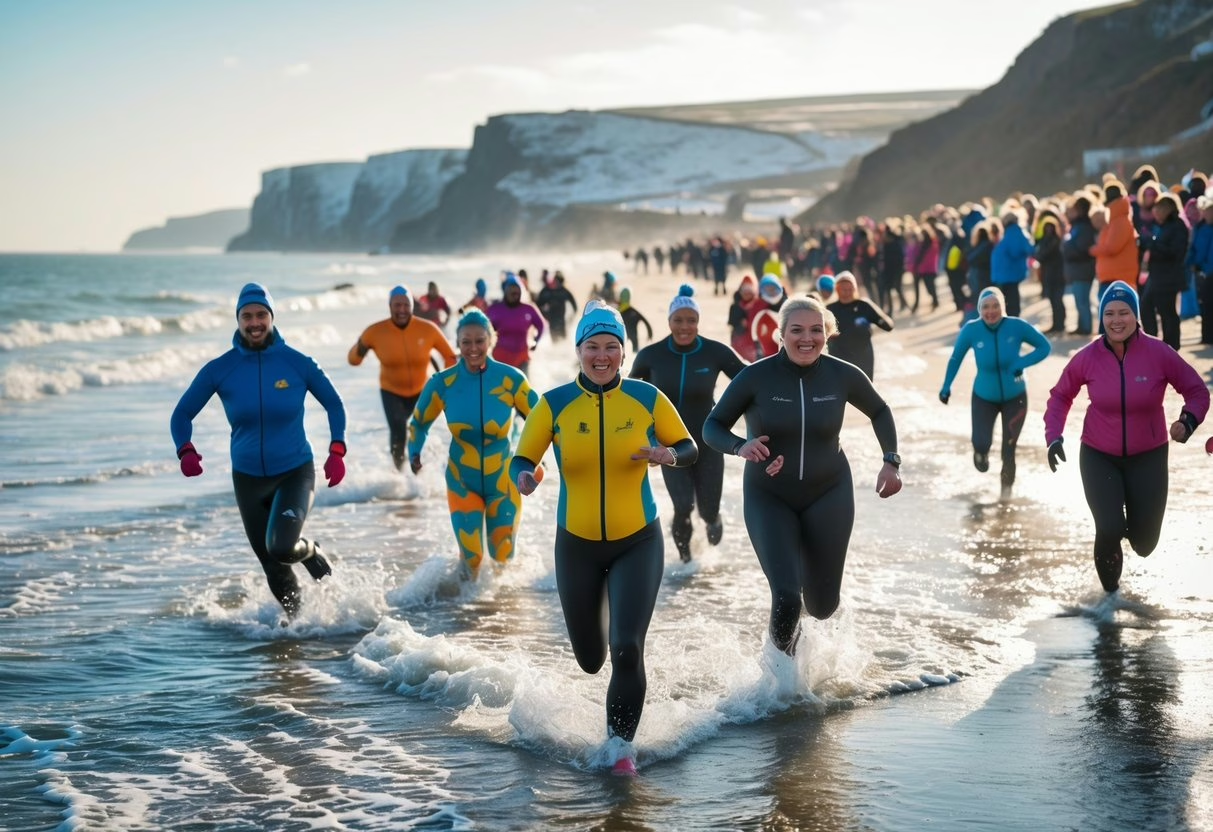
Several locations across Britain have become legendary for their New Year’s Day swimming traditions. The Saundersfoot New Year’s Day swim in Pembrokeshire and the Lyme Lunge at Lyme Regis stand out as particularly celebrated events that draw hundreds of participants annually.
Saundersfoot New Year’s Day Swim
The Saundersfoot New Year’s Day swim takes place at 12:30pm on the picturesque Saundersfoot beach in Pembrokeshire. This charity event has become one of Wales’ most popular New Year traditions.
Participants pay £5 to join the festivities. The event features prizes for fancy dress, encouraging swimmers to don creative costumes before plunging into the Welsh waters.
Saundersfoot beach provides an ideal setting with its sandy shoreline and relatively sheltered bay. The location makes it accessible for families and spectators who come to watch the brave swimmers.
The event serves as an excellent way to raise funds for local charities whilst providing a memorable start to the new year. Many participants describe it as a refreshing way to wash away the previous year’s troubles.
Lyme Lunge at Lyme Regis
The Lyme New Year’s Day Lunge takes place at 1pm along the famous Jurassic Coast in Dorset. This fancy dress fundraiser is organised by the local Rotary Club and has gained popularity over recent years.
Lyme Regis provides a stunning backdrop with its historic Cobb harbour and fossil-rich coastline. The town’s maritime heritage adds to the authenticity of the swimming tradition.
Participants are encouraged to wear costumes, creating a colourful spectacle along the beach. The Rotary Club’s involvement ensures the event is well-organised and supports worthy causes.
The afternoon timing allows participants to recover from New Year’s Eve celebrations whilst still providing an invigorating start to January. The event combines community spirit with charitable fundraising in a quintessentially British seaside setting.
Notable New Year’s Dips Nationwide
The Porty Dook in Lothian takes place at 1pm and represents one of Scotland’s most challenging New Year swims. This hardcore dook occurs in the North Sea off the Edinburgh coast, attracting only the most determined swimmers.
Scotland also hosts the Broughty Ferry Harbour swim in Dundee at 2:30pm. This event carries particular historical significance as it stems from a tradition dating back to the fisher folk nearly 140 years ago.
Devon contributes the Hele Bay Merbabes New Year’s Swim at 10am near Ilfracombe. This RNLI fundraiser combines the thrill of cold water swimming with support for the lifesaving charity.
Popular timing patterns show most events occur between 10am and 2:30pm, allowing participants to recover from celebrations whilst maintaining energy for the challenge ahead.
Other Major Festive Sea Swimming Events
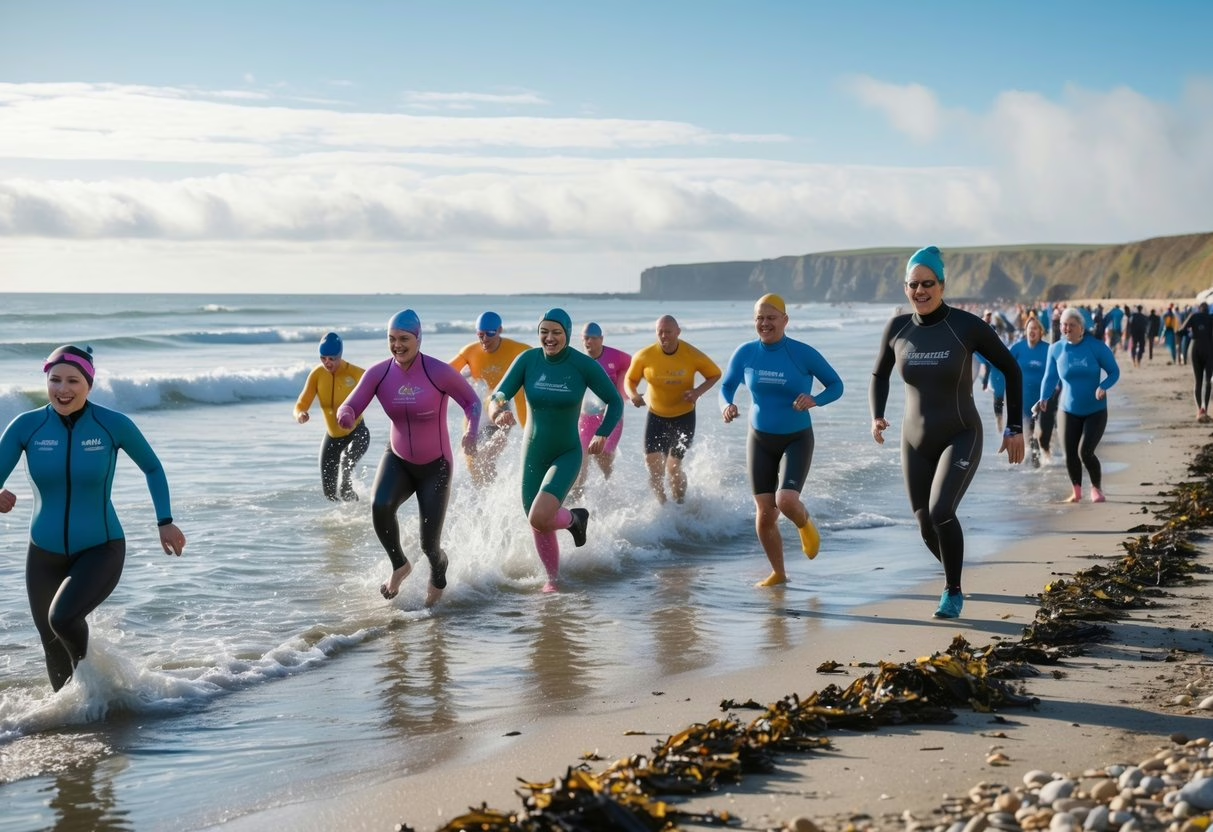
While New Year’s Day dips capture much attention, Boxing Day and Christmas morning swims draw equally devoted crowds across Britain’s coastline. These events range from decades-old community traditions to charity fundraisers that attract thousands of participants each year.
Boxing Day Dips Around the UK
Boxing Day swims have become massive community gatherings that often rival their New Year counterparts. The Cromer Boxing Day Dip in Norfolk starts at 11:30am and draws hundreds of swimmers to burn off their Christmas turkey excesses in the North Sea.
Wales hosts some particularly spirited events. The Tenby Boxing Day Swim in Pembrokeshire begins at 11am with a bonfire on North Beach. Participants enjoy hot soup afterwards, with this year featuring a superhero fancy dress theme.
Scotland’s Burghead Boxing Day Swim in Moray takes place at 2:30pm. Swimmers must leap from the harbour wall into the water below. This dramatic entry method sets it apart from beach-based events.
Cornwall maintains its reputation for festive swimming with multiple Boxing Day options. The St Ives Boxing Day Dip occurs at noon on Porthminster Beach. Meanwhile, Portreath Beach hosts an 11am swim where wetsuits are banned but participants receive mulled wine and mince pies.
Popular Christmas Morning Swims
Christmas Day sea swims offer an alternative way to start the holiday celebrations. The Porthcawl Christmas Swim in Bridgend has operated since 1965, creating a party atmosphere on Coney Beach at 10:30am. Swimmers gather at the Hi-Tide Inn before taking the plunge.
Bude Christmas Day Swim in Cornwall starts at 11am on Crooklets Beach. The local Surf Life Saving Club organises this event with a strict no-wetsuit policy. Participants contribute £10 to support the club’s activities.
Devon’s Exmouth Christmas Day Swim begins at 10:45am and ranks among the county’s largest festive events. Founded in the late 1960s by a group of friends, it now attracts thousands of brave swimmers annually.
The Sennen Beach Christmas swim at 11am draws hundreds to one of Cornwall’s most picturesque coves. The stunning coastal backdrop makes this event particularly photogenic for participants and spectators.
Community-Led Wild Swimming Events
Local swimming groups and charities organise many festive dips beyond the major organised events. Wild swimming organisations use these occasions to raise money for charity whilst building community spirit through shared cold water experiences.
Felixstowe Christmas Day Dip in Suffolk starts at 10am as a charity fundraiser supporting the local hospice. Lowestoft Christmas Day Swim also begins at 10am with coastguard support and includes a prom warm-up session.
Many seaside towns host informal gatherings where local swimmers meet without formal organisation. These grassroots events maintain the wonderful sense of camaraderie that characterises festive sea swimming whilst supporting various charitable causes.
The Deal Rotary Icebreakers Boxing Day Swim in Kent demonstrates how newer events can quickly gain popularity. Launched in 2018, it now requires advance registration and offers discounted tickets for early bookings.
Health Benefits and Risks of Cold Water Swimming
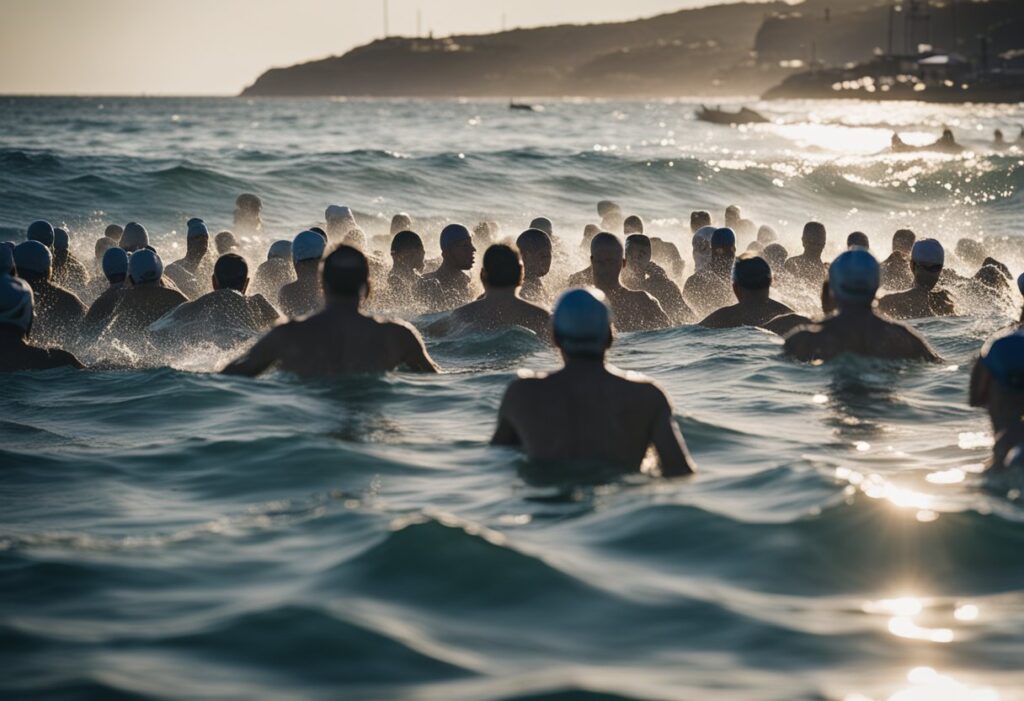
Cold water swimming offers significant physical and mental health benefits whilst also presenting serious risks that swimmers must understand. Research suggests cold water swimming provides mood improvements and immune system benefits, but can also cause dangerous cold shock responses in unprepared individuals.
Physical and Mental Advantages
Cold water swimming triggers the release of endorphins and other feel-good chemicals in the brain. These natural substances help reduce stress and improve mood significantly.
Studies show that cold water swimming can improve general wellbeing and reduce depression. Regular swimmers often report feeling more energetic and positive after their swims.
The physical benefits include improved circulation and better stress tolerance. Cold water exposure forces the body to work harder to maintain its core temperature.
Key physical benefits include:
- Enhanced cardiovascular fitness
- Improved circulation
- Better stress response
- Increased calorie burning
- Stronger heart function
Wild swimming also provides excellent low-impact exercise that works multiple muscle groups simultaneously.
Effects on the Immune System
Research indicates that cold water swimming can lead to fewer upper respiratory tract infections. Regular swimmers often experience less frequent colds and flu.
The immune system benefits come from the stress response triggered by cold exposure. This stress helps strengthen the body’s natural defence mechanisms over time.
Cold water swimming increases the production of white blood cells. These cells are crucial for fighting off infections and maintaining good health.
Immune system improvements:
- Reduced frequency of colds
- Stronger infection resistance
- Enhanced white blood cell production
- Better overall immune response
However, these benefits only occur with gradual adaptation to cold water temperatures.
Potential Hazards and Cold Water Shock
Cold water swimming carries a risk of death in unfamiliar people due to cold shock response or hypothermia. The initial shock can cause dangerous breathing problems and heart rhythm changes.
Cold shock happens within the first few minutes of entering water below 15°C. It causes gasping, rapid breathing, and increased heart rate that can lead to drowning.
People with heart conditions face additional risks. Cold water can trigger arrhythmias and cardiovascular events that may prove fatal.
Major risks include:
- Cold water shock response
- Hypothermia
- Heart rhythm problems
- Drowning
- Loss of swimming ability
Gradual acclimatisation and proper preparation significantly reduce these dangers for healthy individuals.
Safety Advice and Essential Gear for Sea Swimmers
New Year’s Day sea swimming requires proper preparation and the right equipment to ensure a safe experience. Expert guidance covers essential safety protocols, protective gear recommendations, and crucial preparation steps.
Guidance from the RNLI
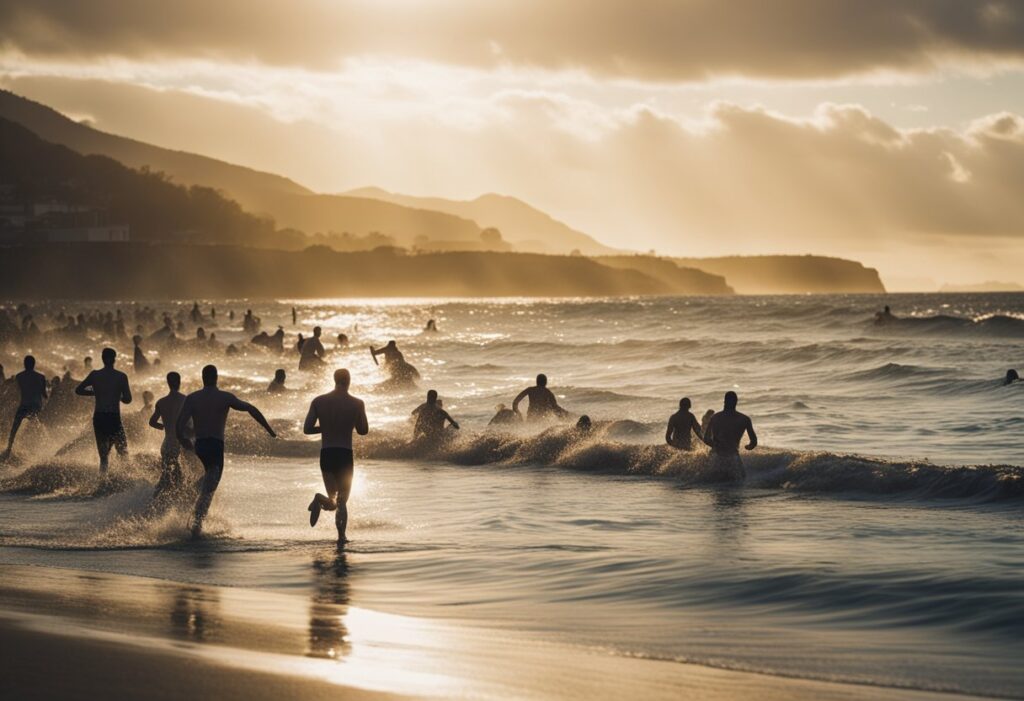
The RNLI emphasises that open water swimming carries significant risks, particularly during winter months. First-time swimmers should consult a healthcare professional before attempting cold water immersion.
Swimmers must never enter the water alone. The RNLI strongly recommends swimming with a buddy and informing someone onshore about planned routes and return times.
Location Selection Guidelines:
- Choose lifeguarded beaches when possible
- Swim between red and yellow flags
- Check tide times and weather conditions
- Avoid areas with strong currents or hazards
The organisation advises checking weather forecasts through Met Office inshore waters reports. Swimmers should assess water conditions before entering and avoid rough seas entirely.
Emergency procedures require calling 999 or 112 for the coastguard. Mobile phones in waterproof pouches provide essential communication options even without network coverage.
Recommended Equipment and Wetsuits
Essential Safety Equipment:
- Brightly coloured swimming cap for visibility
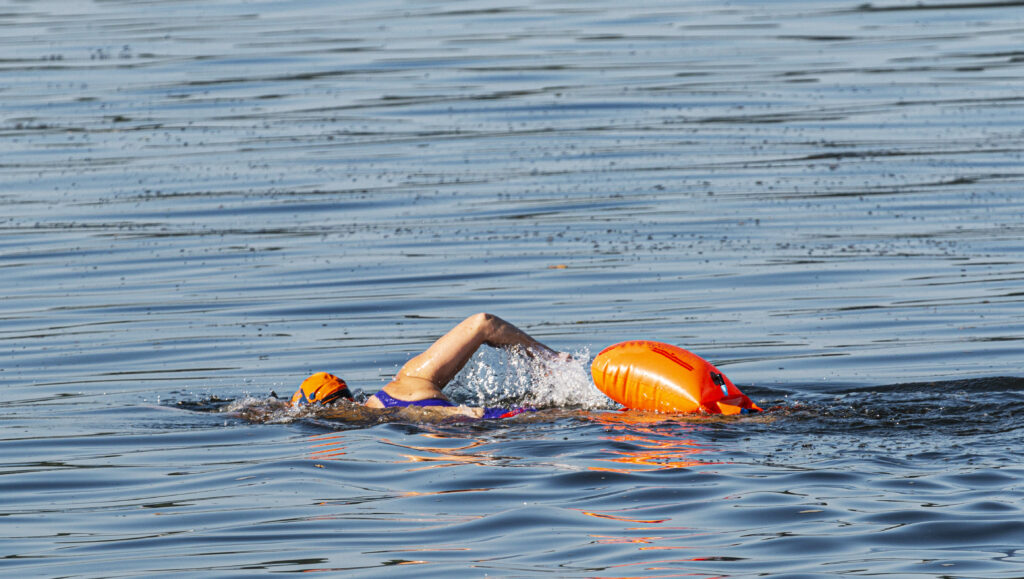
- Tow float for buoyancy and visibility
- Wetsuit for warmth and extended swimming time
- Waterproof phone pouch
- Whistle for attracting attention
Wetsuits provide crucial thermal protection and increase buoyancy during winter swims. They allow swimmers to remain in cold water safely for longer periods whilst reducing hypothermia risks.
Tow floats serve dual purposes as visibility aids and emergency buoyancy devices. The bright colours help lifeguards and other swimmers spot participants in choppy water conditions.
Safety apps like RYA SafeTrx can track swimming routes and alert emergency contacts if swimmers fail to return on schedule. These digital tools add an extra safety layer for solo participants.
Visibility Equipment Priority:
- Bright swimming cap (essential)
- Tow float (highly recommended)
- Reflective wetsuit elements (beneficial)
Pre-Dip Preparation and Aftercare
Proper acclimatisation prevents dangerous cold water shock. Swimmers must enter water gradually, splashing cold water on face and neck before full immersion. Never jump or dive directly into cold water.
Pre-Swimming Checklist:
- Warm-up exercises onshore
- Gradual water entry
- Controlled breathing techniques
- Stay within comfortable depths
Cold water temperatures below 15°C significantly impact breathing and movement abilities. Swimmers should remain parallel to shore and maintain visual contact with exit points throughout their swim.
Post-swim warming requires careful attention. Proper preparation includes bringing warm clothes and hot drinks for immediate use after leaving the water.
Aftercare Essentials:
- Dry clothing layers
- Warm beverages (non-alcoholic)
- Gradual rewarming process
- Shelter from wind and cold
Swimming duration should decrease as water temperatures drop. Winter swimmers typically limit exposure to 5-15 minutes depending on experience levels and conditions.
Community, Charity, and Local Impact
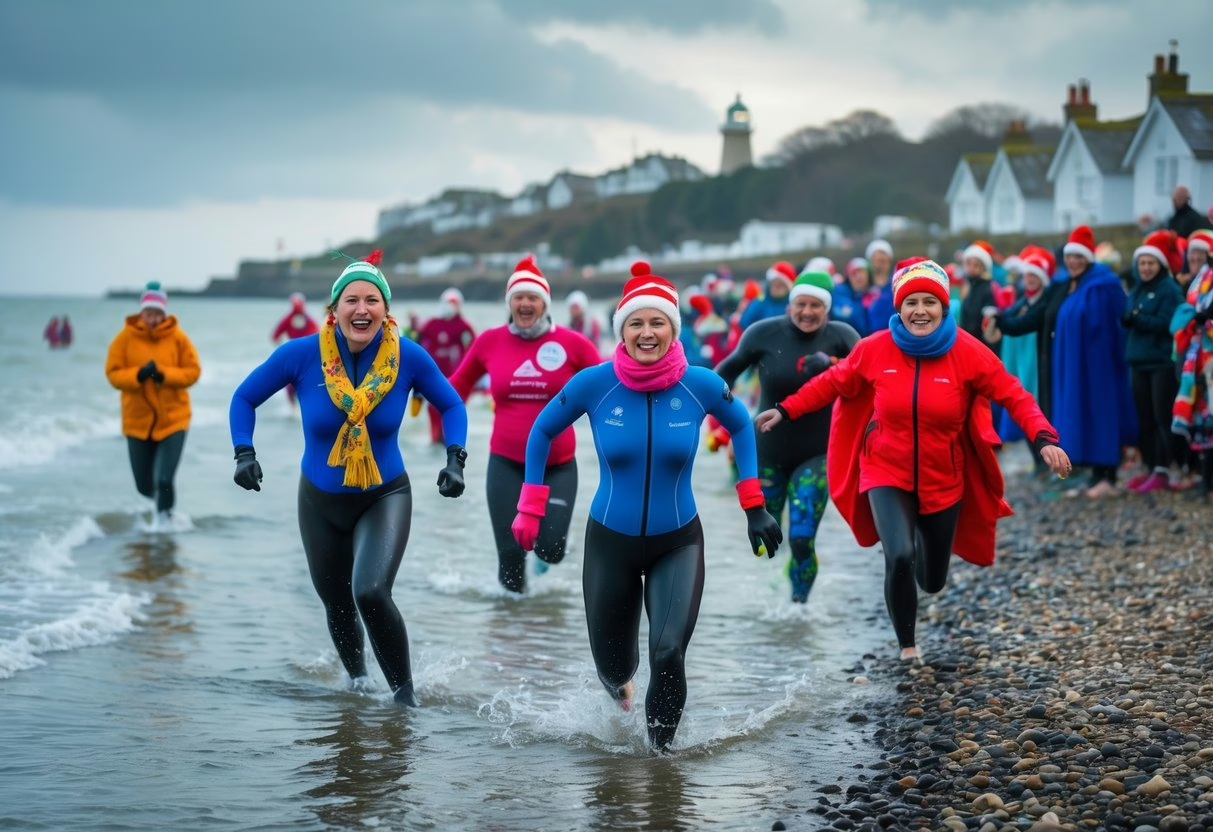
New Year’s Day sea swimming events across the UK generate significant funds for local charities whilst strengthening community bonds. These traditions bring together thousands of participants and spectators, creating lasting positive effects on coastal towns and villages.
Charitable Fundraising Initiatives
New Year’s Day dips raise substantial amounts for various charitable causes throughout Britain. Over 150 participants in Scarborough’s annual dip contribute to fundraising efforts each year.
The Saundersfoot New Year’s Day Swim supports local charities and organisations with particular emphasis on community groups. This event celebrates its 39th year in 2025, demonstrating the long-term commitment to charitable giving.
Major charity beneficiaries include:
- Cancer Research UK
- Local RNLI stations
- Community support organisations
- Youth clubs and sports groups
The RNLI charity dip at Southend-on-Sea charges £6 online entry, with funds directly supporting lifesaving operations. Participants receive hot drinks and mince pies as part of their contribution.
Boxing Day sea swims also provide significant fundraising opportunities for charities like Cancer Research UK. These events complement New Year’s Day activities in supporting vital causes.
Role of Local Clubs and Organisations
Swimming clubs, community groups, and local councils coordinate these annual events. The St Davids Penknife Club represents one example of local organisations maintaining these traditions.
Organisers manage registration, safety protocols, and post-swim refreshments. They work closely with emergency services and lifeguards to ensure participant safety.
Key organising bodies include:
- Local swimming clubs
- Community festivals committees
- Coastal rescue services
- Town councils
The Gosport and Fareham Inshore Rescue Service organises their annual swim after a two-year break, demonstrating how rescue organisations actively participate in community events.
Volunteer marshals guide participants into the water safely. They provide changing facilities and warm beverages afterward.
Festive Atmosphere and Community Spirit
These events create vibrant social gatherings that unite entire communities. Crowds gather on cliffsides to watch brave swimmers tackle cold waves for charity.
Fancy dress costumes add colour and entertainment to proceedings. Many participants wear themed outfits that reflect local culture or current events.
Community benefits include:
- Strengthened local identity
- Increased tourism during winter months
- Enhanced community pride
- Intergenerational participation
The tradition in Broughty Ferry dates back nearly 140 years to fisher folk who swam daily except Sundays. On New Year’s Day, entire communities headed to the sea together.
Modern events maintain this inclusive spirit. Families attend together, with some members swimming whilst others provide support from the shore.
Local businesses benefit from increased footfall during typically quiet winter periods. Cafes, pubs, and shops experience higher trade as participants and spectators seek warmth and refreshments after events.
Frequently Asked Questions
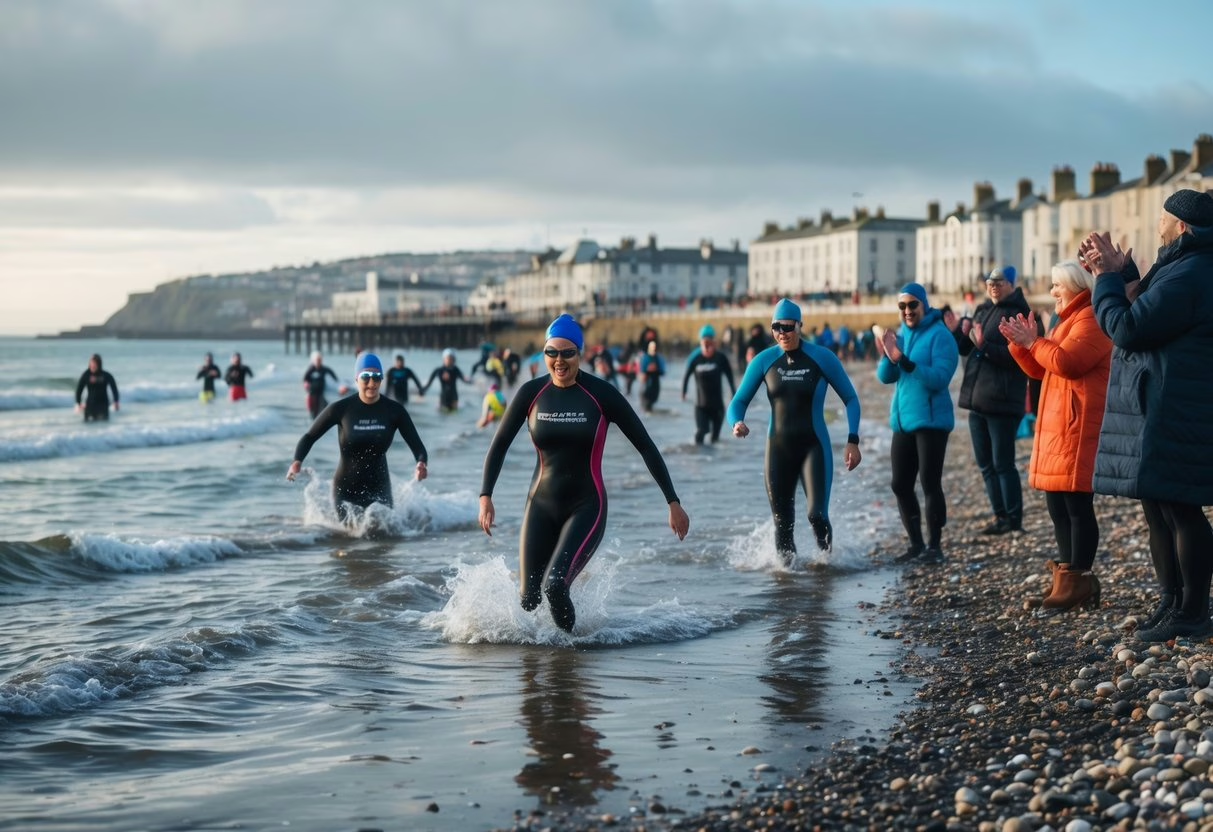
New Year’s Day sea swimming in the UK has deep roots tracing back to fishing communities nearly 140 years ago. These events now span from charity fundraisers to community celebrations across coastal towns throughout Britain.
What is the history behind the New Year’s Day sea swimming tradition in the UK?
The New Year’s Day Dook tradition dates back to the fisher folk of Broughty Ferry nearly 140 years ago. The local fishermen took daily dips in the waters of the Tay throughout the year, except on Sundays.
On New Year’s Day, the entire community would join them for a collective plunge into the sea. This practice symbolised cleansing and renewal as people entered the new year.
The tradition was once limited to hardy individuals or experienced cold water swimmers. However, the recent surge in wild swimming popularity has transformed these events into major community gatherings.
Where are the most popular locations in the UK for New Year’s Day sea swims?
Saundersfoot in Pembrokeshire hosts the biggest festive dip in the UK. The event attracts hundreds of participants and spectators each year.
Broughty Ferry in Dundee continues its historic tradition with hundreds of swimmers gathering at the harbour. The event takes place at 2.30pm and welcomes spectators, though mankinis are banned.
Other popular locations include Lyme Regis in Devon, Camber Sands in East Sussex, and various beaches along the Welsh coast. Scotland refers to these swims as “Loony Dooking,” with events held across the country’s coastal areas.
Are there any specific health and safety guidelines one should follow when participating in cold water swims on New Year’s Day?
The Outdoor Swimming Society publishes specific festive swimming dos and don’ts for participants. These guidelines cover essential safety measures for cold water exposure.
Participants should never swim alone and must ensure RNLI or coastguard supervision is present. Many organised events provide safety crews and medical support on-site.
Swimmers should enter the water gradually to avoid cold water shock. Wearing old trainers for walking across rocky or rough surfaces is recommended before entering the sea.
How do participants typically prepare for the New Year’s Day sea swimming event?
Many swimmers warm up on the promenade before entering the water. This helps prepare the body for the sudden temperature change.
Participants often bring towels and warm clothing for after the swim. Hot drinks and warming facilities are frequently available at organised events.
Some events prohibit wetsuits to maintain the traditional challenge of cold water swimming. Swimmers should check specific event rules before participating.
What charity events are associated with the New Year’s Day sea swimming tradition in the UK?
Many New Year’s Day swims serve as charity fundraisers, with crowds gathering on clifftops to watch brave swimmers take on the cold waves for charitable causes. These events raise significant funds for local hospices and community organisations.
The Saundersfoot New Year’s Day Swim charges £5 to participate, with proceeds supporting various charities. Prizes are awarded for the best fancy dress costumes.
Hele Bay Merbabes organises their New Year’s swim as an RNLI fundraiser. The Lyme New Year’s Day Lunge is run by the local Rotary Club to support community projects.
What are some of the community and cultural impacts of the New Year’s Day sea swimming festivities?
The tradition symbolises new beginnings and provides an exhilarating communal experience. Communities gather to support participants and celebrate together on the first day of the year.
These events have boomed in popularity due to increased awareness of wild swimming and cold water swimming benefits. Local tourism benefits as visitors travel specifically to participate or spectate.
The swims strengthen community bonds and create shared experiences across generations. Many families make attendance an annual tradition, passing the custom down through generations.
Fancy dress competitions and communal warming activities create festive atmospheres. Hot soup, mulled wine, and community gatherings extend the celebration beyond the actual swim.