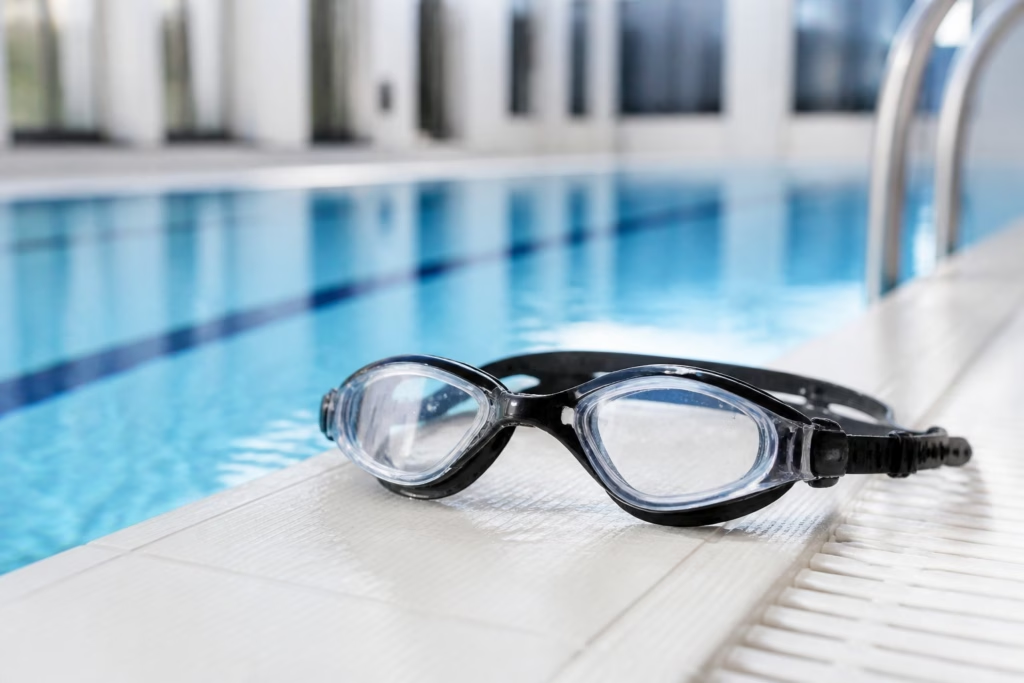
Swimming with a strong prescription is a strange experience. You can count the tiles at the bottom of the pool but the clock on the wall is a smudge, and finding your kit bag afterwards turns into a guessing game. Prescription swimming goggles fix that, and most of them cost less than a decent pair of reading glasses.
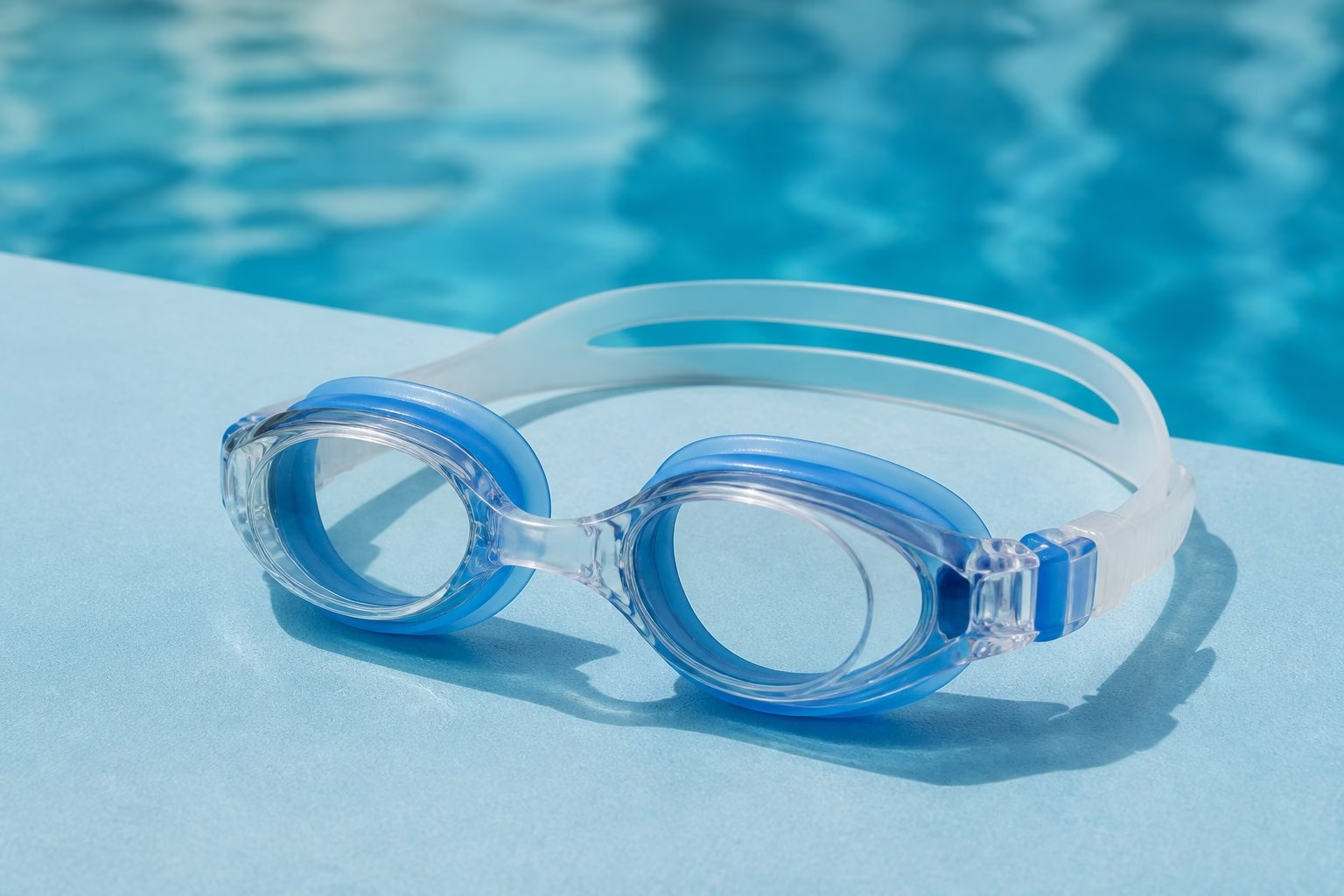
There are two routes. Ready-made goggles use step-dioptre lenses, which come in fixed jumps (usually -1.5, -2.0, -2.5 and so on) and correct short sight only. Custom goggles use lenses ground from your actual glasses prescription, so astigmatism, long sight, prism and even reading power are all in play.
If your prescription is straightforward short sight and both eyes are within about 0.5 dioptres of each other, a step-dioptre pair will serve you well for a fraction of the price of custom lenses. Anything more complicated, and the money spent on made-to-order lenses buys you vision that matches your glasses.
Below are ten pairs worth your attention in 2026, followed by a plain-English guide to dioptres, fit and lens care. Have your latest eye test to hand before you order, since almost every decision here traces back to the numbers on that piece of paper.
Quick picks:
- Best overall: PROGEAR H2O for true made-to-measure lenses
- Best budget: Speedo Vanquisher 2.0 Optical for reliable step-dioptre value
- Best for open water: Aqua Sphere Eagle Optics for its wide field of view
- Best for racing: Arena The One Optical for low-profile speed
1) PROGEAR H2O Custom Prescription Swim Goggles
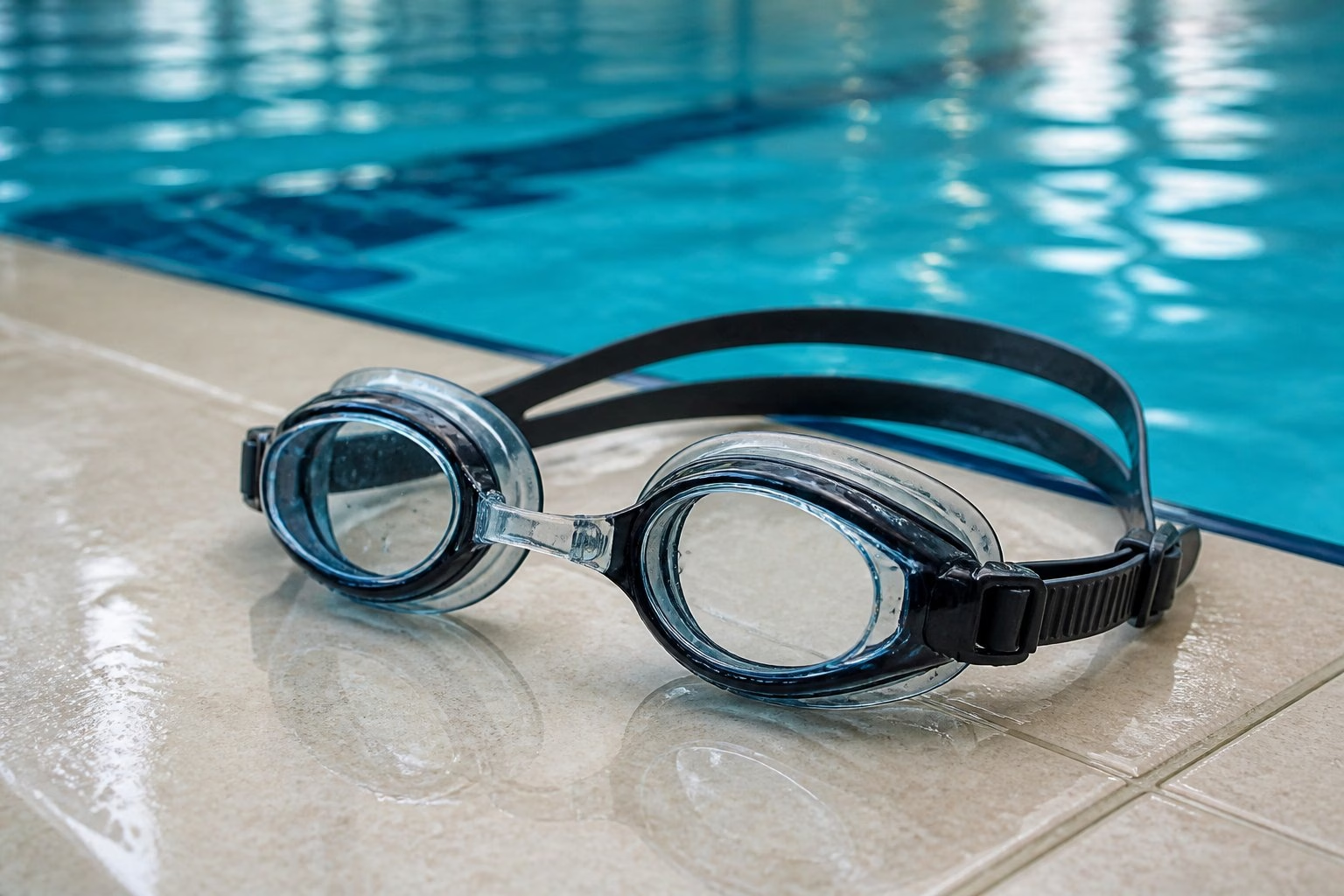
Each lens here is ground separately from your own prescription and then fitted into the frame, the same way an optician makes your glasses. That matters if your two eyes differ, because you get your exact right-eye power and your exact left-eye power instead of a compromise.
The lab behind PROGEAR H2O custom swim goggles handles prescriptions from -20 to +16, covering high myopia, hyperopia, astigmatism, prism and progressive lenses. Store-bought step goggles cannot touch that range.
Fit is unusually adjustable: three cup sizes, six bridge widths and two strap lengths. The silicone seals pop off for cleaning and individual parts can be replaced, so a torn gasket does not mean a new pair.
Worth knowing: custom lenses take longer to arrive than off-the-shelf goggles, and returns are limited because they are made for your eyes alone.
2) Speedo Vanquisher 2.0 Optical Goggles
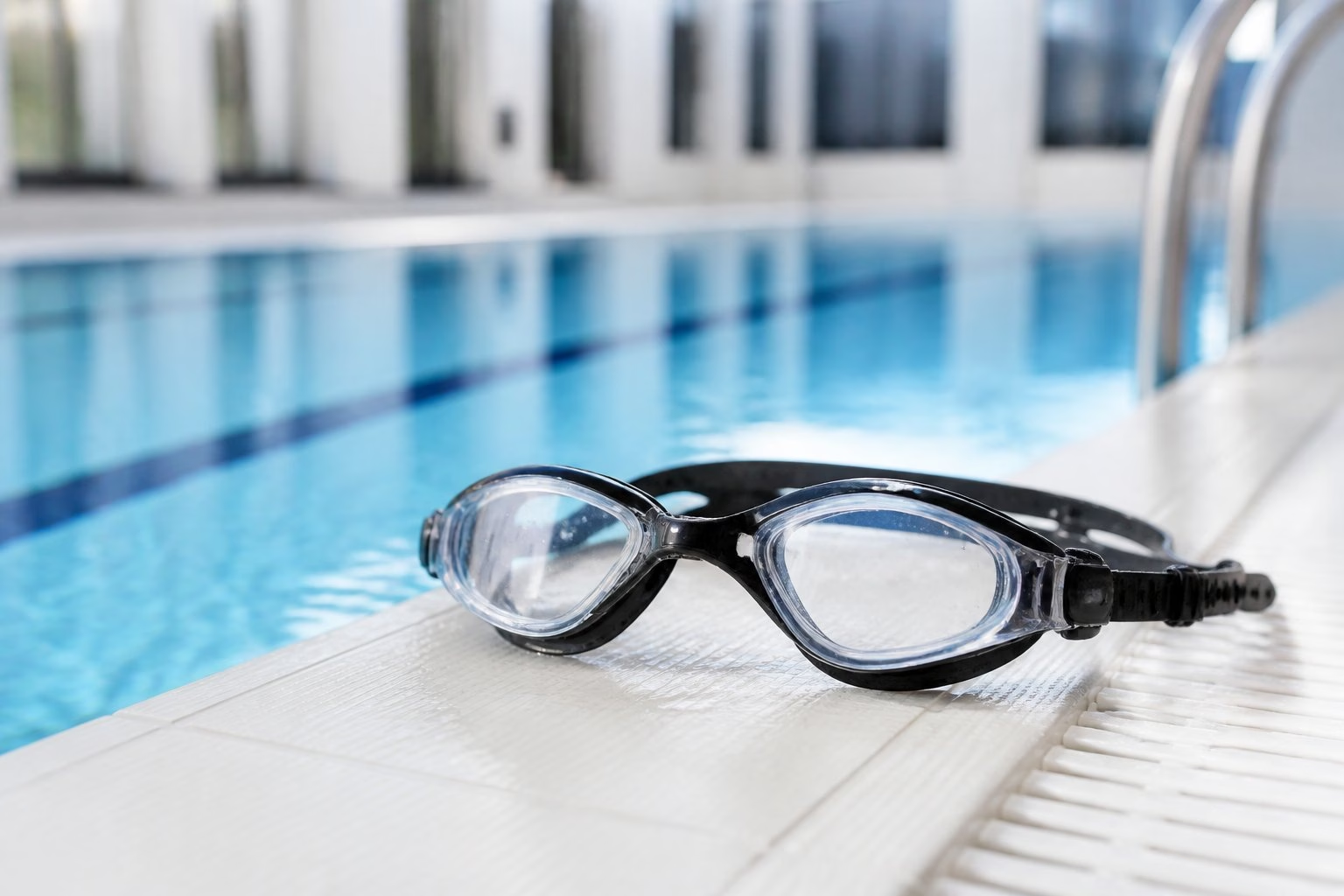
Ask lane swimmers which optical goggle they own and the Vanquisher 2.0 comes up more than any other. The frame is the same low-profile training shape thousands of club swimmers already use, with the lenses swapped for step-dioptre optics.
Powers run in 0.5 dioptre steps, and each lens is sold individually. Two different strengths, one per eye, cost no more than a matched pair.
Four interchangeable nose bridges come in the box. The silicone gaskets are soft enough for hour-long sessions without leaving deep rings around your eyes.
Correction is limited to short sight, so astigmatism goes uncorrected. In practice, mild astigmatism under about 1.0 dioptre is barely noticeable underwater.
3) Sporti S2 Optical Mirrored Goggles
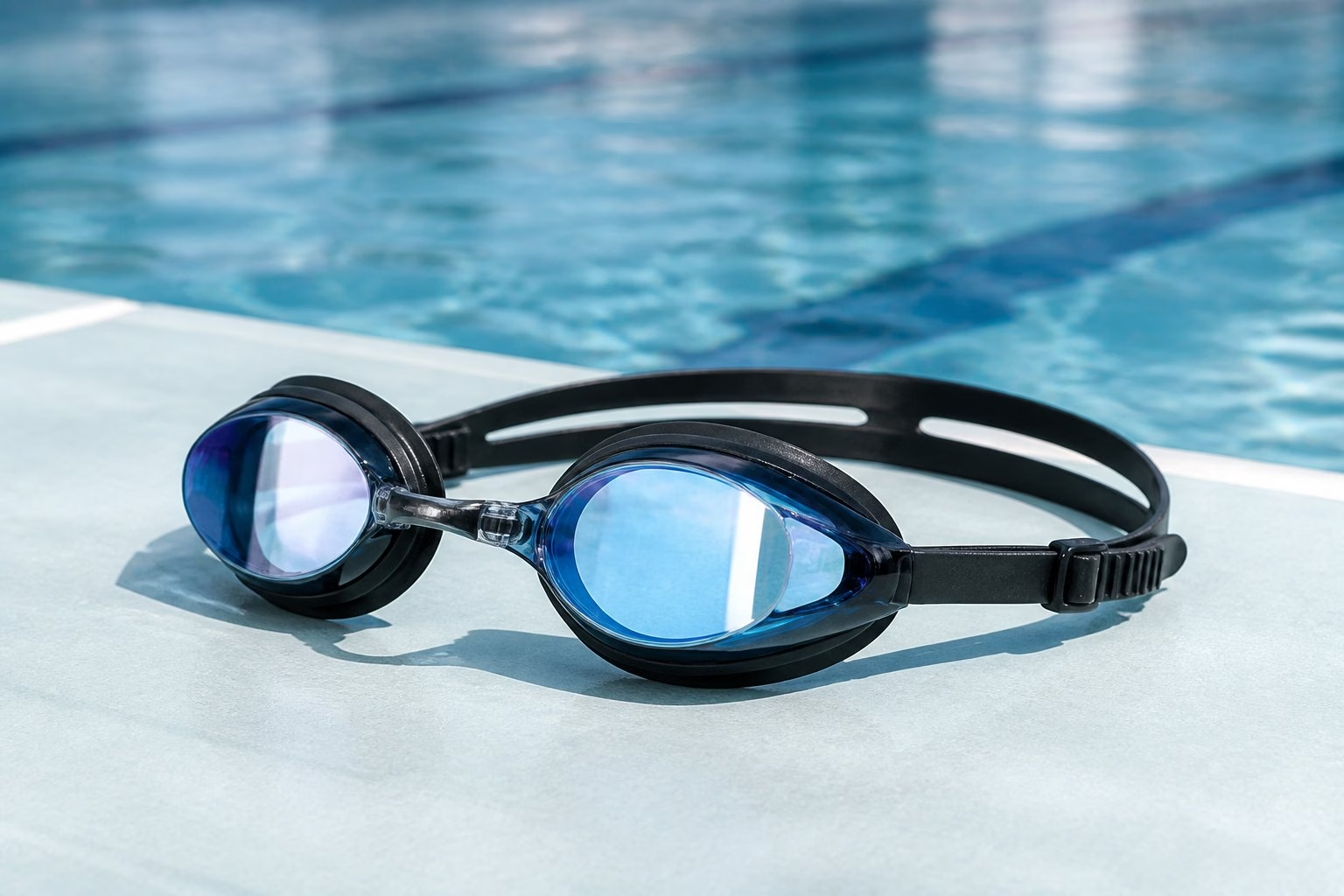
Mirrored coatings on a budget optical goggle are rare, which is what makes the S2 stand out. Outdoor 50m pools and bright lido sessions become far easier on the eyes, and the tint cuts the glare bouncing off the water surface.
Lens strengths are sold per eye in half-dioptre increments, so mismatched vision is straightforward to sort. The curved lens shape widens your peripheral view a touch compared with flat-lens training goggles.
Mirror coatings scratch more easily than plain polycarbonate. Keep them in a hard case, and never wipe the inside face dry with a towel.
Indoor swimmers in dim municipal pools should choose the clear version instead.
4) Aqua Sphere Eagle Optics Goggles
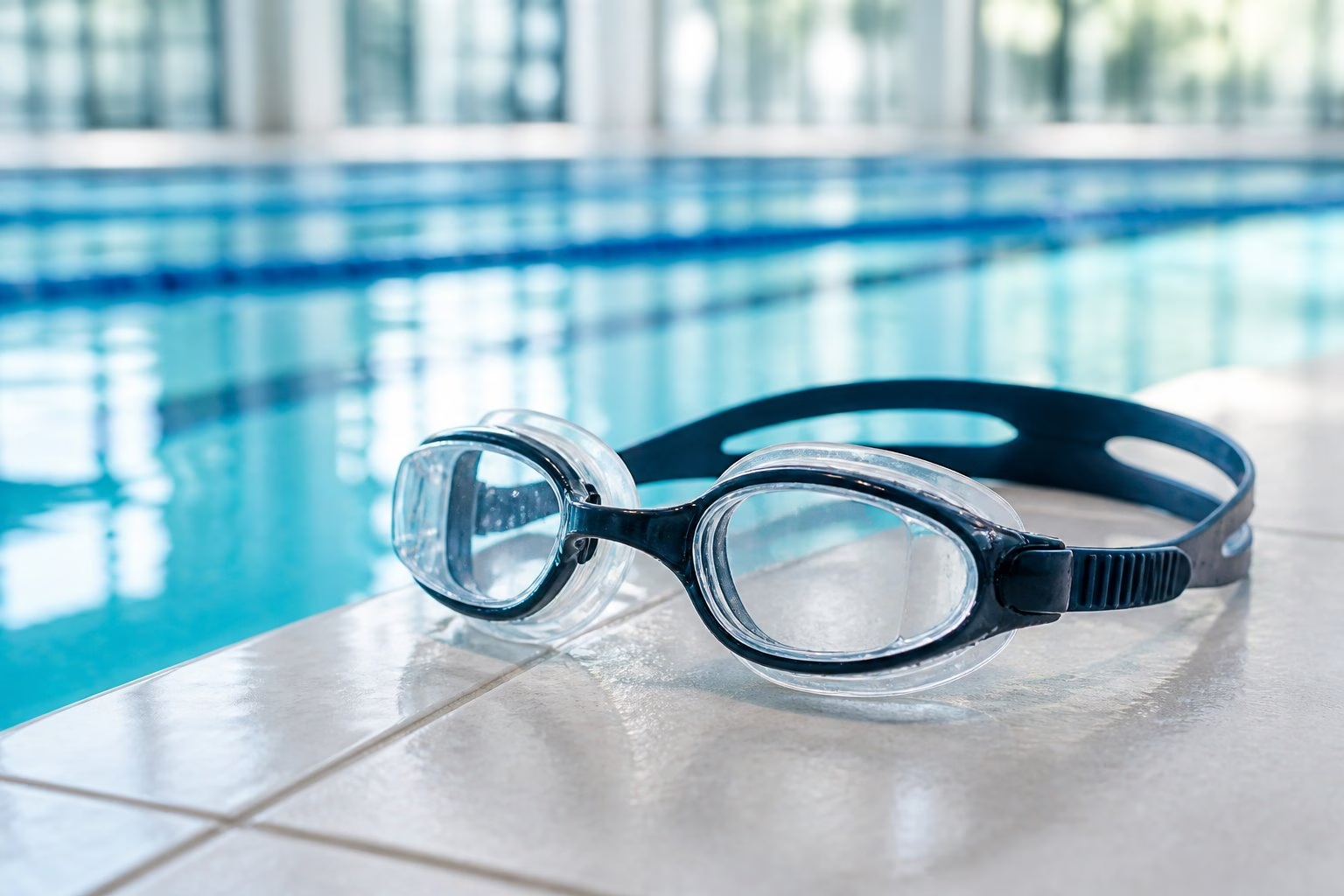
Field of view is the Eagle’s whole argument. The curved lenses wrap further round the face than a standard racing goggle, which pays off in open water when you are sighting a buoy 200 metres away and only have half a second above the chop.
Prescription lenses are supplied in step powers and screw into the frame yourself, taking a couple of minutes per side. The soft silicone skirt seals well on wider faces where slim Swedish-style goggles fail.
The trade-off is bulk. These sit higher on the face than a racing pair and create noticeably more drag at speed. For sprint sets, keep a slimmer pair in the bag; for open water swimming, the extra vision earns its place.
5) Aquagoggles V2 Prescription Swim Goggles
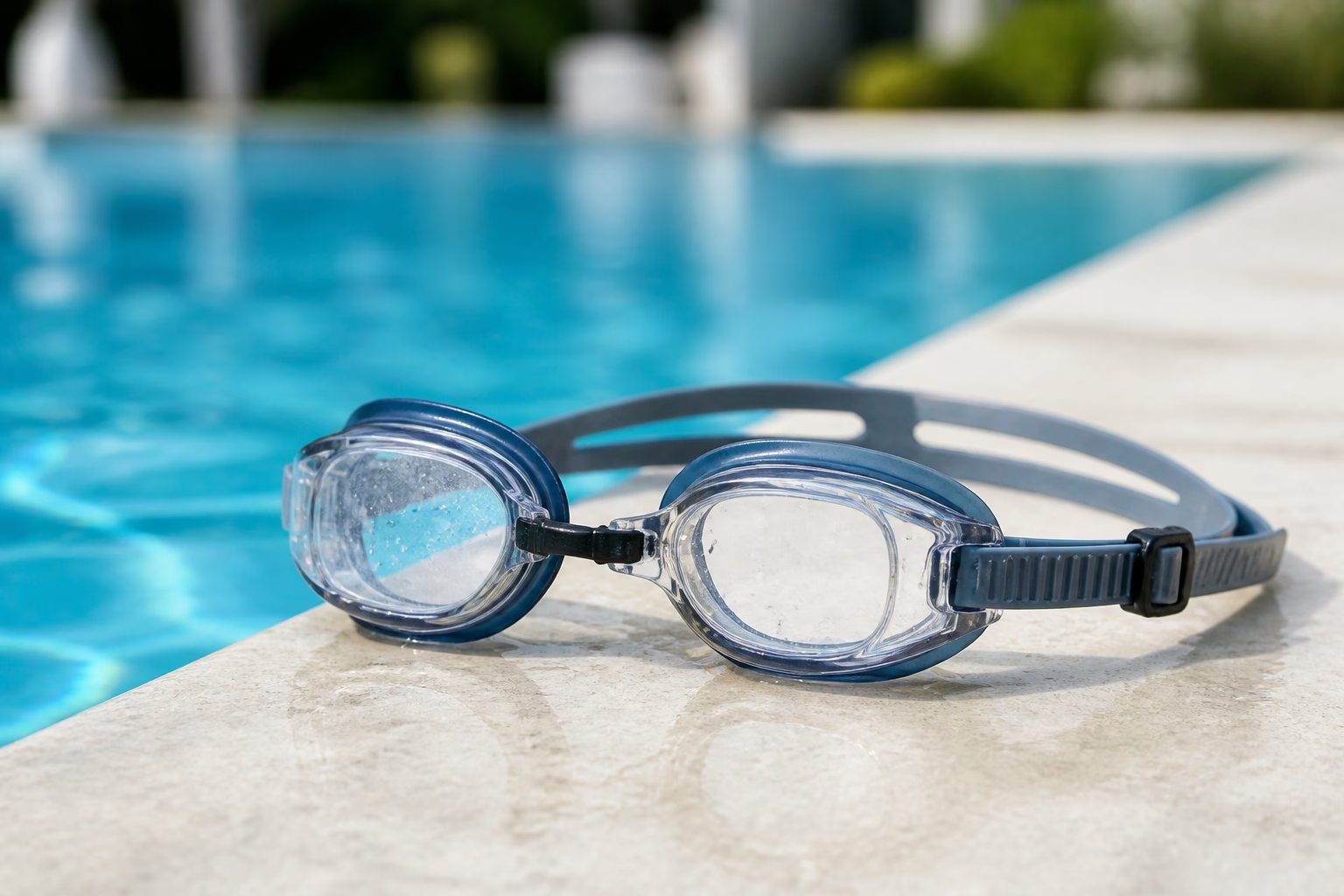
Value drives the V2. It is a straightforward moulded frame with fixed-power lenses, aimed at swimmers who want clear vision twice a week and nothing more elaborate.
Lens powers step in 0.5 increments through the common myopia range, and the one-piece build means no bridge fiddling. The strap is a simple split design that stays put once set.
Durability sits below the premium options. Expect the gaskets to harden after a year of heavy chlorine exposure, which is fair at this price.
Good for occasional swimmers, holiday use, or as a spare pair kept permanently in the car boot.
6) Zoggs Predator Flex 2.0 Optical Goggles
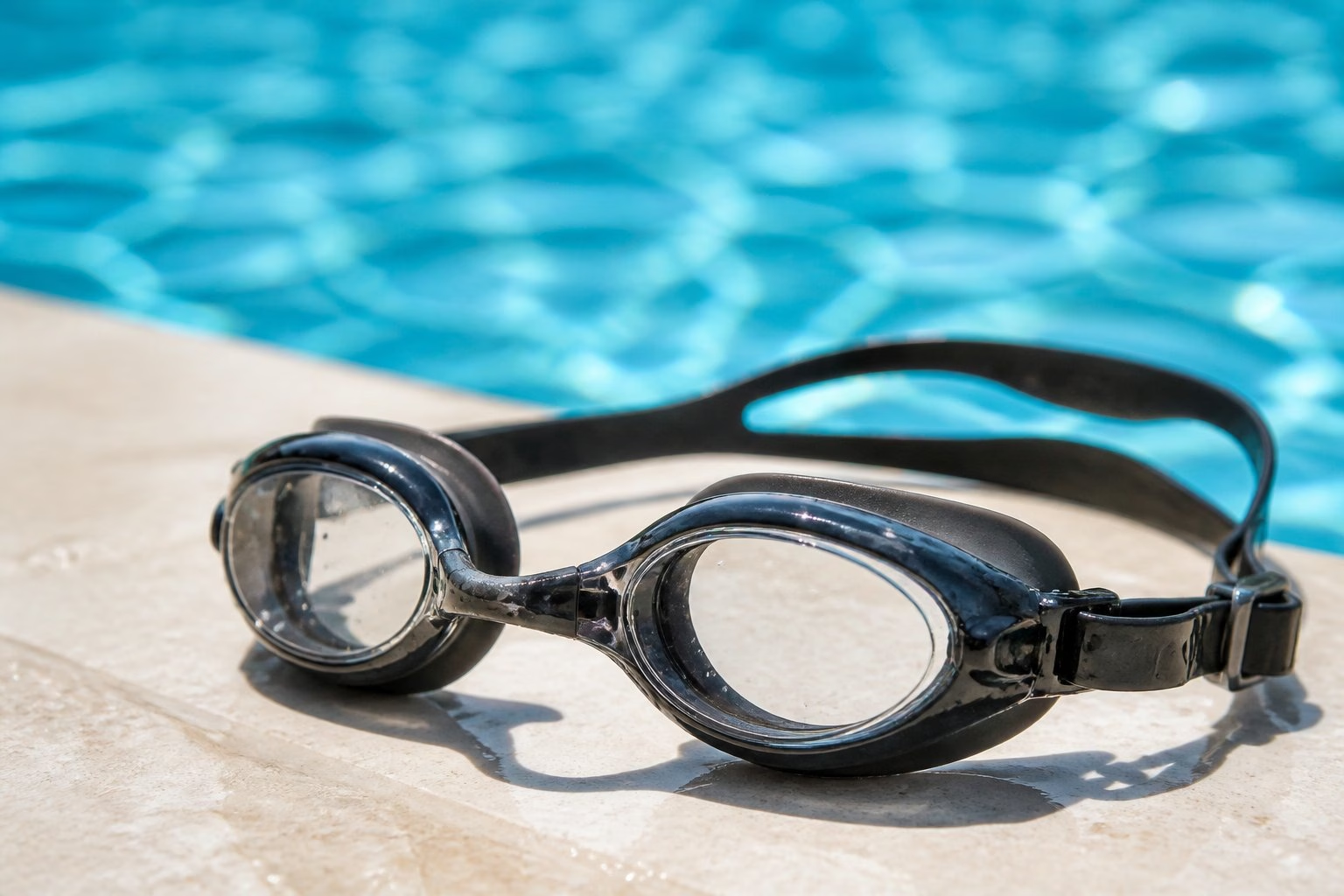
Zoggs builds these around its Curved Lens Technology, which stretches peripheral vision sideways so you spot swimmers coming down the lane before they reach your shoulder. British pool swimmers know the Predator range well, and the optical version keeps the same seal and strap system.
Powers are offered in half-dioptre steps and both lenses can differ. The Flex frame flexes across the bridge to suit different face widths without swappable parts.
The soft silicone seals are forgiving on the eye socket, which suits anyone who swims early mornings and would rather not arrive at work with red goggle marks.
Astigmatism correction is unavailable in this range, so a cylinder above roughly 1.0 pushes you towards custom lenses.
7) TYR Corrective Optical Goggles
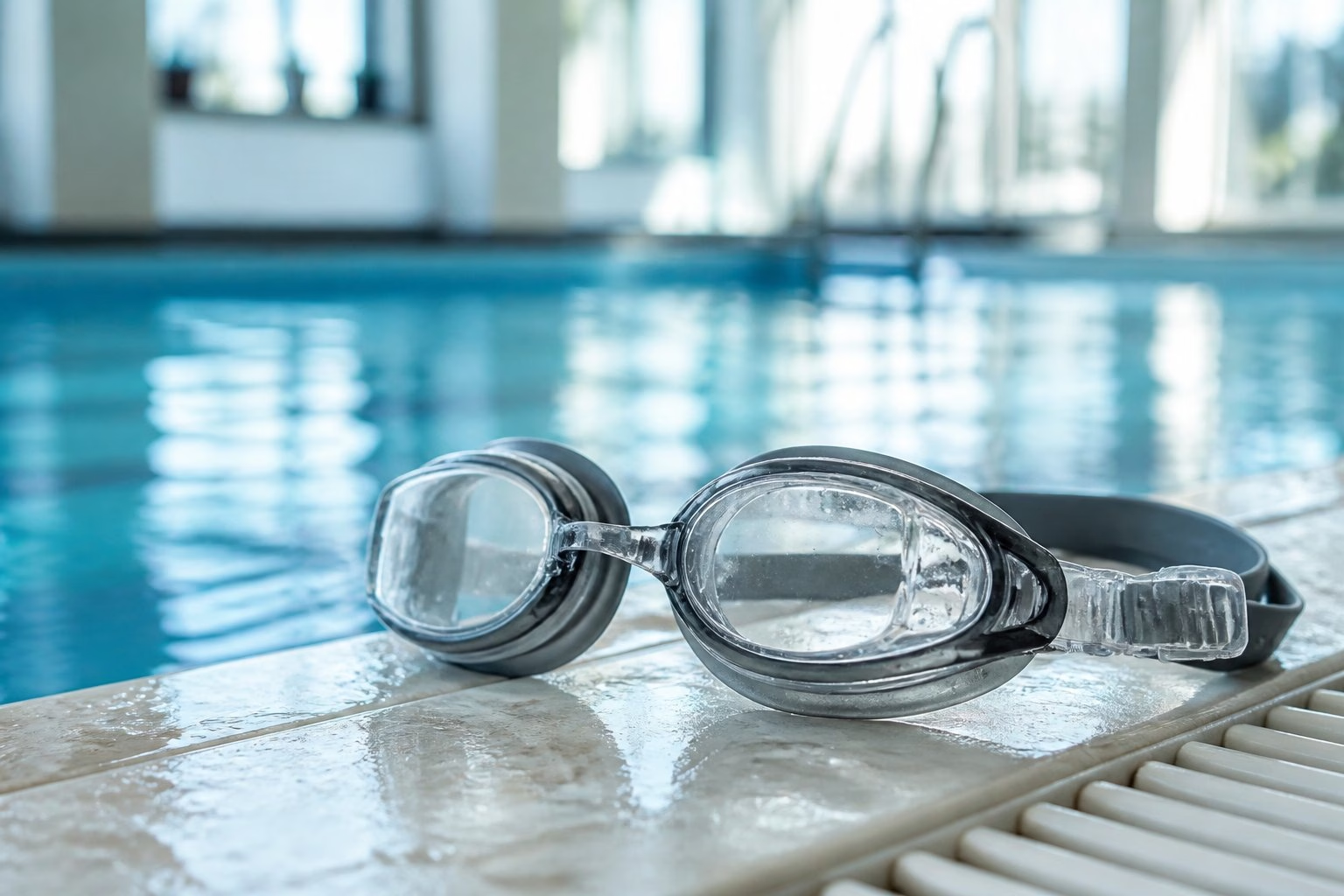
TYR’s corrective range covers a wide sweep of step powers, typically from -1.5 through to -8.0, which is deeper than most high-street options reach. Strong myopes who keep being told they are out of range should start here before paying for custom work.
The frame borrows from TYR’s Socket Rocket training goggles, so the profile is low and the gaskets are firm. Firm gaskets seal well and hold a decent suction, though they suit shorter sessions better than two-hour endurance swims.
Nose bridges are interchangeable. Lenses come pre-assembled rather than as separate halves in some models, so check the listing carefully if your eyes need different powers.
8) Sporti Antifog Optical Pro II Goggles
The Pro II is the one to buy when your budget is tight and you swim indoors three times a week. It appears on most best prescription swim goggle roundups for good reason: the optics are honest, the anti-fog coating lasts, and the price is among the lowest in the category.
Lenses are sold individually across the standard step range, so mixed powers cost no extra. The frame is a plain training shape with a silicone gasket and adjustable split strap.
Nothing here is fancy. There is no mirror coating and no curved optics, which keeps distortion at the lens edge slightly more noticeable than premium pairs.
Buy two. At this price you can keep one in your bag and one at home, and never miss a session because you forgot them.
9) Arena The One Optical Goggles
Speed is the point of The One. The frame is compact, the profile is low, and the gaskets are thin enough that the goggle sits close to the face and creates minimal drag off the wall.
Arena supplies step-dioptre lenses across the common myopia range, with the left and right sold separately. The strap uses Arena’s quick-adjust clips, which you can tighten mid-set with one hand.
Comfort is a tighter proposition than the Aqua Sphere-style masks. These seal on the eye socket rather than the surrounding bone, so they need accurate bridge sizing to avoid leaks.
If you race masters events or train with a club, these will feel familiar next to the standard version already in your bag. Serious racers may also want to look at competitive swimming kit more broadly.
10) SWANS SRXCL Prescription Lens Goggles
SWANS is the Japanese brand that supplies a large slice of the world’s competitive swimmers, and the SRXCL is its Swedish-style optical option. The lenses are individual, screw into the frame, and cover an unusually fine range of powers.
Build quality is the standout. The polycarbonate is hard-coated against scratching and the anti-fog treatment holds up better than most through a full winter of indoor training.
There is no moulded gasket on the classic Swedish design, so the lens rim sits directly on the bone around your eye. Some swimmers love the seal and the tiny profile; others find it uncomfortable within ten minutes.
Try a non-prescription Swedish pair first if you have never worn one. If you get on with it, the SRXCL is the best executed version with corrective optics.
How Prescription Swimming Goggles Work
Prescription swimming goggles hold a curved corrective lens inside a watertight frame, so light bends correctly before it reaches your eye. The waterproof seal keeps an air gap in front of the lens, which is what allows the correction to behave the way it does in air.
The important detail is that goggles sit closer to your eye than glasses do. That shorter distance changes the effective power slightly, which is why the recommended goggle dioptre for a strong prescription is often a little weaker than your spectacle number.
| Model | Lens type | Astigmatism | Mixed powers | Best for |
|---|---|---|---|---|
| PROGEAR H2O | Custom ground | Yes | Yes | Complex prescriptions |
| Speedo Vanquisher 2.0 | Step-dioptre | No | Yes | Everyday training |
| Sporti S2 Mirrored | Step-dioptre | No | Yes | Bright outdoor pools |
| Aqua Sphere Eagle | Step-dioptre | No | Yes | Open water sighting |
| Aquagoggles V2 | Step-dioptre | No | Limited | Occasional swimming |
| Zoggs Predator Flex 2.0 | Step-dioptre | No | Yes | Wide peripheral view |
| TYR Corrective | Step-dioptre | No | Check model | Strong myopia |
| Sporti Antifog Pro II | Step-dioptre | No | Yes | Tight budgets |
| Arena The One | Step-dioptre | No | Yes | Racing and speed |
| SWANS SRXCL | Step-dioptre | No | Yes | Swedish-style fans |
What Is The Difference Between Step-Dioptre And Custom Lenses?
Step-dioptre lenses come pre-made in fixed powers, usually in 0.5 jumps from around -1.5 to -8.0. You pick the closest one to your prescription and accept a small gap.
Custom lenses are surfaced individually from your prescription, including sphere, cylinder, axis and any prism. The vision matches your glasses because the maths behind it is identical.
Cost and waiting time separate them. Step lenses ship immediately and cost a fraction of custom work; custom lenses take days to make and cannot be returned once cut.
How Do You Choose The Right Dioptre Strength?
Take the sphere figure from your glasses prescription and round towards zero, choosing the weaker of the two nearest steps. A -3.25 becomes a -3.0 rather than a -3.5.
Rounding down avoids over-correction, which causes eye strain and headaches during a long swim. Slight under-correction is far more comfortable in the water than the reverse.
If you have astigmatism and are buying step lenses anyway, add half the cylinder value to the sphere before rounding. A -2.00 with -1.00 cylinder becomes roughly -2.50, then rounds to -2.5.
Ask your optician to confirm the number if your prescription is above -6.0, since the vertex distance correction becomes significant at that strength.
When Do Astigmatism, Prism Or Progressive Prescriptions Need Custom Lenses?
Astigmatism above about 1.0 dioptre of cylinder needs custom lenses, because step goggles have no way to set the axis. Below that, the half-cylinder trick above gets you close enough for pool work.
Prism corrections for double vision or eye alignment cannot be approximated at all. The same applies if you need reading power in the water, for instance to read a poolside training set or a watch face.
Progressive prescriptions can be made into swim lenses, though only a handful of labs offer them. Expect the reading zone to sit low in the lens, which works well for glancing down at a stopwatch.
Why Can The Right And Left Lens Need Different Powers?
Most people’s eyes differ, sometimes by two or three dioptres. Buying two matched lenses leaves one eye under-corrected and the other over-corrected, which the brain fights to resolve.
Nearly every step-dioptre range on this list sells lenses individually for exactly this reason. Order the correct power per eye and note which is which before assembly, since it is easy to fit them the wrong way round.
Differences above roughly 3 dioptres between eyes create image size mismatch that step lenses handle poorly. Custom lenses manage it better because the base curve can be adjusted.
Prescription Goggle Buyer’s Checklist
Get the fit right before you worry about anything else, because a leaking goggle ruins clear lenses instantly. Press the goggle onto your dry face without the strap; it should stick for two or three seconds on suction alone.
Bring your prescription, know your face shape, and decide whether you swim mostly indoors or outdoors. Those three answers narrow the field faster than any spec sheet. Comparing adult swimming goggles side by side helps if you are torn between frame styles.
How Should Prescription Swimming Goggles Fit Around The Eyes?
The gasket must sit on the bone around the eye socket, never on soft tissue or your eyebrow. A goggle resting too high leaks the moment you push off the wall.
Bridge width does more work than strap tension. If you find yourself over-tightening the strap to stop leaks, the nose bridge is wrong and a different size will solve it.
Check the lens centres line up with your pupils. Off-centre prescription lenses cause a pulling sensation and mild headaches after twenty minutes.
Which Lens Tint And Features Suit Pool And Open-Water Swimming?
Clear lenses suit indoor pools, where light levels are low and you want maximum brightness. Smoke or mirrored tints belong outdoors, cutting surface glare on 50m outdoor pools and lakes.
Amber and blue tints lift contrast in overcast British conditions, which helps when you are sighting a dark buoy against grey water. UV protection is standard on most polycarbonate lenses and worth confirming for outdoor use.
Curved lenses widen peripheral vision, useful in busy lanes and open water. Flat lenses give slightly crisper central optics and are cheaper to produce.
What Should You Check Before Ordering Ready-Made Goggles?
Confirm the lenses are sold individually, so you can order two different powers. Some cheaper sets ship as matched pairs only.
Check the power range covers your prescription; most stop around -8.0 and few go beyond -10.0. Check whether spare nose bridges are included, since a single fixed bridge is a gamble on fit.
Read the returns policy. Ready-made lenses are usually returnable unopened, which lets you order two adjacent powers and send one back.
How Do You Prevent Fogging And Protect Prescription Lenses?
Rinse goggles in cold fresh water after every swim and let them air dry lens-side up. Chlorine breaks down anti-fog coatings faster than anything else.
Never wipe the inside of the lens, even with a soft cloth. That single habit destroys more anti-fog coatings than years of swimming, and it is why brand-new goggles fog after a fortnight.
When fogging starts, a drop of baby shampoo diluted in water, swirled around the lens and rinsed lightly, restores clarity. Store them in a hard case away from heat, and keep them with the rest of your swim accessories so they never get crushed in the bottom of a kit bag.
Frequently Asked Questions
Is it possible to get prescription swimming goggles?
Yes, and they are widely available from both mainstream swim brands and specialist optical suppliers. Ready-made step-dioptre versions start at a few pounds per lens, while custom-ground pairs made from your full glasses prescription cost considerably more and take longer to produce.
How do I choose the correct dioptre for prescription swimming goggles?
Use the sphere value from your glasses prescription and round towards the weaker of the two nearest half-dioptre steps. If you have astigmatism, add half your cylinder value to the sphere first, then round. Your optician can confirm the figure in seconds.
Are prescription swimming goggles worth it?
For anyone with a prescription stronger than about -1.5, yes. Being able to read the pace clock, spot the wall on turns and recognise faces on the poolside changes how you swim, and a basic pair costs less than a month of pool entry at most UK leisure centres.
Can prescription swim goggles correct astigmatism?
Custom lenses correct astigmatism fully, including the axis. Step-dioptre goggles cannot, though adding half your cylinder value to the sphere compensates reasonably well for cylinders under about 1.0 dioptre.
Can you put prescription lenses in ordinary swimming goggles?
Only if the frame is designed for interchangeable lenses, such as the Speedo Vanquisher, Sporti or SWANS systems. Standard sealed goggles cannot be retrofitted, and attempting it breaks the watertight seal.
Should I wear contact lenses under swimming goggles?
It works, but carries a real risk. Water trapped behind a lens can introduce acanthamoeba, a rare eye infection linked to swimming in contacts, so use daily disposables, keep the goggle sealed, and discard the lenses immediately after your swim.