
Many fitness enthusiasts wonder whether swimming or jogging delivers better results for their workout time, particularly when it comes to burning calories. Both exercises offer excellent cardiovascular benefits, but their calorie-burning potential differs based on several key factors including intensity, technique, and individual body weight.
For most people, jogging burns more calories than swimming during a 30-minute session, with running at moderate pace typically burning 15-20% more calories than casual swimming. However, the gap narrows significantly when comparing vigorous swimming to moderate jogging, making the choice less straightforward than it initially appears.
The decision between these two popular exercises extends far beyond simple calorie counts. Factors such as joint impact, muscle engagement, accessibility, and long-term sustainability all play crucial roles in determining which activity best suits individual fitness goals and physical limitations.
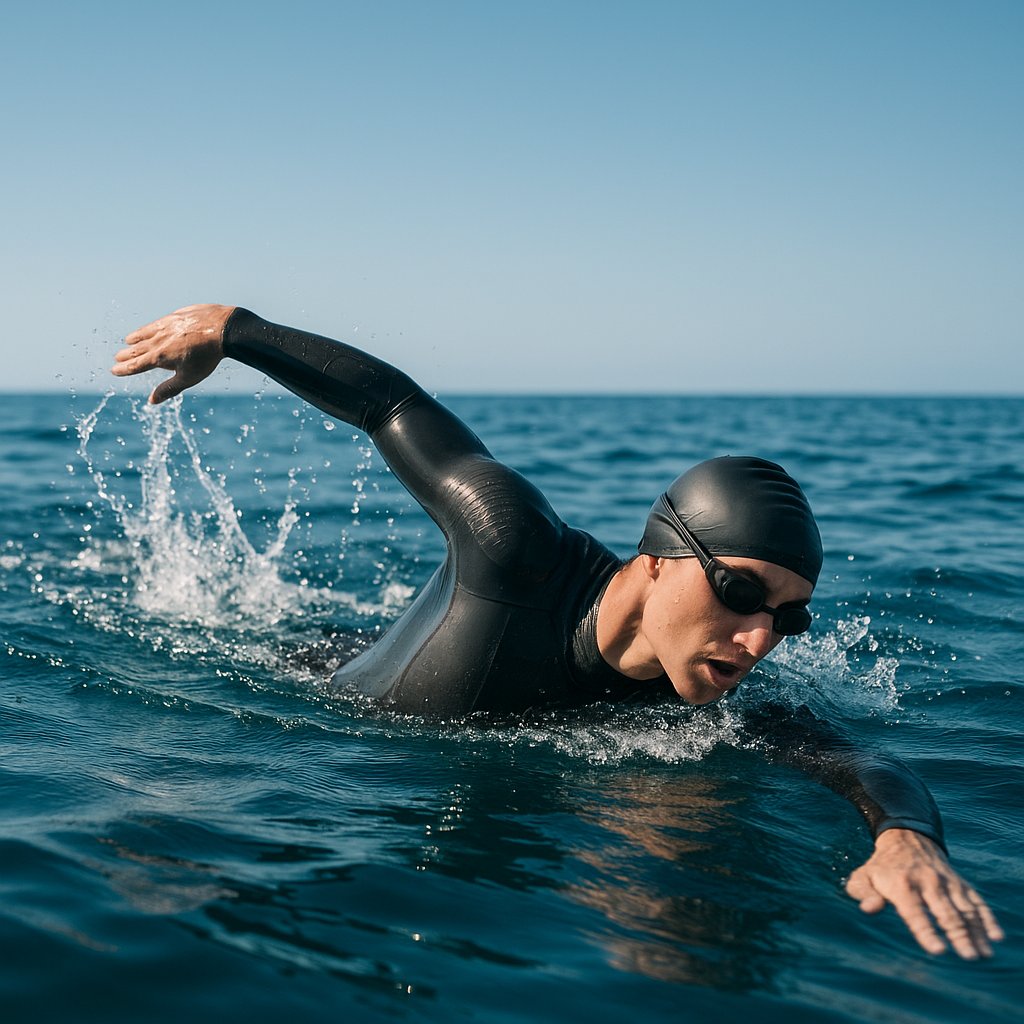
Calorie Burn Comparison: 30 Minutes of Swimming vs. Jogging
Running typically burns more calories than swimming in a 30-minute session, though the exact amount depends on body weight and exercise intensity. Both activities offer significant calorie expenditure for effective fitness routines.
Average Calorie Expenditure for Swimming
Swimming burns different amounts of calories based on stroke type and intensity level. A 155-pound person burns approximately 216 calories during 30 minutes of general swimming.
Calorie burn by swimming style:
- Leisurely swimming: 180-250 calories
- Moderate freestyle: 250-350 calories
- Vigorous butterfly stroke: 400-500 calories
Body weight significantly affects these numbers. Heavier individuals burn more calories during the same swimming session.
Swimming provides excellent calorie burn options through different strokes. The butterfly stroke demands the most energy, followed by freestyle and backstroke.
Water temperature also influences calorie expenditure. Cooler water forces the body to work harder to maintain core temperature, increasing overall energy consumption during exercise.
Average Calorie Expenditure for Jogging
Jogging consistently burns more calories than swimming across most intensity levels. A 155-pound person burns approximately 288 calories jogging for 30 minutes at a 12-minute mile pace.
Jogging calorie burn by pace:
- 12-minute mile: 250-300 calories
- 10-minute mile: 350-400 calories
- 8-minute mile: 450-500 calories

Running provides higher calorie burn compared to swimming. The weight-bearing nature of this exercise requires more energy expenditure than water-based activities.
Terrain affects jogging calorie burn significantly. Uphill running increases energy demands by 15-20% compared to flat surfaces.
Running maintains consistent calorie burn rates throughout the session. Unlike swimming, where technique variations can reduce efficiency, jogging provides steady energy expenditure.
Factors Affecting Calorie Burn
Body weight represents the most significant factor in calorie expenditure for both activities. Heavier individuals burn substantially more calories during identical exercise sessions.
Key factors influencing calorie burn:
- Body weight: 20-30% variation between light and heavy individuals
- Exercise intensity: Can double calorie expenditure
- Fitness level: Affects exercise efficiency
- Age and gender: Influence metabolic rate
Exercise intensity directly correlates with heart rate elevation and calorie burn. Higher intensity sessions produce greater energy expenditure in both swimming and running.
Individual fitness levels affect calorie burn efficiency. Well-traine
Influence of Exercise Intensity and Technique
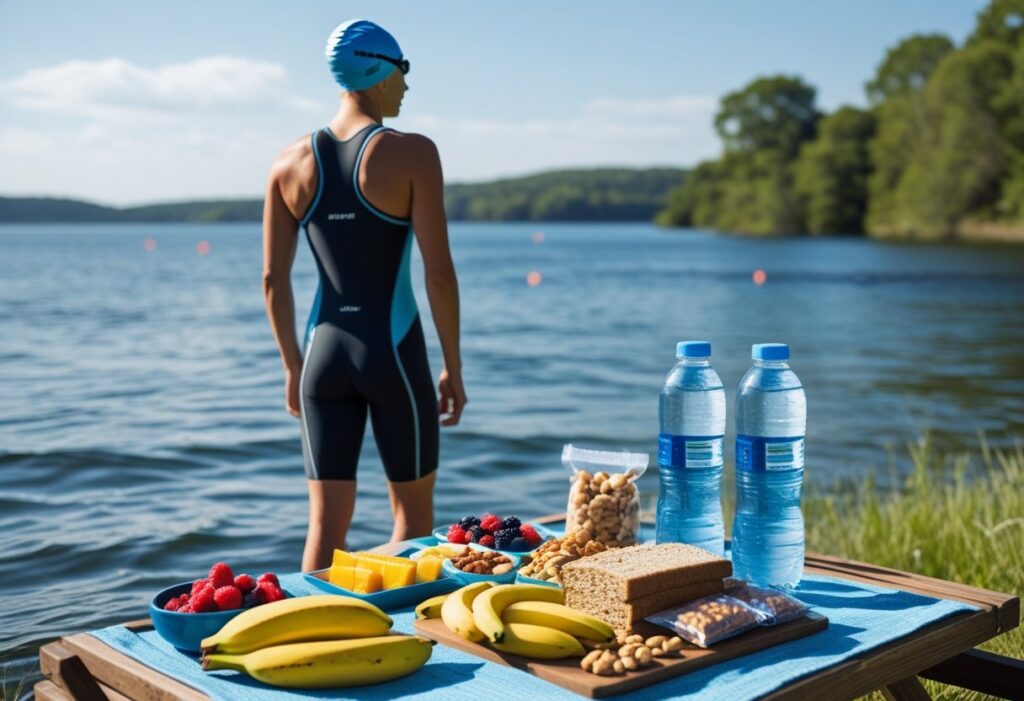
The intensity at which someone exercises and their technical proficiency dramatically affect calorie expenditure in both swimming and jogging. Swimming stroke selection can vary calorie burn by over 150 calories per 30-minute session, whilst jogging pace differences can create similar variations in energy output.
Impact of Swimming Strokes on Calorie Burn
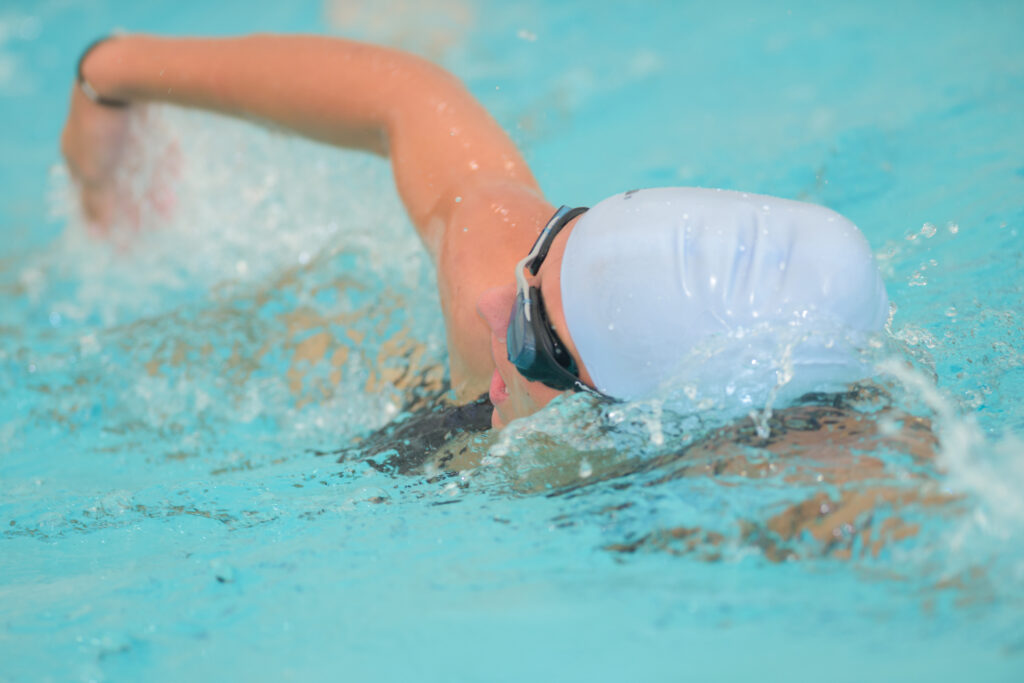
Different swimming strokes require varying levels of energy expenditure. The butterfly stroke burns the most calories at approximately 450 calories in 30 minutes.
The front crawl typically burns around 370-400 calories per 30-minute session. Backstroke burns slightly fewer calories at 350-380 calories. Breaststroke is the least demanding stroke, burning approximately 300-320 calories.
Stroke Calorie Comparison (30 minutes):
- Butterfly: 450 calories
- Front crawl: 370-400 calories
- Backstroke: 350-380 calories
- Breaststroke: 300-320 calories
Technical proficiency significantly affects these numbers. Less skilled swimmers might burn fewer calories due to frequent stops or inefficient strokes. Poor technique forces swimmers to rest more frequently, reducing overall exercise intensity.
Swimmers with proper form maintain consistent pace and breathing patterns. This allows them to sustain higher intensity levels throughout their workout, maximising calorie burn.
Jogging Speed and Calorie Output
Jogging pace directly correlates with calorie expenditure. Running at a 10-minute mile pace burns 370 calories per 30 minutes, whilst a 6-minute mile pace burns 548 calories for a 160-pound person.
Moderate jogging at 12-minute mile pace burns approximately 300 calories. This represents a significant difference of nearly 250 calories between leisurely and vigorous running intensities.
Jogging Pace Calorie Burn (30 minutes, 160-pound person):
- 6-minute mile: 548 calories
- 8-minute mile: 465 calories
- 10-minute mile: 370 calories
- 12-minute mile: 300 calories
Running technique also influences calorie burn, though less dramatically than swimming strokes. Efficient running form allows for sustained higher speeds with less energy waste.
Poor running form leads to early fatigue and reduced exercise intensity. Proper posture, foot strike, and breathing patterns enable runners to maintain challenging paces for longer periods.
Physical Benefits Beyond Calorie Burn
Swimming engages the entire body whilst running primarily targets the lower body, creating distinct differences in muscle development. Both exercises strengthen the heart and lungs, though they challenge the cardiovascular system in unique ways.
Full-Body vs. Lower-Body Engagement
Swimming provides comprehensive muscle activation across all major body regions. The water’s resistance forces swimmers to engage their arms, shoulders, back, core, and legs simultaneously during each stroke.
Upper body benefits include:
- Strengthened shoulders and arms
- Improved back muscle development
- Enhanced core stability
Running focuses predominantly on the lower body muscle groups. The repetitive motion primarily targets the legs, glutes, and core muscles whilst providing minimal upper body engagement.
Lower body benefits include:
- Stronger quadriceps and hamstrings
- Improved calf muscle endurance
- Enhanced glute activation
The full-body workout in swimming recruits nearly every major muscle group. This comprehensive engagement makes it particularly effective for balanced muscle development.
Running’s targeted approach builds powerful leg muscles. However, swimmers develop more evenly distributed muscle tone throughout their entire physique.
Cardiovascular and Muscular Development
Both exercises create significant cardiovascular adaptations, though through different mechanisms. Swimming and running both strengthen the heart, particularly the left ventricle responsible for pumping oxygen-rich blood.
Running typically produces slightly greater cardiac adaptations. The upright position forces the heart to work against gravity, requiring increased cardiovascular output compared to swimming’s horizontal position.
Key cardiovascular benefits:
- Increased heart muscle strength
- Improved oxygen delivery capacity
- Enhanced circulation efficiency
Swimming offers superior joint protection during cardiovascular training. The buoyant environment eliminates impact stress on knees, hips, and ankles whilst maintaining intense cardio benefits.
Muscular endurance develops differently between the two activities. Swimming builds stamina across multiple muscle groups simultaneously, whilst running creates exceptional leg muscle endurance.
The water’s constant resistance in swimming provides natural strength training. This resistance helps develop both cardiovascular fitness and muscular endurance without additional equipment.
Joint Health and Accessibility Considerations
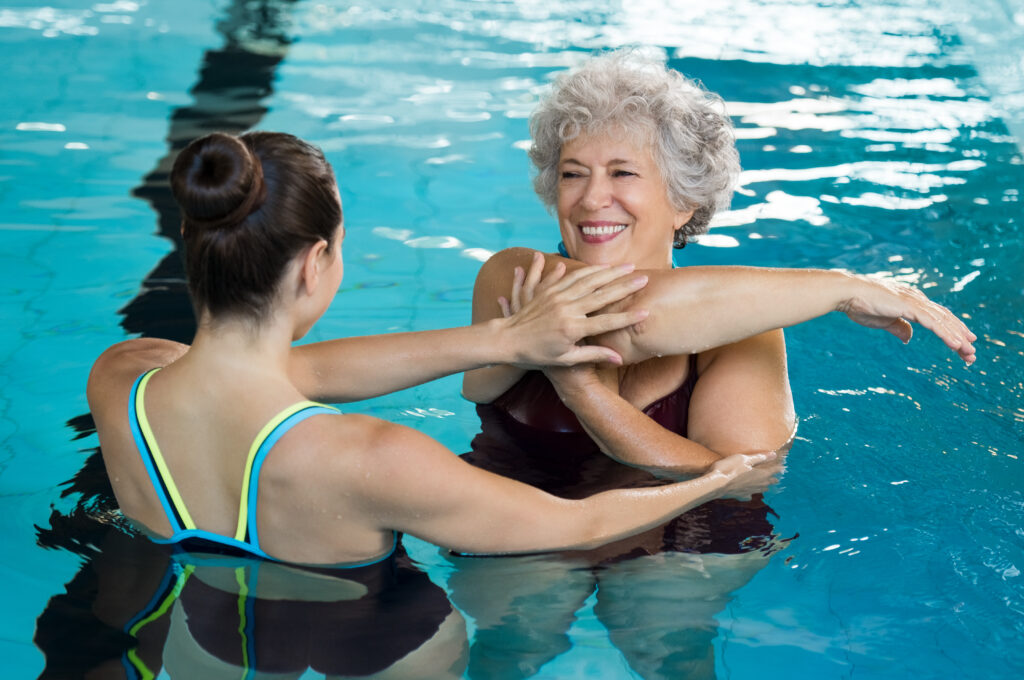
Swimming places virtually no stress on joints due to water’s buoyancy, whilst jogging creates significant impact forces that can strain knees, hips, and ankles. People with arthritis or joint problems often find swimming more accessible than high-impact running activities.
Low-Impact Nature of Swimming
Water supports up to 90% of body weight during swimming. This buoyancy reduces stress on joints significantly compared to land-based activities.
The resistance from water provides strength training benefits without jarring movements. Each stroke works multiple muscle groups simultaneously whilst protecting delicate joint structures.
Key benefits for joint health:
- Minimal impact on knees and hips
- Reduced inflammation in arthritic joints
- Improved flexibility through full range of motion
- Safe exercise option during injury recovery
People with arthritis often experience less pain during swimming sessions. The warm water in heated pools can further reduce joint stiffness.
Swimming allows individuals with mobility limitations to exercise effectively. Those using wheelchairs or walking aids can often swim independently with proper pool access.
Jogging and Joint Stress: Who Should Take Care?
Each footstrike during jogging creates impact forces of 2-3 times body weight. This repetitive stress affects knees, ankles, and hips over time.
Higher risk individuals should consider alternatives:
- People over 50 with existing joint problems
- Those with previous knee or hip injuries
- Individuals carrying excess weight
- Anyone experiencing joint pain during running
Running burns more calories per minute than swimming but may not be sustainable for everyone. Joint pain can force people to stop exercising entirely.
Proper running shoes and soft surfaces can reduce impact somewhat. However, the fundamental stress on joints remains higher than swimming.
People with arthritis should consult healthcare providers before starting jogging programmes. The condition may worsen with high-impact activities.
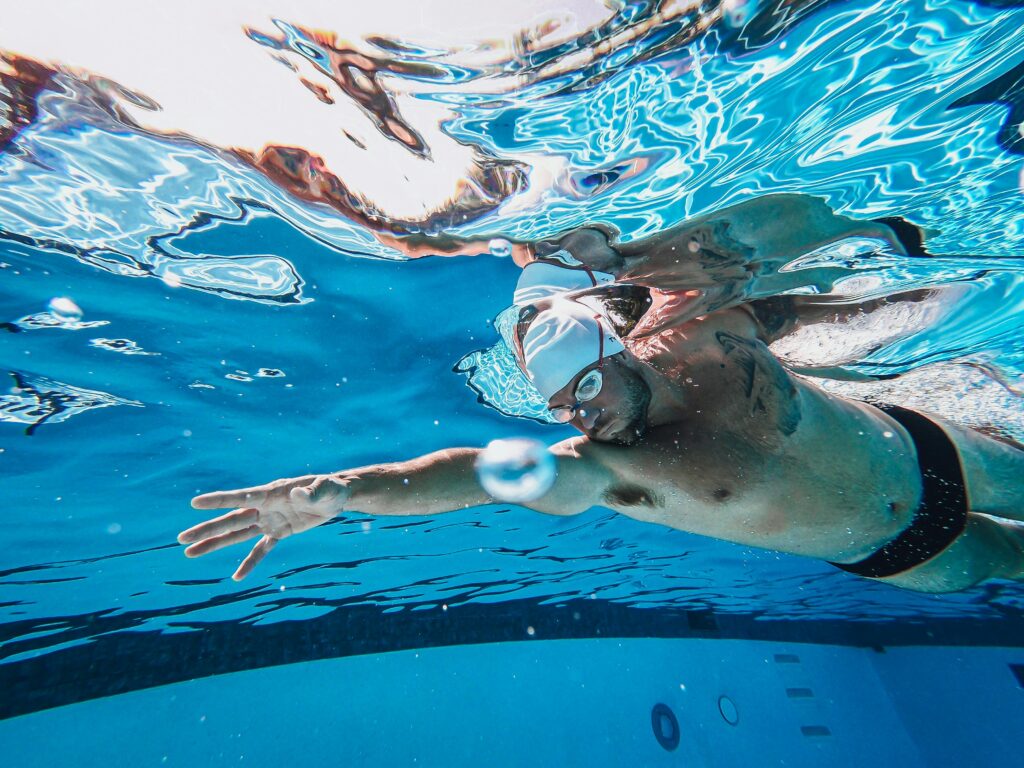
Suitability for Weight Management and Different Populations
Swimming provides exceptional benefits for individuals with joint conditions, whilst both activities accommodate different age groups and fitness levels. Each exercise offers distinct advantages depending on physical limitations and accessibility requirements.
Exercise Choices for Individuals with Arthritis
Swimming offers perfect conditions for those with joint issues due to water’s natural buoyancy properties. The water supports body weight and reduces stress on joints by up to 90%.
People with arthritis can exercise longer in water without experiencing the pain associated with high-impact activities. The warm water temperature in heated pools also helps reduce joint stiffness and muscle tension.
Key benefits for arthritis sufferers:
- Reduced joint compression
- Improved flexibility and range of motion
- Decreased inflammation
- Pain-free movement patterns
Jogging places significant stress on weight-bearing joints including knees, hips, and ankles. This impact can worsen arthritis symptoms and limit exercise duration.
However, some individuals with mild arthritis may tolerate light jogging on soft surfaces. Proper footwear and gradual progression remain essential for joint protection.
Age, Skill Level and Accessibility
Swimming requires basic water confidence and access to suitable facilities. Many adults lack swimming skills, which limits their ability to maintain proper form for 30 minutes.
Pool availability varies significantly by location and often involves membership costs. Weather conditions don’t affect indoor swimming, but outdoor pools have seasonal limitations.
Swimming considerations:
- Requires swimming technique
- Pool access needed
- Year-round availability indoors
- Equipment minimal (swimwear, goggles)
Jogging demands no special skills beyond walking ability. Most people can begin jogging immediately with proper footwear as the only requirement.
The activity remains accessible in most environments including streets, parks, and treadmills. Weather conditions may limit outdoor jogging but don’t prevent indoor alternatives.
Older adults often find swimming gentler on their cardiovascular system. The horizontal position reduces strain on the heart compared to upright jogging positions.
Making the Right Choice for Your Fitness Goals
The decision between swimming and jogging depends on individual preferences, physical limitations, and long-term fitness objectives. Creating a sustainable routine requires balancing personal motivation with practical considerations to achieve optimal results.
Personal Preferences and Motivation
Individual preferences play a crucial role in exercise adherence and long-term success. Some people thrive in water environments whilst others prefer the simplicity of putting on trainers and heading outdoors.
Physical considerations significantly impact choice:
- Joint problems or injuries favour swimming’s low-impact nature
- Limited pool access makes running more practical
- Weather conditions affect outdoor jogging availability
Skill level influences calorie burn effectiveness. Swimming technique affects cardiovascular benefits significantly. Beginners may struggle to maintain intensity in water, reducing overall calorie expenditure.
Time constraints matter for busy schedules. Running requires minimal preparation – just proper footwear and appropriate clothing. Swimming involves travel time to facilities, changing, and post-workout routines.
Personal enjoyment drives consistency. Those who find swimming meditative and relaxing will likely maintain this exercise longer. Others prefer running’s mental clarity and outdoor connection.
Building a Balanced Fitness Routine
A well-rounded fitness approach often combines both activities rather than choosing exclusively. Cross-training between swimming and running reduces overuse injuries whilst developing balanced fitness.
Weekly structure might include:
- 2-3 running sessions for cardiovascular fitness and bone density
- 1-2 swimming sessions for active recovery and full-body conditioning
- Rest days for muscle repair
Seasonal variation maximises year-round consistency. Summer months favour outdoor running and open-water swimming. Winter conditions make indoor pools more appealing than cold, wet roads.
Injury prevention benefits from alternating impact levels. Running’s high-impact nature strengthens bones but stresses joints. Swimming provides cardiovascular maintenance during recovery periods without additional joint strain.
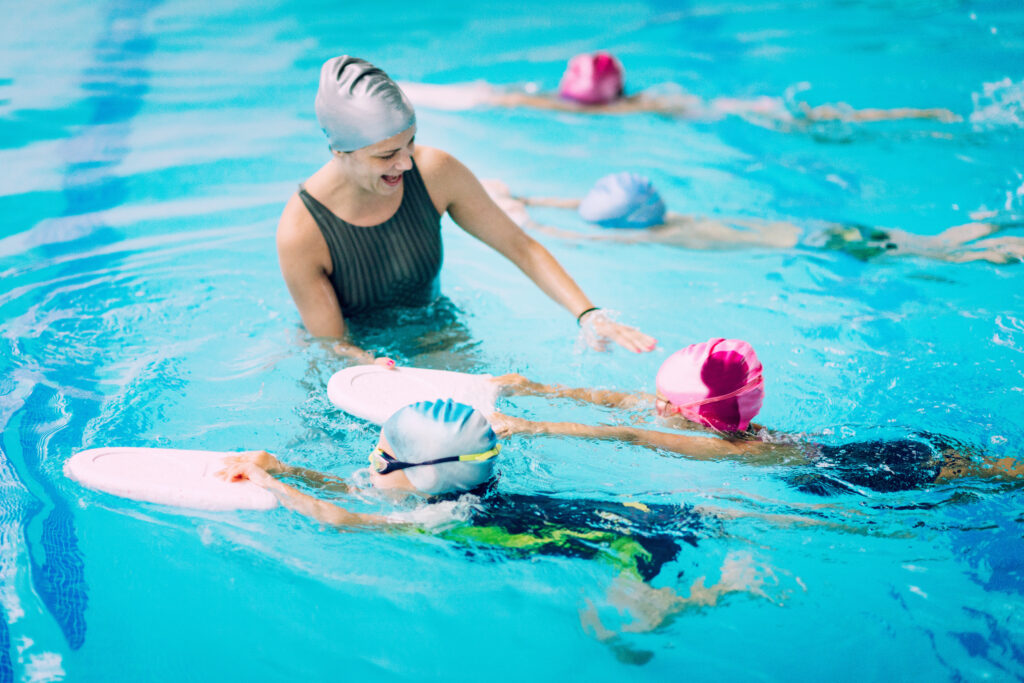
Skill development improves over time with consistent practice. Poor swimmers can work with instructors to improve technique, increasing calorie burn potential. Runners can incorporate interval training to boost intensity and metabolic benefits.
Frequently Asked Questions
People often have specific questions about calorie burn rates between swimming and jogging. The answers depend on factors like body weight, exercise intensity, and individual fitness levels.
Which activity is more effective for losing belly fat, swimming or jogging?
Both swimming and jogging can help reduce belly fat through overall calorie burn. Neither exercise specifically targets belly fat alone.
Jogging typically burns more calories per minute than swimming. A 30-minute jogging session usually creates a larger calorie deficit than swimming for the same duration.
Swimming engages more muscle groups simultaneously. This full-body workout can boost metabolism and contribute to fat loss throughout the body.
The most effective activity is the one a person can maintain consistently. Regular exercise habits matter more than choosing the “perfect” exercise for spot reduction.
How does the calorie burn from swimming compare to jogging?
Research shows that jogging generally burns more calories than swimming in a 30-minute session. The exact difference depends on intensity and individual factors.
A 160-pound person jogging at a 10-minute mile pace burns approximately 370 calories in 30 minutes. Swimming at moderate intensity burns about 312 calories for the same person and duration.
Fast-paced jogging can burn up to 548 calories in 30 minutes. Quick swimming reaches around 378 calories in the same timeframe.
Swimming technique affects calorie burn significantly. Inexperienced swimmers may burn fewer calories due to frequent rest breaks or inefficient strokes.
Can you burn more calories by swimming than walking for the same duration?
Swimming burns significantly more calories than walking for the same time period. Swimming is a more intense cardiovascular exercise.
A 30-minute swimming session typically burns 250-400 calories depending on intensity. Walking for 30 minutes usually burns 120-200 calories for most people.
Water resistance makes swimming more challenging than walking. The body works harder to move through water than air.
Swimming engages upper and lower body muscles simultaneously. Walking primarily uses leg muscles with minimal upper body involvement.
What is the average calorie expenditure from a 30-minute swimming session?
The average person burns 250-400 calories during 30 minutes of swimming. Body weight and swimming intensity are the main factors affecting this range.
Moderate swimming pace burns approximately 300-350 calories for most adults. Swimming at 50 yards per minute burns about 312 calories for a 160-pound person.
Fast swimming increases calorie burn to 350-400 calories per session. Different strokes also affect energy expenditure rates.
Heavier individuals burn more calories than lighter people. A 200-pound person burns roughly 25% more calories than a 160-pound person at the same intensity.
For improving cardiovascular health, should one opt for swimming or jogging?
Both swimming and jogging provide excellent cardiovascular benefits. Research indicates that both activities strengthen the heart and improve overall fitness.
Jogging may provide slightly greater cardiovascular adaptations. The upright position forces the heart to work against gravity, creating additional cardiovascular stress.
Swimming offers joint-friendly cardiovascular exercise. People with knee, hip, or ankle problems can maintain fitness without impact stress.
Both activities meet the definition of cardiovascular exercise by raising heart rate and increasing oxygen consumption. Personal preference and physical limitations should guide the choice.
Where can I find a calculator to estimate the calories burned while swimming?
Many fitness websites offer swimming calorie calculators. These tools typically require body weight, swimming duration, and stroke type or intensity level.
Online jogging calculators are more common than swimming-specific tools. Some multi-sport calculators include swimming options alongside other activities.
Fitness apps on smartphones often include swimming tracking features. These apps can estimate calories based on time, stroke count, and personal data.
General calorie calculators may provide swimming estimates. However, specialised swimming calculators offer more accurate results by accounting for stroke efficiency and water temperature.