Getting into the pool for the first time can feel like stepping into the unknown. You might not know how many lengths to swim, when to rest, or even how to breathe properly while moving through the water. The good news is that a structured swimming workout for beginners removes all of that guesswork and gives you a clear plan to follow from the moment you push off the wall.
The secret to enjoying your first swimming workouts for beginners is keeping things simple, building in plenty of rest, and focusing on how your body feels rather than chasing speed or distance. Swimming is one of the most effective ways to swim for fitness because it works your entire body without stressing your joints, and a well-designed beginner swimming workout lets you tap into those benefits from day one.
This guide walks you through everything you need for your first sessions and beyond. You will find a ready-to-use pool routine, practical advice on pacing and breathing, gear recommendations, and three progressive workouts designed to build your confidence, endurance, and technique week by week. Whether you are a complete newcomer or returning to the pool after years away, these routines will help you feel comfortable, capable, and genuinely excited about your next swim.
Your First Session: A Simple Beginner Pool Routine
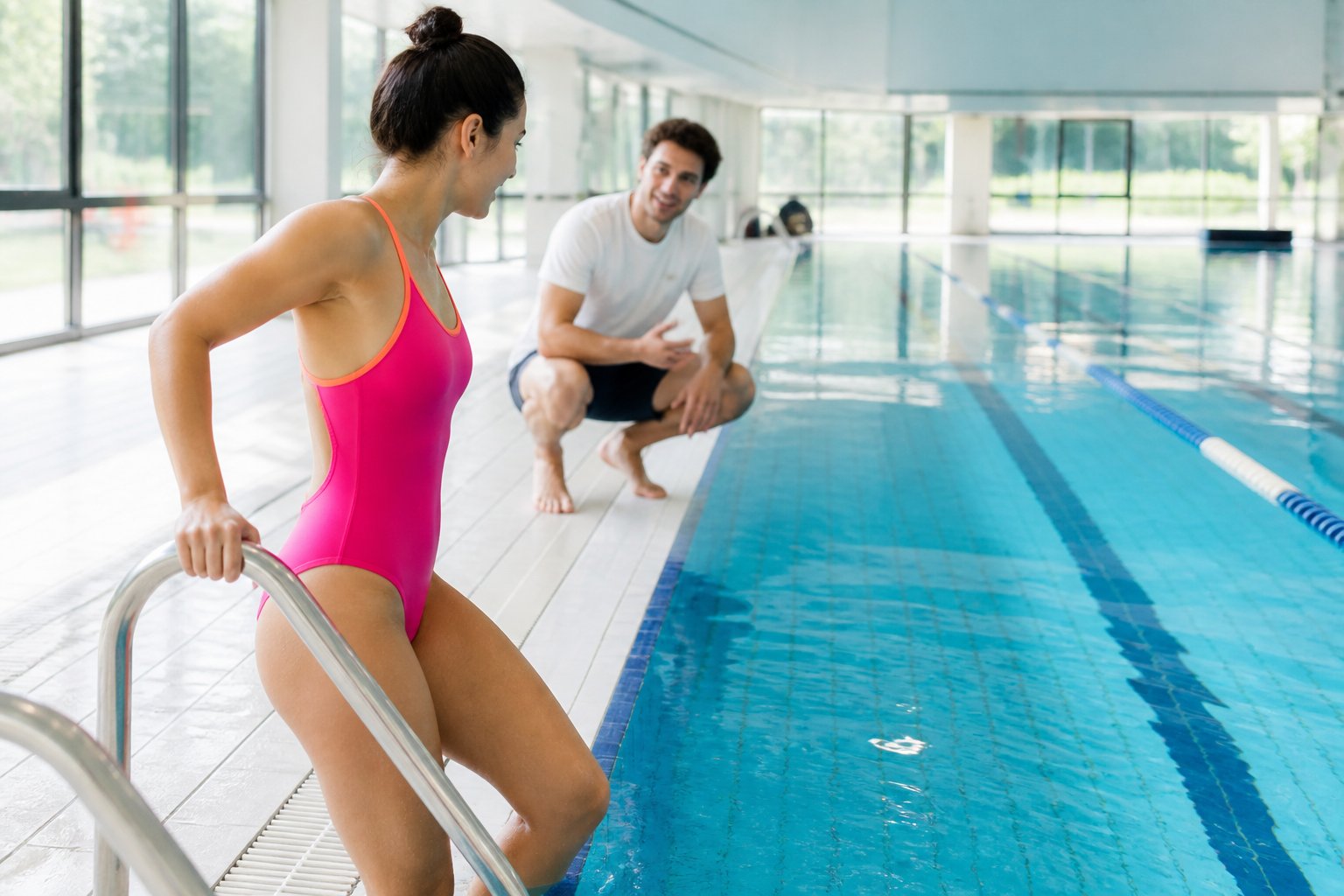
A solid beginner swim workout has three distinct parts: a gentle warm-up, a main set that mixes freestyle and breaststroke, and a warm down that brings your heart rate back to normal. Even with rest periods built in, you can complete this swim workout comfortably within 30 minutes.
Gentle Warm-Up To Settle Into The Water
Resist the urge to launch straight into lengths. Your warm-up is about letting your body adjust to the temperature, loosening your shoulders, and finding a rhythm with your breathing.
Start with 4 x 25 metres at a very easy pace, alternating between freestyle and breaststroke. Take 20 to 30 seconds of rest at the wall after each 25 metres. If a full 25 metres feels too far, push off the wall, swim as far as you can comfortably, then walk the rest. There is absolutely no shame in that.
After those four lengths, spend a minute or two doing some gentle bobs at the wall, submerging your face, and blowing bubbles to settle your breathing. This alone makes a remarkable difference to how relaxed you feel for the rest of the session.
Main Set Using Freestyle And Breaststroke
The main set is where you start building fitness, but it should never feel punishing. Try this structure:
- 4 x 25m freestyle at a comfortable pace, with 30 seconds rest between each
- 4 x 25m breaststroke at a comfortable pace, with 30 seconds rest between each
- 2 x 50m alternating 25m freestyle and 25m breaststroke, with 45 seconds rest between each
That gives you 400 metres of swimming in manageable chunks. Focus on smooth, controlled strokes rather than speed. If you find yourself gasping at the wall, you are pushing too hard.
Rest Periods And How Long To Pause
Rest is not a weakness in your beginner swim workout. It is the mechanism that lets you maintain good technique throughout the session. As a rule of thumb, take at least 20 to 30 seconds between 25-metre efforts and 30 to 45 seconds between 50-metre efforts.
Watch how your breathing recovers during rest. You should be able to speak a full sentence before pushing off again. If you cannot, give yourself more time. As fitness improves over the coming weeks, you will naturally need less rest without forcing it.
Warm Down To Finish Comfortably
Never skip the warm down, even if you feel fine. Swim 2 x 25 metres at the easiest pace you can manage, focusing purely on long, smooth strokes. Breaststroke works especially well here because it lets you keep your head above water and breathe naturally.
Follow this with a minute of gentle stretching at the poolside, paying attention to your shoulders, triceps, and calves. This simple habit helps prevent stiffness the next day and signals to your body that the session is done. Your total distance for this 30-minute swimming workout comes to roughly 450 to 500 metres, which is an excellent starting point.
How To Pace Yourself Without Getting Exhausted
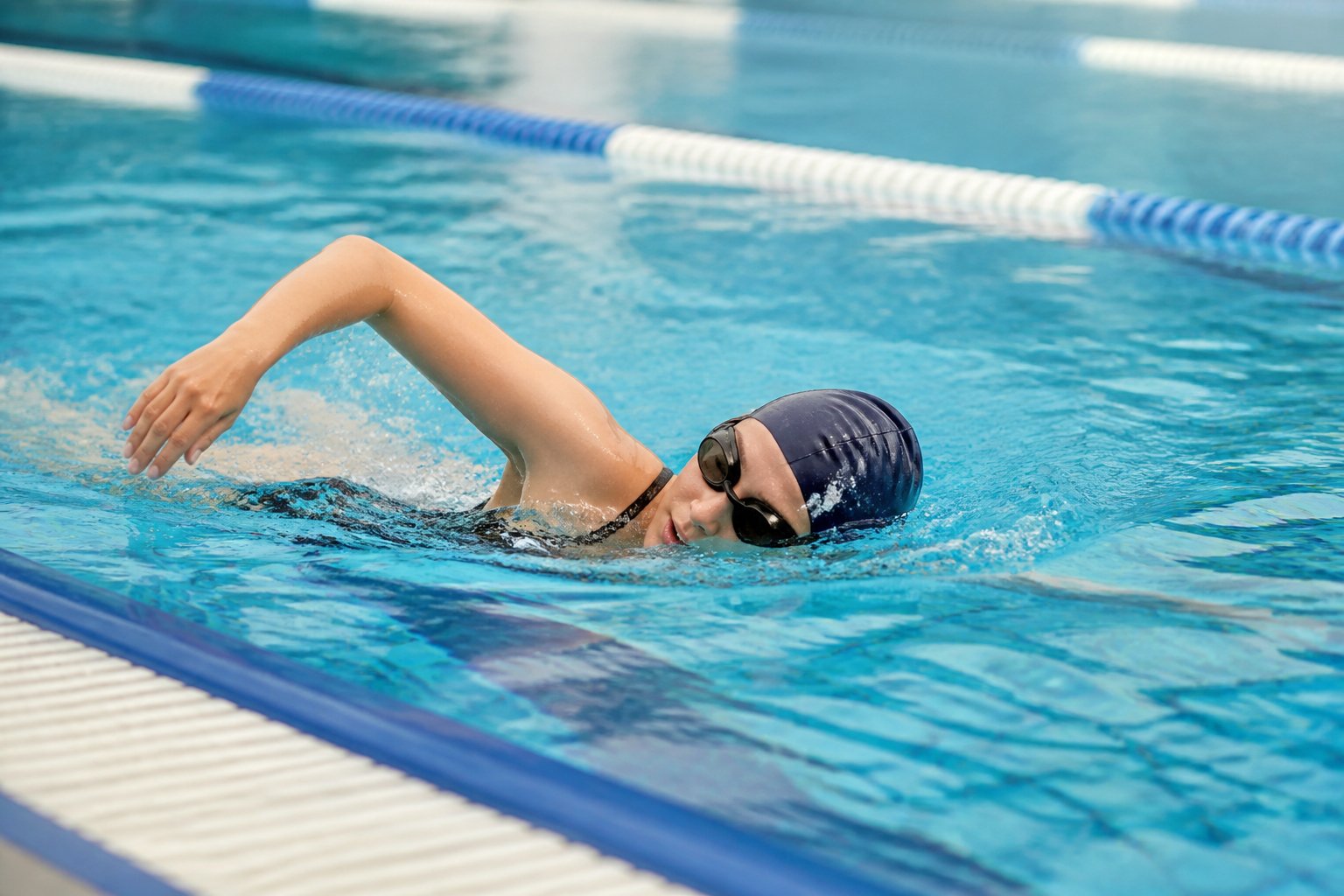
One of the biggest mistakes in early swimming workouts is treating every length like a race. Proper pacing means you finish your swim workouts feeling energised rather than wiped out, and it is the single fastest way to make your sessions more enjoyable and sustainable.
Why Short Repeats Work Better Than Non-Stop Lengths
Swimming continuously until you are exhausted teaches your body very little. You end up thrashing through the water with deteriorating technique, which actually reinforces bad habits. Short repeats of 25 or 50 metres with structured rest allow you to maintain form, control your breathing, and swim each effort with intention.
Think of it like the difference between sprinting until you collapse and doing a well-planned interval session. Even a hiit swim approach works best when built around short, focused efforts with recovery between them. You will cover the same distance but arrive at the end of the session feeling accomplished rather than destroyed.
How To Judge Easy, Steady And Hard Effort
You do not need a heart rate monitor or a fancy swim watch to judge effort. Use this simple framework:
| Effort Level | How It Feels | Breathing | When To Use It |
|---|---|---|---|
| Easy | Relaxed, could swim all day | Calm, controlled | Warm-up, warm down, recovery lengths |
| Steady | Purposeful, slightly challenged | Slightly elevated but manageable | Main set, endurance building |
| Hard | Pushing your limits, unsustainable for long | Heavy, need rest after | Short sprints, fitness intervals |
For your first few weeks, aim to spend about 80% of your swim workouts at easy to steady effort. Hard effort should be reserved for occasional short bursts of no more than 25 metres.
When To Stop, Reset And Start Again
If you reach the wall and feel dizzy, nauseous, or unable to catch your breath after 60 seconds of rest, your body is telling you something important. Stop the set, hold the wall, and spend a couple of minutes breathing slowly before deciding whether to continue or call it a day.
Cutting a session short is not failure. It is intelligent training. You will gain far more from three consistent sessions a week at moderate effort than from one heroic session that leaves you dreading the pool. Listen to your body, adjust in the moment, and remember that every swim makes the next one easier.
Breathing, Relaxation And Water Confidence
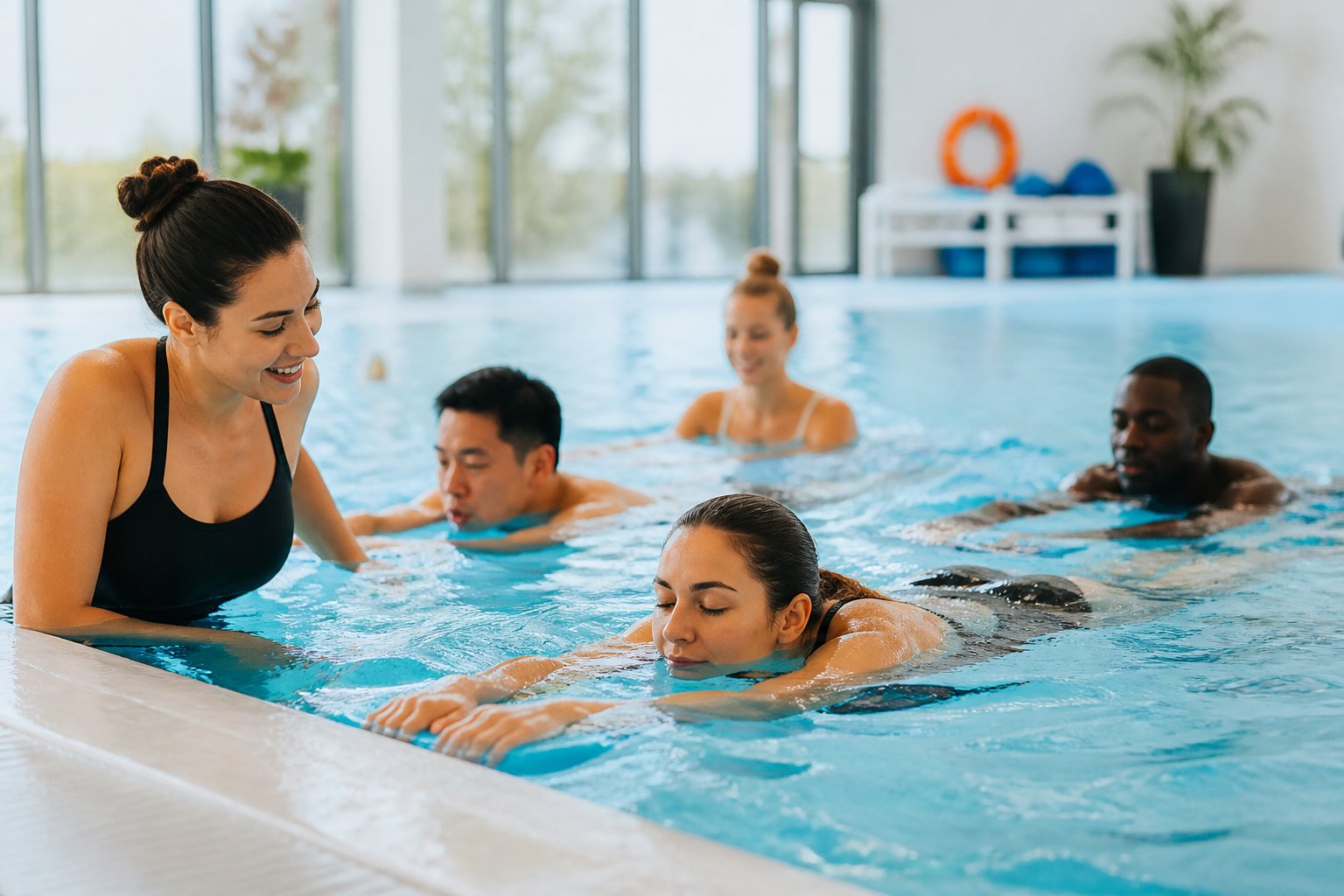
Breathing is the foundation of every successful swimming workout for beginners. When your breathing is under control, your body relaxes, your strokes smooth out, and the water starts to feel like a comfortable place rather than a threatening one. This section is arguably the most important in your entire beginner swim workout journey.
Exhaling Underwater Without Panicking
The instinct to hold your breath underwater is powerful, but it is also the primary cause of that tight, panicky feeling many new swimmers experience. The fix is simple in theory: exhale continuously through your nose or mouth whenever your face is in the water.
Practise this at the wall before you even start swimming. Take a breath, submerge your face, and blow a steady stream of bubbles for three to four seconds. Lift your head, breathe in, and repeat. Do this ten times at the start of each session until it becomes automatic. You will be surprised how quickly the anxiety fades once you master this single skill.
Staying Relaxed During Freestyle
Tension is the enemy of efficient freestyle. When you grip the water too hard, hunch your shoulders, or kick frantically, you burn through energy at an alarming rate.
Focus on three things: a loose grip with slightly spread fingers, relaxed shoulders that rotate naturally with each stroke, and a gentle flutter kick from the hips rather than the knees. If you notice yourself tensing up mid-length, slow down deliberately. Sometimes swimming slower for a few strokes is all it takes to reset your body and regain composure.
Using Breaststroke To Regain Control
Breaststroke is your best friend as a beginner. Because your head comes above the water naturally during each stroke cycle, it gives you a reliable chance to breathe without the coordination demands of freestyle breathing.
Whenever you feel overwhelmed during a swim, switch to breaststroke. There is nothing wrong with mixing strokes mid-length. In fact, experienced swimmers do this regularly during warm-ups and recovery sets. Use breaststroke as a reset button, a way to catch your breath, calm your mind, and then decide whether to continue with freestyle or finish the length at an easy breaststroke pace.
Confidence Tips For Nervous Swimmers
If deep water makes you anxious, start your sessions in the shallow end and gradually work your way deeper over several visits. Staying close to the lane rope or the wall can also provide reassurance.
Consider these practical steps:
- Always swim when a lifeguard is on duty
- Choose quieter pool times so you have more space
- Wear well-fitting goggles so you can see clearly underwater
- Set small, achievable goals for each session rather than thinking about total distance
- Celebrate progress, even if it is just one more length than last week
Swimmers World has a range of articles on overcoming fear of deep water and building mental confidence, which are well worth exploring if nervousness is holding you back.
Gear That Can Make Early Sessions Easier
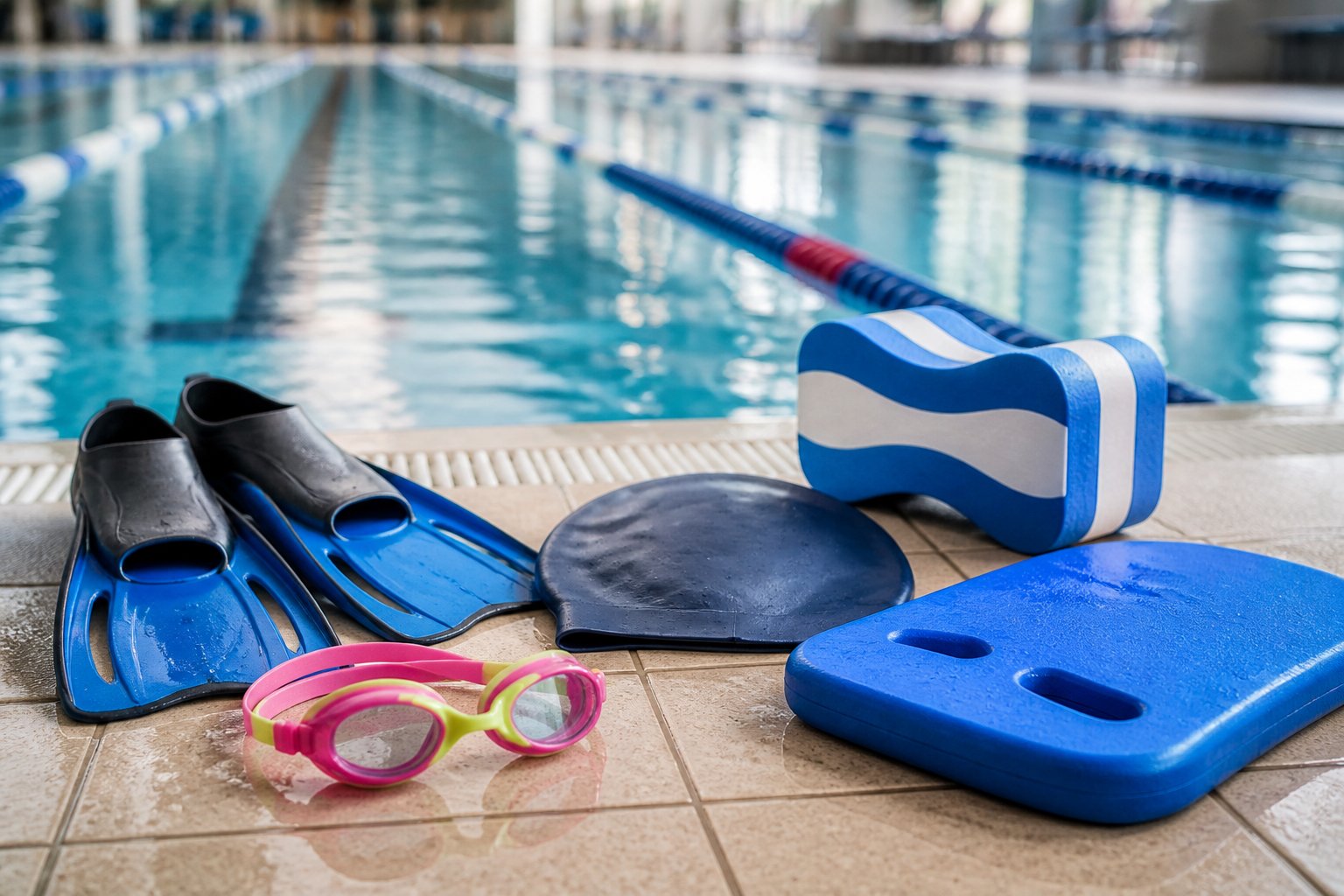
You do not need a bag full of equipment to get started, but a few well-chosen items can make your early sessions significantly more comfortable and productive. The right gear removes distractions and lets you focus on technique and enjoyment.
Choosing Swim Goggles That Fit Properly
Swim goggles are the single most important piece of equipment you will buy. Poorly fitting goggles leak, fog up, and cause discomfort that ruins your concentration.
When trying goggles on, press them gently against your eye sockets without pulling the strap over your head. They should create a light suction and stay in place for a second or two. If they fall off immediately, the seal is wrong for your face shape. Look for goggles with adjustable nose bridges and soft silicone gaskets. Spending a little extra on a comfortable pair is always worthwhile because you will wear them every single session.
When To Use A Kickboard
A kickboard isolates your legs and lets you practise your kick without worrying about arm coordination or breathing to the side. It is particularly useful in your first few weeks when everything feels like it needs attention at once.
Hold the kickboard at the far end with straight arms, keep your face in the water, and kick from your hips with a gentle flutter. Lift your head to breathe when needed. Even two or three lengths with a kickboard at the end of your warm-up can dramatically improve your kick technique and leg fitness over time.
How A Pull Buoy Changes The Session
A pull buoy is a foam float that sits between your thighs, lifting your hips and legs to the surface. This removes the need to kick, allowing you to focus entirely on your arm stroke and breathing.
For beginners, a pull buoy is revelatory. It shows you what good body position feels like without having to work for it. Use it for short sets of 2 x 25 or 2 x 50 metres and pay attention to how much easier it feels to glide through the water. That sensation is what you are aiming to replicate without the buoy as your technique improves.
Where Fins And A Snorkel Can Help Beginners
Fins add propulsion and make swimming feel almost effortless, which is exactly why they are so useful early on. Short-blade fins are best for pool training because they provide extra speed without encouraging lazy technique. Use them sparingly to experience a faster, smoother stroke and to build ankle flexibility.
A front-mounted snorkel eliminates breathing as a variable altogether. You can swim freestyle with your face in the water, focusing purely on your stroke mechanics, body rotation, and kick. It is an outstanding tool for sessions where you want to work on technique without the distraction of turning your head to breathe. Even ten minutes with a snorkel can accelerate your progress noticeably.
Three Progressive Workouts To Build Consistency
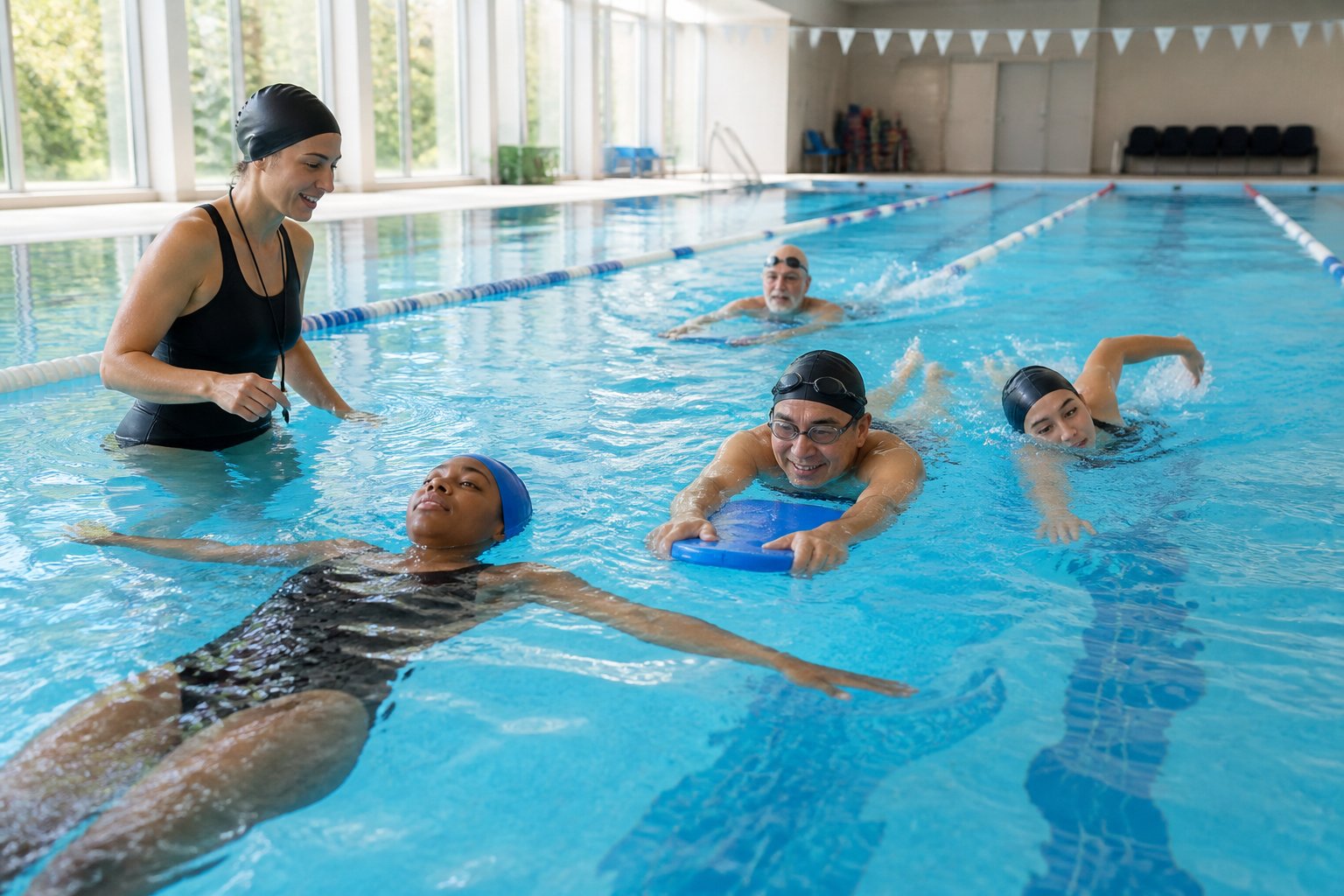
These three swim workouts for beginners are designed to be used in sequence over your first few weeks. Each one builds on the last, gradually increasing distance and reducing rest while keeping the challenge manageable and rewarding.
Beginner Swim Workout #1: Confidence And Technique
This first workout is all about getting comfortable and establishing good habits. Do not worry about speed or distance.
Warm-Up:
- 4 x 25m easy breaststroke, 30 seconds rest between each
Main Set:
- 4 x 25m freestyle at easy effort, 30 seconds rest
- 4 x 25m breaststroke at easy effort, 30 seconds rest
- 2 x 25m freestyle focusing on exhaling underwater, 30 seconds rest
Warm Down:
- 2 x 25m very easy breaststroke, 20 seconds rest
Total Distance: 400m\
Focus: Smooth strokes, continuous exhaling underwater, relaxed shoulders
Beginner Swim Workout #2: Easy Endurance
Now that you have a few sessions behind you, it is time to extend the distances slightly and introduce 50-metre repeats.
Warm-Up:
- 100m easy swim, alternating 25m freestyle and 25m breaststroke
Main Set:
- 4 x 50m freestyle at steady effort, 30 seconds rest
- 4 x 25m breaststroke at easy effort, 20 seconds rest
- 2 x 50m alternating strokes each 25m, 30 seconds rest
Warm Down:
- 100m very easy breaststroke, no stopping if possible
Total Distance: 600m\
Focus: Maintaining steady effort across longer repeats, controlled breathing at the wall
Beginner Swim Workout #3: Fitness And Flow
This workout introduces a touch more structure and asks you to think about effort levels. You should feel pleasantly tired at the end, not shattered.
Warm-Up:
- 200m easy swim, mixing freestyle and breaststroke as you wish
Main Set:
- 6 x 50m freestyle at steady effort, 25 seconds rest
- 4 x 25m breaststroke at slightly harder effort, 20 seconds rest
- 2 x 100m alternating 25m freestyle and 25m breaststroke, 45 seconds rest
Warm Down:
- 4 x 25m easy choice of stroke, 15 seconds rest
Total Distance: 900m\
Focus: Consistent pacing across the main set, reducing rest slightly, finishing the warm down feeling relaxed
Aim to repeat each workout two or three times before moving on to the next. Consistency matters far more than progression speed.
What To Do After The First Few Weeks
Once you have completed the three progressive workouts a few times each, you are no longer a complete beginner. Your body has adapted, your breathing is more controlled, and the pool feels familiar. The next step is building on that foundation without overreaching.
How Often To Swim Each Week
Two sessions per week is the minimum to see genuine improvement. Three sessions is ideal for most people balancing work, family, and other commitments. If you can manage three swims a week with at least one rest day between sessions, your technique and fitness will progress steadily.
Avoid the temptation to swim every day in a burst of early enthusiasm. Your muscles, tendons, and shoulders need recovery time, especially in these early months. Consistent frequency over many weeks beats sporadic intensity every time.
When To Increase Distance Or Reduce Rest
A reliable rule: once you can complete a workout comfortably and your breathing recovers within 15 to 20 seconds at the wall, you are ready to make it slightly harder. You have two options, but do not use both at once.
- Increase distance by adding one or two extra repeats to the main set
- Reduce rest by cutting 5 to 10 seconds off each rest interval
Small adjustments compound quickly. Adding just 100 metres to your total swim workouts each week means you will be swimming over 1,500 metres per session within a couple of months.
Trying Variety With Other Strokes And An IM Workout
Once freestyle and breaststroke feel comfortable, consider introducing backstroke. It develops different muscle groups and gives your shoulders a break from the forward rotation of freestyle.
When you are feeling adventurous, try an IM workout. IM stands for individual medley and involves swimming all four strokes in sequence: butterfly, backstroke, breaststroke, and freestyle. You do not need to be brilliant at butterfly to give it a go. Even a few metres of butterfly arms with a dolphin kick adds variety and challenges your coordination. A simple beginner IM set might be 4 x 100m IM with 45 seconds rest, substituting a length of easy freestyle for butterfly if needed.
Signs You Are Ready For Longer Sessions
Look for these indicators that your body and mind are prepared to step up:
- You finish sessions feeling energised rather than exhausted
- Your stroke count per length has become more consistent
- Rest periods feel too long and you are eager to push off again
- You can swim 50 metres of freestyle without stopping to catch your breath
- You find yourself thinking about swimming on your rest days
When several of these signs appear together, you are ready to explore longer sessions of 45 minutes to an hour, more structured training sets, and perhaps even your first open water swim. Swimmers World publishes plenty of guides on the next steps, from race pace training to outdoor swimming in the UK, so you will never run out of ways to challenge yourself.