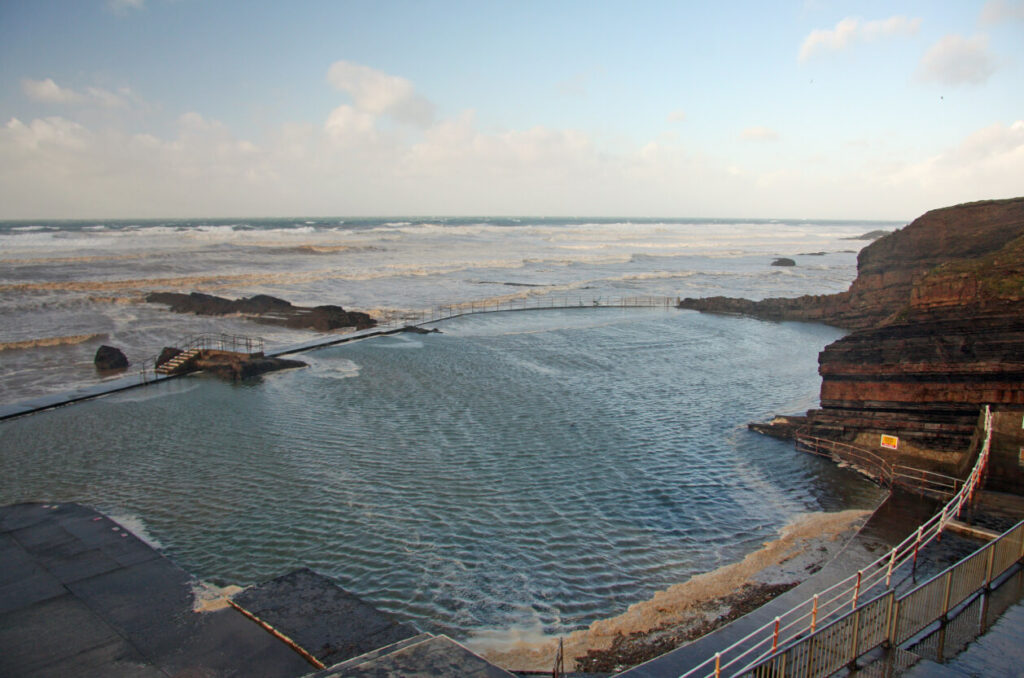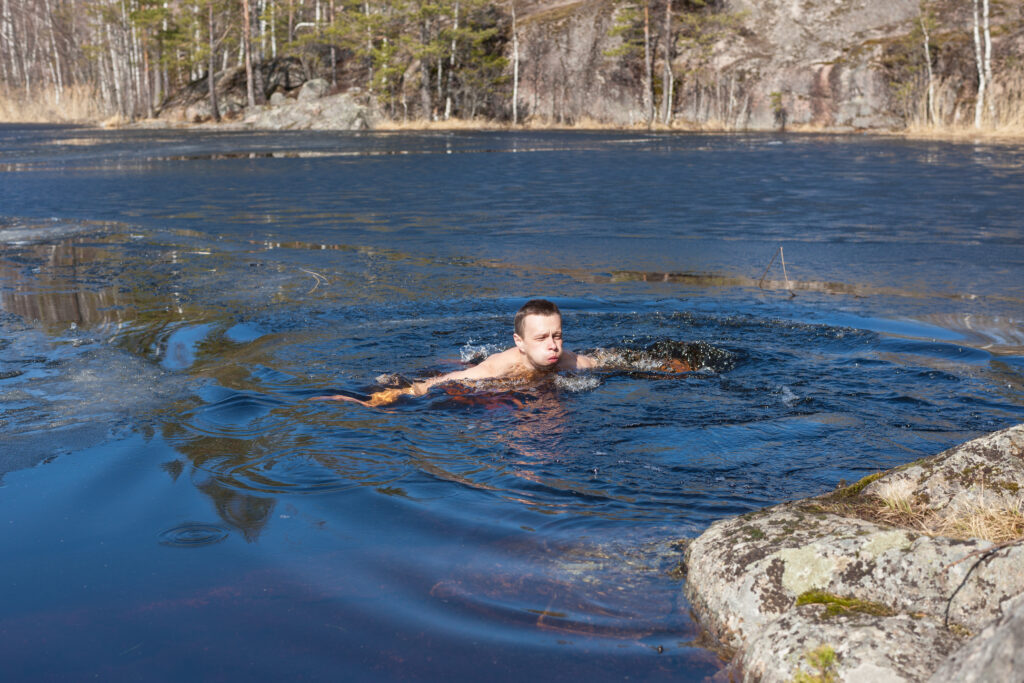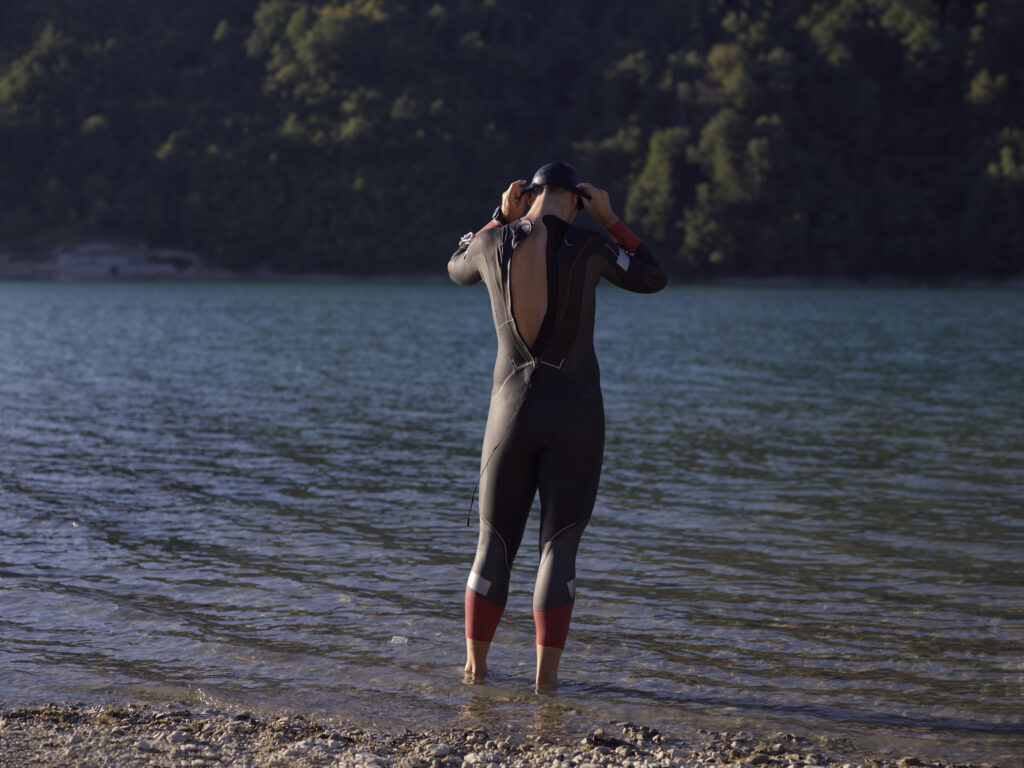
Cold water hits harder than most people expect. The UK’s lakes, rivers and coastline rarely climb above 17°C even in August, and on a grey morning in a Yorkshire reservoir you can be looking at single digits. That shock is what catches beginners out: fast breathing, numb fingers, and a fumbling, shivering change on the bank afterwards.
Wild swimming gear is really about two jobs. The first is keeping heat in your hands and feet, because extremities lose warmth fastest and go clumsy long before your core does. The second is getting you warm and dressed again quickly, since the “afterdrop” chill often feels worse than the swim itself. Add footwear for slippery, stony entries and you have covered most of what a beginner actually needs, alongside the non-negotiables of swimming with a buddy and staying visible in the water.
When you shop, pay attention to neoprene thickness (3mm is the sweet spot for UK conditions), seam construction such as glued and blind-stitched seams, wrist and ankle seals that stop flushing, and grippy soles for weed-covered rocks. Sizing matters more than the price tag, because loose gloves and socks flush cold water through and tight ones are miserable to peel off with numb fingers. The five pieces of kit below cover warmth, grip, privacy and a clean, dry change.
Best all-round warmth kit for beginners: SUPERFA 3mm Neoprene Gloves and Socks Set\
Best for a clean, sand-free change: Pecihiko Wetsuit Changing Mat and Dry Bag\
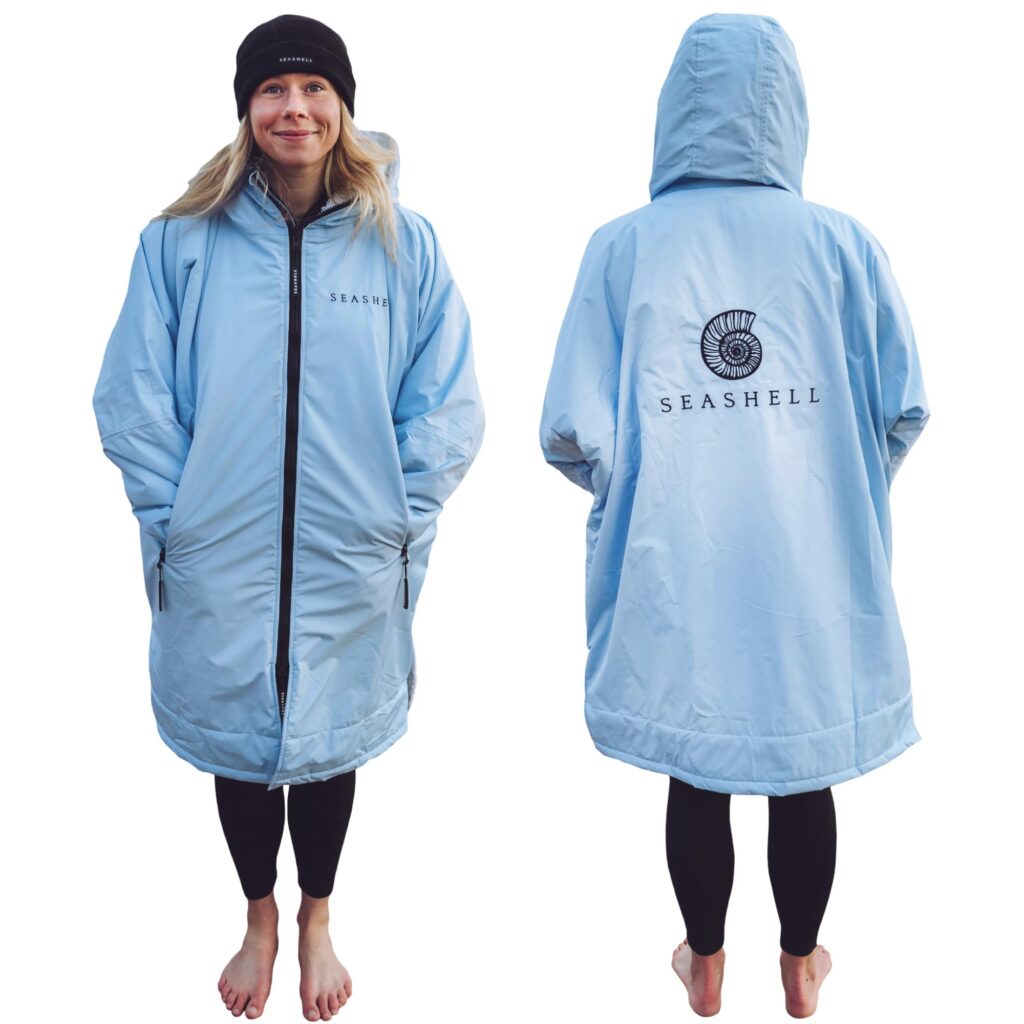
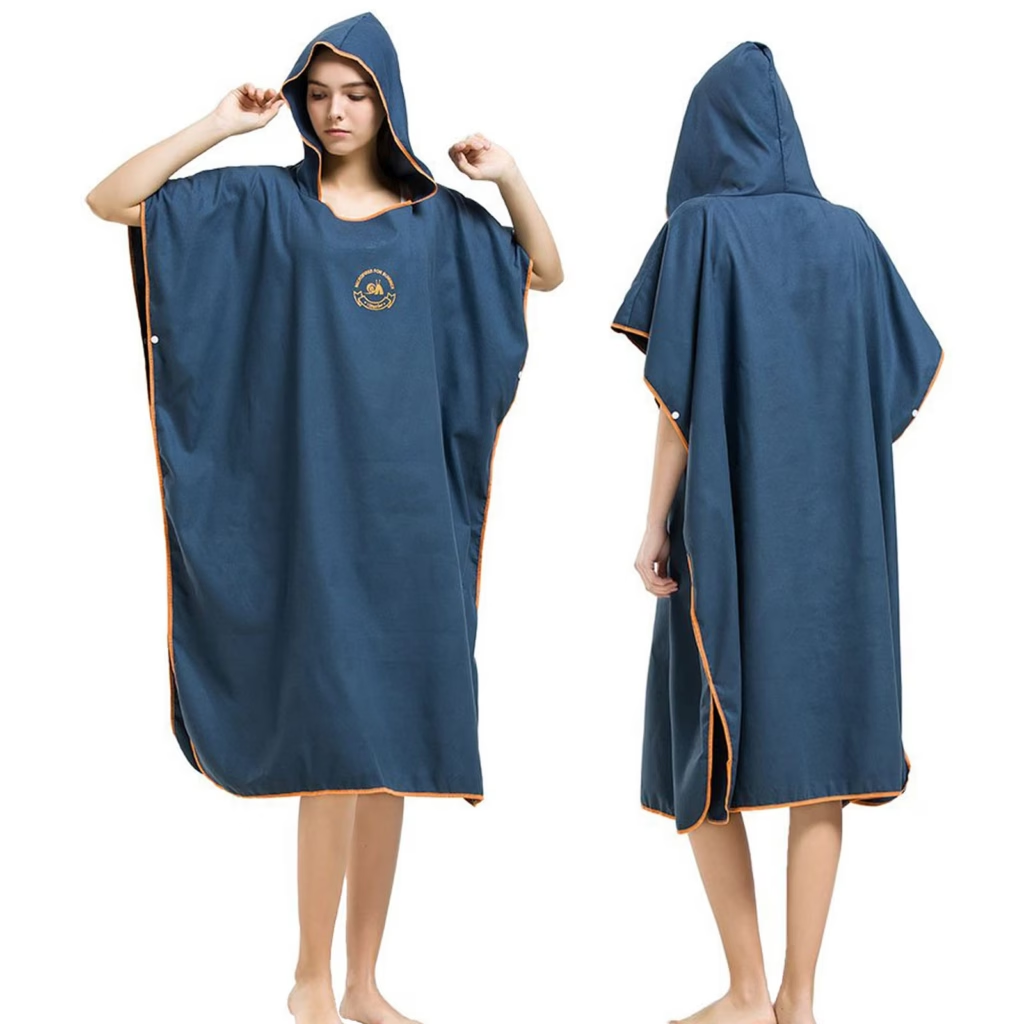
Best for privacy and packability: Hiturbo Hooded Changing Robe Towel Poncho\
Best for rocky and pebbly entries: SAGUARO Water Shoes\
Best budget backup set: AUAUY 3mm Neoprene Gloves and Socks Kit
SUPERFA 3mm Neoprene Gloves and Socks Set
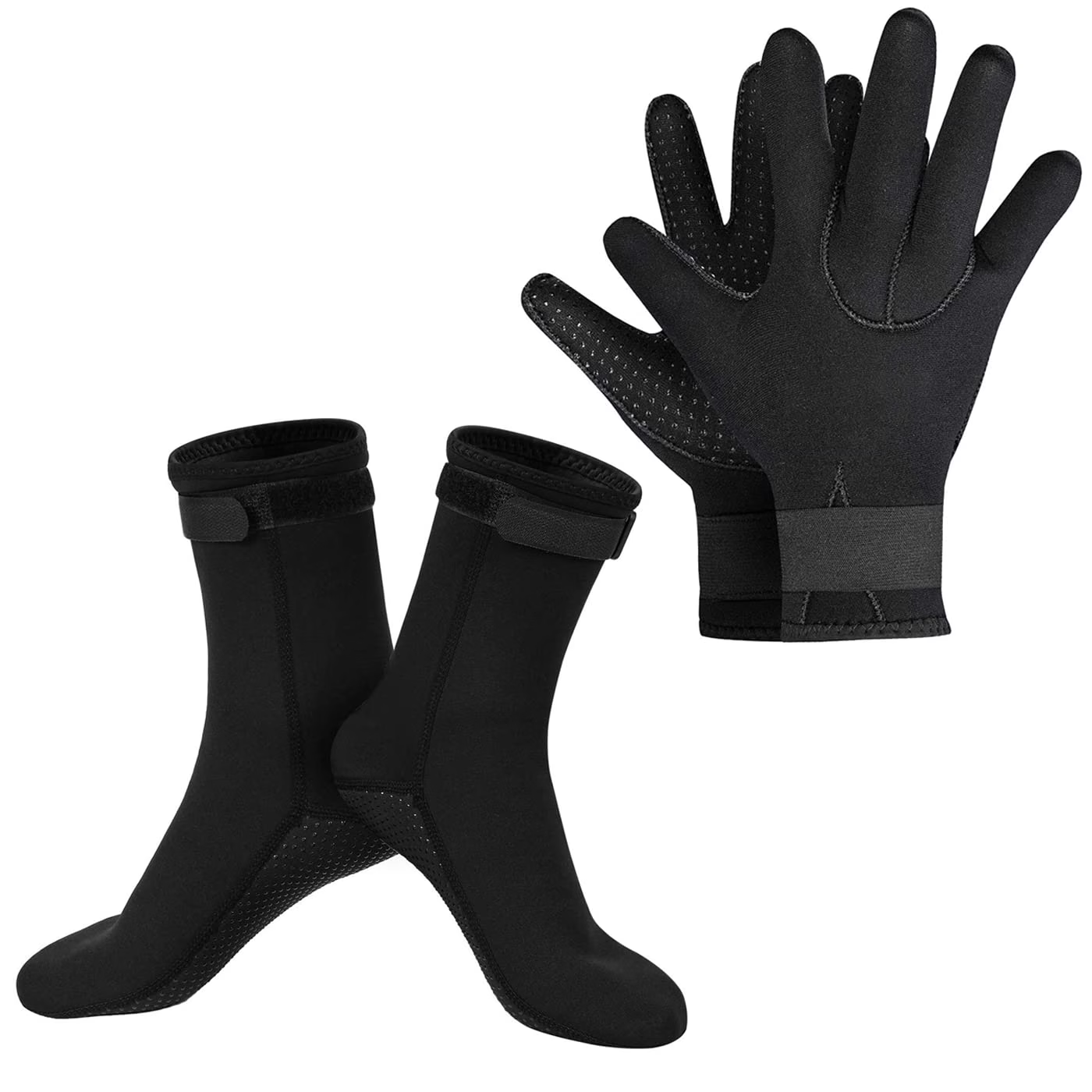
Buy this if you want warm hands and feet in one purchase without spending much on your first winter of dipping.
Pros
- Gloves and socks bundled together, so you cover both extremities at once
- Glued and blind-stitched 3mm neoprene with four-way stretch nylon
- Hook-and-loop straps at wrist and ankle cut down on flushing
Cons
- Not fully waterproof, so very cold water will still seep in
- Can be a struggle to peel off with cold fingers
- Sizing runs generous for smaller hands
The five-finger cut is pre-shaped, which makes a real difference when you want to unclip a tow float or work a car key. Grip on the palms and soles is textured enough for scrambling over slimy rocks at a river entry.
Swimmers doing regular cold-water dips report the Velcro seals keeping most water out for a typical 20-minute swim. In genuinely icy North Sea conditions, some found the gloves let water through and hands still went numb. If you have narrow hands, size down.
Pecihiko Wetsuit Changing Mat and Dry Bag
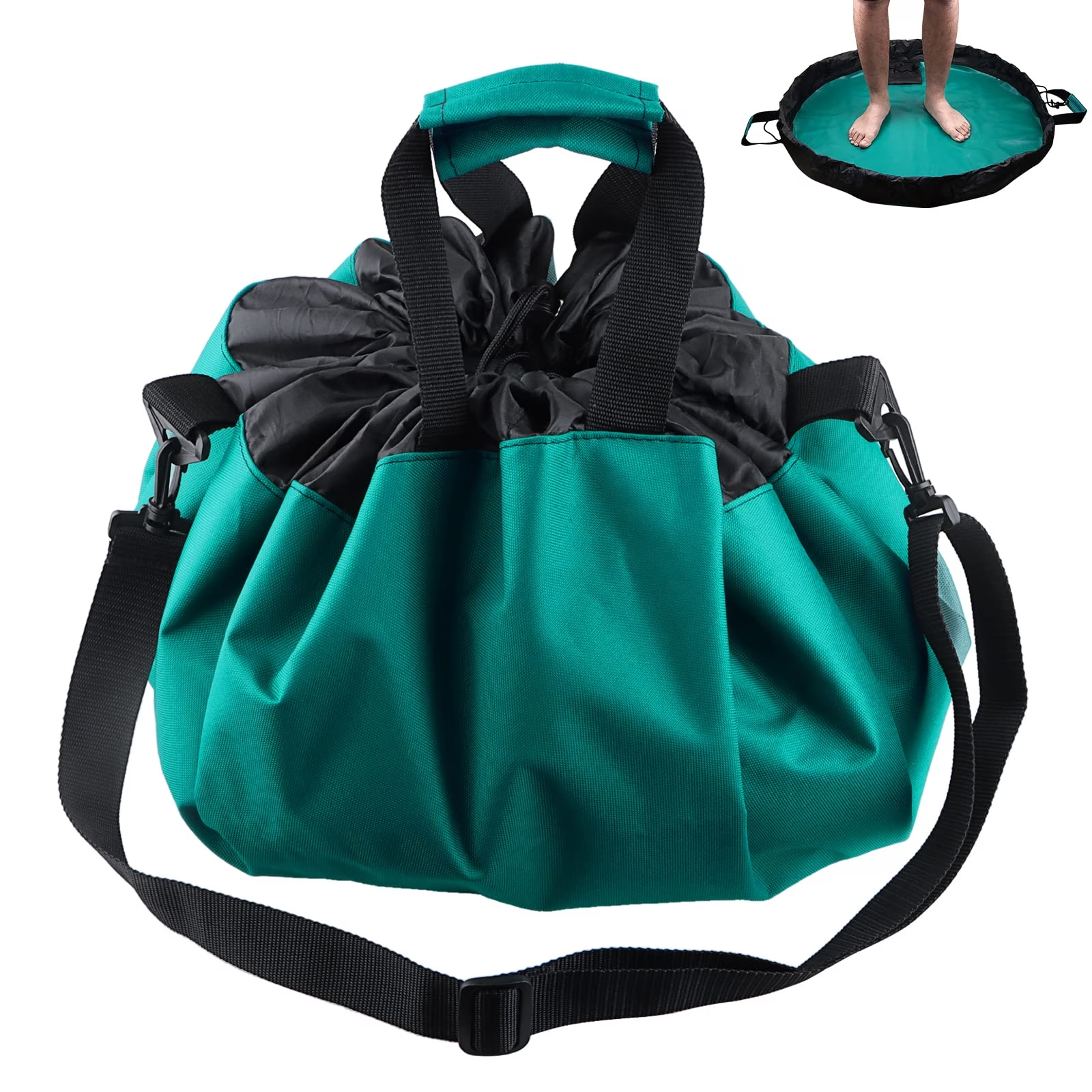
Get this if you are tired of gritty feet, muddy socks and a car boot that smells of pond.
Pros
- Big 86cm mat gives plenty of room to stand and change
- Pulls shut into a sealed bag for wet kit
- Internal Velcro pocket keeps keys and a watch off the ground
Cons
- Drawstring cords are long and easy to trip over
- Fabric is fairly thin, so a cushioned mat underneath helps on gravel
- Occasional reports of it failing early under heavy use
The oxford cloth base with 10cm polyester sidewalls does exactly what you need on a shingle beach: you step out of your costume onto a clean surface, then scoop the lot up with the drawstring. Three carry options, including a removable shoulder strap, make the walk back easy.
Most complaints centre on those cord ends rather than the mat itself. Knot them short and the problem disappears. For the money it is a genuine upgrade on juggling a towel on wet sand.
Hiturbo Hooded Changing Robe Towel Poncho
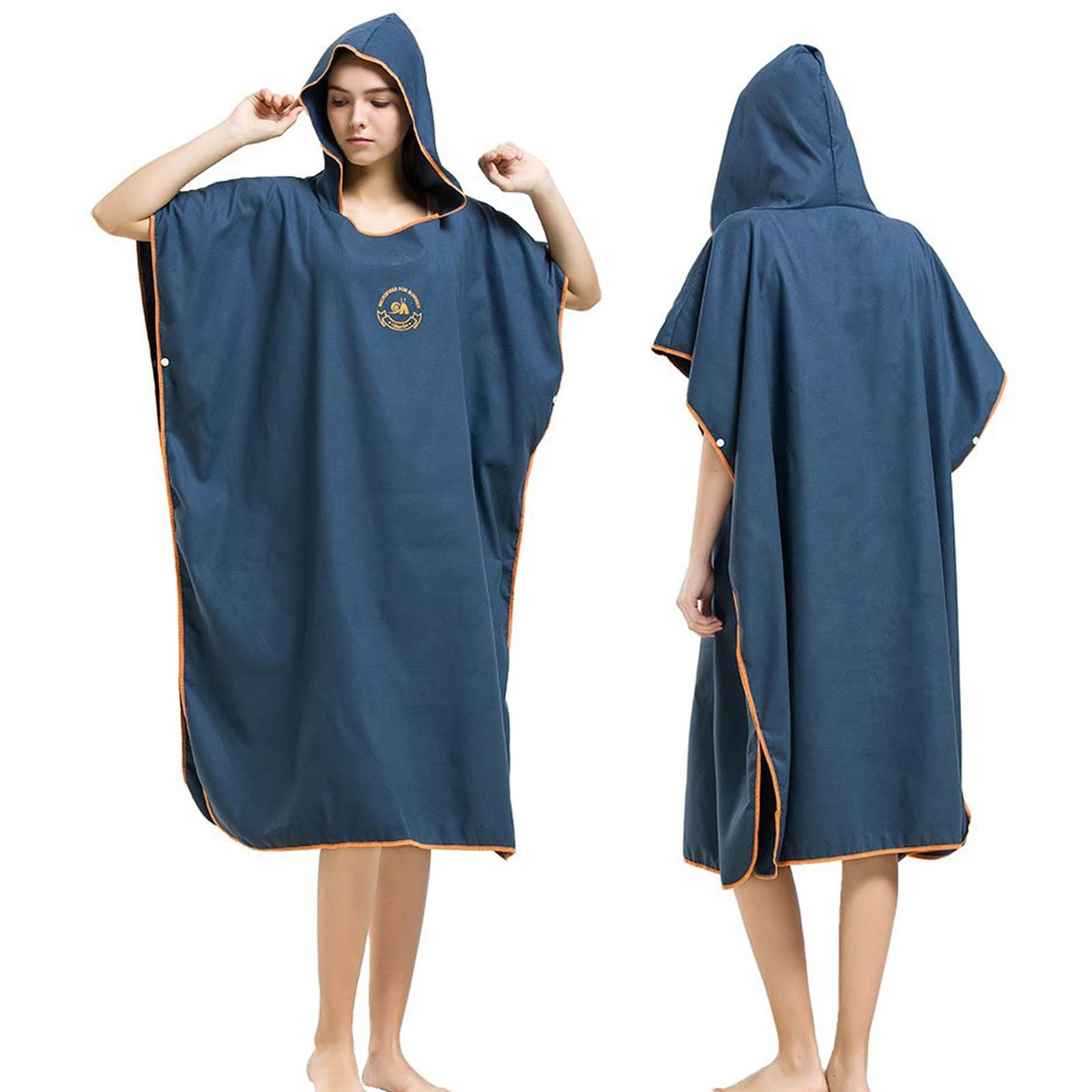
Pick this microfibre poncho if you want privacy and a fast dry-off without carrying a bulky towelling robe.
Pros
- Rolls down small enough to live in a day pack
- Dries quickly and doubles as your towel
- Roomy underarm cut so you can dress underneath it
Cons
- Microfibre is less absorbent than thick cotton towelling
- Not windproof, so a warm layer still matters in winter
- One size only, so shorter swimmers get a lot of fabric
At around 110cm long it covers a 6ft adult to below the knee, and the hood is useful for the shivery ten minutes after you get out. The 90% polyester and 10% polyamide blend soaks up water reasonably well and then dries on the washing line in no time.
It is one of the most popular changing robes on Amazon UK for good reason: light, cheap, and it removes the awkward towel dance at the car park entirely. Treat it as a summer and shoulder-season robe rather than a January windbreaker.
SAGUARO Water Shoes
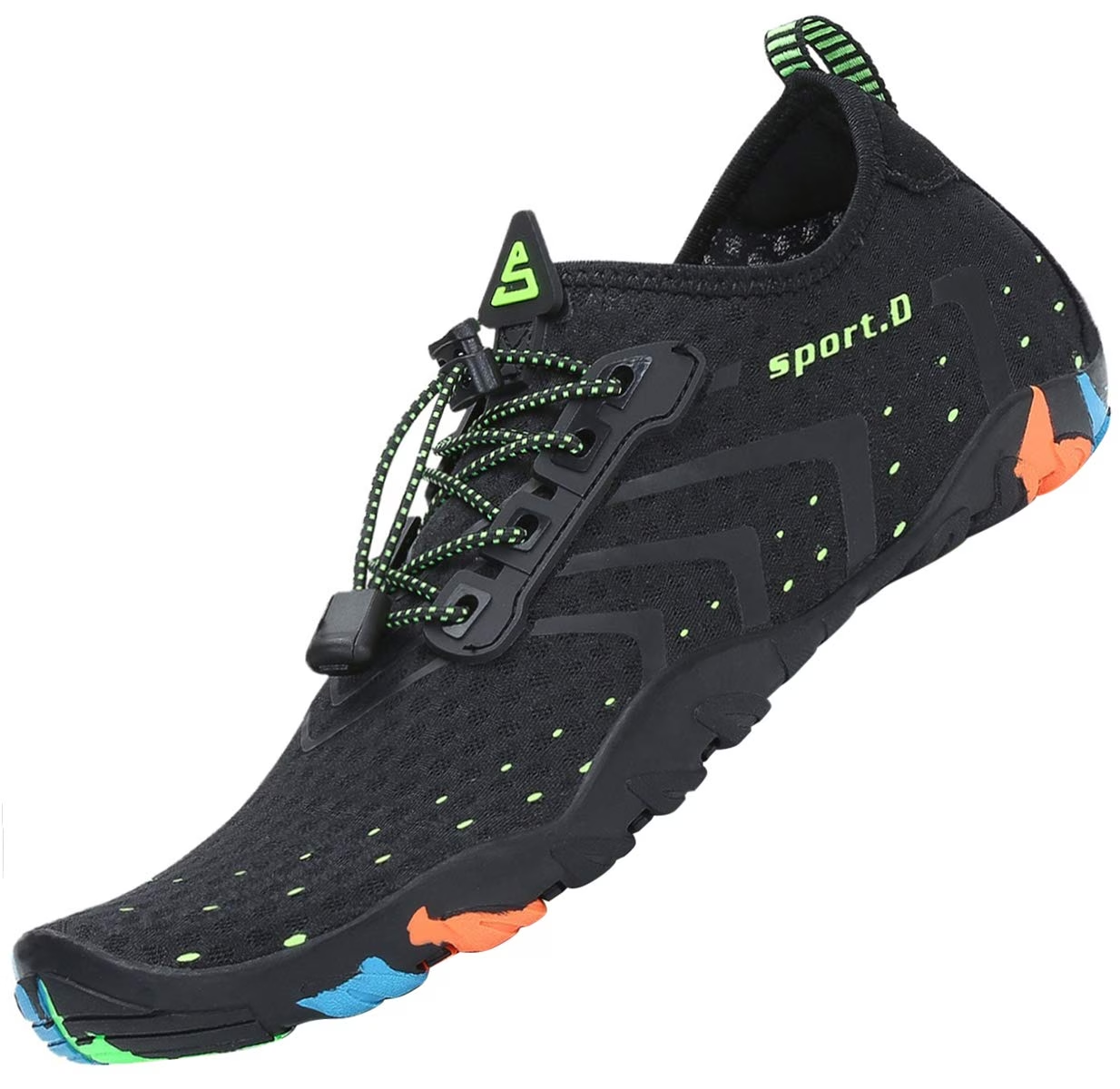
Buy these if your local swim spot involves pebbles, sharp shells or a slippery slipway.
Pros
- Thick rubber sole with raised dots grips wet rock well
- Drainage holes and honeycomb insole clear water fast
- Elastic mesh upper stops them pulling off in the water
Cons
- Sizing can run small, especially with a high instep
- Insoles work loose over time for some wearers
- Mesh offers no warmth, so pair with neoprene socks in winter
These are the shoes you wear for the walk in and out rather than for warmth. The sole is flexible enough to fold flat in a kit bag but substantial enough that you are not wincing across a stony Cornish beach.
Paddleboarders and swimmers rate the grip and the quick-drying mesh, and the elasticated opening keeps them on your feet in surf. Order half a size up if you are between sizes or wear socks underneath.
AUAUY 3mm Neoprene Gloves and Socks Kit
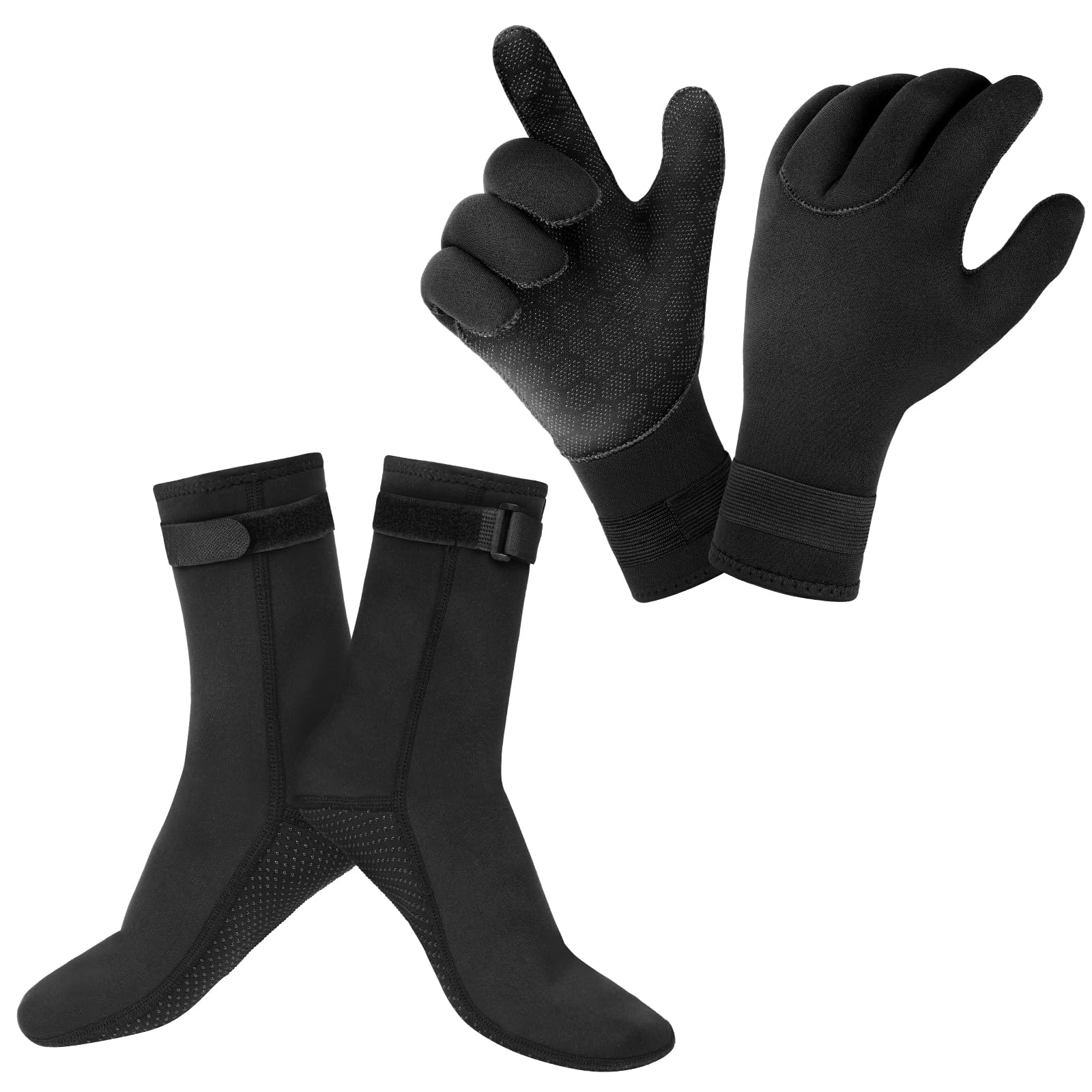
Consider this budget set as a spare pair or a low-risk way to test whether neoprene extremities suit you.
Pros
- 3mm neoprene with glued blind seams and anti-slip particles
- Velcro straps at both wrists and ankles
- Ambidextrous gloves, so no left and right confusion
Cons
- Sizing runs small; most people should size up
- Socks are the weaker half of the kit
- Harder to remove than the better-finished sets
The textured palms and soles do grip, and the elastic wrists sit snugly under a wetsuit sleeve. For short cold-water swims it does the job that a cheap thermal set should do.
Feedback is more mixed than the SUPERFA set. Several swimmers found the socks tricky to pull off and the build a little thin for the amount of stretching involved. If you want one set to rely on all winter, spend a bit more; as a backup pair in the boot, it earns its place.
Buying Guide
Your first shopping trip should cover warmth, grip and visibility. Everything else can wait.
Neoprene thickness and seams
For UK water, 3mm is the practical starting point for gloves and socks. Thinner neoprene feels nicer but gives up warmth fast below 12°C; thicker feels clumsy for a beginner.
Look for glued and blind-stitched seams rather than plain flatlock stitching. Blind stitching does not perforate the neoprene all the way through, so far less cold water flushes in.
| Water temperature | Suggested kit |
|---|---|
| Above 16°C | Costume, water shoes, bright cap |
| 11°C to 15°C | Add 3mm socks and gloves, or a shorty |
| Below 10°C | Full thermal set, short swim, warm layers ready |
Fit and seals
Neoprene should feel snug, not tight. Gaps at the wrist and ankle cause flushing, which is the main reason people say gloves “don’t work”.
Adjustable hook-and-loop straps help, but they cannot fix a size that is too big. Measure your palm width and foot length rather than guessing.
Getting warm afterwards
The chill after a dip can be worse than the swim. A quick-dry changing robe and a mat-style dry bag let you change fast and keep your clothes off the sand.
Pack a flask, a hat and dry gloves too. Getting dressed with numb hands is far easier when your kit is laid out ready.
Safety basics
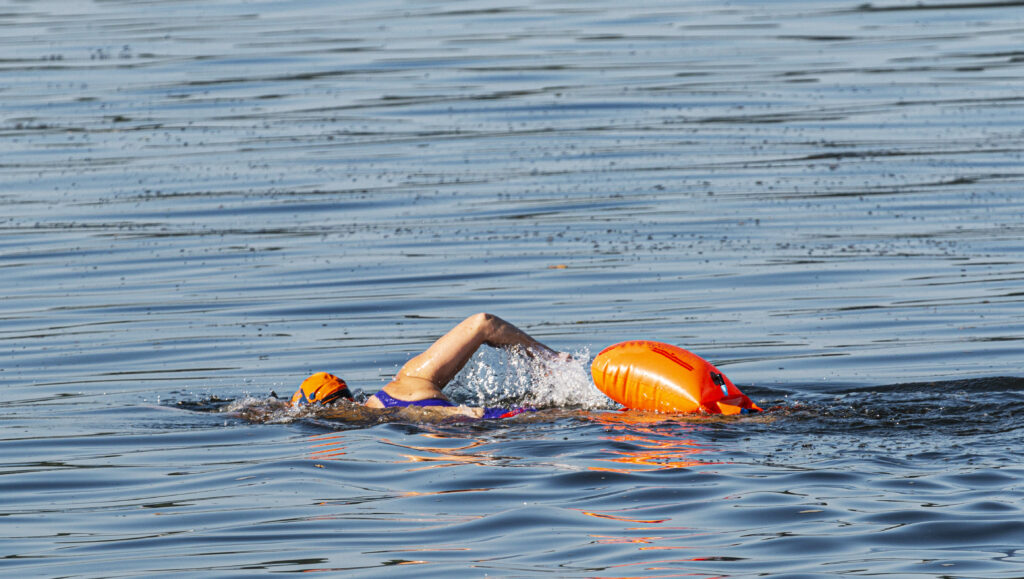
A brightly coloured silicone cap and a tow float make you visible to boats and other swimmers. Neither replaces the golden rules: never swim alone, check entry and exit points, and get out before you stop shivering.
Frequently Asked Questions
What essential equipment do I need for wild swimming?
Start with a bright swim cap, a tow float for visibility, water shoes for the entry, and 3mm neoprene gloves and socks once temperatures drop. A changing robe and a dry bag or changing mat round out the kit so you can warm up quickly afterwards.
What should women wear for cold-water swimming?
Many women swim in a standard costume through summer and add neoprene socks, gloves and a thermal swim cap as autumn arrives. For winter dips below about 10°C, a shorty or full wetsuit plus a warm changing robe makes the session far more comfortable and safer.
What should men wear for open-water swimming?
Jammers or swim shorts work fine in warmer months, with a silicone cap for visibility. From October onwards, add 3mm gloves and socks, and consider a wetsuit if you plan to swim laps rather than take a short dip.
How do I choose the best wetsuit for cold-water swimming?
Pick a swimming-specific wetsuit rather than a surfing one, as the shoulders are cut for freer arm movement. Aim for 3mm to 5mm thickness for UK winters, check there are no gaps at the neck, wrists and ankles, and always try the fit before committing.
Do I need a wetsuit for swimming outdoors in the UK?
No, plenty of swimmers acclimatise and dip in a costume all year, keeping swims short in winter. A wetsuit is sensible if you want longer swims, if you feel the cold easily, or if you are new to open water and building confidence.
Where can I buy open-water swimming equipment near me?
Outdoor retailers, surf shops and larger sports chains stock the basics, and specialist wild swimming shops carry robes and tow floats. Amazon is often the easiest route for entry-level neoprene, water shoes and changing mats, with straightforward returns if the sizing is off.