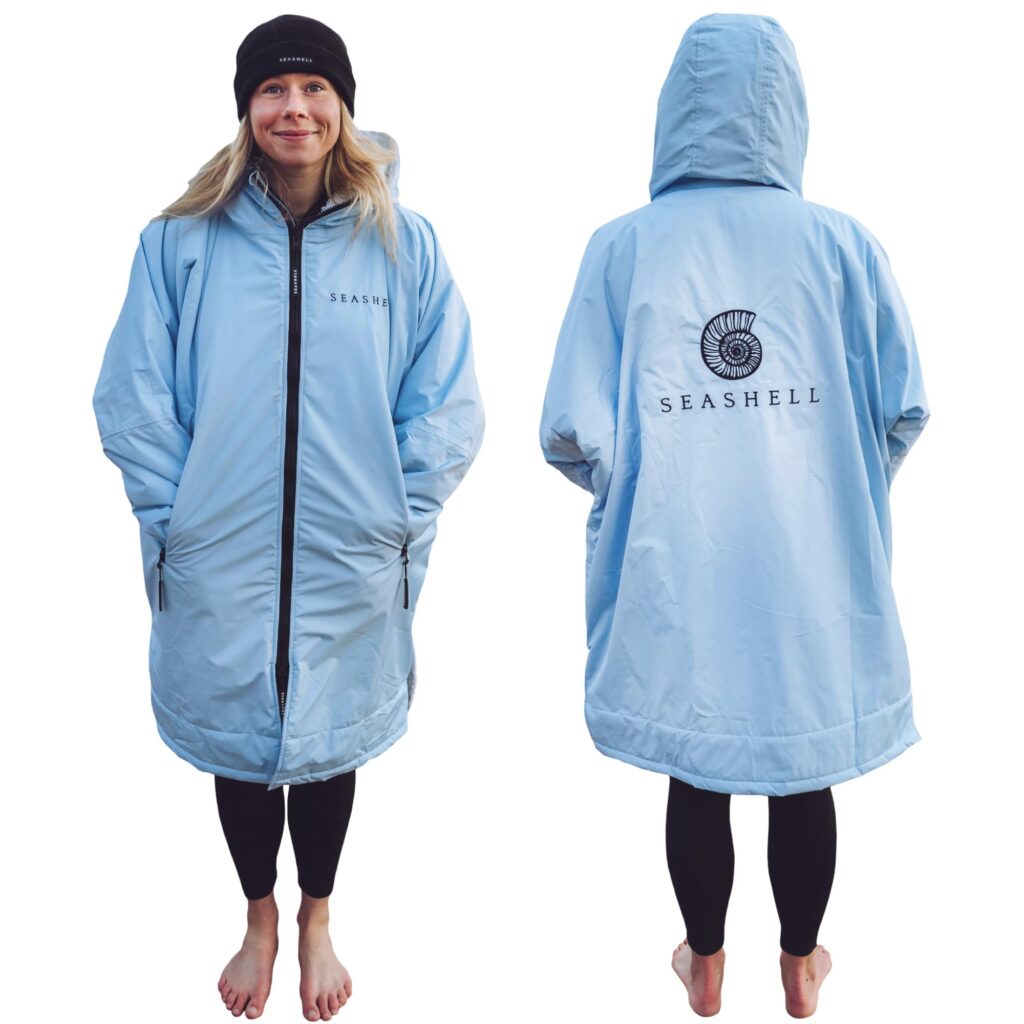
Wild swimming has surged in popularity across the UK, with lakes, rivers, and coastal spots drawing thousands of enthusiasts year-round. Whether you are dipping into a calm loch in the Scottish Highlands or braving the sea off the Cornish coast, the right wetsuit can make the difference between an exhilarating experience and a miserable one. A good wetsuit for wild swimming should keep your core warm in cold UK waters, allow unrestricted shoulder movement for efficient strokes, and provide enough buoyancy to help you stay comfortable during longer swims.
When choosing wetsuits for wild swimming, pay close attention to neoprene thickness, flexibility around the shoulders and arms, seam construction, and ease of entry. A suit that is too thick can restrict your stroke, while one that is too thin will leave you shivering in water temperatures that rarely climb above 15°C even in summer. Flatlock or glued-and-blind-stitched seams reduce chafing on longer swims, and a snug fit is essential to minimise water flushing. Accessories like neoprene gloves can extend your season well into autumn and early spring.
We spent time comparing a range of budget-friendly wetsuits and accessories available on Amazon UK to find options that suit different wild swimmers, from full-length suits for cooler conditions to shorty styles for warmer months.
Best full-length women’s wetsuit: Osprey Women’s 3mm Summer Wetsuit\
Best budget women’s shorty: Mountain Warehouse Shorty Women’s Wetsuit\
Best men’s full-length wetsuit: Two Bare Feet Thunderclap Men’s Wetsuit\
Best unisex shorty wetsuit: Lemorecn 2mm Shorty Wetsuit\
Best cold-water accessory: AUAUY Neoprene Wetsuit Gloves
Osprey Women’s 3mm Full Length Summer Wetsuit
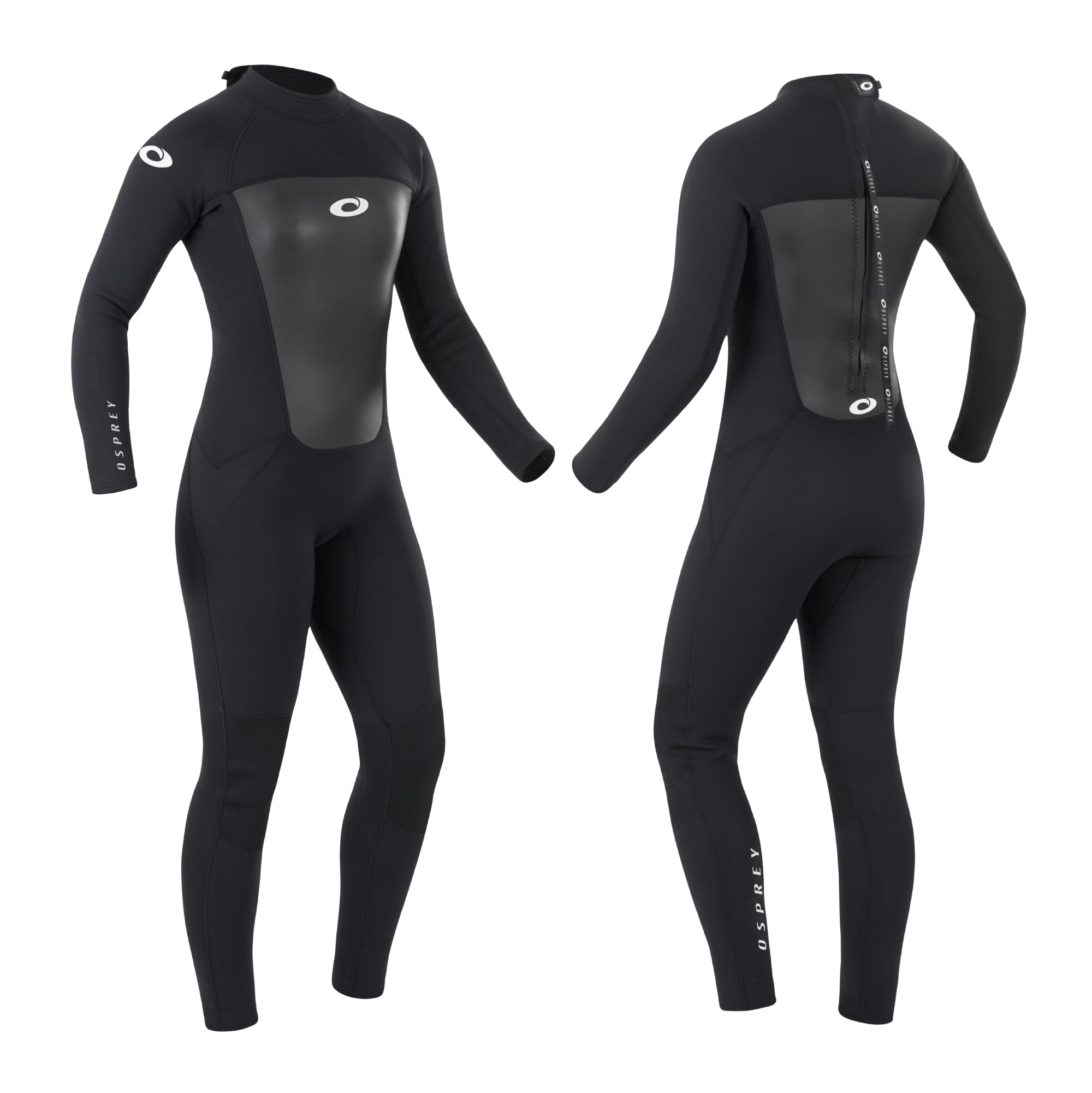
If you want a well-rounded, full-length women’s wetsuit for spring and summer wild swimming in UK waters without spending a fortune, the Osprey Origin is a smart first choice.
Pros
- 3mm body with 2mm underarm panels balances warmth and shoulder mobility
- Flatlock seams and ergonomic panelling reduce chafing on longer swims
- Supratex knee pads protect against rocky lakeside and river entries
Cons
- Not warm enough for late-autumn or winter cold-water sessions
- Wind-resistant mesh panels add bulk compared to swim-specific suits
- Limited high-visibility colour options for open-water safety
The 3/2mm neoprene construction gives you decent thermal protection for water temperatures typical of UK summers, which tend to hover between 12°C and 18°C in lakes and coastal areas. The thinner 2mm panels under the arms noticeably improve range of motion, which matters when you are doing front crawl or backstroke for extended periods.
Osprey has built this suit as an entry-level option for beginners and intermediate swimmers, and it shows in the price-to-quality ratio. The stretch collar sits comfortably without rubbing, and the anti-rub openings at the wrists and ankles help prevent the irritation you often get on longer swims. Amazon reviewers frequently note the suit fits well with generous arm length and offers solid value. For wild swimmers who also enjoy paddleboarding or kayaking, the reinforced knee pads are a practical bonus.
Mountain Warehouse Shorty Women’s Wetsuit
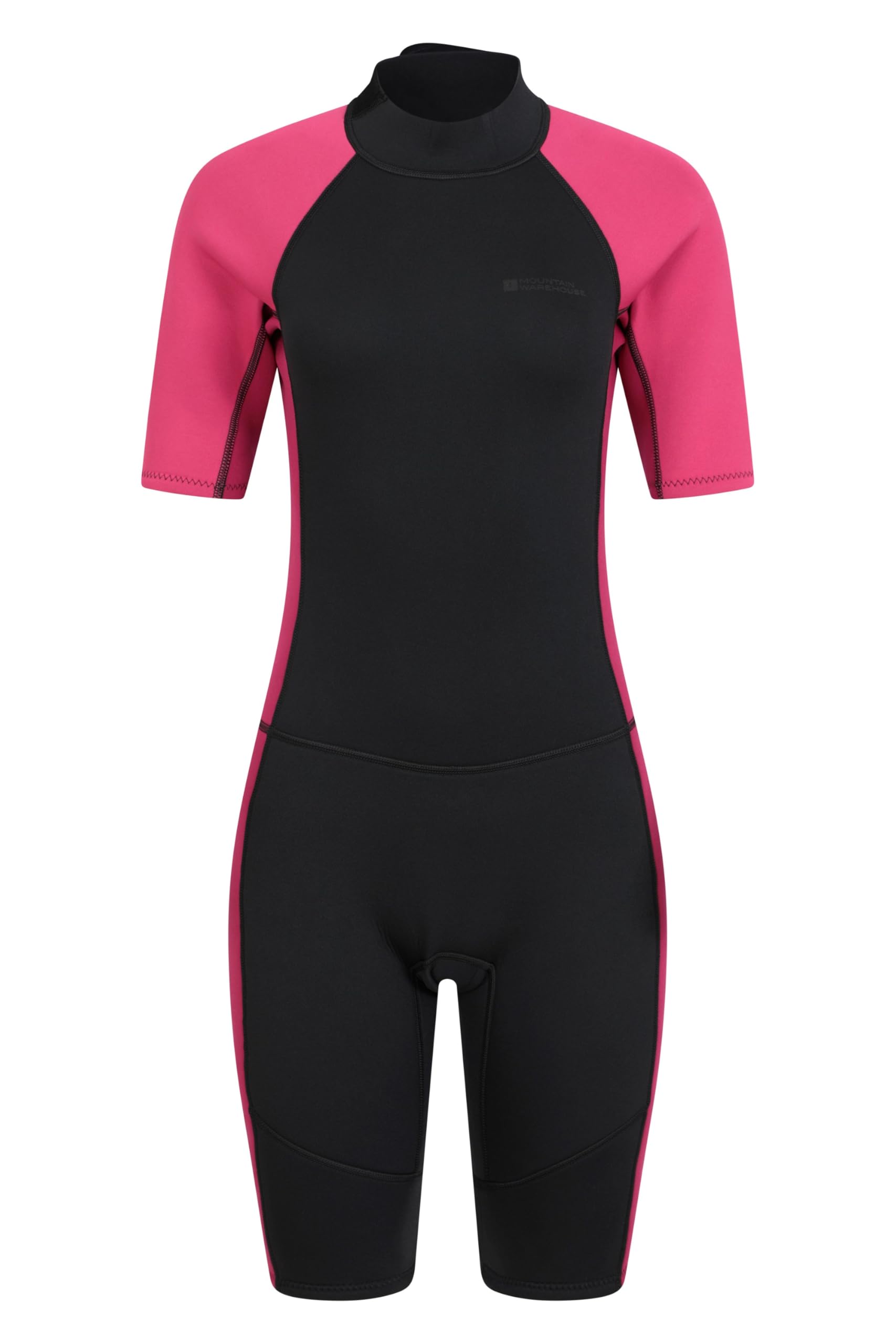
For warm-weather wild swimming when you need some core insulation but want maximum freedom in your arms and legs, this affordable shorty from Mountain Warehouse does the job well.
Pros
- Contour fit with varying neoprene thickness provides a sculpted, comfortable shape
- Discreet key pocket keeps valuables secure while you swim
- Extended zip puller makes solo entry and exit straightforward
Cons
- 2.5mm thickness offers limited protection below about 16°C
- Shorty design leaves legs and arms exposed to cold and abrasion
- Not suitable for year-round UK wild swimming
The contour fit uses thicker neoprene around the core and thinner fabric on the shoulders, so your stroke stays unrestricted while your torso retains heat. Flatlock seams sit smooth against your skin, which is particularly welcome during swims lasting 30 minutes or more.
This is genuinely a summer-only suit for UK conditions. If you swim in sheltered lakes or calm coastal bays between June and September, the 2.5mm neoprene provides enough warmth. The adjustable neck closure helps prevent water flushing down your back, and the included key pocket is a small but thoughtful touch, ideal for wild swimmers who drive to remote locations. For its price point, it is hard to beat as a casual summer option.
Two Bare Feet Thunderclap Men’s Full Length Wetsuit
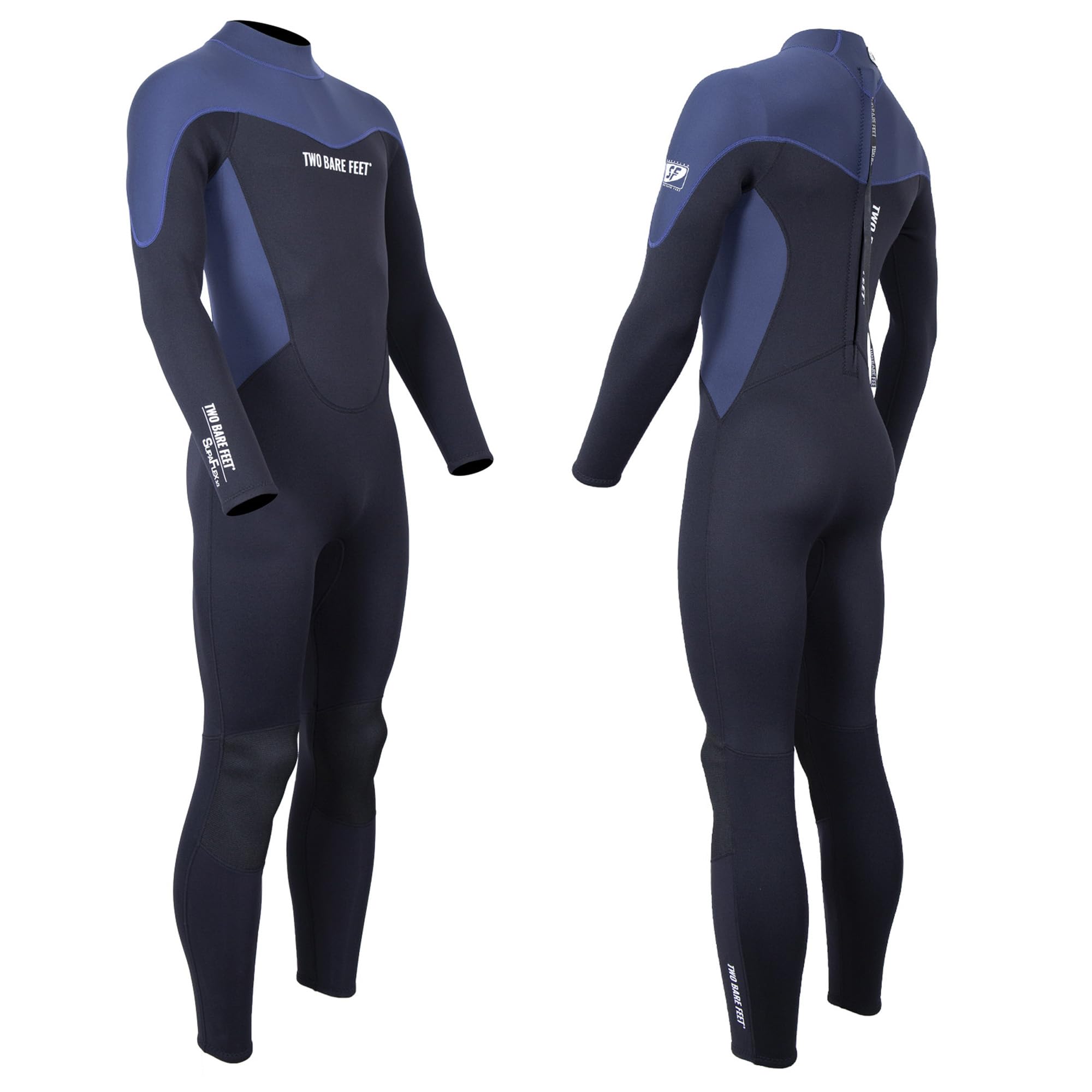
If you are a man looking for an affordable full-length suit that handles everything from river swimming to paddleboarding, the Two Bare Feet Thunderclap offers impressive flexibility and value.
Pros
- Supaflex stretch panels enhance range of motion for front crawl and breaststroke
- Back zip with extended pull cord allows easy solo entry
- Men’s tailored cut reduces water flushing and improves thermal retention
Cons
- 3/2mm thickness is best suited to spring and summer, not winter
- Limited colour choices may not offer high visibility in open water
- Three-month warranty is shorter than some competitors
The Thunderclap’s SCR neoprene provides generous stretch across the whole suit, which is noticeable the moment you start swimming. The coloured Supaflex panels are not just for aesthetics; they use a stretchier neoprene blend that lets your shoulders rotate freely, something that matters enormously during repetitive swim strokes.
The men’s tailored fit sits snugly without feeling constrictive. Flatlock stitching throughout keeps seams flat against your skin, and sealed cuffs at the wrists and ankles limit cold water entry. For the price, this suit competes well with bigger brand alternatives and is a solid pick for beginner to intermediate wild swimmers who need a versatile warm-season suit.
Lemorecn 2mm Shorty Wetsuit
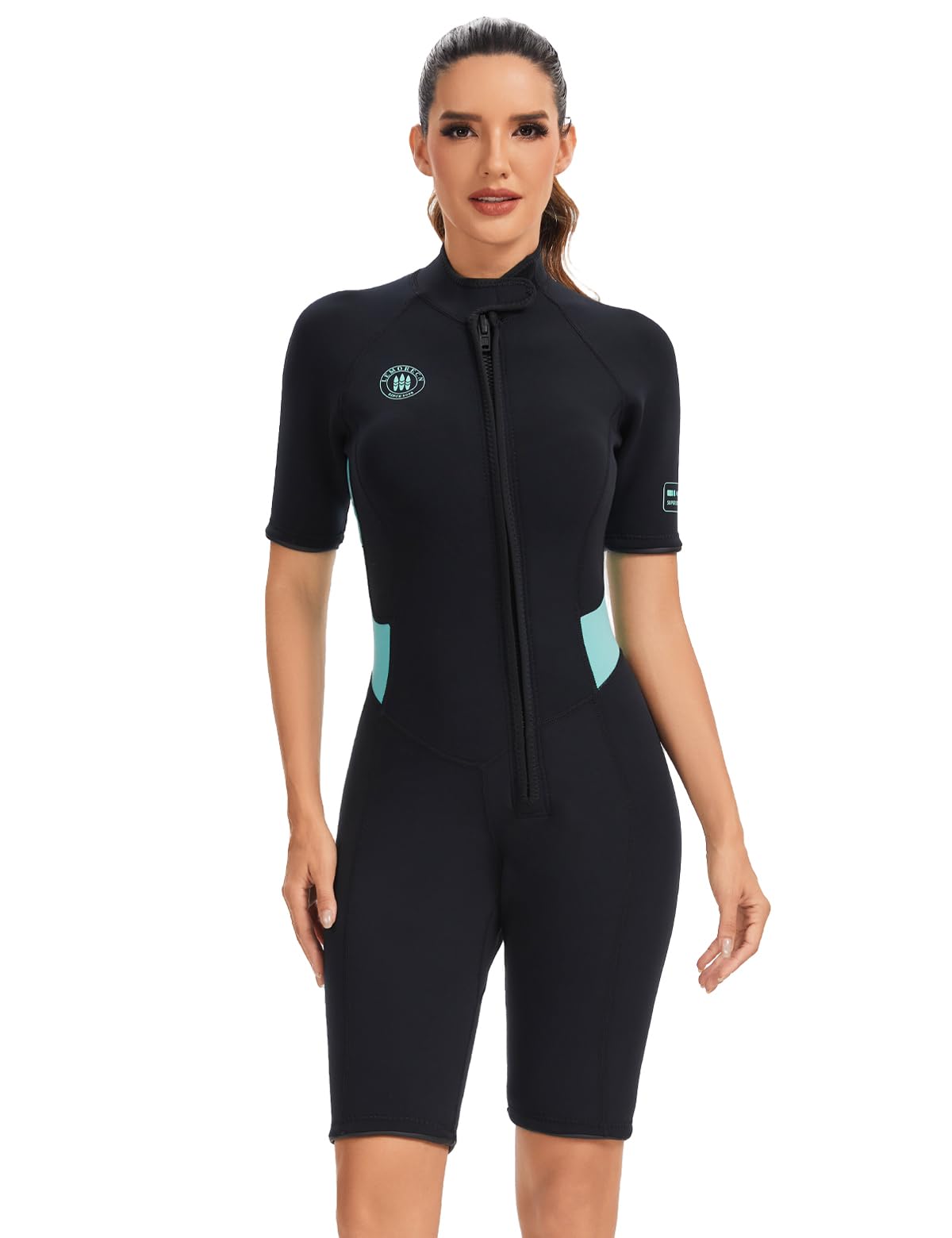
For warm-water dips and summer wild swims where you want core warmth plus total freedom in your arms and legs, the Lemorecn shorty is a lightweight, unisex option that punches above its price.
Pros
- Ultra-stretch CR neoprene claims over 200% more flexibility than standard neoprene
- Front YKK zipper with Velcro collar flap provides a secure, adjustable fit
- Seamless crotch design reduces chafing during extended sessions
Cons
- 2mm thickness offers minimal insulation for UK waters below 18°C
- Relatively new product with fewer verified reviews than established brands
- Short sleeves and legs leave extremities unprotected
The front zip is a standout feature. Most budget wetsuits use rear zips, but the front YKK zipper on the Lemorecn makes solo entry genuinely easy, which is a real advantage when you are changing at a remote riverbank. The Velcro collar flap lets you fine-tune the neck seal to prevent water pouring down your chest mid-swim.
The 2mm CR neoprene feels impressively supple. You barely notice it during freestyle strokes, which is exactly what you want from a summer wild swimming suit. Durability looks solid thanks to reinforced stitching throughout, and care is simple: rinse in fresh water, dry in the shade, and store flat. This suit is best reserved for the warmest months or for swimmers who run warm naturally.
AUAUY Neoprene Wetsuit Gloves
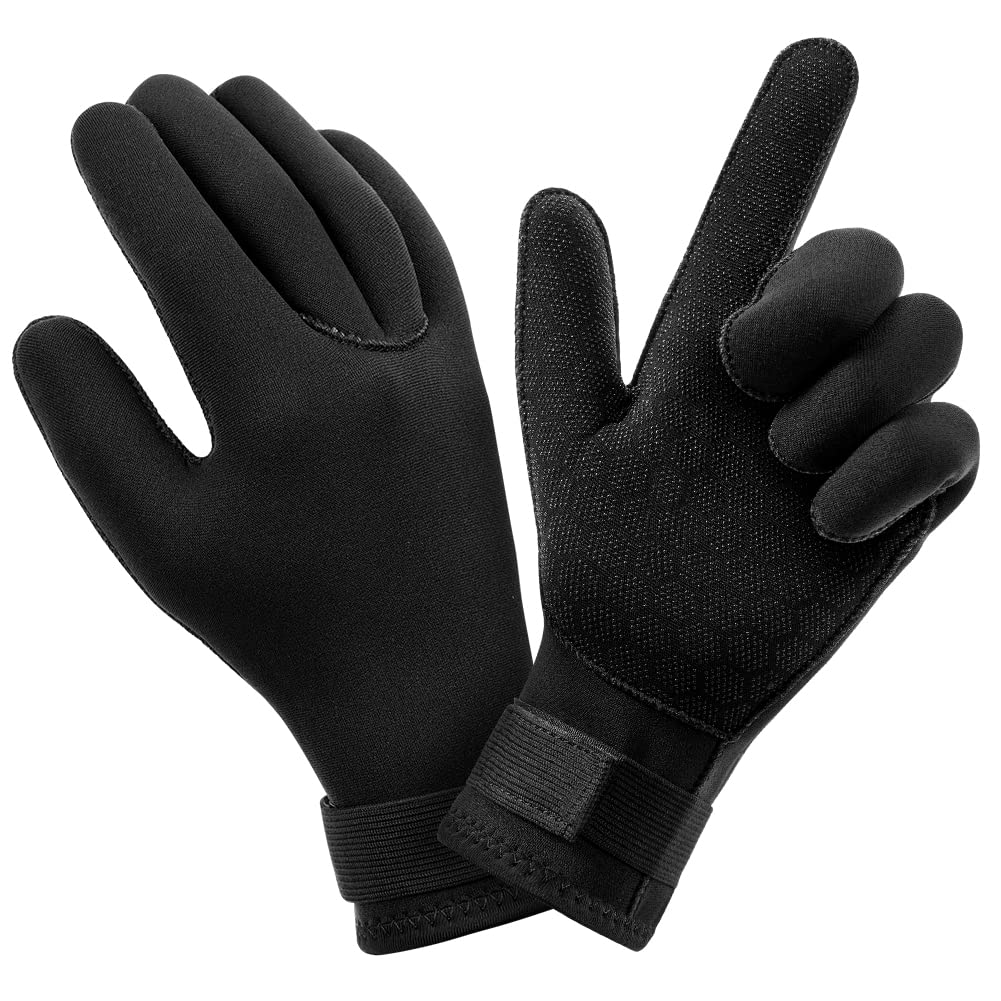
If cold hands cut your wild swims short, these well-rated 3mm neoprene gloves are an inexpensive way to extend your season into colder months.
Pros
- 3mm neoprene with glued blind seams provides effective thermal insulation
- Anti-slip palm texturing maintains grip in wet conditions
- Adjustable Velcro wrist strap keeps sand and debris out
Cons
- Not fully waterproof; they slow heat loss rather than block water entirely
- Sizing can be tricky due to elastic material; careful palm measurement is essential
- May reduce tactile sensitivity compared to bare hands
Your hands lose heat faster than almost any other part of your body in cold water, so a good pair of neoprene gloves is essential kit for wild swimmers venturing out in autumn and early spring. These AUAUY gloves use 3mm neoprene with a nylon lining that feels comfortable and retains warmth noticeably longer than thinner alternatives.
The anti-slip palm design provides reliable grip, which is handy if you need to grab a towline, safety buoy, or rocks when entering and exiting the water. The adjustable wrist strap creates a snug seal that limits water ingress. They also offer protection against jellyfish stings, sharp rocks, and other hazards you encounter in open water. Measure your palm carefully before ordering, as the elastic neoprene can make sizing feel inconsistent.
Buying Guide
Choosing the right wetsuit for wild swimming involves different considerations than picking one for surfing or diving. Below is what to look for before you buy.
Swimming Wetsuits vs Surfing Wetsuits
This is one of the most common points of confusion. The two types of wetsuit are designed for fundamentally different movements.
| Feature | Swimming Wetsuit | Surfing Wetsuit |
|---|---|---|
| Shoulder panels | Thinner, highly flexible neoprene for arm rotation | Thicker, prioritises warmth over mobility |
| Buoyancy | Designed to lift hips and legs for a streamlined body position | Neutral buoyancy for sitting on a board |
| Neoprene layout | Thicker on core, thinner on arms | More uniform thickness throughout |
| Surface coating | Often smooth-skin (SCS) for reduced drag | Textured for durability against board rash |
| Leg design | Slim-fitting to reduce drag | Looser for crouching and standing |
A swim-specific wetsuit acts like a second skin and is built to keep you hydrodynamic. Surfing wetsuits can work for occasional wild swims, but the restricted shoulder movement will tire you out faster.
Neoprene Thickness
The thickness of your wetsuit directly affects warmth and flexibility. For UK wild swimming, here is a general guide:
| Water Temperature | Recommended Thickness | Season |
|---|---|---|
| 12°C and above | 2–3mm | Late spring to early autumn |
| 8–12°C | 3–5mm | Early spring, late autumn |
| Below 8°C | 5mm+ with hood, gloves, boots | Winter |
A 2–3mm wetsuit provides a good balance of warmth and flexibility for most summer conditions. If you plan to swim year-round, consider investing in both a thinner summer suit and a thicker winter suit.
Fit and Sizing
A wetsuit should feel snug across your entire body with no air pockets or loose folds. Water trapped inside the suit warms up against your skin, so a tight fit is essential to prevent cold water flushing through the suit. Always check the manufacturer’s size chart, and if you fall between sizes, the smaller size is usually the better choice.
Seam Construction
Flatlock seams are standard on budget wetsuits and lie flat against the skin to reduce irritation. Glued-and-blind-stitched (GBS) seams offer better waterproofing and are found on higher-end models. For swims lasting under an hour, flatlock seams perform perfectly well.
Safety Features
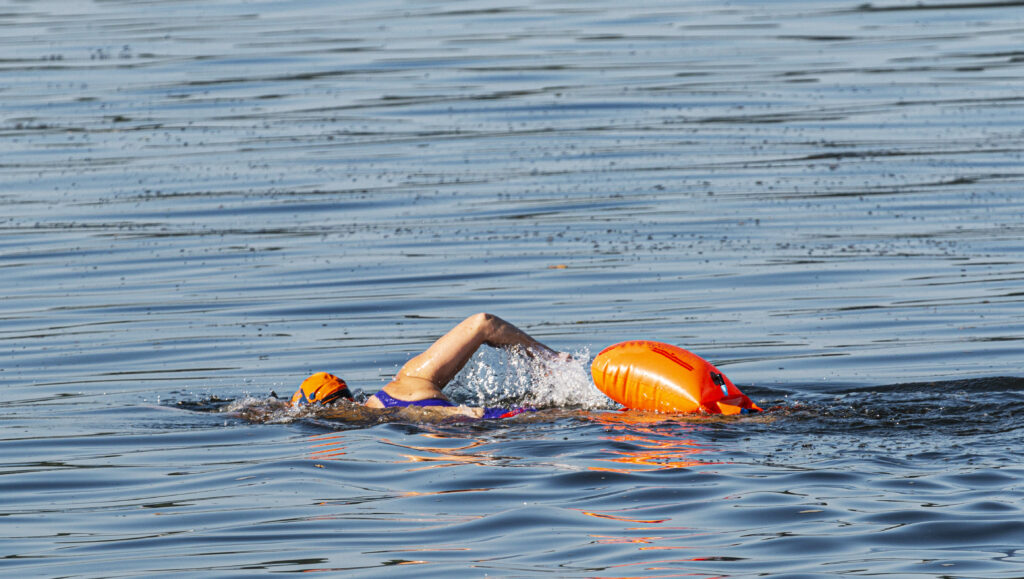
Bright colours or high-visibility panels help other water users and safety crews spot you. Many budget wetsuits come in dark colours, so consider pairing yours with a brightly coloured swim cap or tow float for added visibility.
Essential Accessories
Beyond the wetsuit itself, wild swimmers often benefit from neoprene gloves, boots, and a swim cap. A complete wild swimming kit list might also include a tow float for visibility, a changing robe for warmth after your swim, and ear plugs to prevent surfer’s ear.
Frequently Asked Questions
What thickness wetsuit should I choose for cold-water swimming?
For cold UK waters below 12°C, a 4–5mm wetsuit paired with neoprene gloves, boots, and a hood is recommended. In summer, when temperatures reach 12–18°C, a 2–3mm suit offers enough warmth without restricting your stroke. Always match thickness to the specific water temperature rather than the season alone.
How do I choose the right wetsuit size and fit for swimming?
Measure your chest, waist, hips, and height, then compare these against the brand’s specific size chart. The suit should feel very snug with no gaps, wrinkles, or air pockets. A properly fitting wetsuit lets a thin layer of water in, which your body heats up to create insulation.
What’s the difference between a swimming wetsuit and a surfing wetsuit?
Swimming wetsuits use thinner, more flexible neoprene around the shoulders to allow a full range of arm rotation. They also tend to provide more buoyancy around the legs to help you maintain a streamlined, horizontal body position in the water. Surfing wetsuits prioritise overall warmth and durability over stroke-specific flexibility.
Which wetsuit features matter most for open-water beginners?
Focus on a comfortable fit, easy entry and exit (a back zip with an extended pull cord helps), and flatlock seams to prevent chafing. Beginners should also look for a suit with enough buoyancy to support a relaxed body position. A bright tow float is a worthwhile addition for visibility and safety.
Are women’s and men’s swimming wetsuits cut differently, and does it affect performance?
Yes, women’s wetsuits are shaped with a narrower waist, wider hips, and a shorter torso compared to men’s cuts. This tailored fit reduces excess material and water flushing, which directly improves thermal efficiency and comfort. Wearing a suit designed for your body shape ensures the neoprene sits flat against your skin for better insulation.
Can I use the same wetsuit for pool training as for open-water swimming?
You can, but it is not ideal. Pool chemicals like chlorine degrade neoprene over time, shortening your wetsuit’s lifespan. Many pools also restrict wetsuit use for safety reasons. If you want to practise in a pool, consider a dedicated training suit or check with your local facility first.