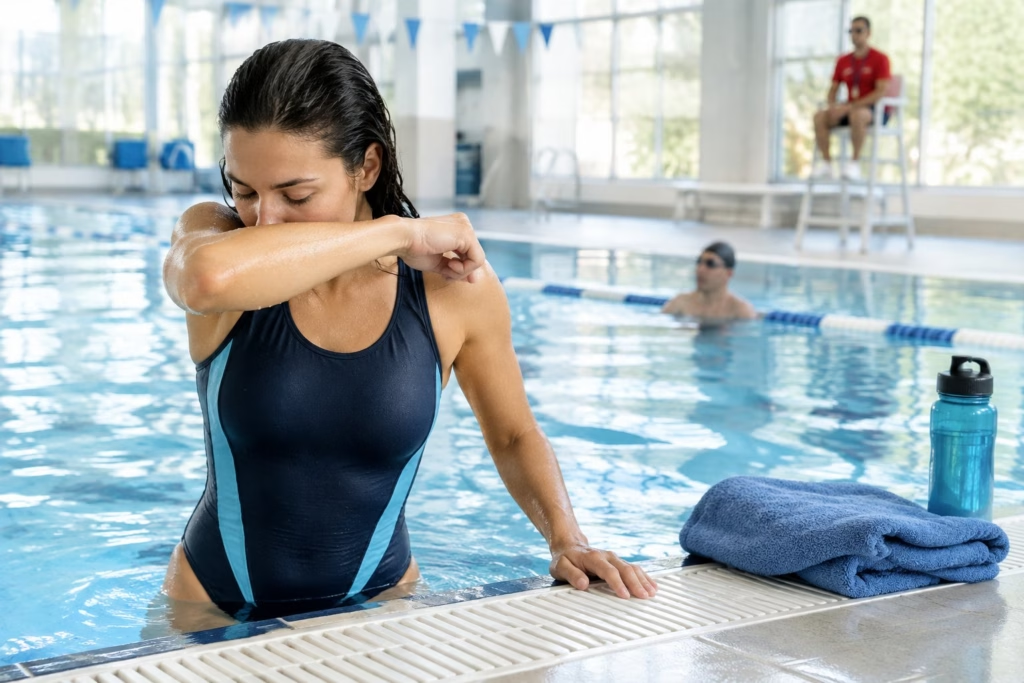
If you start coughing during or after a swim, the cause is often the air above the water. Swimmers cough is usually a short-lived irritation of your throat and airways, triggered by chloramines that build up in the air above chlorinated pools, especially indoor ones with poor ventilation. Most mild episodes ease once you leave the pool area and breathe fresh air.
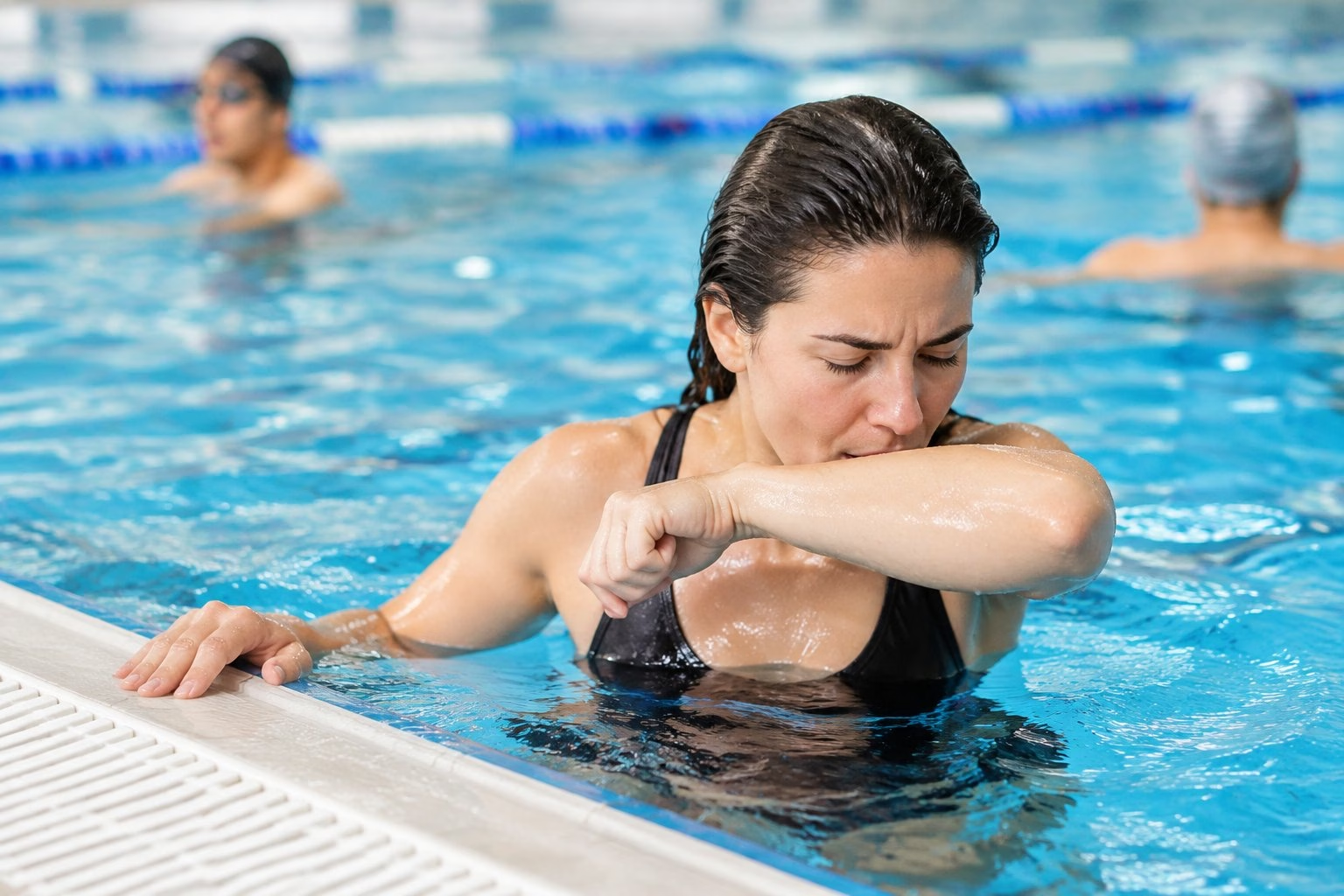
A dry, tickly cough after a hard session is common on pool decks. It still deserves attention, because a cough that keeps coming back, or one that comes with wheezing or breathlessness, points to something worth checking. You will learn how to tell a passing irritation from a red flag, ease symptoms when they start, and cut your exposure at the next session.
If your cough has lasted more than three weeks or breathing feels hard, book a GP appointment or call NHS 111 before your next swim.
Why Do You Cough After Swimming?
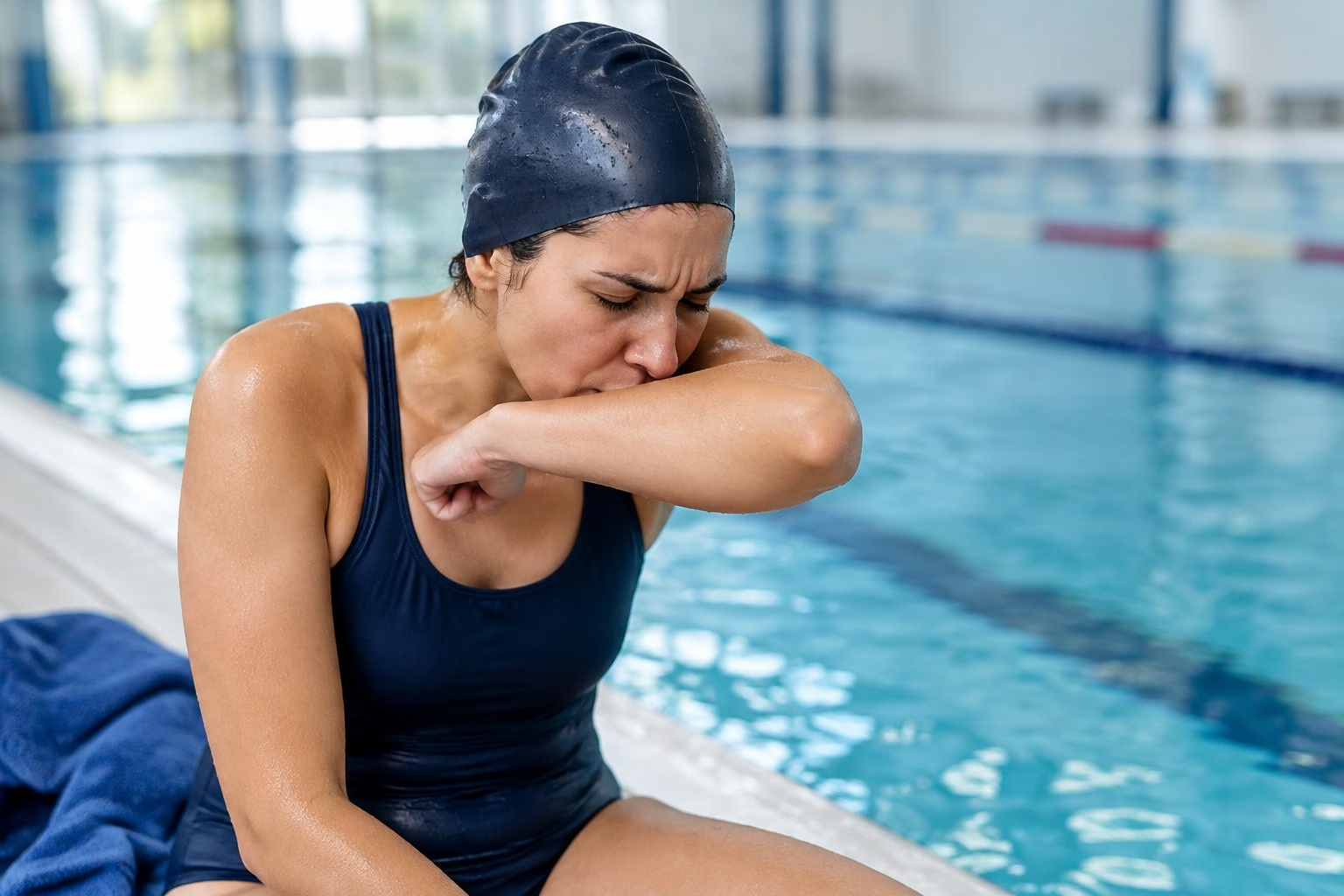
You cough after swimming mainly because chlorine exposure creates irritating gases that sit just above the water, right where you breathe. Other triggers, such as inhaled water, a cold or existing asthma, produce a similar cough, so the cause is not always the pool itself.
What Does Pool-Related Airway Irritation Feel Like?
Most people describe chlorine cough as a dry, hacking cough with a burning or scratchy throat. It starts during the session or within minutes of getting out.
Common signs include:
- Coughing that feels tickly and brings up little or no mucus
- Wheezing, a whistling sound when you breathe out
- Chest tightness, like a band around your ribs
- Shortness of breath during or after hard sets
- Stinging eyes and a runny nose
From experience, the cough is worst on busy club nights and gala days, when the pool hall feels warm, muggy and smells strongly of “chlorine”. Elite swimmers show high rates of rhinitis, airway hyper-responsiveness and exercise-induced bronchoconstriction, linked to regular, intense training in a chlorinated environment.
How Do Chloramines Form in Pool Air?
Chloramines form when the chlorine in pool water reacts with sweat, urine, body oils, skin cells and cosmetics that swimmers bring in. Pools add only small amounts of chlorine, and that alone rarely causes breathing trouble.
The strong “swimming pool smell” comes from chloramines. A clean, well-run pool smells of very little.
These gases are heavier than air, so they collect in a layer just above the water surface. When you swim, you take quick, deep breaths at that exact level. Good front crawl breathing technique helps you breathe more smoothly, but it cannot lift you out of that layer.
Outdoor pools let the gases blow away. Indoor pools trap them unless the ventilation is strong.
Could Breathing in Water or Another Irritant Be Responsible?
Yes. Inhaling a mouthful of water triggers an instant cough as your body clears your airway, and this tends to settle within minutes.
Other possibilities include:
- A cold or chest infection that swimming makes you notice more
- Asthma or exercise-induced bronchoconstriction, which hard efforts can set off
- Cleaning products or fumes in changing rooms
- Cold air on the walk home after a warm pool hall
A rare condition called swimming-induced pulmonary oedema causes sudden breathlessness and a cough with pink or blood-tinged phlegm. That is an emergency. Coughing with nasal discomfort is a separate issue from ear problems, though swimmers often deal with both, and ear plugs for swimmer’s ear solve a different problem entirely.
What Can You Do When Coughing Starts?
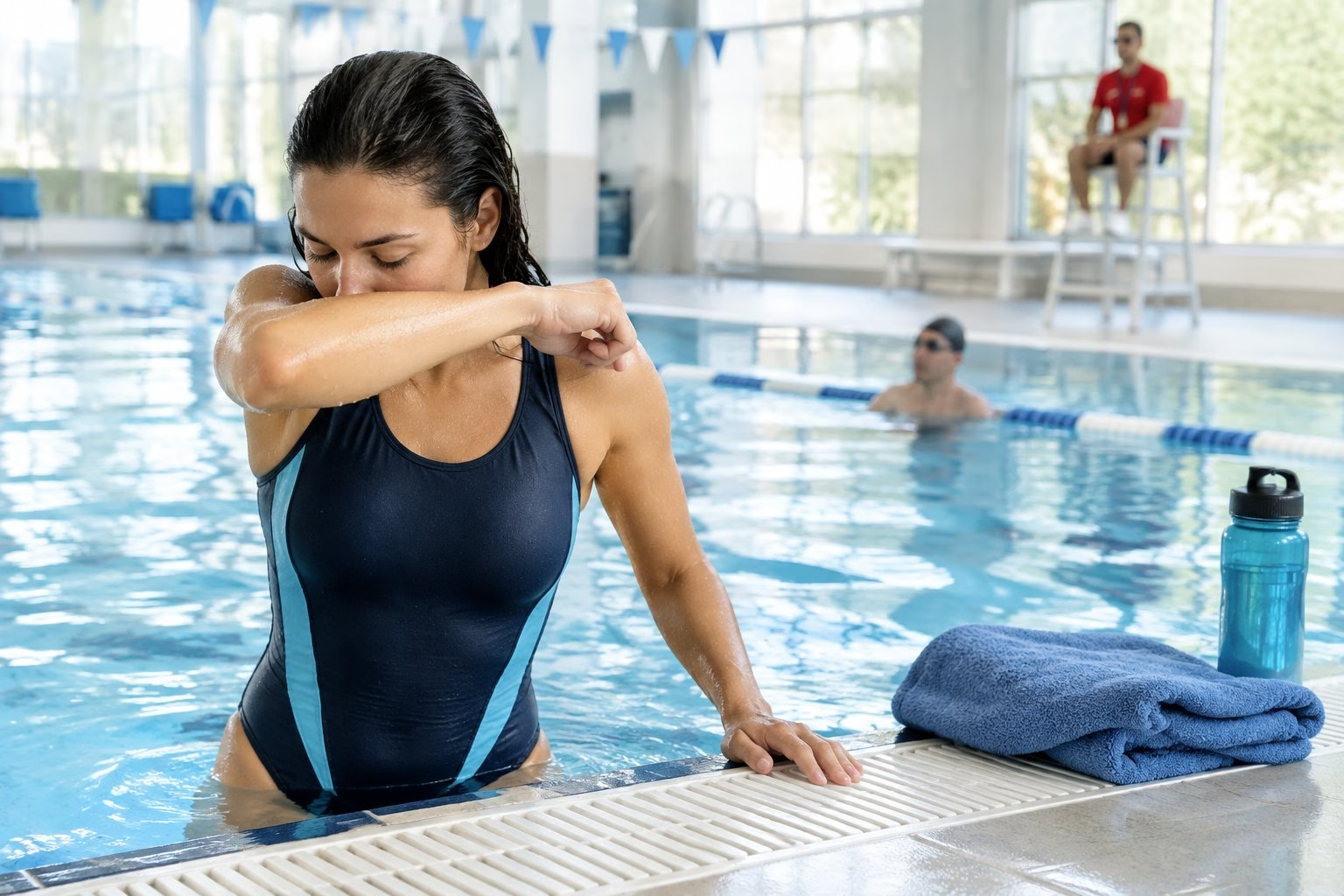
Get out of the pool hall first, then rest, drink fluids and watch how your symptoms change over the next few hours. Most mild irritation fades once you stop breathing pool air.
Leave the Pool and Get Fresh Air
Stop swimming as soon as your breathing feels wrong. Pushing through a set while coughing means more deep breaths of the worst air in the building.
Here is what works for most people:
- Climb out and tell your coach or a lifeguard.
- Step outside or into a well-aired corridor.
- Breathe slowly through your nose if you can.
- Shower to rinse chlorinated water off your skin, hair and face.
- If you have a prescribed reliever inhaler, use it as your plan instructs.
Many swimmers find the cough eases within an hour or two of fresh air. On gala days, waiting outside between races is a smart habit.
Rest, Hydrate and Monitor Your Symptoms
The NHS advises that you rest and drink plenty of fluids when you have a cough. Swimmers lose more fluid than they notice, because you cannot feel yourself sweat in the water.
Plain water suits most sessions. Sorting out water vs isotonic drinks for swimming helps for longer training.
Simple comforts:
- Honey and warm lemon (not for babies under one)
- Cough sweets or lozenges for a sore throat
- A saline nasal rinse after swimming
- A humidifier in the bedroom if your home air is dry
Note when the cough started, how long it lasted and whether it came with wheezing or tightness. That record helps a GP if you need one.
When Should You Seek Medical Advice?
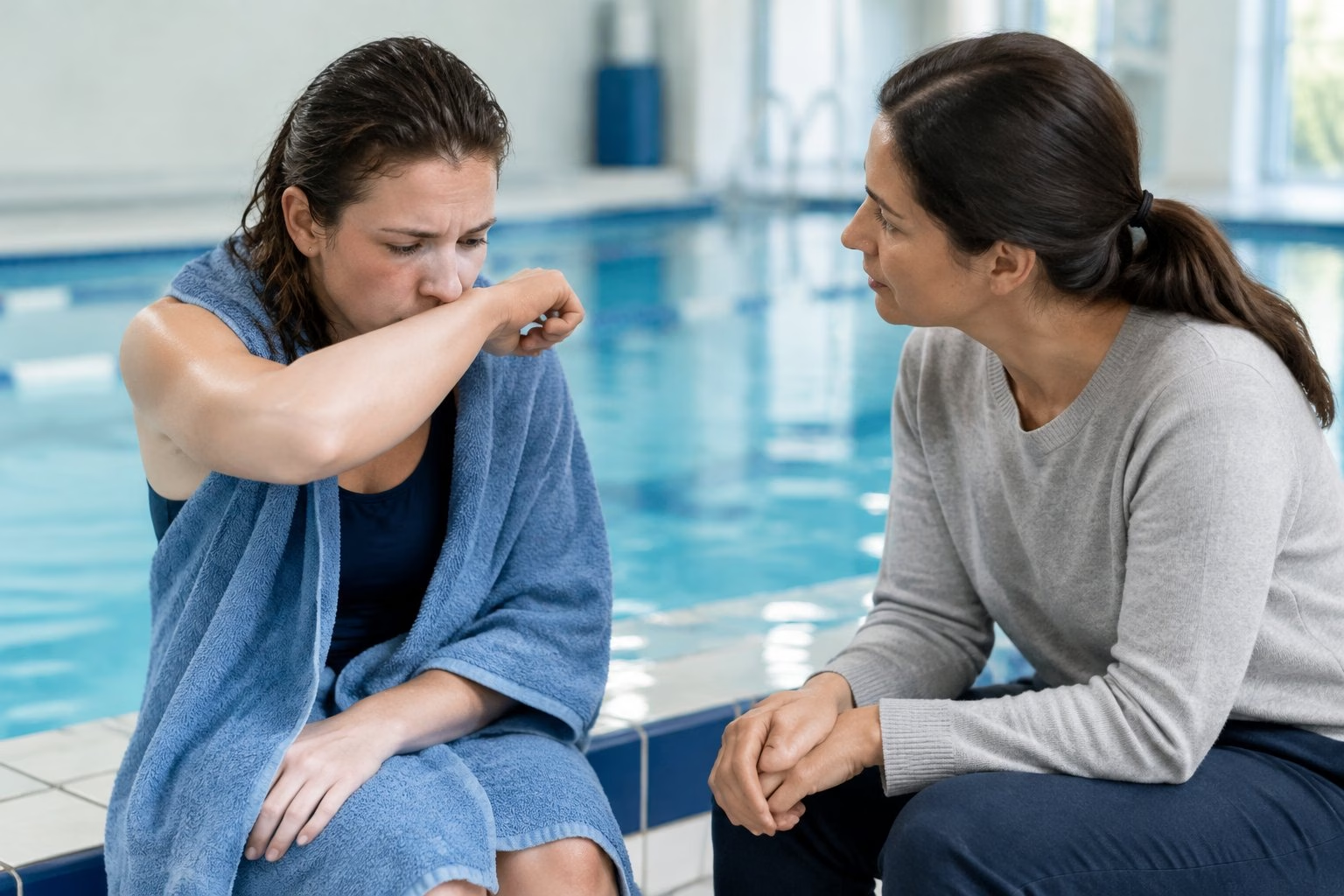
Seek help straight away for serious breathing problems, and book a GP appointment for any cough that lingers or keeps returning after swims. Only a clinician can work out whether you have asthma, tracheobronchitis or another cause.
Which Breathing Symptoms Need Urgent Help?
Call 999 or go to A&E if you or your child:
- Struggles to breathe or cannot finish a sentence
- Has blue or grey lips or skin
- Coughs up blood or pink, frothy phlegm
- Has chest pain that does not ease with rest
- Becomes confused, drowsy or faints
- Uses a reliever inhaler and it does not help
These signs point to something more than pool irritation. Do not drive yourself if you are struggling.
When Does a Persistent or Repeated Cough Need Assessment?
The NHS says to get help if you have had a cough for more than 3 weeks or it gets worse quickly. It also lists chest pain, unexplained weight loss and feeling very unwell as reasons to call 111 or see a GP.
For swimmers, book an appointment if:
- You cough, wheeze or feel tight-chested after most sessions
- Your cough is worse at night after training
- Symptoms last for days after a gala
- You already have asthma and it seems harder to control
- Your performance has dropped because of breathing
A GP might listen to your chest, test your lung function or adjust your inhalers. If you compete, ask whether any medicine is allowed under anti-doping rules.
How Can You Reduce Coughing at the Pool?
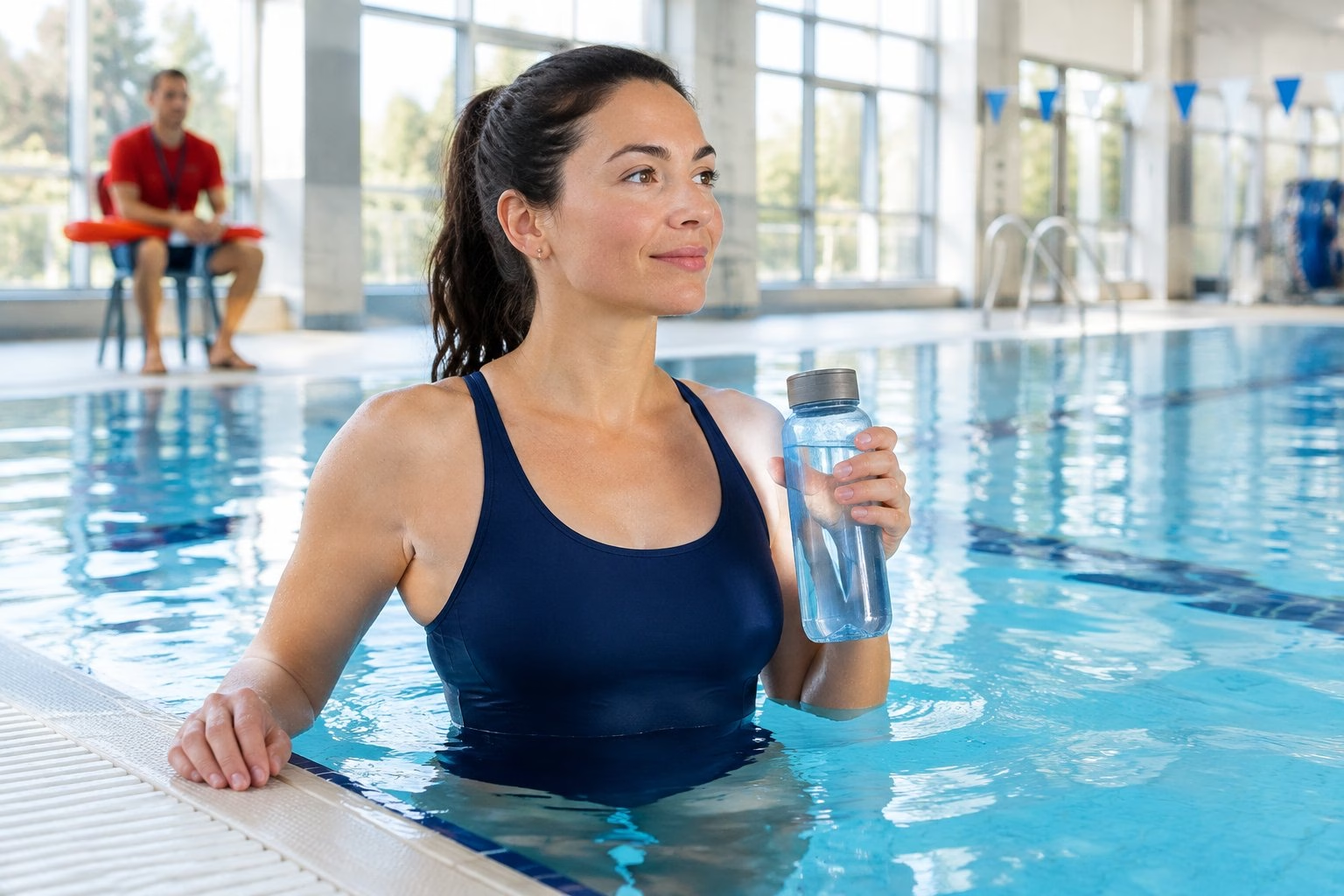
You cut your risk by choosing pools with fresher air, keeping the water cleaner with a pre-swim shower and spacing your exposure across long sessions. Competitive swimmers benefit most, because they spend the most hours breathing pool air.
Choose a Pool with Better Air Quality
Your nose is a good first test. A pool hall that hits you with a sharp, eye-watering smell has a chloramine problem.
Signs of better air include:
- Little or no chemical smell
- Fans running or doors and windows open
- A hall that does not feel heavy and humid
- Fewer swimmers at quieter times
Outdoor pools and lidos let gases drift away fast. If you enjoy fresh air, cold water open swimming gets you away from indoor fumes, though you need to follow open water safety advice on staying warm.
Shower Before Swimming and Take Regular Breaks
A soapy shower before you swim washes off sweat, oils, deodorant and make-up. Less of that in the water means fewer chloramines form. Use the toilet before you get in, and remind children to do the same.
Shower again afterwards and moisturise to prevent dry skin from chlorine. Rinsing your face and hair also stops lingering fumes near your nose.
During the session, pause at the wall every 15 to 20 minutes for a few calm breaths. A steady swimming warm-up eases your lungs into work. A nose clip for swimming stops water going up your nose, which some swimmers find reduces spluttering.
Plan Around Longer Training Sessions and Swim Meets
Long galas are the hardest days on your airways. You spend hours on a warm, crowded poolside with the air at its worst.
Practical steps:
- Wait outside or in a corridor between races
- Pack a water bottle, snacks and a towel to sit on away from the water
- Bring your inhaler and spacer if you have one
- Avoid hard training the day after a long meet if you are still coughing
- Ask your coach whether the club can train at quieter times
Breathing patterns such as the 3-5-7 breathing pattern are useful for fitness, but drop to breathing every two strokes if you feel tight.
Swim More Comfortably Without Ignoring a Cough
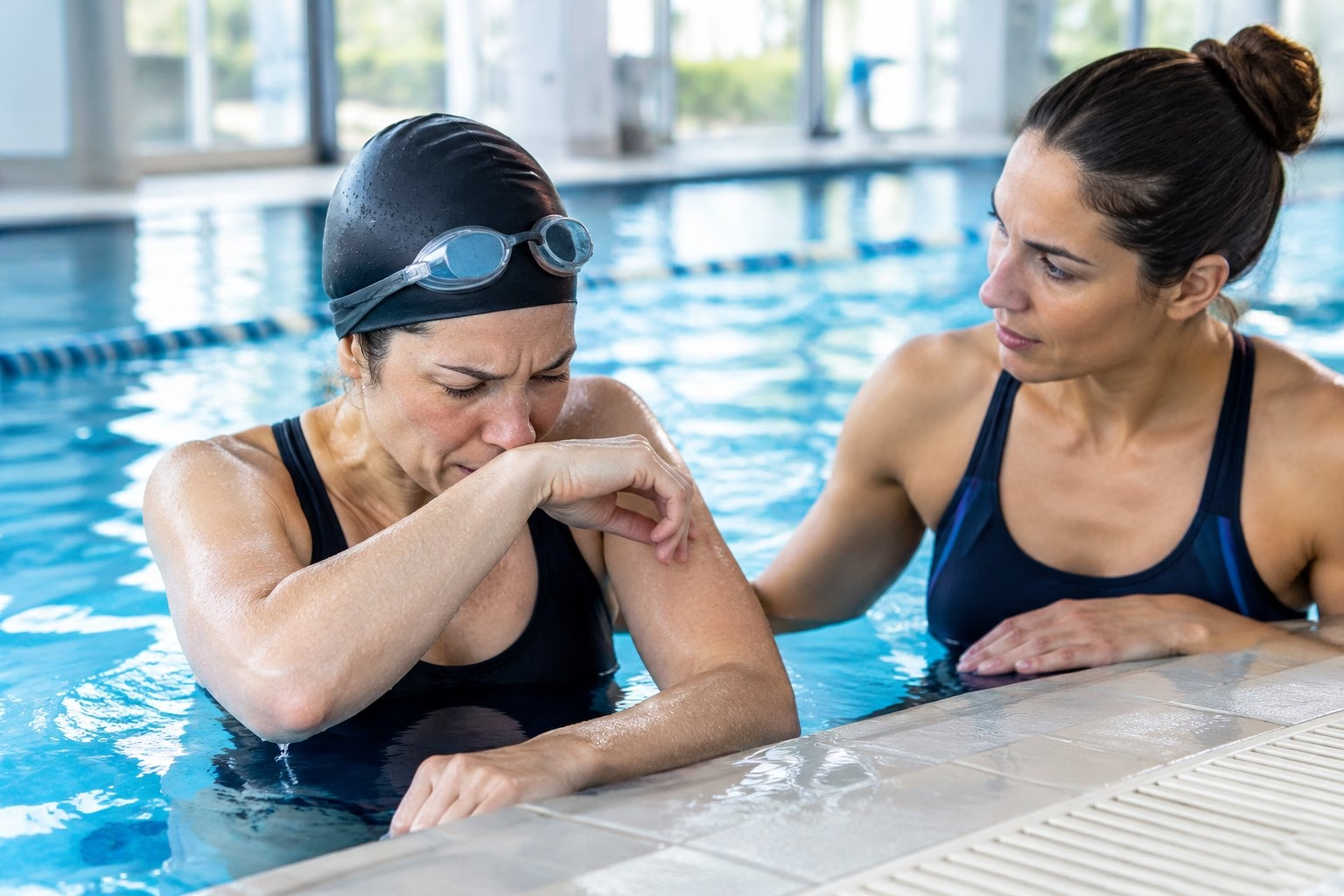
A cough after swimming usually comes from chloramines in pool air, and it eases with fresh air, fluids and rest. Inhaled water, colds and asthma cause similar symptoms, so pay attention to the pattern.
Shower before you get in, pick pools that smell fresh and step outside between races at galas. Those habits cut how much irritant you breathe.
Treat severe breathlessness, blue lips, chest pain or coughing up blood as an emergency and call 999. For a cough lasting over three weeks, or one that returns after most sessions, book a GP appointment or call NHS 111.
Frequently Asked Questions
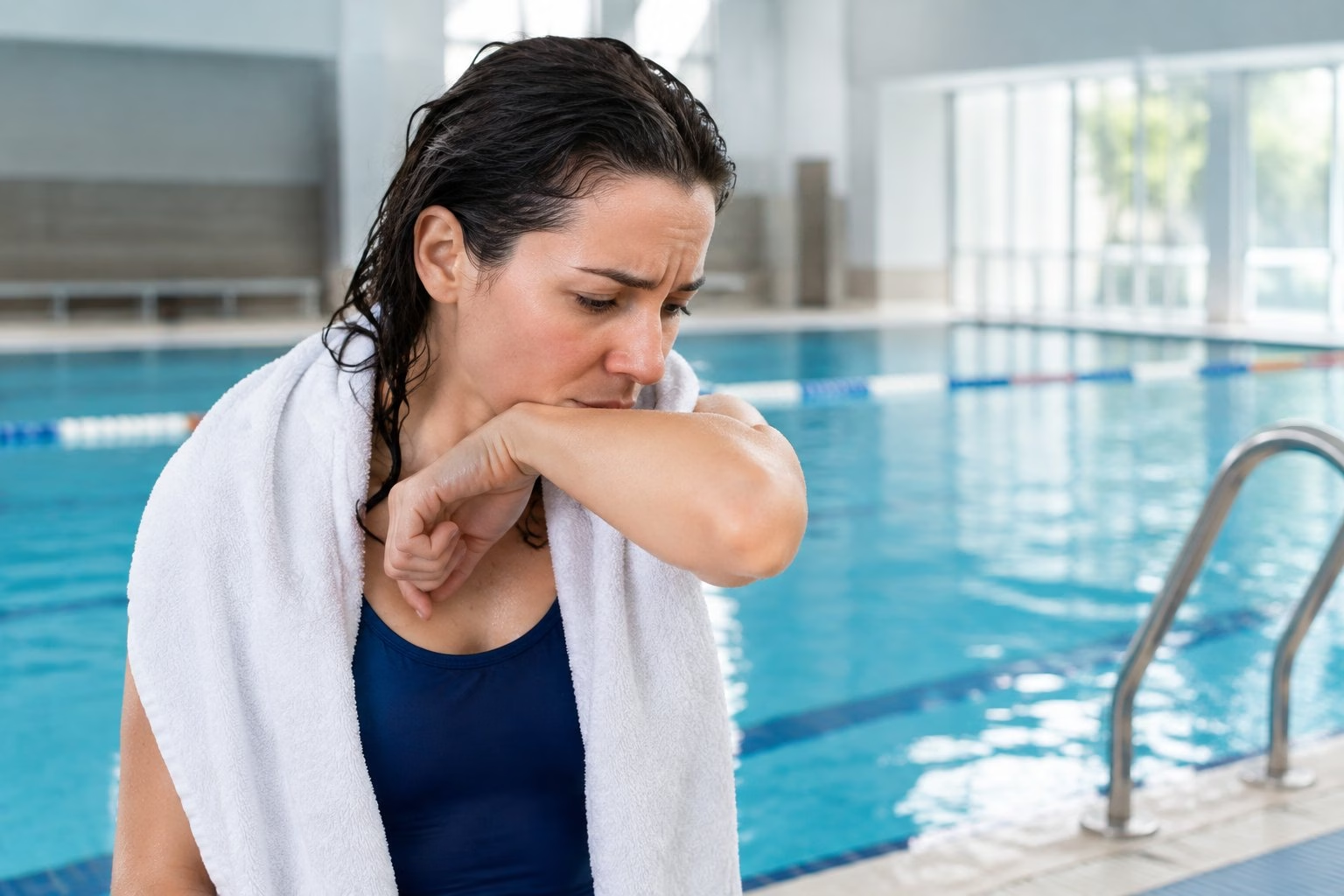
How long does a swimmer’s cough last?
Most mild cases clear within a few hours of leaving the pool. After long meets or heavy exposure, symptoms can last a few days. A cough beyond three weeks needs a GP check.
How do I get rid of chlorine cough?
Leave the pool area, breathe fresh air and shower off the chlorinated water. Then rest, drink fluids and try honey and lemon or lozenges. If it keeps returning, see a GP about your airways.
Is chlorine cough dangerous?
A brief cough is uncomfortable but rarely serious. Repeated exposure is linked to airway problems in swimmers, and it can worsen asthma. Get urgent help for any serious difficulty breathing.
Why is my child coughing at night after swimming?
Irritated airways often feel worse when lying down, and night-time coughing after swimming is a known pattern in children with sensitive airways or asthma. Rinse them off after swimming and keep their bedroom air comfortable. Speak to your GP if it happens regularly or comes with wheezing.
What does chlorine cough sound like?
It is usually a dry, hacking cough with little or no phlegm, sometimes with a wheeze. Some swimmers describe a harsh, barking sound after hard sessions. A wet cough with fever suggests an infection.