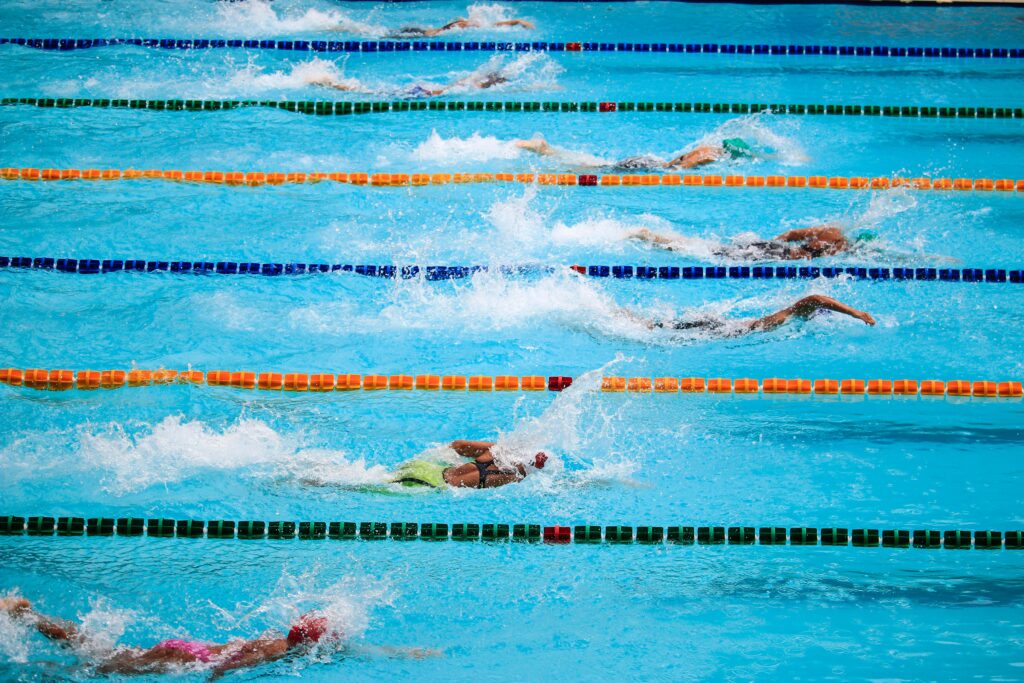
A weak kick sinks your hips, adds drag and makes your arms work twice as hard. A good one keeps you flat, steady and moving forward with less effort, whether you swim freestyle or backstroke.
An efficient flutter kick is a small, fast, alternating kick that starts at your hips, keeps your legs long with only a slight knee bend, uses loose ankles and stays just under the surface. Most swimmers do not need more power. They need a smaller, smoother kick that fits their stroke and keeps going when they breathe.
Once your body line is right, the rest of your front crawl swimming technique gets easier too. Pick one drill from below, take it to your next pool session and give it ten focused minutes before your main set.
How Do You Perform an Efficient Swimming Kick?
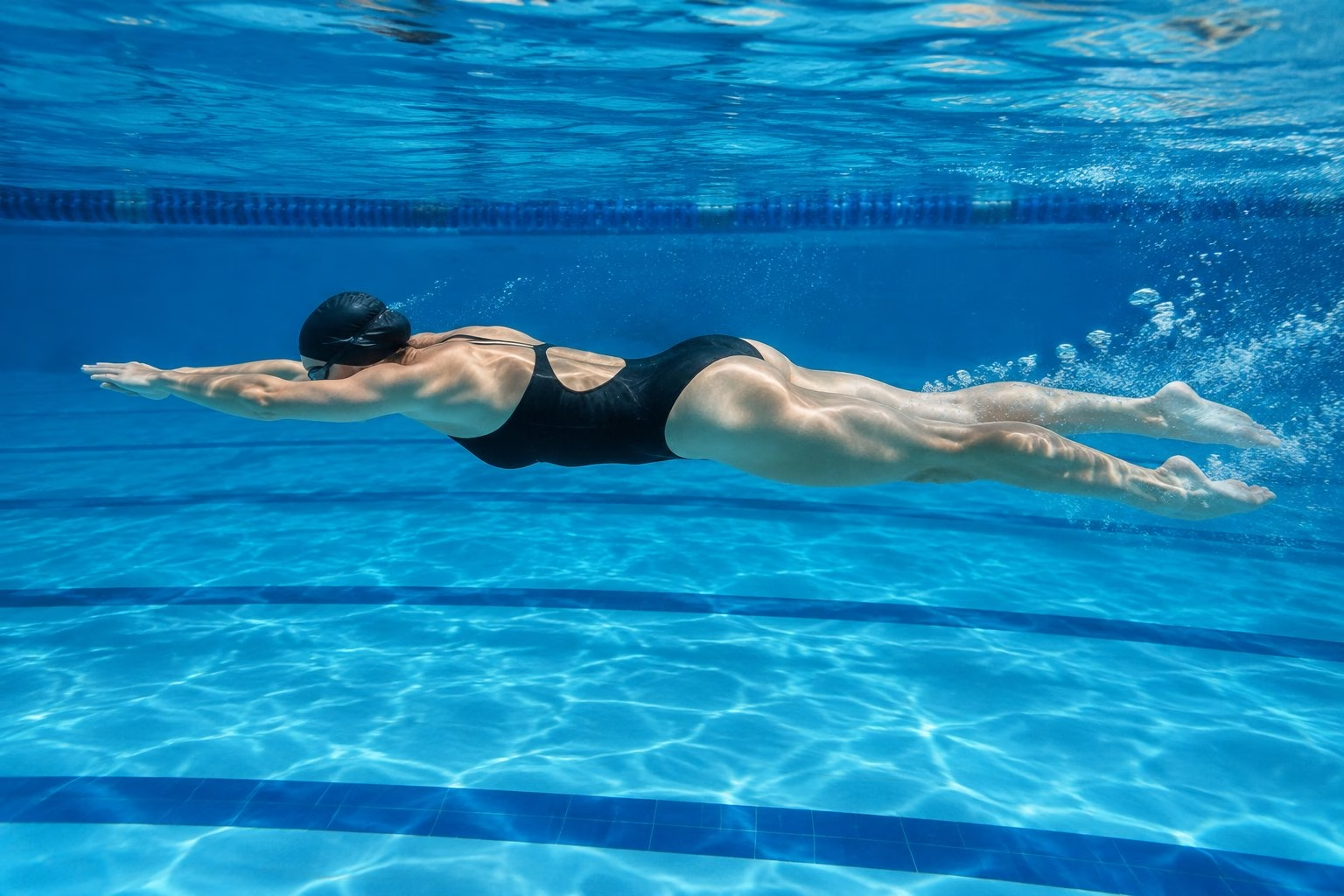
You perform an efficient kick by lining your body up first, then moving each leg from the hip in a short, whip-like action. Loose ankles, a narrow kick and a steady core turn that action into forward speed.
Set Your Body Position Before You Start Kicking
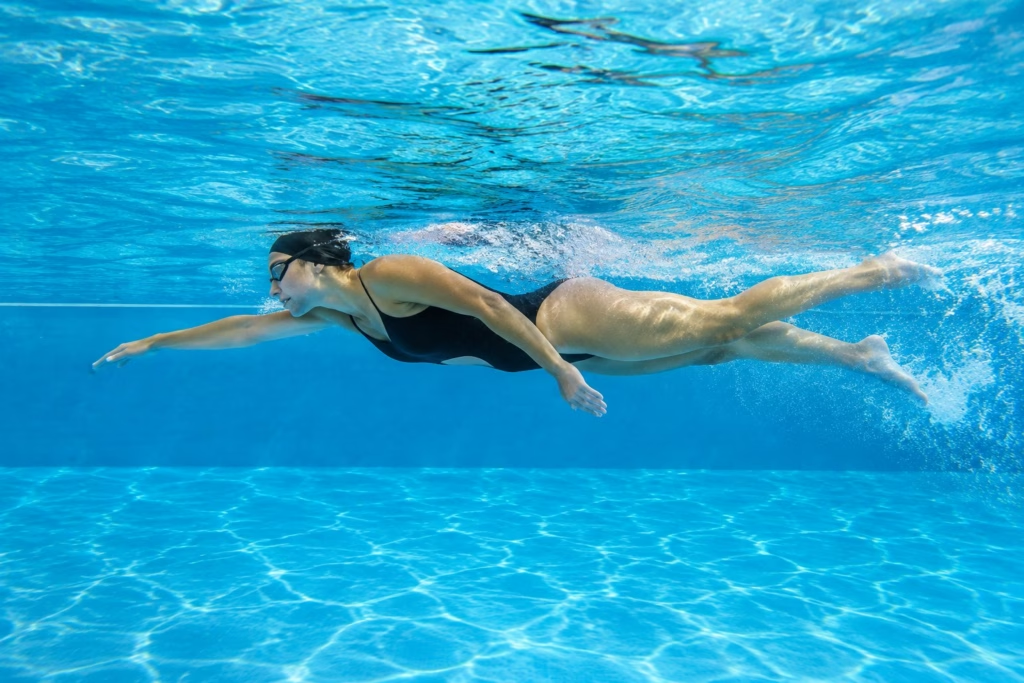
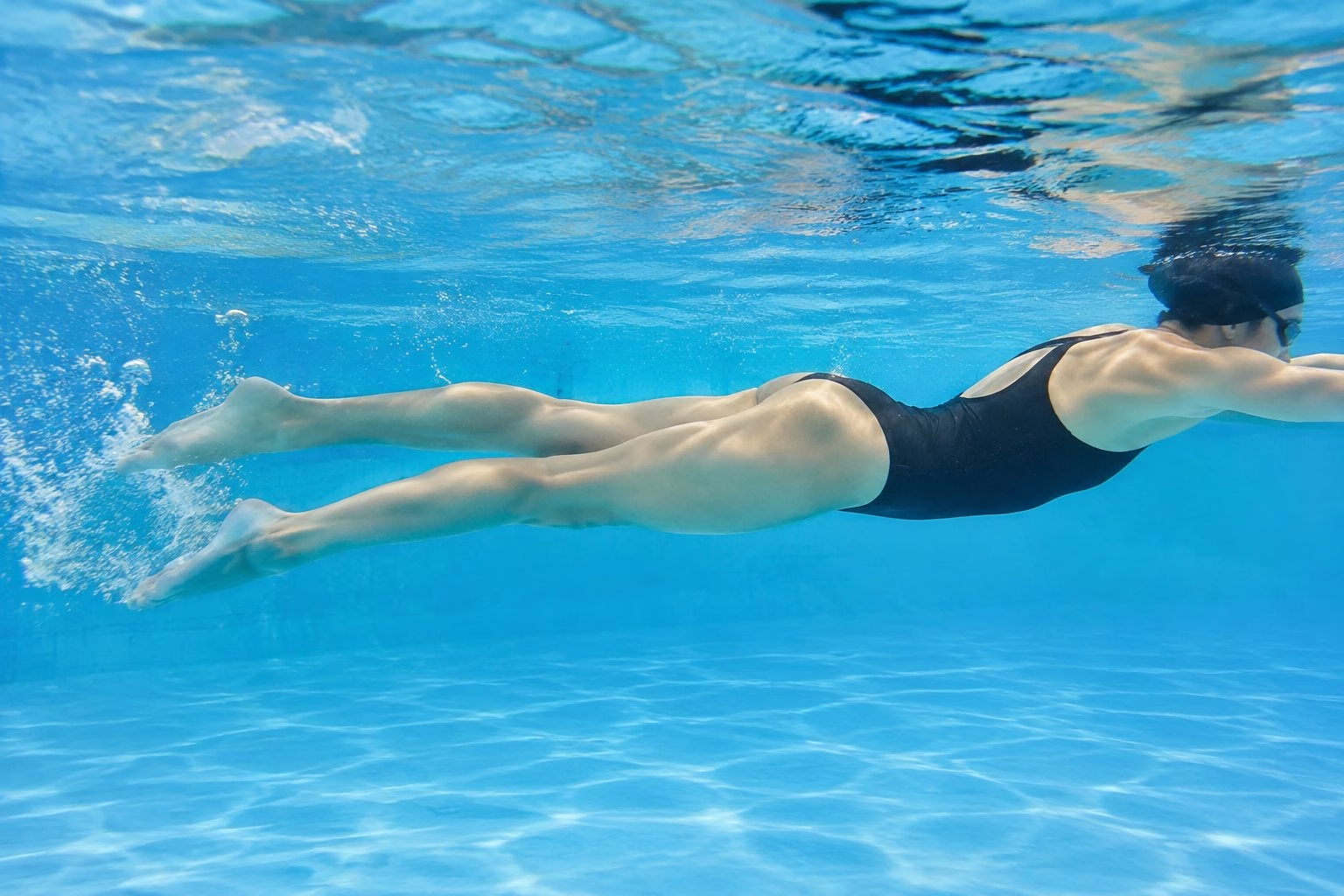
Your kick can only work if your body is flat. Aim for your head, back, hips and heels to sit close to the surface in one long line.
Look down at the pool floor, with the waterline around the top of your head. When you lift your head to look forward, your hips drop and your legs start pushing water down instead of back.
A quick check helps here:
- Push off the wall in a glide with your arms stretched out.
- Feel your hips rise near the surface.
- Start kicking only once you feel level.
If your legs sink during a glide, press your chest gently into the water. That small shift lifts your hips.
Drive from the Hips Through the Downbeat and Upbeat
The kick has two parts. The downbeat pushes your leg from the surface to a depth of about 12 inches (roughly 30 cm), and the upbeat brings it back up to set up the next kick. Your legs move in opposite directions, so one goes down as the other comes up.
Start each downbeat at the hip. The knee bends a little, then straightens with force, and the foot snaps through last. The downbeat begins with the knee bending as the hip flexes, so the thigh presses on the water before the lower leg follows.
On the upbeat, keep your leg almost straight. Many swimmers find it helps to think “long leg up, whip down”. Treat the upbeat as an active lift, and avoid letting your leg just float back.
Keep Your Ankles Relaxed and Your Kick Compact
Loose ankles act like small fins. When your ankle is floppy, your foot points back naturally and pushes water behind you; a stiff ankle pushes water down and wastes the kick.
Do not force your toes into a hard point. Over-pointing tenses your calves and leads to cramp, which is common in newer swimmers. Let your feet turn in slightly, with your big toes almost brushing past each other.
Keep the kick narrow, inside the width of your body. Small, quick kicks beat big, slow ones every time. If your ankles feel tight, a few rolls and stretches during your swimming warm up loosen them before you push hard.
Which Muscles Power and Stabilise the Movement?
Your leg muscles drive the kick, and your trunk holds it steady. Here is how the work splits:
| Muscle group | Main job in the kick |
|---|---|
| Hip flexors | Bring the thigh down on the downbeat |
| Quadriceps | Straighten the knee on the downbeat |
| Hamstrings and glutes | Lift the leg on the upbeat |
| Calves and ankle muscles | Hold a relaxed, pointed foot |
| Abdominal muscles and lower back | Keep hips up and body level |
Weak abdominal muscles let your hips sag and your legs drift apart. Planks and leg raises on land help, and you can add more from these swim strength training exercises to build a stable base.
How Should Your Kick Fit Your Stroke and Breathing?
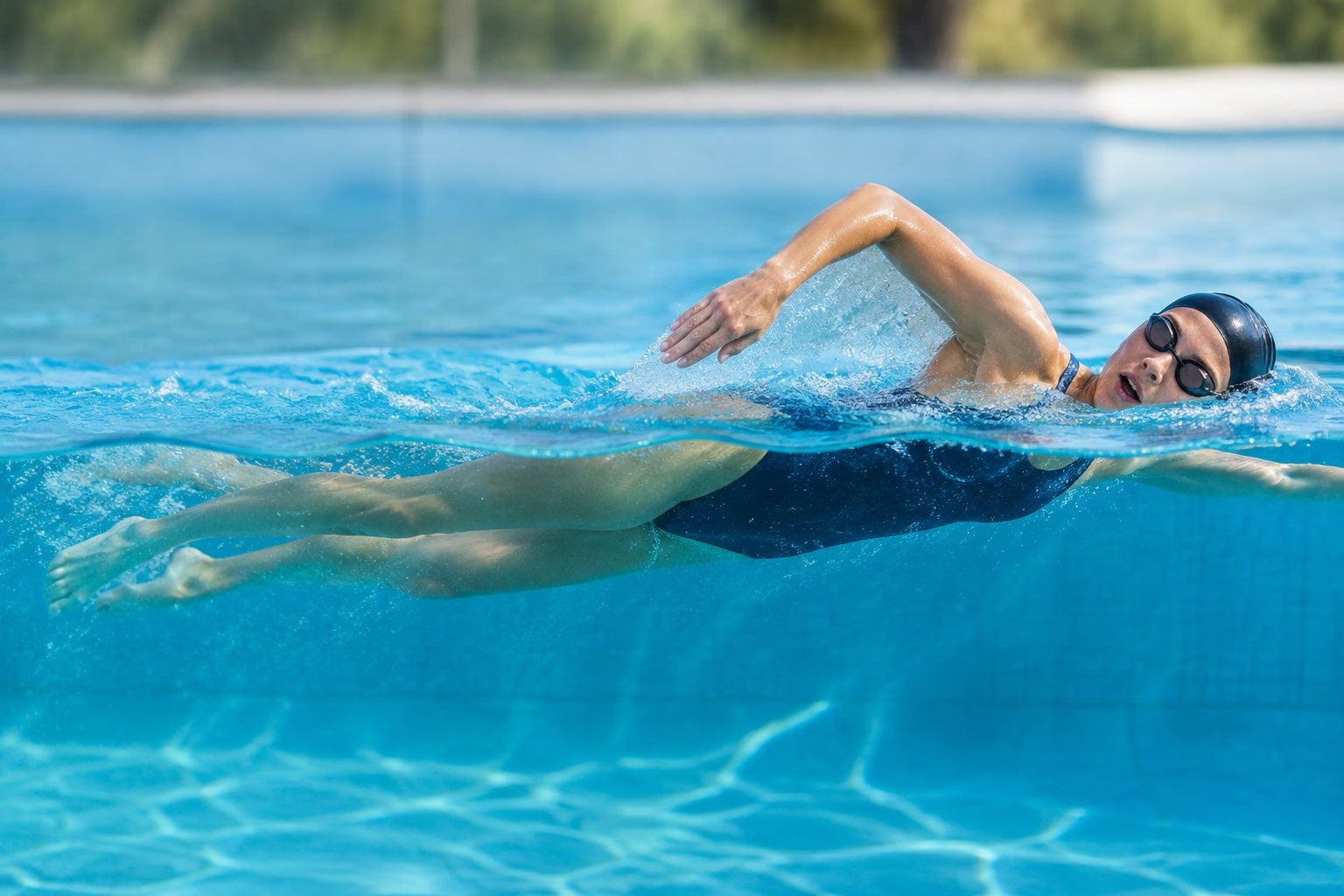
Your kick should match the rhythm of your arms and keep running through every breath. The right beat count depends on your distance, and backstroke needs a few small changes.
Choosing a 2-Beat, 4-Beat or Six-Beat Rhythm
A “beat” is one kick of one leg. The count tells you how many kicks you make in one full arm cycle (both arms).
| Rhythm | Kicks per arm cycle | Best for | Feel |
|---|---|---|---|
| 2-beat kick | 2 | Long distance, open water | Calm, saves energy |
| 4-beat kick | 4 | Steady fitness swimming | Middle ground |
| Six-beat kick | 6 | Sprints, fast intervals | Strong, tiring |
Every rhythm is built on a two-beat base. As your left arm enters the water, your right leg kicks down, which helps roll your body onto your left side. A six-beat kick adds two smaller kicks per leg on top of those main ones.
If you swim long sets, a relaxed 2-beat kick saves your legs, which helps when you pace a 1500m freestyle race. For a 50m sprint, a full six-beat kick adds speed.
Maintain Your Rhythm While Turning to Breathe
Many swimmers stop kicking or scissor their legs wide when they breathe. Both drop your hips at the exact moment you need to stay balanced.
Roll your whole body to breathe, and avoid lifting your head. Keep one goggle in the water and let your kick carry on at the same pace. Counting “one-two-three” in your head while you breathe keeps your legs moving.
Practise this with side kicking first, then add a breath every few kicks. These breathing tips for front crawl pair well with steady kicking.
Adapt Your Kick for Backstroke
On your back, the kick is the same alternating action, flipped over. The upward kick now does the main work, pushing water up and back.
Keep your head still, with your eyes on the ceiling and ears in the water. Tucking your chin forward makes your hips sink, which is why many people feel slow on their back.
Aim for your toes to just break the surface with a small “boil” of bubbles, and avoid big splashes. Keep your knees under the water; if they poke out, you are bending them too much. More detail on body line sits in these backstroke technique tips.
Common Flutter Kick Mistakes and How to Fix Them
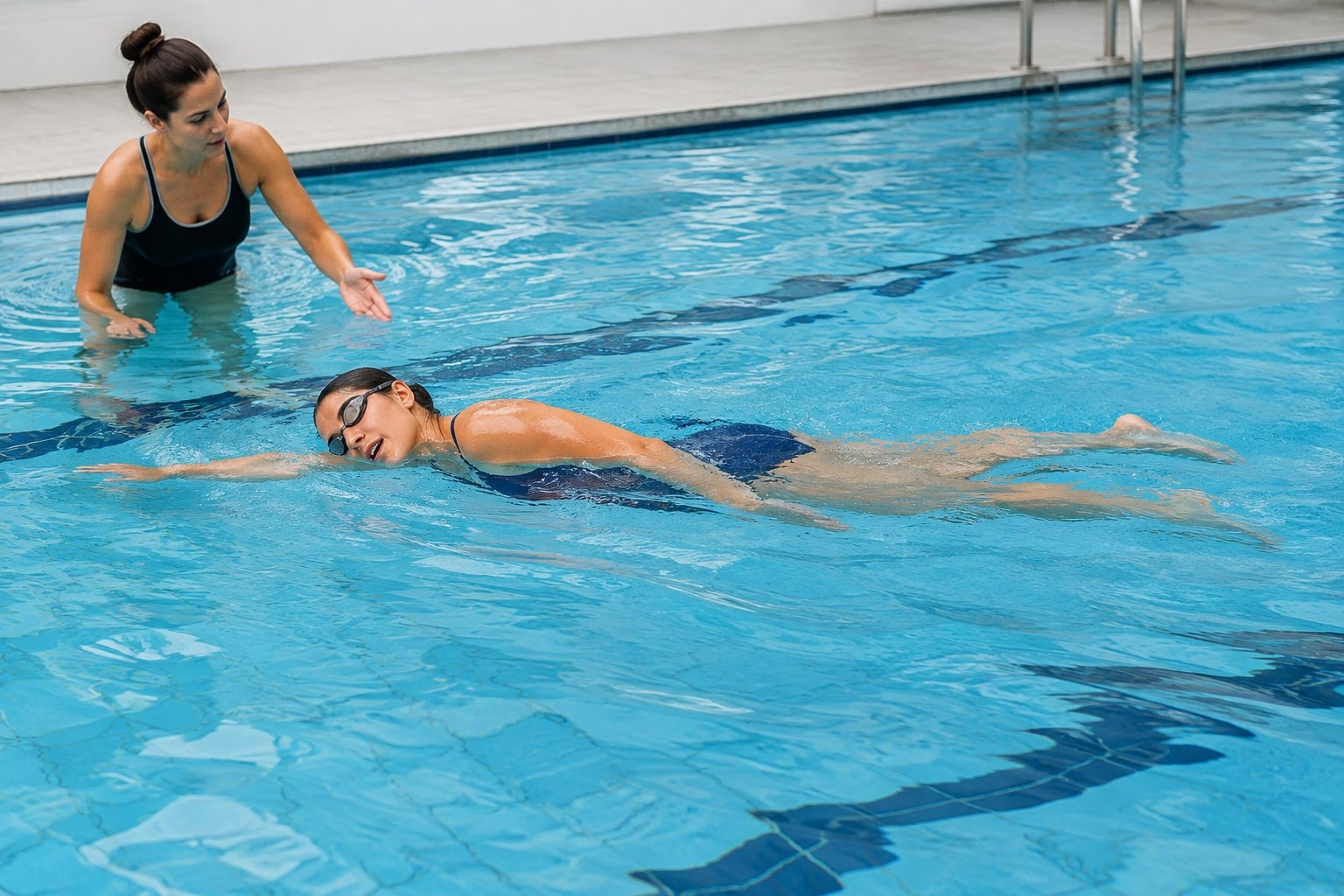
Most kick problems come from kicking too big or too hard, or from poor body position. Each one has a simple fix you can try in your next session.
Excessive Knee Bend and an Oversized Kick
Bending your knees too much turns your kick into a cycling motion. Your thighs drop, your shins push water forward and you create drag.
The fix is to kick from your hips with legs that feel almost straight. The knee bends during the downkick (up to about 120 degrees, measured as the joint angle), but it should feel like a long leg to you.
Try these cues:
- Imagine kicking inside a narrow tube.
- Hold a kickboard and keep your knees from touching the bottom edge of an imaginary box.
- Kick slowly for a length, then speed up while keeping the same size.
Stiff Ankles, Forced Toes and Too Much Splash
A stiff ankle pushes water down, and a forced point brings on calf cramps. Big splashes look busy, but a foot in the air pushes nothing.
Relax your feet and let the water shape them. Keep your heels just at the surface, with only a light ripple behind you.
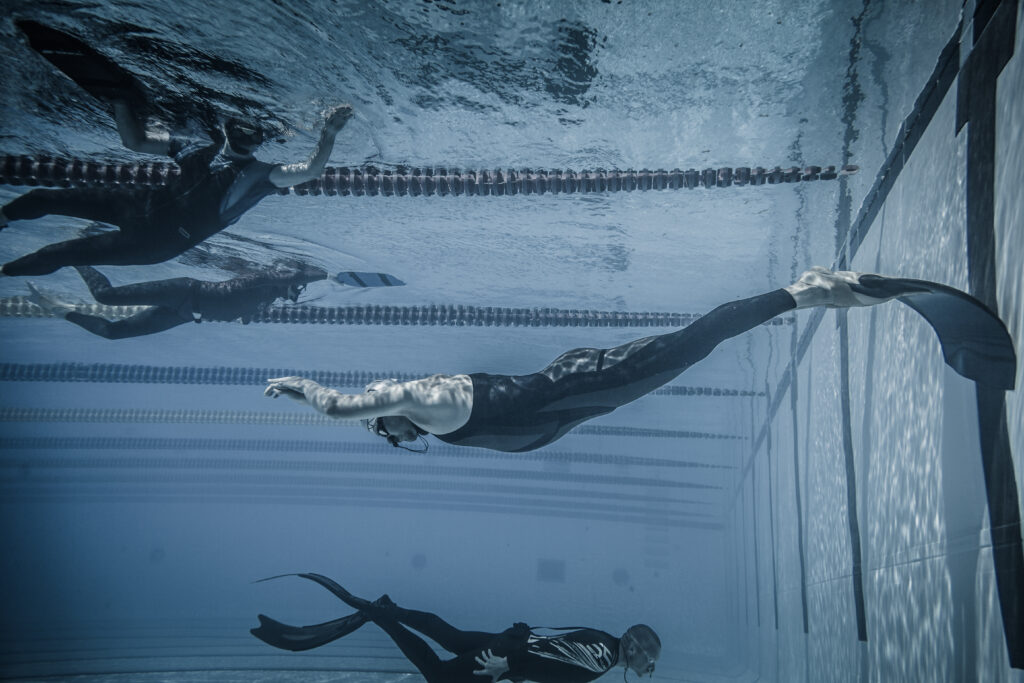
If your ankles are very tight, use short fins for a few lengths. They stretch the ankle and help you feel a whippy kick. Take them off and repeat the drill so the feeling carries over.
Sinking Hips and Pauses During Breathing
When your hips sink, your legs kick downward and you work harder for less speed. Lifting your head and holding your breath are the usual causes.
Look down, breathe out steadily under the water and keep your core lightly braced. Your body position improves straight away.
Then fix the breathing pause. Do a length of side kick, roll to breathe every six kicks and keep your legs moving the whole time. A snorkel lets you practise a steady kick with no breathing at all.
Which Drills Build Technique and Kicking Endurance?
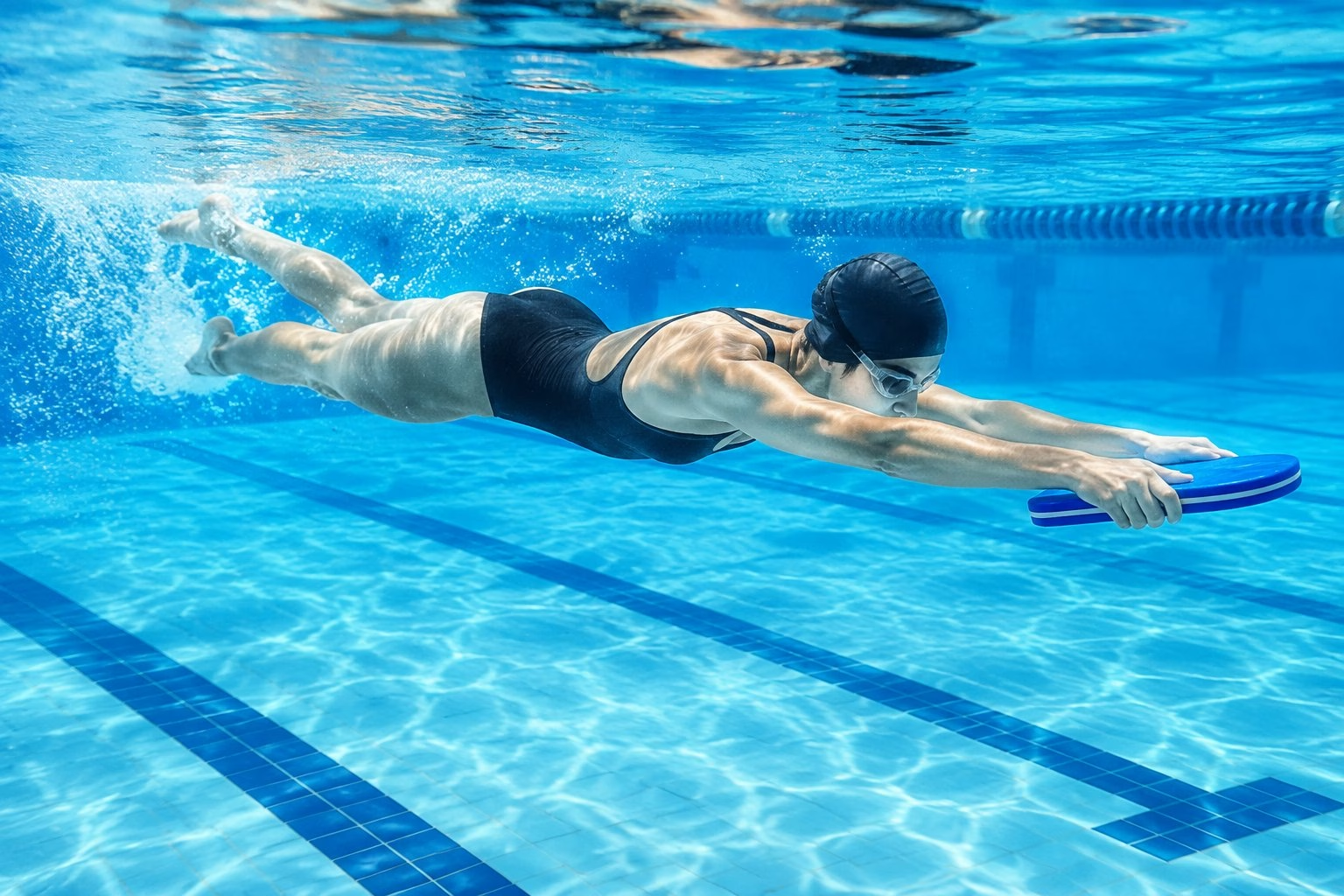
Start with supported drills at the wall and on a board, move on to unsupported streamline and side kicking, then add vertical and resisted work. A set that builds week by week turns good form into lasting endurance.
Start with Wall Support and a Kickboard
Hold the pool edge with your arms straight and your face in the water. Kick gently and feel your hands being pushed towards the wall. Keep your legs long and loose, and focus on a steady rhythm before any speed.
Next, take a swimming kickboard. Hold the lower corners, push off and kick with your face down, lifting to breathe when needed. If you stop or drift backwards, check your knee bend and head position.
To make it easier, rest your forearms on the board. To make it harder, hold the very end of the board with both hands. These are classic swimming drills for beginners for good reason.
Progress to Streamlined and Side Kicking
Streamline kicking removes the board. Push off with your arms overhead, hands stacked and head between your arms, then kick small and fast. You will feel quickly whether your kick holds your body up.
Side kicking builds balance and breathing control. Lie on one side with your bottom arm stretched forward and top arm on your hip. Keep one goggle in the water and kick for a full length, then swap sides.
Add one-arm freestyle with a constant kick once side kicking feels easy. You will find more options among these freestyle swimming drills.
Develop Control with Vertical and Resisted Kicking
Vertical kicking happens in deep water. Cross your arms over your chest and flutter kick to keep your head above the surface. Start with 5 to 8 rounds of 30 seconds kicking and 30 seconds rest.
This drill trains both the downbeat and upbeat and works your core endurance. Progress by raising your hands out of the water.
Resisted kicking adds drag with DragSox, a parachute or a tether. Keep efforts short and rest well so your form stays clean. Alternate a resisted 25m with a free 25m and notice how light your legs feel without the drag.
Try a Progressive Endurance-Building Practice Set
Use this set once or twice a week. Rest 15 to 20 seconds between repeats, and stop if form slips.
| Week | Set | Focus |
|---|---|---|
| 1 to 2 | 4 x 25m kickboard, 4 x 25m side kick | Relaxed ankles, quiet splash |
| 3 to 4 | 6 x 25m streamline kick, 4 x 25m side kick with breathing | Body line, no pause on breaths |
| 5 to 6 | 4 x 50m kickboard, 6 x 30 seconds vertical kick | Steady rhythm, core control |
| 7 to 8 | 6 x 50m kick (alternate easy and fast), 4 x 25m resisted kick | Speed with the same small kick |
Finish every session with 4 x 50m full freestyle, keeping the same kick rhythm. That last step carries your new kick into your normal swimming.
Build a Controlled Kick Before Adding Speed
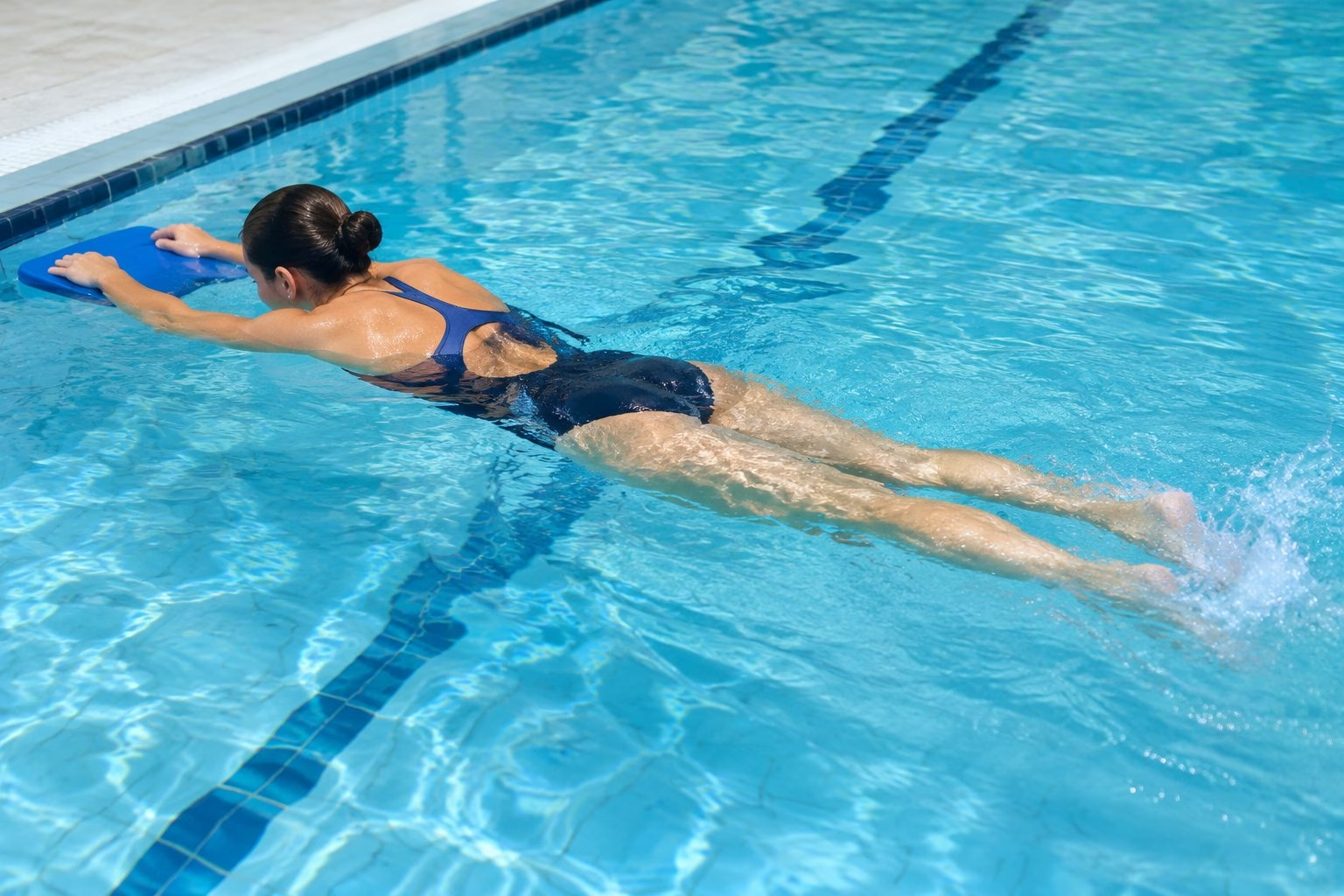
A strong freestyle kick starts with control. Get your body flat first, then build a small kick from the hips with loose ankles and only a slight knee bend.
Once that feels natural, match your kick to your stroke. Use a 2-beat rhythm for long swims, a six-beat rhythm for sprints, and keep your legs moving through every breath.
Work through the drills in order: wall, kickboard, streamline, side kick, then vertical and resisted work. Add distance slowly over eight weeks, and only add speed when your kick stays quiet and narrow at an easy pace.
Frequently Asked Questions
What are the benefits of a flutter kick in swimming?
It keeps your hips high, which cuts drag and saves energy. It also helps your body roll from side to side and adds speed, especially over short distances.
Why am I barely moving when I use a kickboard?
The usual cause is bending your knees too much or kicking with stiff ankles. Both push water down or forward. Make your kick smaller, keep your legs long and relax your feet.
Should my feet break the surface when I kick?
Only just. Your heels should reach the surface with a light ripple, while big splashes mean your feet are kicking air. In backstroke, a small boil of water at your toes is fine.
How is a flutter kick different from a dolphin kick?
In a flutter kick, your legs move in opposite directions, one up and one down. In a dolphin kick, both legs move together in a wave that starts at your chest, which uses different muscles for the butterfly kick.
How often should beginners practise kicking?
Two or three short kick sets a week works well for beginners. Spend 5 to 10 minutes per session on drills like wall kicking and kickboard lengths, and build up slowly to avoid calf cramps.