Pregnancy swimming is one of the gentlest ways to stay active while your body changes. For most mums-to-be with a healthy pregnancy, pregnancy swimming classes (often called aquanatal classes) are a safe, low-impact way to keep fit, ease aches and meet other parents, as long as you check with your midwife or doctor first. The water carries much of your weight, so movements that feel heavy on land often feel easy in the pool.
Many women first try a class in the second trimester, when sickness fades and energy returns. Others join much earlier or keep going until the final weeks. Your own health, comfort and clinical advice decide what suits you.
Below you’ll find what a class looks like, how to stay safe at each stage, and how to pick a good instructor. If you feel ready, mention it at your next midwife appointment and book a taster session at a pool near you.
What Happens in an Aquanatal Class?
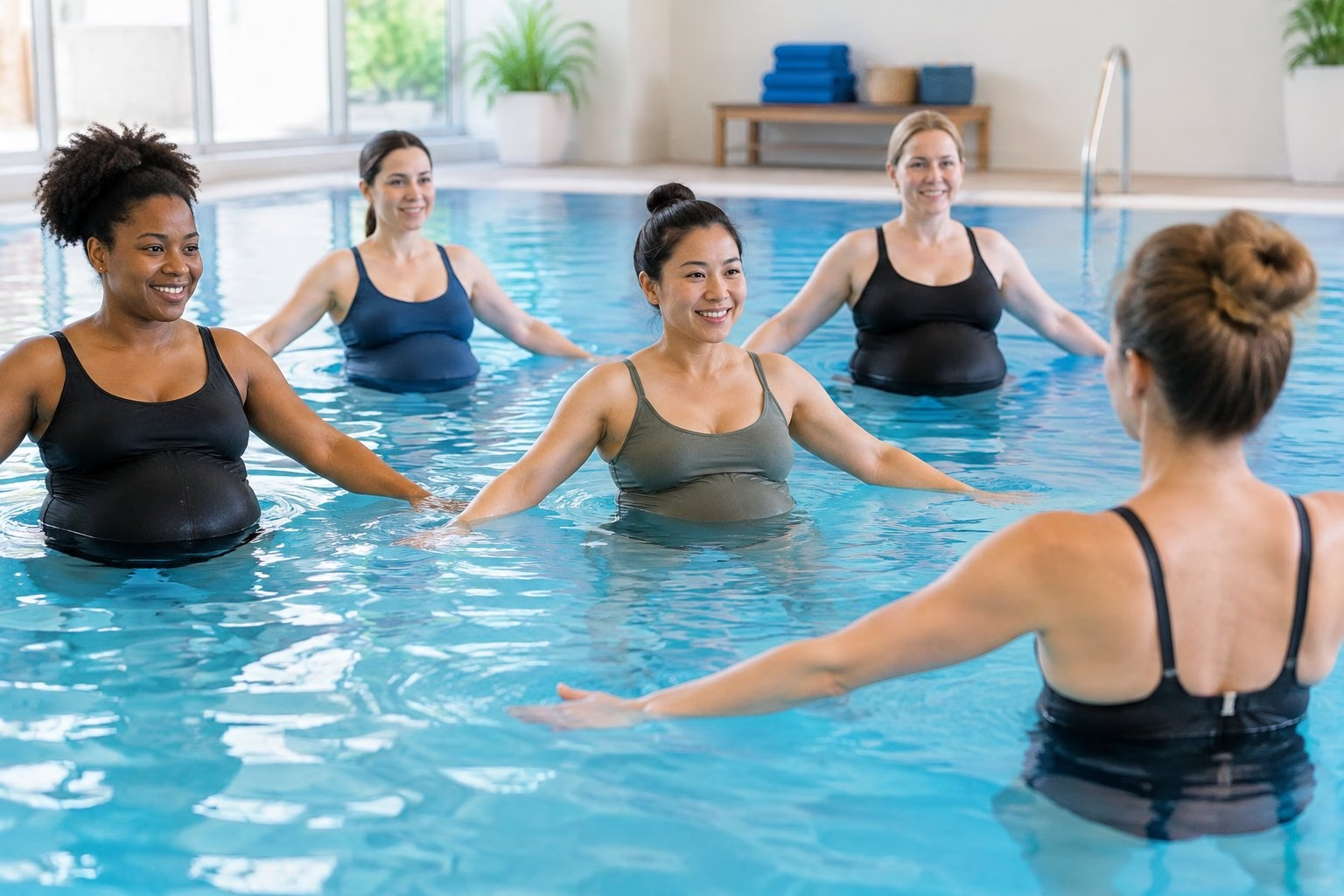
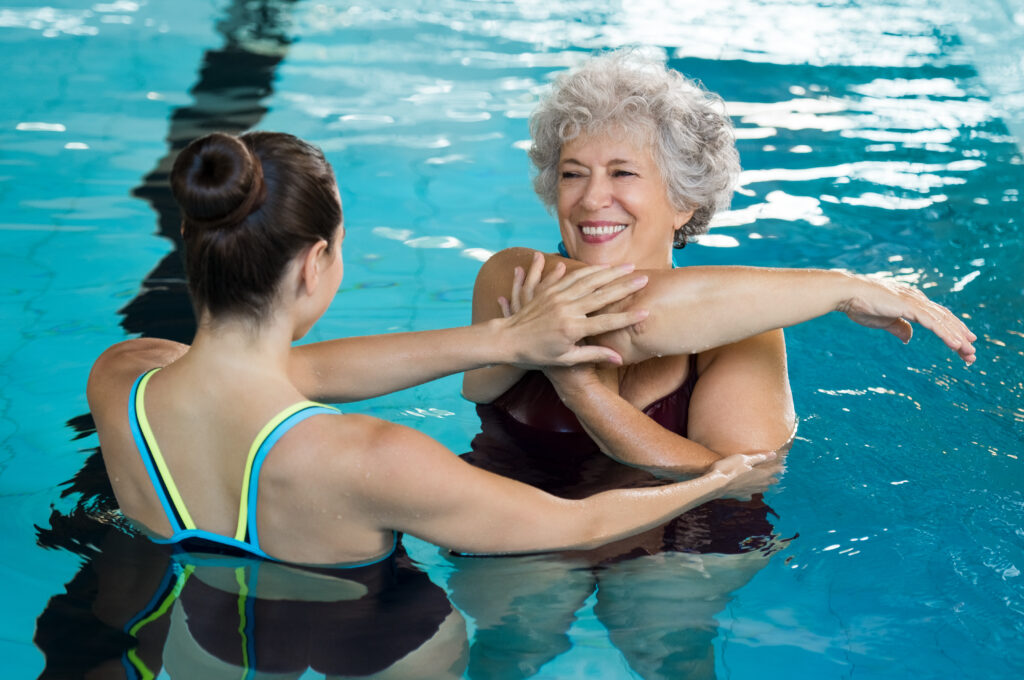
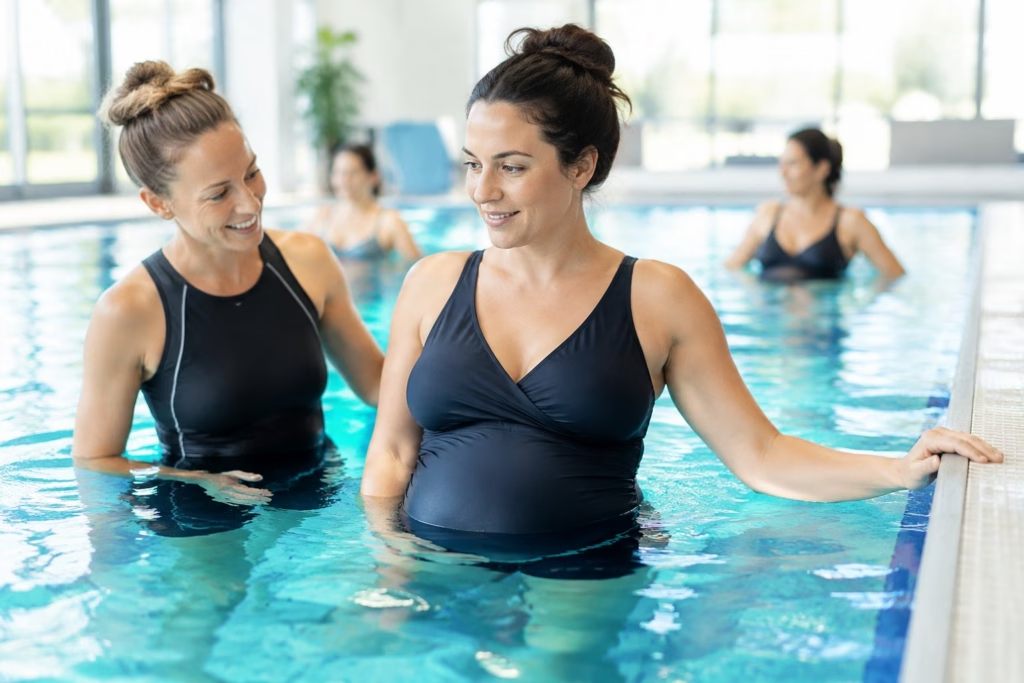
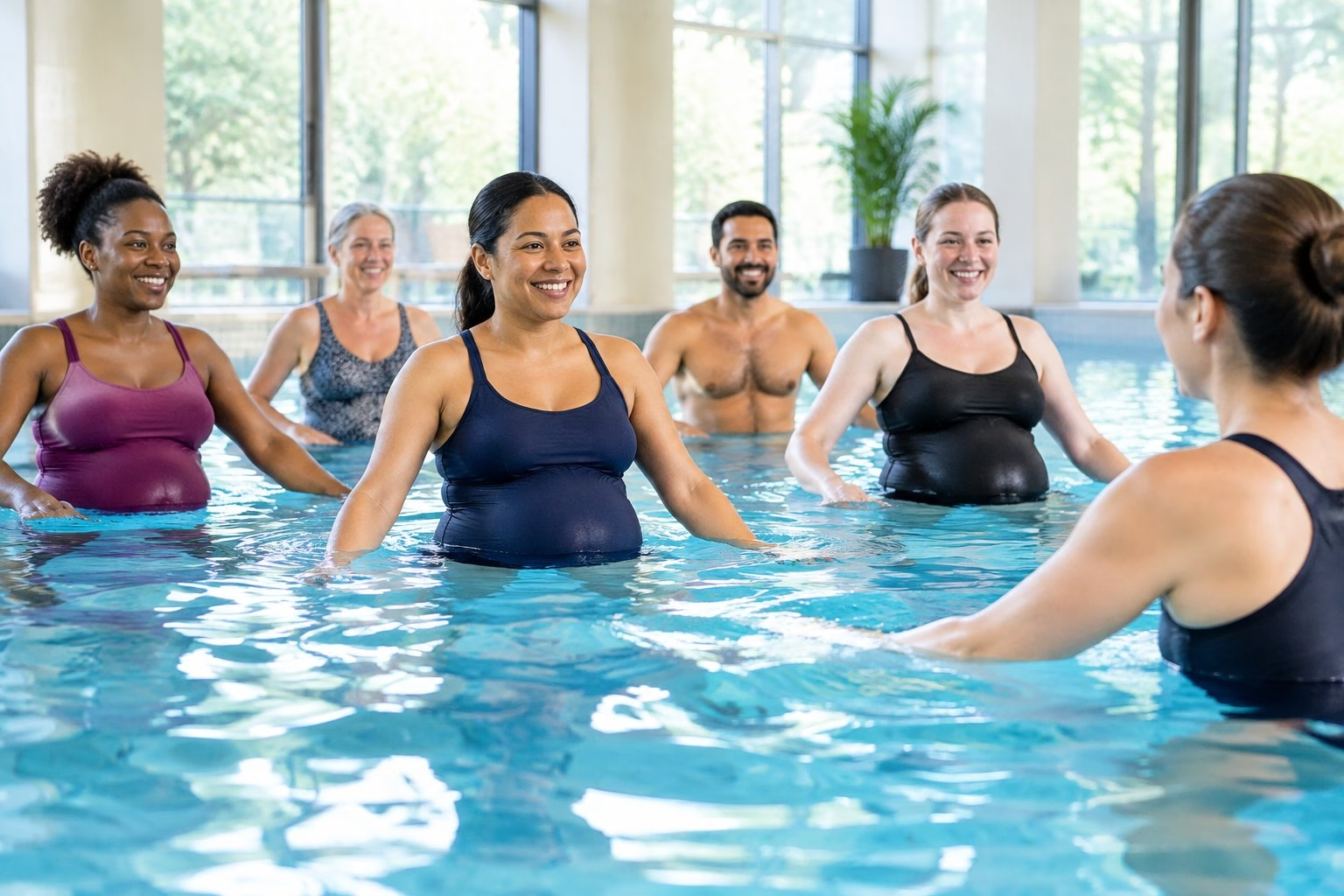
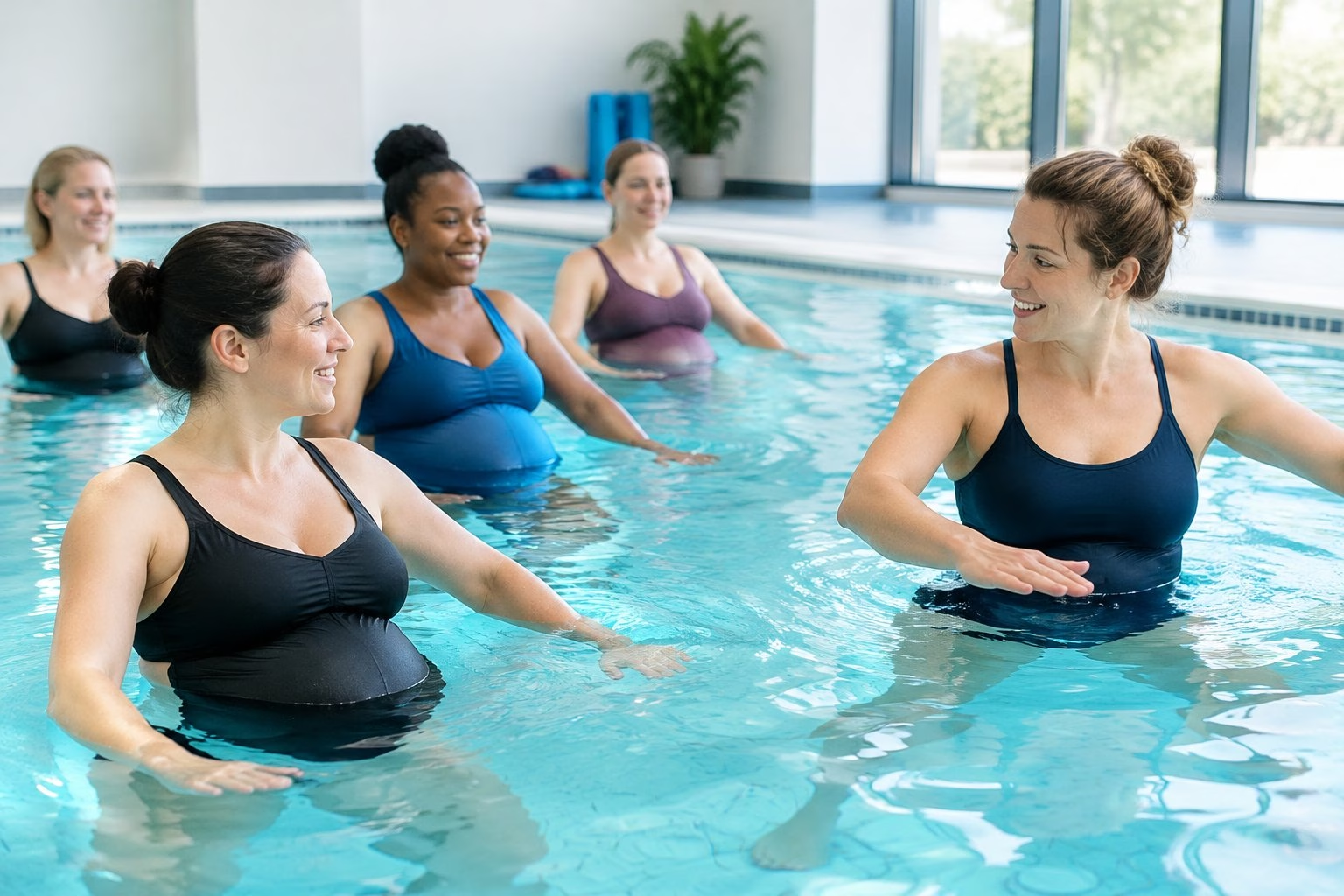
An aquanatal class is a group exercise session in chest-deep water, planned around the needs of a pregnant body. Expect a warm-up, gentle cardio, light strength work and stretching, with time set aside for breathing and calm. You can stand for most of it, so swimming skill is optional.
How Do Aquanatal Sessions Differ from Swimming Lessons and Aqua Aerobics?
Aquanatal workouts are built only for pregnancy. Every move is chosen to protect your pelvis, back and tummy muscles, and the group shares the same stage of life.
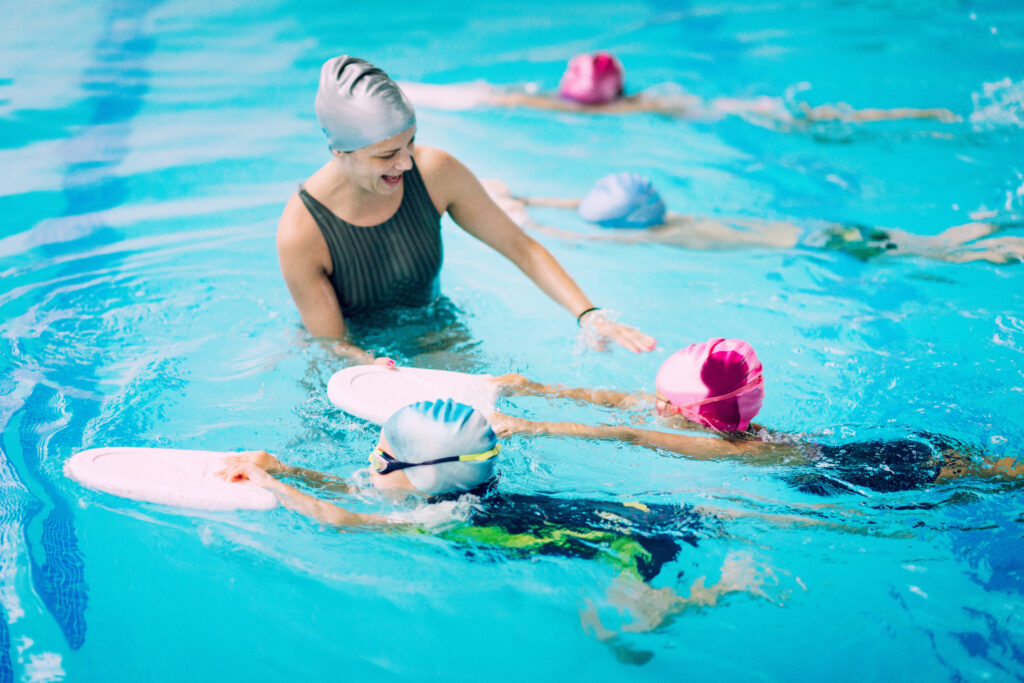
A swimming lesson teaches stroke technique. If you want to learn to swim, adult swimming lessons focus on skills and confidence in deeper water.
Aqua aerobics is a general fitness class. Some exercises, such as fast twists or high jumps, do not suit a growing bump. If you join one, the teacher should be qualified to teach pregnant people and change exercises to suit you, with more on offer than a simple “slow down”. You can read more about general water aerobics classes and how they are run.
| Class type | Main aim | Pregnancy-specific? | Swimming needed? |
|---|---|---|---|
| Aquanatal | Fitness and comfort in pregnancy | Yes | No |
| Swimming lesson | Learn strokes | No | Building up |
| Aqua aerobics | General fitness | No | No |
What Exercises, Breathing and Relaxation Activities Can You Expect?
Most sessions last 30 to 45 minutes and follow a simple shape:
- Warm-up: walking across the pool, heel raises and gentle arm sweeps. A good swimming warm-up prepares joints before harder work.
- Cardio: marching, jogging on the spot and side steps, often to music.
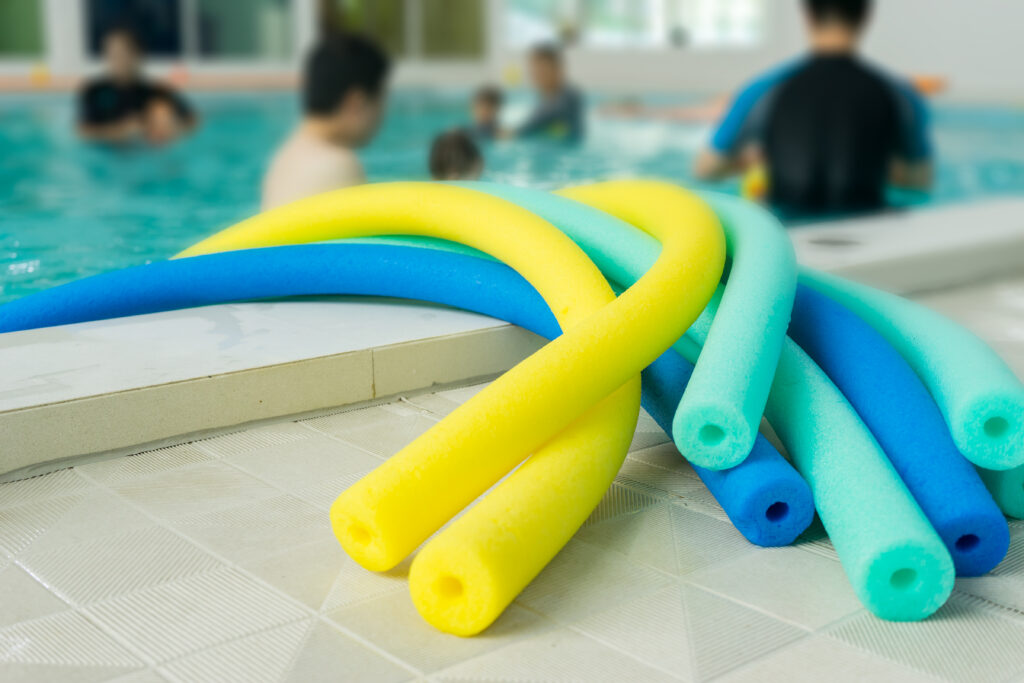
- Strength: pushing the water with your arms or using a woggle as light resistance.
- Breathing: slow, steady breaths, which help in labour too.
- Stretch and relax: floating with support and calm stretches to finish.
Some providers mix in ideas from pregnancy yoga. Others focus on relaxation, since exercise and calm release endorphins that ease pain and help you feel settled. From experience, the last five minutes of floating is the bit most people look forward to.
Do You Need to Be Able to Swim?
No. You stand in water that sits around chest height, so your feet stay on the pool floor for most moves. Plenty of women in these classes are nervous swimmers.
Tell the instructor if water worries you. They can place you near the side or steps, offer a float, and show you how to stand up safely from a floating position.
What Are the Benefits of Exercising in Water?
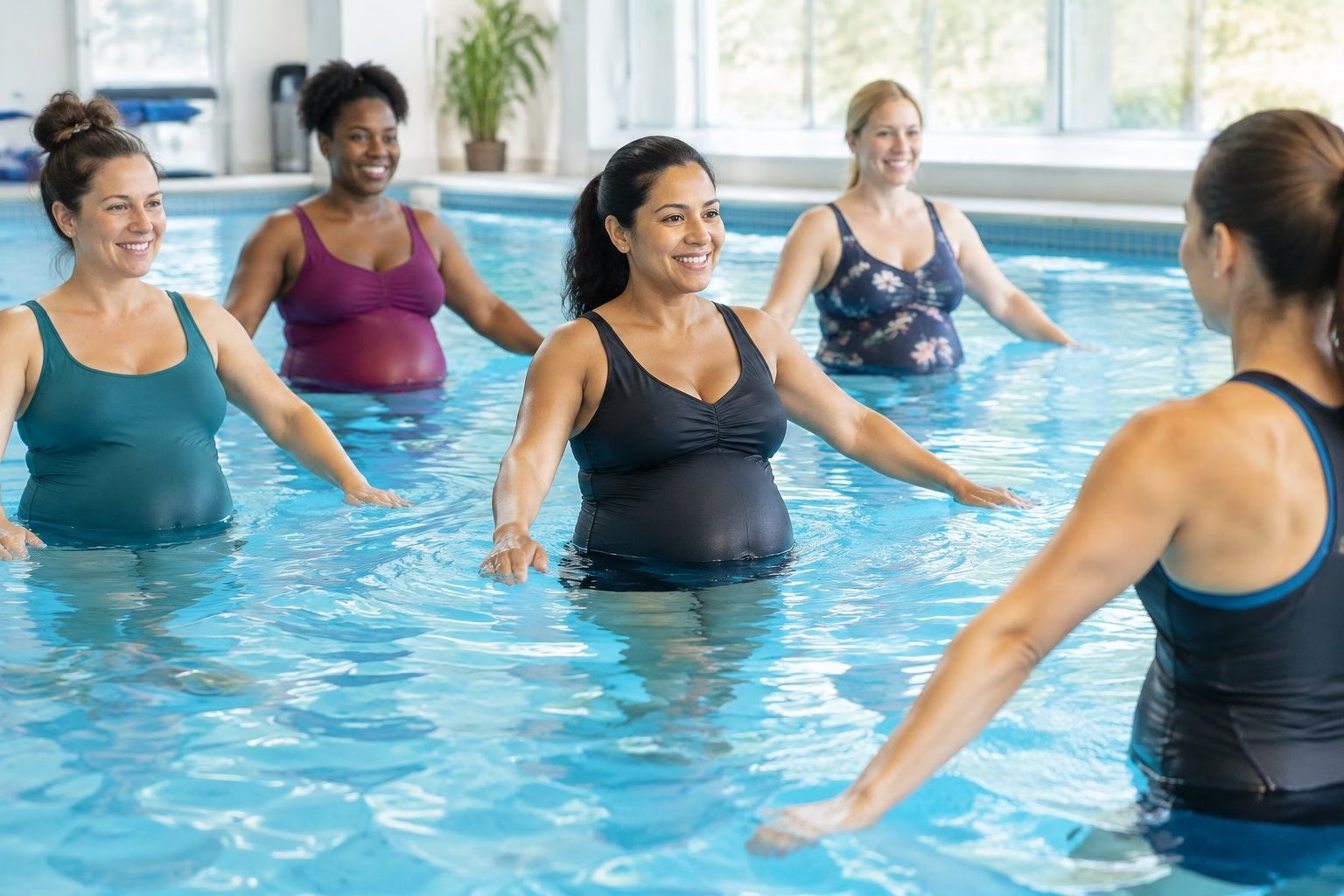
Water exercise eases strain on your body while still working your heart and muscles. The main gains are comfort for your back and joints, less swelling, better mood, and links to healthier outcomes for you and your baby.
How Does Water Support Your Bump, Back and Joints?
Buoyancy lifts some of your weight, so your bump feels lighter as soon as you step in. Many women say it is the only time of day their lower back stops aching.
The feeling of weightlessness lets you move with a reduced risk of injury. Water also gives gentle resistance in every direction, which tones muscles without heavy weights.
This makes pool work a sensible choice if you have back pain or pelvic girdle pain, though you may need to adapt some moves. More on that below.
Can Pool Exercise Help with Tiredness, Swelling and Wellbeing?
Yes, for many women it does. The pressure of the water around your legs helps push fluid back up, so swollen ankles often feel better after a session.
Water also supports your circulation and respiratory system and helps lower blood pressure. Some find that a morning session lifts their energy for the rest of the day.
The social side counts too. Chatting with other expectant parents eases worry, and calm time in the water supports mindfulness and stress relief.
What Does the Evidence Say About Pregnancy and Baby Outcomes?
Water-based exercise is linked to less pregnancy tiredness, a lower risk of gestational diabetes and less pregnancy weight gain. For your baby, it is linked to a healthier heart rate and birth weight.
These results come from studies of active pregnancies in general, so no class can promise them. They fit with wider advice that regular movement helps you stay well. Swimming brings many of the same gains seen in swimming for health and wellbeing outside pregnancy.
The NHS suggests 150 minutes of exercise each week for pregnant women, and even 10-minute spells count. A weekly class plus a couple of swims or walks gets you close.
How Can You Exercise Safely as Pregnancy Progresses?
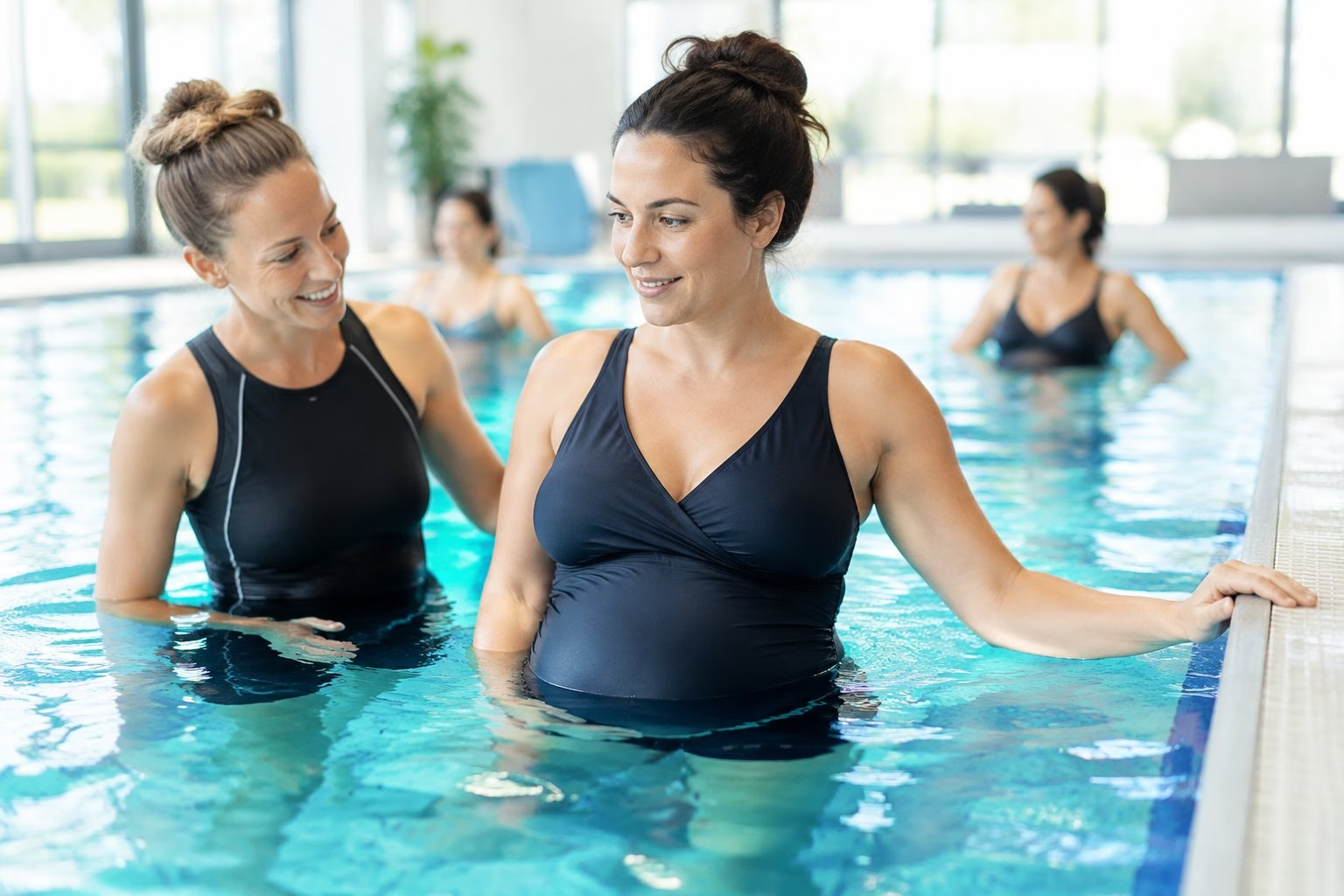
Safe exercise during pregnancy starts with a chat with your midwife and continues with small changes as your bump grows. Moderate effort, steady breathing, careful pool entry and knowing the warning signs keep sessions comfortable from start to finish.
When Should You Ask Your Midwife or Doctor About Suitability?
Tell your midwife or doctor before you start any class. This is the right step for everyone, and it is essential if you have:
- a heart or lung condition
- high blood pressure or pre-eclampsia
- bleeding or a low-lying placenta
- a history of early labour or problems in past pregnancies
- a twin or multiple pregnancy
Only your clinician can judge your own case. Bring a list of what the class involves so they can give clear advice.
How Do Aquanatal Workouts Change by Trimester?
First trimester: you can usually work at your normal level if you feel well. Tiredness and sickness may mean shorter sessions.
Second trimester: energy often returns. This is a good time to build stamina and strength.
Third trimester: moves become slower and wider, with more rest and relaxation. Many classes welcome women from 0 to 40 weeks.
After the first trimester, avoid lying flat on your back for long. The weight of your bump can press on a major blood vessel and leave you dizzy. In the pool, swap long back floats for side floats or upright moves.
What Adaptations May Help with Pelvic or Abdominal Discomfort?
Pelvic girdle pain makes some moves sore, especially wide leg kicks. Try these changes:
- Keep your feet hip-width apart.
- Avoid lifting your knees high.
- Point your toes forwards.
- Swap breaststroke legs for a gentle flutter kick.
Diastasis recti is a gap between your tummy muscles. To protect them, avoid twisting and strong crunch-style moves. Tell your instructor about either problem at the start of the class so they can give you options.
How Can You Manage Effort, Hydration and Pool Entry?
Use the talk test: you should be able to hold a conversation while you move. If you can’t, slow down.
Keep a water bottle at the poolside. You still sweat in water, though you may not notice it. Eat a light snack no less than 30 minutes before you get in.
Always use the steps or ladder. Climbing out over the edge involves a twist that strains your tummy and pelvis. Avoid diving or jumping in.
Warm pools suit pregnancy well. Most public pools sit at 27°C to 29°C, and hydrotherapy pools should not go above 35°C. Skip hot tubs and saunas.
Which Symptoms Mean You Should Stop and Seek Advice?
Get out of the water and contact your midwife, GP or maternity unit if you notice:
- vaginal bleeding or leaking fluid
- chest pain or a racing heart
- feeling dizzy or faint
- headache or blurred vision
- calf pain or swelling in one leg
- regular tightenings or painful contractions
- your baby moving less than usual
If something feels wrong and you are unsure, stop anyway. Instructors are used to people sitting out.
How Do You Find and Choose a Suitable Class?
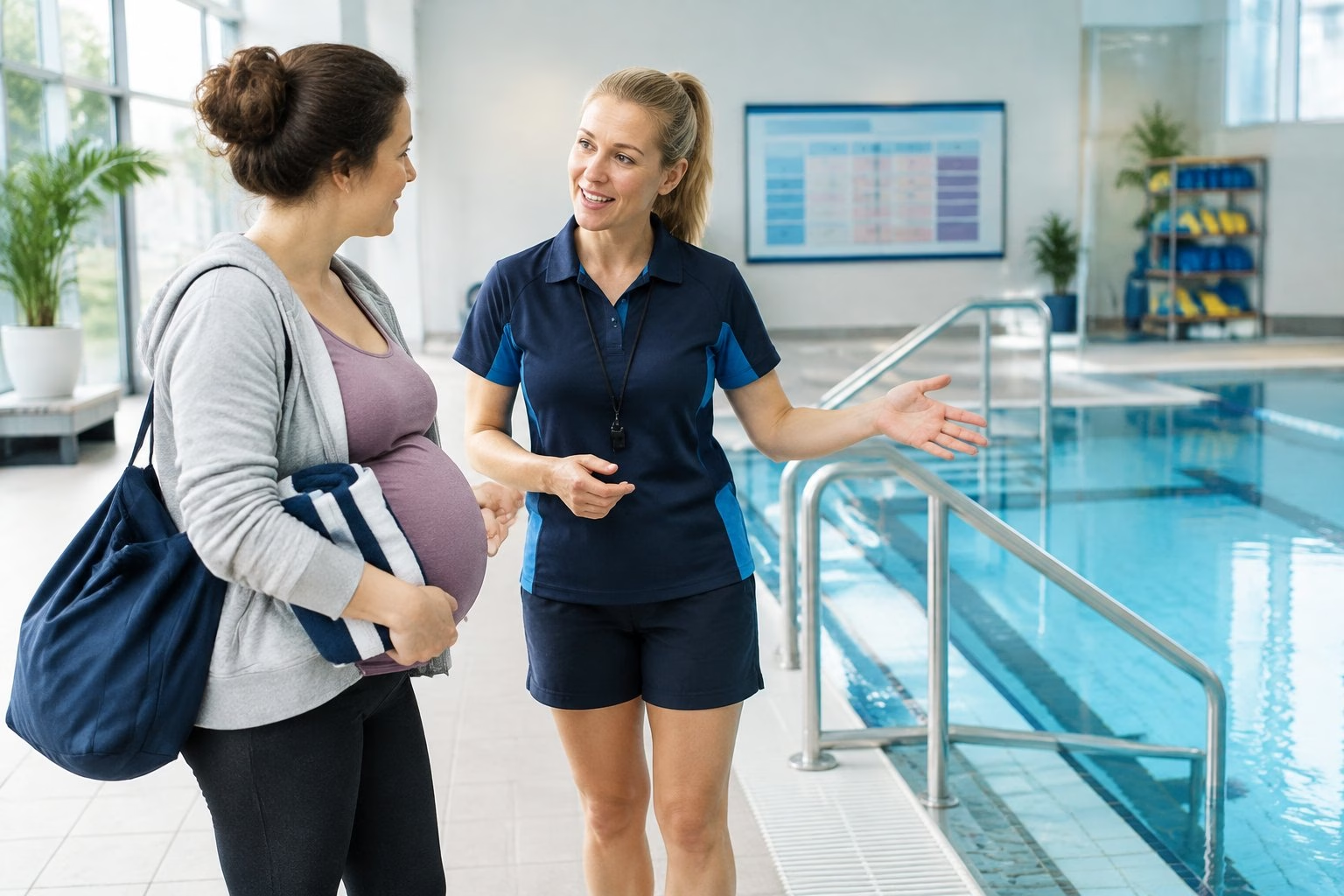
A good class has a qualified instructor, a health check before you start, and a warm, easy-to-reach pool. Asking a few questions up front saves you from a class that does not suit you.
Where Can You Find Local Aquanatal Sessions?
Start with your midwife, who often knows which local pools run sessions. Then check:
- leisure centre timetables
- national providers such as Puddle Ducks and Turtle Tots
- local parenting groups and noticeboards
- hospital or children’s centre leaflets
Swim England has backed Good Boost’s aqua natal programme, so new sessions keep appearing at council pools.
Which Instructor Qualifications and Screening Checks Matter?
The instructor should know both pregnancy and safe water exercise. Women’s health physiotherapists are an obvious choice as instructors, though many trained aquanatal teachers also run excellent classes.
Ask:
- What aquanatal or antenatal exercise qualification do you hold?
- Do you have first aid and pool rescue training?
- Do you ask for a health form before the first class?
- How do you adapt moves for pelvic pain?
A good instructor asks about your health and stage of pregnancy before you get in. If they don’t, look elsewhere.
What Should You Ask About Pool Access, Facilities and Costs?
Check the practical details before you book:
- Pool depth: a shallow area at chest height.
- Water temperature: warm, ideally a teaching or learner pool.
- Entry: wide steps with handrails, not just a ladder.
- Changing rooms: private cubicles, seats and nearby toilets.
- Parking and lifts: close parking helps in late pregnancy.
- Cost: pay-as-you-go, block booking or membership, and whether you can pause if you need rest.
Prices vary by provider and area, so ask about taster sessions before committing to a block.
What Swimwear and Equipment Will You Need?
A maternity swimming costume with a supportive built-in bra and a stretchy front panel is the most comfortable choice. A bikini works too if you prefer.
Also pack:
- a water bottle
- a towel and robe for warmth afterwards
- flip-flops for wet floors
- a snack for after the class
Most pools provide woggles and floats. Some women add light wrist or ankle weights later for extra resistance, but ask your instructor first.
Choose a Supportive Class That Fits Your Pregnancy
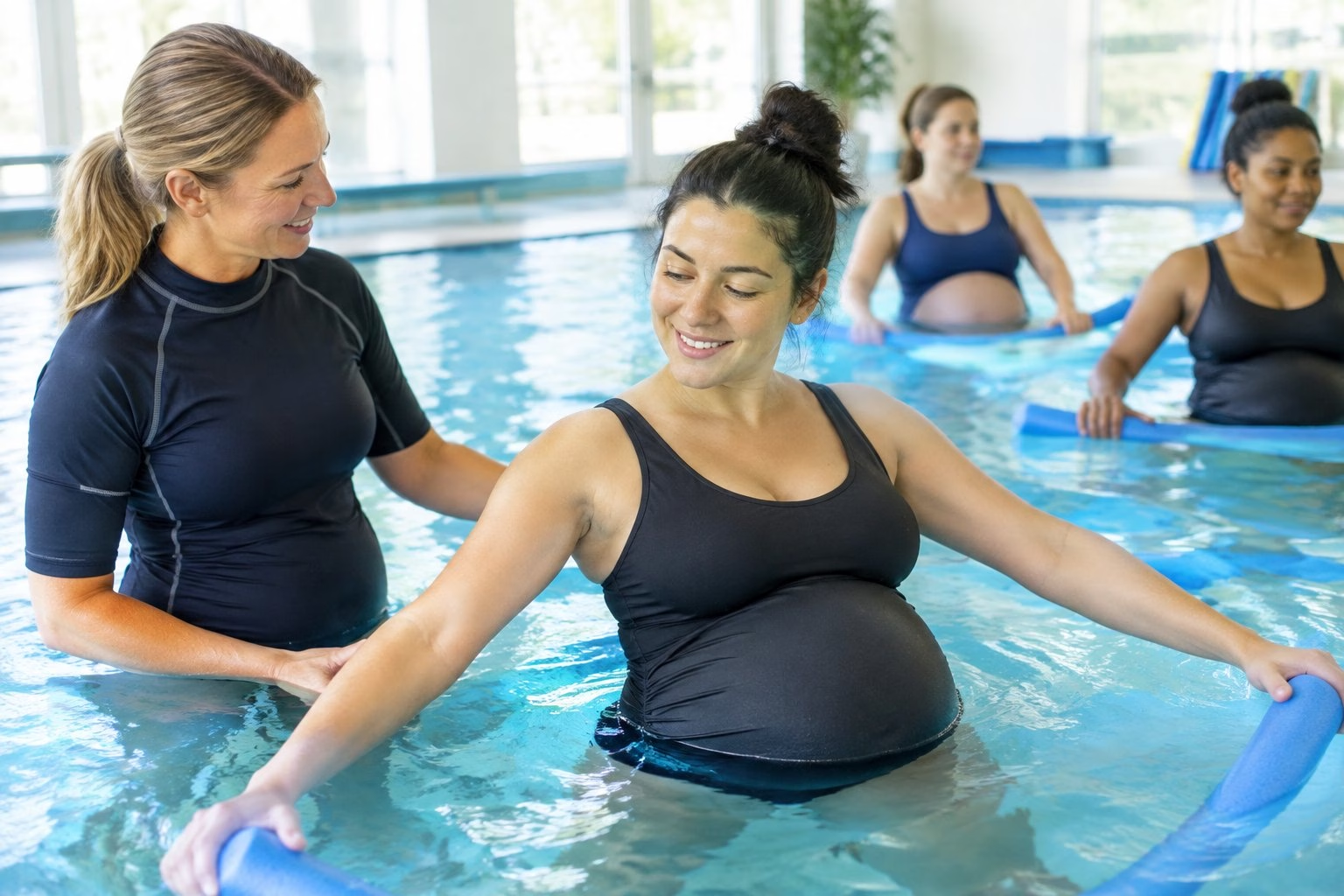
Aquanatal classes give you a safe, gentle way to keep moving while the water carries your weight. They suit swimmers and non-swimmers alike, and the moves change with you from early weeks to the end of pregnancy.
To get started:
- Speak to your midwife or doctor about your plans.
- Find a pool with warm water and good step access.
- Check the instructor’s pregnancy-specific training.
- Tell them about any pelvic pain, tummy gap or health issues.
- Pack your costume, water bottle and snack.
Keep your effort at a level where you can still chat, use the steps every time, and leave the water straight away if any warning sign appears. Pair your pool sessions with walking or gentle land training to reach your weekly activity goal.
Frequently Asked Questions
Is it safe to take swimming lessons while pregnant?
Yes, learning to swim is safe for most women with a healthy pregnancy. Tell your midwife first and let the teacher know you are pregnant so they can avoid twisting moves and jumping in.
When can I start aquanatal classes?
You can start at any stage once your midwife or doctor is happy. Many women begin in the second trimester, when early sickness has eased.
Can I continue swimming classes in the third trimester?
Yes, most women can keep going until the end of pregnancy unless their clinician advises otherwise. Expect slower moves, more rest and side floats in place of lying on your back.
Is it safe to swim in a chlorinated pool while pregnant?
Yes. There is no evidence that pool chemicals harm your baby, and pregnancy swimming in a well-kept public pool is considered safe.
Can I get free swimming or aquanatal classes during pregnancy?
Free sessions depend on your local council, leisure provider or NHS trust. Ask your midwife and local leisure centre about free tasters, discounts or health referral schemes in your area.