The fastest way to stop your goggles fogging takes about thirty seconds on the poolside. Rinse both lenses in cool water, shake off the excess, and pull them on while the inside is still damp. That thin film of water gives condensation nowhere to bead up, and it costs you nothing.
Anti-fog swimming goggles work because of a hydrophilic coating on the inside of the lens, and that coating wears out with time and, more quickly, with finger-rubbing. Once it goes, no spray fully brings it back. You can slow the decline a great deal with the right habits.
Foggy goggles are more than an annoyance. You miss the wall on a turn, you lose the black line, and in open water you stop sighting properly. Clear vision keeps a swim calm.
Below you will find a pre-swim routine you can trust, honest advice on sprays, and model picks by swimming style so you can pick a pair and stop guessing. Have a browse through our swim accessories coverage if you want to compare gear before your next session.
Stop Fogging Before You Swim
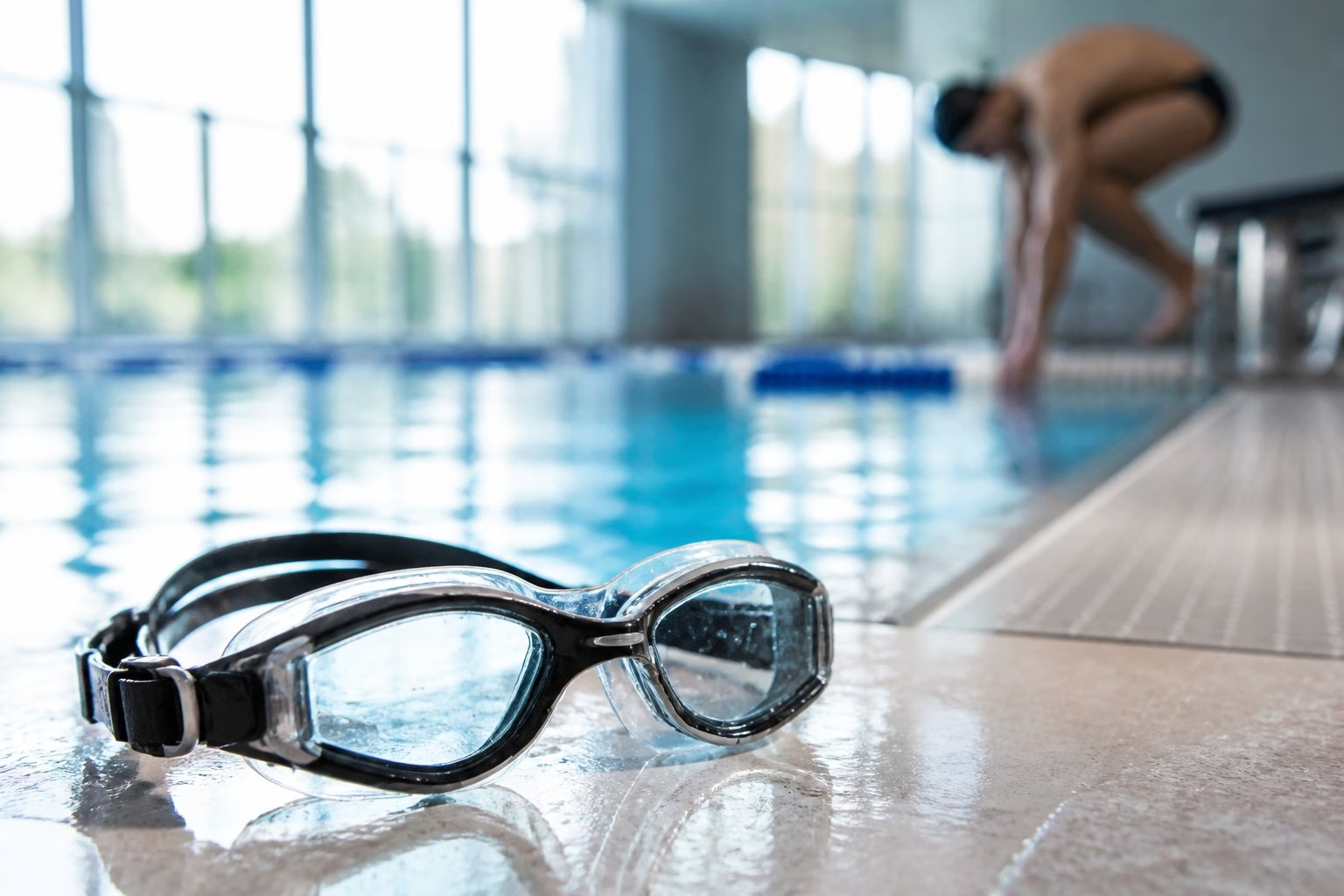
Prevention beats cure with foggy goggles, and the whole routine takes under a minute. A cool-water rinse handles most pool swimming sessions; anti-fog spray covers the rest, as long as you apply it correctly and keep your fingers off the lens.
The Fastest Safe Pre-Swim Routine
Do this on the poolside, right before you get in:
- Hold both lenses under a cool tap or dip them in the pool for two seconds.
- Flick the water out with a short downward shake, leaving a damp film.
- Put the goggles on straight away and seal them before the film dries.
Indoor pools are the worst offenders because the air above the water is warm and humid, and your face is warmer still. The damp lens equalises that difference.
If your goggles are brand new and fog within the first few swims, a tiny smear of non-gel toothpaste rubbed gently and rinsed off removes the factory protective film that sits over the real coating. Do this once, never again.
How to Use Anti-Fog Spray Without Damaging Lenses
Use a spray made for swim goggles, not a car or ski product. Those contain solvents that strip lens coatings.
Spray one light mist into each dry lens, leave it to sit for about a minute, then rinse briefly with cool water and put the goggles on. Skipping the rinse leaves residue that stings your eyes.
Reapply every session. As one guide on choosing goggles puts it, anti-fog spray does not recreate the original factory treatment, so treat it as a top-up rather than a repair.
A cheaper option many masters swimmers use is a drop of no-tears baby shampoo diluted in water, spread inside the lens and rinsed. It works on the same wetting principle and will not hurt your eyes if a trace remains.
Why You Should Never Wipe the Inside of the Lens
Wiping the inside with a towel, your thumb, or a shirt corner scrubs off the anti-fog coating. That single habit kills more goggles than chlorine does.
If water sits inside after a swim, rinse with fresh water and leave them open to air dry on a towel. Never dry them inside a hot bag or on a radiator.
Store them in a hard case or mesh bag with the lenses facing outward so nothing presses against the inner surface.
Why Goggles Fog and What Anti-Fog Technology Does
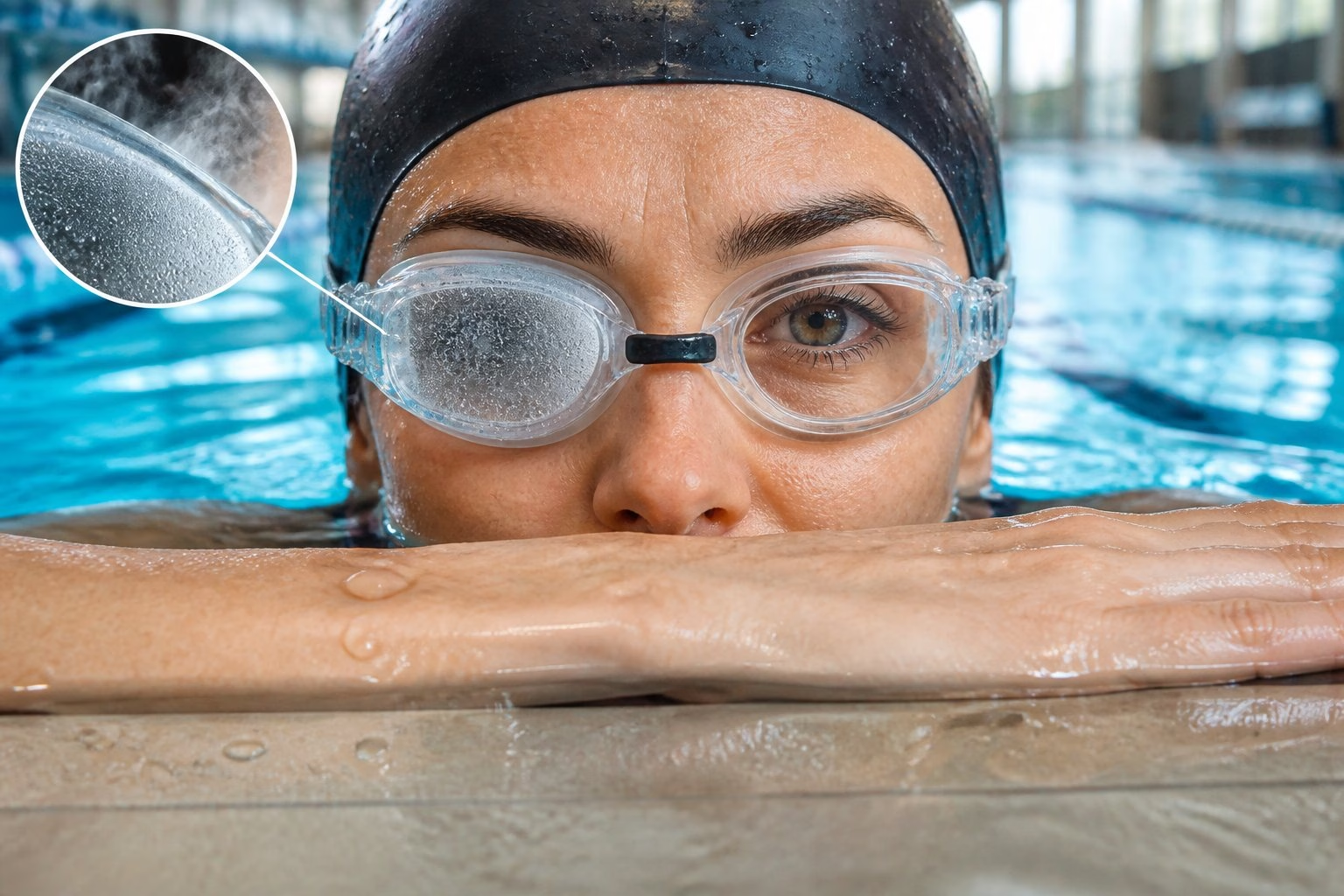
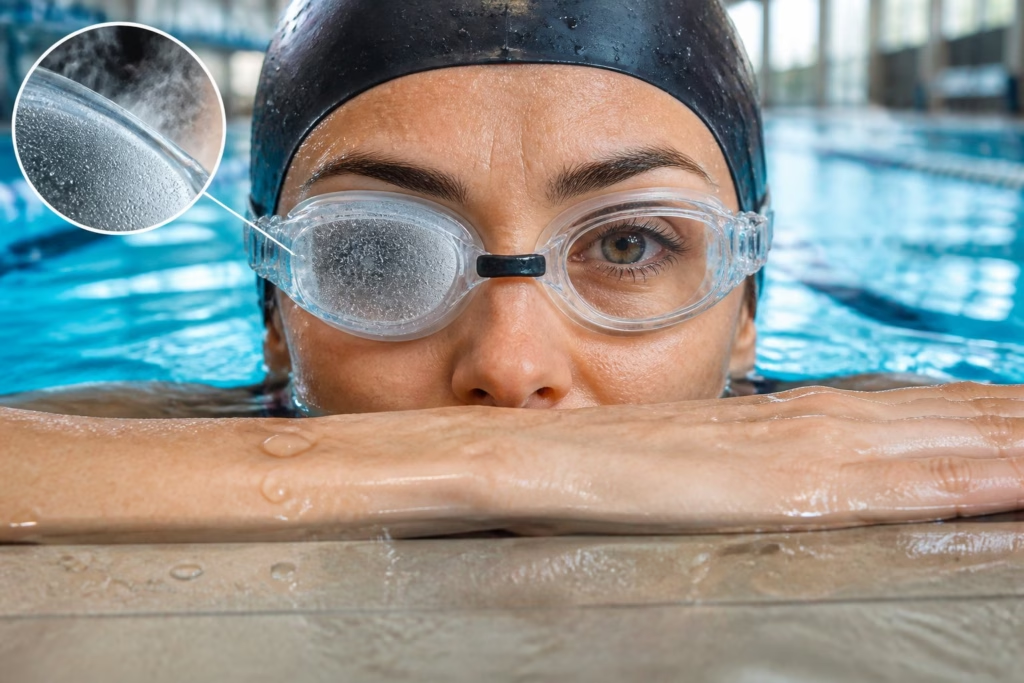
Fog is condensation: warm, moist air trapped against a cooler lens turns into thousands of tiny droplets that scatter light. Anti-fog technology stops those droplets forming into a haze by making the lens surface attract water so it spreads flat.
How Condensation Forms Inside the Lens
Your skin around the eye socket runs warm, and the air sealed inside the goggle picks up heat and moisture from it. The lens outer face sits in cooler pool water.
That temperature gap pushes the trapped water vapour onto the cold inner surface. A thermodynamics researcher explains that these microdroplets scatter light and make it hard to see through the plastic, which is exactly what you experience as a milky blur halfway down the pool.
Hard efforts make it worse. Heavier breathing and a hotter face widen the gap, which is why fogging arrives on the main set and not the warm-up.
How Hydrophilic Treatments Maintain Clear Vision
A hydrophilic coating pulls water into a thin, even sheet across the lens. Light passes through a flat film of water almost unchanged, so you keep clear vision.
Some goggles use a dual-pane or double-glazed lens instead, which reduces the temperature difference across the inner surface. Both approaches attack the same problem from opposite directions.
That is also why the wet-lens trick works. You are manually doing what the coating does automatically.
Why Factory Coatings Eventually Wear Away
The coating is microns thick and sits on the surface where it can be rubbed off. Daily swimmers see it fade within weeks; a couple of swims a week stretches it to a few months.
Chlorine, sunscreen, salt, and sand all speed up the decline. So does letting goggles dry with pool water still on the lens, since the deposits left behind scratch the coating next time you touch them.
When a rinse and a spray both fail to clear a set, the coating has gone. Replace the goggles.
Choose the Right Fit, Seal, and Lens
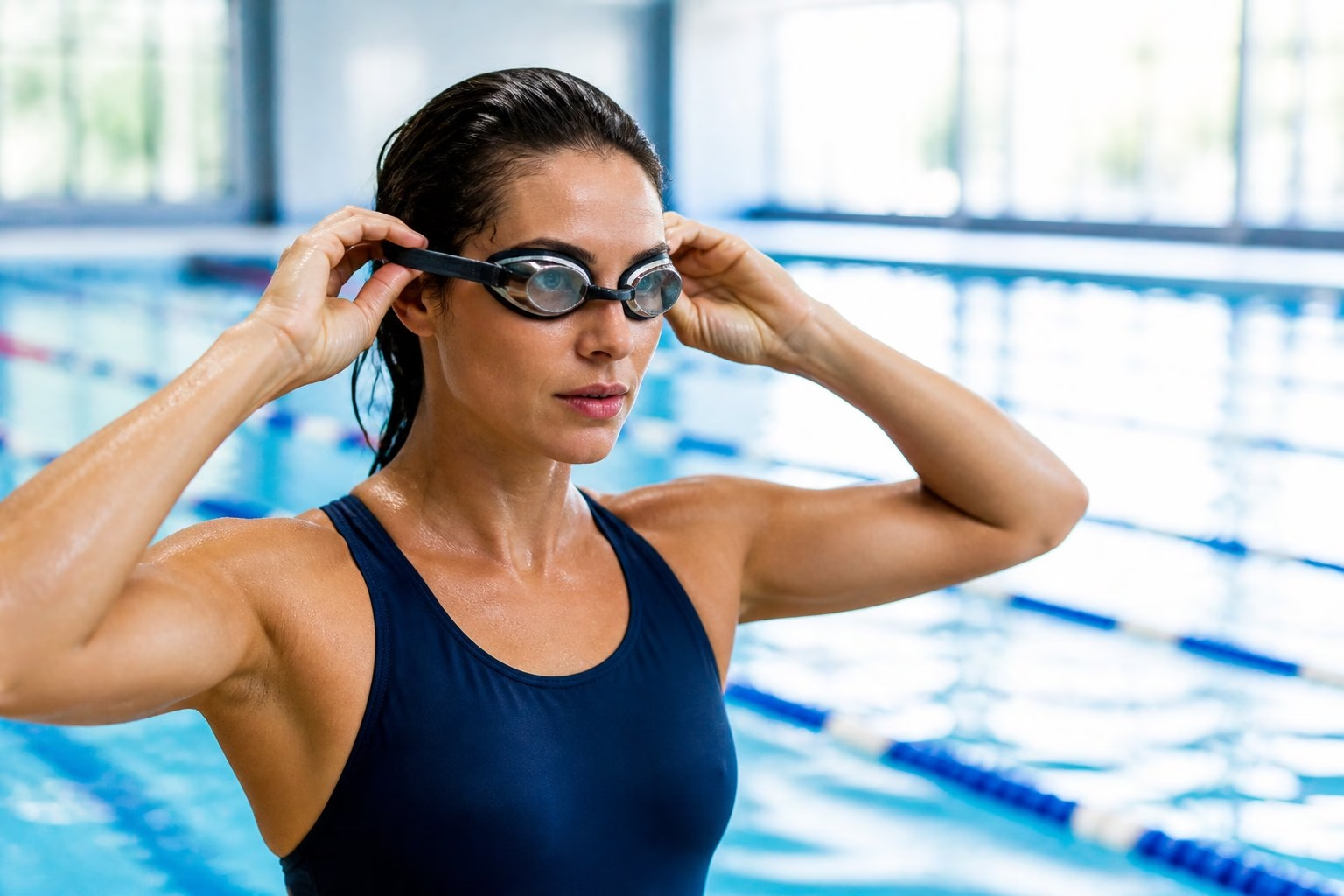
A goggle that seals by suction alone fogs less and leaks less, because you stop fiddling with it mid-set and touching the lens. Lens tint then decides how comfortable your eyes feel, and the frame shape decides how much you can see to the side.
How to Check for a Watertight Seal
Press the goggles onto your eye sockets without the strap over your head. They should stick for a second or two on their own.
If they fall straight off, the eye cup shape does not match your face and no amount of strap tension will fix it. A guide to goggle fit makes the point plainly: the strap is only a retention system, not the thing creating the seal.
Adjustable straps should sit snug, never tight. Red rings around your eyes after a swim mean you have overtightened, and that pressure pushes warm skin closer to the lens.
Silicone gaskets outlast foam and latex straps by a wide margin in chlorinated pools. Silicone also rinses clean, where foam soaks up water and degrades.
Which Lens Colours Work Best Indoors and Outdoors
| Lens type | Best for | Indoor pools | Open water |
|---|---|---|---|
| Clear | Early mornings, dim halls | Yes | Low light only |
| Smoke / grey | Mixed conditions | Acceptable | Yes |
| Amber / rose | Contrast and sighting | Yes | Yes |
| Mirrored lenses | Bright sun, outdoor decks | Too dark | Yes |
| Polarized lenses | Surface glare on lakes and sea | No benefit | Yes |
Polarized lenses block glare bouncing off flat water, and some models claim to cut 99% of intense glare from the sun or light reflecting off lakes and seas. Indoors they do nothing useful, so skip the premium. Look for full UV protection on anything you wear outdoors.
When Peripheral Vision Matters Most
Wide-lens or mask-style frames give you the broadest peripheral vision, which helps in busy lanes and in open water swimming where you need to spot other swimmers and buoys. Racing goggles go the other way with low-profile Swedish or socket-style cups that cut drag at the expense of side vision.
Pick by what you spend most time doing. If you swim lengths, sight for open water safety, or need a prescription, check the fit before the features. Swimmers who need corrective lenses should look at prescription swimming goggles rather than trying to squeeze contacts under a standard pair.
Recommended Models by Swimming Style
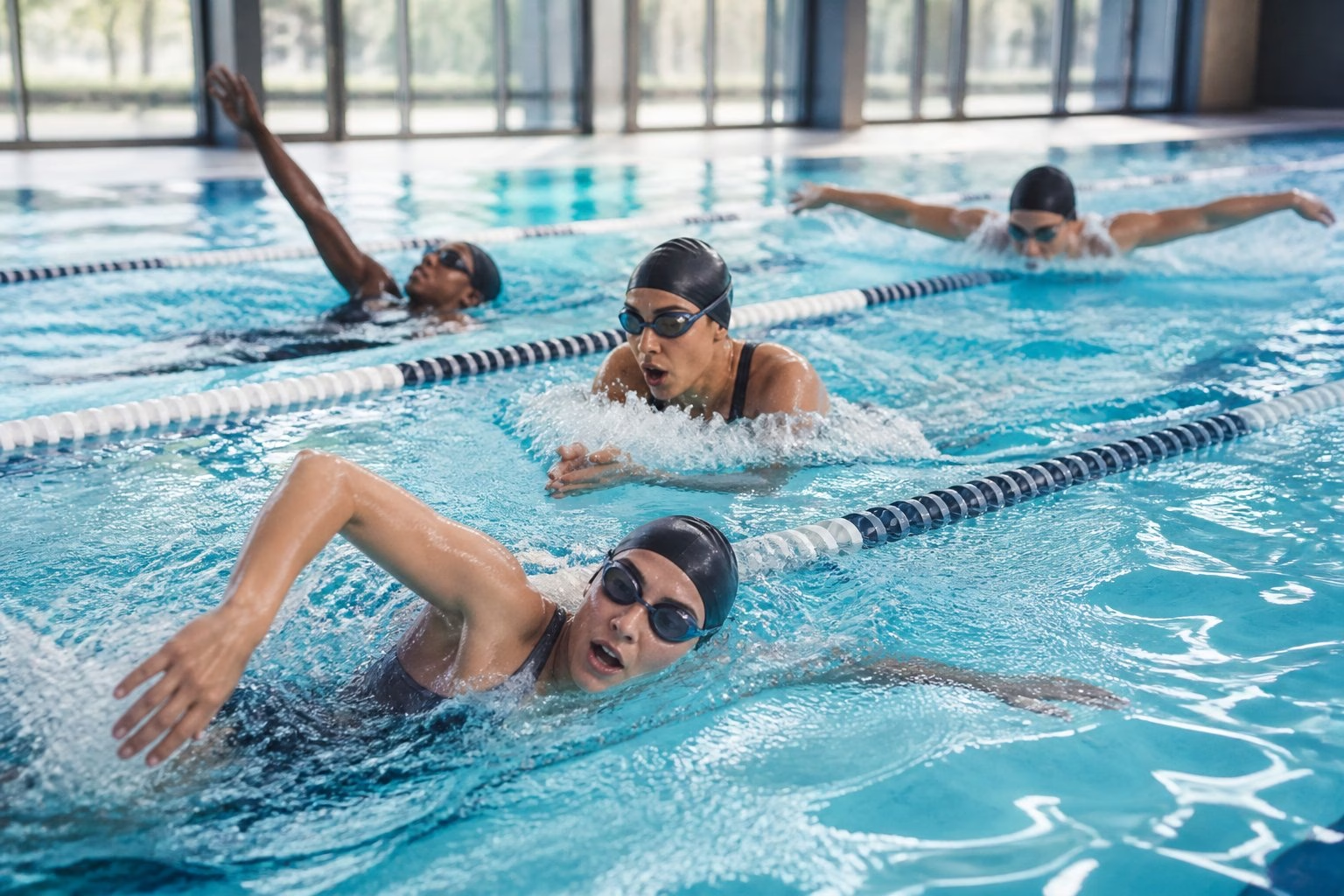
Four goggles cover almost every swimmer: a race pair, a training workhorse, a wide-view outdoor option, and a cheap backup. All four are widely stocked on Amazon in the UK.
Arena Cobra Ultra Swipe for Racing and Intensive Training
The Arena Cobra Ultra Swipe is the pick when clarity through a hard set is the priority. Its Swipe anti-fog system is reactivated by rubbing the outer lens surface, which spreads the internal treatment again without touching the inside.
The low-profile curved lens sits close to the face and suits starts and turns. Side vision is narrow, which is the trade for the speed.
Speedo Vanquisher 2.0 for Everyday Pool Sessions
The Speedo Vanquisher 2.0 is the default training goggle in British pools for good reason. Interchangeable nose bridges ship in the box, so you can dial the fit without buying a second pair.
Silicone gaskets, a split strap, and a mid-size lens make it forgiving on most face shapes. Buy two and rotate them to make the coatings last.
Aqua Sphere Kayenne for Wide-View Outdoor Swimming
The Aqua Sphere Kayenne uses a large curved lens and a soft silicone skirt for the widest field of view of these four. That helps enormously when sighting in a lake or sea.
It creates more drag than a racing cup, so keep it for long continuous swims and triathlon training. Tinted and polarized versions handle bright days.
Aegend Swim Goggles for Budget Buyers and Backup Pairs
Aegend swim goggles are the ones to keep in the bottom of the bag. They sell in multipacks, carry a basic anti-fog coating and UV protection, and cost a fraction of the branded pairs.
The coating fades faster than premium models. Treat them as consumables and replace them without regret.
Clear Vision Begins With Proper Fit and Care
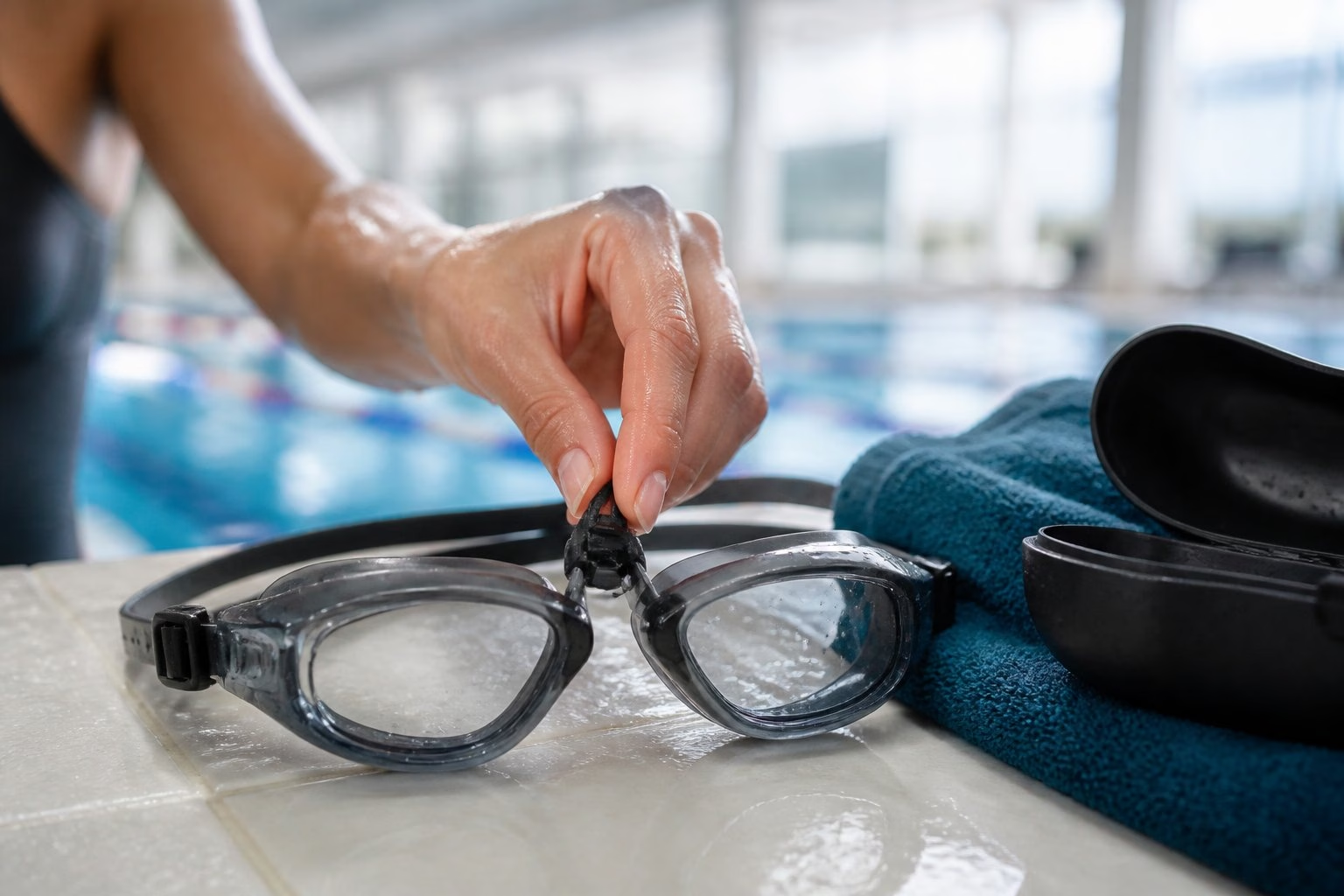
Good anti-fog swim goggles start with a watertight seal you can test in the shop, then a lens tint suited to where you swim. The coating does the rest, as long as you protect it.
Rinse in cool water before you get in, rinse in fresh water after, air dry them open, and keep your fingers off the inside of the lens. Those four habits stretch a coating from weeks into months.
When fogging returns despite a rinse and a proper spray application, the treatment has worn through and a new pair is the fix. Rotating two pairs of swim goggles spreads the wear and keeps clear vision on the days it counts.
Frequently Asked Questions
Do anti-fog swim goggles really work?
Yes, anti-fog swimming goggles work well while the hydrophilic coating on the inside of the lens stays intact. The coating spreads condensation into a flat, transparent film so light passes through cleanly. Expect a few weeks of clarity with daily swimming and a few months with occasional use.
How can I stop my swimming goggles from fogging up?
Rinse both lenses in cool water and put the goggles on while the inside is still damp. For longer sessions, apply a swim-specific anti-fog spray to dry lenses, wait a minute, rinse lightly, then wear them. Never wipe the inside dry with a towel or your fingers.
Can I use anti-fog spray on any pair of swim goggles?
Use only sprays formulated for swim goggles, on any lens material. Sprays made for car windscreens, ski gear, or spectacles contain solvents that can strip or cloud a goggle’s anti-fog layer. Test a small area first if you are unsure about an unbranded product.
Are mirrored or polarized lenses better for open-water swimming?
Polarized lenses do more for open water swimming because they cut the horizontal glare bouncing off a flat lake or sea surface, making buoys easier to spot. Mirrored lenses reduce overall brightness and suit sunny outdoor pool decks. Some models combine both, and either should carry full UV protection.
When should I replace swim goggles that keep fogging up?
Replace them once a cool-water rinse and a correctly applied anti-fog spray both fail to keep a set clear. Cracked or hardened gaskets, a stretched strap, and scratches inside the lens are the other signals. Most regular swimmers get three to six months from a training pair.