Searching “open water swimming near me” gives you a map full of pins, but a pin is not permission. Some of those spots are supervised lakes with lifeguards and a booking system. Others are reservoirs where swimming is banned, or riverbanks with no legal access at all.
The reliable way to find a safe venue is to cross-check three things: an official directory such as Swim England or NOWCA, the venue’s own booking and safety rules, and the water conditions on the day you plan to swim. That takes about ten minutes and rules out most of the risk.
Open water swimming in the UK covers lakes, rivers, lochs, seas and reservoirs, and Swim England has run a national open water championship for more than 100 years. Plenty of swimmers find their first supervised session is calmer than expected, mostly because someone else has already checked the water.
If you want more help choosing a spot, browse our guides to outdoor and wild swimming before your first session.
A Practical Search Method for Safe Local Venues
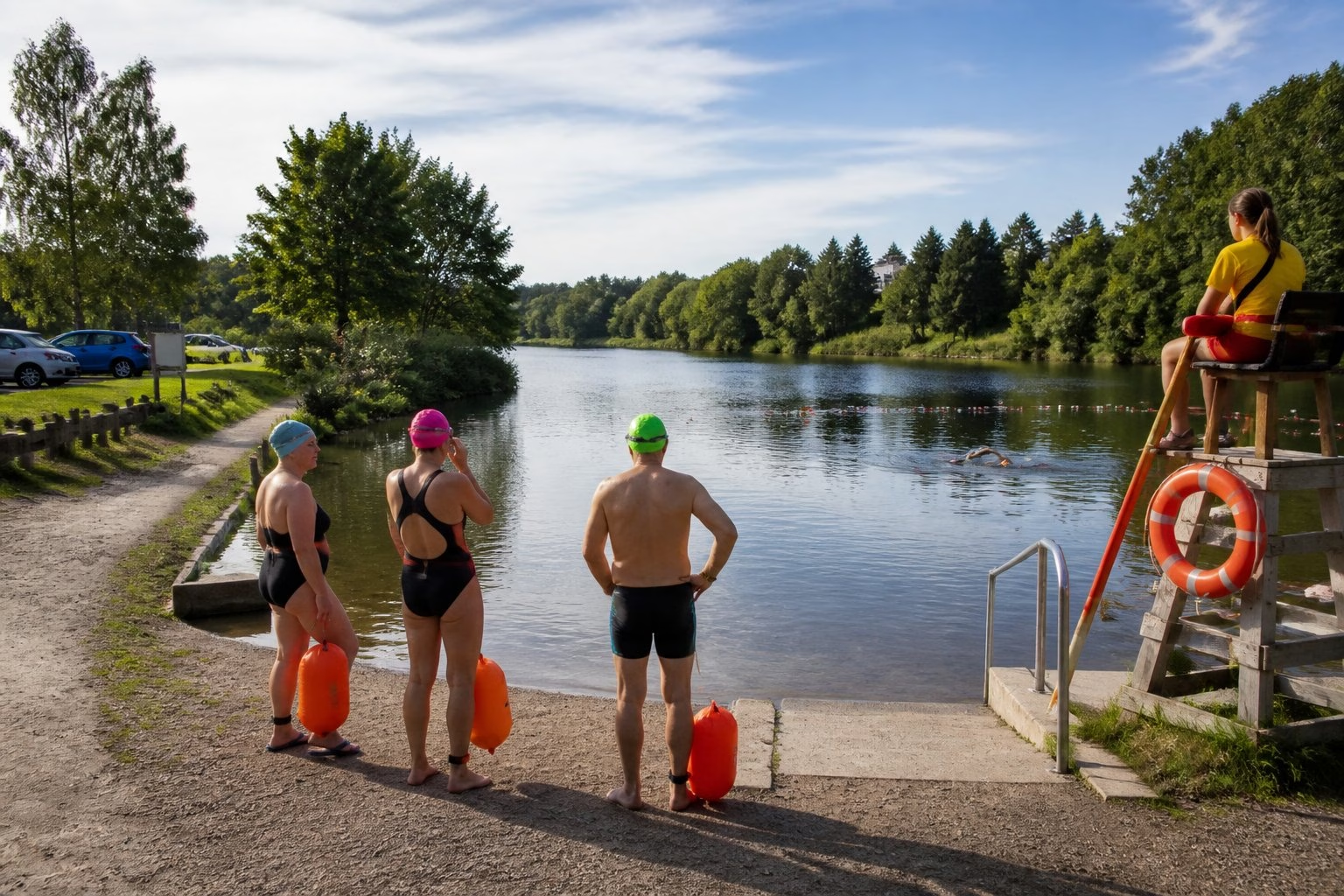
Start with a national directory, then confirm the details with the venue itself and with people who swim there weekly. Directories tell you a site exists; local swimmers tell you whether the car park floods, how cold the lake sat last Sunday, and which session suits beginners.
Start With Swim England, NOWCA and Venue Finders
Swim England lists outdoor pools and open water swimming venues across England, with club websites given as the first contact point. It is the most useful starting layer because listings are tied to organisations that take responsibility for the site.
NOWCA runs a large network of managed venues and gives them a complete safety system covering session planning, swimmer tracking and auditability. That tracking system is why NOWCA sites know exactly who is in the water.
Beyond Swim covers over 20 accredited venues with a shared swim pass. The Outdoor Swimming Society keeps a lake directory too. None of these lists is complete on its own, so check at least two.
Use Local Clubs and Open Water Swimmers for Current Insight
Local groups know things no directory publishes. Ask about blue-green algae warnings, weed growth in late summer, and whether the venue runs a proper beginner lane.
Social media groups for your area are the fastest route in. A message like “first open water swim, which session should I book?” gets honest answers, and often someone offering to meet you at the gate.
Clubs also run structured sessions. Introductory courses exist at many sites, including 60-minute beginner courses combining dryland briefing and water time, capped at eight places.
Compare Travel Time, Session Times and Booking Requirements
Distance decides whether this becomes a habit. A lake 20 minutes away that opens at 6.30am beats a beautiful one an hour off that only runs weekend sessions.
Check these before you book:
- Session times and whether swims are timed or open-ended
- Membership or day pass cost, and whether a NOWCA or Beyond Swim pass covers it
- Minimum experience required, and whether wetsuits are mandatory
- Parking, changing facilities and hot drinks
- Cancellation policy when conditions close the water
Choose a Managed Venue or a Wild Swim
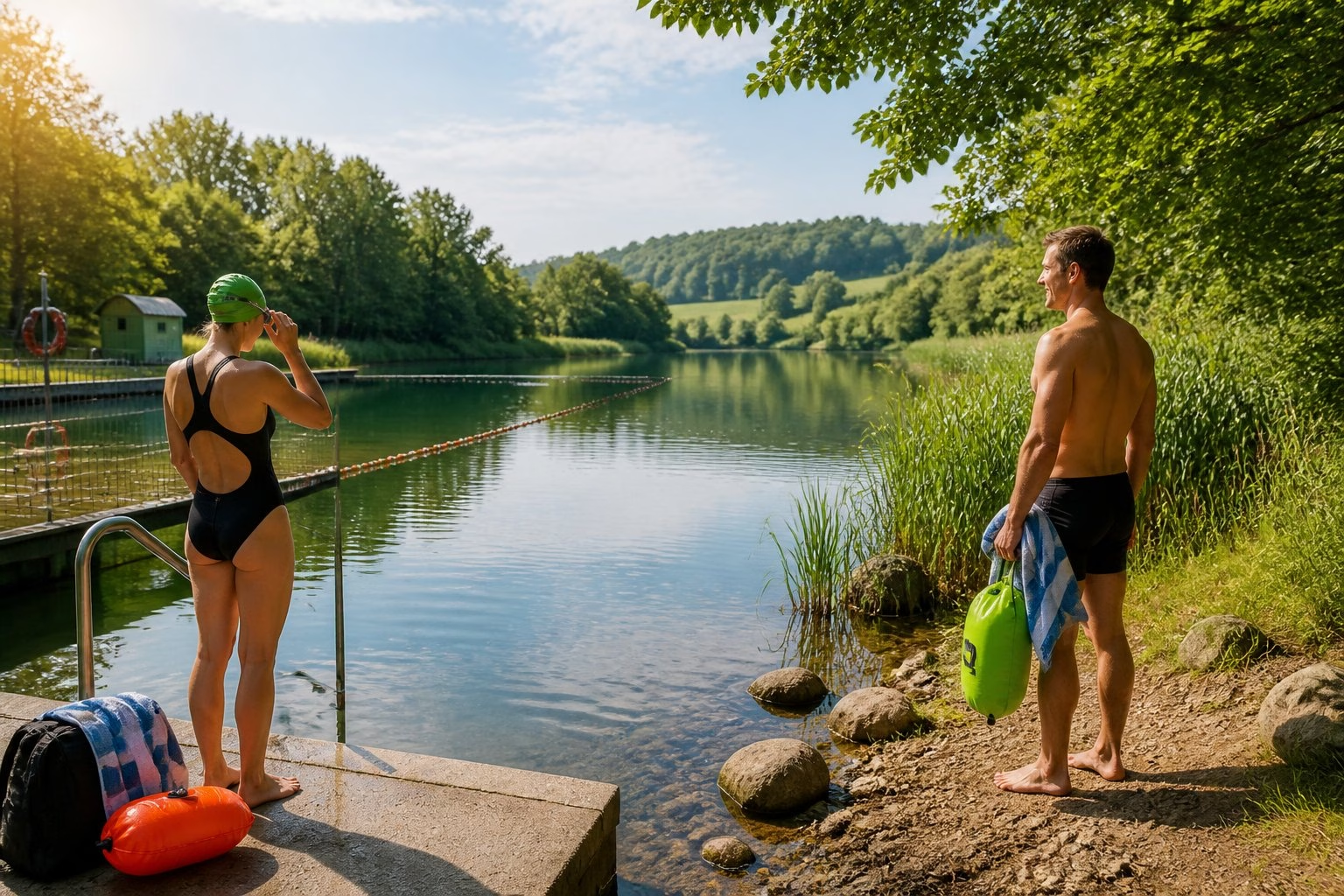
Managed venues give you lifeguards, marked courses and someone counting heads; wild swim spots give you solitude and require you to carry all the risk yourself. For a first swim, or any swim in cold months, the managed option is the sensible one.
What Managed Lakes and Reservoirs Usually Provide
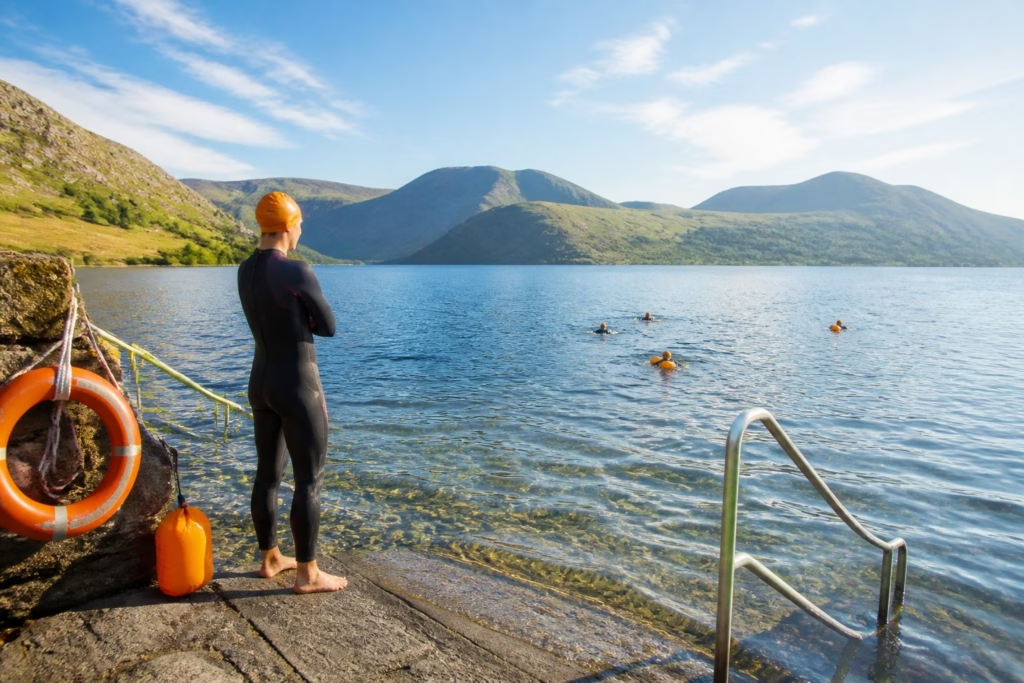
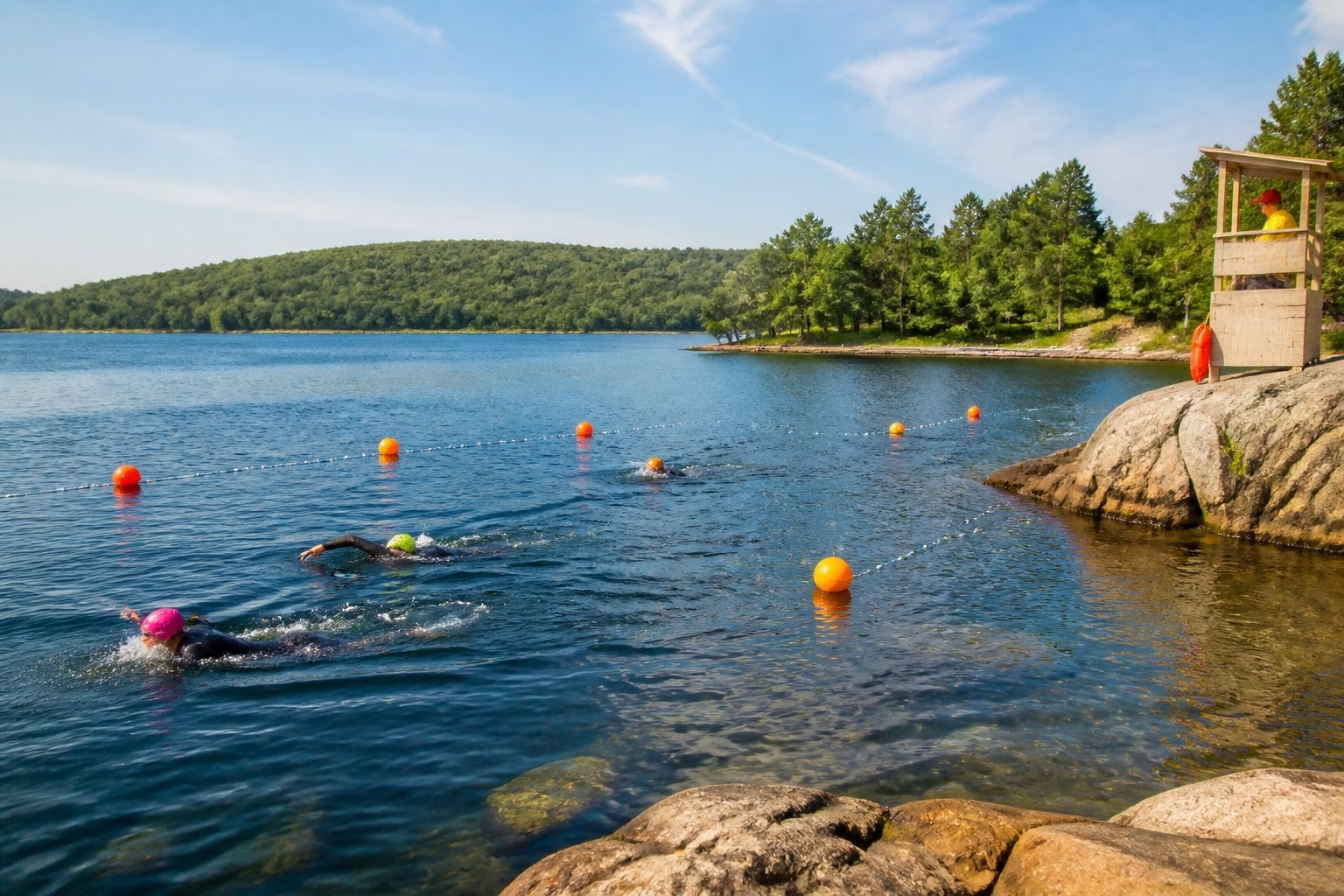
A well-run lake has a buoyed course, water safety cover on paddleboards or kayaks, and a sign-in system that flags if you do not come out. Most sites also offer changing rooms, showers, parking and a hot drink.
Many publish the water temperature daily on their social feeds. That single number tells you what to wear before you leave home.
When Lidos, Ponds and Outdoor Pools Are a Better Fit
A lido suits you when you want outdoor swimming with predictable depth, clear water and lifeguards on the side. London’s best-known lido runs from late May through mid-September with changing facilities and a café.
Heated outdoor pools also let you build cold-tolerance gradually through autumn. If you are weighing up pools across the country, our review of The Lido Guide covers how useful it is as a finder.
Why Lakes, Rivers and Coastal Water Need Separate Judgement
Rivers carry current, submerged branches and cold pockets fed by springs. Coastal swims add tides and rip currents, which change the whole risk picture within an hour.
Swim England is direct about this: wild swimming means swimming with no supervision, which is a riskier choice, and you should never swim alone. Our guide to river and lake swimming goes deeper on reading these sites.
How to Confirm Permission and Local Access Rules
Look for signage at the entry point first. Many reservoirs display explicit no-swimming notices because of steep drop-offs, cold layers and machinery.
Where signage is absent, contact the landowner or the water company. Angling clubs, sailing clubs and nature reserves often hold rights over water that looks public, and a two-minute phone call settles it.
Check Conditions, Water Quality and Access Before You Go
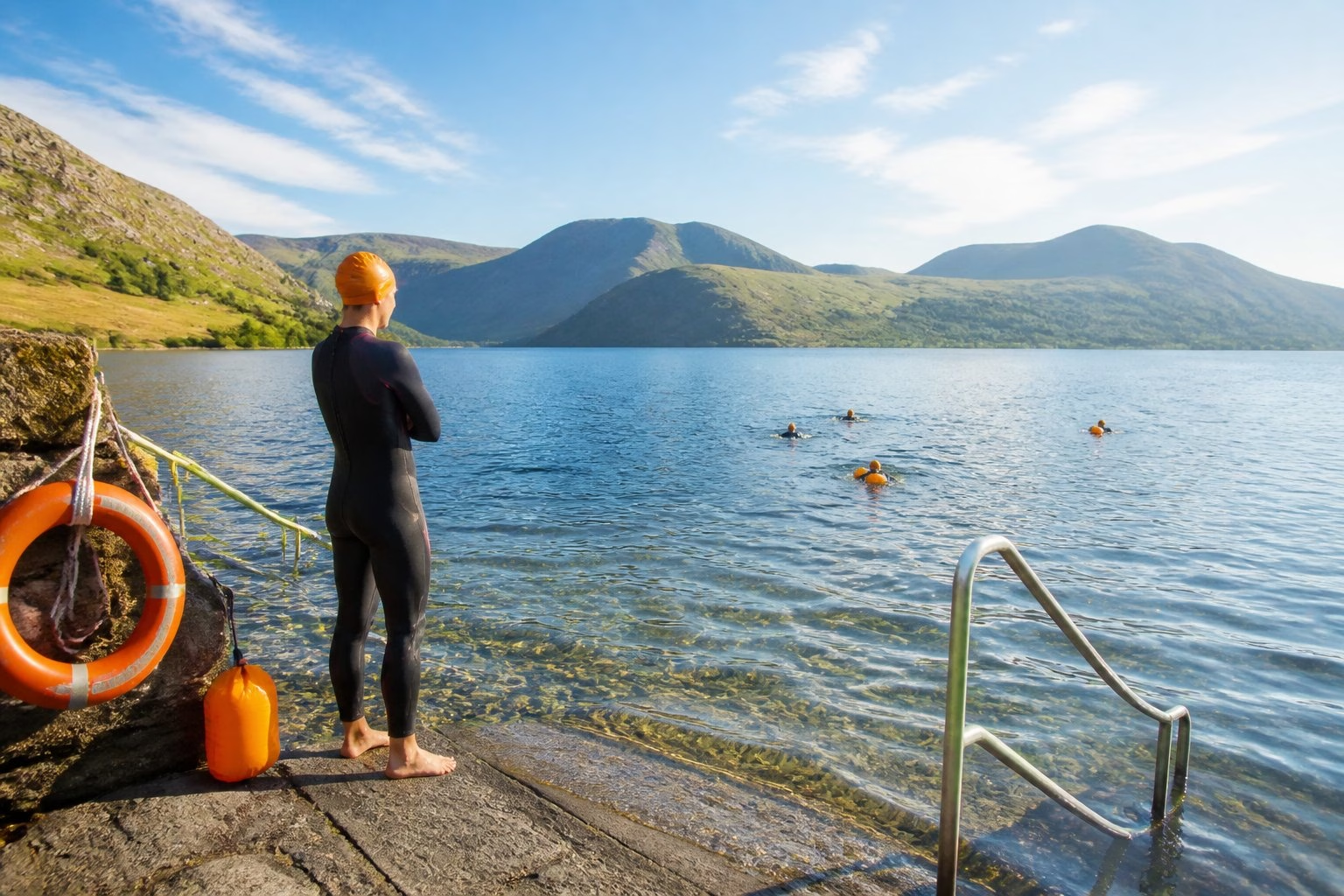
Run two checks the evening before: the official bathing water rating for the site and the rainfall forecast. Then confirm water temperature and wind on the morning itself, because conditions move overnight.
How to Read Official Bathing-Water Quality Ratings
The Environment Agency classifies designated bathing waters in England as Excellent, Good, Sufficient or Poor, based on samples taken during the bathing season. Excellent and Good are the ones to aim for.
Sufficient still meets the minimum standard but sits closer to the line. Poor means the site has repeatedly failed, and advice against bathing is usually displayed on site.
Two things limit those ratings. Samples are taken periodically, often only during the bathing season and may not reflect current conditions, and most inland lakes and rivers have no designated status at all.
Why Rain Can Change Water Safety
Heavy rain flushes farm runoff, road water and sewage overflow into rivers and coastal waters. Bacteria levels spike for a day or two even at sites rated Excellent.
Many swimmers use a 48-hour rule after significant rainfall. Rain also raises river levels and speeds up flow, which turns a gentle stretch into a hazard.
Check Water Temperature, Weather and Tides on the Day
Water temperature drives your kit choice and your time limit. Apps and swim-spot maps now publish live temperature, tides, swell and river levels for thousands of UK and Ireland locations, alongside reports from swimmers who were there that morning.
Wind is the underrated one. A 15mph breeze across a long lake builds chop that makes sighting and breathing much harder.
Know When to Postpone a Swim
Cancel when a thunderstorm is forecast, when the water looks green or has a paint-like surface scum, or when heavy rain fell in the last two days. Blue-green algae is toxic to people and fatal to dogs.
Also postpone if you feel unwell or have not eaten. Cold water is far less forgiving when your body is already low.
Prepare for a Safe First Session
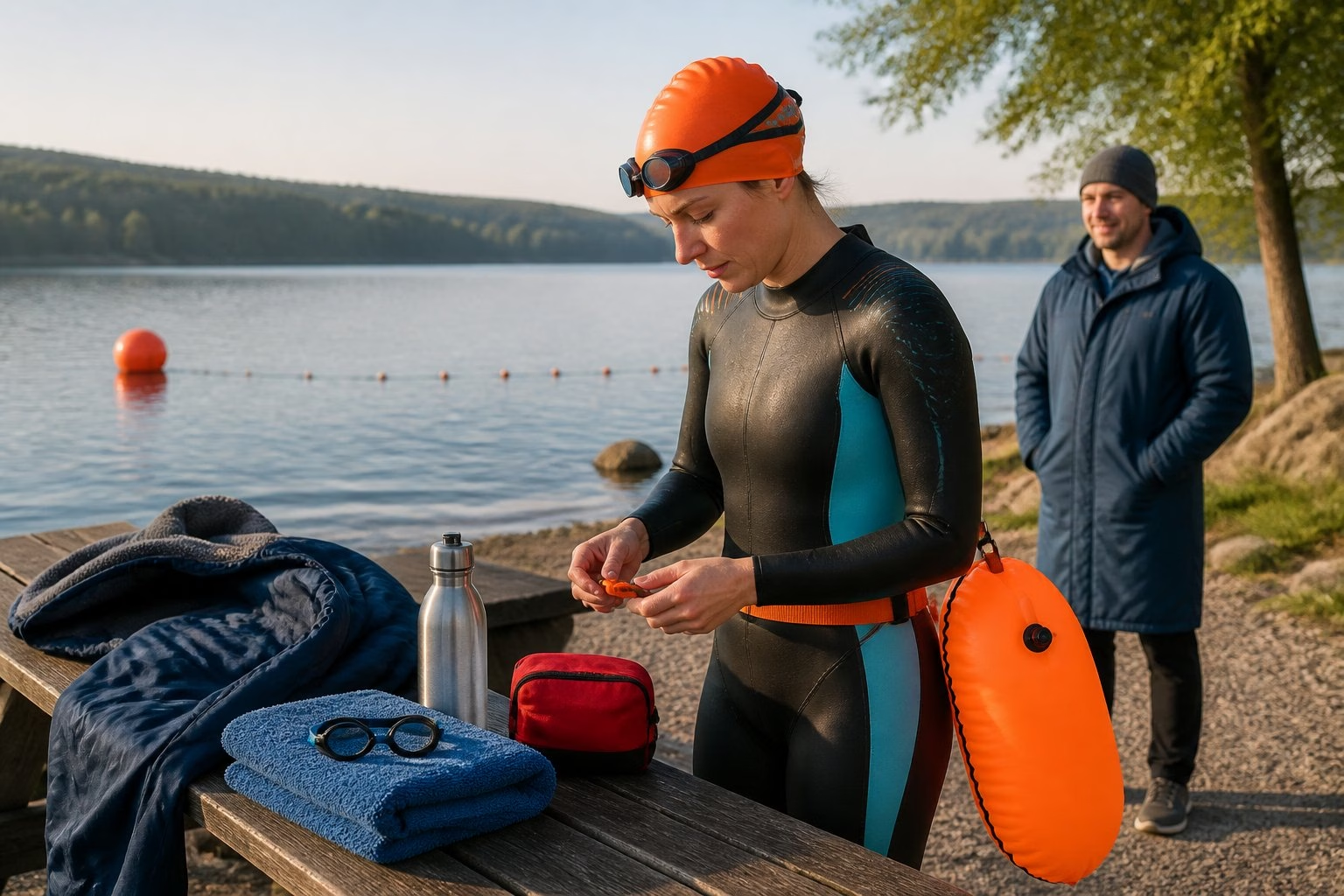
Bring more warm clothing than you think you need, a brightly coloured tow float, and a plan for the first 90 seconds in the water. Cold water shock happens fast and passes fast, and the trick is controlling your breathing until it does.
What to Pack for Cold or Changeable Water
A basic kit list that works year-round:
- Brightly coloured swim hat (two in winter)
- Tow float with a dry pocket
- Neoprene gloves and socks below 12°C
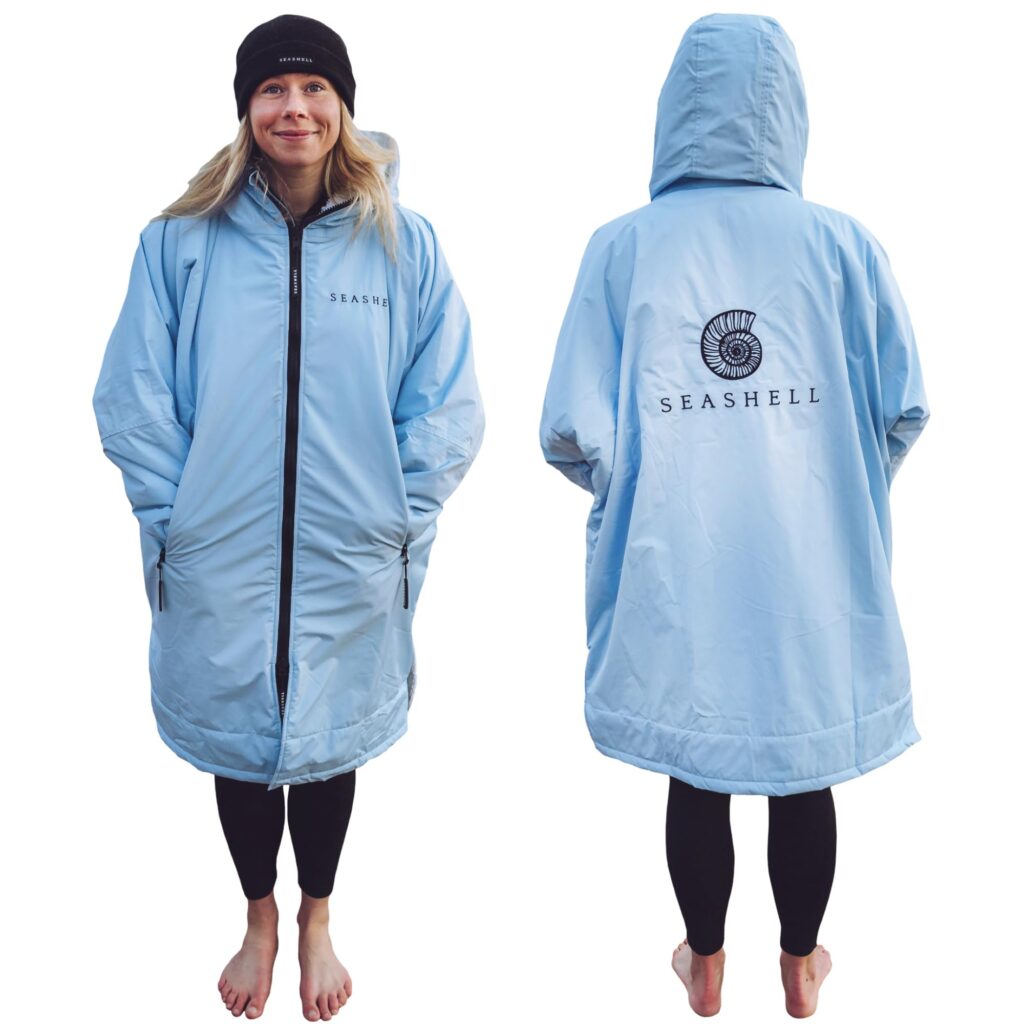
- Changing robe or large towel, plus a warm hat
- Dry base layers, laid out in order before you swim
- Flask of hot, sweet drink
- Old trainers or water shoes for stony entries
Our essential safety gear guide breaks down what each item does in practice.
When to Wear a Wetsuit and Use a Tow Float
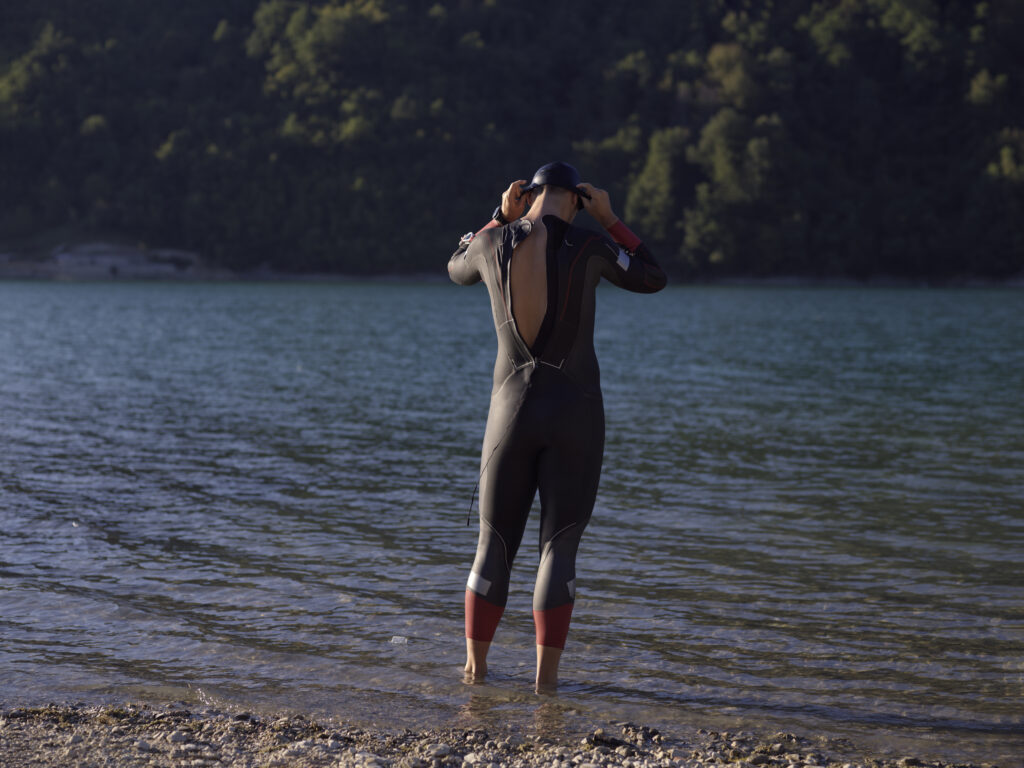
Wear a wetsuit below roughly 16°C if you plan to swim continuously for more than 15 minutes. Many venues make wetsuits compulsory below a set temperature, often around 11°C to 12°C.
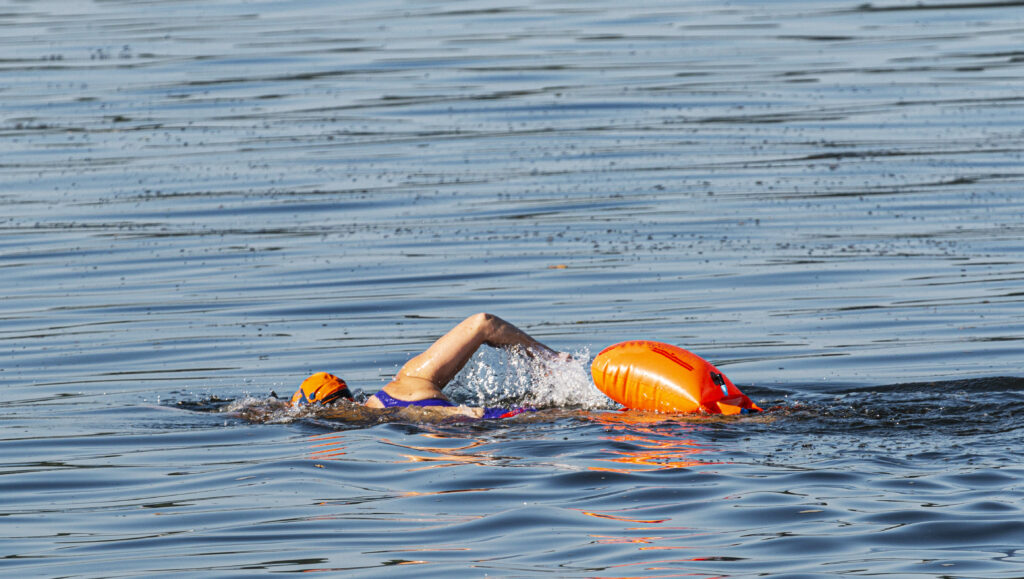
Use a tow float every time, in every season. It makes you visible to boat traffic and safety crews, and it gives you something to hold if you need to stop and breathe.
How to Avoid Cold-Water Shock and Hypothermia
Enter slowly. Let the water reach your shoulders, keep your face out for the first minute, and breathe out longer than you breathe in until the gasping stops.
Get out before you feel cold. The afterdrop, where your core temperature keeps falling once you are out, is where hypothermia sneaks up on people.
Dress fast, in this order: top half first, warm hat on, then legs. Skip the hot shower; it pulls blood to the skin and can make you feel faint. There is more detail in our guide on staying warm and safe in open water.
What Good Venue Supervision Looks Like
Look for a sign-in and sign-out system, water safety staff on the water rather than only on the bank, and a clearly marked swim area with defined exit points. A pre-swim briefing for newcomers is a strong sign.
Ask what happens if someone struggles. A venue with a rehearsed answer is a venue worth returning to.
Turn a Nearby Swim Spot Into a Regular Routine
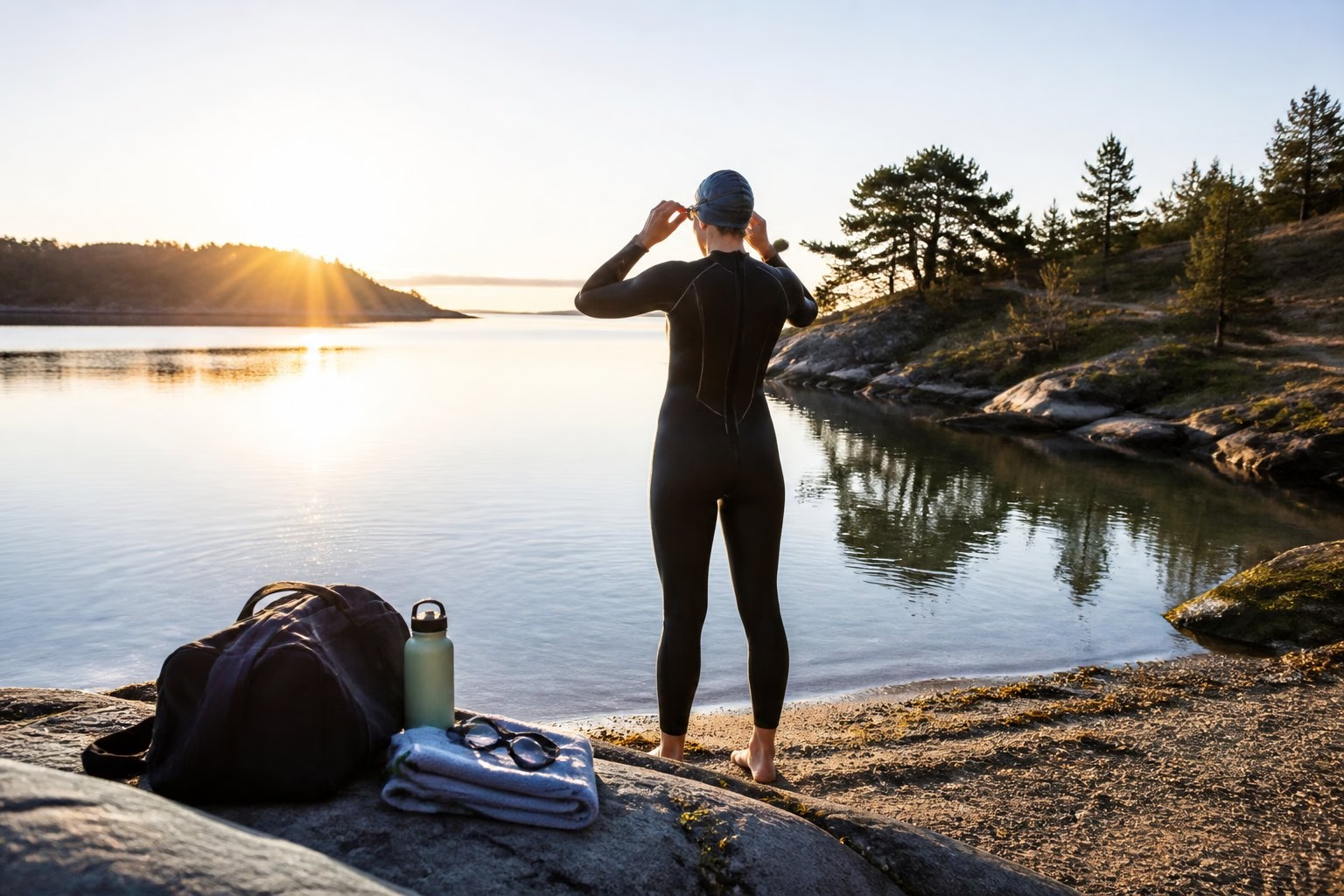
Pick one venue within 30 minutes of home and book the same session each week. Familiarity with one site beats collecting new ones, because you learn its entry points, its cold spots and its regulars.
The UK has strong clusters wherever you live. London Royal Dock hosts open water sessions in the Royal Docks, Hertfordshire has Stanborough Park and Herts Young Mariners Base, and further north you will find established venues around Manchester, Nottingham and the Lake District. Hampshire and the West Midlands both have busy managed lakes, and our guide to open water swimming in Birmingham covers that scene in detail.
Keep a simple log: date, water temperature, time in, how you felt. After six weeks you will know your own limits by number instead of guesswork.
The habit pays back. Regular cold water swimming supports mental wellbeing, and the social side keeps people coming back through winter more than any training plan does.
Finding a safe venue comes down to method: use official directories, confirm access and rules with the venue, check bathing water ratings and rainfall, and match your kit to the temperature on the day. Start at a supervised site, keep your first swims short, and build from there. If you want a wider list of options, our roundup of the best lakes for open swimming in the UK is a good next stop.
Frequently Asked Questions
How can I find permitted open water swimming venues near me in the UK?
Search the Swim England venue finder and the NOWCA venue network first, then cross-check with the Outdoor Swimming Society lake directory. Contact the venue directly to confirm session times, booking rules and whether beginners need an induction.
Is it safe to swim in a lake or river after heavy rain?
Wait 48 hours after heavy rain before swimming in rivers or coastal water. Rainfall washes runoff and sewage overflow into the water, raising bacteria levels, and it also increases river flow and reduces visibility.
Do I need a wetsuit for open water swimming in the UK?
You need one for any sustained swim below about 16°C, and many UK venues make wetsuits compulsory once the water drops near 11°C to 12°C. Skins swimming is possible in colder water, but only with short durations and experience built up gradually.
Can I swim at a venue if I am new to open water swimming?
Yes, most managed venues welcome beginners and many run dedicated introductory sessions. You should be able to swim comfortably out of your depth, and some sites ask new swimmers to complete a short induction or 60-minute course first.
What should I check before swimming at an unfamiliar outdoor location?
Check for signage banning swimming, confirm a safe entry and exit point, and look at the official bathing water rating if the site has one. Also check water temperature, recent rainfall and, for coastal spots, the tide times for that day.