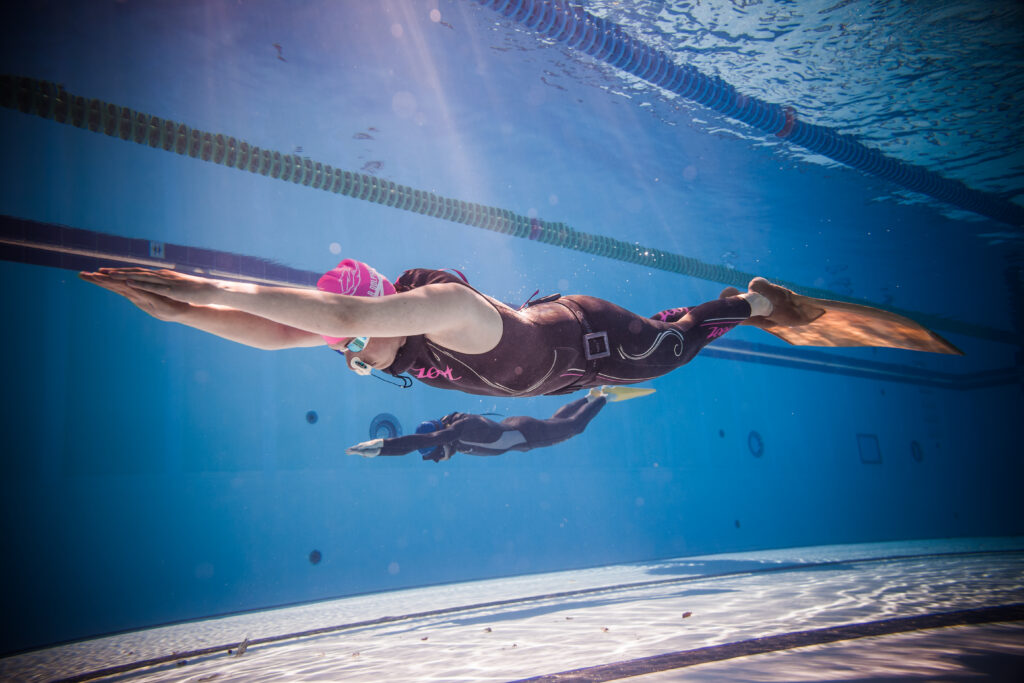

Swimming fins help you move through water more efficiently whether you’re snorkelling, diving, or training in a pool. They extend your legs to create more surface area, which means each kick pushes more water and propels you further with less effort. This makes swimming less tiring and allows you to cover greater distances or save energy for other activities.
Different types of fins suit different purposes. Short fins work well for pool training and body surfing because they’re easier to control and fit in a bag. Long fins provide more power for snorkelling and diving, helping you glide through open water with minimal effort. Split fins reduce strain on your legs by channelling water through the middle, whilst paddle fins offer maximum thrust for strong swimmers.
The most important factors to consider when choosing fins are the blade length, foot pocket fit, and the type of swimming you’ll be doing. Blade stiffness also matters because softer blades require less leg strength but provide less power, while stiffer blades deliver more thrust but can tire you out quickly. The foot pocket should fit snugly without pinching, and you’ll need to decide between full-foot fins for warm water or open-heel fins that work with boots in cold conditions. We tested multiple fins across different categories to find the ones that deliver the best combination of comfort, performance, and value.
Best Swimming Fins
Below is our full list of the best swimming fins. We tested each pair for comfort, propulsion, and durability to help you find the right fins for your needs.
MARU Training Fins
These fins offer a solid balance of resistance training and comfort at a reasonable price point, making them worth considering for regular pool sessions.
Pros
- The silicone material provides a flexible, comfortable fit that works well for various foot shapes
- Short fin design allows for effective strength training without being overly stiff or difficult to control
- Bright colour option makes them easy to spot in your kit bag
Cons
- Some users report durability concerns with splitting after limited use
- The fins may be shorter than expected if you’re used to longer training fins
- Limited sizing options might not accommodate all foot sizes perfectly
The MARU Training Fins take a practical approach to swim training with their compact design. The shorter blade length creates resistance without overwhelming your legs during longer training sessions. This makes them suitable for building strength gradually rather than exhausting yourself too quickly.
The silicone construction sets these fins apart from harder plastic alternatives. This softer material moulds to your feet better and reduces the likelihood of painful rubbing during extended use. Swimmers with wider feet particularly appreciate this flexibility.
These fins help maintain proper body position in the water whilst encouraging a faster kick tempo. The design supports ankle flexibility development, which benefits your overall swimming technique. With over 1,800 ratings averaging 4.4 stars, they’ve proven popular amongst both adults and younger swimmers looking to improve their leg strength.
The neon lime and black colour scheme makes them distinctive in a sea of standard black fins. Whilst some swimmers have experienced issues with the fins splitting, many users report satisfaction with their performance as a training tool. The lightweight feel doesn’t slow you down, yet they provide enough resistance to make your workout challenging.
Zoggs Swim Energy Training Fins
These fins offer a good balance of comfort and training benefits for swimmers looking to strengthen their kick technique, though sizing can be inconsistent.
Pros
- The soft foot compartment delivers comfort during extended training sessions
- Designed to improve kick technique whilst building leg muscle strength
- Made from durable polypropylene material that holds up to regular pool use
Cons
- Sizing runs quite small and may require ordering a size larger than usual
- The fins aren’t very flexible, which some swimmers might find limiting
- The fit can be tricky to get right on the first attempt
The Zoggs Swim Energy Training Fins focus on helping swimmers develop better kicking form. The closed pocket design keeps your foot secure whilst you work on building strength and speed in the water. These fins are made from polypropylene, which makes them light yet sturdy enough for frequent training.
The ergonomic foot compartment includes drainage holes for comfort. This feature helps water flow through rather than pooling inside the fin. The design aims to promote proper technique as you train, which can lead to better swimming efficiency over time.
We noticed that sizing appears to be the main challenge with these fins. Several users reported needing to order a size up from their normal shoe size. The fins also lack significant flexibility, which affects how they feel during use. Despite these issues, they maintain a solid rating from swimmers who use them for both training and rehabilitation exercises.
The fins come in a mesh bag for easy transport to the pool. They’re suitable for adult swimmers who want to add resistance training to their routine. The price point makes them accessible for regular pool users who don’t want to spend a fortune on training equipment.
Cressi Light Fins
These training fins strike a solid balance between effective muscle building and comfort for pool sessions, making them a practical choice for regular swimmers.
Pros
- The short blade design allows for powerful kicks without causing leg cramps during extended training
- Soft foot pocket provides excellent comfort even during long swimming sessions
- Compact size makes them easy to pack in carry-on luggage for travel
Cons
- Sizing runs smaller than expected, requiring careful attention to the size chart
- Performance in open water may not match longer fins for serious snorkelling
- The short blade provides less propulsion compared to full-length alternatives
The Cressi Light Fins focus on training effectiveness rather than raw speed. The blade length works well for building leg strength without exhausting your muscles too quickly. This makes them suitable for swimmers who want to improve their technique and endurance over time.
The soft elastomer foot pocket moulds to your foot shape comfortably. We appreciate that the wide sole makes slipping them on and off straightforward, even when wet. The protective profile around the blade edges helps prevent accidental bumps with other swimmers in crowded pool lanes.
These fins pack down small enough to fit in most bags. This compact design makes them convenient for holidays or regular trips to the pool. The lightweight construction means they won’t add much weight to your luggage.
The materials used create a responsive feel in the water. Each kick provides decent propulsion whilst remaining manageable for extended periods. However, swimmers used to longer fins might notice less power initially.
Build quality appears solid based on the materials and construction. The Italian manufacturing shows attention to detail in the design. With over 8,700 ratings averaging 4.5 stars, these fins have proven popular with a wide range of users.
Cressi Light Fins
These compact training fins offer a comfortable fit and effective performance for pool workouts and snorkelling without taking up much space in your bag.
Pros
- Short blade design prevents muscle fatigue and cramping during extended training sessions
- Soft elastomer foot pocket provides excellent comfort even when worn for long periods
- Compact size makes them easy to pack in carry-on luggage or small bags
Cons
- Sizing runs smaller than typical shoe sizes, often requiring adjustment from your usual size
- Shorter blade provides less propulsion compared to full-length fins
- May feel slightly loose around the heel for people with narrow feet
The Cressi Light Fins stand out for their practical approach to swim training. The short blade uses lightweight materials that make kicking feel natural and sustainable. This design helps swimmers build leg strength without the exhaustion that often comes with longer fins.
The foot pocket deserves attention for its thoughtful construction. The soft elastomer material moulds to your foot shape, creating a secure fit that doesn’t pinch or rub. The wide sole makes sliding your foot in straightforward, which matters when you’re rushing to start your workout.
Protection features add value for pool use. The blade edges have a soft elastomer coating that prevents accidental kicks from hurting other swimmers. This consideration makes them suitable for crowded pool sessions where space is limited.
Portability gives these fins an edge over traditional options. They fit easily into standard carry-on bags, saving you from checked baggage fees when travelling. The compact design doesn’t sacrifice effectiveness, making them work well for both pool training and casual snorkelling in calm waters.
The sizing requires careful attention. Many users find they need to order significantly smaller than their regular shoe size. Once you get the right fit, the fins stay secure during swimming without slipping off.
Befine Swimming Fins
These short-blade training fins offer a practical choice for families seeking one solution that works for multiple swimmers across different age groups.
Pros
- Suitable for all ages with sizes available for children through adults
- Lightweight rubber construction allows natural movement in the water
- Comes with a mesh storage bag for convenient transport
Cons
- Foot pocket sizing may not suit everyone’s fit preferences
- Rubber material might lack durability compared to premium options
- Limited colour selection with only three basic combinations
The Befine Swimming Fins provide a straightforward design focused on training and recreational use. The short blade length makes them appropriate for pool activities without overwhelming younger swimmers. The rubber material creates a soft feel around the foot pocket whilst maintaining enough structure for effective propulsion.
These fins work well for families planning holidays or regular pool visits. The mesh bag included with purchase makes packing easier for travel. Multiple size options mean parents can outfit children and themselves without purchasing from different product lines.
The secure foot pocket design aims to prevent slipping during use. This feature matters most during longer swimming sessions when comfort becomes important. The regular fit accommodates most foot shapes without specialised sizing requirements.
We find these fins handle both training exercises and casual swimming activities. The design supports proper leg toning during workouts whilst remaining accessible for beginners. They represent a middle-ground option between basic recreational fins and specialised competition equipment.
Arena Powerfin Pro II Training Fins
These fins work well for competitive swimmers who want to build leg strength and improve their technique through intensive training sessions.
Pros
- The short blade design helps develop proper kicking technique whilst maintaining a natural swimming motion
- Soft silicone construction with individual left and right foot shapes reduces irritation and blisters
- Open heel design allows for good ankle flexibility and makes them easy to put on and take off
Cons
- The fins feel quite heavy when handling them out of the water
- Sizing can be tight around the toe opening, so you may need to go up a size
- The price point is higher compared to standard training fins
The Arena Powerfin Pro II stands out with its angled blade and special grooves on the sides. These features give swimmers better control during their leg kick. The sloping surface helps create forward thrust without the awkward feeling that comes with longer fins.
The open heel construction offers a comfortable fit that doesn’t restrict ankle movement. This matters because proper ankle flexibility is essential for developing an effective kick. The silicone material feels soft against skin, which means less chance of developing sore spots during longer training sessions.
These fins encourage swimmers to kick from the hip with pointed toes. The design helps build strength in leg muscles whilst working on technique. They’re particularly useful for vertical kicking drills and improving the underwater phase of your swim.
The weight becomes less noticeable once you’re in the water. However, the toe opening has a specific shape for left and right feet, which some swimmers find quite snug. We recommend checking the size chart carefully before ordering, as many users suggest going up a size for a more comfortable fit.
Buying Guide
Fin Type
We need to think about what type of swimming we’ll be doing. Blade fins work well for fitness swimming and training. Split fins need less effort and help reduce leg fatigue. Short fins are good for technique work in the pool.
Full-foot fins slip on like shoes and work best in warm water. Open-heel fins have adjustable straps and let us wear booties in cold water.
Blade Stiffness
The blade’s stiffness affects how much power we need. Stiffer blades give more propulsion but require stronger legs. Softer blades are easier to kick and better for beginners or long sessions.
We should match blade stiffness to our fitness level and swimming goals.
Size and Fit
Proper fit prevents blisters and keeps fins from falling off. We need to measure our feet and check the manufacturer’s size chart. The fin should feel snug but not painful.
For open-heel fins, we should try them on with the booties we plan to wear.
Material
Most fins use rubber, silicone, or composite materials. Rubber fins cost less but may not last as long. Silicone feels more comfortable and resists wear better. Composite materials are lighter and often stiffer.
Length
| Length | Best For | Pool Friendly |
|---|---|---|
| Short (up to 30 cm) | Technique, training | Yes |
| Medium (30-50 cm) | General swimming | Sometimes |
| Long (over 50 cm) | Snorkelling, diving | No |
Longer fins give more thrust but are harder to control. Many pools restrict fin length.
Frequently Asked Questions
Beginners often do best with shorter, more flexible fins, whilst lap swimmers and triathletes benefit from different blade lengths and stiffness levels. The 80/20 training principle plays a key role in how swimmers should use fins during their workouts.
Which swimming fins are recommended for beginners in 2025?
We recommend short blade fins for beginners because they’re easier to control and don’t strain the legs as much. The Speedo Biofuse Training Fin and Arena Powerfin offer comfortable foot pockets and manageable resistance.
These fins help new swimmers focus on proper kick technique without overwhelming their muscles. Most beginners can wear them for 20-30 minute sessions without cramping.
What are the top-rated fins for swimming laps this year?
The Finis Agility Paddle Fins and TYR Crossblade Training Fins receive high marks from lap swimmers in 2025. Both models have medium-length blades that add propulsion without excessive leg fatigue.
We find these fins work well for steady aerobic swimming over longer distances. They’re durable enough for regular pool use and maintain their shape after months of training.
Can you suggest the best swim fins for training purposes available right now?
The Finis Zoomers Z2 Gold remain our top choice for serious training work. Their short blade design strengthens the kick whilst allowing swimmers to maintain proper body position.
The Speedo Nemesis Fin also performs well for interval training and technique work. We use both models regularly because they’re versatile enough for different training goals.
Which swim fins are considered optimum for triathlon training in 2025?
Triathletes benefit most from the TYR Catalyst Training Fin and the Aqua Sphere Alpha Fin. These models simulate race-day leg positioning whilst building ankle flexibility and kick strength.
We prefer fins with moderate stiffness for triathlon preparation. They shouldn’t provide so much propulsion that they eliminate the leg conditioning triathletes need for open water swimming.
Who are the leading manufacturers of swim fins currently?
Finis, Speedo, TYR, Arena, and Aqua Sphere lead the swim fin market in 2025. These brands invest in research and testing to improve fin design and materials.
We’ve used products from all five manufacturers and find their quality consistent. Each brand offers multiple models for different skill levels and training purposes.
Could you explain the 80/20 rule as it applies to swimming?
The 80/20 rule means swimmers should do 80% of their training at low intensity and 20% at high intensity. This approach builds aerobic fitness whilst avoiding overtraining and injury.
When using fins, we apply this rule by doing most fin work at comfortable speeds. The remaining 20% involves faster intervals or sprint sets with fins to develop power and speed.