Cross training for swimmers is one of the most effective ways to get faster, more powerful, and more resilient in the water. If you only ever train in the pool, you are leaving significant performance gains on the table. Dryland exercises address the strength deficits, muscle imbalances, and mobility limitations that swimming alone cannot fix.
The right land-based programme builds explosive power for starts and turns, strengthens the rotator cuff against overuse injuries, and develops the core stability that keeps your body streamlined at race pace. Whether you are a sprinter chasing a personal best or a distance swimmer aiming to hold form across 800 metres, a structured dryland routine will sharpen every aspect of your swimming.
This guide covers exactly what to do, how to do it, and how to fit it around your pool sessions without overtraining. Every exercise listed below has a clear purpose: to make you faster and more durable when it counts.
What Dryland Training Adds To Swim Performance
Dryland cross-training for swimmers fills the gaps that swim workouts alone cannot reach. It develops raw strength, corrects asymmetries, and bulletproofs vulnerable joints, all while giving the shoulders a break from repetitive overhead loading. The payoff shows up in tangible ways: faster walls, a more connected catch, and a body that holds position when fatigue sets in.
How It Supports Speed, Power And Stroke Efficiency
Strength training on land allows you to overload muscles far beyond what water resistance can provide. A stronger lat pull translates directly into a more powerful catch phase. Stronger glutes and quads generate more force off the wall during turns and starts.
Stroke efficiency also improves because a stable trunk reduces energy leaks. When your core can hold a rigid, streamlined position, every ounce of propulsion goes forward rather than into side-to-side snaking. You will notice the difference in the final 50 metres of a race, where technique usually falls apart first.
Why It Helps Prevent Overuse Problems
Swimmer’s shoulder is one of the most common injuries in the sport, and it almost always stems from repetitive overhead motion combined with weak stabilisers. Targeted dryland work strengthens the rotator cuff, scapular muscles, and thoracic spine, creating a protective buffer around the shoulder joint.
Injury prevention extends below the shoulder as well. Knee issues from breaststroke kick and lower back pain from poor body position both respond well to dedicated strengthening. Two or three short sessions a week can dramatically reduce the time you lose to niggling injuries over a season.
Why It Should Complement Rather Than Replace Pool Work
Dryland training is a supplement, not a substitute. The pool is where you refine stroke timing, develop feel for the water, and build sport-specific endurance. Land work supports those qualities but cannot replicate them.
The goal is to arrive at each swim session stronger and better prepared, not so fatigued from heavy lifting that your technique suffers. Keeping dryland volume moderate and timing sessions carefully ensures the two forms of training amplify each other rather than competing.
How Often To Do Land-Based Work
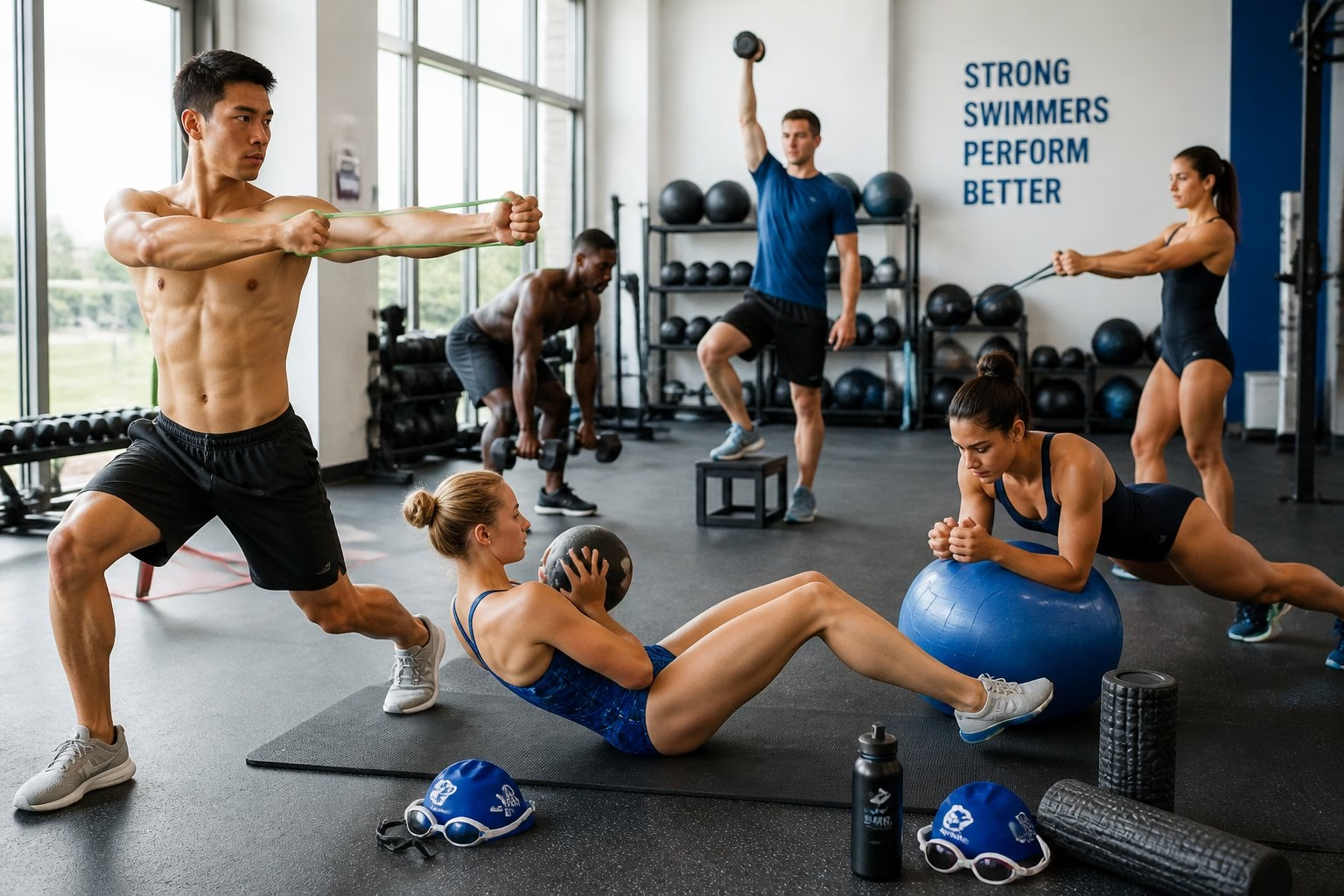
The frequency that works best depends on your training phase, event focus, and how your body responds to added load. Two to four dryland sessions per week is a realistic and productive range for most competitive swimmers. Getting the scheduling right matters just as much as the exercises themselves.
How Often Should Swimmers Cross-Train
For most swimmers, two to three dedicated dryland training sessions per week deliver strong results without excessive fatigue. If you are newer to land-based work, start with two sessions and assess how you recover over three to four weeks before adding a third.
During heavy competition periods, dropping to two lighter sessions helps maintain strength without accumulating unnecessary soreness. In the off-season or a general preparation phase, you can push to four sessions when pool volume is lower.
Fitting Sessions Around Hard And Easy Pool Days
Place your hardest dryland work on the same day as your hardest pool sessions, ideally after the swim rather than before. This keeps your easy days genuinely easy, giving your body the recovery window it needs.
A common approach is to pair a strength-focused session with a morning quality swim set, then use the following day for a lighter swim and complete rest from the gym. Avoid doing a heavy squat session the day before a race-pace pool session; your legs will be sluggish when you need them most.
Adjusting Volume For Sprinters, Distance Swimmers And Age-Group Athletes
Sprinters generally benefit from heavier loads and more explosive, power-oriented exercises. Three to four sessions a week with an emphasis on maximal strength and plyometrics suit their event demands well.
Distance swimmers need enough strength to maintain stroke integrity over longer races, but excessive muscle mass can work against them. Two to three sessions focusing on muscular endurance, core stability, and shoulder health strike the right balance.
Age-group athletes, particularly those still growing, should prioritise bodyweight exercises and lighter resistance work. Building movement quality and coordination at this stage pays dividends later. Two sessions a week, kept to around 30 minutes, is plenty for younger swimmers.
The Best Exercise Categories For Faster Swimming
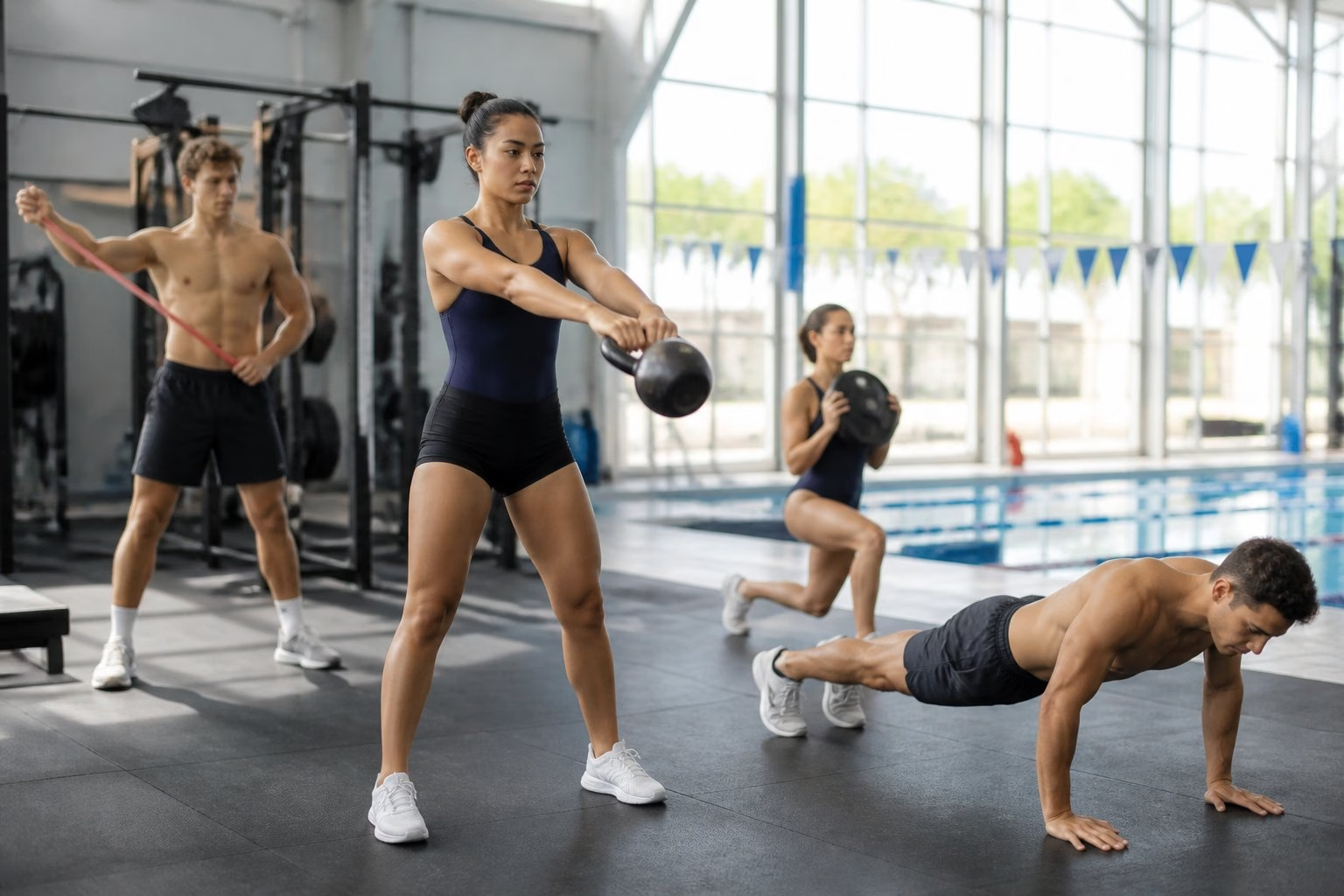
Effective dryland programming covers four distinct categories: core stability, upper-body pulling and pressing, lower-body strength, and mobility. Neglecting any one of these creates a weak link that will eventually limit your speed or lead to injury. Balancing all four produces the most complete transfer to the water.
Core Stability And Body Position Work
Your core is the connection point between upper- and lower-body propulsion. Without a rigid trunk, the force your arms generate leaks into lateral movement instead of driving you forward.
Core strength for swimmers is not about crunching; it is about resisting rotation and extension under load. Exercises like planks, hollow holds, and Pallof presses teach your midsection to stay locked in while your limbs move independently, exactly what happens during each stroke cycle.
Upper-Body Pulling And Shoulder Control
Swimming is a pulling-dominant sport, so your dryland programme needs to reflect that. Pull-ups, single-arm rows, and band pull-aparts develop the lats, rhomboids, and rear deltoids that power your catch and pull phases.
Shoulder control work is equally important. Internal and external rotation exercises with resistance bands keep the small stabilising muscles strong enough to handle the thousands of overhead repetitions you accumulate each week.
Lower-Body Strength For Starts, Turns And Kicking
A fast underwater phase can make or break a race, and it starts with leg power. Squats, split squats, and box jumps build the strength and explosiveness needed to launch off the wall and maintain a powerful dolphin kick.
Even in events where the kick plays a smaller propulsive role, strong legs contribute to body position and balance. Do not overlook them simply because swimming “feels” like an upper-body sport.

Mobility And Movement Quality For Efficient Technique
Tight ankles limit your kick amplitude. Restricted thoracic rotation reduces your body roll. Limited shoulder flexion compromises your streamline position. Mobility work addresses each of these directly.
Spending ten minutes on targeted stretches, foam rolling, and joint circles before or after dryland sessions keeps your range of motion where it needs to be. Think of it as protecting the efficiency gains you have worked hard to build in the pool.
Key Dryland Exercises And How To Perform Them Well
The exercises below form the backbone of a solid dryland training programme. Each one has a specific function that connects to in-water performance. Master the movement pattern before adding load; a sloppy heavy exercise transfers far less to your swimming than a crisp, controlled lighter one.
Planks, Side Planks And Hollow Holds
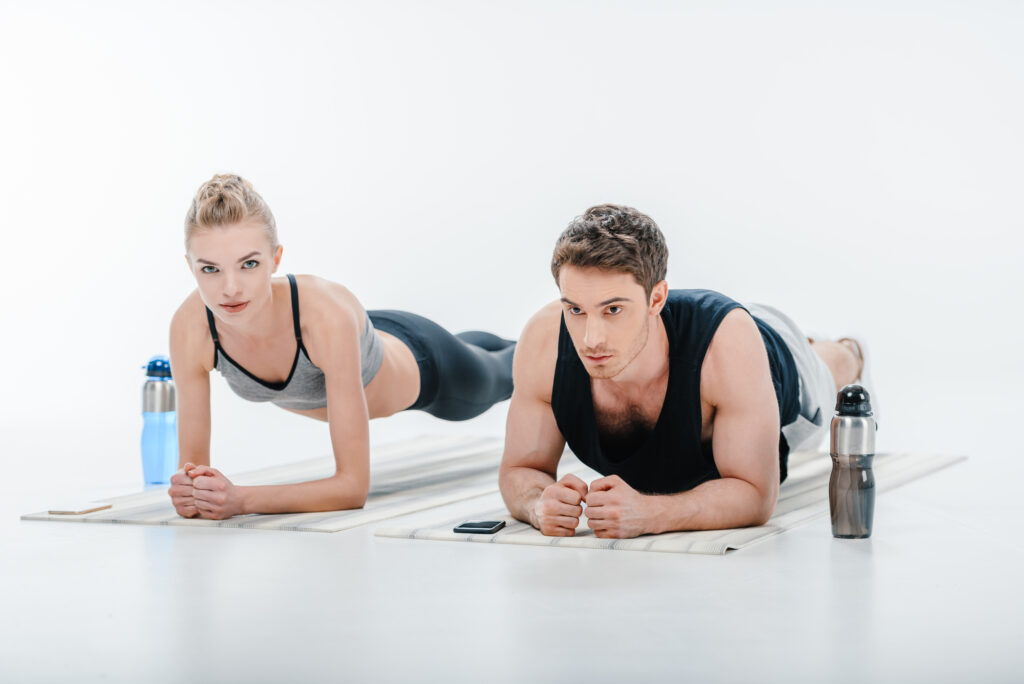
Plank: Set up on your forearms and toes with a straight line from head to heels. Squeeze your glutes and brace your core as if someone were about to push you sideways. Hold for 30 to 60 seconds. This mirrors the rigid body position you need during freestyle and backstroke.
Side plank: Stack your feet or stagger them and hold on one forearm. Keep your hips level and avoid sagging. This builds the lateral core strength that stabilises your body during rotation.
Hollow hold: Lie on your back, press your lower back into the floor, and lift your arms overhead and legs off the ground. Maintain a banana-shaped curve. This directly replicates the streamline position off the wall. Start with 20-second holds and build to 45 seconds.
Resistance Band Shoulder Exercises
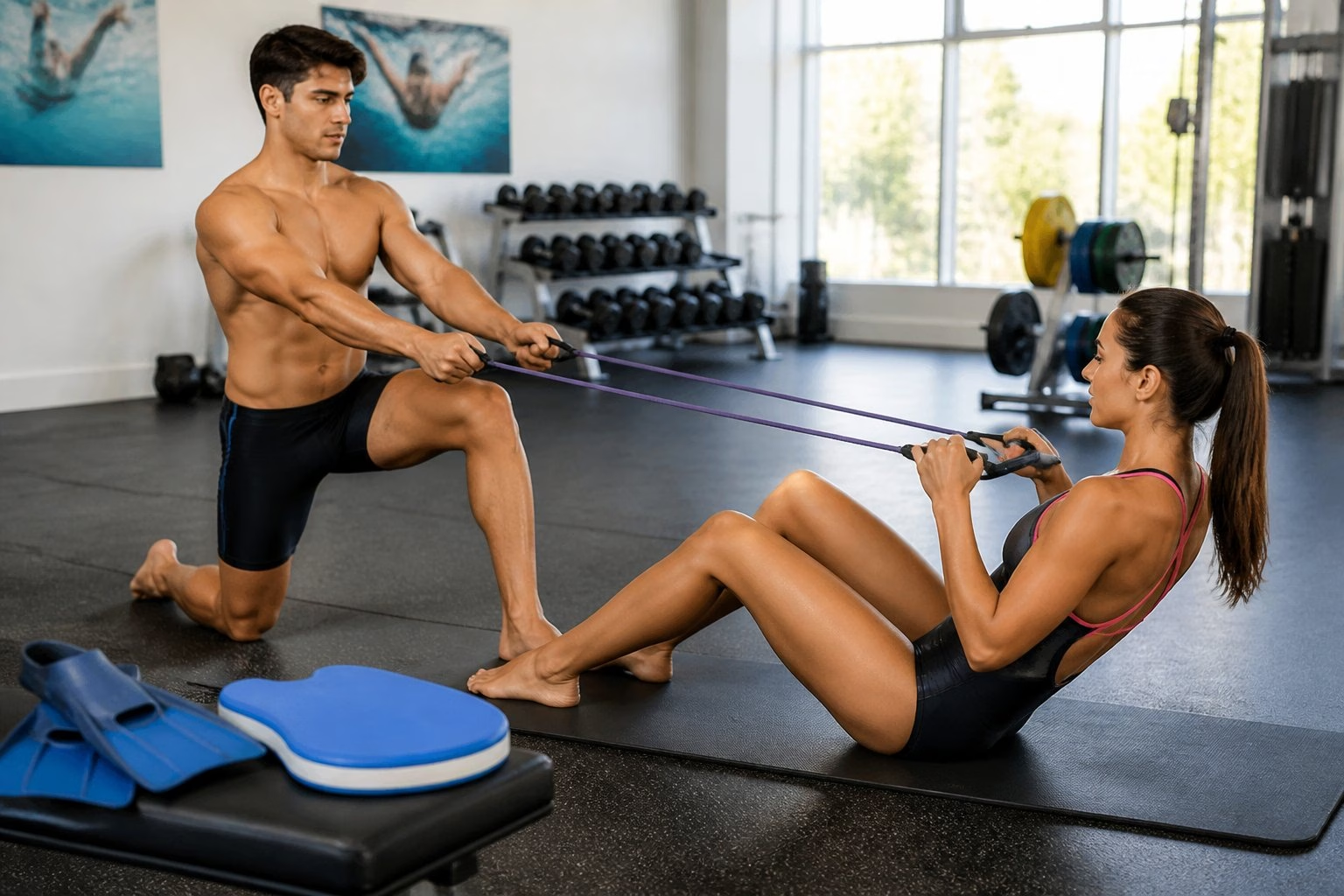
These are non-negotiable for injury prevention. Use a light to medium resistance band for all of the following:
- External rotation: Pin your elbow to your side at 90 degrees. Rotate your forearm outward against the band. Perform 15 repetitions per side.
- Pull-aparts: Hold the band at shoulder height with straight arms. Pull it apart by squeezing your shoulder blades together. Aim for 15 to 20 repetitions.
- Overhead band dislocates: Grip a light band wide and pass it from in front of your body to behind in a slow arc. This improves shoulder flexion and thoracic mobility.
Complete two to three sets of each before your main dryland session as part of your warm-up.
Squats, Split Squats And Lunges
Bodyweight squat: Stand with feet shoulder-width apart, push your hips back, and lower until your thighs are at least parallel to the floor. Keep your chest up and weight through your heels. Progress to goblet squats and then barbell back squats.
Split squat: Take a long stride stance with your rear foot elevated on a bench. Lower your back knee toward the floor while keeping your front shin vertical. This builds single-leg strength critical for asymmetric push-offs during turns.
Walking lunge: Step forward into a deep lunge, drive through your front heel, and bring your back leg through to the next step. Keep your torso upright. Three sets of 10 per leg with bodyweight or dumbbells is a strong starting point.
Pull-Ups, Rows And Pressing Variations
Pull-ups: Grip the bar slightly wider than shoulder width. Pull until your chin clears the bar, squeezing your lats at the top. If you cannot yet perform a full pull-up, use a resistance band for assistance or work with slow negatives (lowering yourself over five seconds).
Single-arm dumbbell row: Brace one hand on a bench, keep your back flat, and row the dumbbell to your hip. Focus on retracting your shoulder blade before bending the elbow. This closely mimics the pull phase of freestyle.
Dumbbell bench press or push-ups: Pressing movements balance out pulling volume and support a strong push-off during open turns. Keep the volume moderate; pressing strength is useful but secondary to pulling for most swimmers.
Medicine Ball And Jump-Based Power Drills
Medicine ball slam: Lift a medicine ball overhead, then drive it into the floor as hard as possible while hinging at the hips. This trains the explosive full-body extension used in starts and breakouts.
Box jumps: Stand in front of a sturdy box, dip into a quarter squat, and jump onto it. Step down rather than jumping down to protect your joints. Start with a low box and progress height as your confidence grows.
Rotational medicine ball throw: Stand side-on to a wall, rotate your trunk, and throw the ball into the wall with maximum force. Catch and repeat. This builds the rotational power behind backstroke and butterfly pull phases.
Perform power drills early in your session, after your warm-up but before heavier strength work, while your nervous system is fresh.
Useful Conditioning Options Beyond The Gym Floor
Not all effective cross-training happens with barbells and dumbbells. Conditioning tools and alternative sports offer variety, keep motivation high, and target energy systems that matter for racing. The key is choosing activities that support your swimming goals without adding unnecessary injury risk.
High-Intensity Interval Training For Racing Fitness
High-intensity interval training on a bike, rower, or assault bike can replicate the metabolic demands of a race. Short bursts of 20 to 40 seconds at maximum effort followed by matched rest periods train the same anaerobic energy systems you tap into during a 100 or 200-metre event.
Keep HIIT sessions to 15 to 20 minutes of working time. Place them on days when your pool session is lighter or when you need a cardiovascular stimulus without shoulder loading. One to two sessions per week is usually sufficient.
Using A Rowing Machine Without Overloading The Shoulders
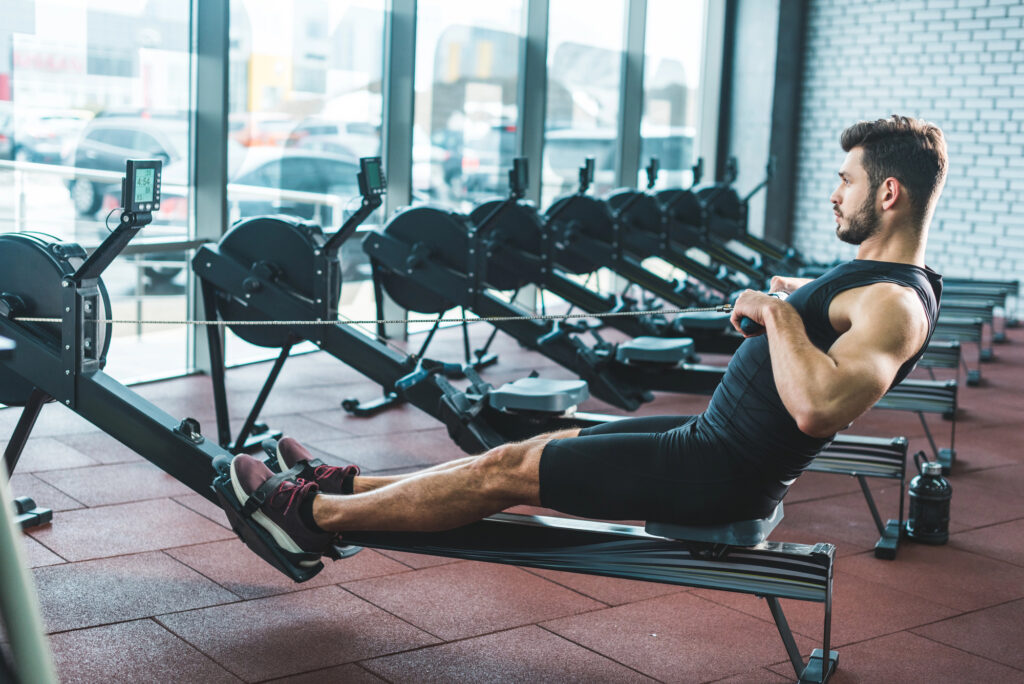
The rowing machine is an excellent conditioning tool for swimmers because it trains the posterior chain, grip, and cardiovascular system simultaneously. The catch position on a rower also resembles the high-elbow catch in freestyle.
To protect your shoulders, focus on driving through the legs first and finishing the pull with your arms, rather than yanking with the upper body from the start. Keep stroke rate moderate and distances manageable (1,000 to 2,000 metres at a steady pace, or intervals of 250 to 500 metres). If your shoulders feel aggravated after rowing, reduce the intensity or switch to the bike.
When Water Polo And Other Sports Can Help
Water polo, surfing, and other aquatic sports develop water confidence, coordination, and game fitness that benefit swimmers during off-season phases. Water polo in particular improves treading endurance, spatial awareness, and overhead throwing power.
Team sports like basketball or five-a-side football offer agility, reaction time, and a mental break from structured training. The risk of ankle or knee injuries is real, so limit contact sport involvement during the competitive season. Use these activities as off-season cross-training to stay fit and motivated without burning out on structured pool and gym work.
Common Mistakes, Progression And Recovery
Getting the exercises right is only half the battle. How you progress them, how you recover, and the mistakes you avoid along the way determine whether your dryland work actually improves your racing or simply makes you tired. Paying attention to these details separates productive cross-training for swimmers from wasted effort.
Technique Errors That Reduce Transfer To The Water
The most common mistake is rushing through exercises with poor form to lift heavier or finish faster. A sloppy pull-up with excessive kipping trains momentum, not your lats. A squat that collapses inward at the knees reinforces exactly the kind of instability you are trying to eliminate.
Prioritise controlled movement through a full range of motion. Record yourself occasionally or ask a training partner to watch. Weight training for swimmers should look smooth and deliberate, not frantic.
Another frequent error is choosing exercises with no clear link to swimming. Bicep curls and calf raises might look good, but they contribute very little to stroke mechanics compared with rows, pull-ups, and compound lower-body movements.
Progressing Load Without Losing Movement Quality
Add load in small increments, roughly five to ten per cent per week, and only when you can complete every repetition with clean technique. If your form breaks down on the last two reps of a set, the weight is too heavy.
A practical approach is to increase repetitions first, then add weight once you can comfortably hit the top of your target rep range for all sets. For example, progress from 3 x 8 to 3 x 12 with the same load before stepping up.
During taper periods before major competitions, reduce volume (fewer sets and reps) but keep intensity close to your working weights. This maintains the strength adaptations you have built without adding fatigue.
Recovery, Soreness And Staying Consistent
Expect some muscle soreness in the first two to three weeks of a new dryland programme. This is normal and does not mean you should skip pool sessions, though you may need to adjust intensity slightly.
Sleep and nutrition are the foundation of recovery. Aim for seven to nine hours of sleep and ensure you consume adequate protein, particularly within a couple of hours after training. Foam rolling and light stretching on rest days help manage tightness.
Consistency beats intensity over the long term. Two well-executed sessions per week, maintained across an entire season, will produce far greater results than sporadic bursts of five sessions followed by weeks off. Build the habit, trust the process, and let the cumulative gains show up on race day. For more guides on structured training and race preparation, explore the resources available at Swimmers World.