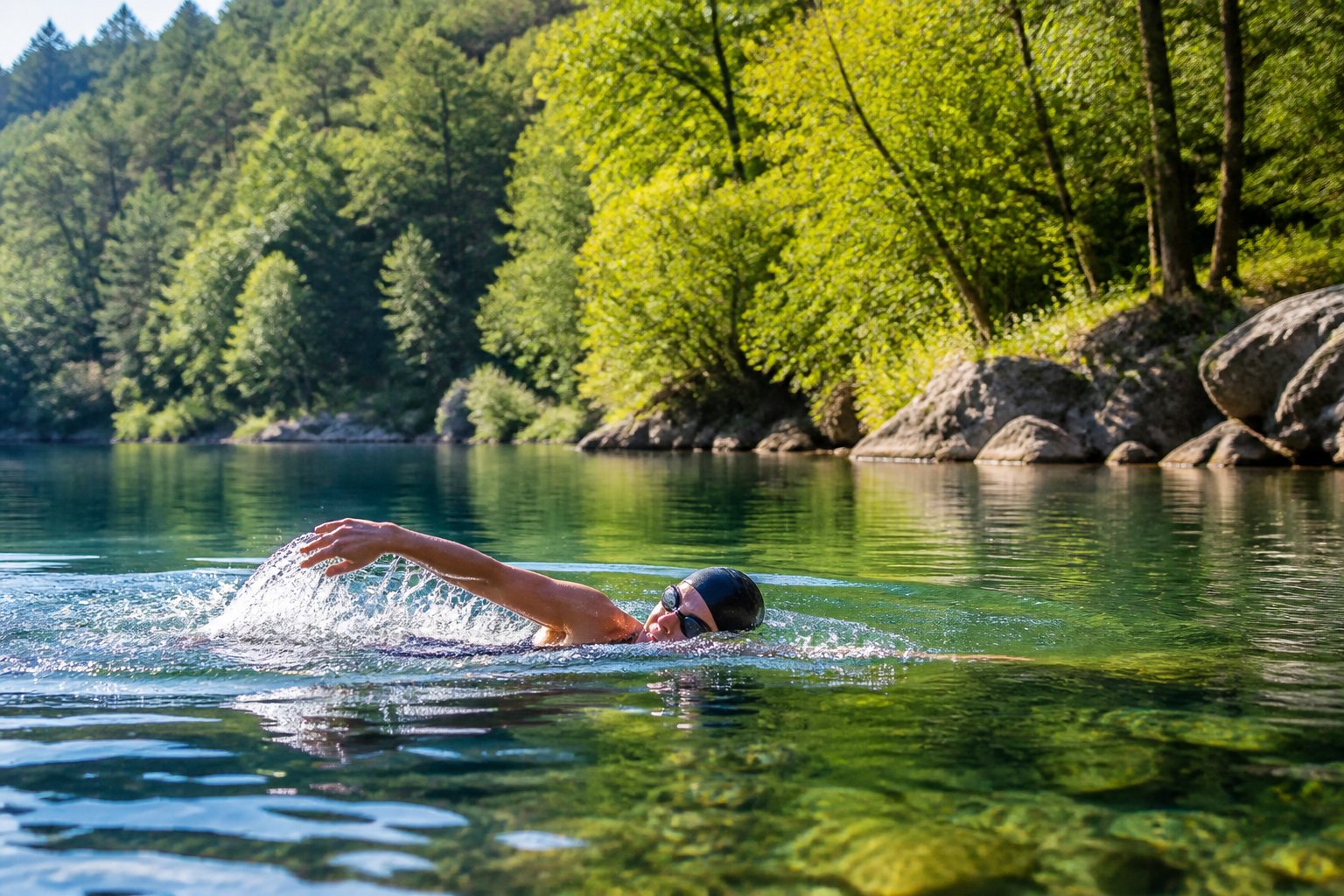
Wild swimming is the practice of swimming in natural bodies of water, such as rivers, lakes, lochs, waterfalls, and the sea, rather than in a chlorinated swimming pool. It is one of the fastest-growing outdoor activities in the UK, with more than 4.1 million people regularly heading into open water to experience the physical and mental rewards of immersing themselves in nature. Whether you call it outdoor swimming or open water swimming, the core idea is the same: swapping lane ropes and tiled walls for fresh air, wildlife, and the quiet thrill of a natural dip.
If you have ever wondered what all the fuss is about, this guide covers everything you need to know before your first wild swim, from safety basics and gear essentials to finding beginner-friendly spots across the UK. The water might be cooler, the bottom might be uneven, and the views will almost certainly be better than anything you have seen from lane four.
Wild swimming appeals to a surprisingly broad range of people. You do not need to be a strong swimmer or an extreme sports enthusiast. Many people start with a short, waist-deep wade and build from there. The key is preparation, respect for the environment, and a willingness to step outside your comfort zone.
How Wild Swimming Differs From Pool Swimming
Pool swimming and outdoor swimming share the same fundamental skill, yet they feel like entirely different activities. The water, the surroundings, and the level of predictability change everything about the experience.
Natural Water Environments and What Counts
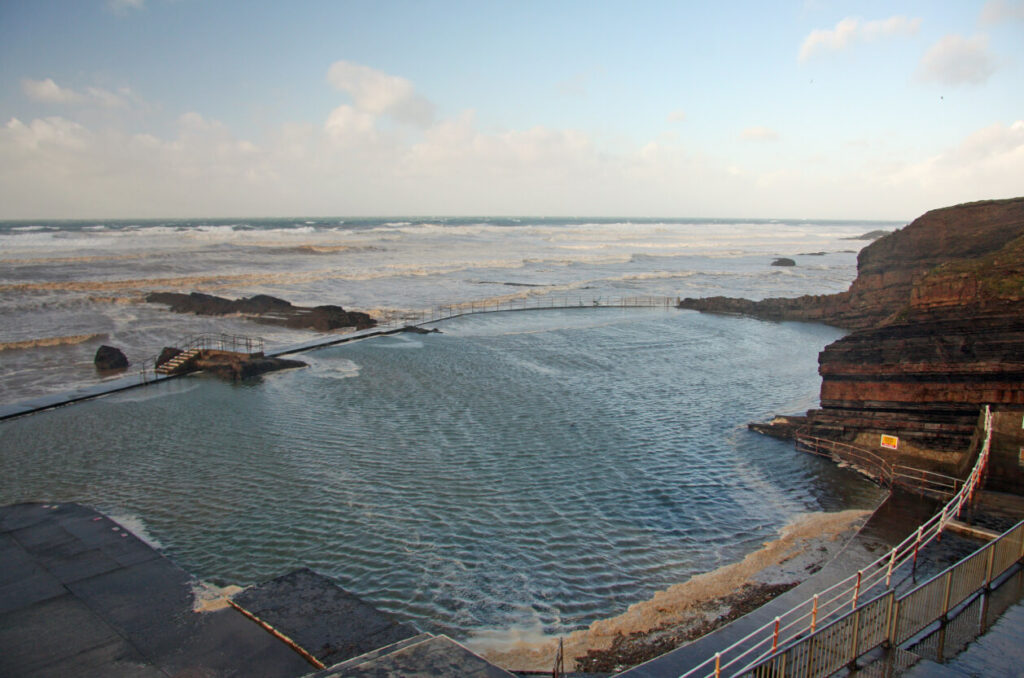
Wild swimming takes place in any natural or semi-natural body of water that is not a standard swimming pool. That includes rivers, lakes, tarns, lochs, reservoirs, the sea, and even quarry pools. As WildSwimLocations notes, it is the act of swimming in natural bodies of water that connects you directly with nature. Lidos and outdoor heated pools sometimes sit on the boundary, but most wild swimmers consider a true wild swim to involve unheated, unchlorinated water in a natural setting.
Rivers, Lakes, Lochs and Sea Swims Explained
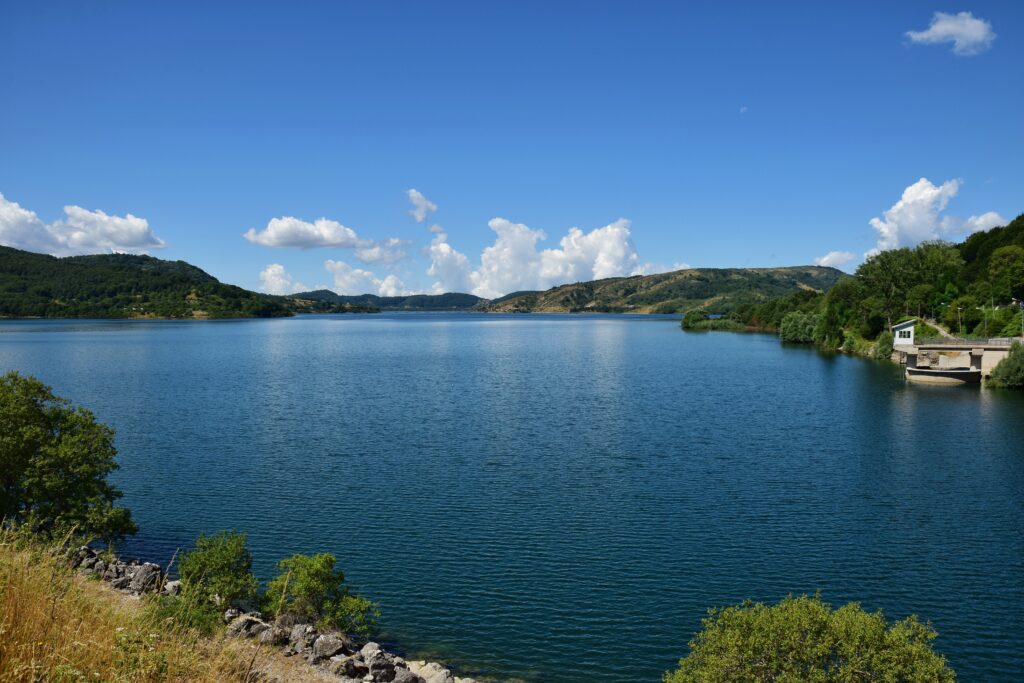
Each type of water offers a different experience. Swimming in rivers often means dealing with currents, varying depths, and the occasional need to navigate around rocks or fallen branches. Lakes and lochs tend to be calmer on the surface, though temperatures can drop sharply below the first metre or two. Sea swims bring tides, salt water, and swell into the equation. Understanding the character of the water you are entering is one of the most important habits you can develop as a wild swimmer.
Why Conditions Feel More Unpredictable Outdoors
In a pool, the temperature stays constant, the depth is marked, and lifeguards keep watch. Outdoors, conditions shift with the weather, the season, and even the time of day. A cold water swim in April will feel very different from one in August. Rainfall upstream can raise river levels overnight. Wind can turn a flat lake into choppy water within minutes. Swim Secure highlights that open water swimming means no controlled temperatures, no lanes, and no visible bottom. That unpredictability is part of the appeal for many, but it also means you need to stay alert and make careful decisions every time you enter the water.
Why People Choose It
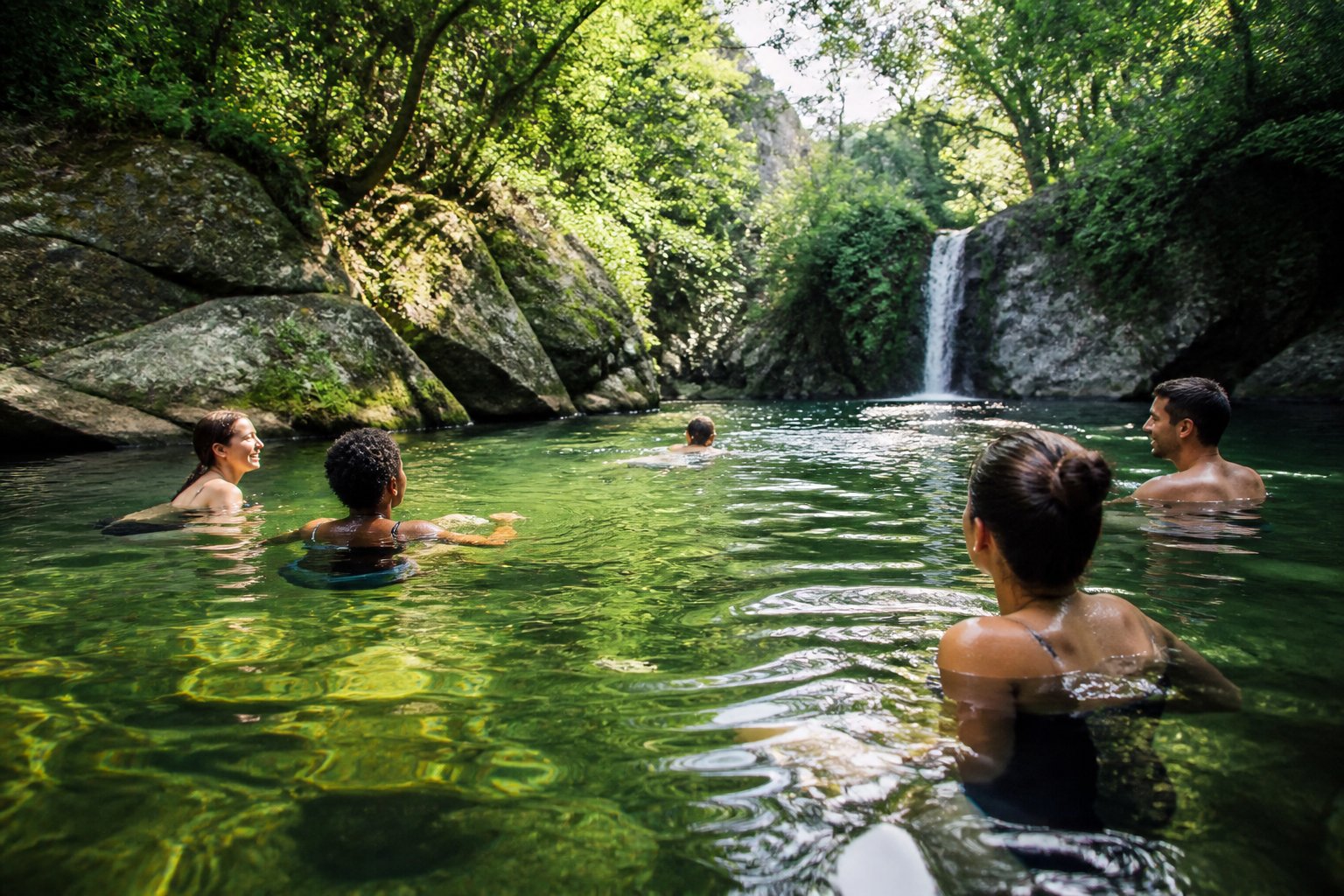
The benefits of wild swimming go well beyond exercise. Cold water, natural surroundings, and shared experiences create a combination that keeps drawing people back to rivers, lakes, and coastlines across the UK.
Benefits of Wild Swimming for Body and Mind
Swimming in natural water works your whole body while placing minimal stress on your joints, making it accessible for a wide range of ages and fitness levels. The physical rewards include improved cardiovascular health, increased muscle tone, and better flexibility. What often surprises newcomers, though, are the mental health benefits. Many wild swimmers describe the experience as a form of mindfulness, where the sensation of cold water and the focus required to swim safely bring them fully into the present moment. Regular dips have been linked to reduced stress, improved mood, and a genuine sense of calm that lasts well beyond the swim itself.
Cold Water Swimming and How It Feels
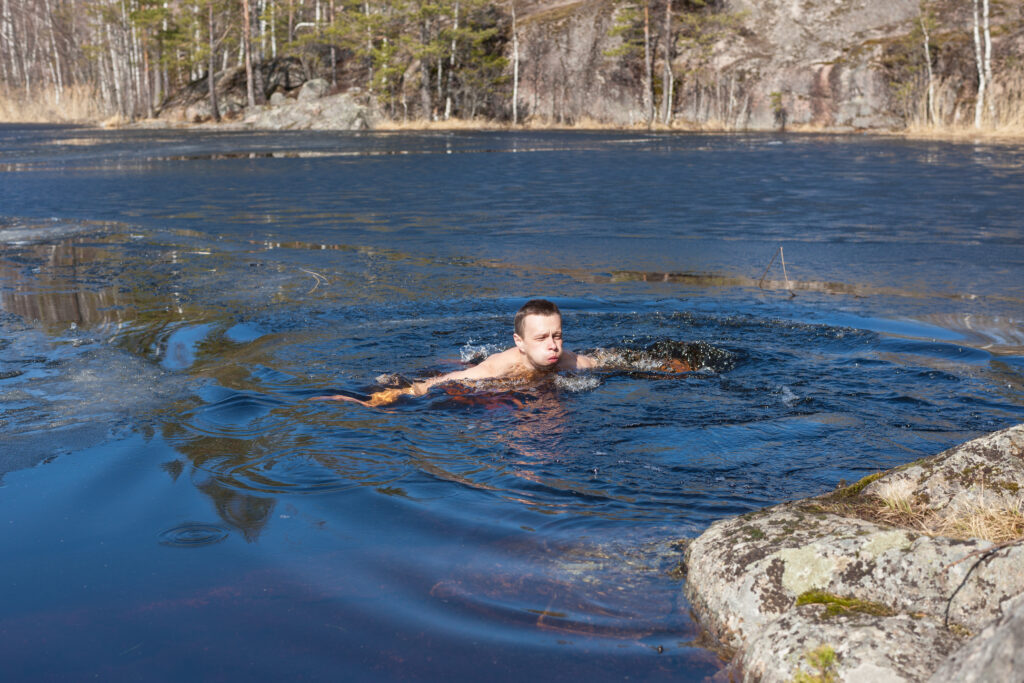
Your first encounter with cold water swimming is likely to be a shock, quite literally. The initial gasp as cool water hits your skin is a natural response. Within a minute or two, your body begins to adapt and the intense cold feeling starts to ease. That process triggers a rush of endorphins, sometimes described as a natural high. Over time, repeated exposure leads to cold adaptation, where your tolerance builds and even chilly water starts to feel comfortable. Many people find this sensation genuinely addictive.
Confidence, Community and the Appeal of a Swimming Group
Wild swimming does not have to be a solo pursuit. Across the UK, local swimming groups meet regularly at rivers, lakes, and beaches. Joining a group is one of the best ways to learn safe practices, discover new spots, and build confidence in open water. Organisations like the Outdoor Swimming Society have helped connect thousands of swimmers. The social side of wild swimming is a big part of its appeal. Sharing a cold dip with others, swapping tips, and celebrating each other’s progress creates a supportive community that is genuinely welcoming to beginners.
Safety Basics Before You Get In
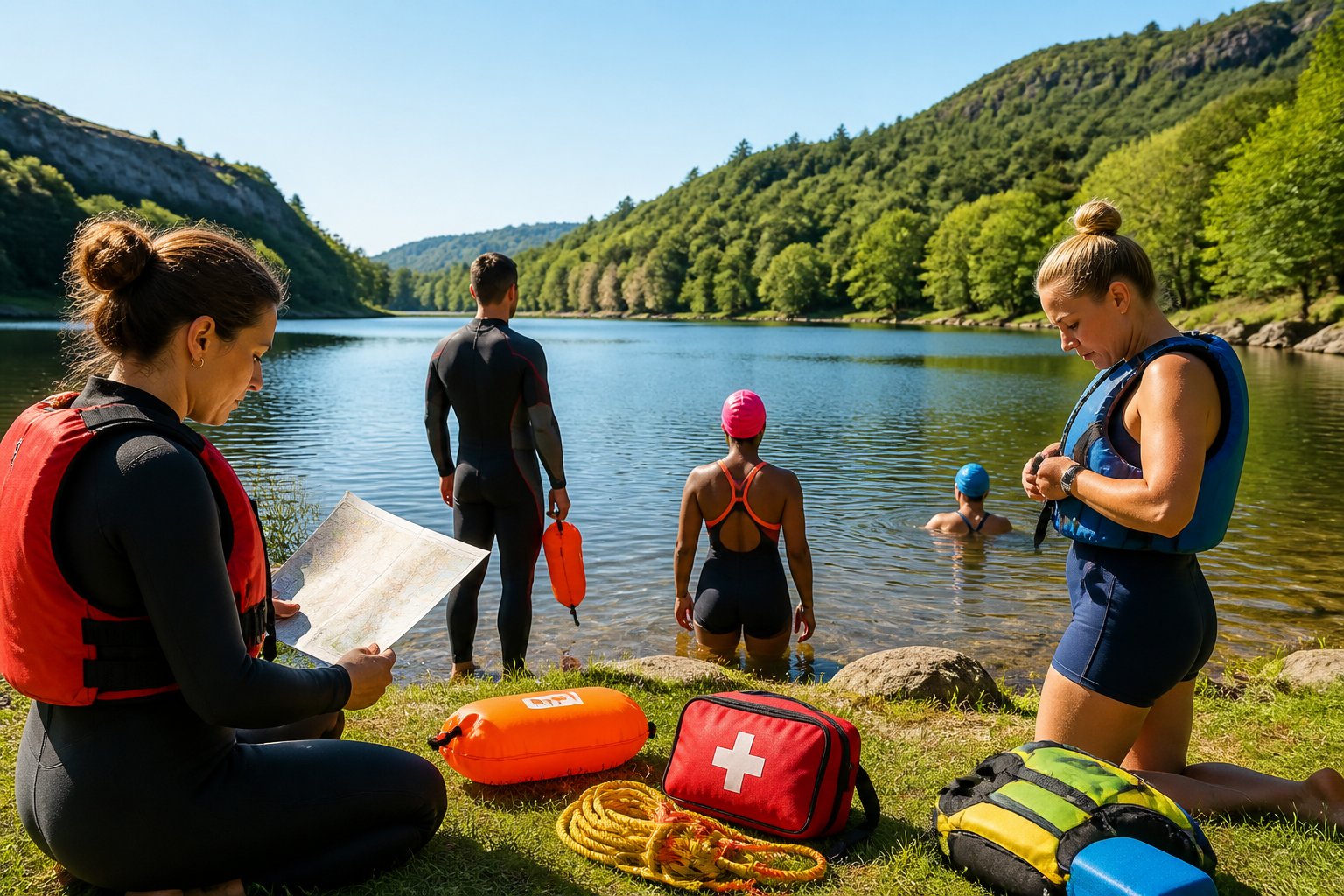
Preparation makes the difference between a brilliant swim and a dangerous one. Checking your environment, knowing the risks of cold water, and swimming within your limits are non-negotiable habits for every open water swimming session.
Checking Water Temperature, Weather and Water Quality
Before you get in, check the water temperature. In the UK, inland water can range from around 5°C in winter to 20°C at the peak of summer. Anything below 15°C counts as cold, and below 10°C is very cold, especially for beginners. Check the weather forecast too; heavy recent rainfall can wash pollutants into rivers and raise water levels unexpectedly. For water quality, the Environment Agency publishes bathing water data for designated sites, and it is worth checking for any blue-green algae warnings or pollution alerts before entering. Avoid stagnant water, urban rivers, and reedy shallows where water quality is uncertain.
Entry, Exit, Depth and Current Awareness
Always identify your exit point before you enter the water. This sounds obvious, but steep banks, slippery rocks, or strong currents can make getting out far harder than getting in. Never jump or dive into water you have not checked for depth and hidden obstructions. Wade in slowly, testing the ground underfoot as you go. In rivers, be aware that currents can be stronger than they appear from the bank, particularly after rain or near weirs. Live for the Outdoors advises always swimming within your ability and having a clear plan for how you will leave the water.
Cold Shock, Afterdrop and Knowing When to Stop
Cold shock is your body’s immediate reaction to sudden immersion in cold water. It can cause involuntary gasping, rapid breathing, and a spike in heart rate. Enter the water gradually, keeping your face above the surface, and allow your breathing to settle before you start swimming. Afterdrop is a less well-known risk; it happens after you leave the water, when your core temperature continues to fall as cold blood from your extremities circulates inward. You might feel fine getting out, then start shivering uncontrollably ten minutes later. Dress warmly as soon as you exit and have a hot drink ready. If you start shivering in the water, feel confused, or lose coordination, get out immediately. A good rule of thumb for beginners: keep your first swims short and build gradually.
What To Wear and Bring
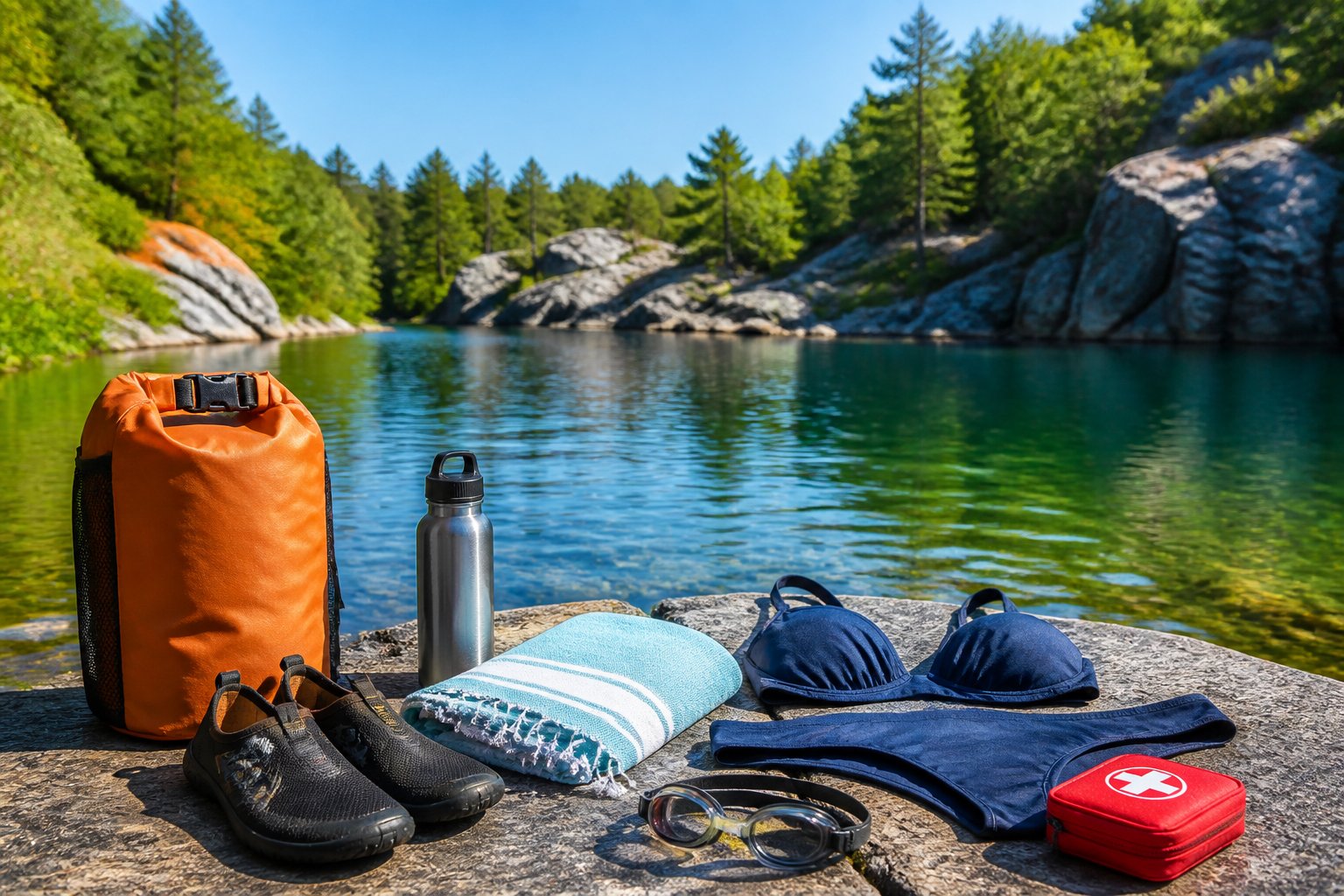
The right gear keeps you comfortable, warm, and safe. You do not need to spend a fortune, but a few well-chosen items make a noticeable difference, especially in cooler conditions.
When a Wetsuit Helps and When It May Not Be Needed
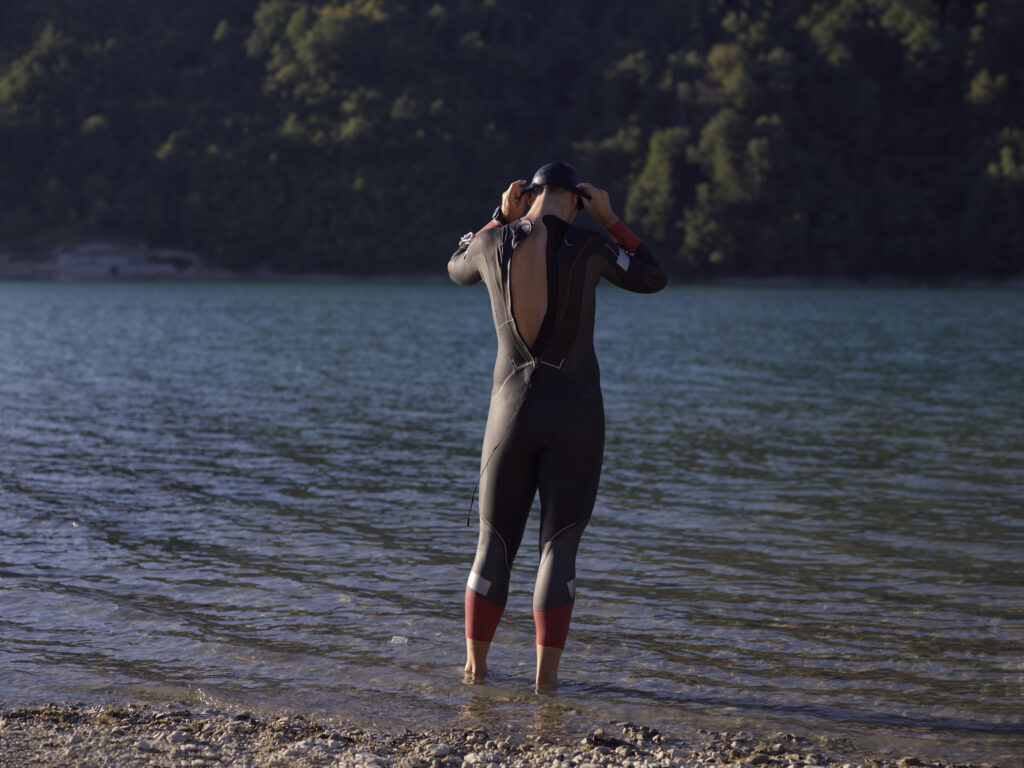
A wetsuit is useful when the water temperature is below about 15°C or if you plan to stay in for more than a short dip. It provides thermal insulation and a little extra buoyancy, which can be reassuring for beginners. In warmer summer months, many swimmers prefer just a swimsuit for the full sensory experience. As wildswimming.co.uk explains, swimming without neoprene lets you feel the water directly against your skin, which many wild swimmers find deeply invigorating. If you are new to cold water, starting with a wetsuit is a sensible choice until you build confidence and cold tolerance.
Useful Extras for Cold or Rocky Conditions
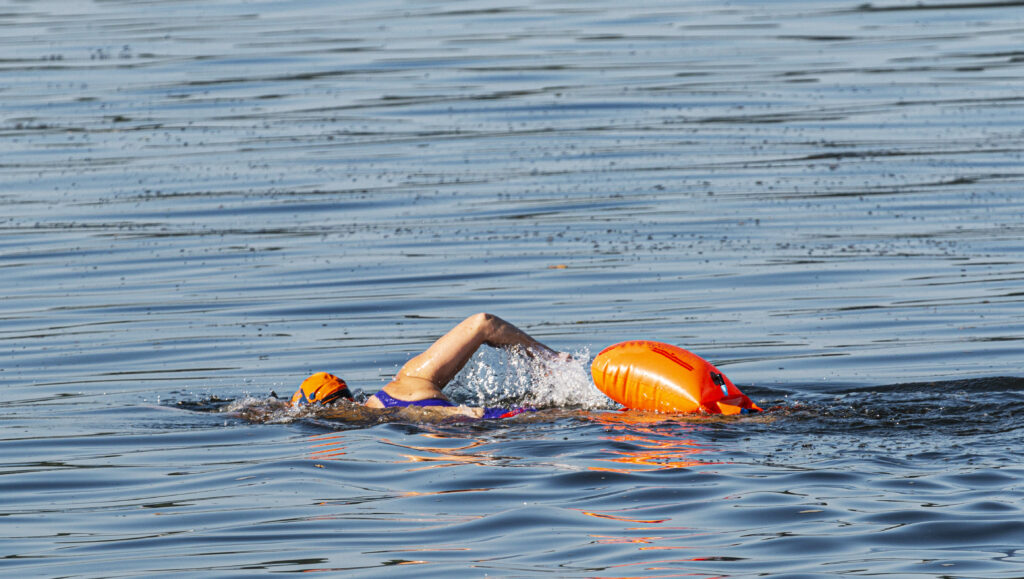
A few accessories can make your swim much more comfortable. Wetsuit gloves and neoprene socks help keep your extremities warm in colder water; hands and feet tend to lose heat fastest. Aqua shoes or old trainers protect your feet from sharp rocks, broken glass, or uneven lake beds. A brightly coloured swim cap makes you visible to other water users, and a tow float attached to your waist provides both visibility and a place to store a small dry bag with your essentials. Mountain Warehouse recommends goggles designed for open water, which tend to have wider lenses and better peripheral vision than standard pool goggles.
Warm-Up and Changing Essentials for Afterwards
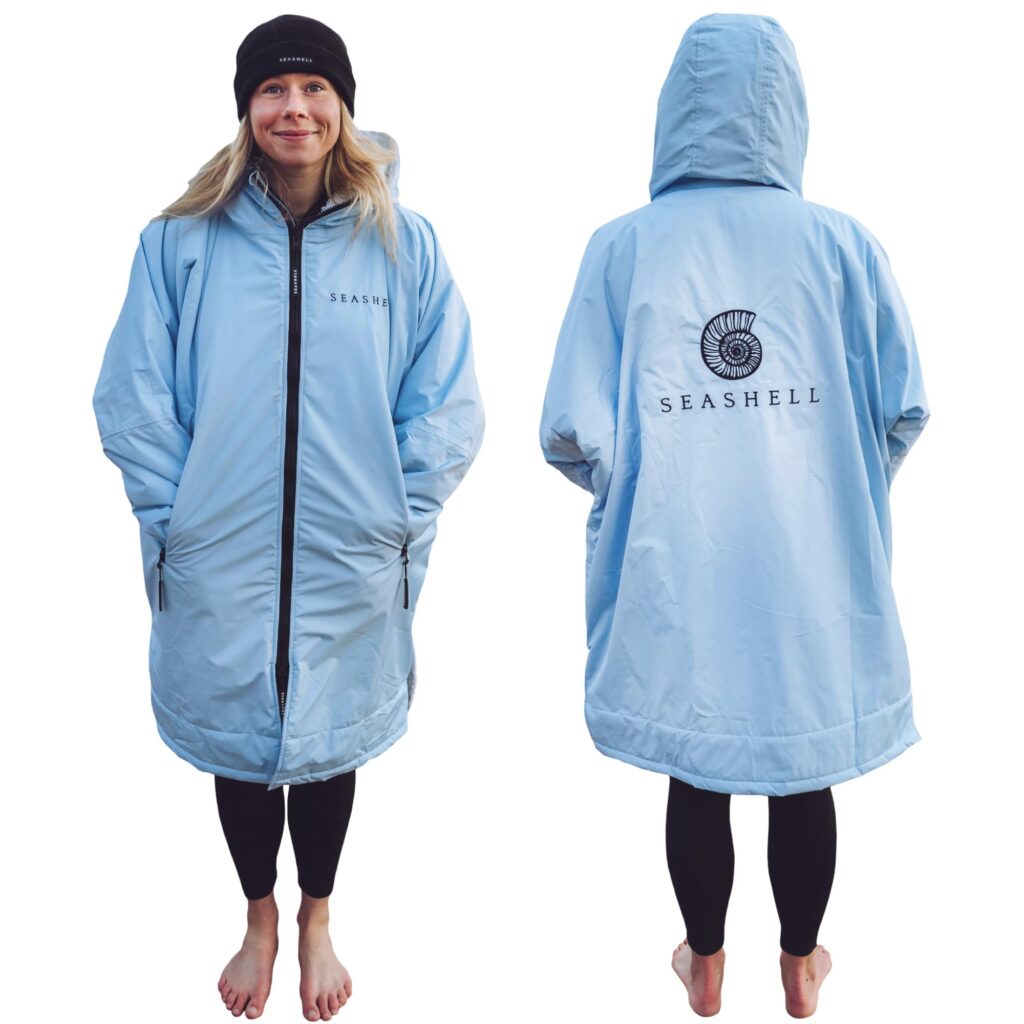
Getting warm quickly after a swim is just as important as the swim itself. A changing robe is one of the most practical investments you can make; it gives you privacy, warmth, and wind protection while you change. A changing mat keeps your feet clean and dry on muddy ground. Pack warm layers including a hat, thick socks, and a fleece or down jacket, along with a hot drink in an insulated flask. For a closer look at changing robe options, Swimmers World has a guide covering the best swim changing robes currently available. Dress from the top down when you get out, starting with your hat and jacket, as this helps counter afterdrop more effectively.
How To Start in the UK
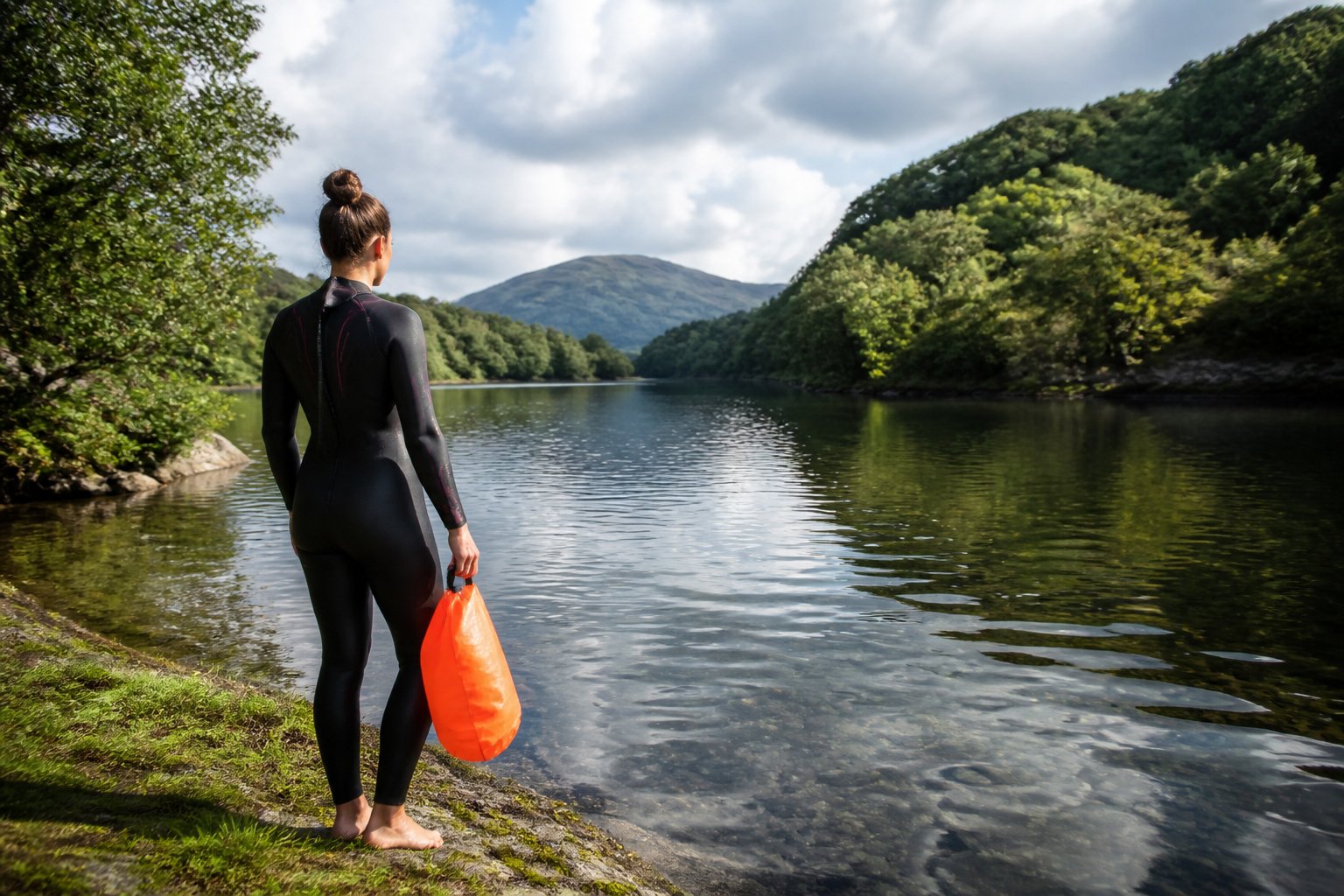
The UK offers an extraordinary range of wild swimming spots, from sheltered river pools in Devon to vast Highland lochs in Scotland. Getting started is simpler than you might think, especially if you take a gradual approach.
Choosing Beginner-Friendly Wild Swimming Spots
Look for wild swimming locations with easy access, calm water, and a gentle entry point. Shallow river pools, small lakes with a visible bottom, and sheltered coves work well for first-timers. Popular beginner-friendly options include Sharrah Pool on the River Dart in Dartmoor and the calm waters of Loch Morlich in the Cairngorms. Websites such as wildswimming.co.uk feature maps and guides to hundreds of tried-and-tested locations across England, Scotland, and Wales. Footpaths, fords, and footbridges near rivers are good starting points for scouting new spots, and Ordnance Survey maps can reveal hidden pools and beaches that are not obvious from the road.
Starting With Short Dips and Building Gradually
You do not need to swim a mile on your first outing. A five-minute dip is more than enough for your body to benefit from cold water immersion. Arrive feeling warm, ideally after a brisk walk to your spot, and enter the water slowly. Let your breathing settle before you move beyond standing depth. As your confidence and cold tolerance grow, you can extend the duration of your swims week by week. Many experienced wild swimmers still keep their winter dips under ten minutes. The habit of listening to your body and getting out before you feel too cold is one of the most valuable skills you can develop.
Joining Local Groups and Learning From Experienced Swimmers
Finding a local swimming group is one of the fastest ways to build skill and confidence. Groups range from informal Facebook communities to organised clubs with regular meet-ups. Many offer sessions specifically for beginners, with experienced swimmers on hand to share advice and keep an eye on newcomers. Check social media, local outdoor shops, and sites like the Outdoor Swimming Society for groups near you. Swimming alongside others who know the local spots, tides, and conditions gives you a safety net and a wealth of practical knowledge that is hard to pick up on your own.
Good Etiquette in Natural Water
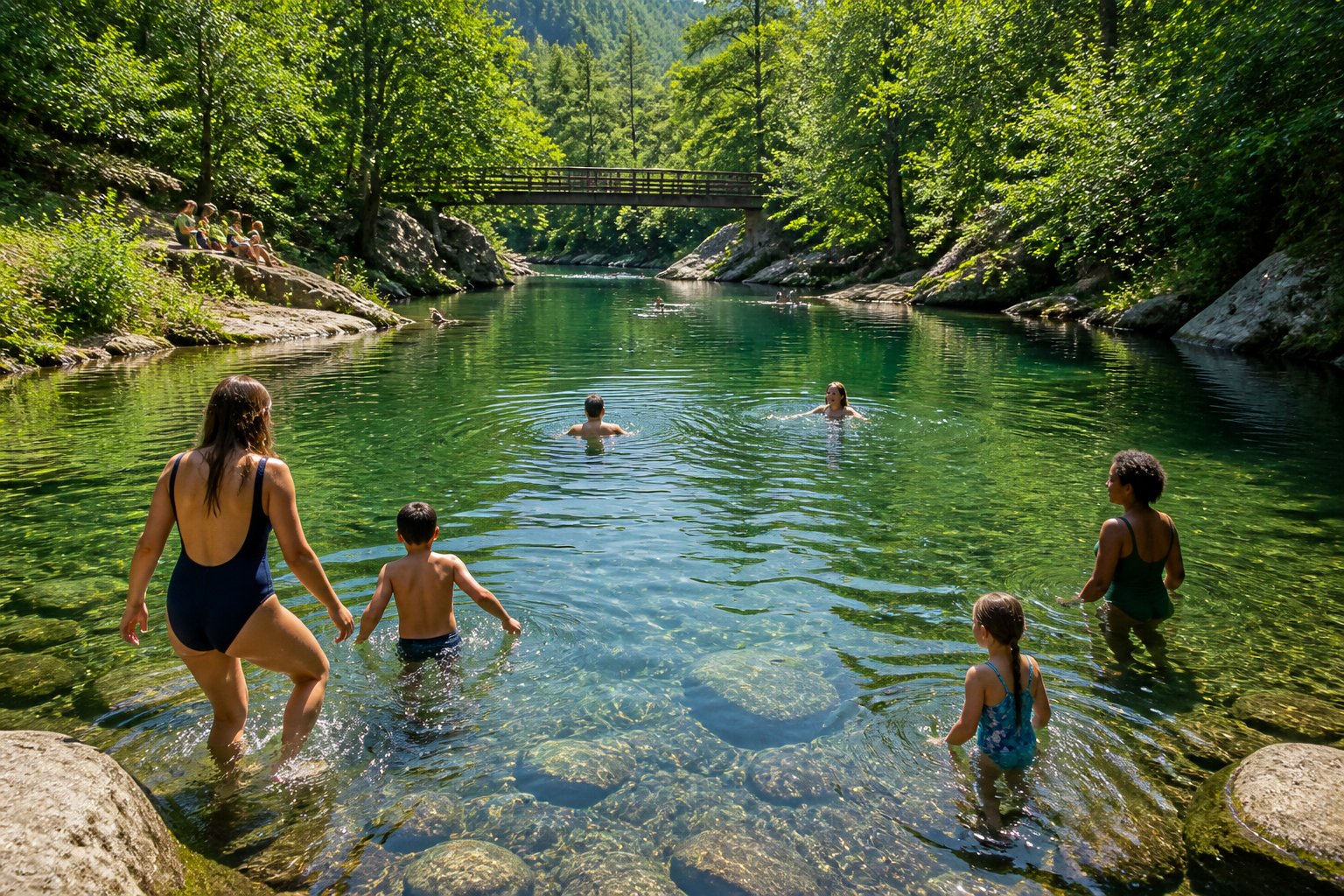
Wild swimming locations remain beautiful and accessible only when swimmers look after them. Good etiquette protects the environment, respects other people, and helps keep outdoor swimming available for everyone.
Respecting Wildlife, Land Access and Other Water Users
Natural waterways are habitats first and swimming spots second. Avoid disturbing nesting birds, spawning fish, or other wildlife. Enter and exit the water at established points rather than trampling through bankside vegetation. Be aware of land access rules; in England and Wales, many rivers cross private land, so use public rights of way and designated access points. In Scotland, the right to roam is broader, but responsible behaviour still applies. If anglers, kayakers, or boats are nearby, give them space and make yourself visible with a bright swim cap. SwimWildWaters emphasises that wild swimming is a communion with nature, and treating the environment with care is part of the experience.
Leaving No Trace at Wild Swimming Locations
Carry out everything you carry in. That means food wrappers, bottles, wet wipes, and any other waste. If you spot litter left by others, picking it up is a simple way to leave the spot better than you found it. Avoid using sunscreen, soap, or shampoo that could contaminate the water. The Cold Water Therapist recommends bringing a bag specifically for litter to make the habit easier. Keep noise levels reasonable, especially in quiet, rural locations where the peace is part of the appeal for everyone.
Making Each Swim Safer and More Enjoyable
Good etiquette and good safety go hand in hand. Let someone know where you are going and when you expect to return. Swim with a buddy whenever possible. Share information about conditions with other swimmers you meet at the same spot. If you are new to a location, asking a local wild swimmer about currents, depth, and any hazards is always worthwhile. These small habits make every wild swim a better experience for you and for everyone who follows.
Frequently Asked Questions
What counts as wild swimming?
Wild swimming is swimming in any natural body of water, including rivers, lakes, lochs, tarns, waterfalls, and the sea. It does not include standard heated pools, though some people consider unheated lidos and outdoor pools to be on the edge of the definition.
How is wild swimming different from open-water swimming?
The terms overlap significantly, and many people use them interchangeably. Open water swimming is a broader term that can include organised races and training in lakes or the sea, whereas wild swimming tends to emphasise the recreational, nature-focused side of swimming outdoors.
Is it safe to swim in rivers, lakes and reservoirs, and what should I check first?
It can be safe if you take precautions. Check the water temperature, look for pollution or algae warnings, assess the depth and current, and never swim alone. Reservoirs can be particularly hazardous due to cold temperatures, hidden machinery, and strong undercurrents, so only swim at those with designated swimming access.
What kit do I need for wild swimming, including wetsuits and safety gear?
At a minimum, you need a swimsuit and a pair of aqua shoes or old trainers to protect your feet. A wetsuit is advisable when water temperatures drop below 15°C. A brightly coloured swim cap, goggles, a tow float, and a changing robe for afterwards are all worthwhile additions. For a full overview of wetsuits and wild swimming gear, check out Swimmers World’s guide on the best wetsuits for wild swimming.
How do I find local wild swimming spots and groups near me?
Start with online resources such as wildswimming.co.uk, which maps hundreds of locations across the UK. Social media groups on Facebook and Instagram are also excellent for finding local wild swimming communities. Local outdoor shops often have noticeboards or staff who can point you in the right direction.
Can wild swimming be done in the sea, and what should I know about tides and currents?
Absolutely. Sea swimming is one of the most popular forms of wild swimming in the UK. Before entering, check the tide times and direction, look for rip current warnings, and choose a sheltered beach if you are a beginner. Swim parallel to the shore rather than heading straight out, and always tell someone your plan before you go.