
Cold water swimming has surged in popularity across the UK, with thousands of people taking the plunge in open water year-round. Whether you are a seasoned wild swimmer braving a January dip in the Serpentine or just starting out at your local lido, the moments after you leave the water are critical. Your core temperature continues to drop even after you are out, a phenomenon known as “afterdrop,” and getting warm quickly is not just about comfort; it is about safety.
The best swim changing robes let you strip out of a wet swimsuit or wetsuit, dry off, and bundle up in seconds, all without flashing fellow beachgoers. The key factors to weigh up are waterproofing, lining material, weight, and how much room you have to move underneath. A waterproof outer shell with a warm fleece or sherpa lining is ideal for battling wind and rain on exposed coastlines, while a lightweight microfibre poncho might suit summer lake swims or travel where packability matters most. Size and fit also vary widely; some robes run enormous, which is great for changing but less great for walking back to the car park.
We tested four popular changing robes across a range of budgets and styles, from budget-friendly towel ponchos to a fully waterproof, fleece-lined jacket-style robe, to help you find the right match for your next swim.
Best for warmth on a budget: Winthome Changing Bath Robe\
Best for ultralight travel: Hiturbo Changing Robe Towel Poncho\
Best waterproof all-rounder: OHS Adults Drying Robe\
Best for quick-drying packability: Fit-Flip Microfibre Changing Robe
Winthome Changing Bath Robe
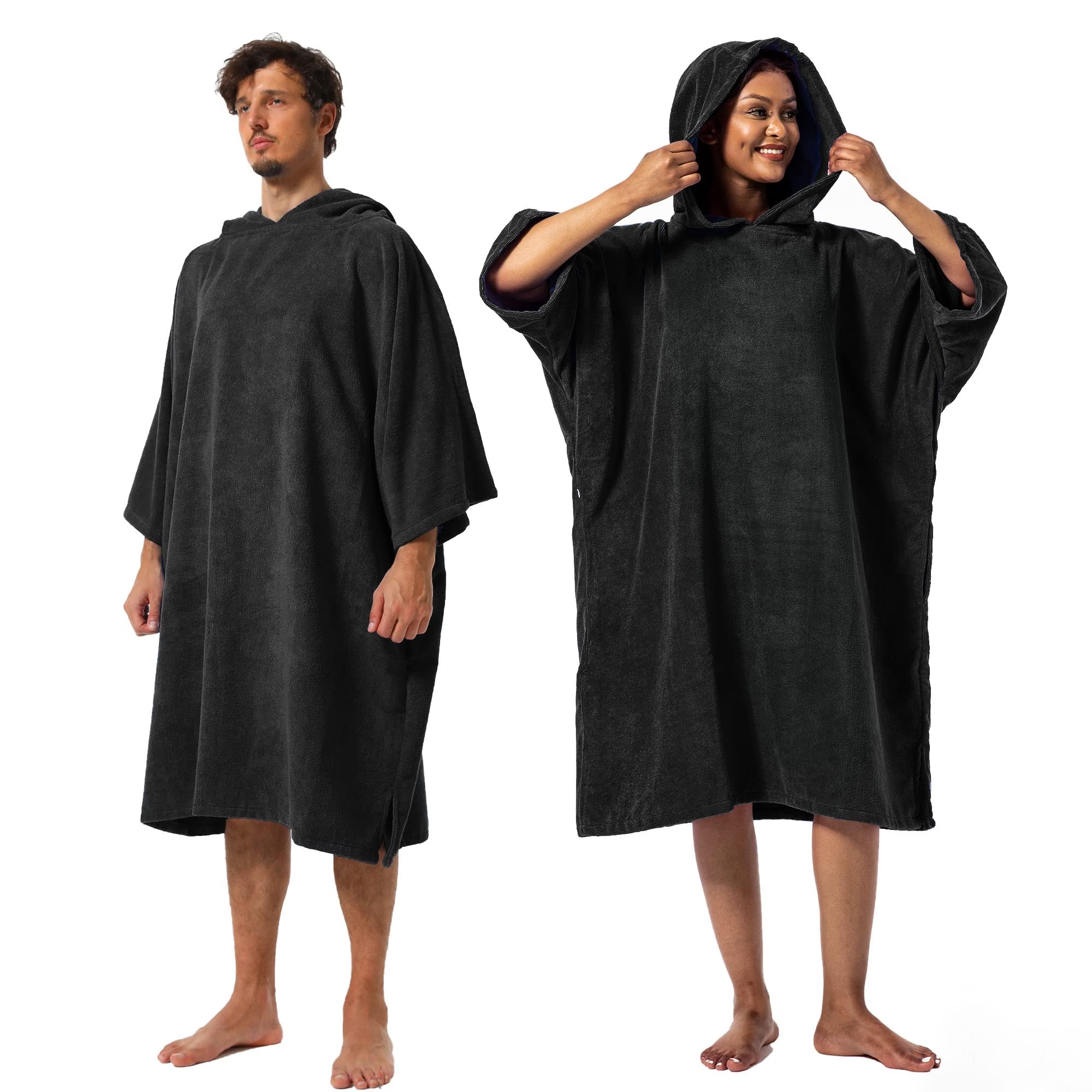
If you want a thick, fluffy towel robe that feels genuinely cosy after a cold swim, the Winthome is a reliable and affordable choice.
Pros
- Exceptionally roomy, with a large hood and a side-opening zip for easy changing
- Soft, absorbent 80/20 polyester-polyamide blend that feels plush against the skin
- Built-in zipped pocket for keys, phone, or car fob
Cons
- Heavier than microfibre alternatives at 0.85 kg, so less portable
- Several buyers report that darker colours can bleed in the first wash
- Not waterproof on the outside, so rain soaks straight through
The Winthome stands out for sheer comfort. It wraps around you like a thick bath towel, and the cavernous hood keeps your head and ears warm on breezy riverbanks. The side zip is a thoughtful touch, giving you a wide opening to step into trousers or pull on layers without the awkward shimmy you get with pull-over ponchos.
Where it falls short is absorbency compared to a dedicated towel; a few sea swimmers noted they still needed a separate towel to dry off fully before using this as a warming layer. It also arrives vacuum-packed, so give it a pre-wash (on its own, to catch any dye runoff) before your first swim outing. For the price, it is hard to beat as a winter wild swimming companion, but pack a waterproof bag if rain is forecast.
Hiturbo Changing Robe Towel Poncho
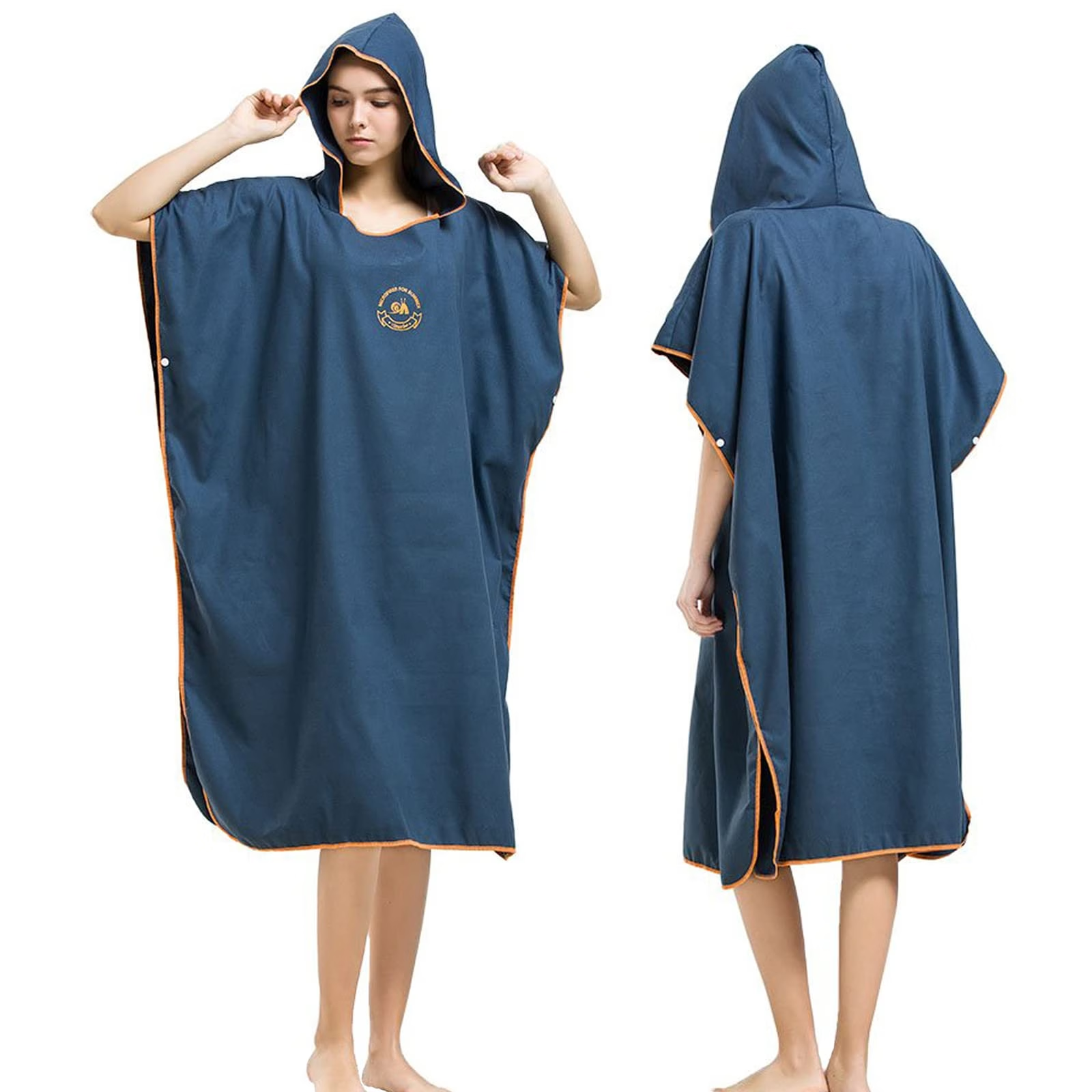
The Hiturbo is the robe to pick if packability and fast drying are your top priorities, especially for travelling swimmers and triathletes.
Pros
- Incredibly lightweight at just 0.45 kg, rolls down small enough to tuck into a day pack
- Dries remarkably quickly, often within a couple of hours in the open air
- Flexible underarm design makes changing in and out of wetsuits straightforward
Cons
- Thin microfibre fabric offers minimal warmth in cold or windy conditions
- Not a substitute for a proper towel; absorption is modest at best
- One-size-fits-all cut can feel short on taller swimmers
This poncho is purpose-built for people who value portability above all else. It weighs roughly half of the Winthome and compresses into a fraction of the space, making it ideal for outdoor adventures where bag space is tight. After a pool session or sheltered lake swim on a mild day, it does the job well.
The trade-off is warmth. On a blustery November beach, you will feel the wind cut through the thin 90/10 polyester-polyamide weave. A few reviewers also cautioned that it dries the surface of your skin but does not absorb moisture the way a proper cotton or thick microfibre towel would. Think of it more as a privacy screen that happens to wick some water, rather than a cosy cocoon. For summer sea dips and holidays, though, it is excellent value.
OHS Adults Drying Robe
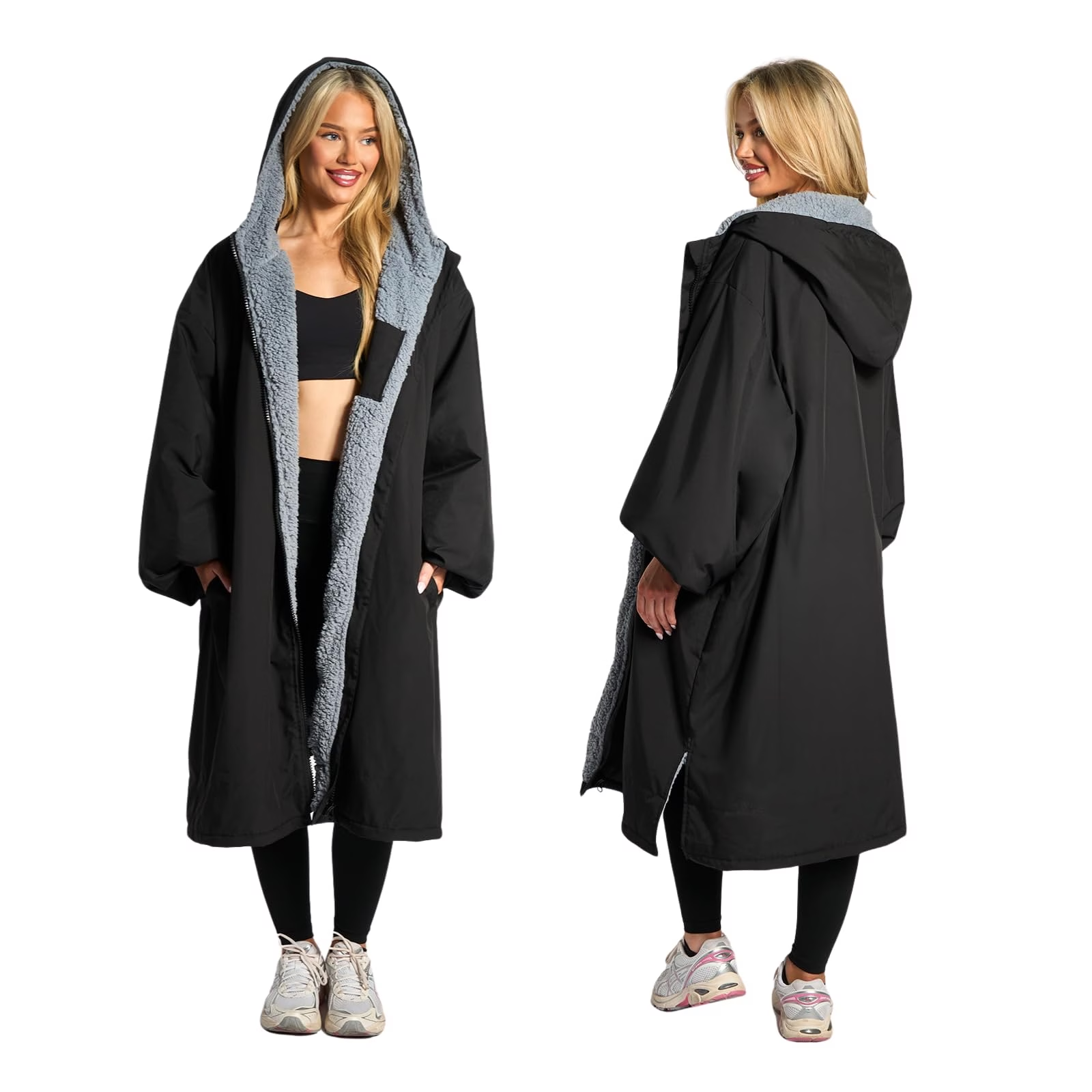
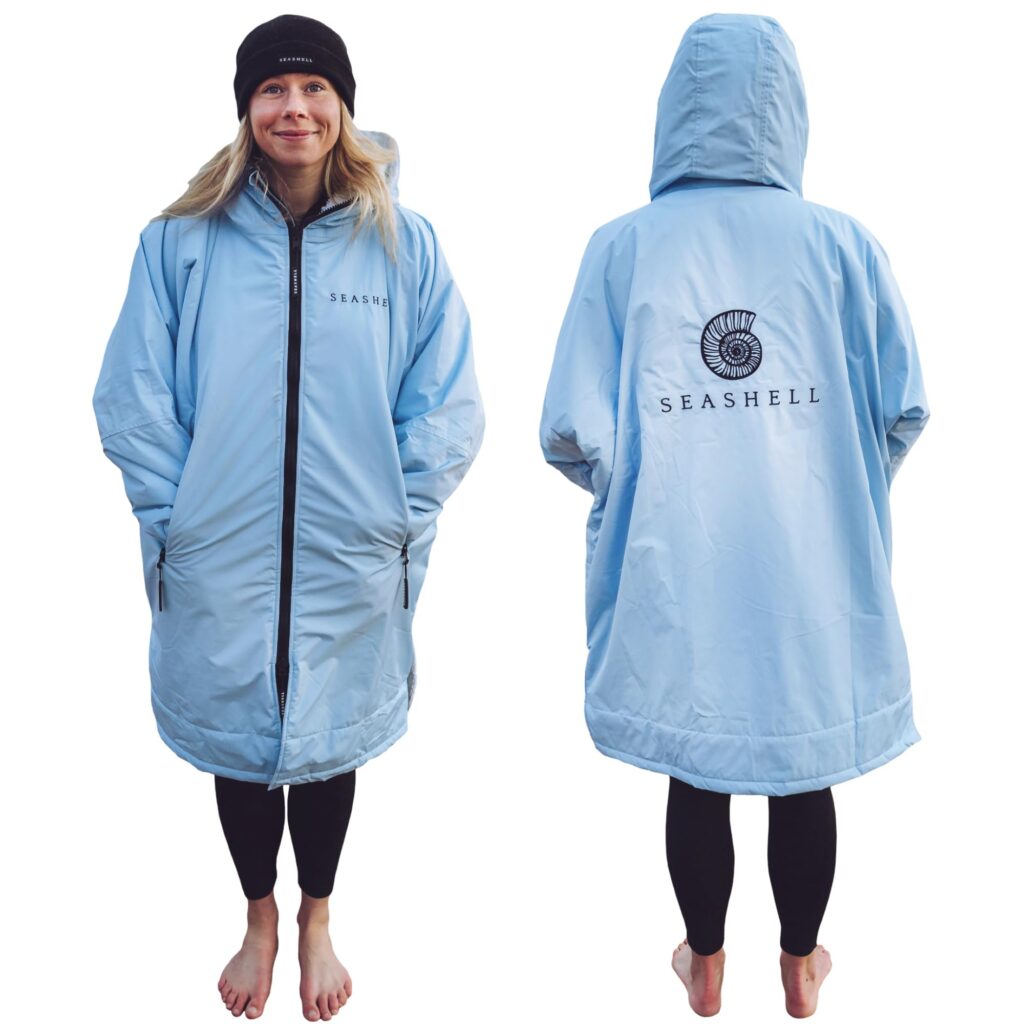
For swimmers who want genuine weather protection without spending close to £200 on a premium brand, the OHS drying robe is a brilliant all-rounder.
Pros
- Fully waterproof and windproof outer shell keeps you dry even in sustained rain
- Soft sherpa fleece lining traps warmth instantly after a cold dip
- Full-length zip, roomy hood, and deep pockets make it practical for everyday use too
Cons
- Bulkier and heavier than towel-style ponchos, not ideal for packing light
- Only two sizes (S/M and L/XL), so the fit can feel overly oversized on smaller frames
- Not absorbent; you still need a towel to dry off underneath
This jacket-style robe feels closest in design to the much pricier Dryrobe, and multiple buyers have pointed out just how impressive it is for the cost. The waterproof polyester shell shrugs off driving coastal rain, and the sherpa fleece interior is noticeably warm the moment you pull it on. One cold water swimmer described it as a “game-changer” after years of shivering under a flimsy poncho.
It doubles up nicely as a dog-walking coat, a touchline jacket for football parents, or a camping layer on chilly evenings. The zip runs smoothly and the pockets are generous enough for a phone, keys, and even a small towel. Just remember that this is an outer shell, not a drying towel, so pair it with a quick-dry microfibre towel for the best post-swim experience. The limited size range is the main drawback; if you are petty or very tall, try it on before committing.
Fit-Flip Microfibre Changing Robe
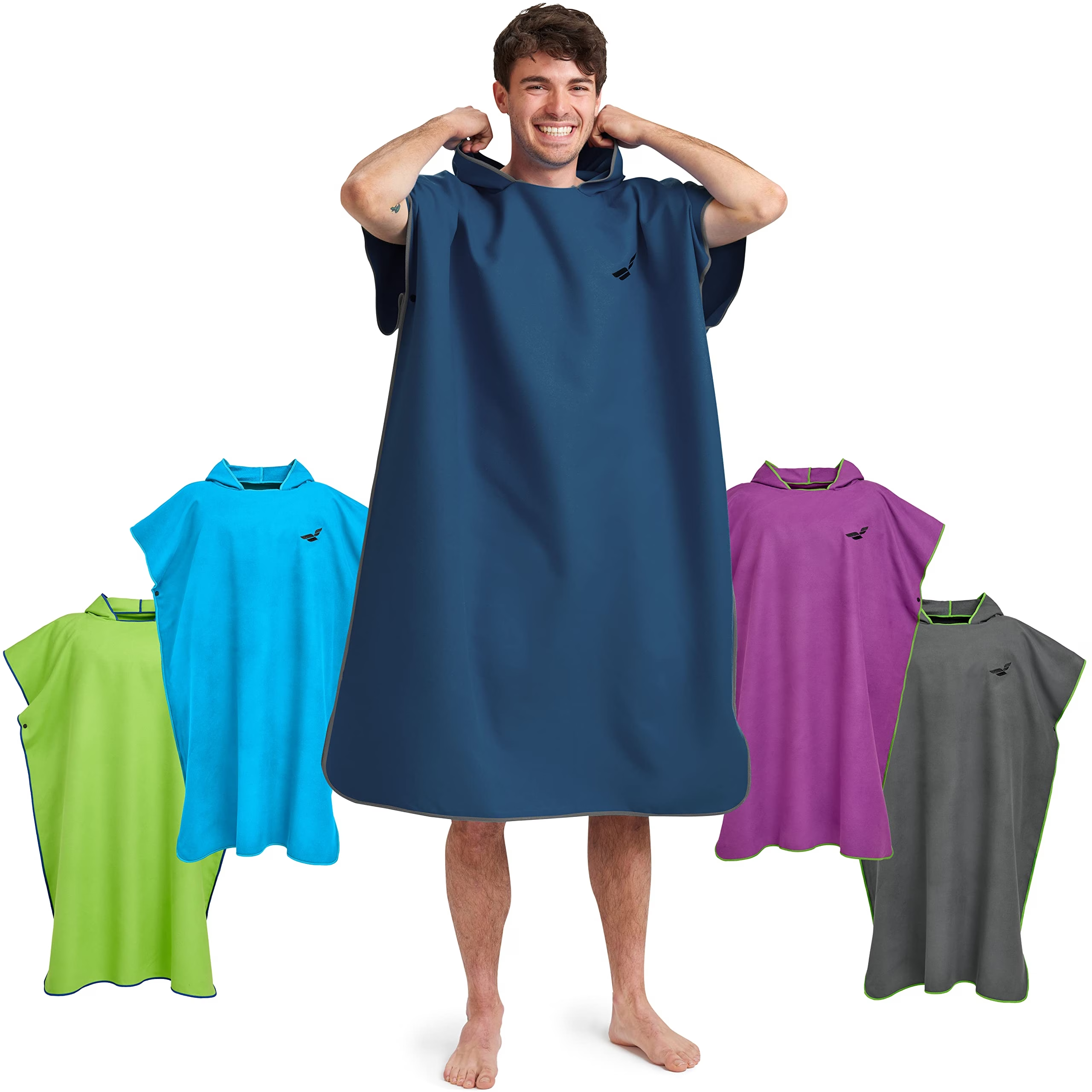
The Fit-Flip strikes the best balance between genuine absorbency, quick drying, and compact size, making it a top pick for regular swimmers who travel.
Pros
- Highly absorbent microfibre that genuinely dries your skin, not just covers it
- Weighs just 330 g and comes with a mesh carry bag; takes up 60% less space than cotton robes
- Poppers on the sleeves let you free your arms for discreet changing underneath
Cons
- Thin material means limited warmth in truly cold or windy weather
- The medium size can feel snug for anyone above about 175 cm; size up if in doubt
- Hand wash only is recommended, which can be inconvenient
The Fit-Flip impressed more than any other lightweight poncho tested. Its finely woven microfibre absorbs noticeably more moisture than the Hiturbo, and buyers confirm it dries roughly four times faster than conventional cotton. That means less time lugging a damp robe in your bag and less chance of mildew odour building up between washes.
The sleeve poppers are a small but clever feature. Undo them and you can slip your arms inside the robe’s body for complete privacy while changing, then pop them back together for a normal poncho look. It is available in two sizes (M and L) and a wide range of colour combos, so it works well as a unisex option for couples or families. Just be aware that, like all thin microfibre ponchos, it will not shield you from a gale. For exposed winter swims, pair it with a windproof jacket on top.
Buying Guide
Choosing the right swim changing robe depends on when, where, and how often you swim. Below are the main factors worth considering before you buy.
Waterproofing
| Protection Level | Best For | Typical Material |
|---|---|---|
| Fully waterproof | Year-round coastal swimming, rainy conditions | Polyester with waterproof coating (e.g., Hydrafort) |
| Water-resistant | Light drizzle, sheltered spots | Coated nylon or treated polyester |
| Non-waterproof (towel-style) | Summer swims, pool use, travel | Microfibre or terry-style polyester blend |
If you swim outdoors through autumn and winter, a fully waterproof shell is worth the extra bulk. For fair-weather or indoor pool use, a towel poncho may be all you need.
Lining Material
The lining determines how warm you feel immediately after putting the robe on. Sherpa or Borg fleece linings trap body heat quickly and feel luxurious. Microfibre linings are lighter and absorb water from your skin. Cotton terry linings are highly absorbent but slow to dry and heavy when wet.
Size and Fit
A changing robe needs to be roomy enough that you can move your arms and pull clothing on underneath without it riding up. Look for a length that reaches at least mid-calf. If a brand offers only “one size fits all,” check the shoulder-to-hem measurement against your height. Taller swimmers (above 180 cm) should choose an XL or size up wherever possible.
Weight and Packability
Towel-style ponchos typically weigh between 300 g and 500 g and compress into a small bag. Jacket-style robes with waterproof shells and fleece linings often weigh over 1 kg and take up more space. Consider how you travel to your swim spot. If you cycle or hike to the water, a compact poncho makes more sense than a heavy coat.
Extra Features to Look For
- Hood size: A deep, generous hood covers wet hair and ears against wind chill.
- Pockets: Internal and external zipped pockets keep your phone and car key safe.
- Side or front zip: A full-length zip is easier to get in and out of than a pullover design.
- Sleeve design: Poppers or open sleeves give you more freedom to change underneath.
Frequently Asked Questions
What features should I look for in a changing robe for swimming?
Prioritise a generous length (mid-calf or longer), a deep hood, and enough internal room to change comfortably. Zipped pockets keep valuables secure, and a full-length or side zip makes it much easier to pull the robe on over wet skin. If you swim in cold weather, a warm fleece or sherpa lining and a waterproof outer layer are essential.
Are waterproof changing robes better than water-resistant ones for year-round use?
Yes, for UK conditions a fully waterproof robe is the better investment if you plan to swim through autumn and winter. Water-resistant coatings can handle light showers but tend to soak through in sustained rain. A waterproof robe with taped seams will keep you dry even on exposed, wind-battered beaches.
How do I choose the right size and fit for a swim changing robe?
Always check the shoulder-to-hem measurement rather than relying on generic S/M/L labels. You need the robe to hang below your knees so you have enough coverage to change underneath. If you are between sizes, go up; extra room makes manoeuvring in and out of wetsuits and swimsuits far easier.
Which materials are warmest and quickest to dry after swimming?
Sherpa and Borg fleece linings offer the most immediate warmth because they insulate even when slightly damp. For drying speed, microfibre is unmatched, as it absorbs moisture rapidly and dries in a fraction of the time compared to cotton. A waterproof-shell robe with a fleece lining paired with a separate microfibre towel gives you the best of both worlds.
What should I consider when buying a changing robe for children?
Look for a robe with a secure, easy-to-use zip rather than a pullover style, as children can struggle to pull ponchos on and off alone. Bright or high-visibility colours help you spot them on a busy beach. Make sure the length reaches well below the knee, and avoid excessively heavy robes that could feel uncomfortable for smaller bodies.
How do I wash and care for a swim changing robe without damaging the lining?
Most robes are machine washable on a cool or 30°C cycle. Turn the robe inside out, fasten any zips, and wash dark colours separately for the first few washes to prevent dye transfer. Avoid fabric softener, which can reduce the absorbency of microfibre and clog fleece fibres. Air dry whenever possible; tumble drying on a low heat is usually fine for polyester but can damage waterproof coatings over time.