The 800m freestyle demands a precise balance between speed and endurance that many swimmers struggle to achieve. Going out too fast leads to dramatic fading in the final lengths, whilst swimming too conservatively leaves unused energy at the finish.
The most effective training sets for the 800m freestyle combine aerobic base building through longer intervals, broken 800m sets that simulate race conditions, and speed work at 100m distances to develop both sustainable pace and finishing power. Structured training that builds consistent pacing skills forms the foundation for breakthrough performances in this challenging middle-distance event.
This guide covers the essential training sets that will help you develop the fitness, technique, and race awareness needed to swim your fastest 800m freestyle. You’ll learn how to structure your training around specific interval work, tempo sets, and race-pace efforts that teach your body to maintain consistent splits across all 32 lengths of the pool.
Understanding the 800m Freestyle Race
The 800m freestyle sits between middle and long distance events, requiring 32 lengths in a short course pool or 16 lengths in a long course pool. You need both aerobic endurance and the ability to maintain speed over an extended period.
Key Demands and Structure
The 800m freestyle requires you to swim 16 lengths in a 50-metre pool or 32 lengths in a 25-metre pool. This race typically takes between 8 and 15 minutes to complete, depending on your skill level.
Your body relies primarily on aerobic energy systems during this event. You need strong cardiovascular fitness to deliver oxygen to your muscles throughout the race. Unlike sprint events, you cannot rely on anaerobic power alone.
The race structure demands consistent technique across all lengths. Small inefficiencies in your stroke multiply over the distance, wasting energy you need for the final lengths. You must maintain proper body position, breathing patterns, and stroke mechanics even as fatigue sets in.
Distance swimming in long course metres presents different challenges than short course yards. You get fewer wall pushes in a 50-metre pool, which means less rest and more continuous swimming effort.
Common Challenges for Distance Swimmers
Many distance swimmers struggle with pacing throughout the race. You might start too fast and fade in the final 200 metres, or hold back too much energy and finish without feeling tired.
Mental fatigue becomes a significant factor. You need to stay focused on technique and pace for the entire duration whilst managing discomfort. Losing concentration for even a few lengths can cost you valuable seconds.
Breathing patterns often deteriorate as you tire. You may start lifting your head too high or holding your breath, which disrupts your stroke rhythm and reduces oxygen intake. This creates a cycle where poor breathing leads to more fatigue.
Many distance swimmers also lack the speed endurance needed to maintain their target pace. Your aerobic fitness might be strong, but without specific training, you cannot sustain faster speeds over the full 800 metres.
Essential Pacing Concepts
Consistent pacing across 32 lengths forms the foundation of successful 800m racing. You should aim for even 100-metre splits rather than dramatic variations in speed.
Negative splitting means swimming the second half faster than the first. This strategy works well for distance swimmers who can control their early pace and finish strong. You conserve energy early whilst your muscles are fresh for the final push.
Even pacing maintains the same speed throughout the race. This approach suits you if you know your sustainable race pace and can hold it consistently. Most competitive swimmers use this method.
You need to work out your race pacing over 100-metre intervals during training. If your goal is to swim under 14 minutes, you must hold approximately 1 minute 45 seconds per 100 metres. Breaking the race into smaller segments makes the distance feel more manageable and helps you monitor your speed.
Core Principles for Effective 800m Freestyle Training
Training for the 800m freestyle requires balancing aerobic capacity with speed work whilst managing energy distribution across 32 lengths. Success depends on building endurance swimming foundations, incorporating strategic interval training, and implementing proper recovery to sustain consistent performance without burning out.
Aerobic Capacity and Endurance Development
Your aerobic base forms the foundation for 800m success. Without strong endurance swimming capabilities, you’ll struggle to maintain pace in the later stages of your race.
Building aerobic fitness requires consistent sets between 1200m and 1600m. These longer sets teach your body to process oxygen efficiently whilst maintaining technique under fatigue. You should focus on solid swimming at a sustainable pace rather than pushing too hard too early.
Effective aerobic sets include:
- 6 x 200m freestyle on 3:45 rest intervals
- 5 x 300m freestyle on 5:30 rest intervals
- 4 x 400m freestyle on 7:30 holding around 6:30
- 3 x 500m freestyle on 9:00 solid swimming
These sets develop the cardiovascular endurance you need for distance events. Schedule one aerobic-focused session every 2-3 training days to build your base properly.
Integrating Speed and Race Pace Work
Speed work prevents you from becoming a one-pace swimmer. Developing consistent pacing skills through structured interval training helps you maintain goal pace across the full distance.
Your speed sets should target specific race pace zones:
- 100m repeats: 8 x 100m holding under 1:35 on 2:00 rest
- 50m intervals: 16 x 50m as 3 fast (45 seconds or under on 55 seconds) then 1 easy on 1:15
- Pyramid sets: 1 x 200m on 3:30, 2 x 100m on 1:45, 4 x 50m on 50 seconds, then 200m easy
Include one speed-focused session per week. These shorter, faster intervals improve your lactate threshold and teach you to swim at race pace without accumulating excessive fatigue.
Negative Splitting and Energy Distribution
Negative splitting means swimming the second half faster than the first. This strategy prevents early burnout and ensures you have energy for a strong finish.
Practice pacing by splitting your 800m into four 200m segments. Aim to hold consistent times for the first three 200s, then increase speed on the final 200m. This approach builds mental discipline and teaches efficient energy distribution.
During training sets, track your split times carefully. If you fade significantly in later repeats, you’ve started too aggressively. Adjust your initial pace until you can maintain or slightly improve times throughout the set.
Preventing Burnout and Recovery Strategies
Recovery prevents burnout and allows your body to adapt to training stress. You can’t improve if you’re constantly exhausted or injured.
Build rest days into your weekly schedule. Two full rest days per week allow muscle repair and nervous system recovery. On training days, include proper warm-ups and cool-downs around your main sets.
Monitor these burnout warning signs:
- Declining performance despite consistent training
- Persistent fatigue or difficulty sleeping
- Loss of motivation or enjoyment
- Increased injury frequency
Working with experienced coaching helps you balance training intensity with adequate recovery. If you notice burnout symptoms, reduce training volume by 20-30% for one week before resuming your normal schedule.
Fundamental Technique for Long-Distance Freestyle Success
Mastering freestyle technique for the 800m requires a balance between body position, stroke efficiency, and breathing patterns that sustain performance across 32 lengths. These technical elements work together to reduce drag and conserve energy throughout the race.
Optimising Freestyle Technique
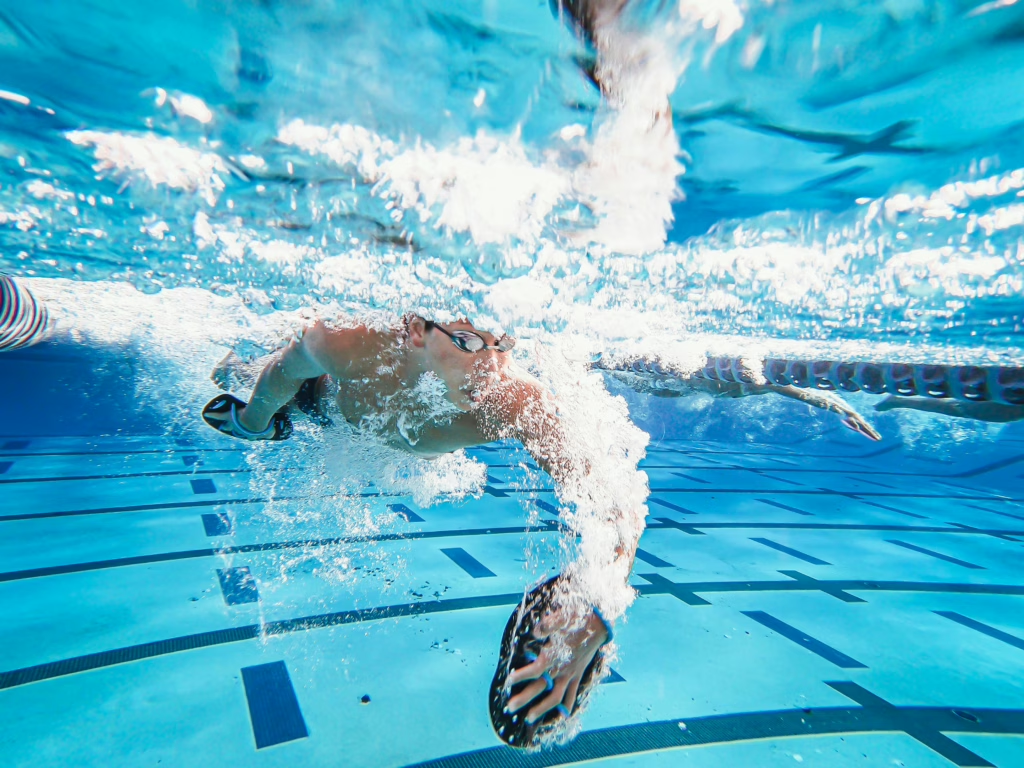
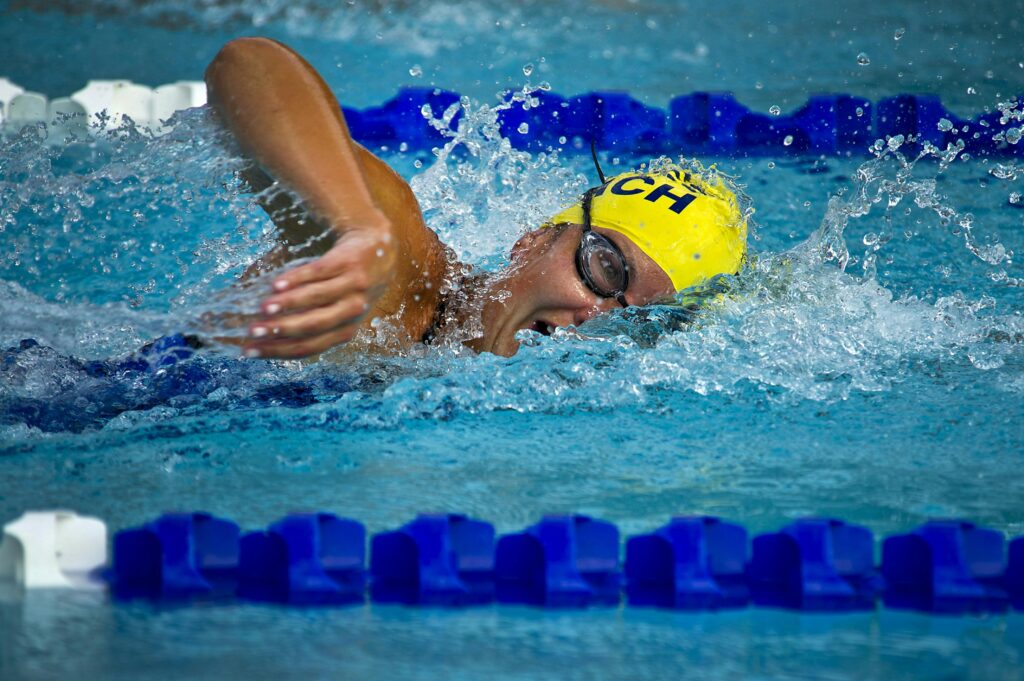
Your freestyle technique must prioritise efficiency over power in distance events. The catch phase should begin with your hand entering the water in line with your shoulder, followed by a firm grip on the water as your forearm bends to approximately 90 degrees.
Keep your elbow high during the catch and pull phases. This position creates maximum surface area to push against the water. Your hand should accelerate through the pull, moving from chest to hip in a straight line beneath your body.
Recovery happens when your arm exits the water near your hip. Your elbow should lead this motion, staying relaxed and high whilst your hand travels forward just above the water surface. A smooth recovery reduces unnecessary energy expenditure.
Focus on maintaining a consistent rhythm between both arms. Each stroke should mirror the other in timing and power application to prevent zigzagging through the water.
Improving Stroke Efficiency and Stroke Rate
Stroke efficiency measures how far you travel per stroke, whilst stroke rate counts strokes per minute. For 800m racing, you need to find the optimal balance between these two metrics.
Most elite distance swimmers maintain a stroke rate between 60-80 strokes per minute. However, your ideal rate depends on your height, arm length, and efficient stroke mechanics. Count your strokes per length during training to establish your baseline.
Key factors affecting stroke efficiency:
- Minimal hand slippage during the pull phase
- Complete extension at the front of each stroke
- Proper hand pitch throughout the underwater pull
- Controlled breathing that doesn’t disrupt body rotation
Test different stroke rates during training sets to identify which maintains your speed with the least effort. Record your times and perceived exertion at rates 5 strokes above and below your normal cadence.
Body Position and Streamlining
Your body position determines how much resistance you face whilst swimming. Maintaining a horizontal, streamlined position reduces drag and allows you to swim faster with less energy.
Keep your head in a neutral position with your eyes looking at the bottom of the pool slightly forward. Lifting your head creates a seesaw effect that drops your hips and increases drag. Your hips should sit just below the water surface.
Engage your core muscles to prevent your hips from sinking. A strong core connection keeps your body rigid from shoulders to toes, creating a stable platform for your arms and legs to work from. Your body should rotate as one unit, typically 30-45 degrees on each side.
Your legs provide balance and a small amount of propulsion through a compact flutter kick. Keep your kicks shallow, originating from your hips rather than your knees. Excessive kicking wastes energy needed for the later stages of your race.
Bilateral Breathing for Distance Events
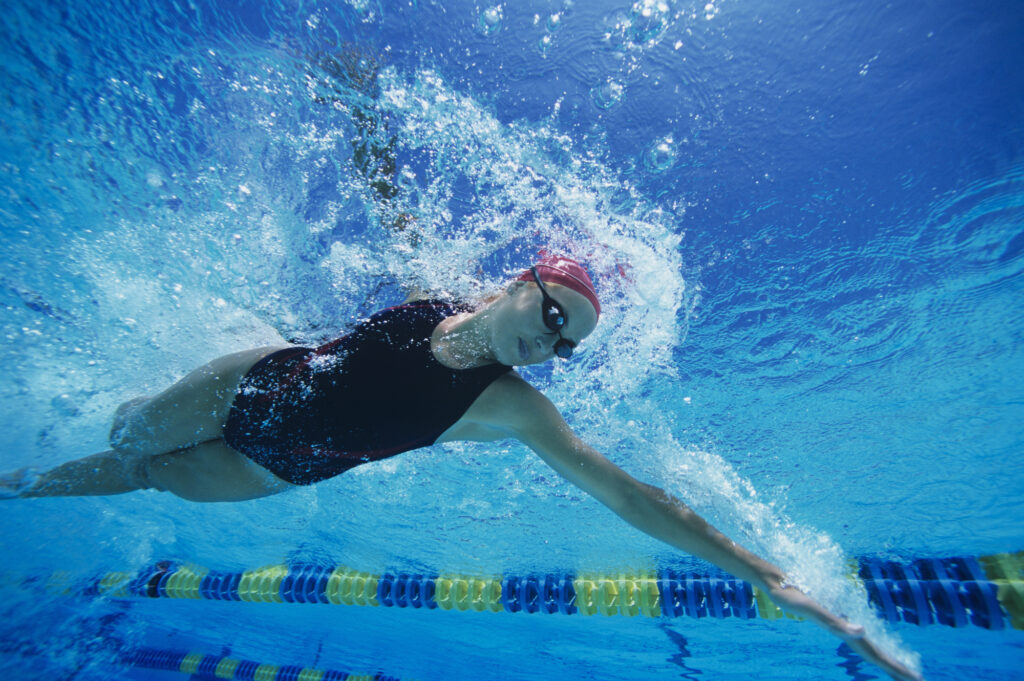
Bilateral breathing means breathing on both sides, typically every three strokes. This pattern helps you maintain balanced stroke mechanics and prevents muscular imbalances that develop from single-side breathing.
Breathe by rotating your entire body, not just your head. Your head should rotate with your shoulders, with one goggle staying in the water whilst you take a breath. Return your head to centre position before your hand enters the water.
For 800m racing, you might breathe every two strokes when you need more oxygen during faster sections. However, practising bilateral breathing during training improves your overall swimming technique and comfort in the water.
Time your breath to coincide with the natural rotation of your body. Inhale quickly through your mouth, then exhale steadily through your nose and mouth whilst your face is in the water. This rhythm should feel automatic rather than forced.
Best Training Sets for 800m Freestyle Preparation
Effective 800m freestyle training requires a balanced mix of aerobic distance work, race-pace intervals, tempo swimming, and technique refinement. These training sets build the endurance and speed needed to maintain consistent splits across 32 lengths whilst developing the fitness to execute a strong race strategy.
Aerobic Distance Sets and Pyramid Workouts
Aerobic distance sets form the foundation of your 800m training programme. These longer swim workouts develop cardiovascular fitness and teach your body to clear lactate efficiently during racing.
Essential Distance Sets:
- 4 x 400m at steady effort with 45 seconds rest
- 2000m continuous swim at moderate intensity
- 6 x 200m on 3:45 rest intervals
- 8 x 150m with descending intervals
Pyramid workouts offer variety whilst building aerobic capacity. A typical pyramid might be 100m-200m-300m-400m-300m-200m-100m with 30 seconds rest between each swim. This structure keeps training mentally engaging whilst accumulating substantial yardage.
Distance swimming training should target 70-80% of maximum heart rate. Masters swimming programmes often include 1200m to 1600m total distance per set to build the aerobic base required for sustained pace throughout the 800m event.
Race Pace and Interval Sets
Race pace training teaches you to hold target splits consistently. These interval training sessions develop both physical fitness and pacing instincts needed for successful racing.
Key Interval Sets:
| Set | Rest | Purpose |
|---|---|---|
| 8 x 100m | 2:00 | Speed endurance |
| 16 x 50m (3 fast, 1 easy) | Variable | Pace control |
| 6 x 100m | 1:45 | Race pace simulation |
| 4 x 200m | 3:30 | Middle distance work |
Your freestyle sets should progress from comfortable intervals to challenging efforts. Start with 100m repeats at race pace plus 3-5 seconds, then gradually reduce rest periods as fitness improves. Speed-focused freestyle training develops the anaerobic power needed for tactical moves and strong finishes.
Tempo and Broken 800m Sets
Tempo sets develop sustainable speed at 85-90% of race pace. These moderate-intensity efforts build the specific energy systems used during 800m racing without excessive fatigue.
Effective Tempo Workouts:
- 3 x 400m at 85% effort with 45 seconds rest
- 1 x 800m steady swim at tempo pace
- 5 x 200m building from tempo to race pace
Broken 800m sets simulate race conditions with brief recovery periods. Swim 4 x 200m with 10 seconds rest at goal race splits, or try 8 x 100m with 5 seconds rest for speed endurance focus. These sets help you understand how your body responds to sustained pace efforts whilst allowing coaches to provide immediate split feedback.
The broken 500 can also prepare you for longer efforts. Complete 5 x 100m with minimal rest to practise maintaining technique under fatigue.
Integrating IM and Technique Sets
Individual medley training improves overall swimming fitness and prevents overuse injuries from excessive freestyle training. IM workouts engage different muscle groups whilst maintaining cardiovascular conditioning.
Beneficial IM Sets:
- 4 x 100m IM with 30 seconds rest
- 200m IM followed by 200m freestyle (repeat 3 times)
- 8 x 50m (25m backstroke, 25m freestyle)
Your IM set should complement rather than replace freestyle-specific work. Including one IM workout per week provides active recovery whilst building balanced strength across all four strokes.
Technique-focused freestyle sets maintain efficiency throughout high-volume training blocks. Drill 6 x 50m focusing on catch mechanics, body position, or breathing patterns with 20 seconds rest. Long-distance swimming demands consistent technique, so regular drill work prevents form breakdown during the demanding 800m race distance.
Monitoring and Adjusting Training Progress
Successful 800m freestyle training requires careful tracking of performance metrics and regular analysis of your swimming data. Recording splits, stroke efficiency, and physiological responses helps you identify improvements and adjust your training plan when progress stalls.
Tracking Splits, Stroke Count, and Tempo
Your 100m split times provide the clearest measure of pacing consistency throughout training sets. Record every split during race-pace efforts to identify patterns in your performance.
Track these splits for each workout:
- First 400m average pace
- Middle 200m pace consistency
- Final 200m fade or negative split
- Comparison to target race splits
Stroke count reveals efficiency changes as fatigue accumulates. Count your strokes per 25m during the first, middle, and final portions of your 800m training sets. Your stroke count should remain within 2-3 strokes of your baseline throughout the set.
A tempo trainer helps you maintain consistent stroke rate during longer efforts. Set it to beep at your target strokes per minute (typically 28-32 for 800m freestyle). If you cannot match the tempo trainer’s pace during the final 200m, you may be swimming too fast early in the set.
Utilising Training Aids and Technology
Heart rate monitors provide objective data about your cardiovascular response to training. Your heart rate should stay between 70-80% of maximum during aerobic sets and reach 85-95% during race-pace efforts.
Essential training tools include:
- Pace clock: Monitor rest intervals and split times
- Waterproof watch: Track continuous swim times and lap splits
- Tempo trainer: Maintain consistent stroke rate
- Heart rate monitor: Verify training intensity zones
Modern swim watches record distance, pace, and stroke rate automatically. Review this data after each session to spot trends in your performance. Look for improvements in average pace at the same heart rate or consistent splits over longer distances.
Analysing Data for Continuous Improvement
Compare your weekly training data to identify progress or plateaus. Calculate your average pace for standard sets like 4x200m at race pace and track whether you maintain or improve these times.
Create a simple training log that records:
| Week | 4x200m Average | Stroke Count | Heart Rate | Recovery Time |
|---|---|---|---|---|
| 1 | 2:35 | 36 | 165 bpm | 45 sec |
| 2 | 2:33 | 35 | 163 bpm | 40 sec |
If your splits slow by more than 3-4 seconds over three consecutive weeks, reduce training volume by 10-15%. If splits improve consistently but feel too easy, increase intensity by swimming at race pace more frequently.
Review stroke count alongside pace data. Improved efficiency means swimming faster with fewer strokes per length. If your stroke count increases whilst pace remains constant, focus on technique work rather than additional volume.
Additional Considerations for Optimal Performance
Training sets alone won’t guarantee your best 800m freestyle performance. Proper nutrition timing, mental preparation strategies, and adjustments based on your swimming background all play critical roles in race day success.
Nutrition, Hydration, and Recovery
You need to fuel your body properly before and after demanding 800m training sessions. Consume a meal containing carbohydrates and moderate protein 2-3 hours before training to ensure adequate energy stores. During longer sessions exceeding 90 minutes, consider a sports drink to maintain blood sugar levels.
Hydration directly impacts your performance in the pool. Drink 500ml of water 2 hours before training and continue sipping throughout your session. You lose fluids even whilst swimming, so don’t wait until you feel thirsty.
Recovery nutrition is equally important. Within 30 minutes of finishing your workout, eat a snack containing both carbohydrates and protein in a 3:1 ratio. This timing helps replenish glycogen stores and supports muscle repair.
Sleep requirements increase when you’re training intensively for the 800m. Aim for 8-9 hours per night to allow your body to adapt to the training stress. Active recovery sessions of easy 1000-1500m swims help flush out metabolic waste products between harder workouts.
Mental Strategies and Race Preparation
Your mental approach to the 800m determines how well you execute your race plan under pressure. Visualise swimming each 100m at your target pace during the week before competition. Picture yourself maintaining technique when fatigue sets in during the final 200m.
Break the race into manageable segments rather than thinking about 32 lengths. Focus on hitting your splits for each 200m interval, just as you practised in training sets.
Develop a pre-race routine you follow consistently. This might include specific warm-up distances, stretching sequences, or breathing exercises. Familiarity with your routine reduces anxiety and helps you feel prepared.
Race day pacing checklist:
- First 200m: controlled effort at goal pace
- Middle 400m: maintain rhythm and stroke count
- Final 200m: gradual increase in effort whilst preserving technique
Adapting Sets for Masters and 1500m Swimmers
Masters swimming competitors often train with less weekly volume than younger athletes. If you’re training 3-4 times per week rather than 6-7 sessions, prioritise quality over quantity in your 800m preparation.
Reduce the number of repeats in each set whilst maintaining the prescribed intensities. Instead of 8 × 100m at race pace, complete 4-6 repeats with full focus on hitting your target times.
For 1500m freestyle specialists, your 800m race pacing serves as crucial speed work. The sets designed for 800m training help you develop the faster turnover needed for middle sections of the 1500m. Include specific 800m pace work once per week alongside your longer aerobic sets.
Older masters swimmers should extend rest intervals between repeats to allow for complete recovery. If a set calls for 30 seconds rest, take 45-60 seconds instead. This adjustment lets you maintain quality and reduces injury risk whilst still building the necessary fitness for 800m racing.
Coaching yourself requires honest assessment of your current fitness level. Record your times for benchmark sets every 3-4 weeks to track progress and adjust training paces accordingly.
Frequently Asked Questions
Training for the 800m freestyle raises specific questions about endurance development, workout structure, nutrition timing, technique refinement, training balance, and mental readiness that directly impact race performance.
What are the recommended training strategies for enhancing endurance in the 800m freestyle?
You need to build your aerobic base through longer training sets ranging from 1200m to 1600m total distance. These extended workouts develop your cardiovascular system’s ability to deliver oxygen efficiently to your working muscles throughout the race.
Effective endurance sets include 6 x 200m freestyle on 3:45 rest intervals or 4 x 400m freestyle at steady aerobic pace. You should maintain 70-80% of your maximum heart rate during these sessions.
Your training must also incorporate tempo workouts at 85-90% of race pace. Swimming 3 x 400m at 85% effort with 45 seconds rest builds the aerobic power needed for consistent pacing across all 32 lengths.
How does interval training impact performance in long-distance swimming events like the 800m freestyle?
Interval training teaches you to maintain consistent splits whilst building the speed endurance required for the 800m distance. Structured intervals develop your ability to repeat target pace efforts without complete recovery between repetitions.
Key interval sets include 8 x 100m holding your goal pace plus 3-5 seconds on 2:00 rest. You can also swim 16 x 50m freestyle with 3 fast lengths at 45 seconds followed by 1 easy length on longer rest.
The rest periods should allow partial recovery but keep you challenged. You’ll develop better race awareness and physiological adaptations through progressive interval work where you gradually increase pace through the set.
What role does nutrition play in preparing for an 800m freestyle competition?
Your pre-race nutrition should focus on maintaining glycogen stores without causing digestive discomfort during the swim. Eat a meal containing 2-3 grams of carbohydrates per kilogram of body weight 3-4 hours before racing.
You need adequate carbohydrate intake during training to support the volume required for 800m preparation. Consume 30-60 grams of carbohydrates per hour during extended training sessions lasting longer than 90 minutes.
Hydration impacts your performance significantly in middle-distance events. Drink 5-7 millilitres of water per kilogram of body weight at least 4 hours before competition and monitor your urine colour to ensure proper hydration status.
Can you suggest drills that improve technique specifically for the 800m freestyle swim?
Single-arm freestyle drills help you develop a stronger catch phase and high elbow position. Swim 6 x 50m with 25m right arm only, 25m left arm only, focusing on your hand entry and pull pattern.
Finger drag drills improve your recovery phase efficiency. Keep your fingertips dragging along the water surface during the recovery to ensure a relaxed, energy-conserving arm movement essential for distance swimming.
You should practise breathing pattern drills to develop bilateral breathing every three strokes. Swim 8 x 100m alternating between breathing to your right side one length and left side the next length to build balanced technique.
Kick-focused sets with a board for 4 x 100m maintain your body position without relying on excessive leg effort. Keep your kick amplitude small at 12-15cm to conserve energy over the full 800m distance.
What is the optimal balance between speed work and distance training for the 800m freestyle?
Your training programme should dedicate approximately 70% of your volume to aerobic endurance work and 30% to speed and lactate threshold training. This ratio develops both the aerobic base and anaerobic power needed for tactical racing.
You need two to three aerobic sessions per week focusing on longer sets at moderate intensity. Include one to two speed sessions featuring 100m repeats at race pace or faster to maintain your top-end speed.
Broken 800m sets provide the ideal middle ground between pure endurance and speed work. Swim 4 x 200m with 10 seconds rest at your goal race pace to simulate competition conditions whilst allowing brief recovery.
How important is mental preparation in training for an 800m freestyle race?
Mental preparation directly influences your ability to execute your pacing strategy under race pressure. You must develop confidence in your goal splits through repeated practice during training sessions.
Visualisation techniques help you rehearse your race plan before competition. Spend 10-15 minutes before bed imagining yourself swimming each 100m at your target pace and maintaining strong technique when fatigue sets in.
You need to practise race-specific scenarios during training to build mental resilience. Swim time trials where you must hold your goal pace without checking the clock every length to develop instinctive pacing awareness.