
Swimming in open water in Britain is one of the simplest joys going, and it is also one of the easiest activities to get wrong. Cold water, moving rivers, hidden drop-offs and tides can turn a lovely dip into a genuine emergency in under a minute. The good news is that almost every serious incident traces back to a handful of avoidable mistakes.
If you remember only three things, make them these: never swim alone, always know exactly how you will get out before you get in, and enter cold water slowly rather than jumping. Everything else in this guide, from tow floats to tide tables, builds on those three habits.
Whether you call it wild swimming, outdoor swimming or open water swimming, the skills are the same. Below you will find what to check at the water’s edge, how to read water quality, how to handle cold water safely, the kit that actually earns its place in your bag, and a few UK spots worth researching before you visit. Pull on a robe, make a flask of tea, and take your first dip with a plan rather than a hope.
What To Check Before Entering Natural Water
Five minutes of looking before you touch the water prevents most problems. You are checking three things: how you get out, how the water is moving, and whether you are allowed to be there.
Choose A Site With A Safe Entry And Exit
Walk the bank first. Gently shelving gravel beaches, stone steps and low grassy banks all make good exits, while steep mud, slippery weirs and undercut river edges do not.
Never jump or dive into water you have not waded or checked for depth and obstructions. Rocks, shopping trolleys and submerged branches sit in some of the prettiest pools in the country.
Pick your exit point before you get in, then swim upstream or upwind first so the tired half of your swim is the easy half.
Read River Flow, Waves And Changing Conditions
Throw a stick in and watch it. If it moves faster than you can comfortably walk, the river is too fast to swim against.
Avoid weir pools, sluices and anything with white water. Weirs create recirculating currents that hold swimmers under and they look harmless from the bank.
At the coast, watch waves for a few sets and look for rip currents: narrow channels of choppy, discoloured water flowing away from the shore. Lakes and lochs get rough quickly in wind, especially at exposed ends.
Check Tides, Weather And Daylight
For sea swimming, check the tide times and swim on a rising or high tide where possible. Outgoing tides in estuaries can drag strongly, and a beach that looks calm at noon can be a very different place three hours later.
Check wind direction, air temperature and sunset time. Cold air and wind make getting changed afterwards far harder than the swim itself.
Confirm Access, Local Rules And Swimming Locations
Not every river, quarry, pond or reservoir is open to swimmers. Flooded quarries in particular are notorious for freezing deep layers and sheer walls.
Footpaths, fords, footbridges and open-access land bordering rivers and lakes are the traditional starting points, as the long-running wild swimming community guide for beginners explains. Local swim groups, the Outdoor Swimming Society and any nearby outdoor swimmer you meet will tell you which spots and waterfalls are genuinely used.
Water Quality And Environmental Hazards
Water quality changes day to day, mostly with rainfall. Learning to read a site, rather than trusting last week’s report, keeps you well.
Use Official Information And Recent Local Reports
Designated bathing waters in England are sampled and rated, and the Environment Agency publishes results. Bathing water standards have improved slightly year on year, though many popular river spots are not monitored at all.
Free tools such as an interactive UK wild swimming map with water-quality ratings help you see which sites have official data. Local Facebook groups often report sewage discharges faster than anything else.
Avoid Heavy Rain, Storm Overflows And Suspect Water
The simple rule: wait 48 hours after heavy rain before swimming in rivers or near outfalls. Rain triggers storm overflows and washes farm run-off into watercourses.
As reporting on how safe wild swimming really is makes clear, illness risk peaks during and just after downpours. Skip water that smells bad, looks milky or grey, or has scum and debris rafts.
Cover cuts with waterproof plasters, keep your mouth shut, and wash your hands before eating.
Recognise Blue-Green Algae And Other Visible Warning Signs
Blue-green algae blooms look like spilled paint, pea soup or green scum along the shoreline, usually in warm, still weather. They can be toxic to people and are often fatal to dogs.
If you see a bloom, warning signs, dead fish or thick reedy shallows, walk away and find another spot.
Respect Wildlife And Leave No Trace
Give nesting swans a wide berth, especially in spring, and never swim between an adult and its cygnets. Enter quietly, avoid trampling banks, and stay clear of anglers’ lines.
Take every scrap of rubbish home. Rinse kit at home rather than in the water to reduce the spread of invasive species.
Cold Water: Acclimatisation And Emergency Responses
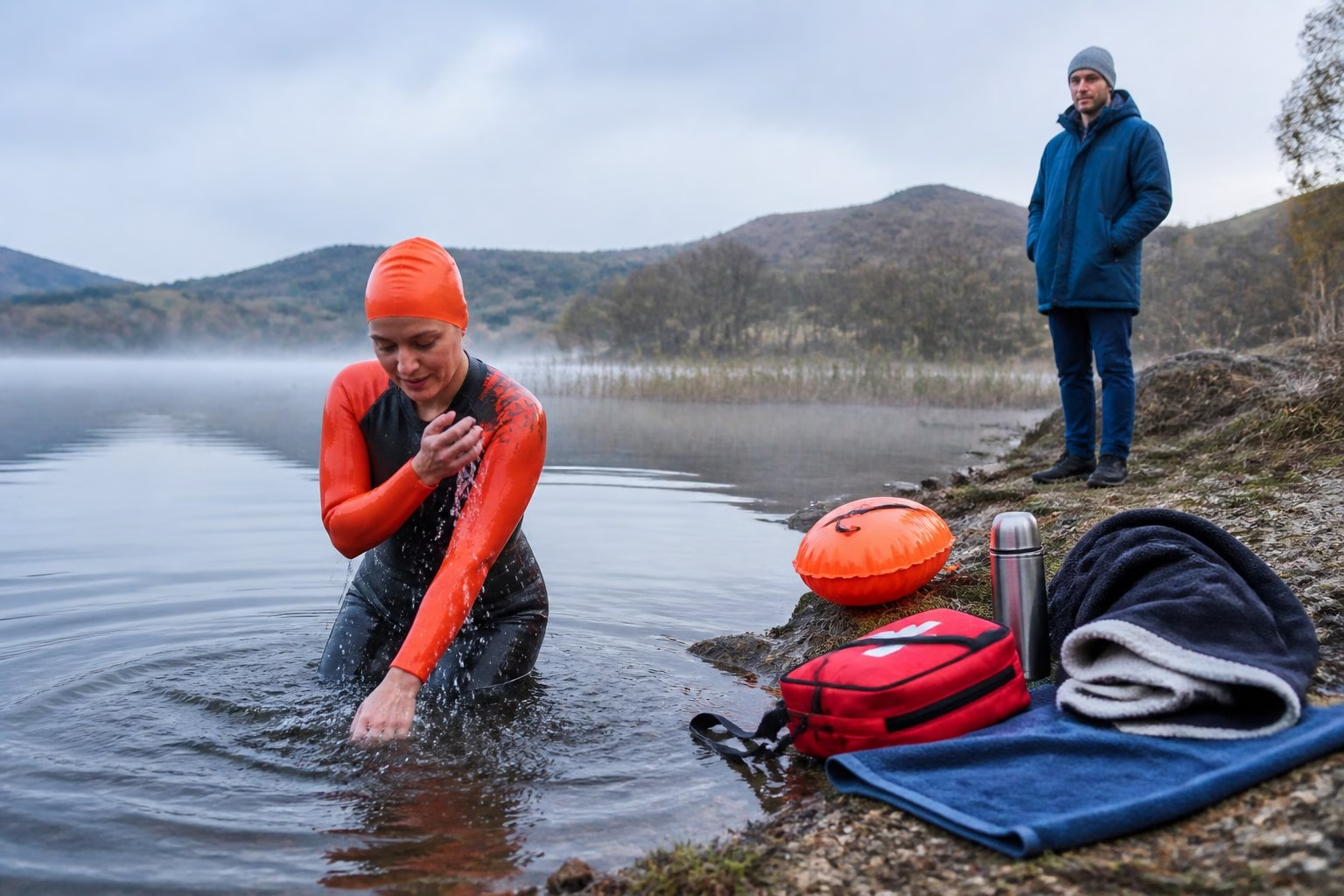
UK water sits between roughly 4°C and 18°C for most of the year, so cold is the main hazard rather than distance. Handled properly, cold water swimming is enjoyable and repeatable; rushed, it is dangerous.
Enter Gradually To Manage Cold-Water Shock
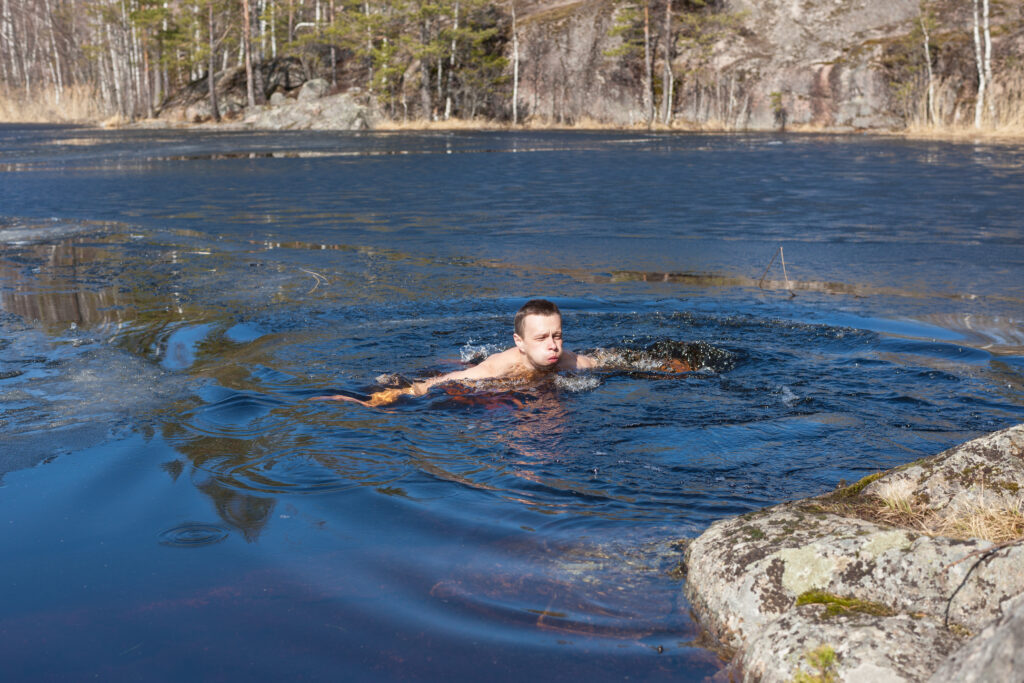
Walk in slowly. Splash your neck and face, breathe out long and slow, and wait until your breathing settles before you put your shoulders under.
Cold-water shock causes an involuntary gasp and rapid breathing, which is exactly what you do not want with your face in the water. Give it 60 to 90 seconds of calm standing and it passes.
Never jump or dive in cold water, no matter how good it looks in videos.
Build Tolerance Over Weeks Rather Than Forcing It
Start with short dips, two or three a week, and let your body adapt. Regular swimmers see a reduced shock response, and researchers at the University of Portsmouth note that your body genuinely habituates to cold with repeat exposure, even though you can still be incapacitated quickly.
A rough rule many UK swimmers use is one minute per degree, and less if you are new. Cold water also brings the reported health benefits of wild swimming, from vasodilation in the extremities to a claimed immune system lift, plus a real mindfulness or meditation-like calm that keeps people coming back.
Know The Signs Of Hypothermia And When To Get Out
Get out at the first sign of clumsy hands, slurred words, a swimming stroke falling apart, or the “claw” grip. Shivering that starts in the water means you stayed too long.
Confusion and feeling suddenly warm or sleepy are late signs. After-drop means you keep cooling for 20 to 30 minutes after exiting, so plan for it.
Float, Signal And Warm Up Safely
If you get into trouble, lean back and float: your natural buoyancy holds you up while your breathing settles. Raise one arm and shout for help once you are calm.
Warm up with dry layers, a hat, warm sweet drinks and gentle movement. Avoid hot showers, hot tubs and alcohol straight after a swim.
Essential Kit For Visibility, Warmth And Recovery
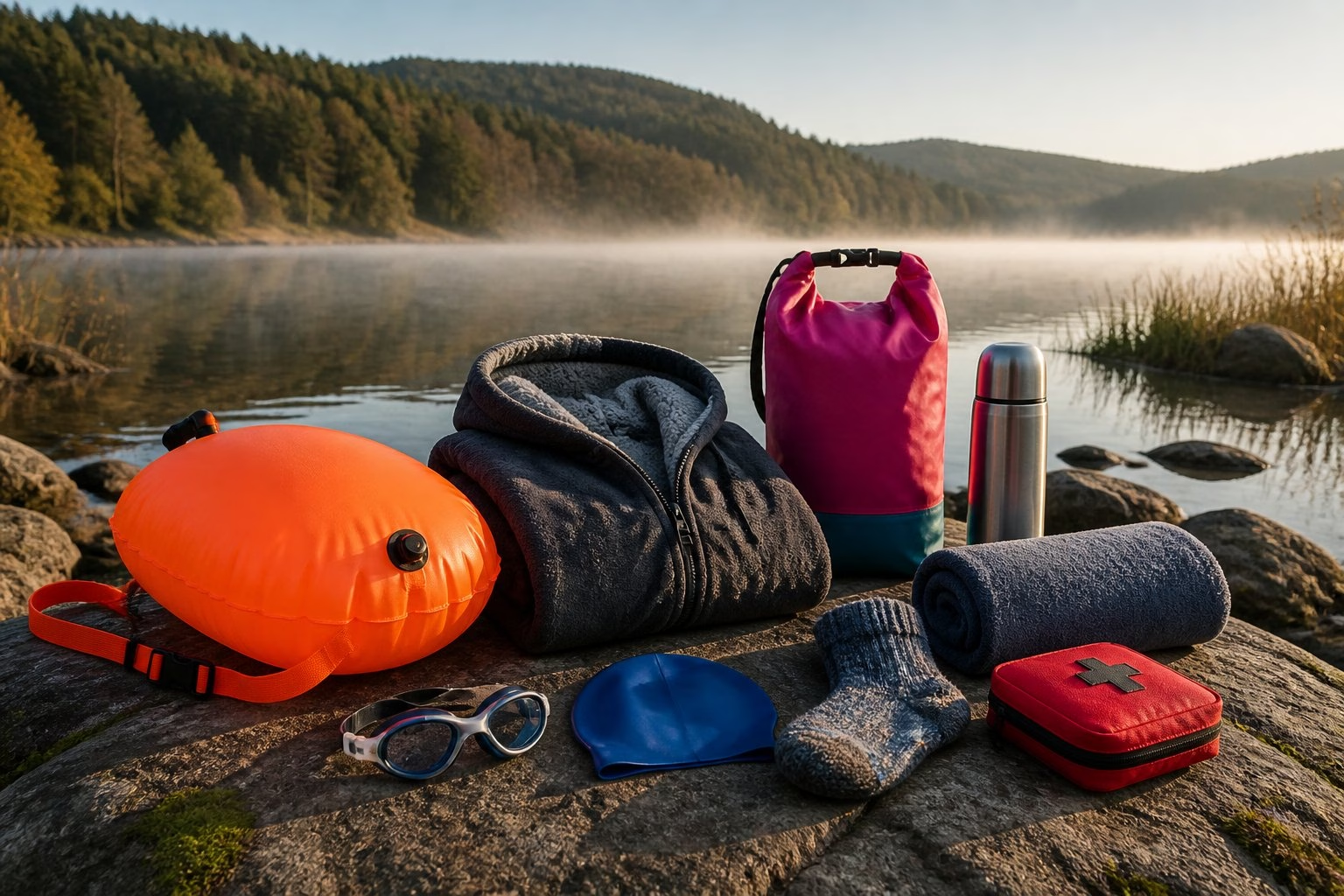
You can swim wild with almost nothing, but a small kit list makes you visible to boats, keeps your hands and feet working, and gets you warm quickly afterwards.
Tow Floats And Bright Swim Hats
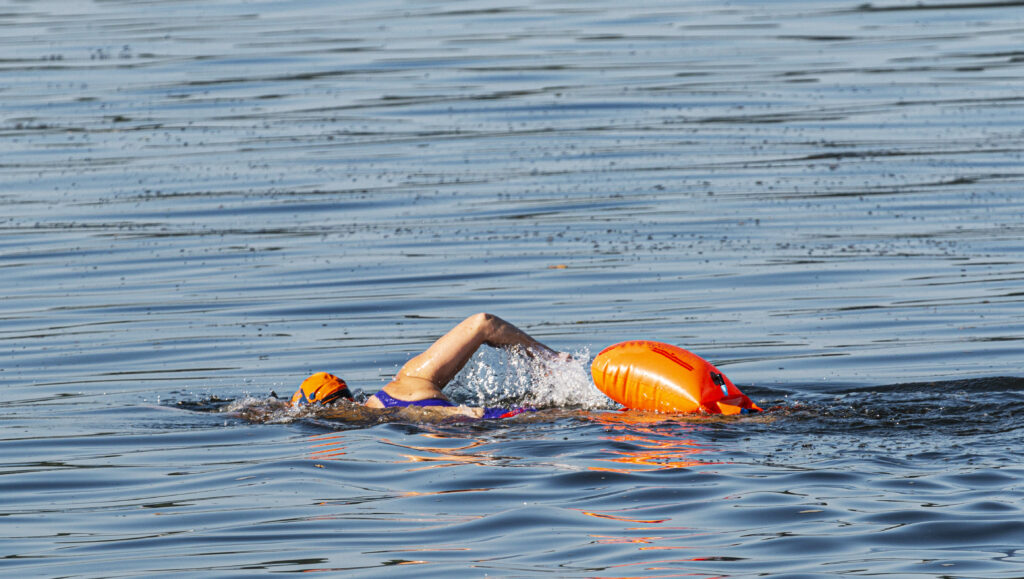
A tow float is the single best value item you can buy. It sits behind you on a waist belt, adds nothing to your effort, and makes you visible from a long way off, as most open water swimming kit guides point out.
Dry-bag versions carry your keys and phone. Pair one with a bright orange, pink or yellow swim hat, which also keeps a surprising amount of heat in.
Wetsuits And Neoprene Socks
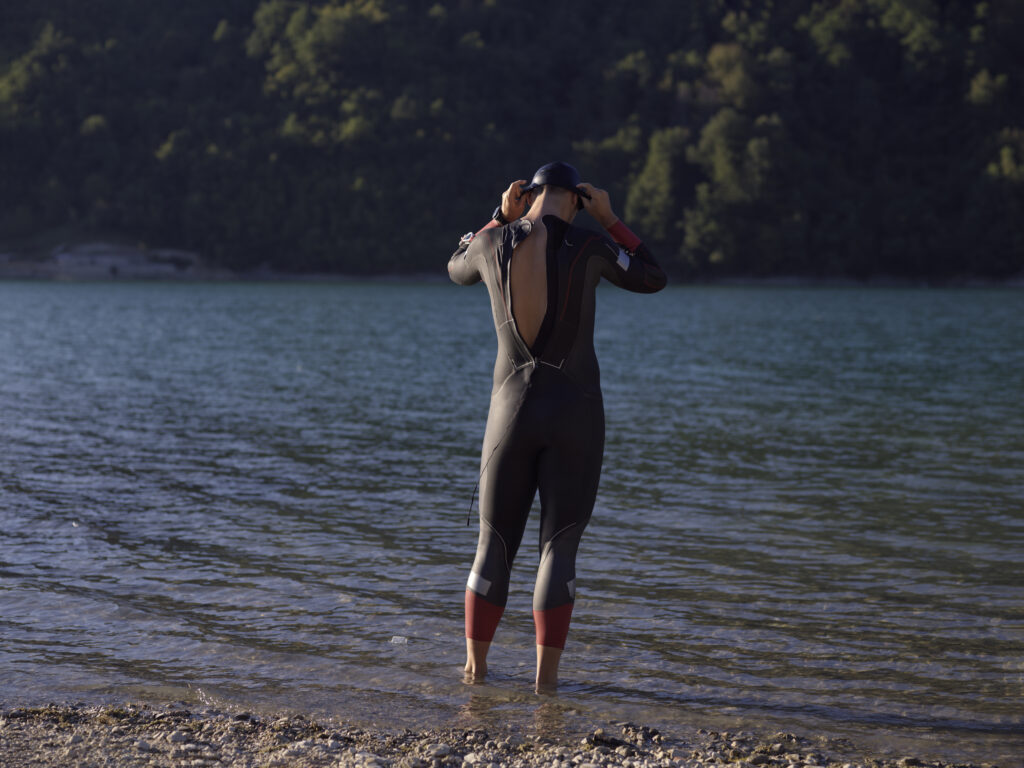
A wetsuit adds warmth, buoyancy and confidence, which is exactly what a new outdoor swimmer needs. Open water suits have thinner, flexible shoulders, so avoid stiff surf suits if you want to swim front crawl.
Neoprene socks or old trainers protect your feet from stones, glass and cold shingle. Feet lose usable feeling fast in UK winter water.
Gloves And Earplugs
Neoprene gloves keep your fingers working below about 10°C, which matters when you need to unzip a wetsuit with numb hands.
Earplugs reduce cold water in the ear canal, help prevent surfer’s ear over years of swimming, and cut down on dizziness. A neoprene cap or hood is worth it in winter.
Changing Robes And A Reliable Warm-Up Kit
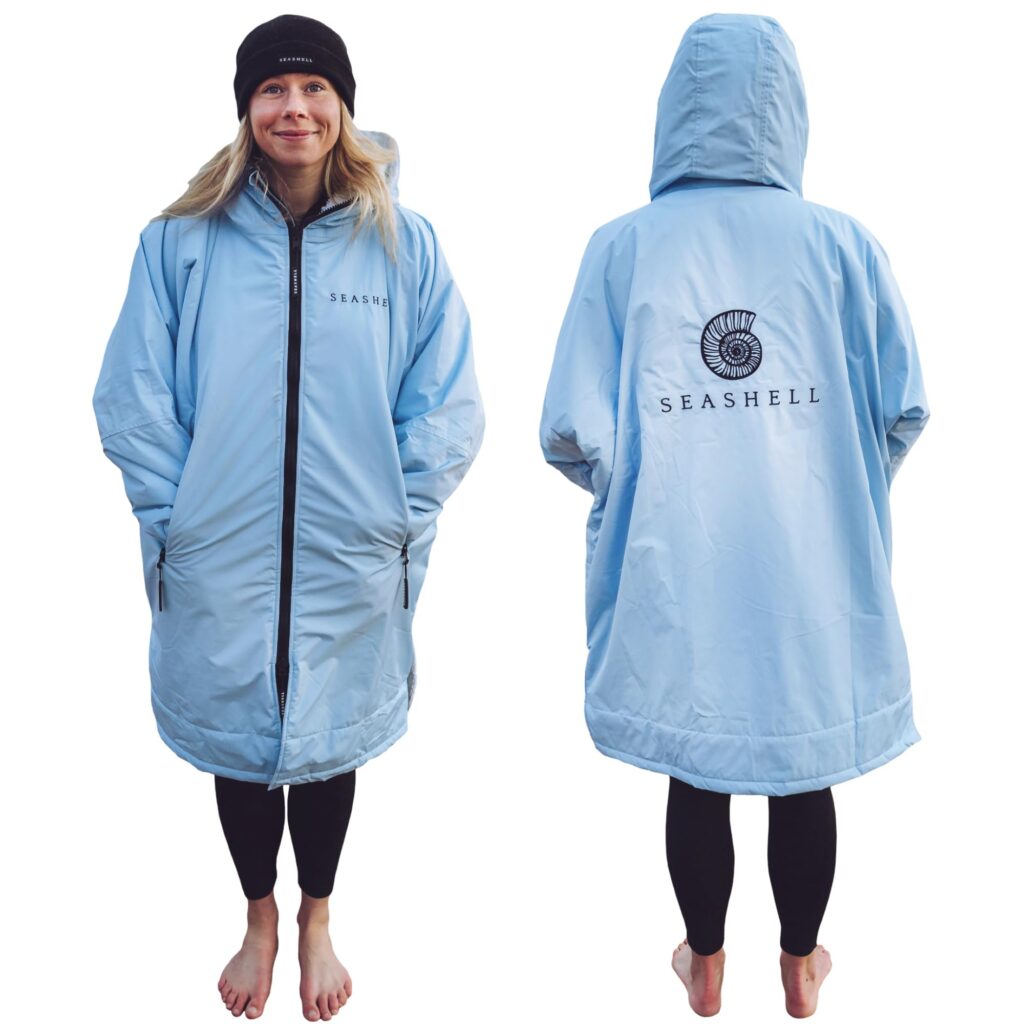
A hooded changing robe is a game changer on a windy beach car park. Pack a woolly hat, thick socks, loose warm layers, gloves and a flask.
Useful Extras For Safe Navigation And Communication
A whistle, a charged phone in a dry bag, a head torch in winter, tinted and clear goggles, and a swim watch to track time and temperature all pull their weight. Gear reviews on Swimmers World cover swim watches, robes and fins if you want help choosing.
A Safer First Wild Swim
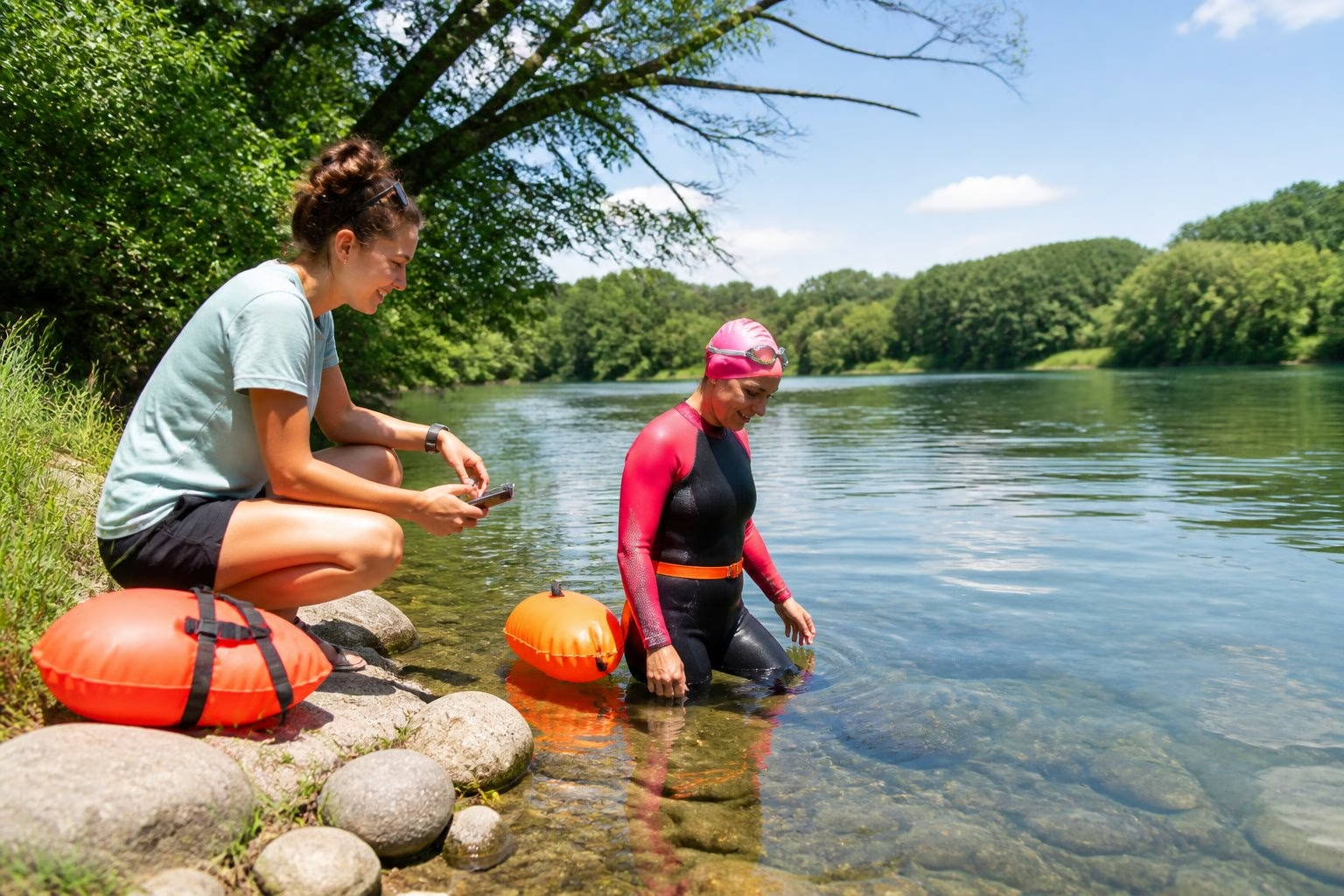
Your first few outdoor swims should feel almost too easy. Short, shallow, close to shore, with someone watching from the bank.
Swim With Others And Set A Conservative Plan
Never swim alone. Go with a friend, a local group or a lifeguarded venue, and agree a signal for “I’m getting out” before you start.
Set a plan: five minutes, stay within your depth, one lap of a small bay. Get out while you still feel good rather than testing your limit.
Match Distance And Route To Your Ability
Open water flatters no one. A comfortable 1,000 metres in a warm pool might become 200 hard metres in a choppy loch with no lane rope to grab.
Swim parallel to the shore rather than across a lake, and keep water shallow enough to stand in for the first few sessions. Sighting every few strokes stops you drifting.
Tell Someone Your Plan And Keep An Exit Option
Message someone your location, your entry point and your expected finish time, then confirm when you are out. Leave a note on the dashboard if you are somewhere remote.
Always keep a second exit in mind in case wind, current or cramp pushes you off course. Know where the nearest road, phone signal and car park are.
When To Postpone Or Choose A Supervised Venue
Postpone if it is flooding, thundering, foggy, dark, or if the water has changed colour after rain. Postpone too if you are unwell, hungover or exhausted.
There is no shame in a supervised lake with lifeguards, marked buoys and hot showers. Many long-term swimmers still use one all winter.
UK Inspiration: Locations To Research Carefully
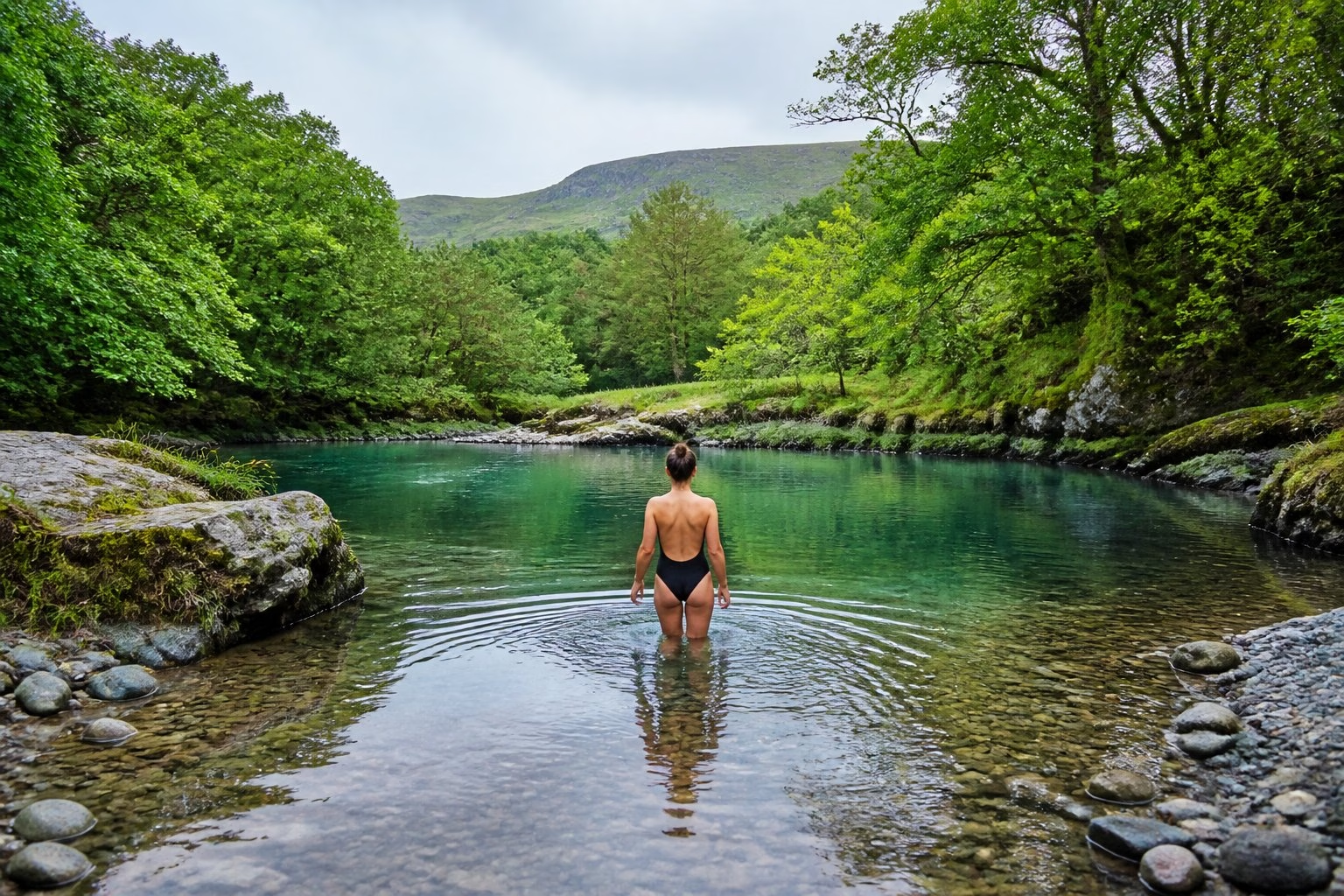
Britain is spoiled for outdoor swimming. Treat the spots below as starting points for research, not endorsements, and check access, conditions and water quality on the day.
Scotland
Loch Morlich in the Cairngorms offers a sandy shore, gentle shelving and mountain views, which makes it a kind first loch. On Skye, the Fairy Pools are stunning and very cold, with slippery rock and fast flow after rain.
The Lake District And Northern Waterfalls
The Lake District suits lake-edge dips, though open crossings need boat cover and experience. In the Yorkshire Dales, Janet’s Foss is a short, easy walk to a waterfall pool that is popular in summer and best visited early.
Dartmoor, Cornwall And The South West
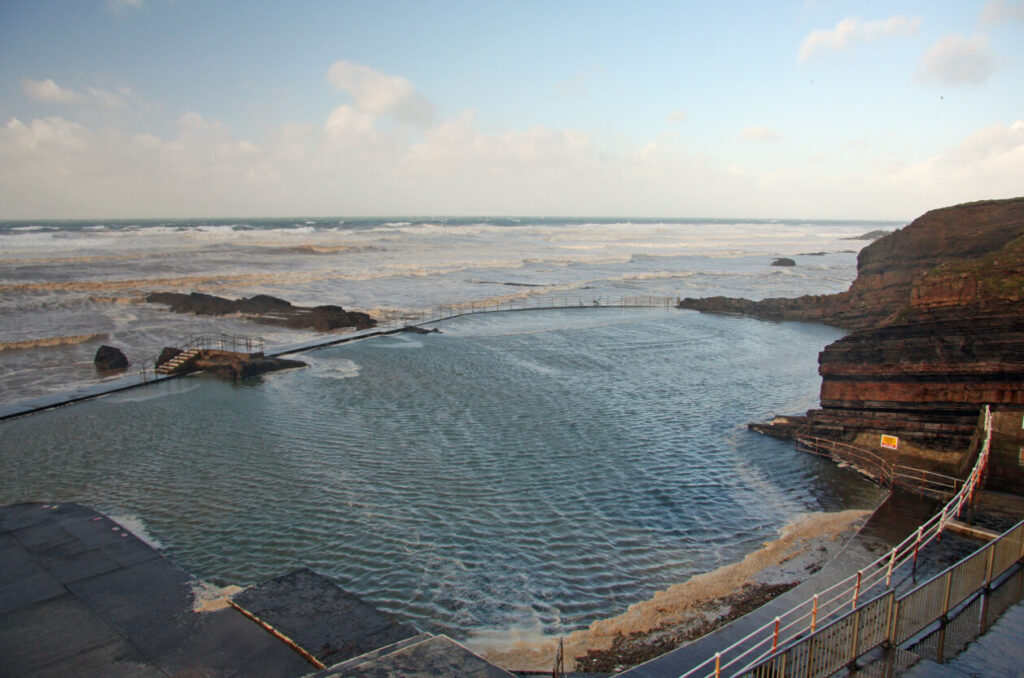
Sharrah Pool on the River Dart is a Dartmoor classic: a long, deep pool reached by a 40 minute riverside walk from Holne. Cornwall and Dorset add sea coves and tidal pools, where swell and rips matter more than temperature.
Wales And Pembrokeshire Coastal Dips
Snowdonia’s lakes and the Brecon Beacons waterfall country, including Lady Falls, offer cold, clear inland swims. The Blue Lagoon at Abereiddy in Pembrokeshire is a flooded slate quarry with sea access, deep water and no shallow exit.
Southern England Rivers And Accessible Day Trips
Gentle river swims sit close to cities: the River Thames near Kelmscott in Oxfordshire, the River Ouse near Barcombe Mills in Sussex, Suffolk’s Waveney meadows, weir pools near Bath, Surrey’s lakes and the meadows upstream of Cambridge. Many were mapped by Daniel Start’s guidebooks and appear in round-ups like these UK wild swimming spots and the best outdoor swims in Britain. If you want more help planning, the outdoor and wild swimming guides on Swimmers World cover sea swimming, lakes and cold water technique in detail.
Frequently Asked Questions
What does wild swimming mean?
Wild swimming means swimming in natural water rather than a pool: rivers, lakes, lochs, tarns, tidal pools and the sea. It is often used interchangeably with outdoor swimming and open water swimming, though open water usually refers to longer training or racing swims.
Is wild swimming good for you?
Many swimmers report better mood, less stress and easing of muscle aches, and cold immersion triggers vasodilation and a strong endorphin response. It is also low-impact, full-body exercise. The benefits only hold if you manage cold exposure and water quality sensibly.
Why do people go wild swimming?
The pull is part physical and part mental. Cold water sharpens your focus in a way that feels close to mindfulness or meditation, and swimming somewhere beautiful with friends beats staring at a lane rope. It is also cheap and needs very little kit.
What are the dangers of open-water swimming?
The big ones are cold-water shock, hypothermia, currents and weirs, jumping into unchecked depth, and poor exit points. Water quality risks such as storm overflows and blue-green algae come next. Almost all of these are reduced by planning and swimming with others.
Can you swim safely in the wilderness?
Yes, if you swim within your ability, never alone, and check the site before entering. Remote spots demand more care because help is further away, so keep swims short, stay near the bank, and carry a phone in a dry bag.
What should you take with you for a wild swim?
Bare minimum: a bright swim hat, a tow float, goggles, footwear and warm dry clothes with a hat and flask for afterwards. Add a wetsuit, neoprene socks, gloves, earplugs and a changing robe as the water gets colder.