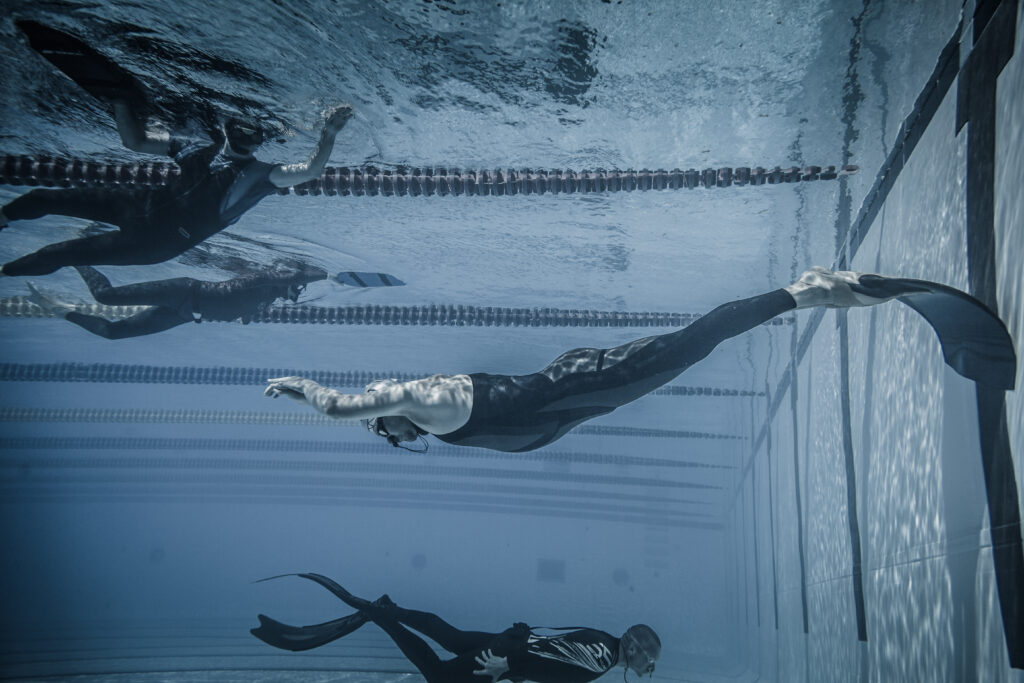

Dryland training is the work you do outside the water to swim faster inside it. It covers strength, power, core control and mobility, and it fills the gaps that laps alone will never close. If your shoulders ache after a hard week, if your legs feel flat off the wall, or if your hips sink halfway down a 200, land work is usually the missing piece.
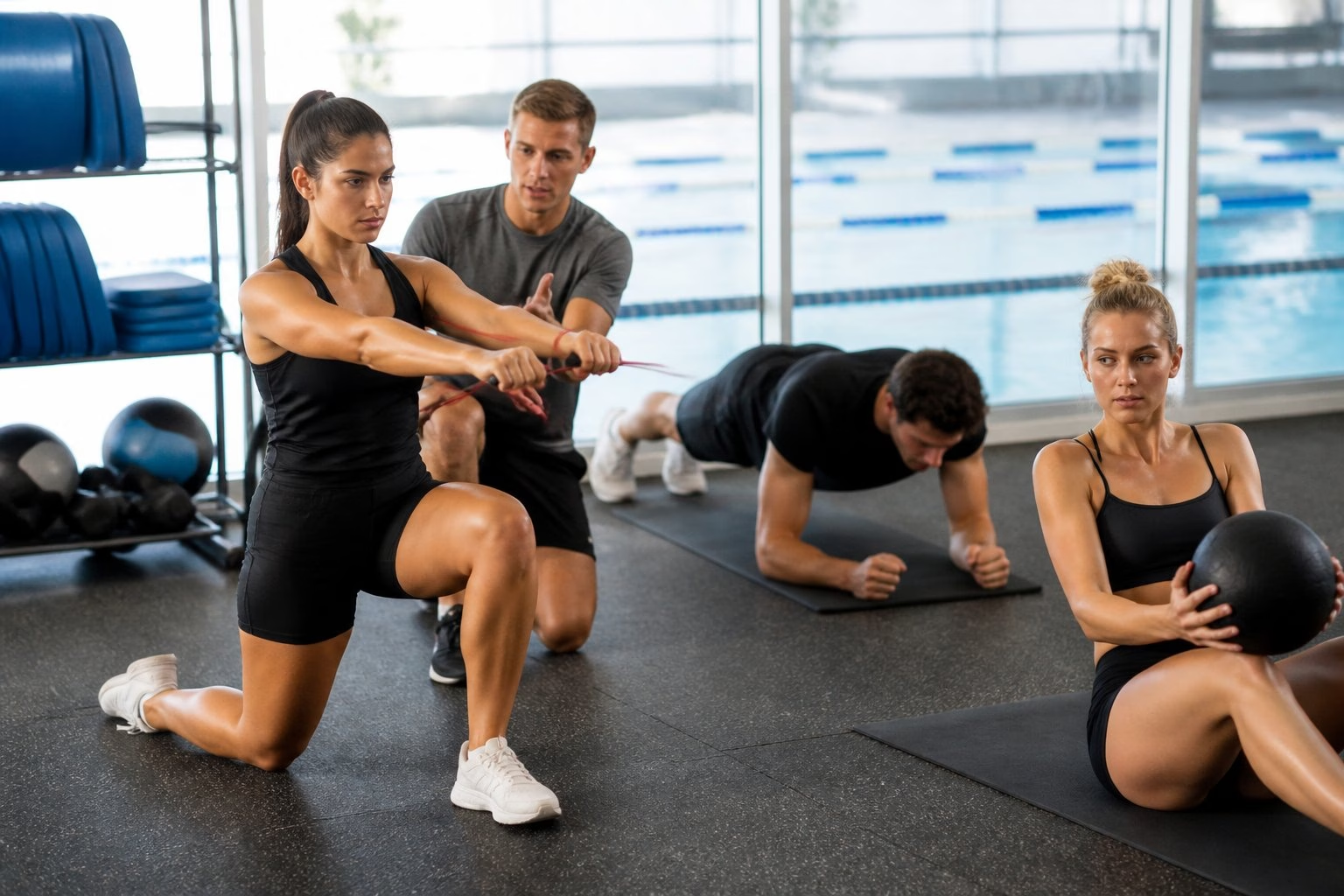
You do not need a full gym to make dryland training work: a mat, a set of resistance bands and a pull-up bar cover almost everything a swimmer needs for months of steady progress. Competitive swimmers benefit most from the power side of it, but beginners and masters swimmers often see the biggest jump in body position and comfort.
This guide walks you through the exercises that matter, how they carry over to your stroke, and how to build them into your week without wrecking your pool sessions. If you want more on training structure, technique and gear once you have read this, have a browse around Swimmers World for the rest of the picture.
How Land Work Carries Over To The Pool
Dryland training changes your swimming in four main ways: it makes each pull stronger, it holds your body flatter in the water, it protects your shoulders from repetitive strain, and it gives you more push off every wall. What it will not do is fix your feel for the water.
Strength, Power And Stroke Efficiency
Every stroke you take is a push against water that keeps moving away from you. The stronger your lats, chest and posterior chain, the more water you hold before it slips.
Upper body strength on land also lets you keep a high elbow late in a race, when fatigue usually drags your arm through flat and shallow. That is stroke efficiency in plain terms: same effort, more distance per stroke.
Core Control, Streamline And Body Position
Core strength is not about visible abs. It is about stopping the wobble between your ribs and your hips while your arms and legs pull in opposite directions.
When your core stability improves, your hips ride higher, your kick stays behind you rather than under you, and your streamline off each wall holds its shape for longer. Swimmers often notice this before they notice any change on the clock.
Shoulder Durability And Injury Prevention
Shoulder problems affect a huge share of competitive swimmers, and research on dryland programming puts the figure at 40 to 80 per cent across a career. Most of it comes from thousands of overhead reps with weak stabilisers behind them.
Band pull-aparts, external rotations and scapular work take a few minutes and build shoulder stability where it counts. Injury prevention is the least glamorous part of dryland and the part you will thank yourself for.
What Dryland Cannot Replace
Land work does not teach timing, catch, breathing rhythm or pacing. It will not improve your feel for the water, and it cannot replace kick sets or race pace swimming.
Treat it as a support act. Two or three focused sessions a week alongside your normal swimming, with proper recovery, will do far more than five rushed circuits that leave you tired in the pool.
Essential Movement Patterns And Exercise Choices

Good dryland workouts for swimmers cover four patterns: bracing the trunk, squatting and hinging, pushing and pulling, and moving joints through full range. Pick one or two exercises from each and you have a complete session with almost no kit.
Core Exercises For A Stable Line
Start with holds before you start with movement. The front plank teaches you to lock your ribs down, the side plank builds the lateral stiffness that stops your hips snaking on breaststroke and freestyle.
- Front plank: 3 x 30 seconds, squeezing glutes hard
- Side plank: 3 x 20 seconds each side
- Flutter kicks: 3 x 30 seconds, lower back pressed flat
- Russian twists: 3 x 20 total, slow and controlled
- Mountain climbers: 3 x 30 seconds for a bit of pace
A simple test: if your hips drop or your breath holds, the set is too long. Shorten it.
Squat, Hinge And Single-Leg Strength
Your walls come from your legs. Bodyweight squats and split squats build the quads and glutes you need for a fast push-off, while the hinge pattern loads the hamstrings and lower back that hold your streamline tight.
Romanian deadlifts, glute bridges and kettlebell swings all train the posterior chain. Add step-ups or lunges for single-leg balance, because most starts and turns are rarely perfectly symmetrical.
Push, Pull And Shoulder-Control Work
Pull more than you push. A ratio of two pulling exercises for every pushing exercise keeps your shoulders sitting in a healthy position.
Pull-ups, rows and band work top the list. Push-ups and dips cover the pressing side, and resistance bands anchored high let you rehearse the freestyle pull and butterfly pull with real load. Keep the shoulder press light and controlled; bench press is optional and rarely a priority.
Mobility For Shoulders, Hips And Ankles
Tight ankles kill your kick. Tight thoracic spine wrecks your streamline.
Spend five minutes on shoulder dislocates with a band, deep squat holds, hip flexor stretches and ankle rocks. Mobility work is boring and it is the cheapest speed you will ever buy.
Building Power For Starts, Turns And Fast Swimming
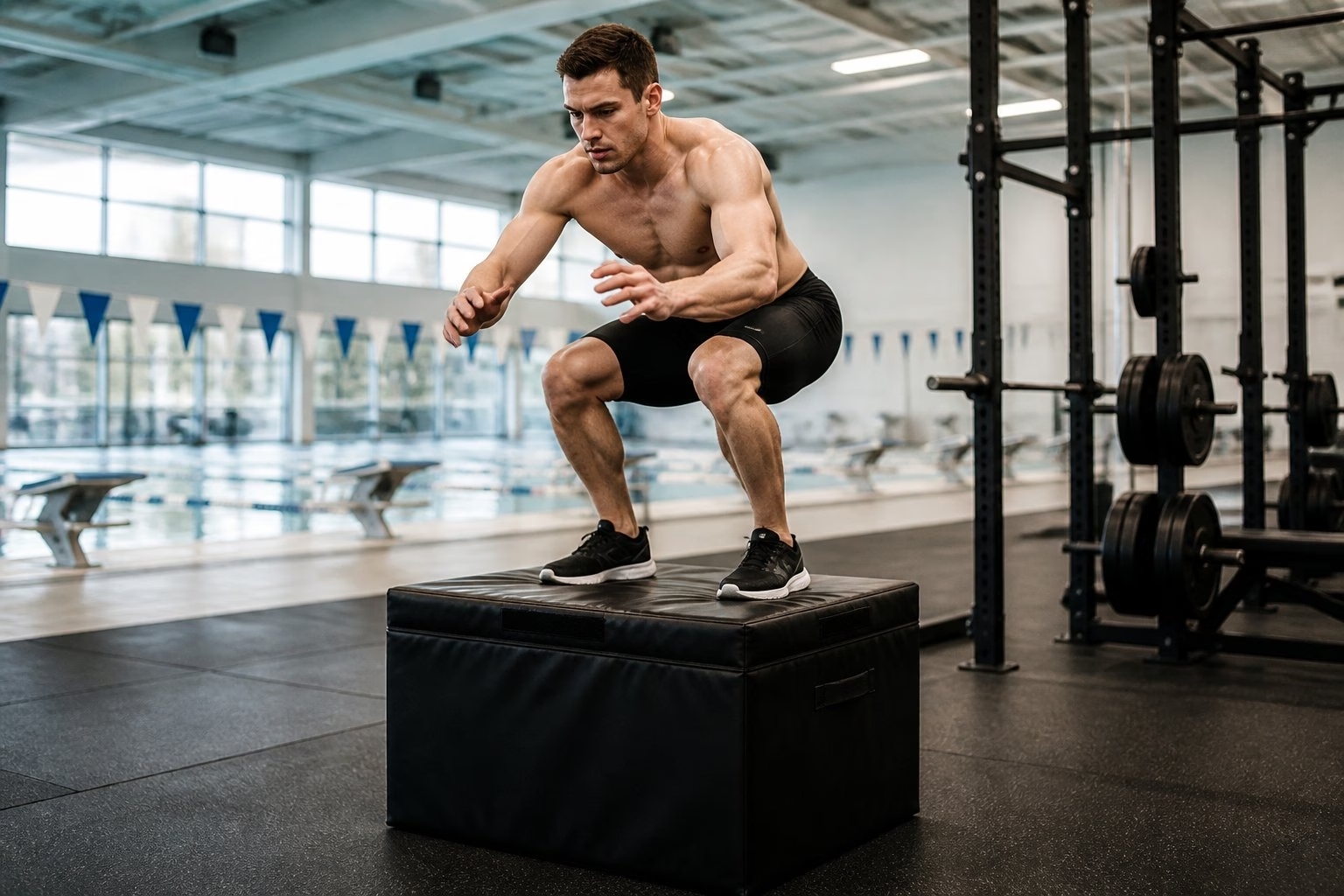
Power is strength expressed quickly, and it shows up in the first ten metres of every race. Plyometrics and medicine ball work build it, but only once you have a base of controlled strength underneath.
When To Introduce Plyometrics
Wait until you can hold a clean bodyweight squat and land softly from a small hop. As a rough rule, if your knees cave inwards or you land with a thud, you are not ready for depth jumps.
Start with low box jumps and squat jumps, keeping the volume low: 4 to 6 sets of 3 to 5 reps, with full rest. Quality beats quantity here. Plyometric-based dryland work has been shown to improve block starts specifically, which is why it is worth doing properly rather than tacking it onto the end of a tired circuit.
Low-Equipment Explosive Exercises
You can build most of this with a rope, a wall and a medicine ball.
| Exercise | Sets and reps | What it helps |
|---|---|---|
| Squat jumps | 5 x 4 | Push-off power |
| Box jumps | 4 x 5 | Start and turn drive |
| Medicine ball slams | 4 x 6 | Trunk and lat speed |
| Overhead med ball throws | 4 x 6 | Streamline extension |
| Jump rope | 5 x 30 seconds | Ankle stiffness, coordination |
Burpees and jumping jacks belong in the warm-up or conditioning block, not the power block. Once you feel slow, the power work is finished.
Controlling Land-Based Conditioning
Circuit training and high-intensity interval training build stamina and agility, but they also add fatigue that lands on top of your swim sets. Keep hard land conditioning to once a week during heavy pool phases.
Running, cycling and rowing all have a place, especially in the off-season or when the pool is shut. Rowing is the friendliest of the three for swimmers because it loads the posterior chain without pounding your joints.
A Safe Session Template And Progression Plan
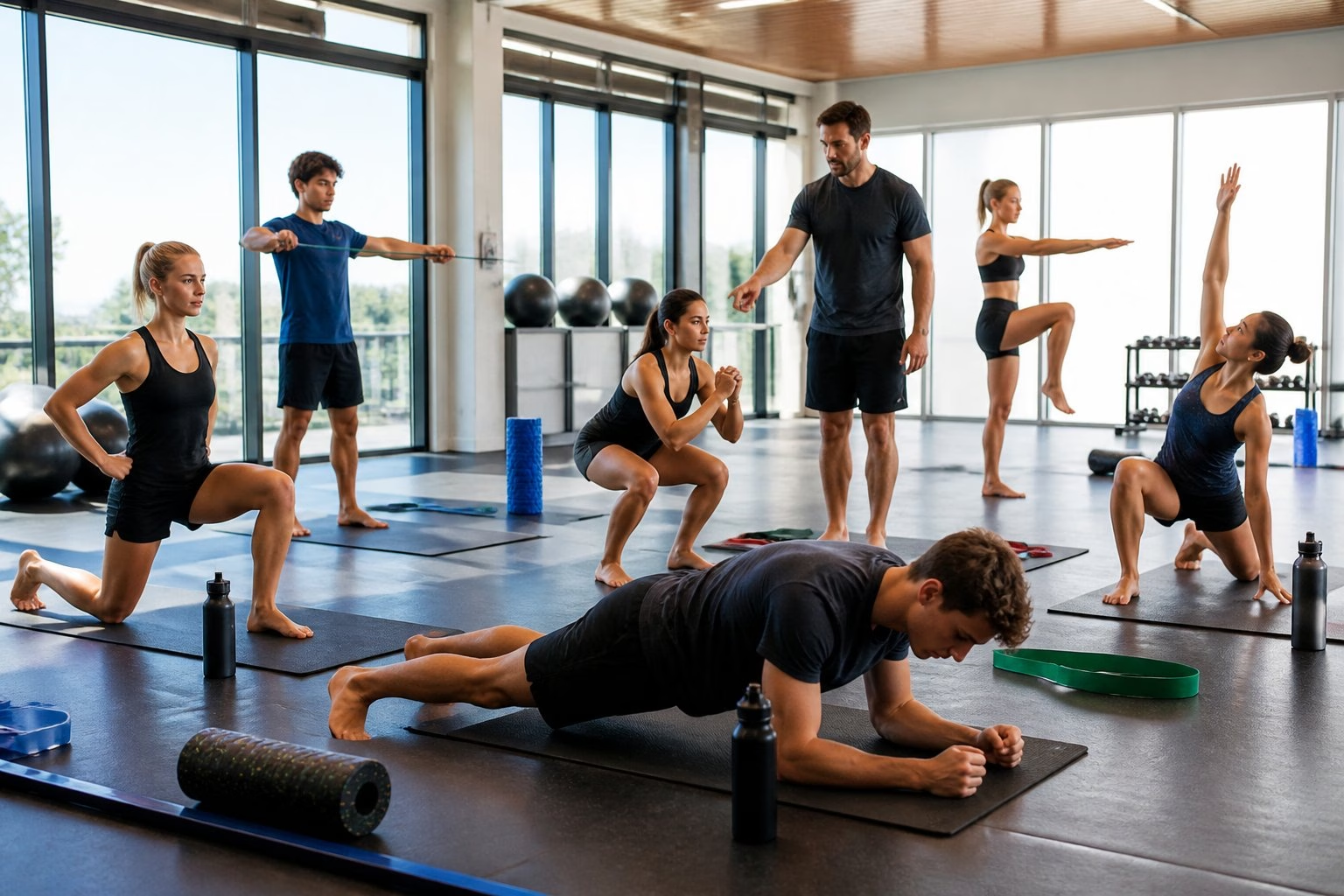
A dryland session should follow the same shape every time: prepare, activate, work, then stretch. Once you have that template, progressing is mostly a matter of adding reps, then adding resistance, then adding speed.
Warm-Up, Activation And Mobility
Give it ten minutes and never skip it. Dynamic stretches such as arm swings, trunk rotations and leg swings raise your temperature and open the joints you are about to load.
Follow with two minutes of jump rope or jogging, then a short activation block: band pull-aparts, glute bridges and a 20 second front plank. That is enough to switch the right muscles on.
Choosing Sets, Repetitions And RPE
For general strength and conditioning, 3 sets of 8 to 12 reps works well. For power, drop to 3 to 5 reps and rest properly between sets.
Use RPE to steer effort. Aim for RPE 7 out of 10 on most strength sets, meaning you finish with two or three reps left in the tank. Grinding to failure adds soreness without much extra benefit for swimmers.
Progressing From Bodyweight To Resistance
Master the movement before you add load. Progress in this order:
- Slow it down. Three seconds lowering, one second pause.
- Add reps. Build to the top of your rep range.
- Add a band. Resistance bands are the easiest step up.
- Add external load. Dumbbells, kettlebells or a weighted vest.
- Add speed. Only once the pattern is solid.
A pull-up bar plus two bands will carry most swimmers through an entire dryland season plan.
Placing Sessions Around Swim Training
Put heavy dryland after a swim, not before a technique or race pace session. Leave at least six hours between hard land work and a quality pool set if you can.
Two sessions a week during the season and three in the off-season suits most swimmers. Take a full rest day somewhere in there.
Sample Minimal-Equipment Sessions
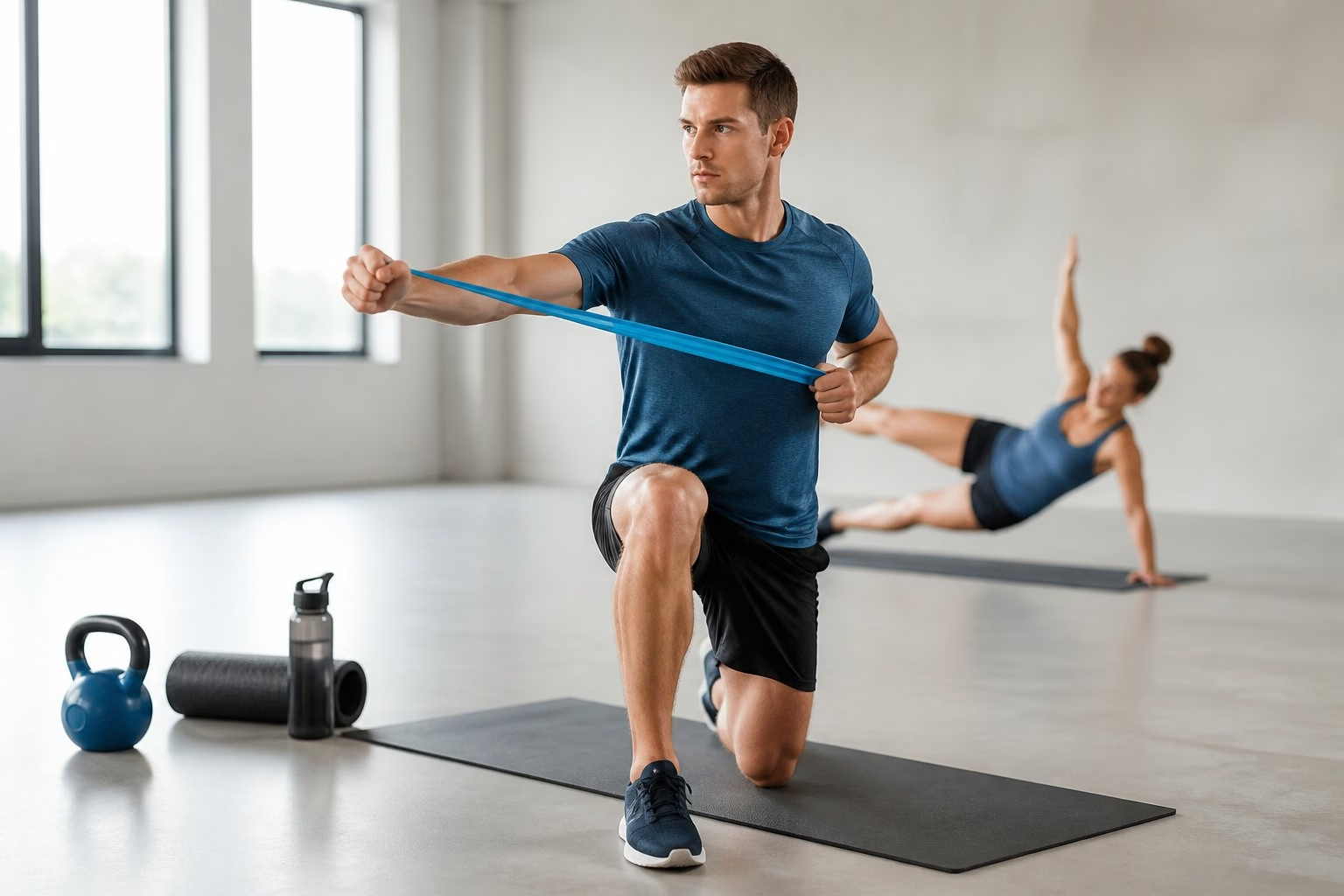
These three dryland workouts for swimmers need nothing more than a mat, bands, a pull-up bar, a skipping rope and, for the last one, a medicine ball. Each takes 35 to 50 minutes including the warm-up and stretch.
Beginner Foundation Session
- 10 minutes dynamic stretches
- 3 x 30 seconds jumping jacks
- 3 x 20 seconds front plank
- 3 x 20 seconds side plank each side
- 3 x 8 push-ups (knees if needed)
- 3 x 10 bodyweight squats in streamline
- 3 x 10 reverse lunges each leg
- 3 x 10 glute bridges
- 5 x 5 band-assisted pull-ups
- 8 minutes stretching
Intermediate Strength And Pull Session
- 10 minutes dynamic stretches, then 3 minutes jump rope
- 3 x 40 seconds front plank
- 3 x 10 scapular push-ups
- 5 x 6 pull-ups
- 4 x 10 single-arm band rows each side
- 4 x 8 paced push-ups (3s down, 1s hold, 2s up)
- 4 x 10 Romanian deadlifts
- 12 minutes bands: 30 seconds freestyle pull, 30 seconds rest, alternating with butterfly pull
- 3 x 30 seconds flutter kicks
- 10 minutes stretching, lats and pecs first
Power And Speed Session For Experienced Swimmers
- 10 minutes dynamic stretches, then 3 minutes jump rope
- 3 x 30 seconds side plank each side
- 5 x 4 squat jumps, full rest
- 4 x 6 medicine ball slams
- 4 x 6 overhead medicine ball throws
- 4 x 5 pull-ups, explosive up, slow down
- 3 x 8 split squats each leg
- 6 x 20 seconds jump rope at maximum speed
- 10 minutes stretching
Log what you do. Swimmers who write it down progress faster than swimmers who guess.
Adapting Training For Age, Goals And Recovery
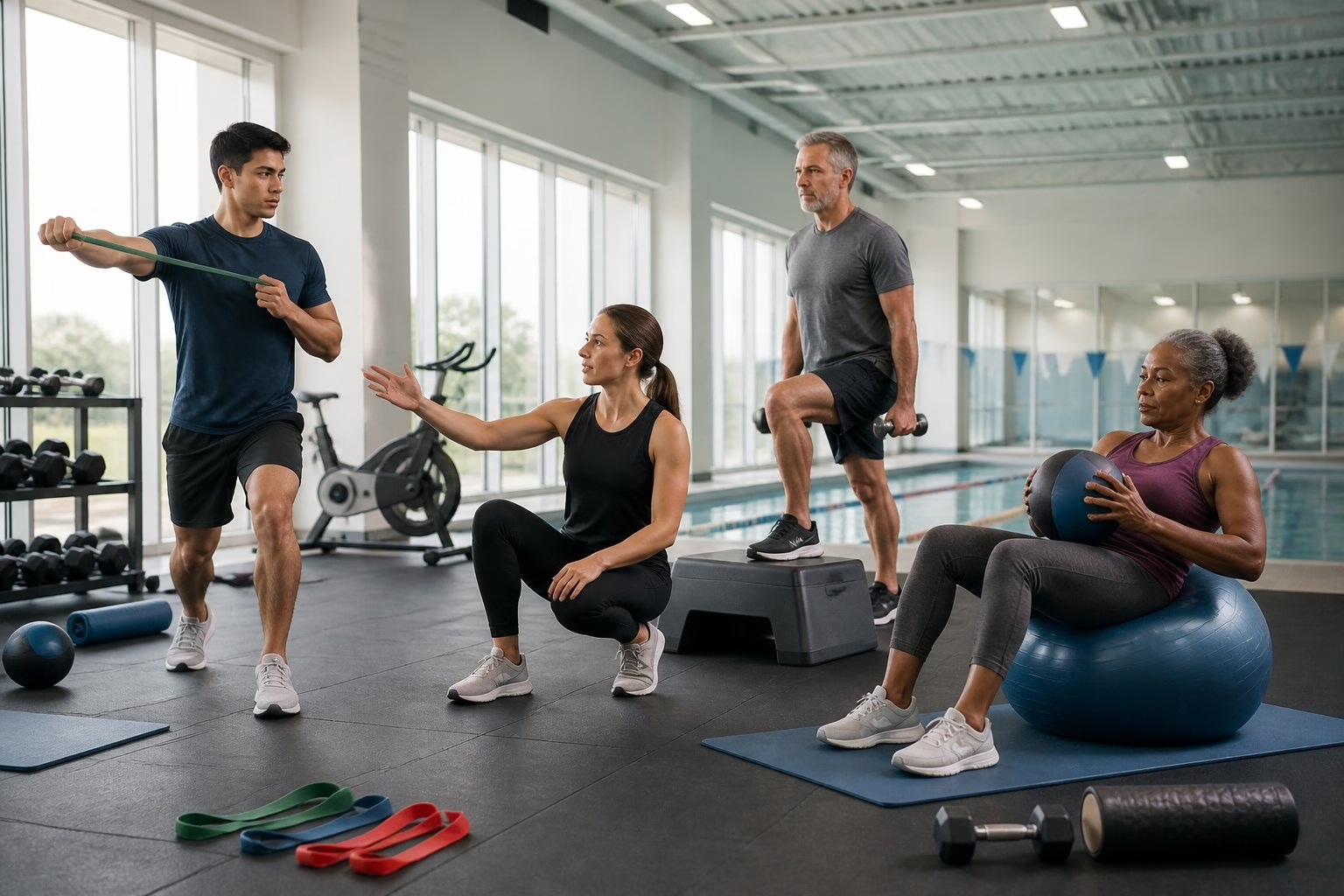
The same exercises suit a 10-year-old and a masters sprinter, but the emphasis changes completely. Younger swimmers need movement skill, race-focused swimmers need strength before speed, and everyone needs to spot fatigue before it becomes an injury.
Young Swimmers: Movement Before Load
For under-13s, skip the weights. Bear crawls, animal walks, obstacle courses and balance drills build coordination, proprioception and body awareness far better than a barbell will.
Keep sessions playful and short, 20 to 30 minutes. As age-by-age dryland guidance points out, the goal at this stage is competence in basic patterns, not numbers on a chart.
Race-Focused Swimmers: Strength Then Power
Build a base first. Spend six to eight weeks on general strength training for swimmers, then shift to power work in the weeks closer to competition.
Cut dryland volume back sharply in the final two weeks before a big meet. Keep one short session with a few explosive reps to stay sharp, and drop everything heavy.
Recovery, Mobility And Warning Signs
Soreness the day after a new session is normal. Soreness that hangs around for four days is a sign you did too much.
Foam rolling, easy mobility work and sleep do the real recovery job. Stop and reassess if you get shoulder pain during your stroke, a dead feeling in your arms at the start of practice, or a stroke rate that will not lift. Those are load problems, not motivation problems.
Frequently Asked Questions
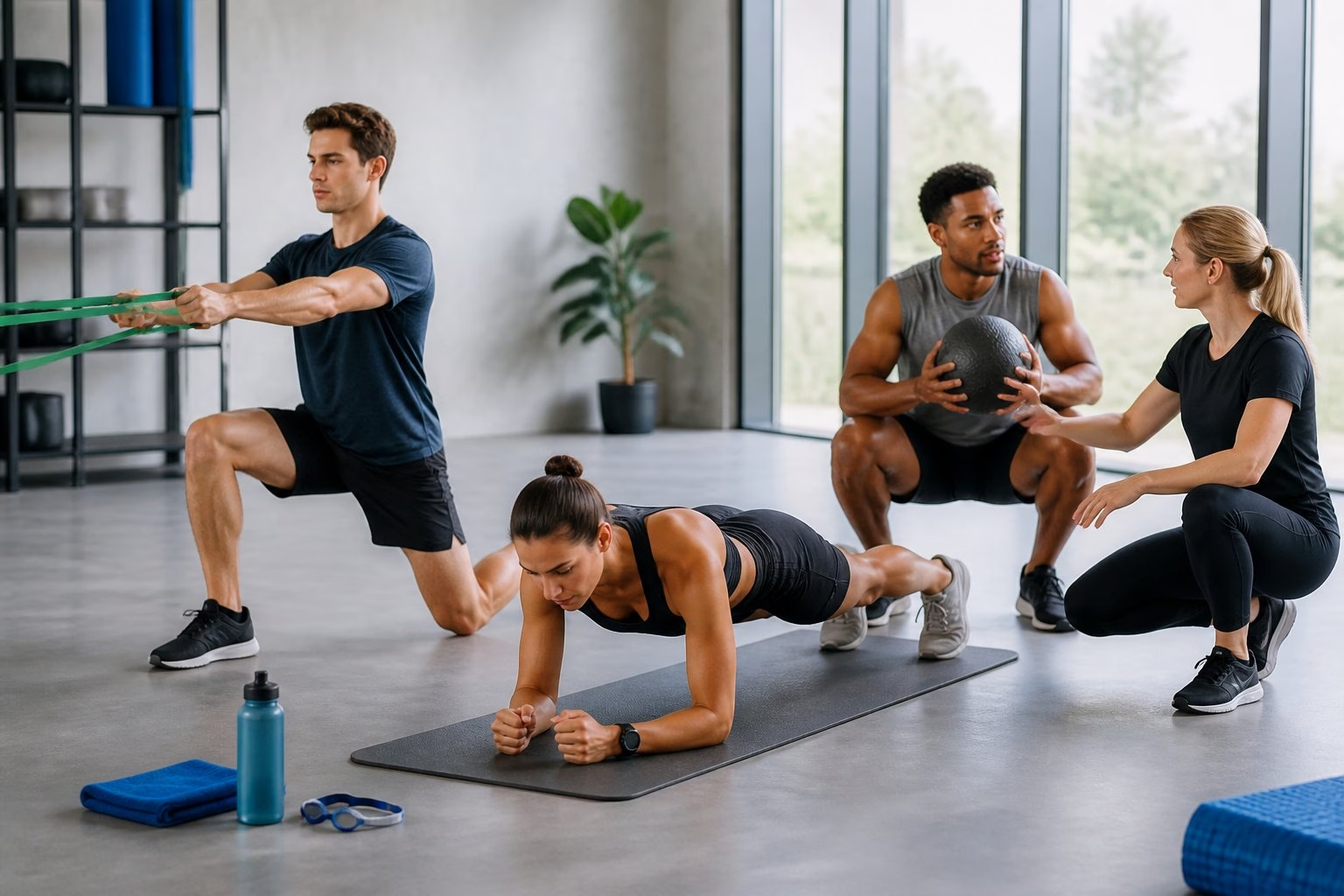
What are the best dryland exercises for swimmers?
Planks, side planks, squats, lunges, glute bridges, push-ups, pull-ups and band rows cover the essentials. Add resistance band freestyle and butterfly pulls for stroke-specific strength, plus squat jumps and medicine ball slams once you have a strength base.
How often should swimmers do dryland training?
Two sessions a week works well during the swimming season, rising to three in the off-season. Place them after swim sessions where possible, and always keep at least one full rest day in the week.
Can swimmers do effective dryland workouts at home without equipment?
Yes. Bodyweight exercises such as planks, squats, lunges, push-ups, glute bridges and flutter kicks build genuine strength, and you can add difficulty by slowing the tempo or moving to single-leg versions. A cheap resistance band and a doorway pull-up bar widen the options considerably.
What should a dryland training programme for young swimmers include?
Focus on bodyweight movement, coordination and balance rather than load. Animal walks, obstacle courses, hopping games, short planks and basic squats build the control that heavier training relies on later, and sessions should stay under half an hour.
Where can I find free swimming dryland workout PDFs?
Several coaching sites publish free downloadable plans, including GoSwimFast’s dryland library, which lists sets, reps and rest periods. Check that any plan matches your age, training age and available equipment before following it.
What is the 80/20 rule in swimming training?
It describes spending roughly 80 per cent of your training time at easy or moderate effort and 20 per cent at hard, race-pace intensity. Applied to dryland, it means most of your land work should be controlled strength and mobility, with only a small slice of truly maximal power work.