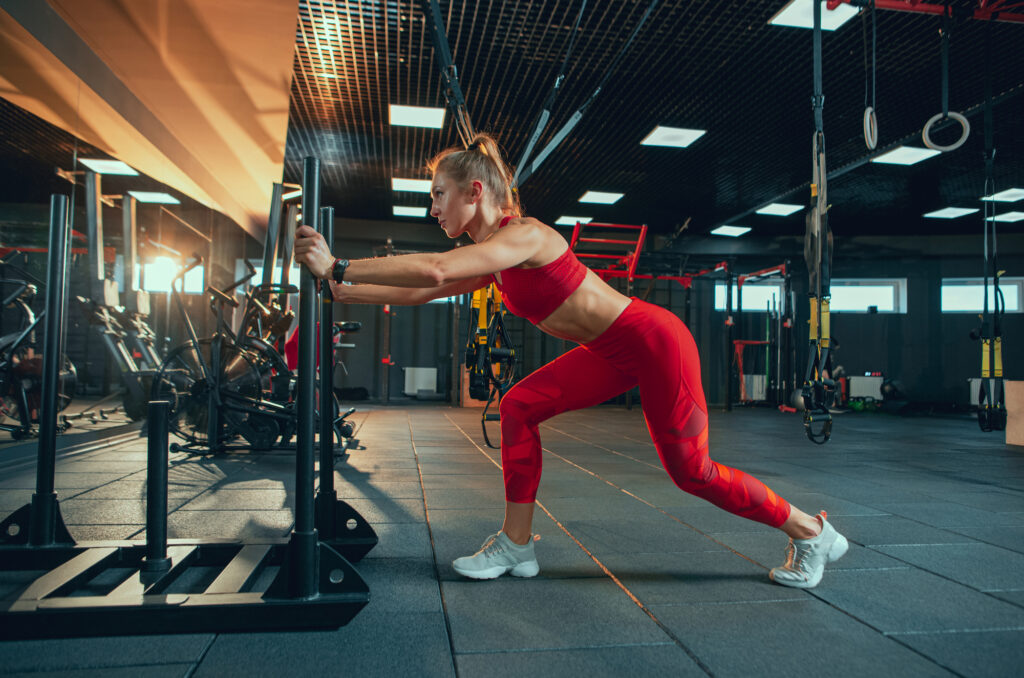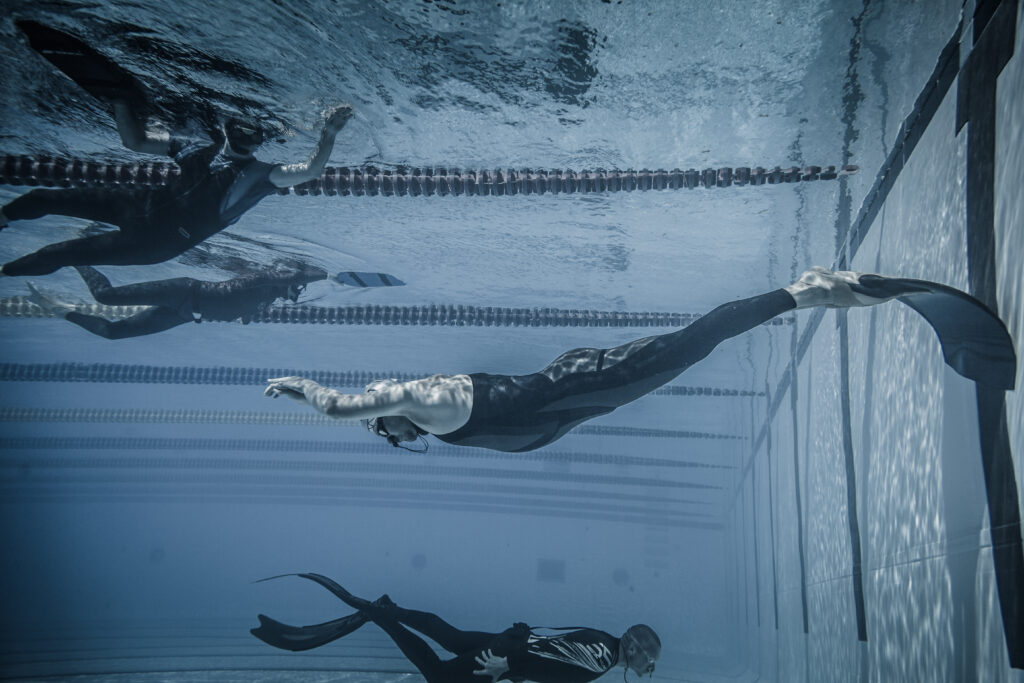
If you want to swim faster, the pool is only half the equation. Swim strength training bridges the gap between raw fitness and real speed, giving you the power to hold a tighter streamline, drive harder off the wall, and maintain your stroke when fatigue sets in. Whether you are a club swimmer chasing a personal best or someone returning to the pool after time away, the right exercises on land and in the water can transform how you move through every length.
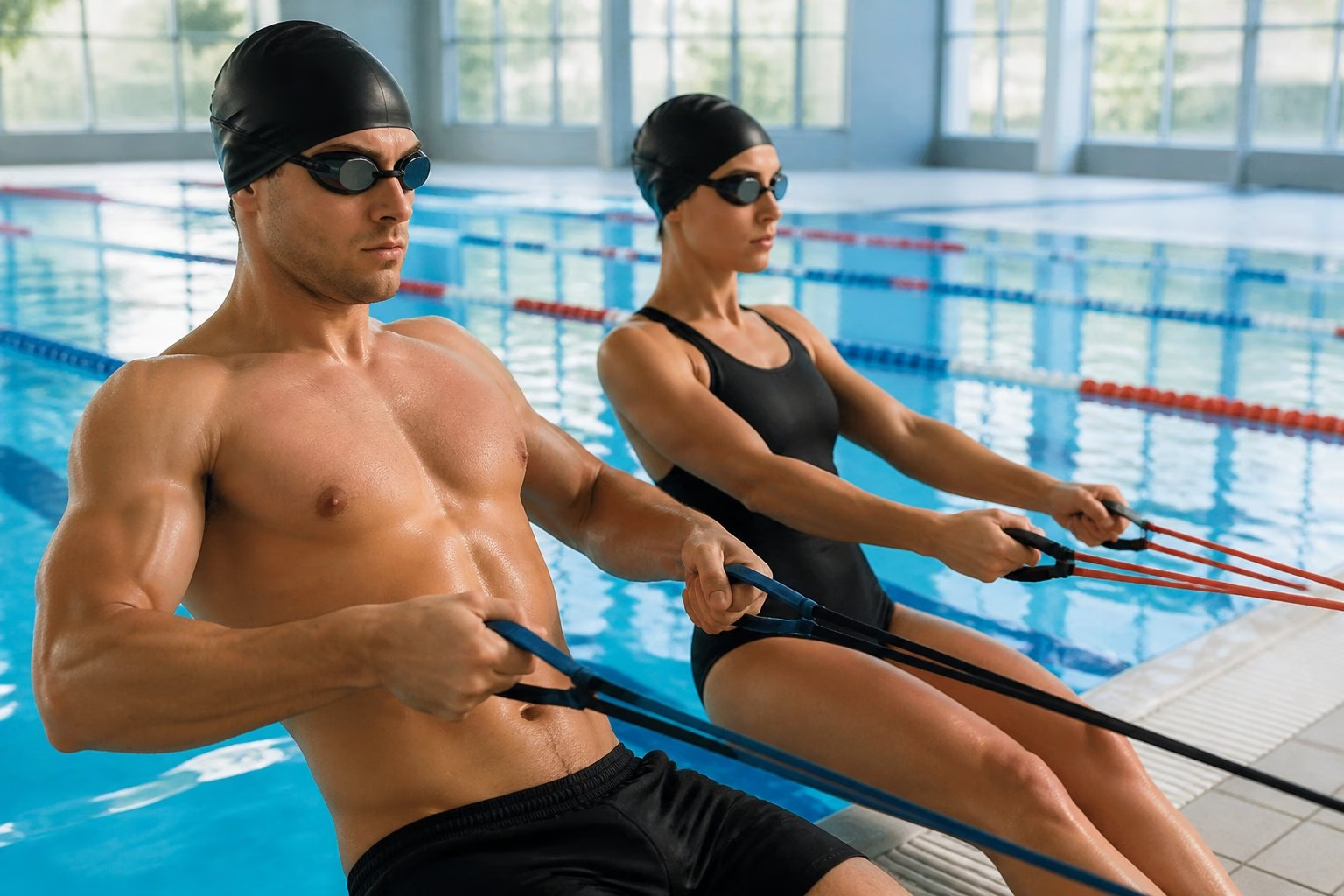
Too many swimmers skip strength work because they worry it will make them bulky or stiff. In reality, targeted strength and conditioning for swimmers builds lean, functional muscle that directly supports stroke technique and race performance. The key is choosing the right exercises, placing them smartly in your weekly schedule, and progressing at a pace that supports your swimming rather than competing with it.
This guide breaks down the best dryland exercises for pool speed, in-water resistance sets, weekly planning strategies, injury prevention, and the equipment that actually makes a difference. If you are ready to add real power to your swimming, explore more training and technique advice across Swimmers World and start putting these sessions into practice.
How Strength Work Helps You Move Faster In The Water
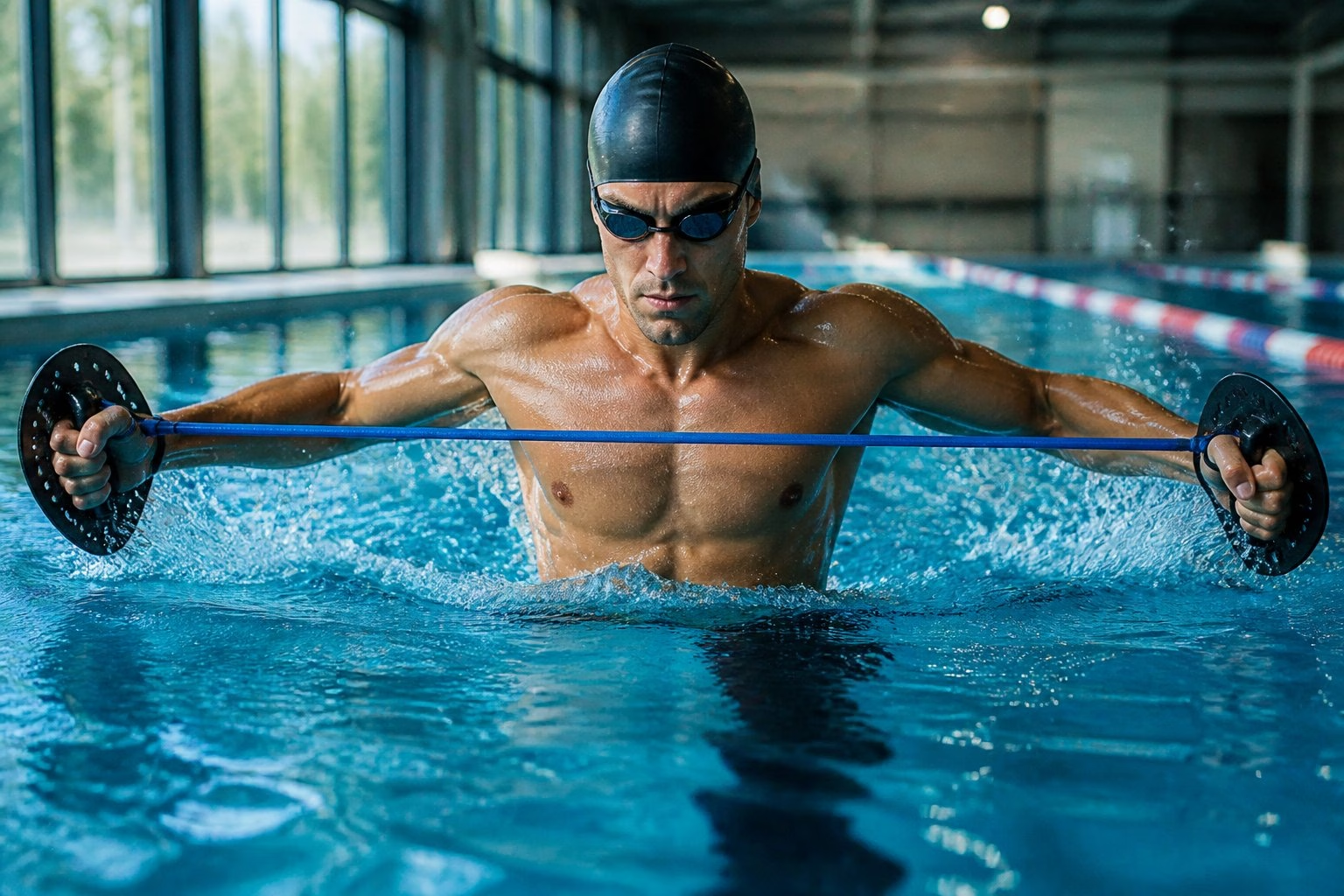
Stronger muscles let you produce more force per stroke, hold better body position, and resist the breakdown that happens when you tire. The result is greater distance per stroke, faster starts and turns, and a more efficient dolphin kick off every wall.
Power, Endurance, And Speed In Swimming
Power in swimming is your ability to generate force quickly. It is what launches you off the blocks and propels you through the water on each pull. As noted in a guide from Strength Log, adding strength training improves your power, speed, and stability in ways that pool work alone cannot match.
Endurance benefits from strength work too. Stronger muscles fatigue more slowly, which means your stroke count stays consistent across a 200m or an 800m rather than climbing as you tire. You hold technique longer and keep swim speed steady.
Speed is not just about moving your arms faster. It comes from applying more force in the right direction. A stronger catch and pull phase means you cover more distance per stroke, which is one of the most reliable ways to improve swimming performance.
Why Technique Still Comes First
No amount of strength will fix poor swimming technique. If your catch slips or your body position creates drag, extra power simply pushes you through the water less efficiently. Always prioritise stroke technique refinement alongside your strength work.
Think of strength as an amplifier. It takes what good technique gives you and turns up the volume. A swimmer with solid freestyle mechanics who adds pulling strength will see far better results than someone with a powerful physique but a flat, draggy body position.
Where Strength Transfers Best: Starts, Turns, And Kicking
Strength training has its greatest direct impact on explosive actions like starts, push-offs, and underwater dolphin kick. These are moments where raw force production matters most.
A stronger squat translates to a more explosive push-off from the wall. Improved core stability keeps your streamline tight during the underwater phase. Powerful hip flexors and glutes drive a faster dolphin kick that carries momentum before you break the surface.
In a close race, the swimmer who gains half a second on every turn and start has a significant advantage. Strength work is where you find those gains.
The Best Dryland Exercises For Pool Speed
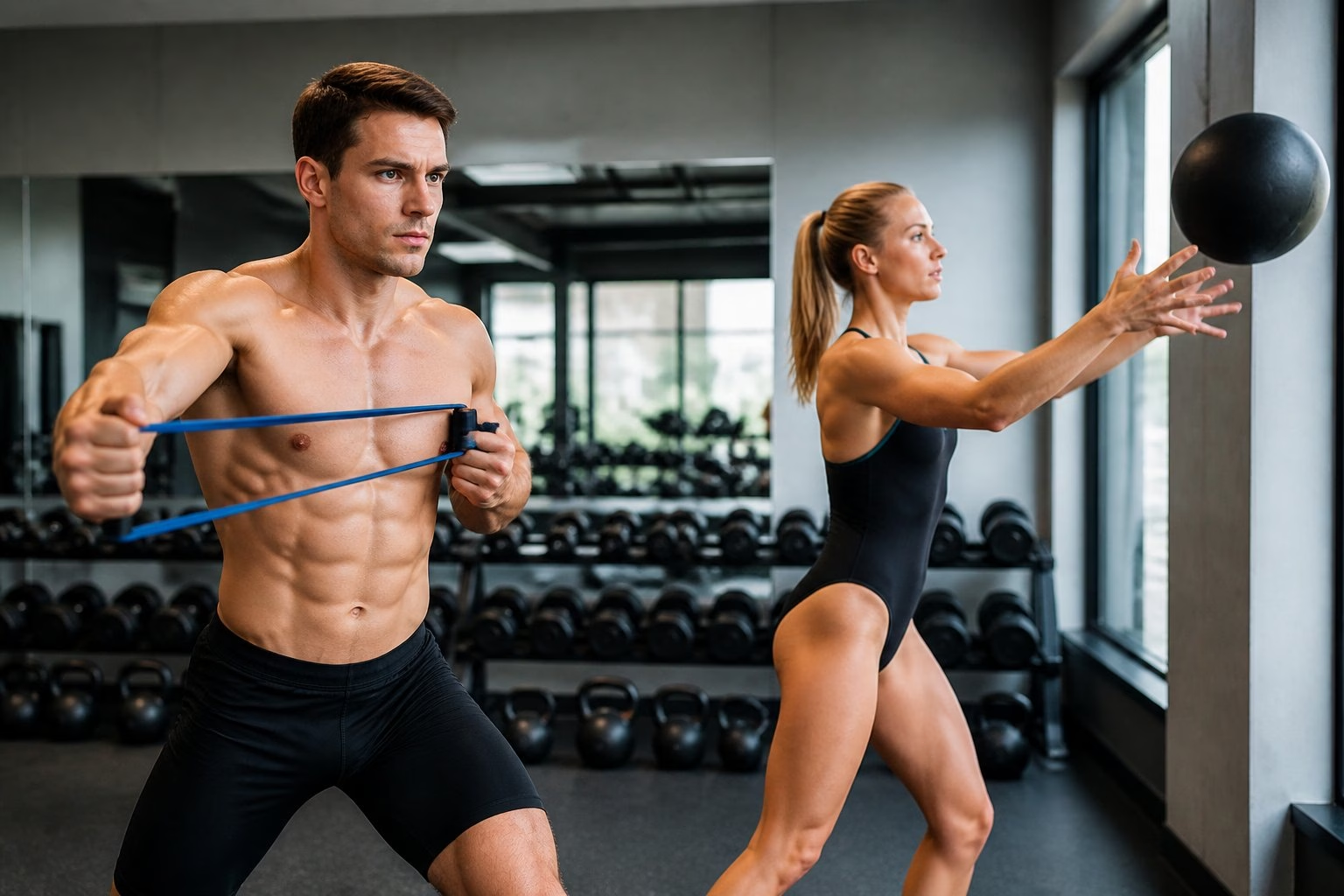
The best exercises for swimmers are compound exercises that train multiple muscle groups through swim-specific movement patterns. These dryland movements build upper-body pulling strength, lower-body explosive power, core control, and fast-twitch muscle fibers that transfer directly to the pool.
Upper-Body Pulling Strength For A Stronger Catch
Pull-ups are the single most valuable upper-body exercise for swimmers. They directly target the latissimus dorsi, the primary pulling muscle for every stroke. If you cannot manage a full pull-up yet, start with assisted pull-ups using a resistance band looped over a pull-up bar. Progress through band-assisted reps, slow negatives, and eventually bodyweight pull-ups before moving to weighted pull-ups.
Lat pulldowns on a cable machine are an excellent alternative and let you control the load precisely. According to a beginner’s guide from Coach Slava, 3 to 4 sets of 6 to 12 reps is the ideal range for building swim-specific strength without excess bulk.
Complement these with push-ups or a bench press to maintain shoulder balance. Aim for elbows at 45 degrees to your body during pressing movements to protect the joint.
Lower-Body Strength For Kicks, Push-Offs, And Block Work
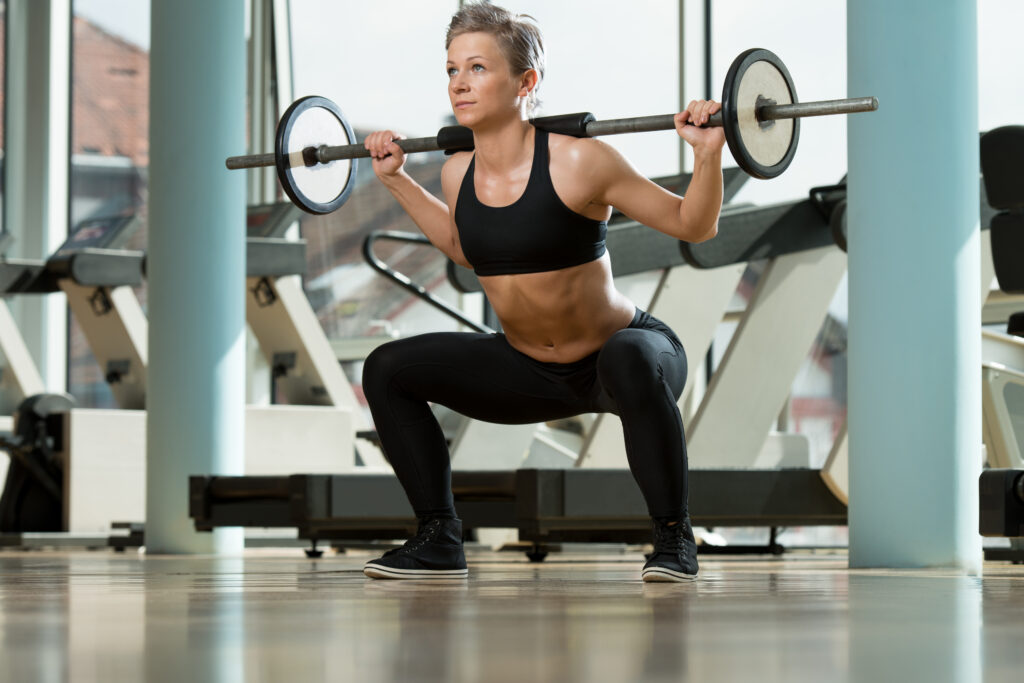
Squats form the foundation of lower-body swim strength training. Start with bodyweight squats to learn the pattern, then progress to goblet squats with a dumbbell or front squats with a barbell. Three sets of 8 to 12 reps, two to three times per week, builds the quad and glute strength that powers your kick and wall push-offs.
Deadlifts train the entire posterior chain, including your glutes, hamstrings, and lower back. These muscles are critical for explosive block starts and powerful streamline push-offs. Keep loads moderate and focus on perfect hip-hinge form.
Lunges add single-leg stability that corrects imbalances. Hold dumbbells in each hand once bodyweight lunges feel controlled.
Core Control For Streamline And Rotation
Core training for swimmers is not about sit-ups. It is about core stability, the ability to hold a rigid body line while your arms and legs generate force around it. The plank is the most direct way to build this quality. Hold for 30 to 60 seconds, focusing on squeezing your glutes and bracing your abdominals as if someone were about to tap your stomach.
Russian twists with a medicine ball develop the rotational strength that drives body rotation in freestyle and backstroke. Keep your feet off the ground and move with control rather than speed.
As core workout research shows, improved core strength tightens streamlines, reduces injury risk, and increases swim speed.
Explosive Moves That Build Race-Day Pop
To develop the fast-twitch muscle fibers that power starts and turns, include explosive exercises in your routine. Box jumps, broad jumps, and squat jumps all train your nervous system to recruit muscle quickly.
Medicine ball slams build upper-body and core explosive power in a way that mimics the force production of a dive start. Kettlebell swings target the hip extension pattern used in every push-off. Aim for 3 to 5 sets of 3 to 6 reps, resting fully between sets so each rep is genuinely explosive.
These moves are best placed at the beginning of a dryland session, after your warm-up but before heavier strength work, when your nervous system is freshest.
In-Water Resistance And Power Sets
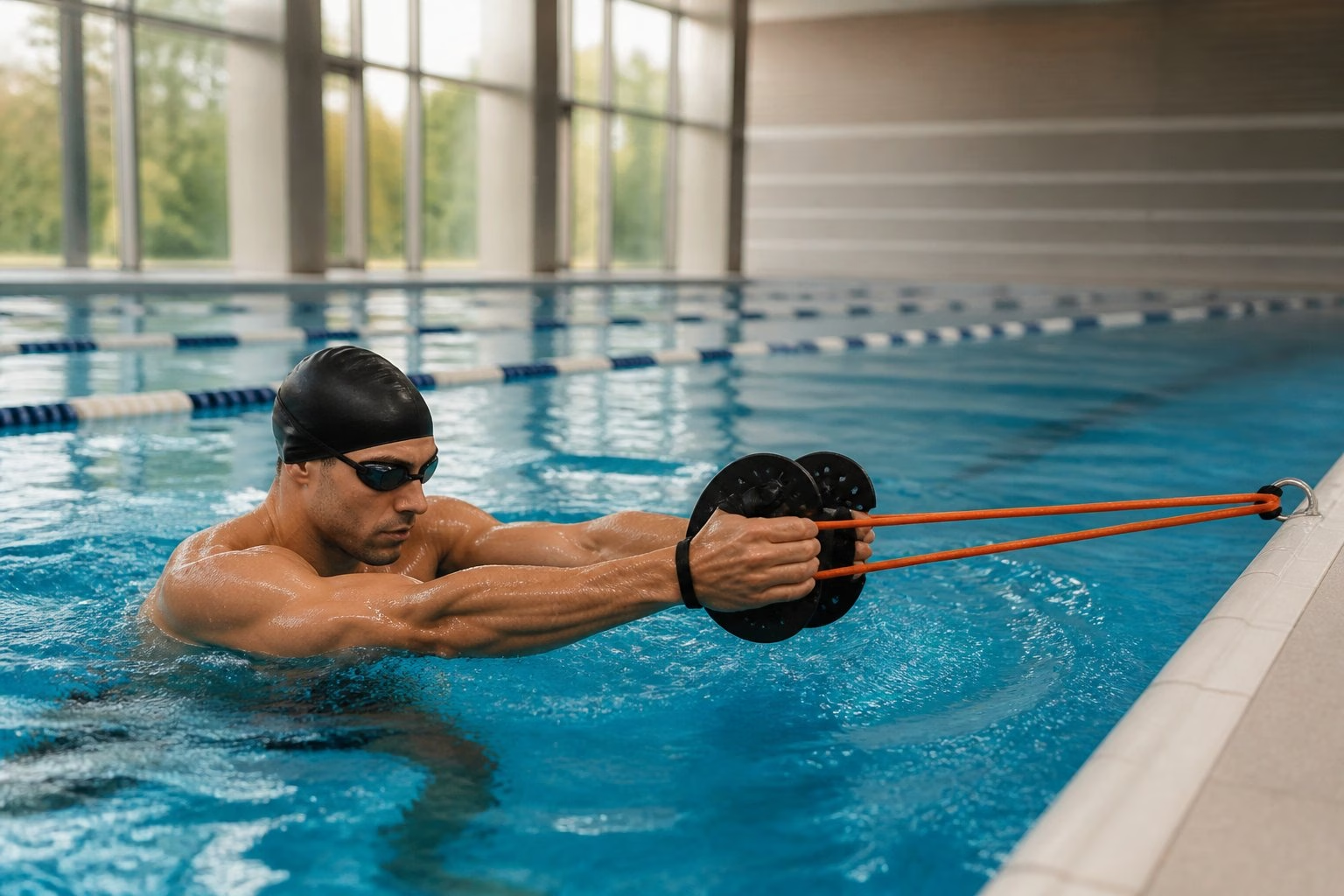
Dryland strength means little if you cannot apply it in the pool. In-water resistance work teaches your muscles to generate swim-specific force at race-relevant speeds, bridging the gap between gym strength and actual swim speed.
When To Use Paddles, Fins, And A Pull Buoy
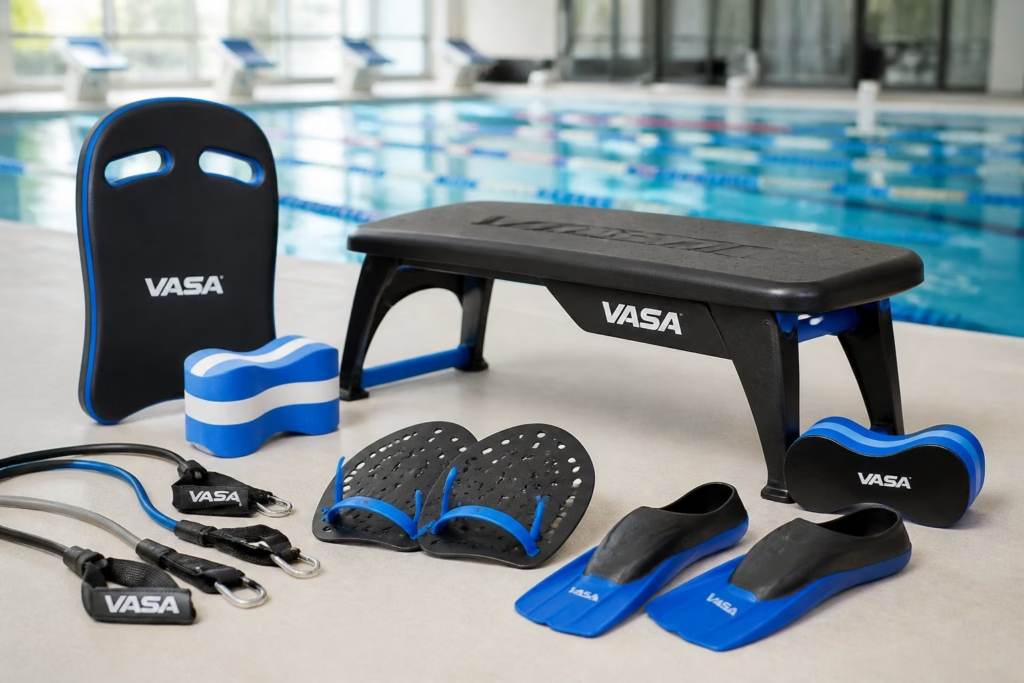
Swim paddles increase the surface area of your hand, forcing your catch and pull muscles to work harder on every stroke. Use them for pulling sets to build upper-body strength while reinforcing good technique. Keep paddle size only slightly larger than your hand to avoid shoulder strain.
Swim fins shift the focus to your legs, helping you develop a faster, more powerful kick. Short-blade fins are best for building speed and ankle flexibility without encouraging lazy kick habits.
A pull buoy lifts your hips and removes kicking from the equation, isolating your upper body. It is a useful tool for pull-focused strength sets, though avoid relying on it so heavily that your kick deteriorates.
Resisted Swimming For Short Bursts Of Force
A swim parachute attaches to your waist and creates drag behind you, forcing you to generate significantly more power per stroke. As highlighted by Swimmer Living, resisted swimming amplifies power development while maintaining proper stroke mechanics.
Keep resisted efforts short: 12.5m to 25m sprints with full recovery between reps. The goal is maximum force, not endurance. Four to eight reps is plenty for a single session.
Vertical Kicking And Underwater Work
Vertical kicking in the deep end is one of the most demanding and effective ways to build kick strength. Tread water using only a dolphin kick or flutter kick, keeping your hands out of the water or held against your chest. Start with 30-second intervals and build to 60 seconds.
Underwater dolphin kick work off the wall develops the core and hip-driven power that makes breakouts faster. Practise sets of 4 to 8 repetitions of maximum-effort underwater kicks to 15 metres, focusing on a tight streamline and powerful hip snap.
Sample Swim Workouts For Speed And Strength
Here are two example sessions you can slot into your swim training week:
Session A: Upper-Body Power Focus
- Warm-up: 400m easy choice stroke
- 8 x 50m pull with paddles and pull buoy at 80% effort, 15 seconds rest
- 6 x 25m resisted swim (parachute) at maximum effort, 45 seconds rest
- 4 x 100m freestyle at threshold pace with fins, 20 seconds rest
- Cool-down: 200m easy backstroke
Session B: Kick And Underwater Strength
- Warm-up: 300m mixed stroke
- 6 x 30 seconds vertical dolphin kick, 30 seconds rest
- 8 x 25m underwater dolphin kick off the wall, walk back recovery
- 4 x 50m kick with fins at race pace, 20 seconds rest
- 4 x 75m IM order drill (no fly), focus on turns
- Cool-down: 200m easy freestyle
These swim workouts combine strength-building tools with race-relevant intensity to improve both power and swim speed.
Building A Weekly Plan Without Hurting Your Swimming
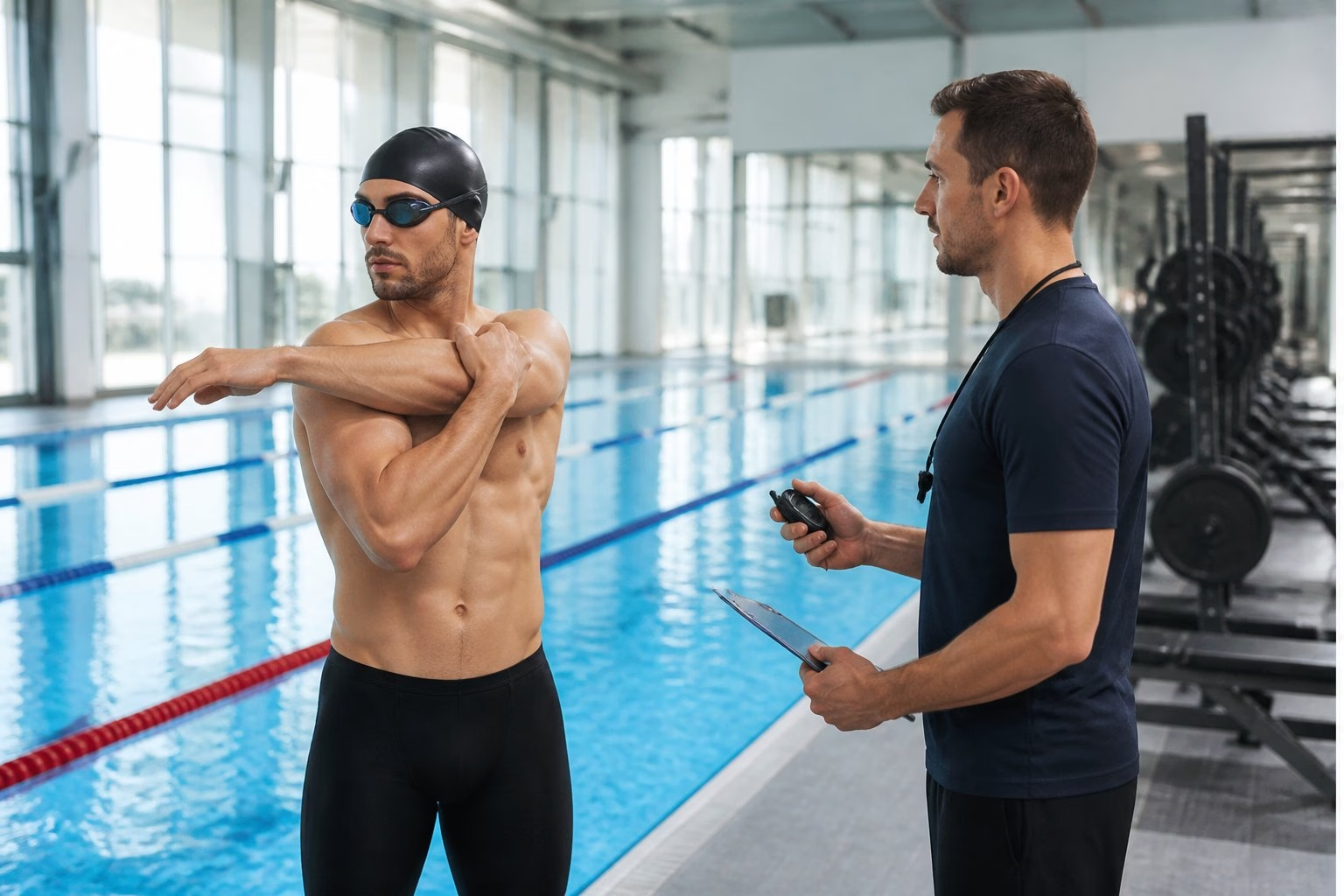
The biggest mistake swimmers make with strength work is doing too much, too close to key swim sessions. A well-structured weekly plan improves your swimming performance without leaving you fatigued when it matters most.
How Often To Lift And When To Swim Hard
Two to three dryland sessions per week is sufficient for most swimmers. Place them on easier swim days or at least 2 to 4 hours away from your main pool sessions. According to guidance from Swimmer Living, resistance training should ideally occur after swimming sessions to prevent pre-fatigue that compromises stroke quality.
A practical weekly structure might look like this:
| Day | Morning | Afternoon/Evening |
|---|---|---|
| Monday | Main swim session | Dryland: upper body + core |
| Tuesday | Technique swim | Rest |
| Wednesday | Main swim session | Dryland: lower body + explosive |
| Thursday | Easy swim or rest | Rest |
| Friday | Main swim session | Dryland: full body (lighter) |
| Saturday | Race-pace or test set | Rest |
| Sunday | Rest or easy swim | Rest |
Progressive Overload Without Excess Fatigue
Progressive overload means gradually increasing the demand on your muscles over time. Add a small amount of weight, an extra rep, or an additional set each week. Avoid jumping in load, which leads to excessive soreness and compromised swim training.
During competition phases, reduce dryland volume and shift focus toward maintaining strength rather than building it. The aim is to arrive at race day feeling powerful, not sore.
Track your lifts in a simple log. If your squat weight creeps up by 2.5kg every two to three weeks while your swim performance holds or improves, you are on the right path.
Adapting Work For Sprint, IM, And Distance Goals
Sprinters benefit most from explosive power exercises like box jumps, heavy squats, and medicine ball slams. Keep reps low (3 to 6) and rest periods long.
IM swimmers need a balance of strength and endurance across all four strokes. Include rotational core work for butterfly and backstroke, plus single-leg exercises for breaststroke kick power. An IM workout on land might combine squats, Russian twists, lunges, and pull-ups in a circuit format.
Distance swimmers should prioritise muscular endurance. Use lighter loads with higher reps (12 to 15) and shorter rest periods. The goal is building the conditioning to maintain stroke efficiency and speed across 400m, 800m, or longer events.
Technique, Recovery, And Injury Prevention
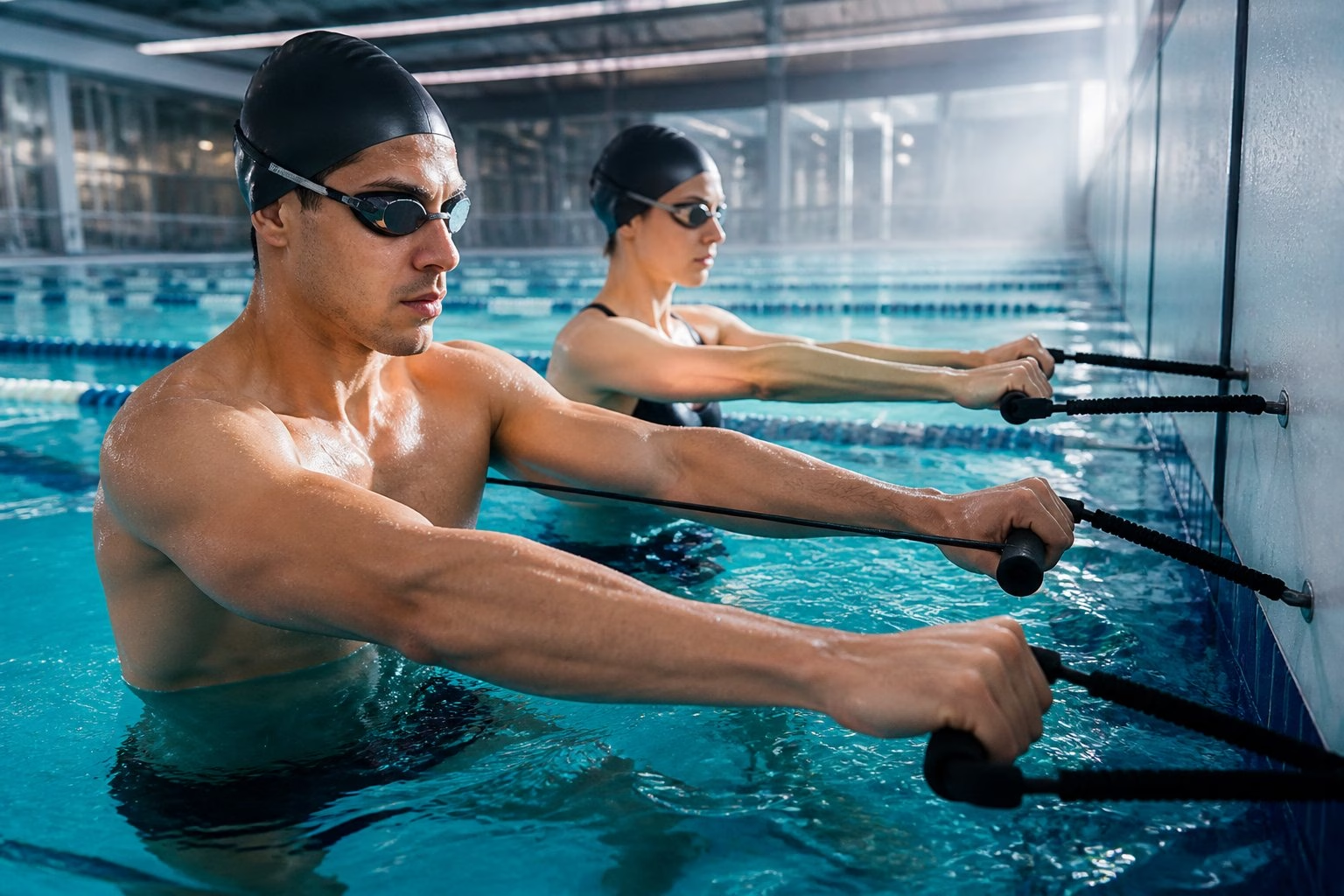
Strength training only works if you stay healthy enough to use it. Proper exercise form, adequate recovery, and smart warm-ups protect your body from the overuse injuries that sideline swimmers for weeks or months.
Common Swimming Injuries And How Strength Work Helps
Swimmer’s shoulder is the most frequent injury in the sport. It typically results from repetitive overhead motion combined with muscular imbalance around the shoulder joint. Targeted strength and conditioning for swimmers, particularly external rotation exercises with resistance bands and balanced pulling and pushing work, helps protect against these common issues.
Knee injuries in breaststroke swimmers often stem from weak hip stabilisers. Single-leg squats and lunges address this directly. Lower back pain frequently traces back to poor core stability, which planks and dead bugs can correct.
The pattern is consistent: common swimming injuries almost always link back to a strength deficit that targeted dryland work can address.
Warm-Ups, Mobility, And Exercise Form
Never skip your warm-up before a dryland session. Five to ten minutes of light cardio followed by dynamic stretches (arm circles, leg swings, hip openers) prepares your muscles and joints for load.
Exercise form is non-negotiable. A squat performed with your knees caving inward or a pull-up done with shrugged shoulders does more harm than good. Use a mirror, film yourself, or ask a training partner to check your positions.
Mobility work after sessions keeps your joints moving through a full, pain-free range. Shoulder dislocates with a resistance band, thoracic spine rotations, and hip flexor stretches are particularly valuable for swimmers.
When To Get Help From A Coach Or Personal Trainer
If you are new to lifting, investing in a few sessions with a personal trainer who understands swimming demands is well worth the cost. They can assess your movement patterns, correct form errors, and design a programme tailored to your swimming goals.
As Athletes Untapped highlights, common mistakes among young swimmers include heavy overloading, poor form, and skipped mobility work. A qualified strength and conditioning coach can steer you away from these pitfalls before they become habits.
If you experience sharp joint pain during any exercise, stop immediately. Dull muscular soreness after a session is normal; sharp or localised pain is a warning sign that needs professional attention.
Equipment That Makes Training Easier
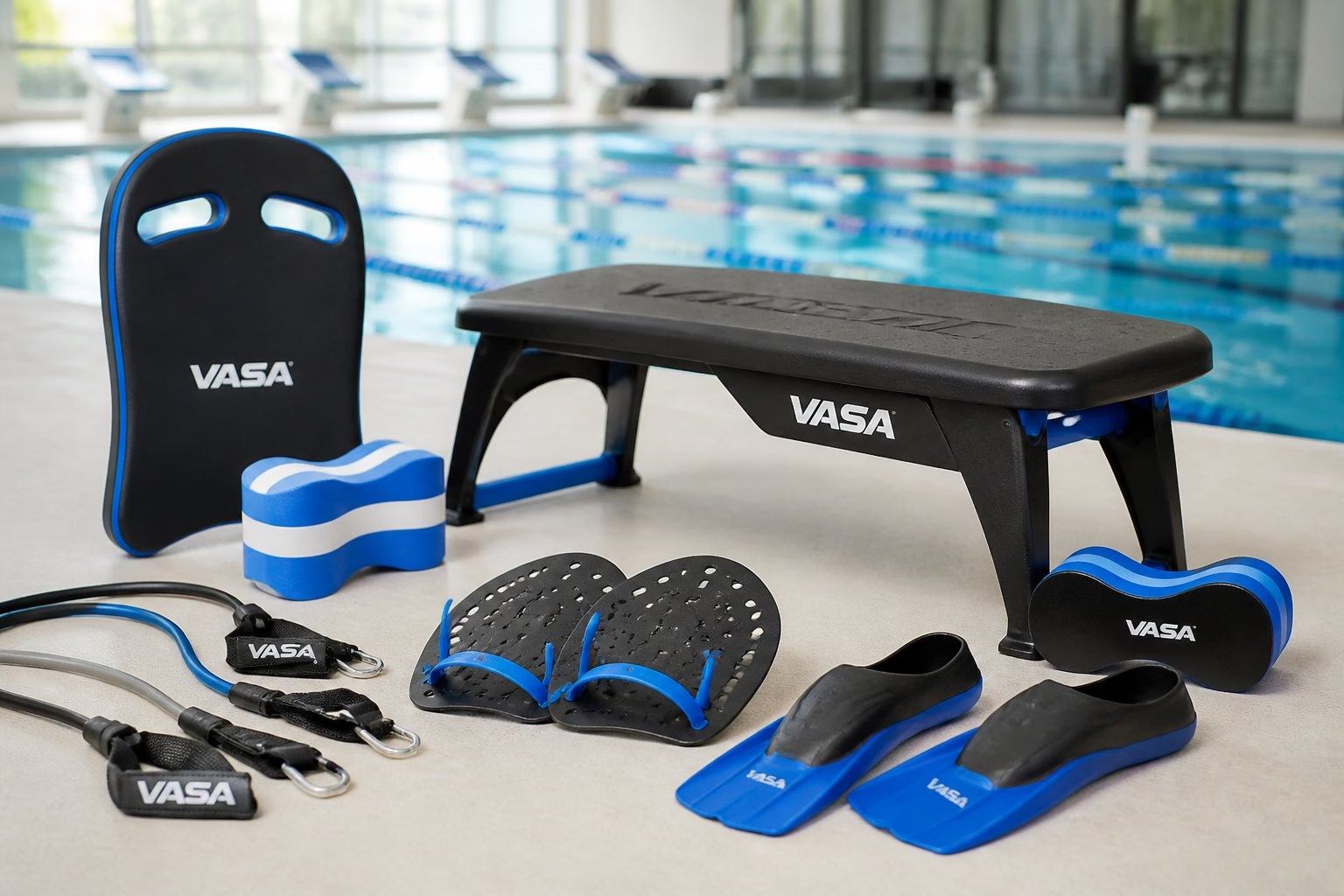
You do not need a fully equipped gym to get started. A few well-chosen pieces of kit for dryland sessions and a small collection of pool tools will cover the vast majority of exercises in this guide.
Useful Home And Gym Kit For Dryland Sessions
A pull-up bar that fits a door frame is one of the best investments you can make. It opens up pull-ups, hanging core work, and band-assisted variations without needing a gym membership.
A set of loop resistance bands covers warm-ups, shoulder prehab exercises, and assisted pull-ups. They weigh almost nothing and travel easily.
A medicine ball in the 3 to 6kg range supports medicine ball slams, Russian twists, and rotational throws. A kettlebell adds kettlebell swings and goblet squats to your home setup.
If you have gym access, a lat pulldown machine, barbell rack, and cable station give you everything else you need.
Pool Tools Worth Considering For Strength-Focused Sets
The essentials are straightforward:
- Swim paddles: choose a size only slightly bigger than your hand
- Short-blade swim fins: build kick speed without over-relying on fin propulsion
- Pull buoy: isolates upper-body pulling work
- Swim parachute: creates drag for resisted sprint sets
These four tools, available from most swimming training equipment retailers, cover every in-water strength set in this guide.
How To Choose Gear Without Overbuying
Start with what you will actually use at least twice a week. A pull-up bar, a resistance band, and a pair of swim paddles are enough for your first month. Add a medicine ball or a swim parachute once those become routine.
Avoid buying the most expensive version of everything upfront. Quality matters for items that take heavy use, like a pull-up bar, but a basic pull buoy performs identically to a premium one.
Match your equipment to your goals. If you are focused on kick strength, invest in good fins first. If your catch needs work, prioritise paddles and a pull buoy. Let your weaknesses guide your spending.
Frequently Asked Questions
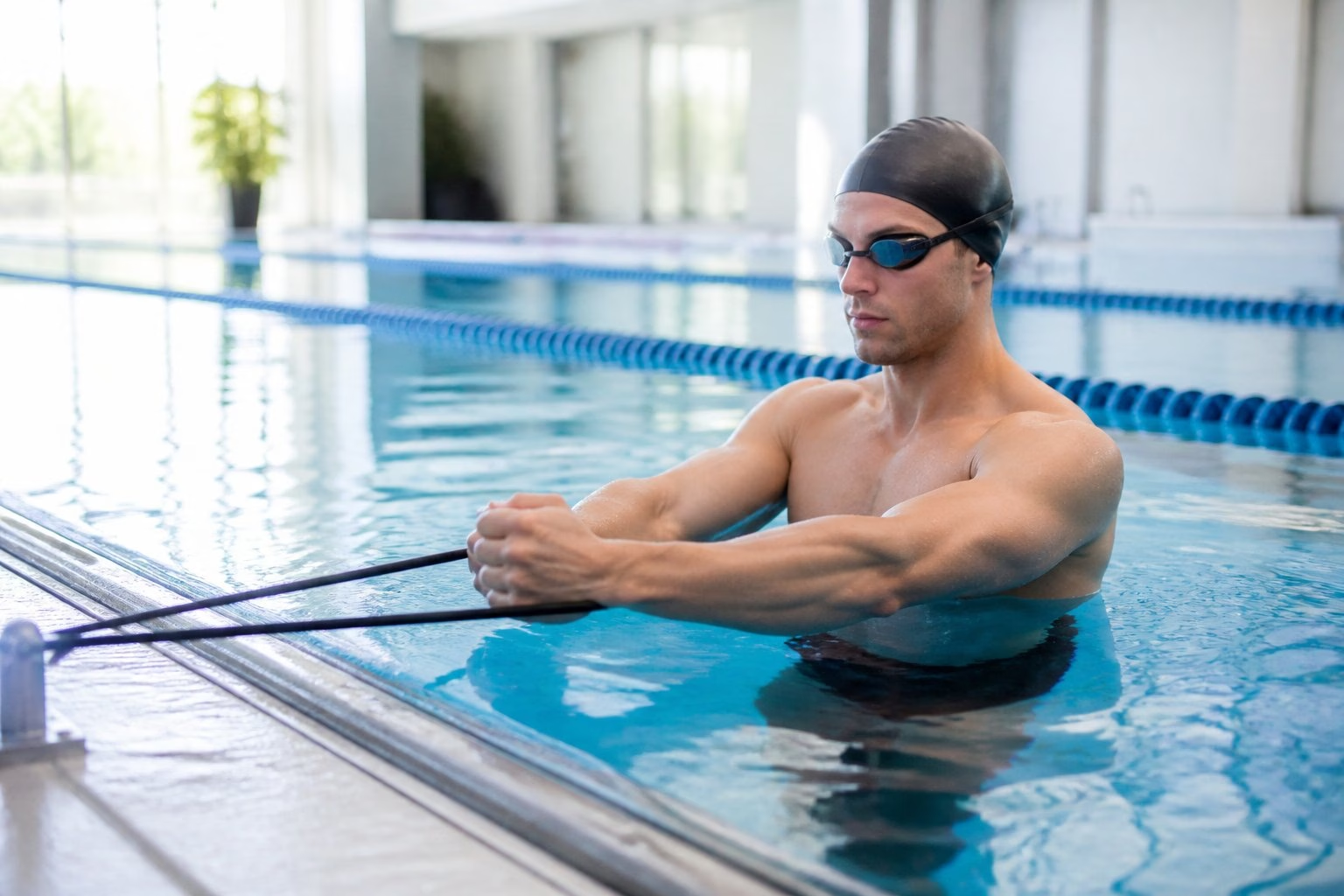
What gym exercises improve pull strength and shoulder stability for faster swimming?
Pull-ups and lat pulldowns are the most effective exercises for building the pulling strength that drives every stroke. Pair them with external rotation exercises using resistance bands and push-ups or bench press to maintain balanced shoulder stability. Aim for 3 to 4 sets of 6 to 12 reps on each exercise.
How can I structure a weekly dryland programme to complement pool sessions without overtraining?
Limit dryland sessions to two or three per week, scheduled on lighter swim days or several hours after your main pool work. Focus each session on a different emphasis, such as upper body, lower body, or full-body circuits with lighter loads. Reduce volume during competition periods to maintain strength without accumulating fatigue.
Which strength exercises can swimmers do at home with minimal equipment?
Push-ups, planks, bodyweight squats, lunges, and Russian twists require no equipment at all. Add a door-frame pull-up bar and a resistance band, and you can perform pull-ups, assisted variations, and shoulder prehab exercises. A medicine ball opens up rotational throws and slams for core and power development.
What strength work best supports freestyle technique and reduces shoulder strain?
A combination of pull-ups for lat strength, external rotation band work for rotator cuff health, and planks for core stability gives the best support for freestyle. These exercises strengthen the muscles that power your catch and pull while protecting the shoulder joint from the overuse patterns that cause common swimming injuries.
How should triathletes balance strength sessions with swim, bike and run training?
Triathletes should aim for one to two full-body strength sessions per week, ideally placed after a lower-intensity training day. Prioritise compound exercises like squats, deadlifts, and pull-ups that benefit all three disciplines. Keep sessions to 30 to 45 minutes and reduce intensity in the final two to three weeks before a race.
What does the 80/20 rule mean in swimming training and how do I apply it?
The 80/20 rule means spending roughly 80 per cent of your training time at lower intensities and 20 per cent at high intensity. In practice, most of your swim workouts should be aerobic base work, technique drills, and moderate-pace sets, with only a small portion dedicated to race-pace sprints or maximum-effort strength work. This balance builds endurance while allowing adequate recovery for quality high-intensity sessions.