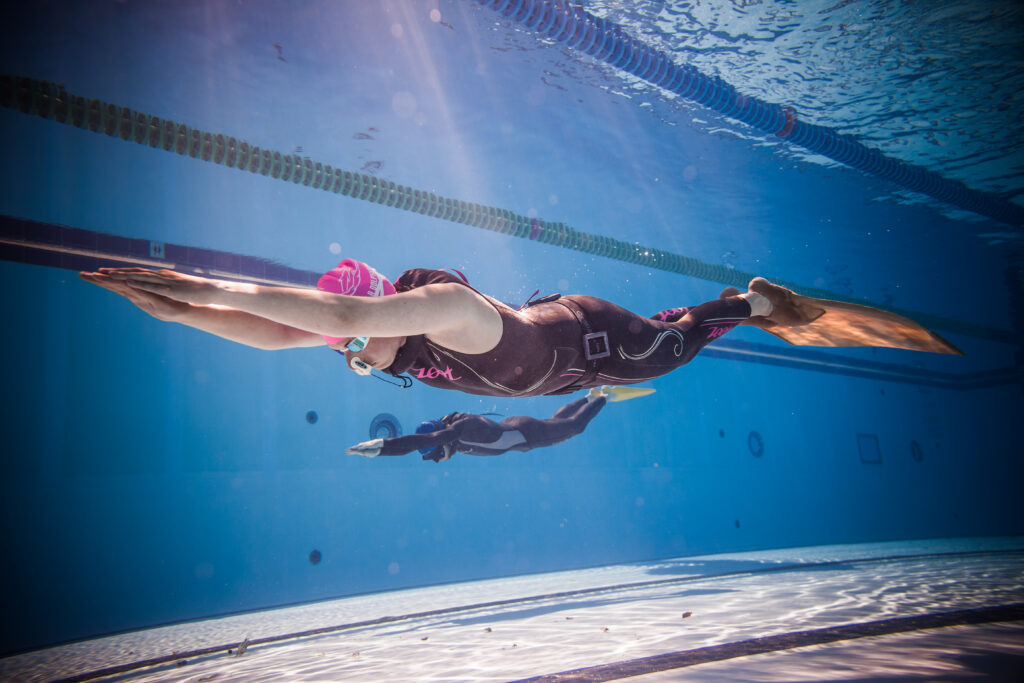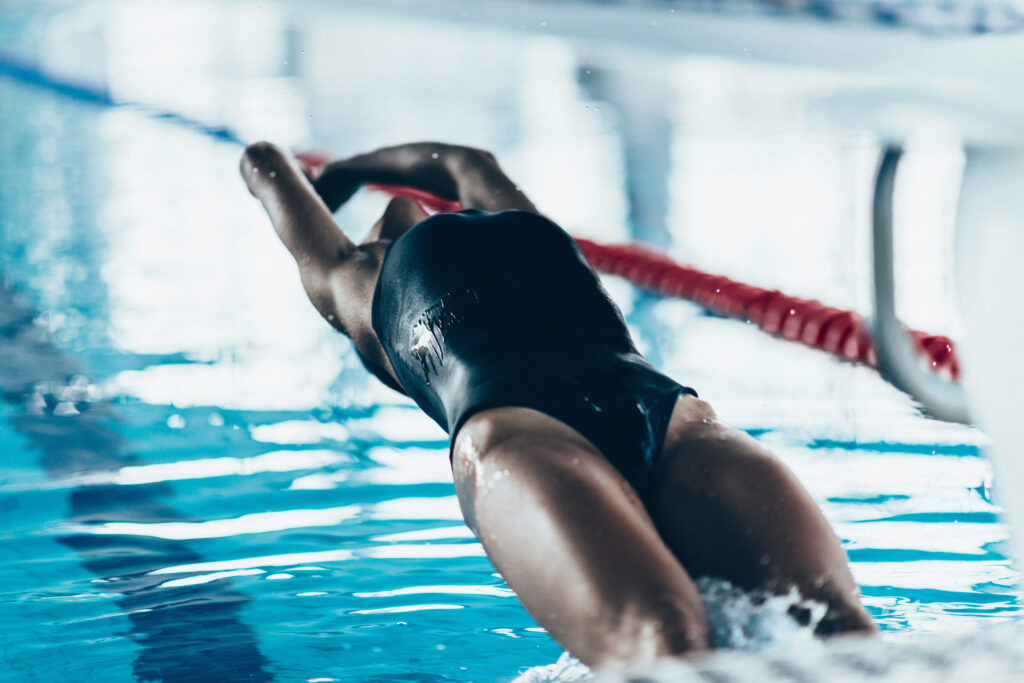
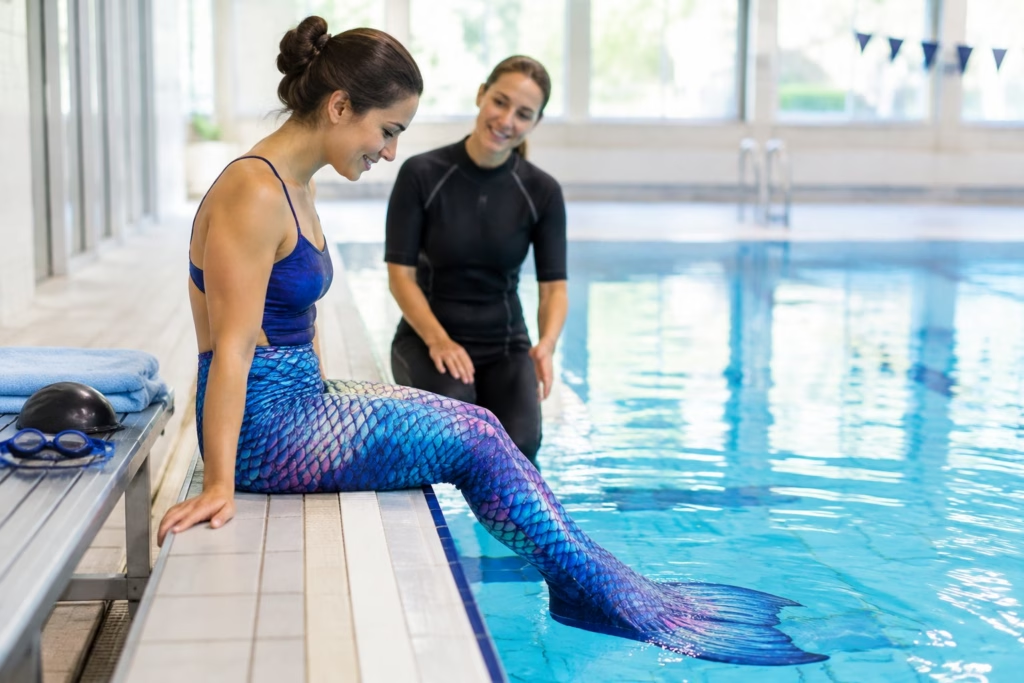
You swim like a mermaid by wearing a tail with a single fin inside it and moving with a wave-like dolphin kick from your core. This is called mermaid swimming, or mermaiding, and in the UK it is now taught in pools by trained instructors.

If you can already swim 25 metres confidently and are happy with your face in the water, a supervised beginner session with a qualified mono-fin instructor is the safest way to start. With your feet bound together, you cannot kick to safety the normal way. Strong swimming skills and a good instructor make the difference between a fun first session and a frightening one.
The upside is huge. Mermaiding builds core strength, adds playful new skills to your swimming, and suits both children and adults. When you feel ready, book a beginner session with a local qualified instructor and try a tail in a safe pool before you spend money on your own kit.
How Do You Swim With a Tail?

You swim with a tail by pushing a wave through your body from your chest down to the fin. Once that kick feels natural, you build up to turns, rolls and routines, and your core and hips get stronger along the way.
How the Dolphin Kick Creates Movement
The dolphin kick is the engine of every mermaid move. Your legs stay pressed together, and the motion starts in your chest and belly, not your knees.
Think of it as a slow ripple:
- Press your chest down a little.
- Let your hips rise as the chest lifts.
- Let the wave travel through your thighs and knees.
- Snap the fin at the end, like cracking a whip.
Most beginners bend their knees too much. When you do this, the fin drags and you barely move. Keep the bend small and let the hips lead.
Arms matter too. Start with your hands stretched in front of you in a streamlined shape, or rest them by your sides. This helps you feel where the push comes from. Wearing a single fin works your legs in a similar way to swimming with fins to build muscle and speed, though the monofin asks far more of your core.
You can practise this kick without a tail. Try it on your front at the surface with your feet together, then on your back. Short swimming drills for beginners like kicking with a float are a good way to groove the movement first.
From Basic Mermaid Skills to Group Routines
Your first mermaid skills are practical ones. A typical course starts with putting the tail on, getting in and out of the water, and moving safely before any tricks.
From there, skills build in steps:
- Floating and sculling: small hand movements keep you steady at the surface. Good sculling technique helps you hover and turn.
- Rolls and turns: you learn to roll from front to back, which is a key safety move.
- Short underwater swims: a few kicks below the surface on one breath.
- Tricks: tail flicks, waves and handstands with the fin above the water.
MermaidsUK lays out a clear path where learners progress onto partner and group routines, advanced movements and basic synchronised swims. Routines set to music are where many adults fall in love with the sport. Moving in time with others feels a lot like dance.
How Mermaid Fitness Can Support Strength and Flexibility
Mermaid fitness is a proper workout. Each kick uses your stomach, back and bottom muscles together, so you feel it the next day after your first session.
Flexibility helps you move more smoothly. Loose ankles let the fin point well, and mobile hips and spine give you a deeper wave. Gentle yoga, Pilates and planks out of the water all support your kick.
Expect to tire quickly at first. Rest at the side often, and treat short sets of kicks as your training. Your stamina grows week by week.
Who Can Take Part, and How Do You Stay Safe?
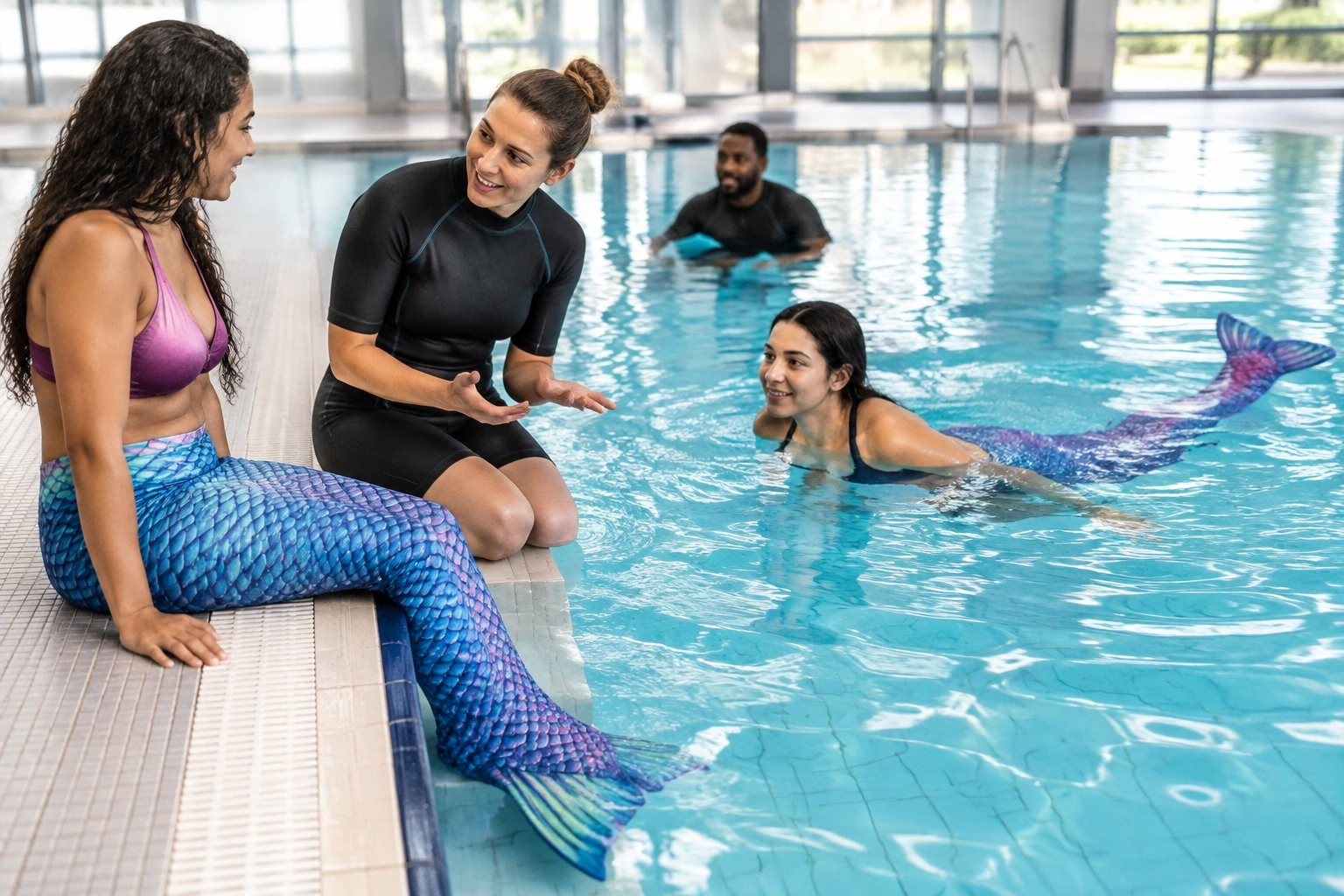
Anyone aged six or over who can already swim well can take part, as long as they learn under supervision. Safety rests on four things: proof of swimming ability, a trained instructor, knowing how to get out of the tail, and care around breath-holding.
Swimming Ability and Age Requirements
Most UK schools set a minimum age of six. MermaidsUK states that all participants must be 6 years or plus and pass its own swim test.
For children, a common benchmark is Swim England Stage 5 or equal. At one Surrey provider, children must be able to:
- Swim 25m on the front and back confidently
- Tread water for 30 seconds
- Perform a dolphin kick
- Go under the water
- Log roll
These rules come straight from Splash Active’s mermaid session requirements. Adults at the same venue need to swim 25m and be comfortable with their face in the water.
Expect a quick test at the start. Instructors watch a warm up, and anyone who cannot manage the skills does not wear a fin. That rule protects you.
Why Qualified Instruction and Supervision Matter
A trained instructor knows how a tail changes your body in the water. You lose your normal kick, and standing up takes more effort than you expect.
Look for an instructor with a recognised mono-fin qualification. Fin2Fit, for example, is a mono-fin instructor course accredited by Swim England with a water safety link to the Royal Life Saving Society (RLSS).
Good sessions also have a lifeguard on poolside. Ask about insurance and DBS checks before you book. A decent provider answers these questions happily.
Safe Entry, Exit and Equipment Removal
Getting in and out is where many slips happen. Sit on the pool edge, put the tail on there, then slide in gently with your instructor nearby.
The single most important skill is taking the fin off fast. Quality fins have a quick-release system, so you can kick them off quickly even while swimming. Practise this in shallow water during your first lesson until it feels automatic.
To get out, swim to the side and hold the edge with both hands. Remove the fin in the water, then climb out normally. Never try to hop out with your feet still bound.
Why Underwater Breath-Holding and Open Water Need Extra Caution
Breath-holding needs care. Never hold your breath for long periods, never hyperventilate before going under, and never practise alone. Short swims with lots of rest at the surface are the safe way to learn.
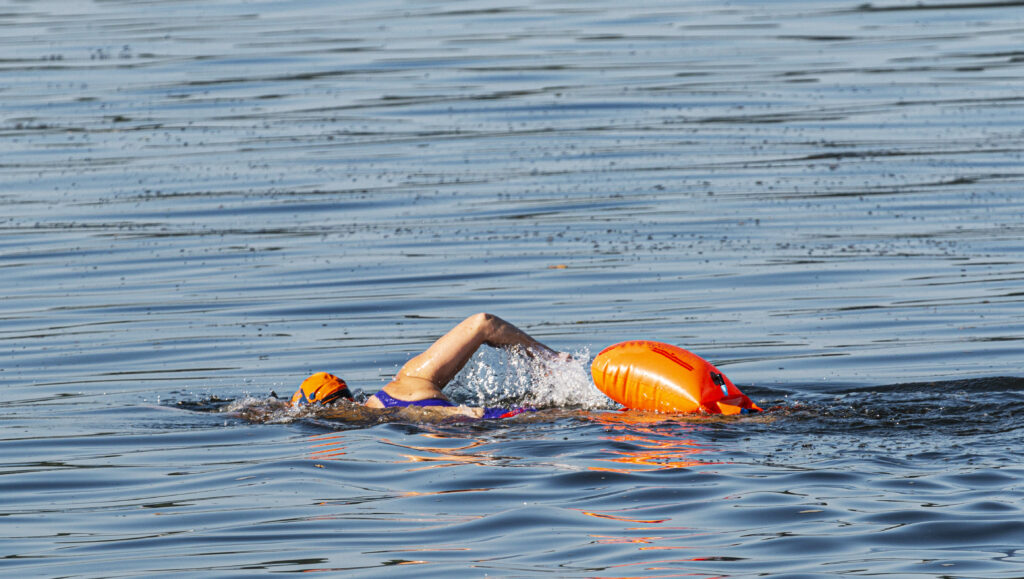
Open water adds risks you cannot see. Currents, cold, drop-offs and weed make it harder to reach a safe spot with your legs joined. Stay in pools until an instructor says you are ready. If you later swim outdoors, read up on staying warm and safe in open water and always go with a buddy.
What Equipment Do Beginners Need?
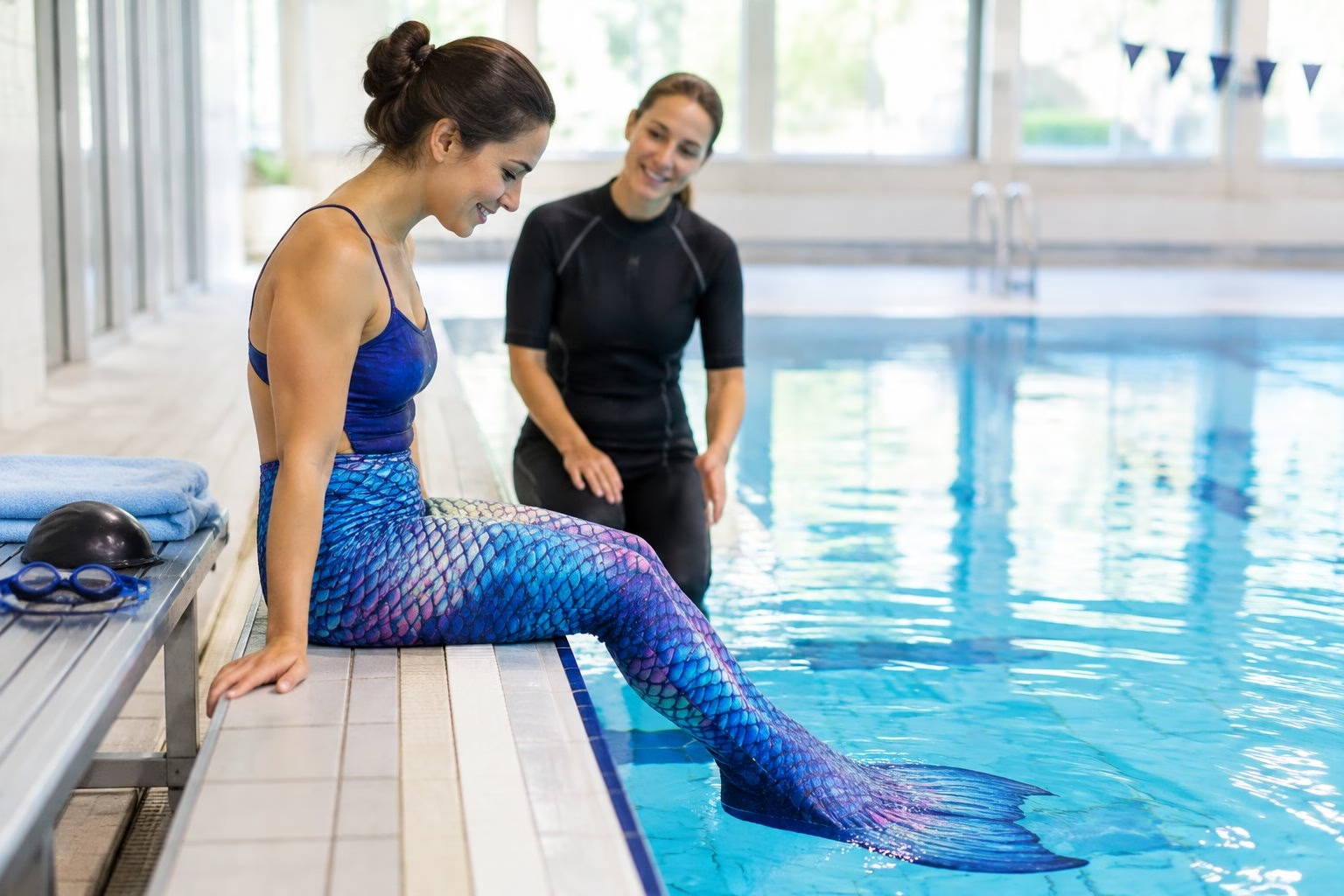
For a first lesson you need only your normal swim essentials: a costume, goggles and a towel. The instructor brings the monofin and tail, and later you can choose your own once you know what fits.
Mermaid Tail Skins vs. Monofins
A mermaid tail has two parts. The monofin is the hard blade your feet slot into, and the skin is the fabric or silicone cover that makes you look like a mermaid.
| Part | What it does | Beginner tip |
|---|---|---|
| Monofin | Pushes you through the water | Choose one with quick release |
| Fabric tail skin | Covers the fin, light and easy to move | Best for learners |
| Silicone tail | Heavy, realistic look | Save for later |
Fabric tails are lighter and easier to handle, so most beginners start with them. Rinse your kit in fresh water after each swim and dry it out of direct sun. A swimming cap also keeps long hair from tangling in the fin straps.
Choosing the Right Fit and Checking Release Features
A good fin feels snug without pinching. Your feet should not slide around, but you must be able to pull them free in a second.
Check these points before you swim:
- The fin has a quick-release design or open heel.
- The tail skin lets water drain through it.
- The waistband sits firmly but does not dig in.
- There are no tears in the fabric near the feet.
Sizes vary widely. One provider stocks tails from XS (2-4) to XXL (22-24), so adults of most builds can find a fit.
Hiring Equipment Before Buying Your Own
Hiring first saves money and teaches you what you like. Most UK mermaid experiences include fin and tail hire in the price.
Many instructors will not let you use your own fin anyway. One South Coast teacher accepts only FinFun fins, because the RLSS tested a range of fins and advised that FinFun are the best entry level fins. Ask your instructor which brands they approve before you buy anything.
Where Can You Learn in the UK?
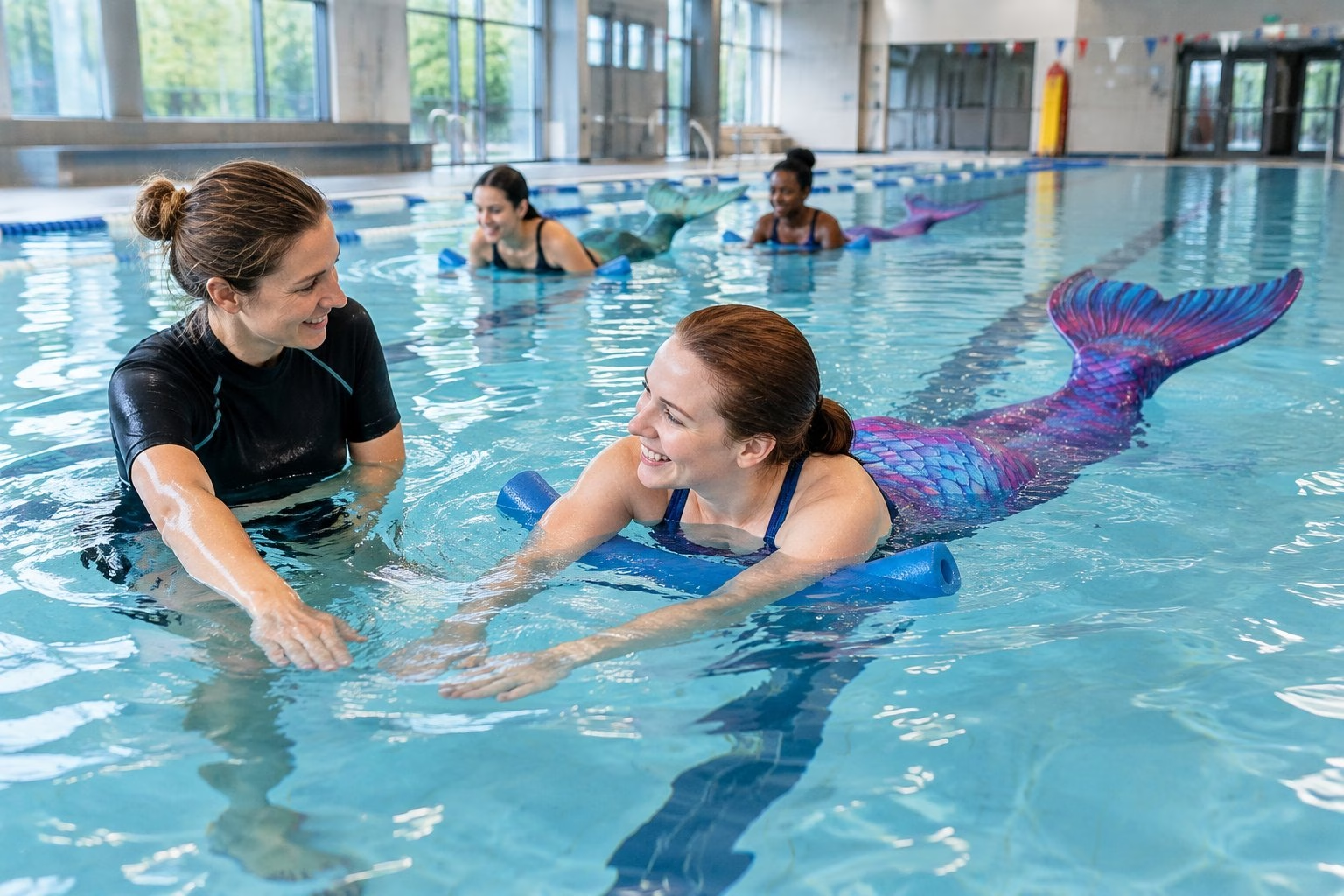
You can learn at swim schools, leisure centres and specialist mermaid academies across the UK. Your choice comes down to whether you want a one-off taster or a course that builds real skills.
Choosing Between a Mermaid Experience and Regular Lessons
A mermaid experience is a single fun session. It suits birthdays, hen parties or simply finding out if you enjoy it.
Regular mermaid lessons run over several weeks. You learn more each time, from basic finning up to routines. Group sizes vary; one school runs adult classes of 4 to 6 swimmers and private lessons for one to three.
If you are nervous, a private lesson gives you more attention. If you love a social class, a group course keeps you motivated.
Finding Qualified Instructors and Approved Pool Sessions
Start with a national network. MermaidsUK lists instructors in a searchable directory covering areas across the UK.
PADI also runs mermaid courses through dive centres. Its Discover Mermaid taster takes place in shallow water you can stand in, which is ideal for nervous beginners.
Before you book, ask:
- What qualification does the instructor hold?
- Is a lifeguard on poolside?
- Is equipment hire included?
- What swim test will I take?
Do not turn up at a public session with your own tail. Most pools ban tails outside booked, supervised classes.
What to Expect From Your First Lesson
Your first lesson is calm and practical. Like most adult swimming lessons, it opens with a chat about safety and a short ability check.
A typical first session runs like this:
- A swimming warm up and quick swim test.
- Learning to put the tail on and take it off.
- Kicking with feet together, often holding a float.
- Short swims in the tail, with rolls and rests.
- A few fun tricks if time allows.
Children’s sessions often last 50 minutes with a lifeguard present. Some pools have limited changing rooms, so you might need to arrive with your costume under your clothes.
Start With a Supervised Session That Matches Your Ability
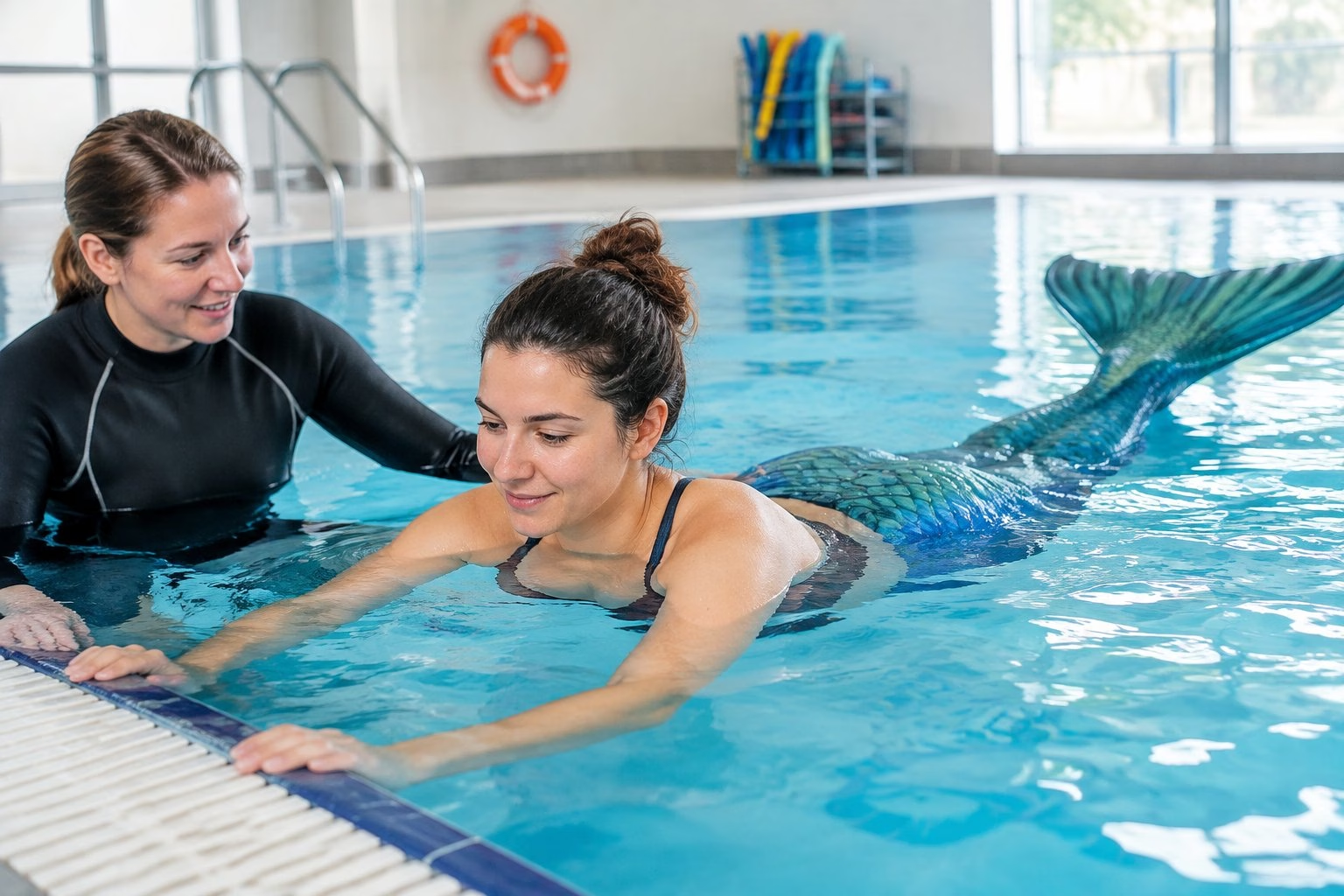
Your best first step in mermaid swimming is a supervised session pitched at your current level. Check that you can swim 25 metres and tread water before you book.
Choose an instructor with a recognised mono-fin qualification and a lifeguard on hand. Make sure the fin has a quick-release design, and practise removing it until you can do it without thinking.
Hire your tail at first. Keep breath-holds short and stay in the pool until your instructor signs off on more. Good water safety habits learned now will serve you in every session that follows.
Frequently Asked Questions

What is mermaid swimming called?
It is most often called mermaiding. Dive groups such as PADI also use the term mermaid diving, and the word applies to men and women alike.
Is mermaid swimming suitable for non-swimmers?
No, you need to be a confident swimmer first. Most UK providers ask you to swim 25 metres and tread water. Non-swimmers should start with standard lessons, perhaps using pool noodles and floats, and try a tail later.
Can adults take mermaid swimming lessons?
Yes, many UK schools run adult mermaid lessons and experiences. Adults enjoy the fitness side and group routines. You still need to pass a short swim test first.
Can I use a mermaid tail at my local swimming pool?
Usually only during a booked session with a qualified instructor. Most pools ban tails in public sessions because they raise safety risks. Ask your pool which mermaid classes it hosts.
Do I need to buy a tail before my first lesson?
No, your instructor will supply one. Most experiences and mermaid lessons include monofin and tail hire. Wait until you know your size and your instructor’s approved brands before you buy a mermaid tail.