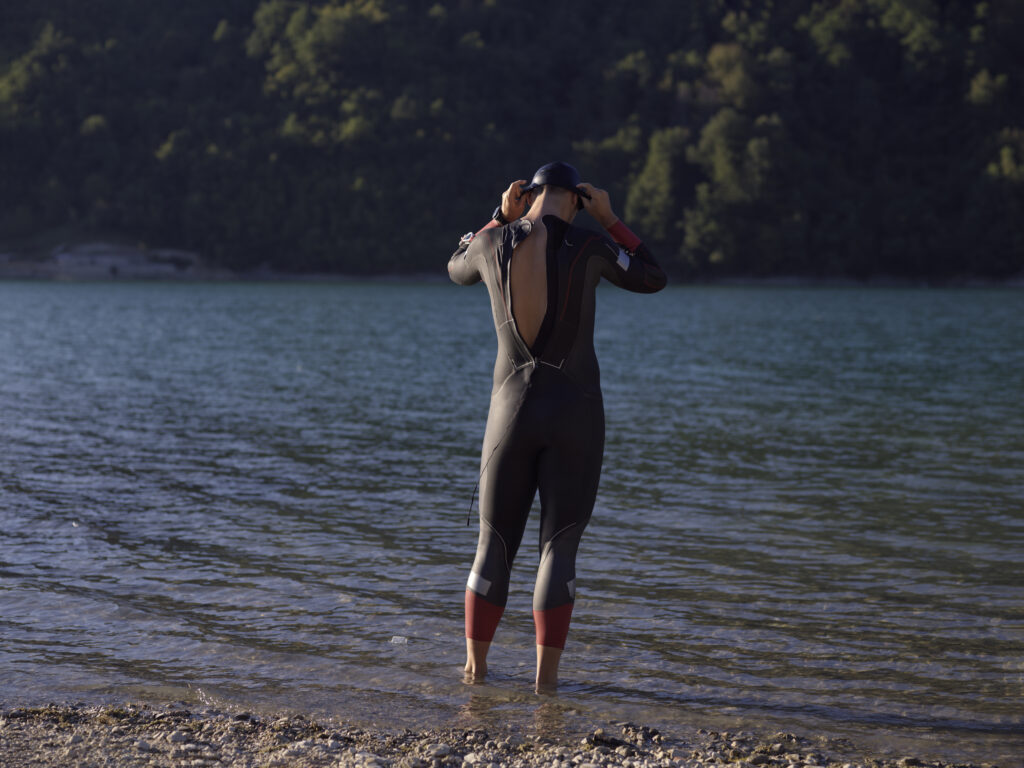
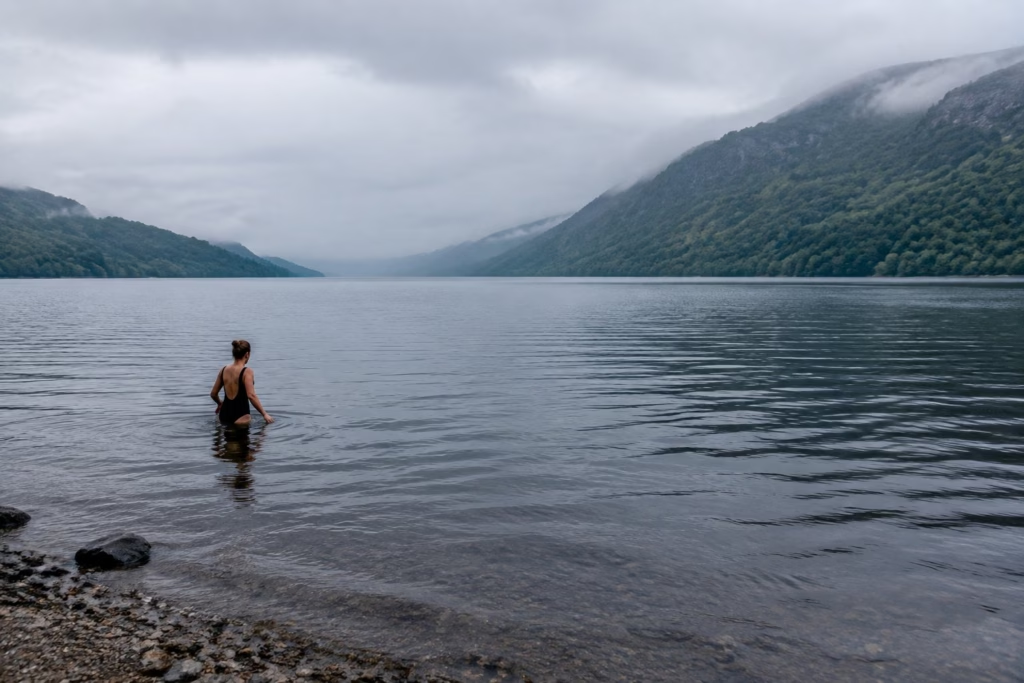
You can legally swim in Loch Ness, but the water is very cold and very deep, and it changes fast when the wind picks up. Scottish access rights cover swimming in most lochs, including this one. Near the shore you will feel a summer surface of around 12 to 13°C at best, with water closer to 5°C below the top layer.
Wild swimming at Loch Ness suits experienced, cold-acclimatised swimmers who stay close to shore, wear a wetsuit and tow float, and bring someone on land to watch them. If you are newer to outdoor water, it helps to read up on what wild swimming involves before you choose this loch. Many people get more from a short dip at Dores, or from a gentler loch a short drive from Inverness.
Nothing here promises a safe swim. Conditions on the day decide that. Use what follows to judge your entry point, your support and your backup options, then check the forecast and plan your first trip with a friend.
Can You Swim in Loch Ness, and What Are the Risks?
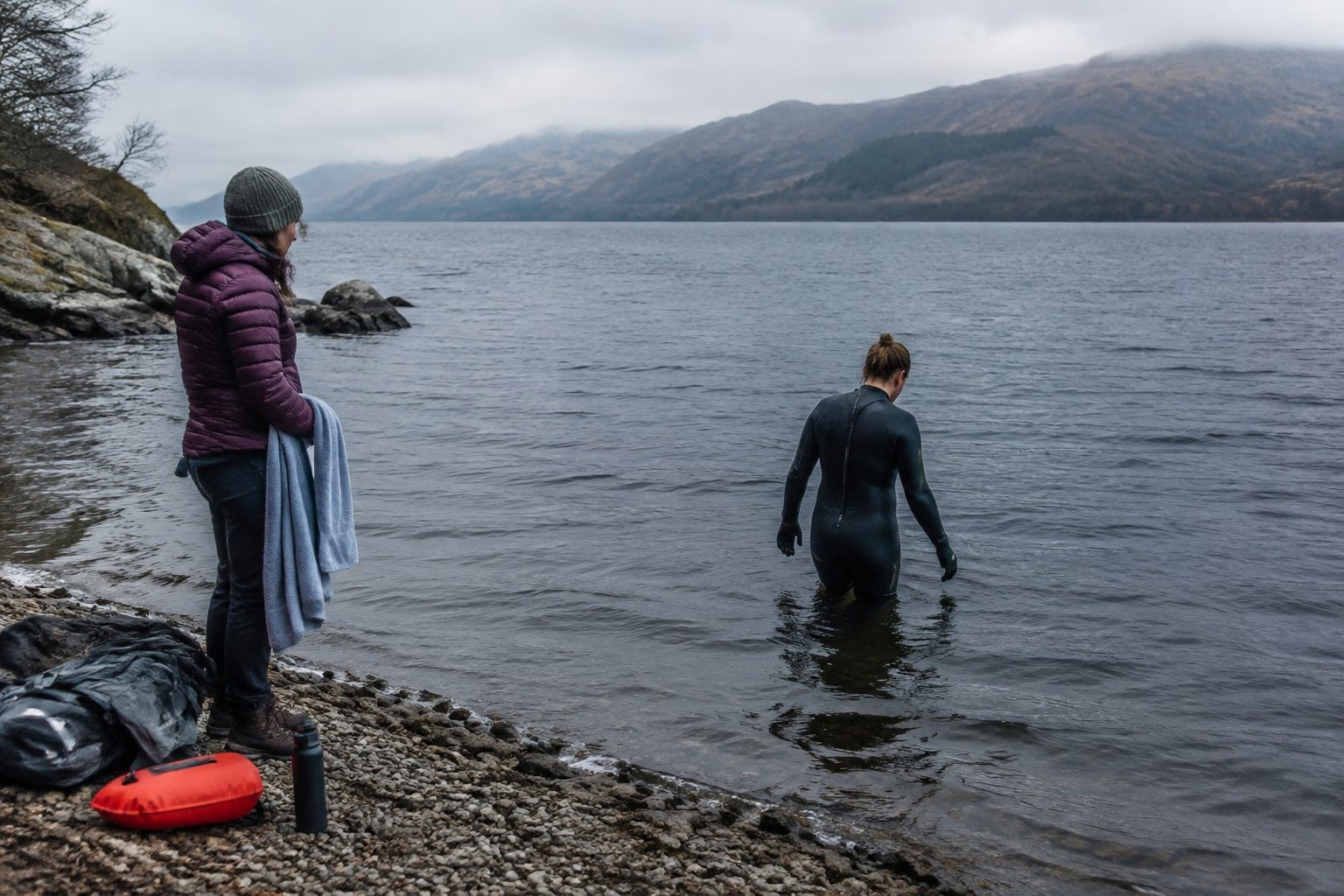
Swimming is allowed, and the main risks are cold, depth and wind. Cold water shock hits in the first minute, the bottom falls away close to shore, and the long, straight Great Glen funnels wind into steep chop.
Is Swimming Permitted, and What Restrictions Should You Check?
There is no ban on swimming in Loch Ness. Your right to swim comes from the Scottish Outdoor Access Code, which also asks you to act responsibly. That means respecting private land, avoiding crops and livestock, and leaving no trace.
Before you go, check these points:
- Signs at the shore. Look for local notices about events, works or water quality. Follow them.
- Private ground. Some shoreline sits behind fields or gardens. Use paths and public access points.
- Paid sites. Urquhart Castle is a ticketed Historic Environment Scotland site. Do not treat its grounds as a swim entry.
- The Caledonian Canal and locks. Keep well away from canal sections, lock gates and moorings at Fort Augustus and Dochgarroch. Boats and moving water make these places unsuitable for swimming.
- Organised events. Marshalled swims sometimes use the loch. Give their course plenty of space.
Rules do change. Check with Highland Council, Historic Environment Scotland or the venue on the day if you are unsure.
Why Do Cold Water, Depth and Sudden Drop-Offs Matter?
Cold water shock is the first danger. When cold water hits your skin, you gasp and your breathing races. If your face is under water at that moment, you can inhale it. Experienced marathon swimmers warn that cold water shock can kill in minutes, and that applies even on a hot July day.
The loch’s depth keeps it cold. Loch Ness reaches 230m at its deepest point and holds more water than all the lakes of England and Wales combined. That huge volume barely warms. The surface tops out around 12 to 13°C in late July and August. Below the warm top layer, it sits near 5°C all year.
The bottom also drops away close to land. At Dores you are out of your depth soon after you step off the pebbles, and the loch falls to over 100m not far out. You cannot stand up to rest. If you are still building tolerance, follow a slow plan for starting cold water swimming in shallower water first.
Peat stains the water dark, so you see less than a metre down. Some swimmers find that unsettling, and panic makes cold shock worse.
How Do Wind, Waves and Boat Traffic Affect a Swim?
The Great Glen runs in a straight line for about 23 miles. Wind blows down it with nothing to break it, and flat water can turn choppy within an hour. Currents on Loch Ness are mostly driven by wind direction. The other main flow comes from the River Oich at Fort Augustus.
Waves change a swim in a few ways:
- You swallow water and lose your breathing rhythm.
- Spotters on shore lose sight of your head between waves.
- Getting out on a steep, stony shore becomes harder.
Boat traffic is the other risk. Cruise boats from Drumnadrochit and Fort Augustus, hire cruisers and private craft all use the loch. A cruise boat’s wake reaches the shore long after it has passed. A bright tow float and a bright cap help skippers see you, but stay close to land and away from piers and the main boat lines.
Where Can You Access the Shore?
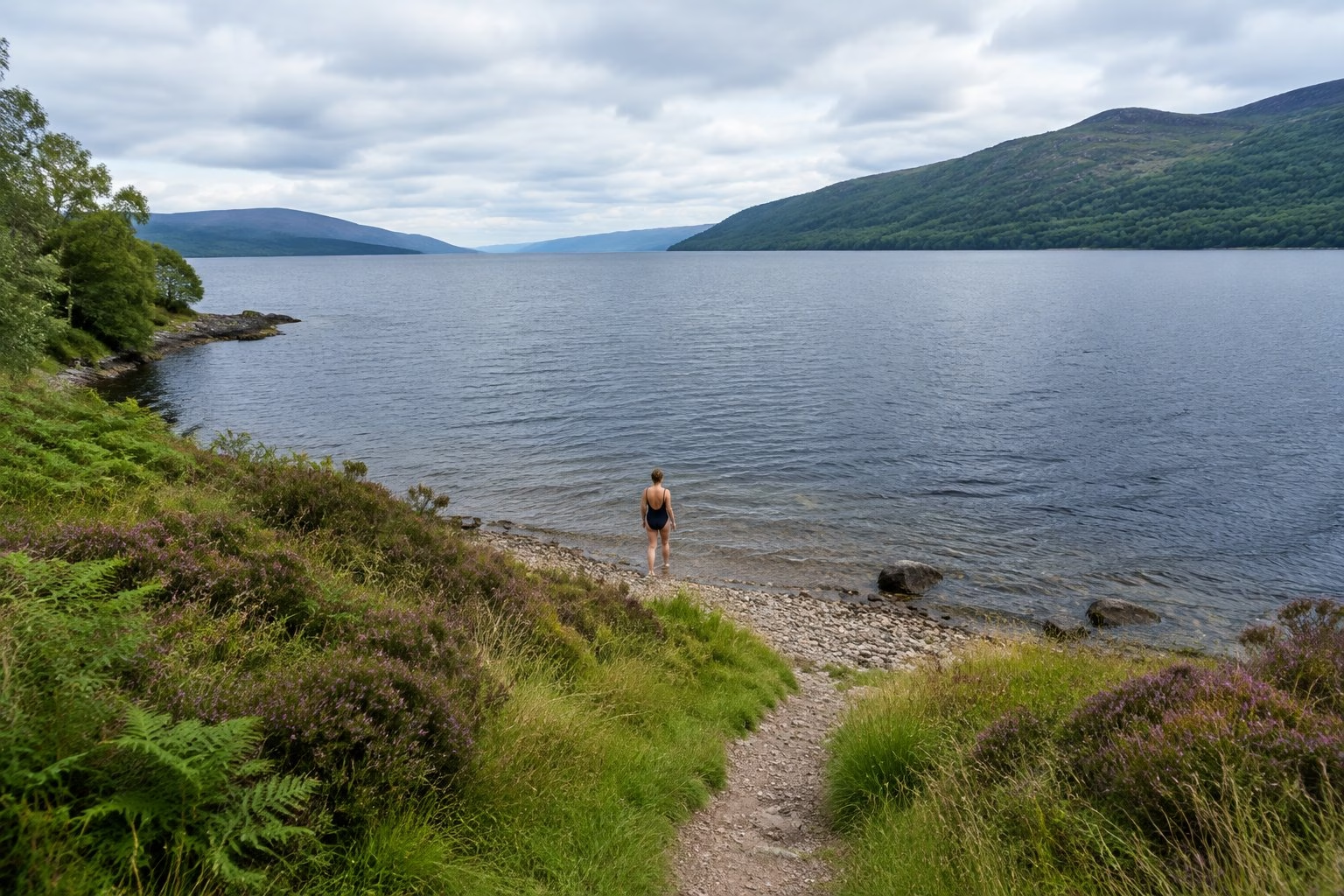
Dores Beach on the south-east shore is the easiest access point for most swimmers. The Drumnadrochit and Urquhart side is busier with boats and has fewer easy entries, so whichever shore you choose, plan your exit before you get in.
Dores Beach: What to Check Before Entering the Water
Dores is a small shingle beach about 10km southwest of Inverness, with long views down the loch. The village car park (IV2 6TR) sits close to the water, and the Dores Inn is nearby.
Before you swim, check:
- The wind. A south-westerly blows straight up the loch and onto this beach. Small waves at Dores mean bigger ones further out.
- The drop. The pebbles shelve quickly. Walk in slowly and stop once the water reaches your waist.
- Other users. Paddleboarders, kayakers and dogs share the shore on warm days.
- Your limit. Stay parallel to the shore and within about 50m of it. Never try to cross.
Wear swim shoes. The stones shift underfoot, and cold feet go numb fast.
What Should You Know About Access Around Drumnadrochit and Urquhart Castle?
The north-west shore is the tourist side. Drumnadrochit sits in Urquhart Bay, and many cruise boats leave from here. That means regular wakes and busy water near jetties.
Urquhart Castle grounds are a paid visitor site. They are not a swim spot. Some swimmers reach the shore opposite the castle on the south side by walking down through fields. That stretch is rocky and shelving, and the land is farmed, so close gates and keep clear of livestock.
Along the A82 the road runs close to the water, with steep banks and few safe places to stop. Avoid pulling into passing places or lay-bys that block traffic. If you cannot park legally and walk down safely, move on.
How Do You Assess Entry Points and Exit Routes?
Your exit matters more than your entry. Cold hands lose grip, and tired legs struggle on rocks. At any spot on Loch Ness, run through these checks:
- Look at the slope. Gentle shingle is easiest. Avoid steep rock or slabs covered in weed.
- Pick two exits. Choose one main exit and one backup in case wind pushes you along the shore.
- Walk it dry. Step down and back up before you swim, wearing the shoes you will swim in.
- Set markers. Agree with your spotter on a tree, rock or boat as your turning point.
- Check phone signal. Coverage along the loch is patchy. Know where you would go to call 999.
Our guide to lochs and rivers for wild swimming in Scotland applies the same checks to other Scottish waters.
How Should You Plan and Support Your Swim?
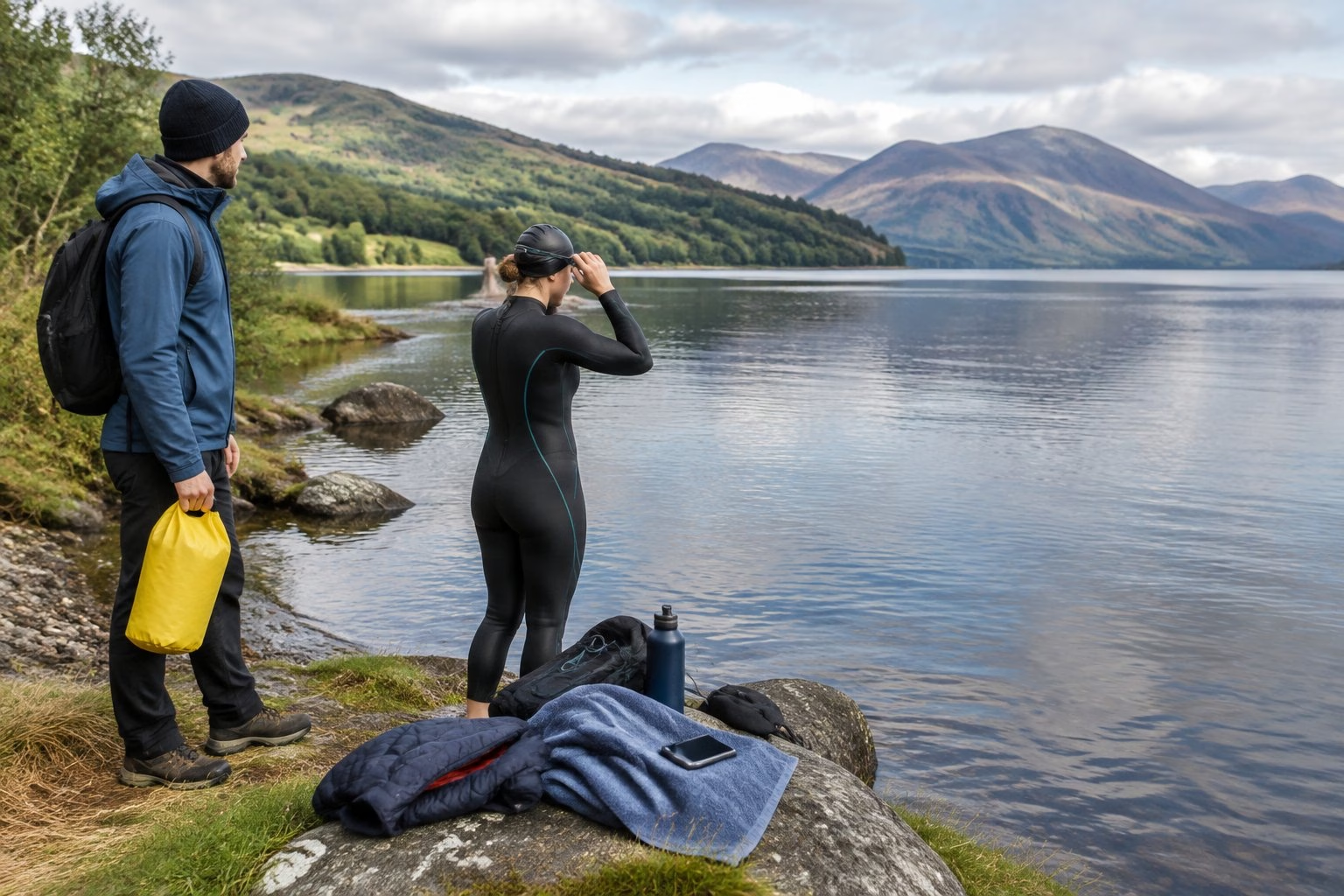
Good planning comes down to a calm forecast, the right kit, a person on shore and a fast way to warm up. Agree on a clear emergency plan before you get wet.
When Should Weather and Water Conditions Change Your Plans?
Highland weather turns quickly. Check a mountain or marine-style forecast that shows wind speed and gusts, as well as rain.
Cancel or move your swim when:
- Wind is above a gentle breeze, or gusts are forecast.
- You can see white caps on the water.
- Mist or low cloud cuts visibility for your spotter.
- Heavy rain has fallen, which brings runoff and colder water near the shore.
- You feel unwell, tired, or have been drinking alcohol.
Season matters too. Highland water is much warmer in late August and early September than in June. A hot June day tempts people in while the water is still near its coldest, and a sun-warmed body feels the shock more.
What Equipment and Shore Support Should You Arrange?
On Loch Ness, a wetsuit is the sensible choice for anything beyond a quick dip. Add these items:
| Item | Why you need it |
|---|---|
| Wetsuit (and neoprene hat, gloves, socks) | Slows heat loss in water under 13°C |
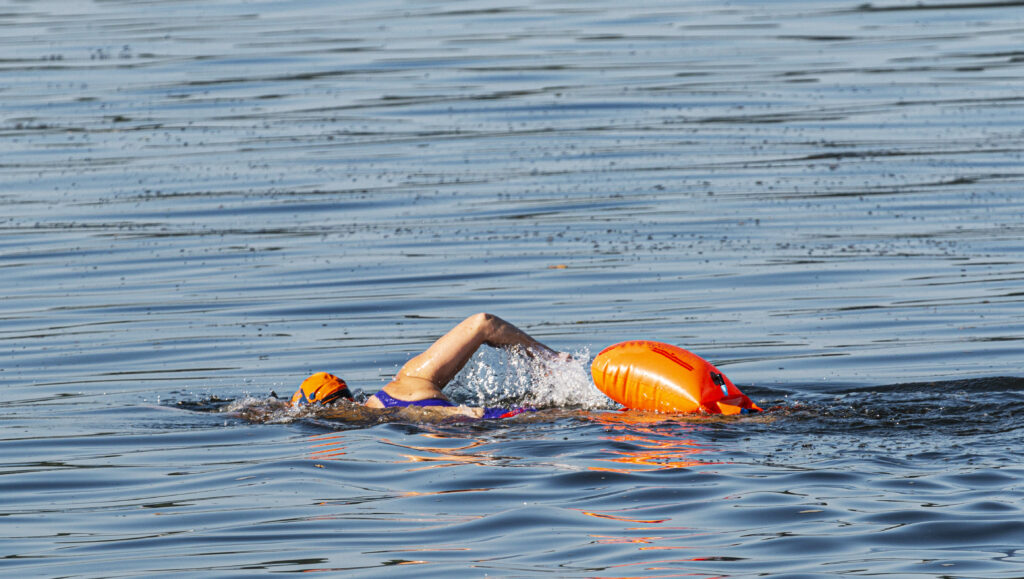
| Bright tow float | Helps boats and spotters see you; gives you something to hold |
| Bright silicone cap | Easier to spot between waves |
| Swim shoes | Protects feet on shingle and rock |
| Whistle | Gets attention fast |
| Throw line | Lets your spotter reach you without getting in |
| Phone in a dry bag | For calling 999 |
Your spotter stays on land, watches you the whole time and knows your planned route and time. Our list of essential safety gear for wild swimming covers each item in more detail.
How Should You Manage Cold Exposure and Rewarming?
Get in slowly. Walk in to your waist, splash your face and neck, and wait until your breathing settles before you put your head down. Your first few visits might just be sitting in the shallows, and that is fine.
Keep swims short. Think in minutes. Get out while you still feel fine, because the cold keeps working after you leave the water. This is called the after-drop: your body temperature keeps falling for a while once you are out.
Lay out your warm kit before you get in:
- A changing robe or big towel
- Warm layers you can pull on fast, with a hat
- A hot drink in a flask
- Something sweet to eat
Do not take a hot shower straight away or sit by a fire. Rewarm gently with layers and gentle movement. Our tips on staying warm and safe in open water go further on rewarming.
What Is Your Plan if Someone Gets Into Difficulty?
If cold shock hits, float on your back until your breathing calms, then swim to shore or signal for help. This “float to live” approach buys you time.
Agree these steps with your group before anyone swims:
- Signal. One arm raised and waving means “I need help”.
- Call. The spotter dials 999 and asks for the Coastguard for any incident on the loch.
- Reach or throw. Use the throw line or tow float. Do not swim out to the person.
- Give a location. Know your village name, the nearest landmark, or use the what3words app.
- Treat for cold. Once the person is out, remove wet clothes, wrap them up and get them to medical help.
Watch for the “umbles” in each other: stumbles, mumbles, fumbles and grumbles. Any of these means get out and warm up now.
Where Else Can You Swim Near Inverness and Loch Ness?
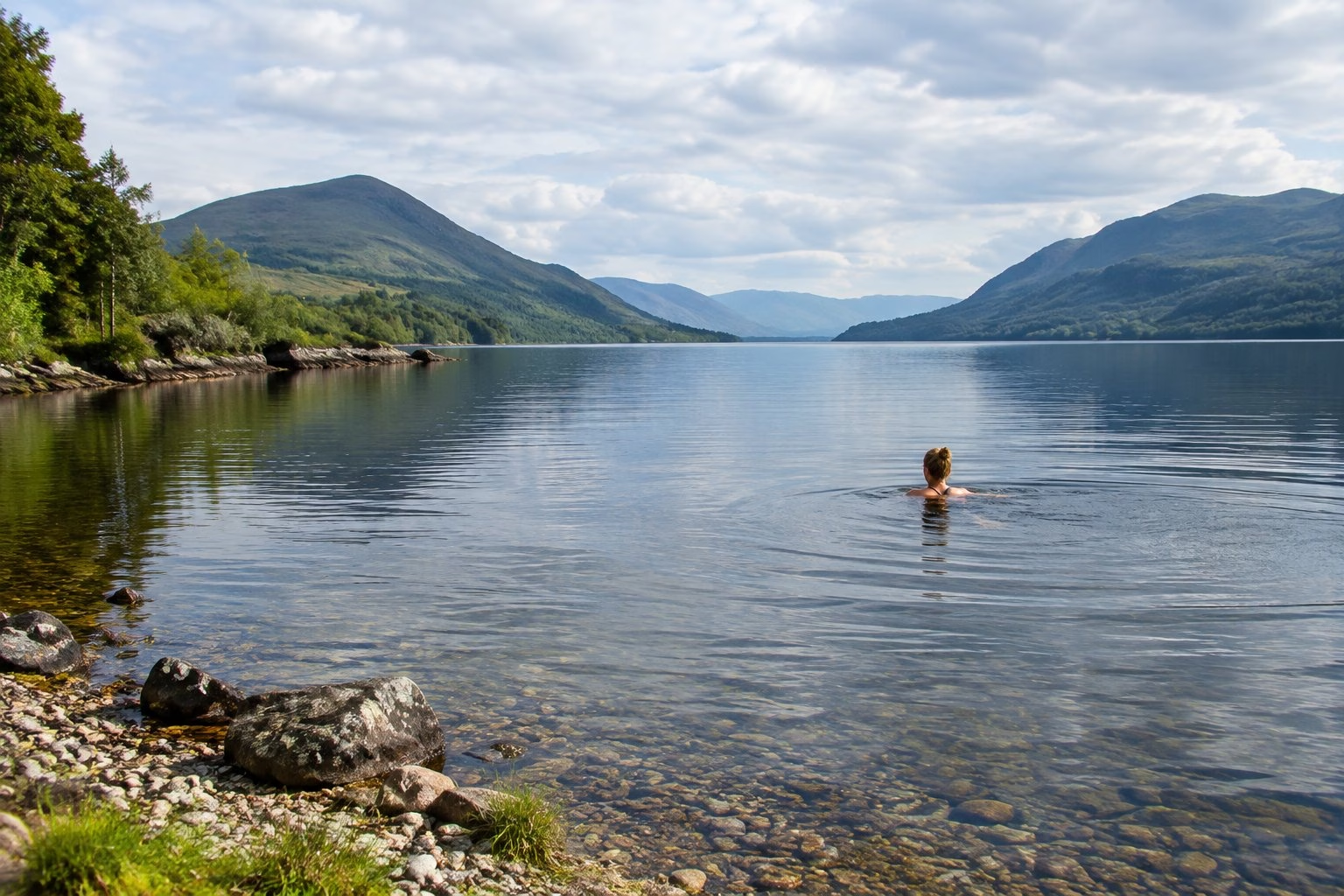
Smaller lochs south of Loch Ness warm up faster and shelve more gently, while Glen Affric and the Cairngorms offer sandy entries. For sea swimming, the Moray Firth beaches on the Black Isle and at Nairn bring tides into the plan. Wild swimming in the Highlands has plenty of choice once you look beyond the famous loch.
Loch Duntelchaig and Loch Ceo Glais: Rocky Shores and Local Access Checks
Loch Duntelchaig sits in the hills south of Inverness. Its water is clear, which suits snorkelling, and it does not get deep quickly. Every access point is rocky, so wear swim shoes with a firm sole. Parking fills up early on sunny days.
Loch Ceo Glais lies about half a mile southwest of Duntelchaig. It is small and warms up quickly in summer, so many locals call it the warmest loch in the area. There is very little parking, so arrive early or late, or park at Duntelchaig and walk round.
Both lochs sit among farms and estates. Use existing tracks, close gates and check for any local signs about water supply or land management before you swim.
Glen Affric and Loch Beinn a’ Mheadhoin: Woodland Shores and Reservoir Precautions
Loch Beinn a’ Mheadhoin sits deep in Glen Affric among old pine woods. Some of its entry points are sandy, which is rare for a Highland loch.
It is also a hydro reservoir. Take these precautions:
- Keep well away from the dam and any water intakes or outflows.
- Expect the shoreline to change as water levels rise and fall.
- Watch for steep, soft edges where the level has dropped.
Phone signal is poor in the glen, and help is far away. Carry a full kit, tell someone your plans and swim only with company.
Loch Morlich and Loch an Eilein: Options in the Cairngorms
Loch Morlich, in Cairngorms National Park near Aviemore, has sandy beaches and is fairly shallow all the way across. It gets very busy and is used by watersports clubs. Swim before 9am or after 7pm in summer for quieter water, and stay clear of paddlers and sailing boats.
Loch an Eilein sits in Rothiemurchus Forest, a short walk from a car park. Its island holds the ruins of a 14th-century castle. Do not swim out to the island; it is further than it looks and the water is cold.
Both lochs make a calmer half-day trip from Inverness. For more inland options across the country, browse these top lakes for open swimming in the UK.
Rosemarkie Beach and Nairn Beach: How Sea Conditions Differ
Sea swimming brings tides, currents and salt water into your planning. Both beaches face the Moray Firth.
Rosemarkie Beach on the Black Isle has rocks in the bay that are good for snorkelling. Local swimmers suggest arriving about an hour before high tide on a calm, sunny day. Dolphins often pass nearby, especially off Chanonry Point, but the currents off the point are strong. Keep to the bay.
Nairn has long, flat sands. The tide goes out a long way there, and channels near the river mouth carry moving water. Check tide times and stay away from the river outflow. Our advice on the safest tide for a sea swim explains how to time your entry.
Choose Your Swim Around Conditions, Not the Landmark
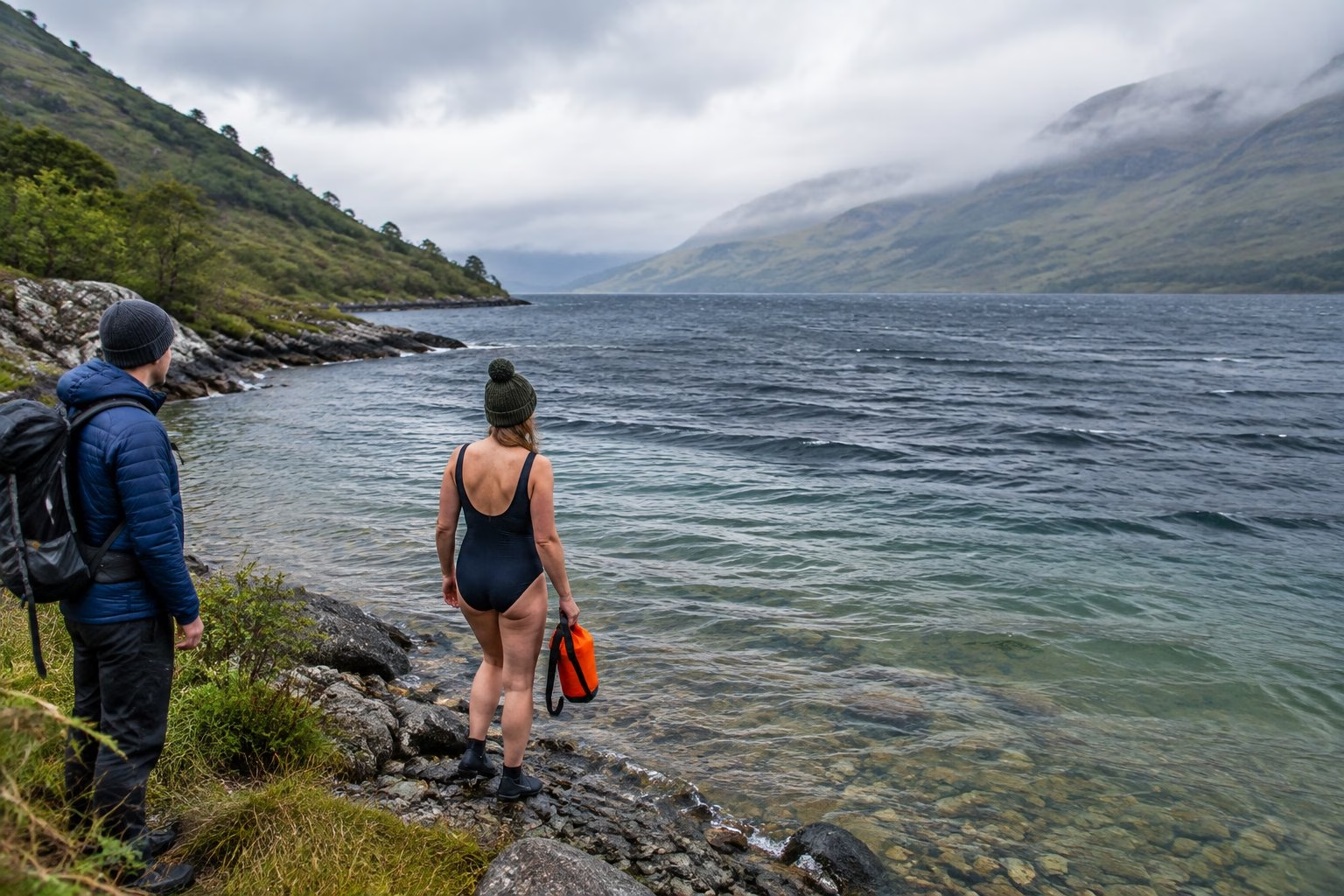
Pick your swim spot on the day by checking wind, water temperature and support. The most famous name on the map comes second. Loch Ness is cold, deep and exposed, so it rewards swimmers who keep close to shore, bring a spotter and wear a wetsuit.
On calm days with a friend on land, a short swim at Dores is a fine goal. On windy days, or if you are still building cold tolerance, a sheltered loch like Duntelchaig or Morlich gives you a better session. Wild swimming in the Highlands works best when you are willing to switch plans.
Before every trip, run through the same short list:
- Forecast checked for wind and gusts
- Spotter on shore with a throw line and phone
- Wetsuit, tow float and bright cap packed
- Entry and two exits walked dry
- Warm layers and a hot drink ready
For more spots and advice, explore our wider outdoor and wild swimming pages, then keep your first Loch Ness swim to a few minutes along the shore.
Frequently Asked Questions
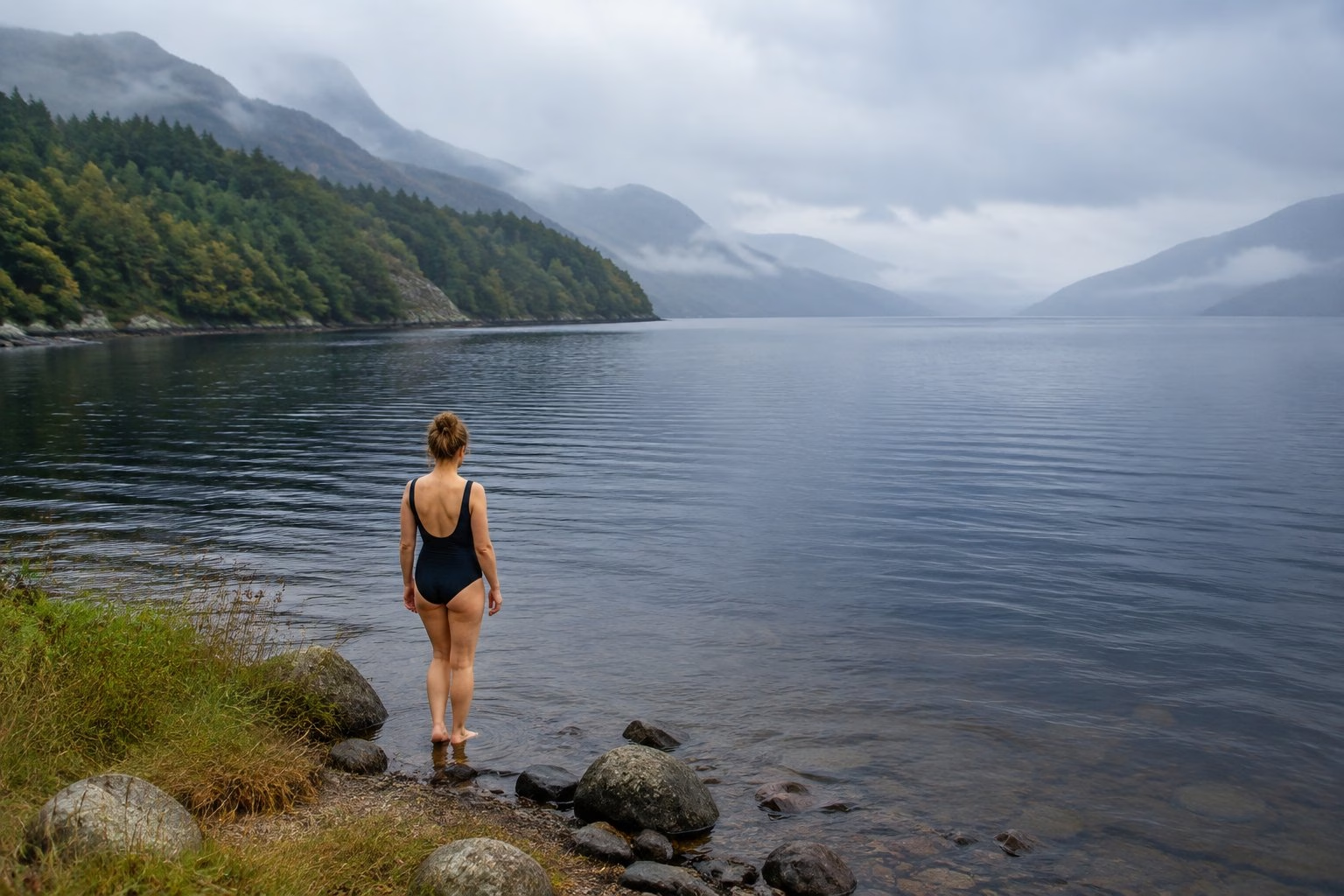
Is it safe to swim in Loch Ness?
No swim in Loch Ness can be called safe, because the water is very cold and very deep all year. Cold water shock, sudden drop-offs and wind-driven waves are the main dangers. Experienced swimmers lower the risk by staying close to shore, wearing a wetsuit and swimming with a spotter.
Can beginners swim at Dores Beach?
Dores Beach is a poor first choice for beginners, because the shingle shelves fast into water over your head. If you are new, try a calm dip in the shallows with a friend, or start at a gentler loch first. Build up your cold tolerance before swimming any distance here.
Why does the water in Loch Ness look black?
Peat from the surrounding hills stains the water a dark brown, so it looks black from above. Visibility is often less than a metre. The colour comes from natural plant matter and is not a sign of pollution.
Do you need a wetsuit to swim in Loch Ness?
A wetsuit is strongly advised for anything beyond a very short dip. The surface rarely goes above about 13°C even in August, and the deeper water stays near 5°C. Add a neoprene hat, gloves and socks if you plan to stay in longer.
Where can I go wild swimming near Loch Ness?
Loch Duntelchaig and Loch Ceo Glais, south of Inverness, are popular nearby choices with clearer, shallower water. Loch Beinn a’ Mheadhoin in Glen Affric and Loch Morlich in the Cairngorms offer sandy entries. For sea swimming, try Rosemarkie or Nairn, and check tide times first.