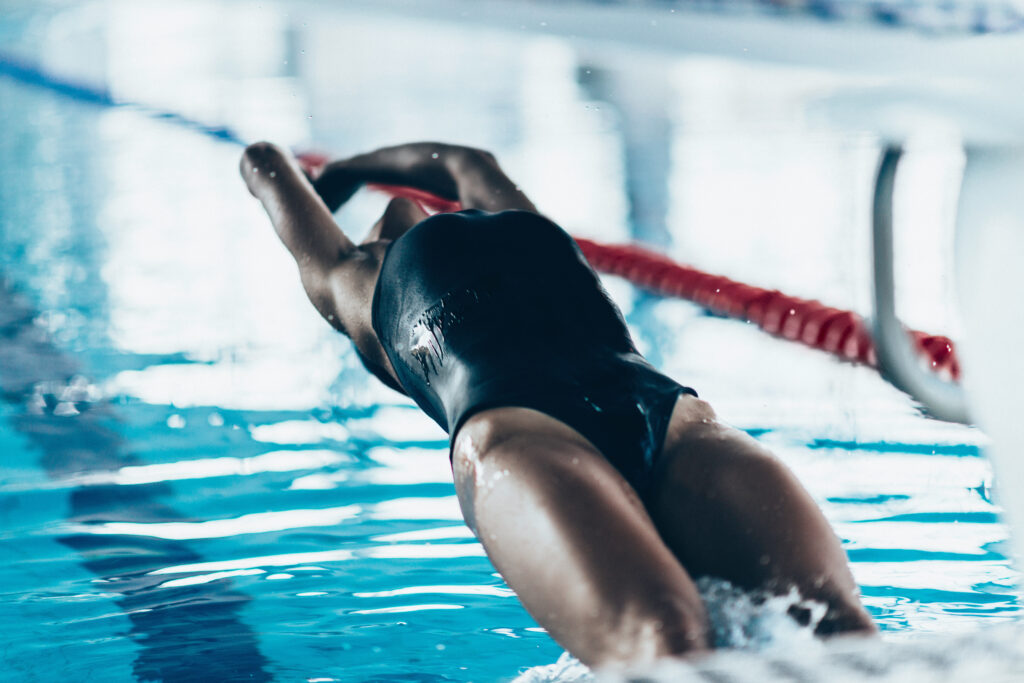

Most swimmers need two different jammers: a tough, chlorine-resistant pair for weekly lengths and a tight, approved suit saved for race day. Training jammers are built to survive hundreds of hours in chlorine. Racing jammers compress your muscles and cut drag, but they wear out much faster and cost far more.

For most pool swimmers, the Speedo Eco Endurance+ Jammer is the best everyday pick, because its Endurance+ fabric is made to resist chlorine damage through frequent training. If you race, add a World Aquatics approved suit such as the Arena Powerskin ST Next for club galas, or a carbon suit for your biggest meets.
The wrong choice costs you in two ways. A cheap suit goes baggy and see-through within months, and a racing suit worn for training wastes money fast. You can compare more options in our swim wear reviews, then pick the pair that suits how often you swim.
Quick picks:
- Best overall training jammer: Speedo Eco Endurance+ Jammer
- Best for bold prints: Funky Trunks Training Jammer
- Best entry racing jammer: Arena Powerskin ST Next Jammer
- Best for elite finals: Arena Powerskin Carbon Air2 Jammer
1) Speedo Eco Endurance+ Jammer

Speedo’s Endurance+ fabric is the reason this jammer sits at the top. It is designed to hold its shape and colour after long spells in chlorinated water, and the Eco version uses recycled yarn.
The fit is snug without squeezing. You get a drawcord waist, flat seams and a leg that stops just above the knee.
What stands out:
- Built for daily training sessions
- Recycled fabric content
- Easy to find in UK shops in many sizes
It suits club swimmers, fitness swimmers and triathletes doing indoor pool work. Rinse it in fresh water after each swim and it should last many months of steady use.
2) Arena Team Solid Jammer in MaxLife Eco

Arena’s MaxLife Eco fabric gives you a close rival to Speedo’s Endurance+. It is made with recycled fibres and is built to resist chlorine and sun cream.
Many clubs order team kit from Arena, so this solid-colour design often matches squad colours. The cut feels a touch firmer at the thigh than softer fitness shorts.
If you swim four or five times a week, the tighter weave helps it keep its grip on your legs for longer. It is a strong swap if Speedo sizing does not suit your build.
3) TYR Durafast Elite Solid Jammer

Heavy training is where TYR’s Durafast Elite fabric earns its place. It is a polyester-based material aimed at swimmers who log high weekly distance.
Polyester feels a little stiffer than Lycra blends at first. After a few sessions it softens while keeping its shape.
Good to know:
- Firm, supportive feel
- Solid colours for team use
- Handy for early morning squads with long sets
Choose it if past suits have faded or sagged fast.
4) Funky Trunks Training Jammer

Funky Trunks is the fun choice here. The brand is known for loud prints, from food patterns to national flags, on chlorine-resistant polyester.
The prints do more than look good. On a crowded poolside you can spot your kit in a pile of black shorts straight away.
The fit runs true to size for most swimmers, with a drawcord and lining at the front. Pair it with anti fog swimming goggles and you have a bright, practical training setup.
5) Zoggs Cottesloe Ecolast+ Jammer

Zoggs aims this jammer at regular lap swimmers who want recycled fabric without paying top prices. Ecolast+ is the brand’s chlorine-resistant material made from recycled polyester.
The Cottesloe cut feels relaxed compared with the Arena and TYR picks. That makes it comfortable for longer, slower sessions and aqua fitness.
You will not get much muscle support. For steady fitness swimming, that softer feel is a plus.
6) Nike Swim HydraStrong Solid Jammer

Nike’s HydraStrong fabric is 100% polyester, which helps it stand up to chlorine and keep its colour.
The design is plain and clean, with a small logo and flat waistband. Nike sizing can feel slightly longer in the leg than Speedo, so check the size chart if you are short in the thigh.
This jammer works well as a second training pair to rotate. Swapping suits between sessions gives each one time to dry fully, which slows fabric breakdown.
7) Speedo Fastskin LZR Pure Valor 2.0 Jammer

This is Speedo’s high-end racing jammer, and it is a completely different product from the training suits above. It uses a light, water-repellent woven fabric with strong compression to hold your body in a streamlined line.
Putting it on takes time. Expect five to ten minutes, and use your fingertips, never your nails.
It carries World Aquatics approval, so it is legal at approved meets. Keep it for championship races, as heavy use wears down the compression.
8) Arena Powerskin ST Next Jammer
Arena’s ST Next is a popular first racing suit. It gives you the tight, woven feel of a tech suit with lighter compression than elite models.
That makes it easier to put on and more forgiving for younger or newer racers. It is World Aquatics approved, so check the label before each season.
Club swimmers moving up to county events often start here. It lets you learn how a racing suit feels, and how it changes your body position, before you spend more.
9) TYR Venzo Genesis Jammer
TYR’s Venzo Genesis sits in the upper tier of racing jammers. It offers firm compression through the hips and thighs to support core position during the race.
The seams are placed to follow how your legs move in a kick. Some swimmers find TYR’s racing fit a little roomier at the waist than Arena’s.
Try it if Speedo or Arena racing suits pinch your waist. As with any tech suit, confirm the World Aquatics approval label before race day.
10) Arena Powerskin Carbon Air2 Jammer
The Carbon Air2 is one of Arena’s top racing suits. A carbon-fibre cage in the fabric adds support and holds its shape under strong compression.
It is aimed at national and elite racers who want every small gain in a final. It is also the least forgiving suit here, so you need exact sizing.
Wear it only for key races. Our guide to the best racing swimwear brands for competitive swimmers explains how Arena’s range compares with its rivals.
How to Choose Between Training and Racing Jammers
Start with how often you swim. If you train more than twice a week, buy a chlorine-resistant training jammer first and only add a racing suit when you compete.
| Jammer | Main use | Fabric type | Compression | World Aquatics approved |
|---|---|---|---|---|
| Speedo Eco Endurance+ | Training | Endurance+ recycled | Light | Not needed |
| Arena Team Solid MaxLife Eco | Training | MaxLife Eco | Light | Not needed |
| TYR Durafast Elite | Training | Polyester | Light | Not needed |
| Funky Trunks Training | Training | Polyester | Light | Not needed |
| Zoggs Cottesloe Ecolast+ | Fitness | Recycled polyester | Very light | Not needed |
| Nike HydraStrong | Training | Polyester | Light | Not needed |
| Speedo LZR Pure Valor 2.0 | Racing | Woven | High | Yes |
| Arena Powerskin ST Next | Racing | Woven | Medium | Yes |
| TYR Venzo Genesis | Racing | Woven | High | Yes |
| Arena Powerskin Carbon Air2 | Racing | Carbon woven | Very high | Yes |
How do jammer cuts and leg lengths affect coverage and comfort?
Jammers run from the waist to just above the knee. That gives you more thigh cover than briefs and a tighter fit than loose swim shorts.
Training jammers use a stretchy knit that moves with you. Some brands cut the leg slightly shorter for a freer kick, while others go longer for more modesty.
Racing jammers sit higher on the waist and hug the thighs firmly. A longer leg covers more muscle, so it supports more, but it also takes longer to put on.
If you do lots of breaststroke, look for a leg that does not ride up when your knees bend wide. Squat in the changing room to test it.
Which fabrics stand up best to frequent chlorinated-pool use?
Polyester and PBT blends last longest in chlorine. Brands give them names such as Endurance+, MaxLife, Durafast, HydraStrong and Ecolast+.
Suits with a high elastane (Lycra) content feel softer, but chlorine breaks elastane down. Those suits go baggy and thin, which is why cheap fashion swimwear sags in months.
Care makes a big difference. Retailers advise rinsing your jammers in fresh water after every swim. Dry them flat in the shade, and never wring them out or leave them rolled in a wet swimmer towel.
How much compression is useful for training or racing?
For training, light compression is enough. You want the suit to stay put during tumble turns and drills without cutting into your skin.
For racing, stronger compression holds your hips and thighs in a tight line. That helps your body sit higher in the water and lowers drag.
Too much squeeze in training is uncomfortable over a 90-minute session. It can also leave red marks at the waist and knee. Save firm compression for races, and try it at a swimming warm up before your event.
When is a racing jammer worth the extra cost?
A racing jammer pays off when you compete in timed events where a small gain counts. Think county, regional or national meets.
For club galas, an entry suit such as the Arena Powerskin ST Next gives you the tech-suit feel for less. Top models such as the Carbon Air2 make sense once you are chasing qualifying times.
Racing suits lose their snap after a set number of wears. Our piece on why racing swim suits outperform traditional suits and shorts covers the performance side in more detail.
Sizing and Competition Checks Before You Buy
Always size from a tape measure and the brand’s own chart. Sizes differ between Speedo, Arena, TYR and Nike, so your usual size in one brand may not fit in another.
How should you measure yourself against a brand’s size chart?
Measure your waist at the narrowest point, just above your hip bones. Keep the tape level and snug, but do not pull it tight.
Some racing charts also use hip size, height or weight. Write down all four so you can match any chart.
Follow these steps:
- Measure in underwear, after a light meal.
- Record your waist and hip in centimetres and inches.
- Match both to the chart, and use the larger size if they differ for training suits.
- For racing suits, follow the brand’s racing chart, which is often tighter than its training chart.
What should a jammer feel like when you try it on?
A training jammer should feel snug with no gaps at the waist or leg hems. You should be able to squat, lunge and raise your knees without the fabric sliding.
If you can pinch loose fabric at the thigh, it is too big. Deep red marks after ten minutes mean it is too small.
A racing jammer feels far tighter. It should take effort to pull up, sit flat with no wrinkles, and still let you breathe and bend at the hip. Try it on with clean, dry legs, and wear light gloves if the brand supplies them.
How can you check whether a racing jammer is legal for your event?
Look for the World Aquatics approval label, usually a small printed mark or barcode inside the suit. Only suits on the World Aquatics approved list are allowed at meets run under its rules.
Men’s suits must not go above the navel or below the knee. Jammers meet that rule by design, but modified or damaged suits may not.
Some governing bodies limit tech suits for younger age groups. Check your meet pack or ask your club coach before you buy for a junior swimmer.
What should you confirm about returns before ordering a tight-fitting suit?
Read the retailer’s returns policy before you order. Many shops will only take back swimwear that is unworn, with hygiene liners and tags still attached.
Try the suit on over underwear, indoors and on a clean floor. Do not get it wet until you are sure it fits.
Racing suits are often excluded from returns once the packaging seal is broken. If you are between sizes, ask the shop about exchanges first, or order from a store that lets you try suits in person.
Frequently Asked Questions
What is a jammer in swimwear?
A jammer is a close-fitting swimsuit that runs from the waist to just above the knee. It gives more thigh cover than briefs and cuts drag compared with loose swim shorts. Swimmers wear jammers for both training and racing.
Are jammers or swim briefs better for regular pool training?
Both work well, so pick the one you feel comfortable in. Jammers give more coverage and a little muscle support, which many adult swimmers prefer. Briefs give more freedom of movement and dry faster.
Are racing jammers worth buying for training?
No, racing jammers are not a good buy for training. Their thin woven fabric and compression wear out quickly in chlorine, and they cost far more than training suits. Keep them for races only.
Should you size down when buying a compression jammer?
Only if the brand’s racing size chart tells you to. Racing charts already allow for a tight fit, so going smaller again can cause seam tears and restrict breathing. Follow the chart for your exact measurements.
Are all racing jammers legal for competitions?
No, only suits on the World Aquatics approved list are legal at meets that follow its rules. Check for the approval label inside the suit before you race. Your club or meet organiser can confirm any extra age-group limits.