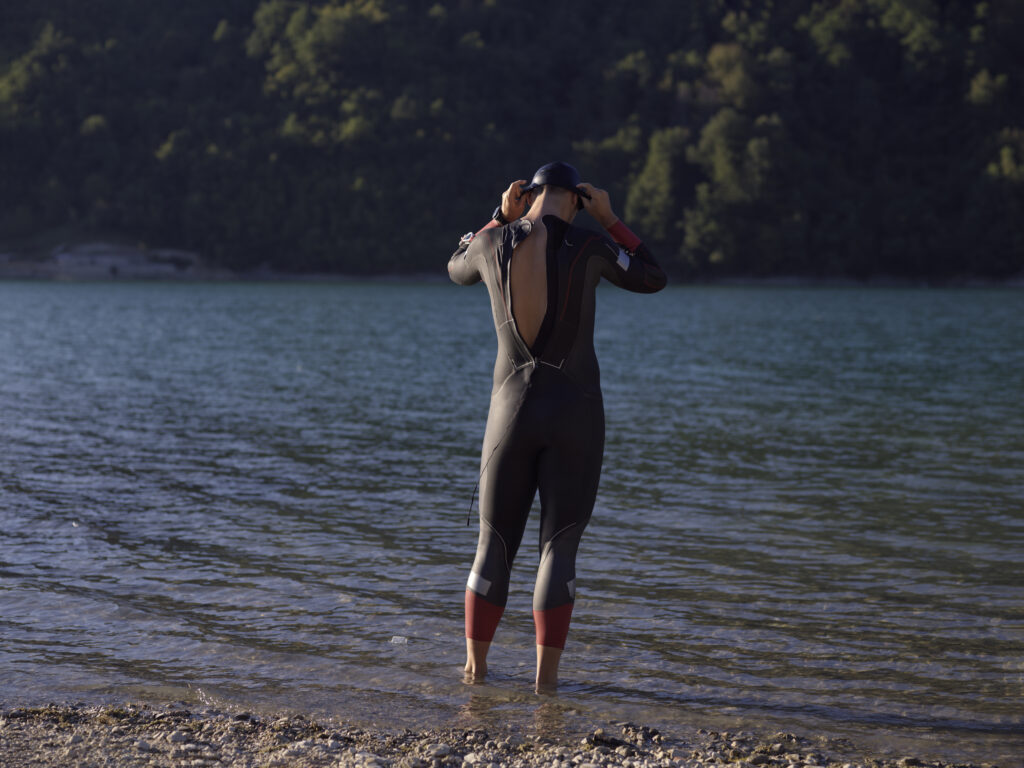
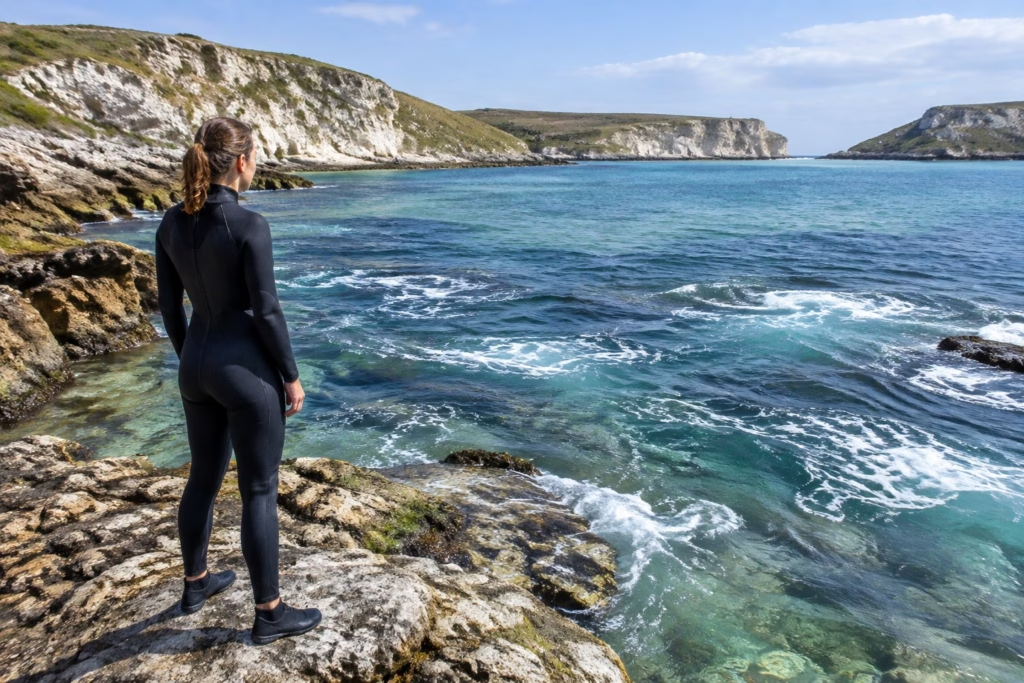
Dorset gives you two very different kinds of swim within an hour’s drive. You can drift down the slow, willow-lined River Stour, or you can swim under the limestone cliffs of the Jurassic Coast. For most swimmers, the best wild swimming Dorset has to offer starts at Colber Bridge on the Stour for an easy river dip, or Studland Bay on the coast for shallow, sandy entry, because both have gentle access and calmer water than the exposed Purbeck ledges.
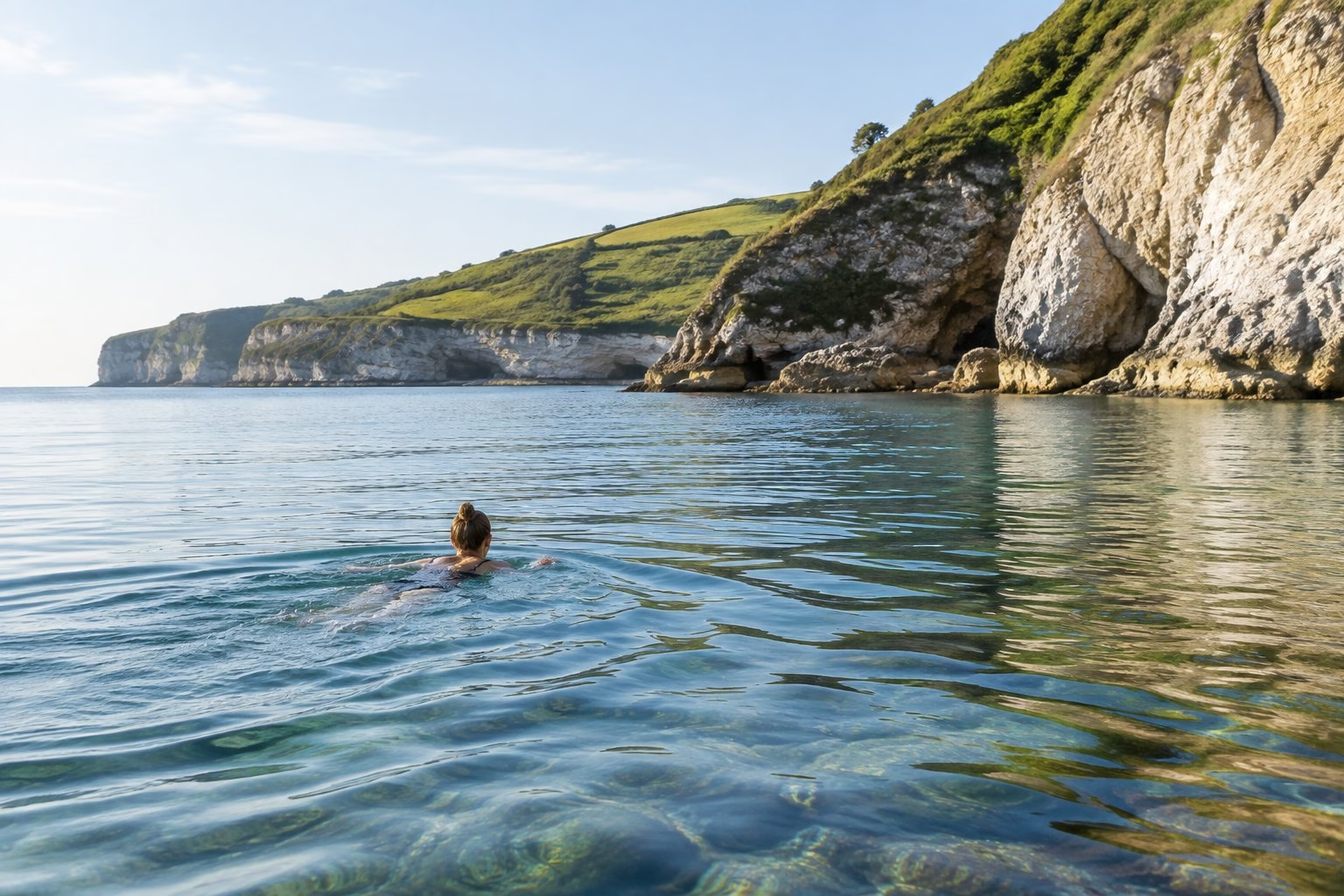
The catch is that conditions change fast. A river that looks glassy in June can run brown and fast after one wet night. A cove that feels like a lagoon at low tide can throw dumping waves by the afternoon. The spots below come with what you need to judge access, depth and hazards before you even unpack your towel.
If you are new to outdoor swimming, our beginner’s guide to wild swimming covers the basics. Then pick a spot from the list, check the day’s conditions, and plan your first Dorset dip.
Where Can You Swim in Dorset’s Rivers?
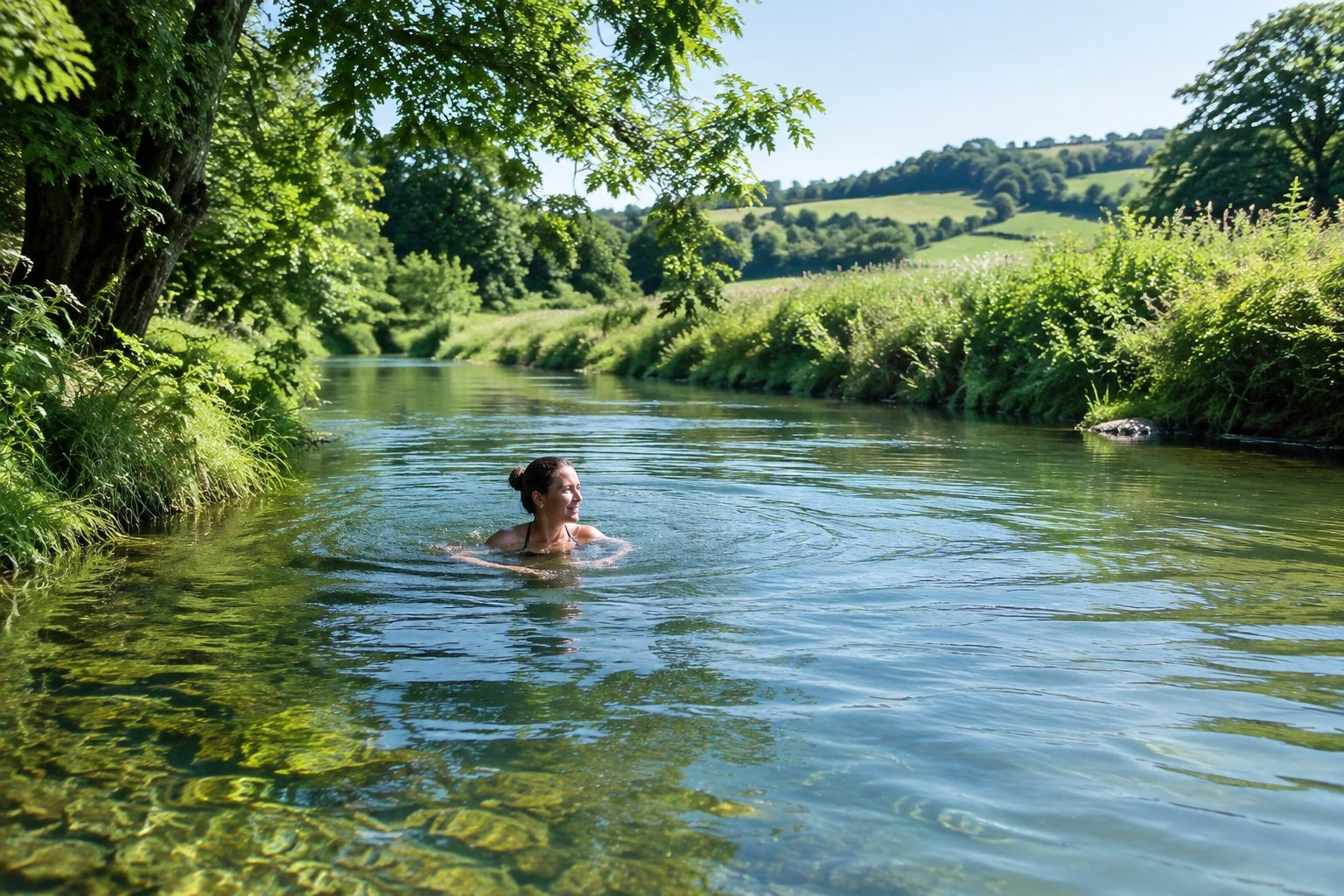
The River Stour gives you the most river swimming spots in Dorset, running from Sturminster Newton down through the Stour Valley to Wimborne Minster. The River Frome adds quieter options around Moreton and Wareham. Expect old mills, weirs, grassy banks and cattle fields, with water that ranges from knee-deep fords to pools well over your head.
Colber Bridge and Bather’s Island Near Sturminster Newton
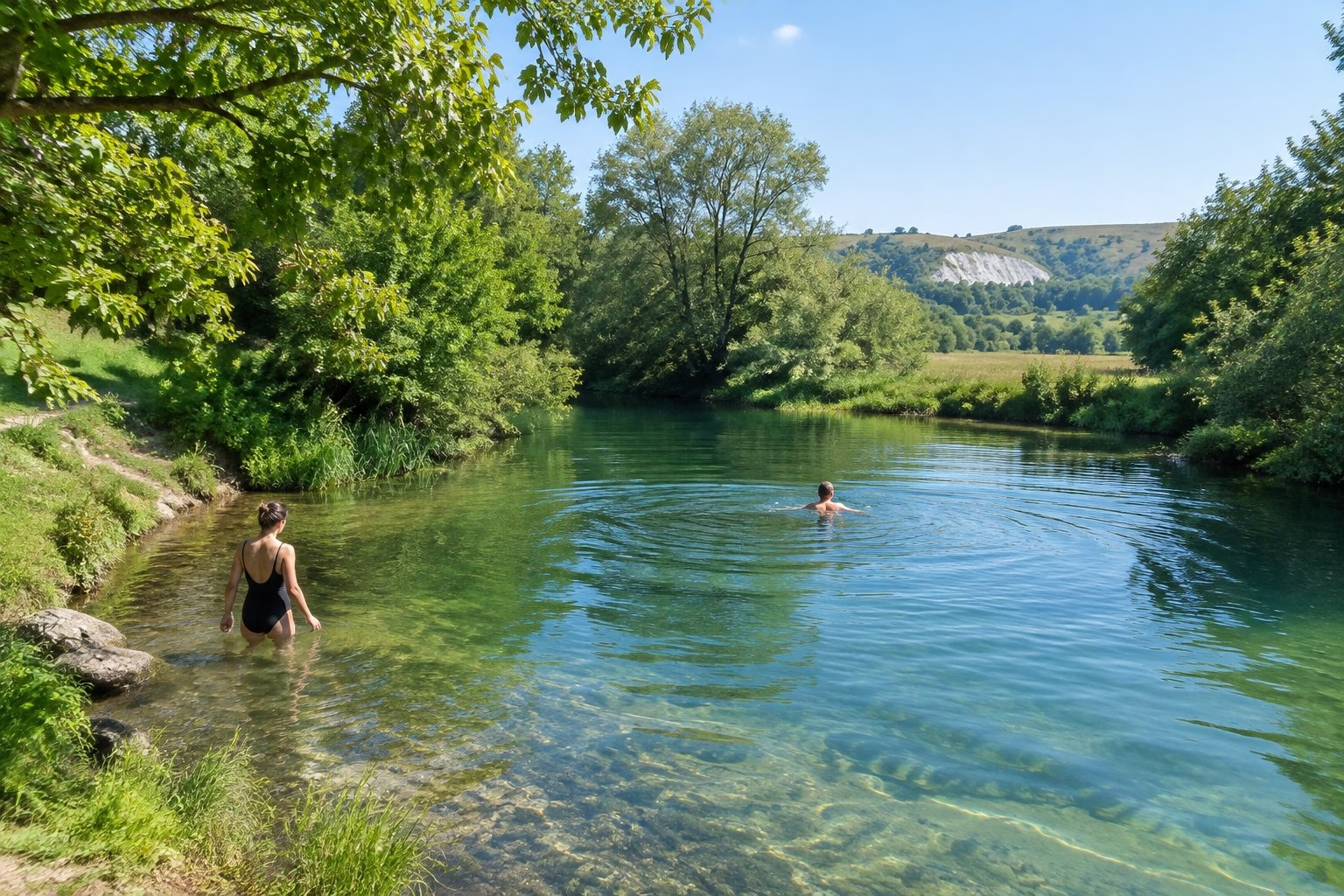
Colber Bridge is a footbridge over the Stour on the edge of Sturminster Newton, and it is one of the best-loved river spots in the county. You walk from the town across meadows to reach it. Just downstream sits Bather’s Island, a small grassy island that local swimmers have used for generations.
The water here is slow and wide. You can get in from the grassy bank, and there is enough depth near the bridge for proper strokes. There are no facilities at the water, so bring what you need. The town’s pubs and shops are a short walk back.
Watch for:
- Cattle in the fields along the bank
- Slippery, muddy entry points after rain
- Weed growth in late summer, which can tangle around your legs
Fiddleford Manor and Its Riverside Setting
Fiddleford sits a mile or so east of Sturminster Newton. The medieval manor house is cared for by English Heritage, and the nearby mill and weir make this a pretty stop on a riverside walk.
The weir is the main thing to respect here. Water pouring over a weir creates a strong recirculating flow at the base, which can hold a swimmer under. Swim well away from the weir itself, in the calmer stretches above or further below it. In dry summer weather the river is gentle. After rain, stay out.
Cutt Mill Near Hinton St. Mary
Cutt Mill is a ruined mill on the Stour near Hinton St. Mary, north of Sturminster Newton. The old mill pool is deep and shaded by trees, which gives it a quiet, secret feel.
Access is via public footpath, and parking nearby is very limited, so arrive early or walk in. The banks are steep and uneven in places. Check your footing and your exit before getting in, because the old mill structure and sluice remains mean there are hidden edges under the surface.
Eye Bridge Near Pamphill and Wimborne Minster
Eye Bridge is a popular, wide stretch of the Stour near the village of Pamphill, just outside Wimborne Minster. The river is broad and calm here, and the grassy banks draw picnickers, paddleboarders and families on warm days.
There is a weir by the bridge, so keep clear of it and swim the calmer water away from the falling flow. Parking is limited and fills up quickly on sunny weekends. Pamphill Parlour, the local farm shop and café, is close by for a warm drink afterwards.
White Mill Near Sturminster Marshall
White Mill is a National Trust mill on the Stour near Sturminster Marshall and Shapwick. The old stone bridge beside it is one of the oldest in Dorset, and the meadows around it make a lovely base.
You can find calm water a short walk along the bank from the bridge. Avoid swimming near the bridge arches and mill race, where the current speeds up. This is a good spot to pair with a gentle circular walk through the water meadows.
Moreton Ford on the River Frome
Moreton Ford crosses the River Frome near the village of Moreton, with a long footbridge running beside it. The water is shallow over a gravel bed, which makes it a great first stop for children and dogs.
Most adults will find it too shallow for a full swim, so treat it as a paddle and splash spot. A few car parks nearby offer up to two hours free, and the village café is close by. Moreton is also where T.E. Lawrence (Lawrence of Arabia) is buried, which adds a short history stop to your visit.
Wareham Bridge and the Busy Riverside
The Frome flows through Wareham, and the quay near Wareham Bridge gives you easy entry from the banks. The river is slow-moving here, so it feels simple for a quick dip.
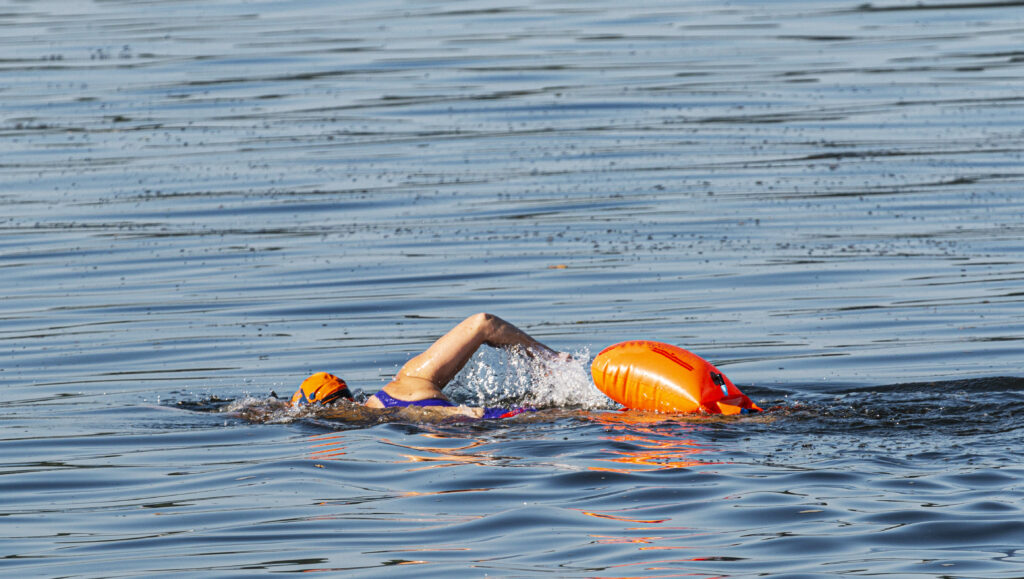
The problem is traffic. Boats, canoes and paddleboards use this stretch all summer, and hire craft come and go from the quay. Wear a bright cap and tow float, stay close to the bank, and avoid the main channel. The Frome is tidal in its lower reaches near Poole Harbour, so levels shift through the day. If you care about water clarity, compare it with the cleanest rivers and lakes in the UK before you set your expectations.
Which Coastal Swimming Spots Suit Your Plans?
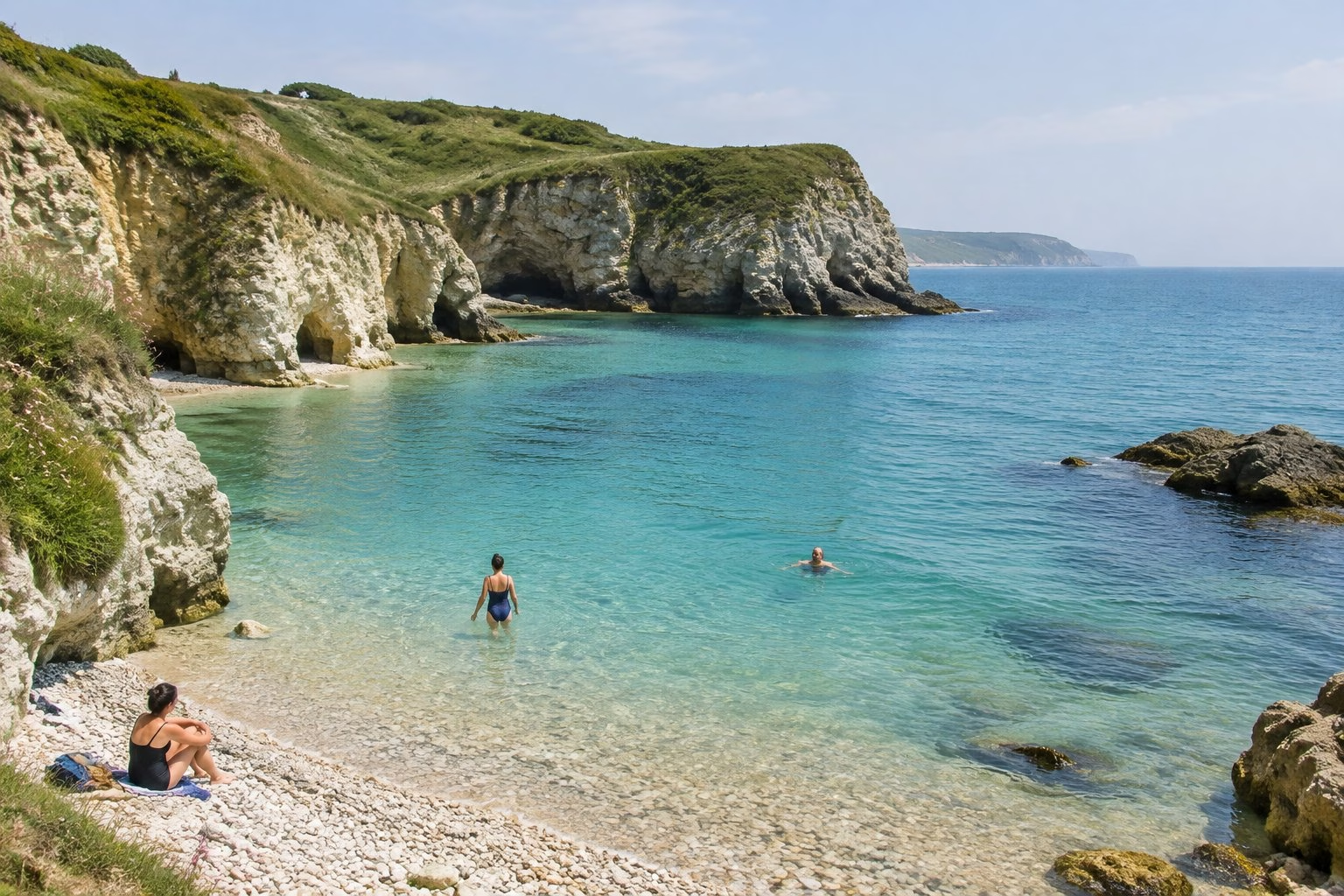
Pick the coast by how much effort and exposure you want. Poole Harbour and Studland give you easy, shallow entry, while Lulworth, Dancing Ledge and Chapman’s Pool reward a walk with clear water but carry more wave and access risk. Portland’s Church Ope Cove sits in between.
| Spot | Entry | Walk in | Main hazard |
|---|---|---|---|
| Lake Pier / Rockley Point | Sand, gradual | Short | Boat traffic |
| Studland | Sand, very gradual | Short | Wind, offshore drift |
| Lulworth Cove | Shingle | Short | Busy, boats |
| Durdle Door | Shingle, steep shelf | Steep steps | Dumping waves |
| Dancing Ledge | Rock ledge | Long, scramble | Waves on ledge |
| Chapman’s Pool | Rocky shingle | Long, steep | Remote, rockfall |
| Church Ope Cove | Pebbles | Steep steps | Swell, rocks |
Lake Pier and Rockley Point: Harbour Access and Boat Traffic
Lake Pier at Hamworthy and Rockley Point near Hamworthy and Holton Heath look out over the sheltered waters of Poole Harbour. The harbour is shallow, warms up faster than the open sea, and has small sandy beaches with easy entry.
This is one of the busiest stretches of water on the south coast. Ferries, yachts, jet skis and windsurfers all share the space. Stay inside the swim area close to shore, wear a bright tow float, and never cross the marked channels. Tidal flow through the harbour mouth is strong, so keep well away from the narrow entrance at Sandbanks.
Studland: Sandy Beaches and Changing Sea Conditions
Studland Bay has miles of sand from Shell Bay down to Middle Beach. The water shelves very gently, so you can walk out a long way before it is deep. It is one of the easiest coastal spots for a first sea swim.
Studland feels calm most days, but it is open to wind from the east and south-east. A steady offshore breeze can push inflatables and tired swimmers out further than they expect. Check the wind direction before you go, swim parallel to the shore, and use the lifeguarded section in summer when it is staffed. Expect busy car parks on warm weekends.
Lulworth Cove and Durdle Door: Access, Depth and Exposure
Lulworth Cove is an almost round bay with a narrow opening, so it stays sheltered on most days. You enter from shingle, and the water gets deep fairly fast in the middle. Small boats moor and move in the cove, so swim near the edges.
Durdle Door is a short but steep walk west over the cliff, down a long set of steps. The beach shelves sharply, and waves can dump hard on the shingle when there is any swell. Swimming through the arch is only for strong swimmers in flat, calm water. Do not jump from the rocks; the depth changes with the tide and there are hidden ledges. Time your visit with our notes on the safest tide for a sea swim.
Dancing Ledge: Rock Pool Access and Wave Hazards
Dancing Ledge is a flat rock shelf near Langton Matravers with a small pool blasted into it for a local school in the early 1900s. You reach it by a long walk across fields from the nearest car park, then a short climb down a rock face.
The pool itself is calm on flat days. The danger is the ledge: any swell washes waves across the rock and can knock you off your feet or into the sea. Go only on calm days, wear shoes with grip, and stay off the edge. There is no lifeguard and no easy way up the cliff if you get into trouble.
Chapman’s Pool: A Remote Cove with a Demanding Approach
Chapman’s Pool is a horseshoe cove near Worth Matravers, ringed by crumbly cliffs. The approach is long and steep, and the path down to the beach can be loose and muddy. Plan for a hard walk back up with wet kit.
Once you are down, the water is clear and quiet. The beach is rocky and weedy, so water shoes help. Stay clear of the cliff base, where rockfalls happen. Phone signal is patchy, so tell someone your plan before you go.
Church Ope Cove: Pebble Beach Access on Portland
Church Ope Cove sits on the east side of the Isle of Portland, below the ruins of Rufus Castle. You reach it down a long flight of steep steps through the trees. The beach is all pebbles, with clear water and rocky reefs to snorkel over.
The east side of Portland is sheltered from westerly winds, which makes it a good pick when the rest of the coast is rough. It is exposed to easterly swell, though, and the pebbles make entry and exit awkward in waves. Wear water shoes, and spot your exit before swimming out. If you bring a dog, read up on sea swimming with dogs first, because the steps and pebbles are hard on paws.
What Should You Check Before Entering the Water?
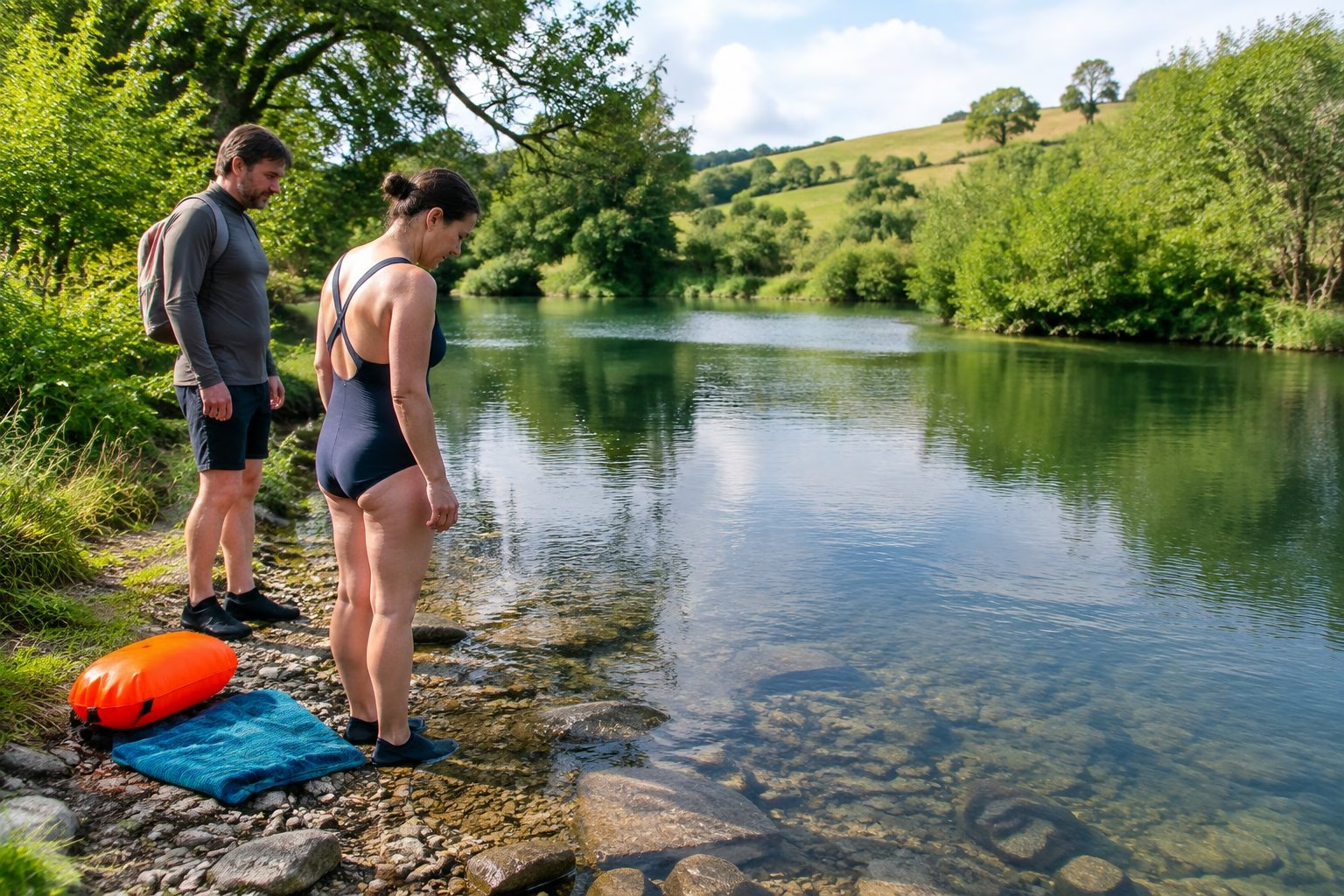
Five checks keep most open water swimming trips safe: tide and weather, river flow, water quality, access rules, and your own cold-water plan. Running through them takes a few minutes on your phone and at the water’s edge. If one check fails, swap spots or swim another day.
Tides, Rip Currents, Weather and Exit Points
Check tide times for the exact beach, not just the nearest town. Low tide at Dancing Ledge or Chapman’s Pool exposes more rock, while high tide at Durdle Door shrinks the beach and pushes waves against the steps.
Rip currents form where water rushing back out to sea finds a channel, often beside rocks, groynes or piers. Look for a strip of darker, calmer-looking water between breaking waves, or foam and debris moving out to sea. If you get caught, do not swim against it. Float, raise a hand, and shout for help, or swim parallel to the beach once you can.
Before you get in, plan your exit and a backup, because currents can push you off course. Check the wind forecast too. Wind against tide builds choppy water fast.
River Levels, Weirs, Sluices and Boat Traffic
On the River Stour and River Frome, rain changes everything. After heavy rain the water turns brown, rises and runs much faster, and it can stay that way for days. The Environment Agency publishes river level readings online, which help you see if levels are high.
Keep well clear of weirs and sluices at Fiddleford, Eye Bridge and White Mill. The churning water below a weir can trap you. Near Wareham and in Poole Harbour, wear a bright cap and tow float so boats can see you.
Water Quality, Rainfall and Pollution Alerts
Rainfall drives most pollution. Storm overflows spill sewage into rivers and the sea when pipes get overwhelmed, and rain also washes farm runoff off the land. A good rule is to wait 24 to 48 hours after heavy rain before swimming at an affected spot.
Many Dorset beaches are designated bathing waters, tested from 15 May to 30 September. Most river spots are not tested, so you become the monitor. Use these tools:
- Environment Agency Swimfo for bathing water ratings and daily pollution risk forecasts
- Surfers Against Sewage Safer Seas & Rivers Service for live sewage overflow alerts
- Your own senses: skip water that smells, foams or looks grey
Keep your head up where you can and avoid swallowing water.
Access Rights, Parking and Local Restrictions
Most river banks in Dorset are private land. Use public footpaths and established access points, and respect anglers, livestock and closed gates. Some riverbanks are on National Trust land, such as around White Mill and the Kingston Lacy estate near Eye Bridge.
On the coast, the Lulworth Ranges between Lulworth and Kimmeridge close for military firing on many weekdays, which blocks paths and beaches like Worbarrow Bay. Check the range opening times first. Car parks at Lulworth, Studland and Durdle Door charge fees and fill early in summer. Never park across field gates on narrow lanes.
Cold-Water Shock, Wetsuits and Essential Equipment
UK water rarely warms above 20°C, so cold-water shock is a risk even in August. Enter slowly, let your breathing settle, and only start swimming once you feel in control. Our guide on how to start cold water swimming covers building up your tolerance.
A wetsuit adds warmth and buoyancy, especially in spring and autumn. Many regulars swim in a costume from July to September. For help choosing, read up on whether you need a wetsuit in UK summers.
Pack these basics:
- Bright swim cap and tow float
- Water shoes for pebbles and rocks
- Warm layers, a changing robe and a hot drink
- A charged phone in a dry bag
More kit ideas sit in our list of essential wild swimming safety gear.
Supervised Open Water Sessions at Swineham and Castle Lake
If you want to build confidence first, supervised venues are a good bridge into wild swimming. Swineham, near Wareham, hosts open water sessions on its lake, and Castle Lake runs sessions too.
At these venues you swim a marked course with safety cover watching the water. You can test your wetsuit, practise sighting and get used to cold water without worrying about tides or boats. Session times and booking rules change through the year, so check with each operator before you go.
Which Walks Can You Combine with a Swim?
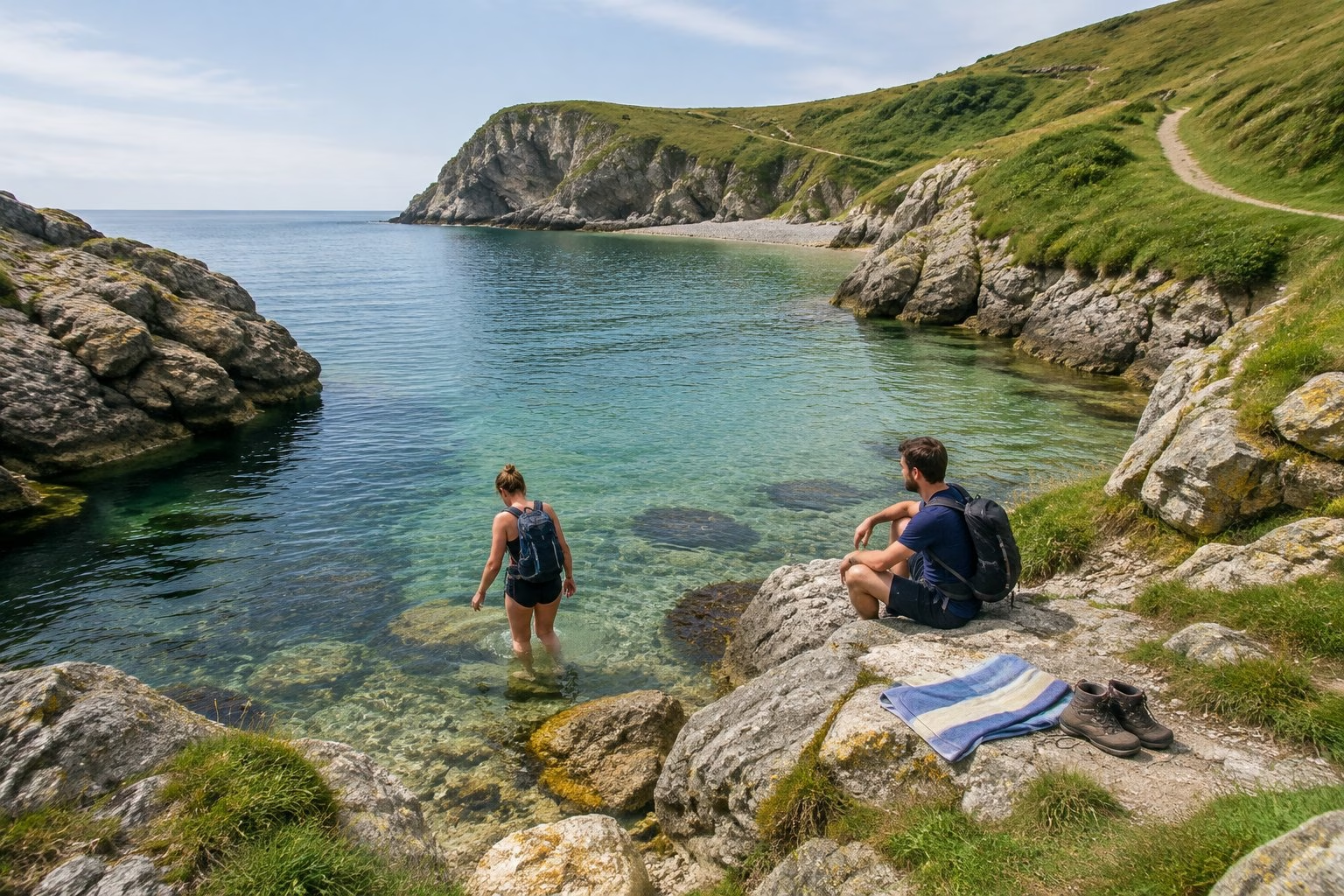
The best Dorset walk-and-swim routes link a riverside meadow loop in the Stour Valley with coast path circuits around Studland, Lulworth and West Dorset. Walking in warms you up before a swim, and a steady walk back helps you warm up afterwards.
Sturminster Newton and Fiddleford Riverside Walk
This loop starts in Sturminster Newton and follows the Stour past the town mill to Fiddleford Manor and back. It runs through flat water meadows, so it suits families and slower walkers.
Stop at Colber Bridge for a swim near Bather’s Island at the start or end. Fiddleford offers a second dip on calm days, away from the weir. Allow two to three hours with swims and a picnic.
Studland Circular and Its Coastal Stops
A Studland loop takes you along the beaches, up onto the heath and out to Old Harry Rocks, the chalk stacks at the end of the headland. The heathland is home to all six native UK reptiles, so keep dogs close in summer.
Swim at Knoll Beach or Middle Beach, where entry is easy. South Beach near the village is smaller and quieter. Avoid swimming near Old Harry itself, where the water is deep and the cliffs are tall.
Lulworth Cove to Durdle Door Along the Coast Path
The coast path from Lulworth Cove to Durdle Door is short but very steep in both directions. The views over Man o’ War Beach and the arch are some of the best on the Jurassic Coast.
Swim in Lulworth Cove for calm water, then walk over to Man o’ War Beach or Durdle Door if the sea is flat. Go early in the morning to beat the crowds. The steps down to Durdle Door are hard work on the way back up, so save some energy.
Golden Cap and Seatown for a West Dorset Outing
Golden Cap is the highest point on the south coast, rising above the village of Seatown in West Dorset. A circular walk climbs to the top and drops back down to the beach.
Seatown’s beach is shingle and shelves fairly steeply, so get in carefully when there is any swell. The Anchor Inn sits right by the beach for a post-swim lunch. The cliffs here are unstable, so stay off the base of them.
Using Wild Swimming Walks Dorset and East Devon
Wild Swimming Walks Dorset and East Devon, by Sophie Pierce and Matt Newbury, covers 28 walk-and-swim routes from the Exe Estuary to Studland. Routes include the Sturminster Newton Circular, Shapwick and White Mill Circular, Lulworth Cove and Durdle Door Circular, and Golden Cap and Seatown Circular.
Each walk has maps, directions and downloadable route files for your phone. Use it to plan the route, then check tides, weather and water quality on the day yourself.
Choose Your Swim Around Conditions, Not Just the View
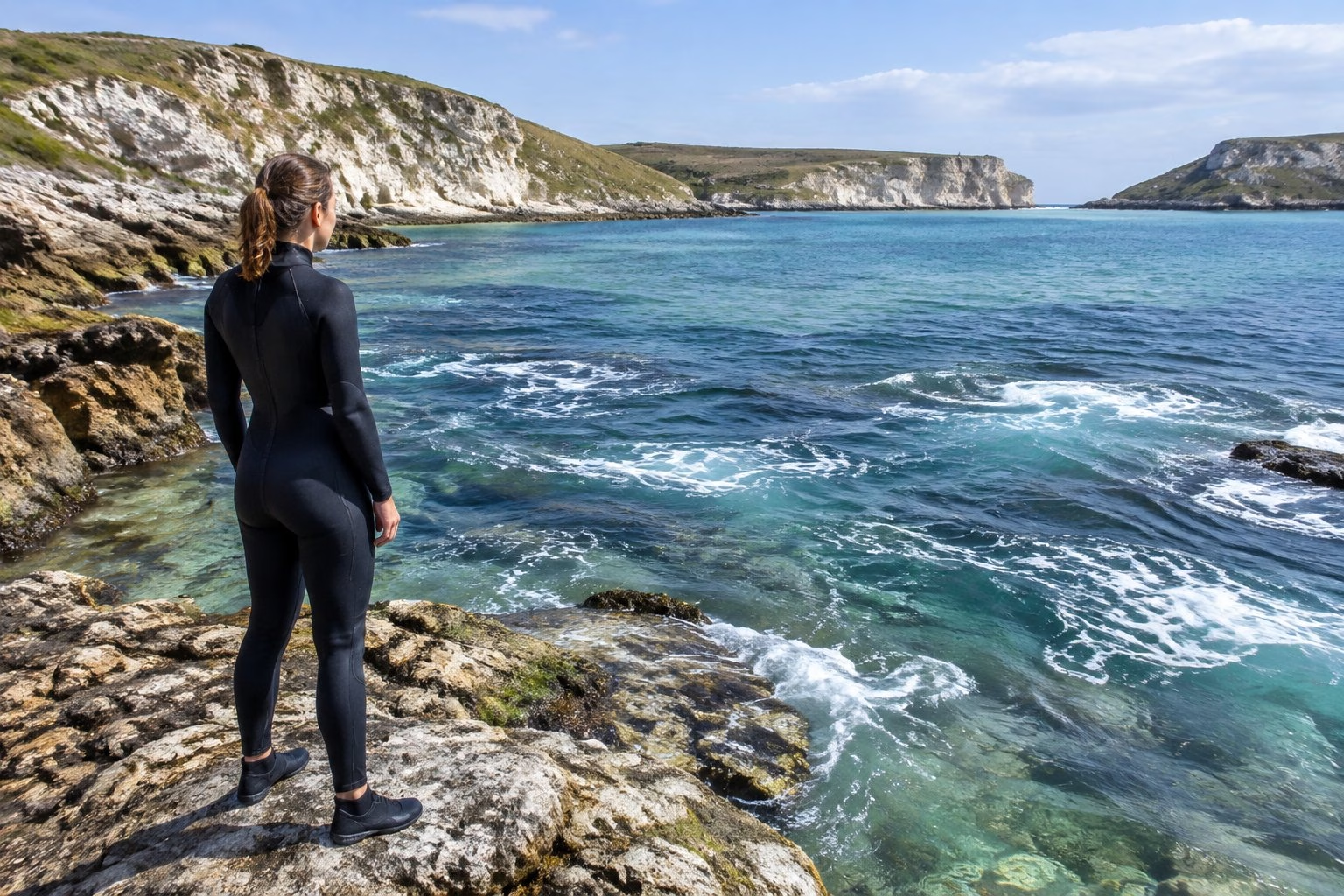
Your safest swim is the one that matches the day’s conditions. A famous spot on a rough day is a worse choice than a quiet riverbank on a calm one.
Use this quick guide:
- After heavy rain: skip the rivers for at least a day or two, and check pollution alerts at beaches
- Westerly wind: try Church Ope Cove, Studland or Poole Harbour
- Easterly wind: try the Purbeck coast or the Stour
- Flat, calm sea: this is your day for Dancing Ledge, Chapman’s Pool or Durdle Door
- New to outdoor swimming: start at Studland, Colber Bridge or a supervised session at Swineham
Bring a friend, a bright tow float and warm layers. Check tide times, river levels and the Swimfo forecast before you leave home, then look again at the water’s edge before getting in.
Frequently Asked Questions
Where can I go wild swimming in Dorset for free?
Most wild swimming in Dorset is free, including Colber Bridge, Eye Bridge, White Mill, Moreton Ford and every public beach. You will pay for parking at busy spots like Lulworth Cove, Studland and Durdle Door. Supervised lake sessions charge a fee.
Can you swim at Colber Bridge on the River Stour?
Yes, Colber Bridge is one of the most popular river swimming spots on the River Stour, with grassy banks and slow water near Sturminster Newton. It has no lifeguard or facilities. Stay out after heavy rain, when the river runs fast and pollution risk rises.
Is it possible to swim in Lulworth Cove?
Yes, you can swim in Lulworth Cove, and its near-circular shape keeps it sheltered most days. The water deepens quickly in the middle and small boats move around the bay. Stick to the edges and wear a bright cap.
Which Dorset beaches are best for less experienced swimmers?
Studland Bay is the best pick for less experienced swimmers, thanks to its gentle sandy slope and seasonal lifeguards. Poole Harbour beaches near Lake Pier are shallow too, but watch for boats. Avoid Dancing Ledge and Durdle Door until you are confident in waves.
Can you swim in the Blue Pool in Dorset?
No, swimming is not allowed in the Blue Pool near Furzebrook. It is a flooded clay pit on a private estate, and visitors walk around it on paths. Head to Studland or the Frome at Wareham for a swim nearby.
Do I need a wetsuit for wild swimming in Dorset?
You do not need a wetsuit, but one helps in spring, autumn and winter, when the water is coldest. Many swimmers go without from July to September. Either way, our tips on staying warm and safe in open water will help you warm up properly afterwards.