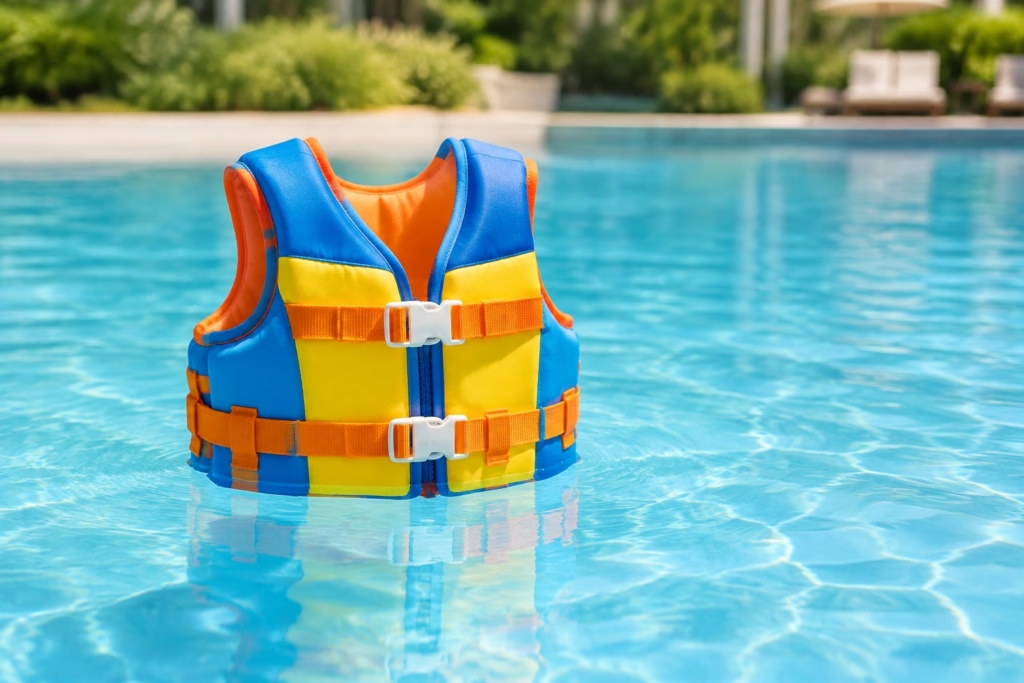
Most UK swimming teachers prefer a foam swim vest to armbands for young learners. A vest holds a child in a forward, swimming-ready position and leaves their arms free to paddle. For most children aged two to six, the Zoggs Super Star Swimsure Jacket is the best all-round choice, because its fixed foam buoyancy, zip cover and EN 13138-1 safety rating give you steady support without fiddly adjustments.
There is a catch with every flotation aid, though. A vest keeps a child higher in the water, yet it can ride up, slip or tip them forward. It only works with an adult standing close by. Children’s swimming aids in the UK are tested to EN 13138-1, a standard for learning aids. That is a different class from life jackets for boats and open water.
If your child is about to start lessons, check the best age to learn to swim and then match a vest to their weight and confidence. Weigh your child, measure their chest, and use the picks below to find a vest that fits before your next pool trip.
Quick picks:
- Best overall: Zoggs Super Star Swimsure Jacket for steady, fixed foam support.
- Best for progression: SwimBest Swim Vest with removable floats in pairs.
- Best for toddlers: Splash About Go Splash Swim Vest in soft neoprene.
- Best for adults: Owntop Adults Buoyancy Vest for watersports and weaker swimmers.
1) Zoggs Super Star Swimsure Jacket
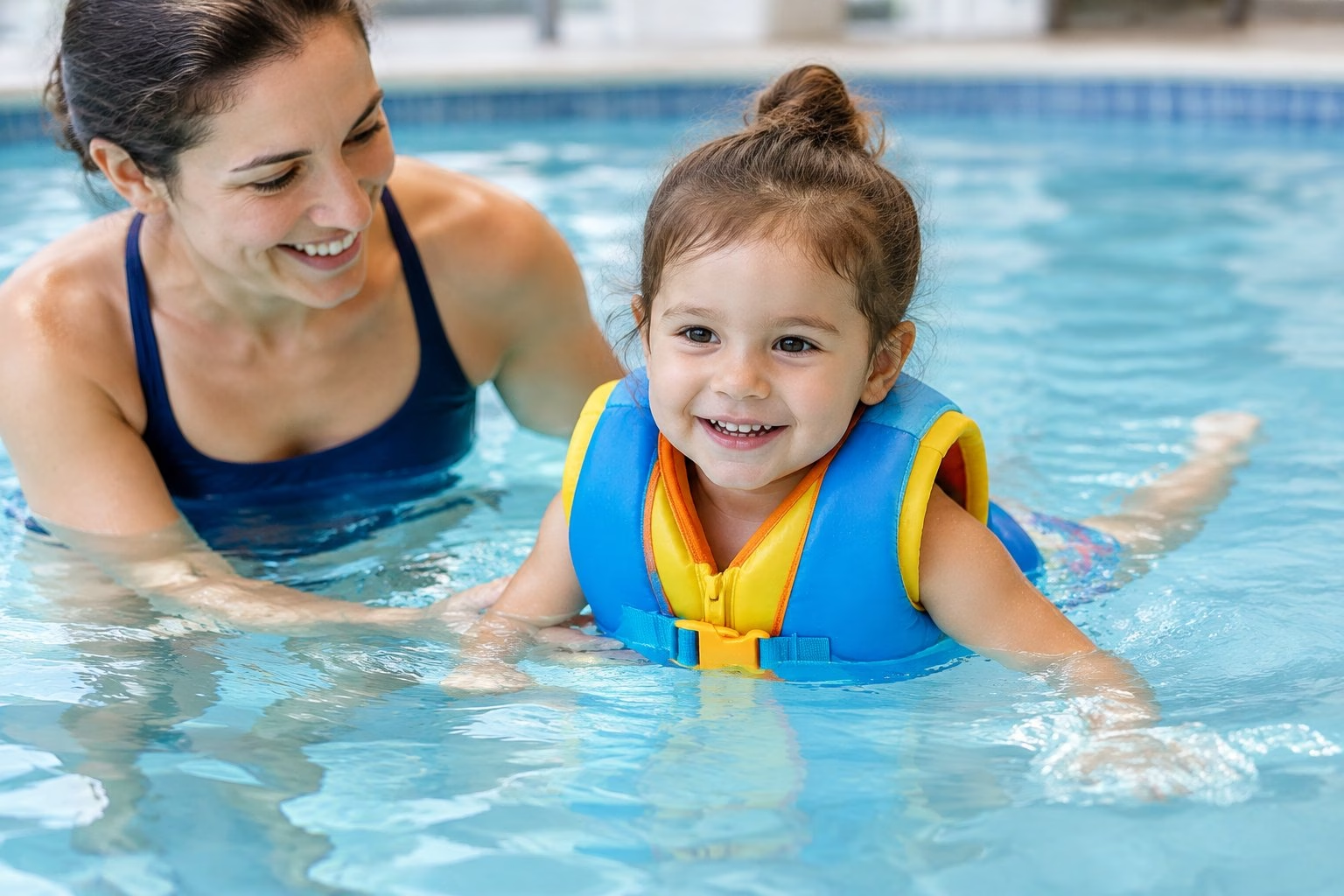
Fixed foam floats make this jacket the easiest vest to use straight out of the bag. There are no pads to remove, so the lift stays the same every session.
A zip cover sits over the fastener to stop children from unzipping themselves mid-swim. The jacket is tested to EN 13138-1, the European standard for swimming aids.
Zoggs sizes run by weight:
- 2–3 years: 15–18 kg
- 4–6 years: 18 to under 30 kg
You can browse the full range on the Zoggs swim jackets and vests page. The fixed buoyancy is the trade-off: once your child kicks well, they will outgrow its support and need less lift.
2) Konfidence Original Jacket
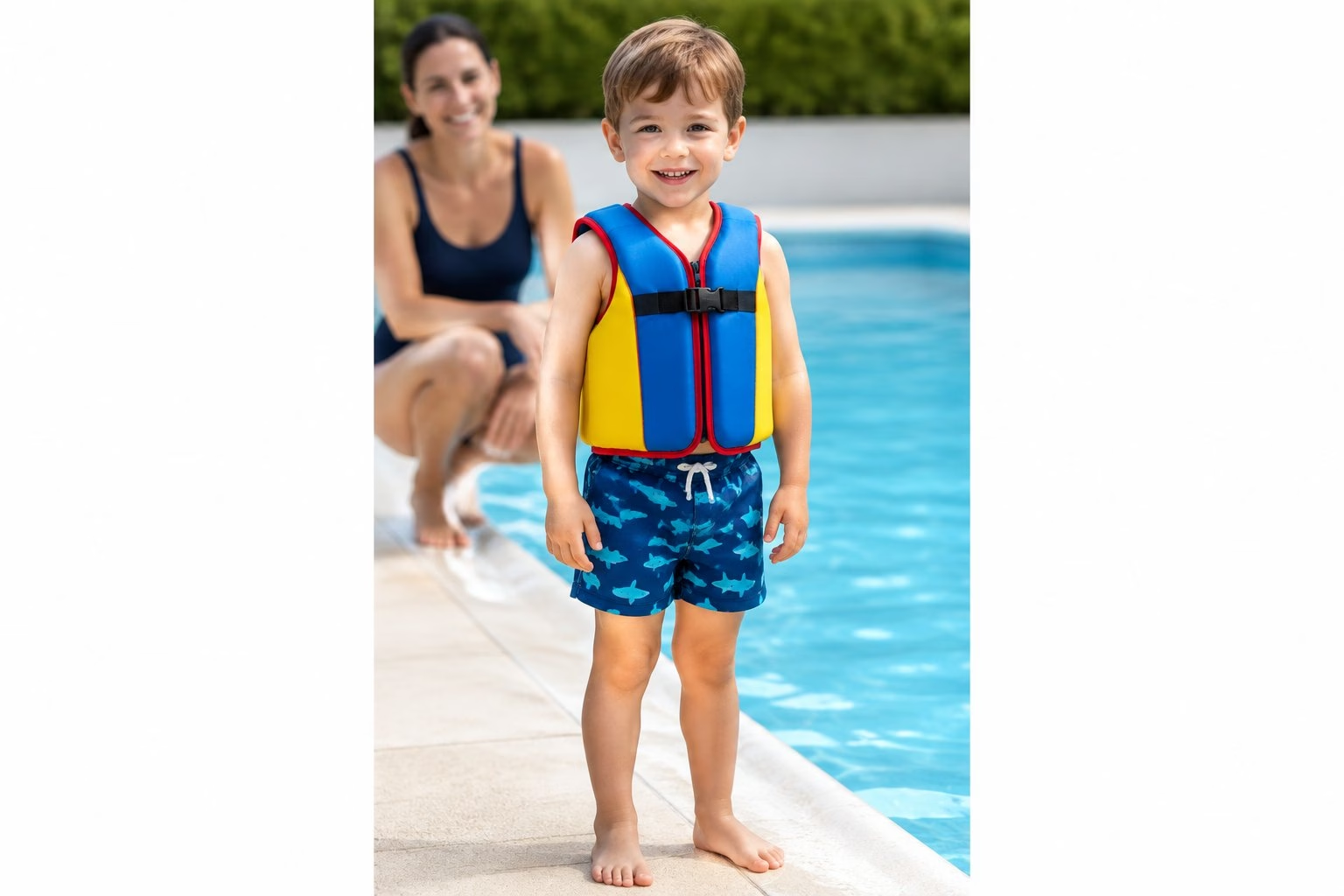
Many swim schools use Konfidence jackets because the buoyancy is adjustable. Foam floats sit in pockets around the jacket, and you take them out as your child grows stronger.
The neoprene body adds warmth in cooler pools, which helps small children who shiver after 20 minutes. Taking floats out evenly from front and back keeps your child level in the water.
At the pool, check the side seams and straps each time. Neoprene stretches with use, and a jacket that fitted snugly in spring can sit loose by autumn.
3) SwimBest Swim Vest With 8 Removable Floats
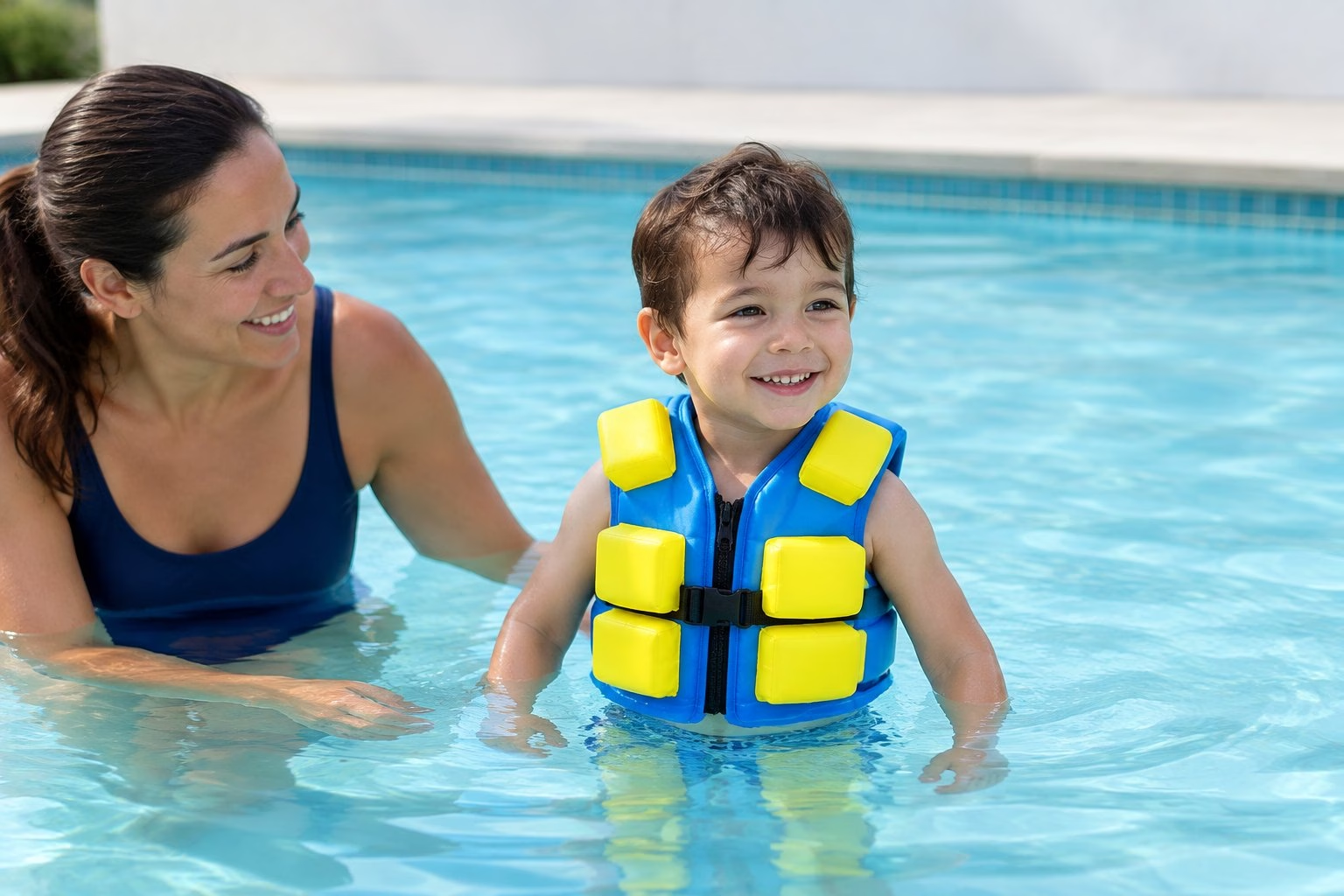
This vest suits families who want one jacket to last from first splash to early strokes. The SwimBest vest has 8 individual floats, a security strap and 100 sun protection on covered areas.
You remove the floats in pairs, so your child loses lift gradually. The large size covers ages 3–6 and 19–30 kg.
The strap runs between the legs and stops the vest riding up towards the chin. Since a vest keeps the arms free, it helps with proper strokes. Parents weighing back floats or arm floats often find this design the easier middle ground.
4) Splash About Go Splash Swim Vest
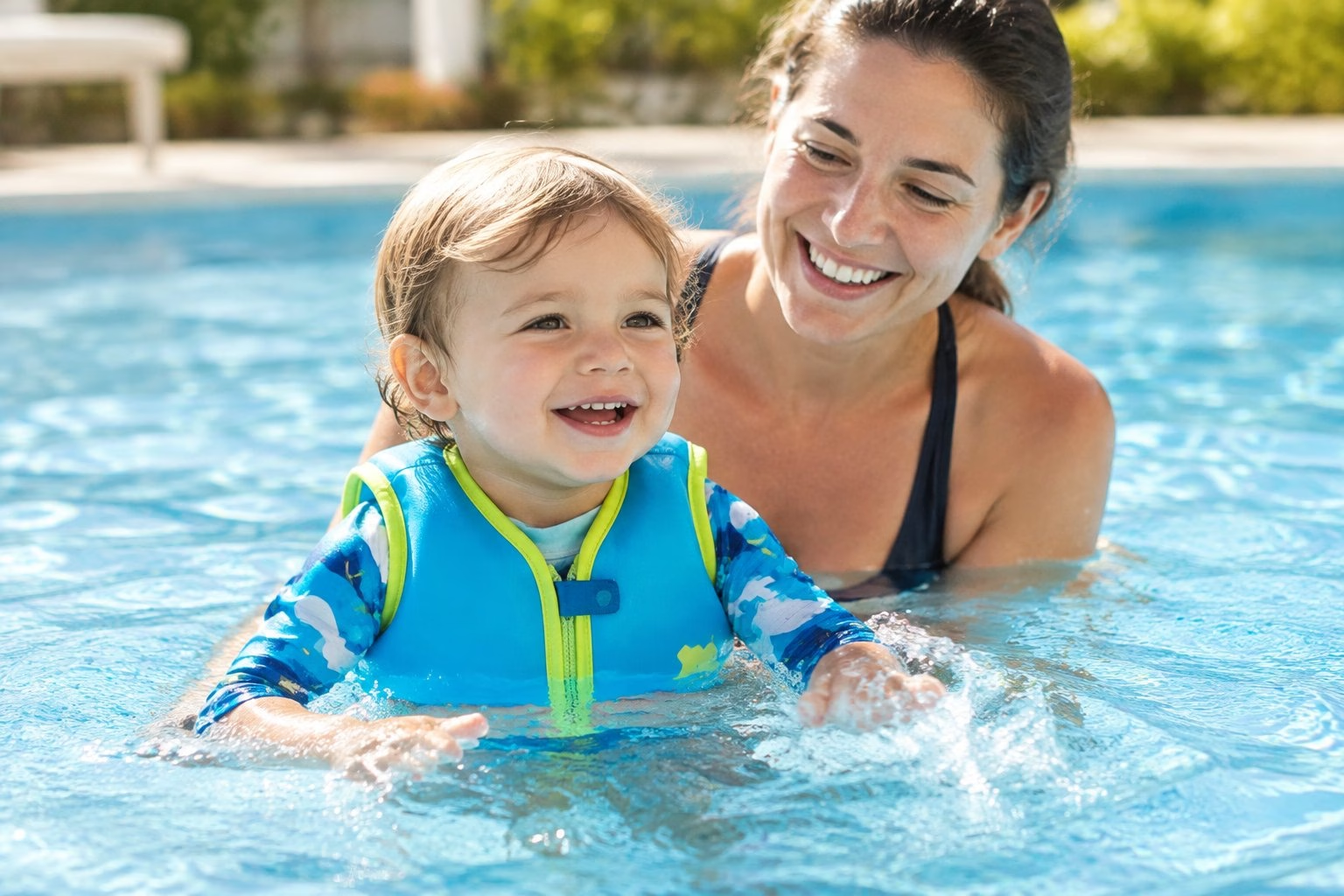
Soft neoprene with bound edges makes this a comfortable vest for very young swimmers. The binding stops chafing under the arms when the fabric is wet, and the material dries quickly between sessions.
It comes in three sizes for children aged 1 to 6, and it is CE marked to EN 13138-1. Splash About states plainly that the vest must be used under adult supervision.
This is a good choice when your toddler is moving on from parent-and-baby classes. It pairs well with the other kit covered in our guide to infant swim lessons and essential gear.
5) Speedo Learn to Swim Float Vest
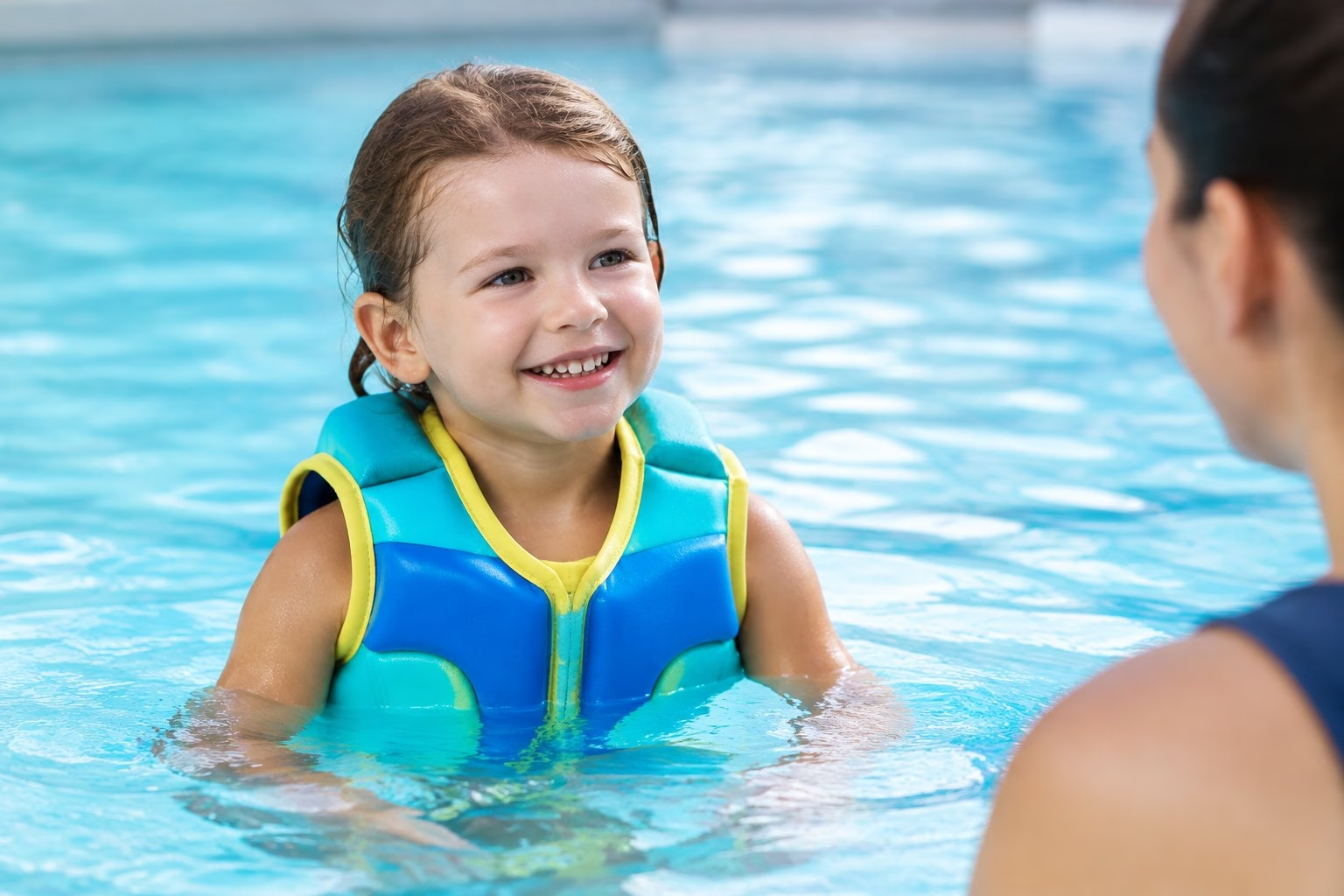
Speedo’s learn-to-swim vests use foam inserts to lift your child and complies with both Australian and European safety standards. The character prints help nervous children feel excited about wearing it.
Sizes start at 1–2 years. The vest works well in a holiday pool where you stay in the water beside your child.
Check the label for the weight range before buying, as Speedo sizes by age first. A lighter child in a larger size floats lower and can slip through the arm holes.
6) Nabaiji Kids’ Foam Swimming Vest
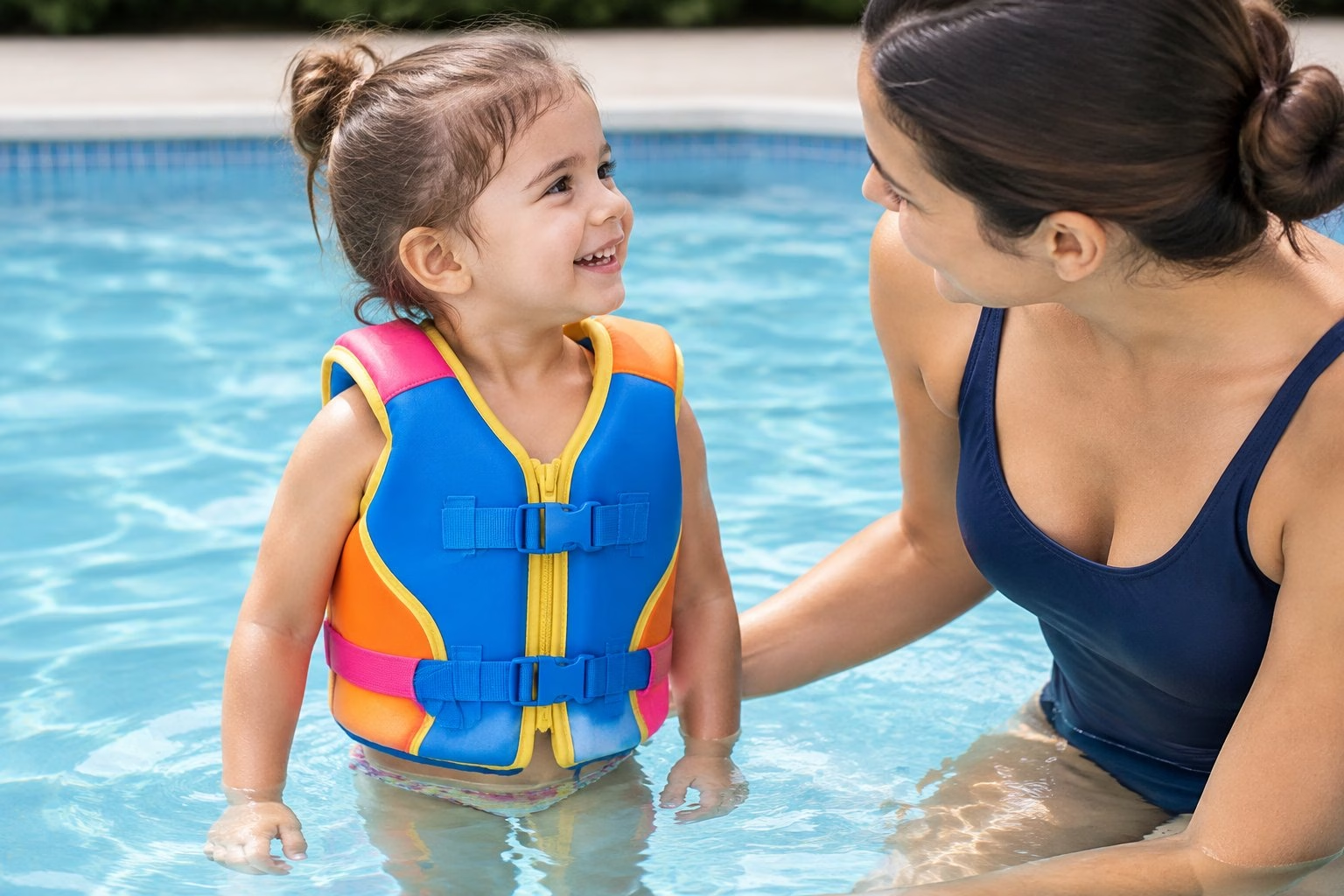
Nabaiji is Decathlon’s own swimming brand, and its foam vest is a sensible budget pick. You can find it alongside dozens of other options in the Decathlon swimming vest range.
Foam buoyancy cannot puncture or deflate, unlike inflatable armbands. That makes it handy for busy family swims where you will not stop to top up air.
Mix it with other aids as confidence grows. Many learners move on to pool noodles and floats once they can kick without the vest.
7) BECO Sealife Swim Vest
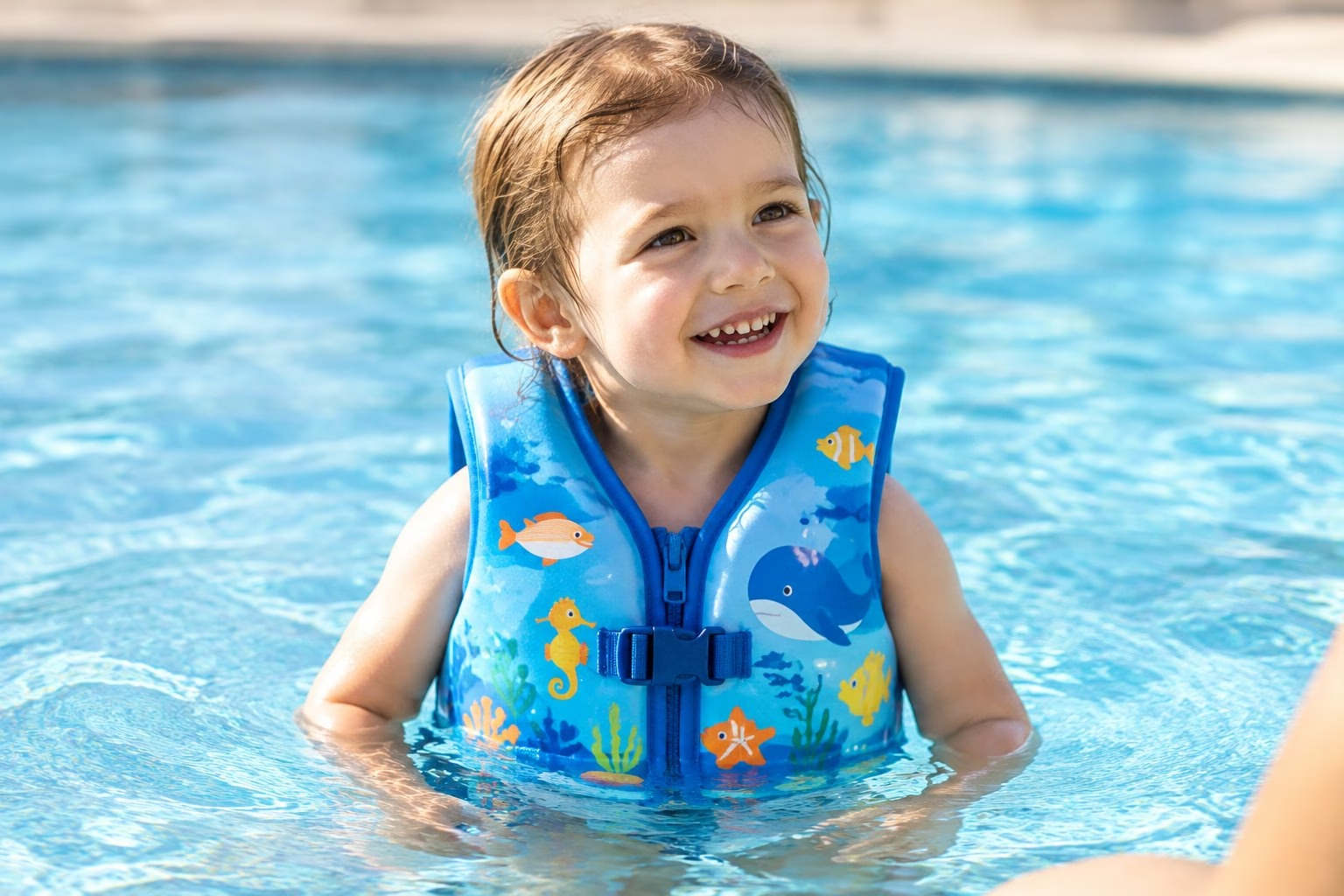
Bright sea-creature prints make the BECO Sealife vest easy to spot in a crowded pool. That visibility is a practical safety bonus when several children share the water.
BECO is a German swim brand with a long line of learning aids. The Sealife vest uses foam floats inside a soft outer shell.
Try it on dry before the first swim. Lift the vest gently at the shoulders: if it slides up past the ears, choose a smaller size.
8) JoJo Maman Bébé Float Jacket
JoJo Maman Bébé’s float jacket suits parents who already buy the brand’s baby swimwear and want matching kit. It is designed for babies and toddlers in the early stages.
Treat it like any toddler swimming aid. Keep your child within arm’s reach and use it in warm, shallow water.
Sizing follows the brand’s age bands, so check your child’s weight against the label. Wash out chlorine with cool fresh water after each swim to protect the fabric.
9) Liewood Dove Swim Vest
Liewood is a Danish brand known for soft colours and simple design. The Dove Swim Vest appeals to parents who want a calmer look than bold cartoon prints.
Muted shades look lovely but stand out less in busy water. Pair it with a bright swim hat so you can find your child at a glance.
As with every vest here, check that it carries the EN 13138-1 marking. Confirm the weight range before buying, as design brands sometimes size more tightly.
10) Owntop Adults Buoyancy Vest With Hydration Pack
Adult weaker swimmers and watersports fans get a two-in-one design here: a buoyancy vest with a built-in hydration pack. You can carry water while staying buoyant on long paddleboard or kayak trips.
Safety details include reflective strips on the shoulders, an emergency whistle and bright colour choices. Neoprene lining at the shoulders helps prevent chafing.
Check the buoyancy rating on the label before open water. Pair it with a safety buoy float for visibility, and a suitable wetsuit from our wild swimming wetsuit buying guide when the water is cold.
How to Choose the Right Swim Vest
Start with your child’s weight, then pick the buoyancy style that matches their stage.
| Vest | Best for | Buoyancy | Safety strap | Material |
|---|---|---|---|---|
| Zoggs Super Star Swimsure | Ages 2–6 | Fixed | Zip cover | Foam/fabric |
| Konfidence Original | Progressing learners | Removable | Check model | Neoprene |
| SwimBest 8 Floats | Ages 3–6, 19–30 kg | Removable (8) | Yes | Neoprene |
| Splash About Go Splash | Ages 1–6 | Fixed foam | Check model | Neoprene |
| Speedo Learn to Swim | Ages 1+ | Foam inserts | Check model | Fabric/foam |
| Nabaiji Foam Vest | Budget buyers | Foam | Check model | Foam |
| BECO Sealife | Visibility | Foam | Check model | Soft shell |
| JoJo Maman Bébé | Babies, toddlers | Foam | Check model | Neoprene |
| Liewood Dove | Design-led families | Foam | Check model | Fabric/foam |
| Owntop Adults | Adult weaker swimmers | Fixed | Waist straps | Neoprene-lined |
How do swimming aids, buoyancy aids and life jackets differ?
These three products do different jobs:
- Swimming aids (EN 13138-1) help children learn in calm pools with an adult close by.
- Buoyancy aids (ISO 12402, often 50 newtons) help conscious adults who can swim during watersports.
- Life jackets (100 newtons and above) are built to turn a person face-up in open water.
A child’s swim vest belongs in the first group. It gives lift, yet it is designed to keep a learner leaning forward in a swimming position.
Should you choose fixed or removable buoyancy?
Fixed buoyancy suits beginners and holiday swimmers. The support never changes, and nobody forgets to put floats back.
Removable floats suit children in weekly lessons. You take out one pair at a time, usually every few weeks, so they rely more on their own kicking. Always remove floats evenly from front and back to keep your child level.
How do weight limits, chest measurements and fit affect your choice?
Weight decides the size first. Each vest is tested to hold children within a set weight band, so a child outside that band floats too high or too low.
Chest size decides the fit. A snug vest stays put, while a loose vest rides up towards the chin. Some brands list a maximum chest size, such as up to 56 cm for smaller sizes.
At home, dress your child in the vest and lift gently under the arms. The vest should stay in place and not reach the ears.
Which features matter for toddlers, older children and adult weaker swimmers?
For toddlers, look for soft neoprene, a zip cover and a strap between the legs. Warmth helps too, as small bodies chill fast.
Older children of five to seven need lighter support and free shoulders for strokes. Removable floats work well here.
Adult weaker swimmers need a buoyancy aid with adjustable waist and shoulder straps, bright colours and a whistle. A child-style swim vest will not fit an adult safely.
Safe Use and Flotation Limitations
A swim vest supports your child in the water, and an adult within arm’s reach is what keeps them safe.
What supervision does a child wearing a swim vest need?
Stay in the water and within arm’s reach of any child under five. Watch them all the time, with your phone out of your hand.
Older children who can swim a few metres still need eyes on them at all times. Lifeguards watch whole pools, so they cannot track your child alone.
Drowning is quiet and fast. A child can slip under in seconds without splashing or shouting.
How should you check fastening security and ride-up before use?
Do a quick four-step check before each swim:
- Fasten the zip or buckle fully and close any cover.
- Tighten the crotch strap so a flat hand fits between strap and body.
- Lift the vest at the shoulders; it should not pass the chin.
- Count removable floats so both sides match.
Repeat the lift test after the first few minutes in the water. Wet neoprene stretches slightly.
Why does flotation not guarantee a clear airway or prevent drowning?
Swimming aids are built to hold a child leaning forward. If your child tips or tires, their face can drop into the water while the vest stays afloat.
A vest also has no way to turn a child onto their back. Only a proper life jacket is designed to do that, and even then not every time.
When is a swimming aid unsuitable for boating or open water?
Use a swimming aid only in calm, shallow pools. Waves, currents and cold water push children around and shock the body.
On boats, paddleboards and in the sea, choose a life jacket rated for the activity and the child’s weight. Read up on essential safety gear for wild swimming before you head outdoors.
Frequently Asked Questions
Are swim vests a good idea for learning to swim?
Yes, swim vests are popular with teachers because they leave the arms free for strokes. Removable floats let you reduce support as your child improves. Once they kick confidently, a swimming kickboard is a good next step.
What is the difference between a swim vest and a life jacket?
A swim vest is a learning aid tested to EN 13138-1 for pool use. A life jacket is built for open water and designed to turn a person face-up. Use a life jacket for boats and the sea.
Does a swim vest keep a child afloat without adult support?
A vest keeps a child near the surface, yet their face can still slip under. Stay within arm’s reach every time they wear one.
Can a one- or two-year-old wear a swim vest?
Yes, several vests start at 1–2 years, including Splash About and Speedo. Choose soft neoprene with a secure zip, and hold your toddler close throughout.
How do I choose a swim vest for a five- or seven-year-old?
Pick by weight first, as most children’s vests top out around 30 kg. For a confident five-year-old, choose removable floats; a seven-year-old near the limit may be ready for a kickboard instead.
Are adult buoyancy vests suitable for weaker swimmers?
Adult buoyancy vests help weaker swimmers feel steadier during watersports. Check the newton rating, and choose a full life jacket if you cannot swim at all or plan to be in open water.