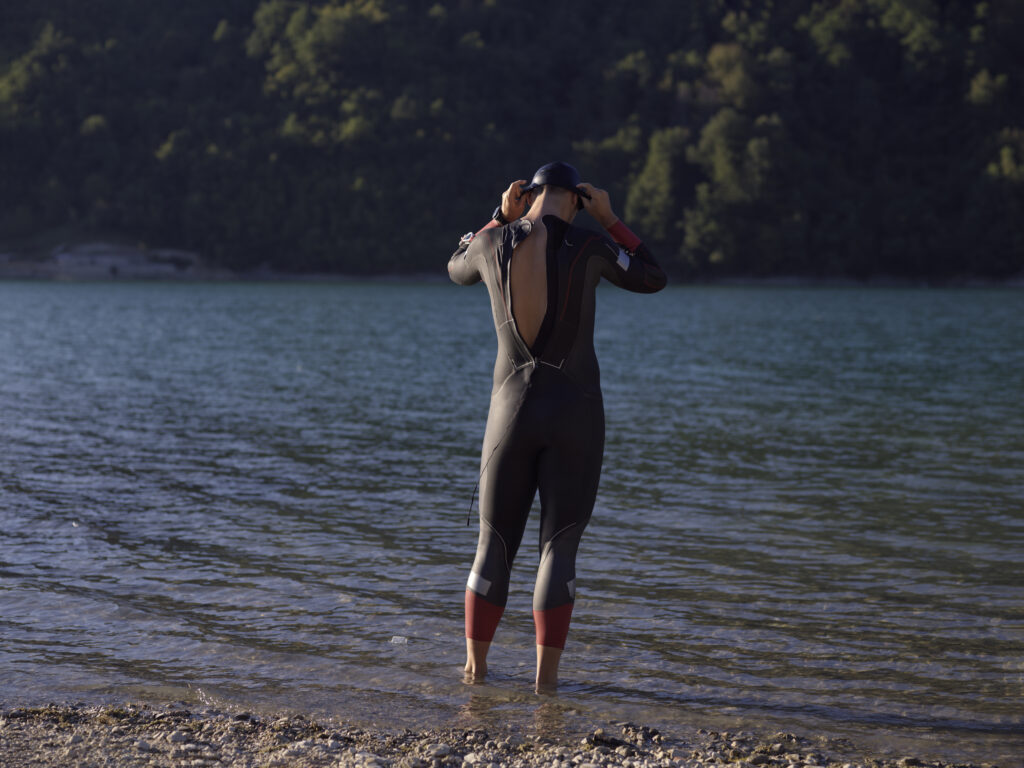
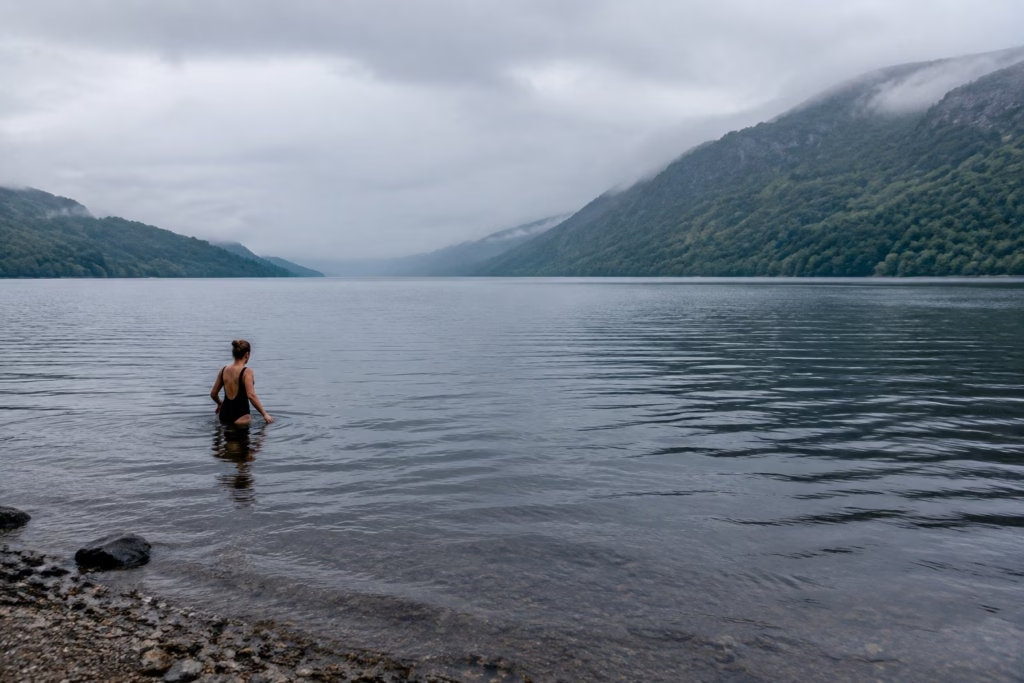
If you want easy, quieter water, start with Rydal Water, Grasmere, Buttermere or Crummock Water. Wild swimming in the Lake District gives you lakes, tarns, river pools and waterfall plunges, all inside one national park. The water stays cold for most of the year, so where you can get in and out matters as much as the view.

For a first swim in 2026, Rydal Water is your best bet. It is small, sheltered and free of powered boats, and you can reach its shore on a short, flat walk. Buttermere and Crummock Water suit you next, with more space and the same quiet water.
You can swim in most lakes, tarns and rivers across the Lake District National Park. Four reservoirs are off-limits, and the busier lakes carry boat traffic. The best wild swimming spots in the Lake District reward you for checking access, depth and water quality before you change.
If you are new to it, read our guide to outdoor and wild swimming first. Then pick a calm, shallow shore for your first dip.
Which Lakes Offer the Most Practical Swimming Access?
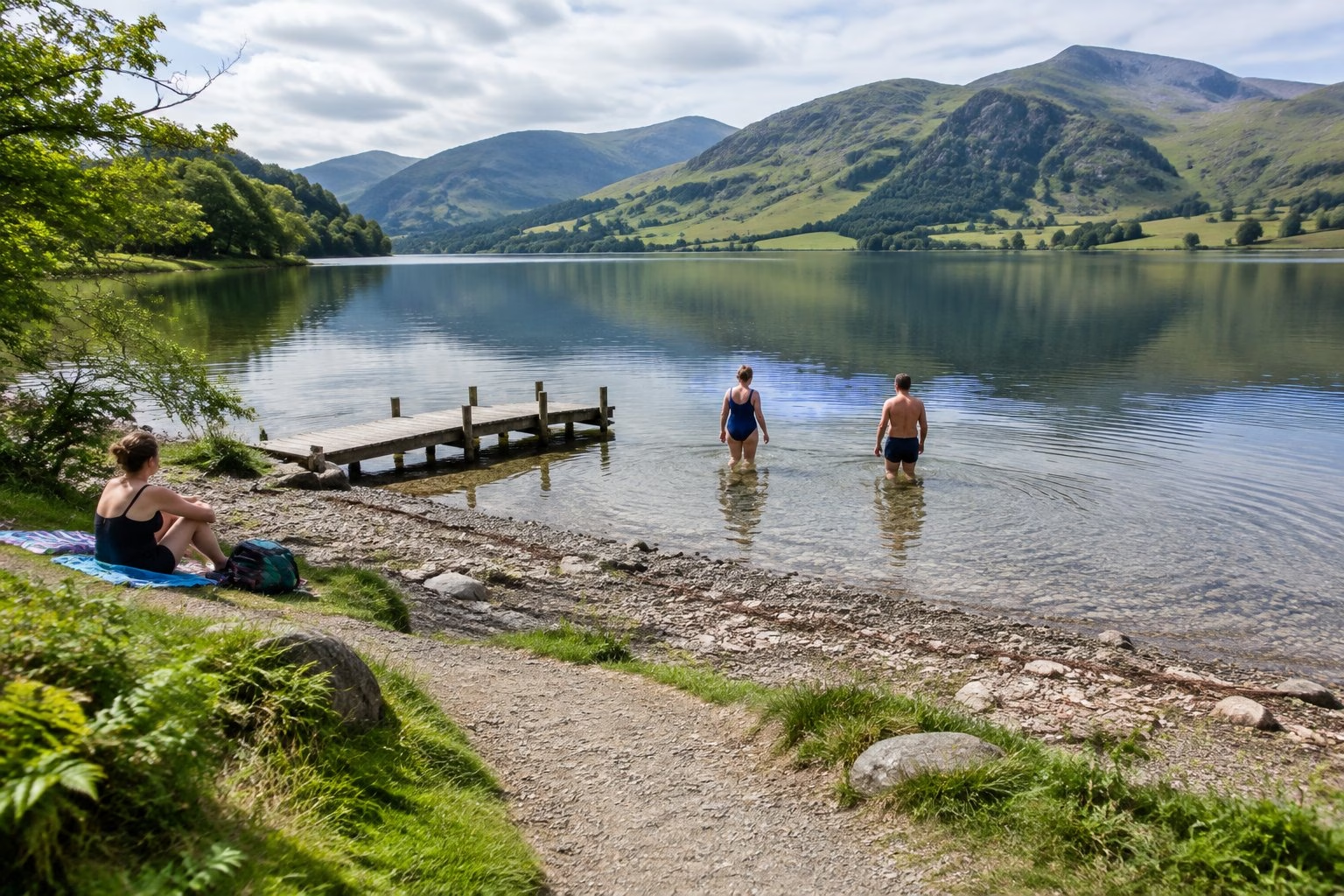
The quieter lakes give you the easiest open-water swimming. Rydal, Grasmere, Buttermere, Crummock Water and Wastwater all ban powered craft. The Lake District National Park Authority lists Windermere, Ullswater, Coniston and Derwentwater as busier lakes with motorboats and cruisers. On those four, stay close to the shore and make yourself easy to see.
Most wild swimming spots in the Lake District sit close to a road, but parking fills early in summer. Gravel or pebble shores give you the gentlest way in. Rocky edges near jetties can hide sudden drops or shallow ledges.
Rydal Water: Sheltered Shores Between Ambleside and Grasmere
Rydal Water is one of the smallest and shallowest lakes. It warms faster than the big lakes in summer, which helps if you are new to cold water.
Park at White Moss or Pelter Bridge and walk a few minutes to the shore. The pebble beaches on the south side slope gently, so you can wade in slowly and check the depth as you go.
The estate permits individual recreational swimming only, and any commercial activity has to be agreed with the land agents first. Grasmere sits less than a mile away and also bans powered craft. Its small islands are off-limits, so swim around them and keep off.
Windermere: Access and Facilities at Fell Foot
Windermere is England’s longest lake, and it carries the most boat traffic. Fell Foot Park at Newby Bridge, at the southern tip, gives you a managed shore, toilets and a café. National Trust members park free there.
Brockhole, the visitor centre between Windermere and Ambleside, is another easy shore. Avoid ferry routes, marinas and the jetties boats use.
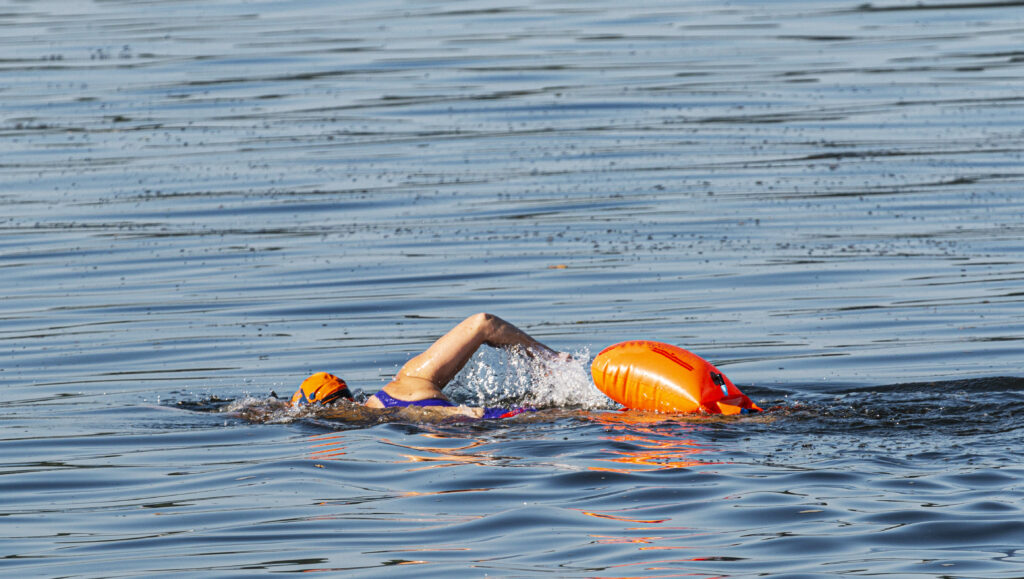
A bright cap and a tow float are essential here. Our guide to safety buoy floats explains why they make you visible to boat crews.
Coniston Water: Shore Access at Monk Coniston
Coniston Water sits beneath the Old Man of Coniston. The north end near Monk Coniston gives you a calmer start than the busier village side.
From Monk Coniston car park, cross the road and follow the path to the water’s edge. The shore here is shallow and stony, so water shoes help.
Coniston still has sailing boats, kayaks and the steam yacht. Swim along the shoreline and keep well clear of the boat launches at Coniston village.
Derwentwater: Swimming Close to Keswick
Derwentwater gives you the easiest town access of any big lake. Keswick sits at its north end, with shops and cafés a short walk from the water.
The lake has seven lakeside marinas, and launches run between the jetties. Steer clear of the landing stages. Pick a quieter bay on the west shore or near Ashness Jetty, and swim parallel to the shore.
The islands look tempting, but crossing open water puts you in the launch routes. Keep to the shallows unless you have a support kayak with you.
Ullswater: Shoreline Options Around Glenridding
Ullswater is nine miles long, and the Ullswater ‘Steamers’ run its full length from Pooley Bridge to Glenridding. The pebble beaches near Glenridding and around Aira Force are popular places to get in.
The A592 follows the western shore, so you will find plenty of lay-bys and short paths down to the water. Arrive early on sunny weekends.
Avoid the piers at Glenridding, Howtown and Pooley Bridge. Steamers move faster than you expect and sit low in the water when they turn.
Buttermere and Crummock Water: Choosing Your Entry Point
Buttermere and Crummock Water both ban powered craft, so the water stays still and quiet. For Buttermere, park in the village and walk five to ten minutes down to the shore. Gatesgarth Farm, at the south-east end, has pay parking right beside the lake.
The path around Buttermere gives you many entry points. Shingle beaches at the head of the lake shelve gently. Crummock Water’s shore near the village is wider and often emptier.
Check the wind before you go. A breeze funnelling down the valley can whip up chop on Crummock in minutes.
Wastwater: Dramatic Scenery and Exposed, Cold Water
Wastwater is England’s deepest lake, at about 79 metres. It stays cold even in August. The National Trust owns it and bans powered craft.
The shore beneath the screes drops off fast, and the water turns black and deep within a few strokes. Swim close to the north-west shore near the road, where you can climb out easily.
Wind hits this valley hard. If deep water makes you uneasy, our tips on how to overcome a fear of deep water will help you build up to it.
| Lake | Powered boats | Easiest access | Best for |
|---|---|---|---|
| Rydal Water | No | White Moss, Pelter Bridge | First swims |
| Grasmere | No | Village, A591 lay-bys | Calm mornings |
| Buttermere | No | Village, Gatesgarth | Views, gentle shores |
| Crummock Water | No | Buttermere village | Space and quiet |
| Wastwater | No | Roadside north-west shore | Experienced swimmers |
| Windermere | Yes | Fell Foot, Brockhole | Facilities |
| Ullswater | Yes | Glenridding beaches | Long shoreline |
| Coniston Water | Yes | Monk Coniston | Quieter north end |
| Derwentwater | Yes | Keswick bays | Town access |
Where Can You Find River Pools and Waterfall Dips?

The best river pools sit in Borrowdale, Eskdale and the Duddon Valley, and most need a walk of between two minutes and an hour. River water is colder than lake water. After rain, the flow can change from gentle to dangerous within hours.
Look at each pool before you get in. Find your exit point first, and never jump without checking the depth with your feet.
Black Moss Pot and Galleny Force: Walking from Stonethwaite
Black Moss Pot is a deep rock channel about 50 metres long on Langstrath Beck, above Stonethwaite in Borrowdale. High rock walls line it, with a small waterfall at one end and a stony beach at the other.
Parking at Stonethwaite is very limited, so use the National Trust car park at Rosthwaite. Walk past Stonethwaite and up Langstrath with the beck on your left. Allow about 45 minutes each way.
Galleny Force sits about halfway along. Its clear pools are shallower and make a good dip if Black Moss Pot is crowded. People jump at Black Moss Pot, but check the depth every single time. Rocks move after floods.
Tongue Pot, Kail Pot and Gill Force: Exploring Eskdale
Tongue Pot is a series of deep, green pools on the River Esk. It lies about two miles from Brotherilkeld, at the foot of Hardknott Pass.
Follow the river upstream through the valley to the old packhorse bridge at Throstle Gill. Tongue Pot sits just below it. Kail Pot lies downstream; don’t confuse it with Kailpot Crag on Ullswater.
Gill Force sits lower in the valley near Boot, with a shorter walk in. Eskdale’s single-track roads are slow, so give yourself extra time, especially if you come over Hardknott.
Birks Bridge: Gorge Access in the Duddon Valley
Birks Bridge is a stone packhorse bridge over a deep, clear pool in the River Duddon. It sits about two minutes from the Forestry England car park, which makes it one of the easiest river swims in Cumbria.
The gorge walls are smooth and slippery. Get in from the gravel just downstream of the bridge, where you can stand up.
The Duddon rises fast after rain. If the water looks brown or loud, stay on the bank.
Buttermere Infinity Pool: Access, Exposure and Limited Space
The Buttermere infinity pools sit on Warnscale Beck, above the head of Buttermere. From Gatesgarth Farm, walk up the Warnscale path towards Haystacks. Allow 45 minutes or more on rough ground.
The pools are small and sit right on the lip of a drop. Only a few people fit at once, and a slip near the edge could be serious.
The beck is exposed to wind, and it is cold even in summer. Bring a warm layer for the walk down.
Wasdale Emerald Pool and Netherbeck Waterfalls: Remote Approaches
The Wasdale emerald pool sits on Lingmell Gill, on the path towards Scafell Pike. Park at the National Trust Lake Head car park. Follow the Scafell Pike path for about 45 minutes, and look for a deep pool where the gill widens between rock slabs.
The Netherbeck waterfalls flow down to Wastwater from the north-west side of the valley. Park near Netherbeck Bridge and walk up beside the beck to find small pools and falls.
Wasdale has no phone signal in most places. Download your map offline before you leave and tell someone your plan.
Whorneyside Force: A Walk into Great Langdale
Whorneyside Force sits in Oxendale at the head of Great Langdale. Walk from the Old Dungeon Ghyll area along the valley track, then follow Oxendale Beck uphill.
The fall drops into a narrow pool beneath steep fells. This is a high, cold spot, so treat it as a quick plunge.
Langdale car parks fill early on fine days. A dawn start gets you a space and an empty pool.
Swindale Beck: Pools, Paths and Habitat Protection
Swindale Beck lies in a quiet valley near Shap, on the eastern edge of the park. The beck has been restored to a more natural, winding course, and it now supports spawning fish.
Parking is very limited on the narrow road in, so take care not to block gateways or farm access. Walk in from the end of the public road.
Keep off the gravel beds in autumn and winter, when fish lay eggs there. Get in at rocky or stony edges, and keep your footprint small.
Waterfalls to View Rather Than Treat as Swimming Spots
Some Lake District waterfalls are better for looking at. Scale Force is the tallest, at around 52 metres. Its plunge pool is cold even in August, and the walk from Buttermere is about 3.5 miles return on boggy paths.
Aira Force on Ullswater has fierce flow and a small, busy National Trust car park that fills quickly. Stanley Ghyll Force in Eskdale is a 60-foot fall, best seen from the suspension bridge.
Ritson’s Force near the Wasdale Head Inn has small pools, so paddle there with care. Sour Milk Ghyll, above both Buttermere and Grasmere, is steep and slippery after rain. Admire it from the path.
Which Tarns Can You Combine with a Walk?
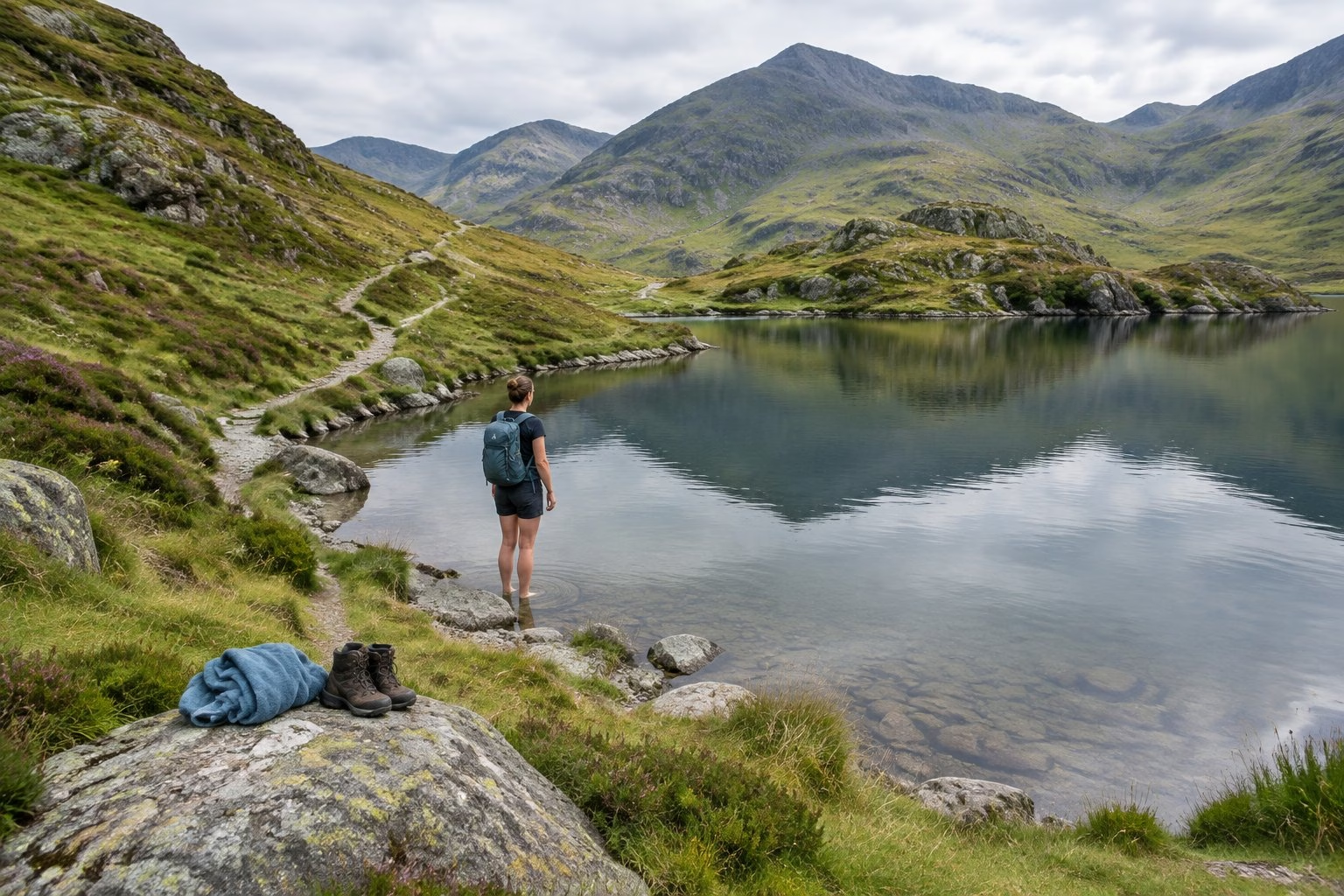
Tarns turn a fell walk into a swim, and the Lake District has an estimated 197 of them. Most are colder than the lakes, even on a hot day. Your body will also be warm and tired from the climb, which affects how you cope with the cold.
Blea Tarn and Loughrigg Tarn suit a short walk. Easedale Tarn needs about an hour of climbing, so pack extra warm layers.
Blea Tarn: A Short Approach with Mountain Views
Blea Tarn sits between Great Langdale and Little Langdale, with the Langdale Pikes rising behind it. The National Trust car park lies across the road, and the walk to the water takes a few minutes.
The shore is grassy with some stony patches. Get in where the bottom is firm and slopes gently.
It is a popular spot for photographers at dawn and dusk. Swim quietly and give them space.
Loughrigg Tarn: Checking Shore Access Before Your Visit
Loughrigg Tarn sits between Grasmere and Skelwith Bridge, and Wordsworth was a regular visitor. It is small, calm and sheltered.
Much of the shore is private farmland. Use the public footpath to reach the water, and check the signs on the gates before you cross any fields.
The bottom is soft and weedy in places. Water shoes make getting in much more pleasant.
Easedale Tarn: Planning for a Longer Upland Approach
Easedale Tarn sits above Grasmere. The steady climb past Sour Milk Ghyll takes about an hour each way from the village.
The tarn is deep and cold all year. Swim in short bursts, and change straight into dry clothes, since you still have the walk down.
Pack a hat, gloves and a hot drink. Weather on the fells changes quickly, and the tarn sits in an open bowl with little shelter.
Tarn Hows and Coniston Coppermines: Check Restrictions Before Planning a Dip
Tarn Hows is a National Trust beauty spot near Coniston, and its paths are busy with families. Read the signs at the car park before you plan to swim, as landowners can change their guidance between seasons.
The Coniston Coppermines valley holds old mine workings, spoil heaps and streams. Stay away from shafts and unstable ground. Pick clear water away from the mine debris.
Both are better as walks with a paddle unless signs say swimming is welcome. Treat the rules here as part of your planning.
How Do You Plan a Safer Swim?
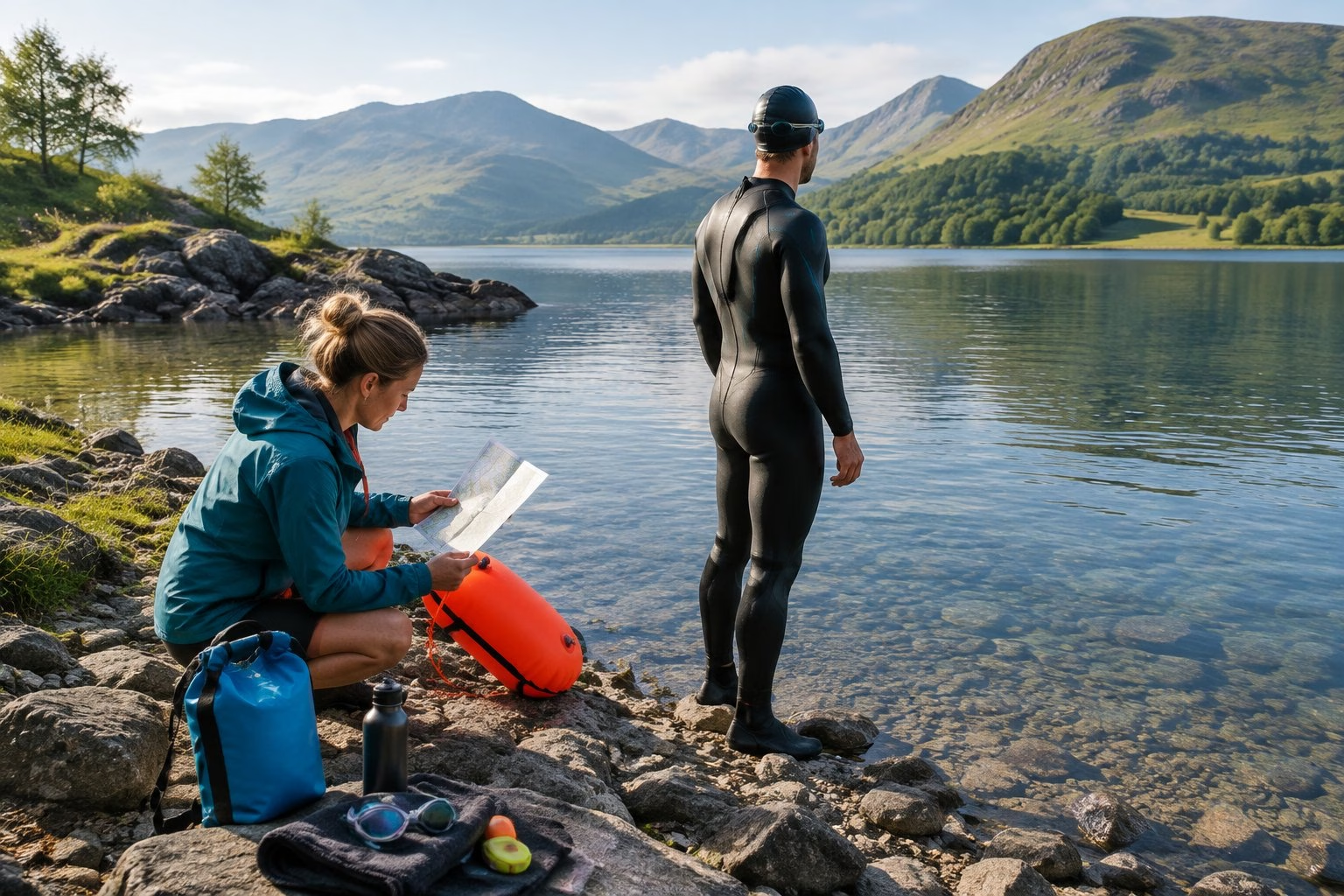
Wild swimming safety comes down to planning before you leave home. Check the permissions, read the map, look up water quality, and work out how you will warm up afterwards.
Never swim alone. Tell someone where you are going and when you will be back.
Check Swimming Permissions, Shore Access and Local Restrictions
Swimming is not allowed in Ennerdale Water, Haweswater, Thirlmere and Kentmere reservoir. These supply drinking water or have other restrictions.
Some lakes have extra rules. Bassenthwaite has no diving. Grasmere’s islands are off-limits. Rydal allows individual swimming only.
If your group has more than 50 people, or you plan to bring a gazebo, seek advice from the landowner first. Read the signs at car parks and gates, as rules change.
Use a Map to Check Parking, Approach Routes and Facilities
Carry an OS Explorer map or download one offline, as many valleys have no phone signal. Mark where you will park, the path in, and the nearest toilets or café.
Check the walk time honestly. A 45-minute walk in means 45 minutes out again when you are cold.
Plan a backup spot nearby. If your car park is full, you can move on without driving round for an hour.
Check Water Quality, Blue-Green Algae and Recent Rainfall
Blue-green algae is more likely in warm, dry weather, and it can be lethal for dogs. It looks like green scum, paint or small specks in the water.
If you suspect algae, stay out. Report any sightings using the Bloomin’ Algae app, and check Environment Agency updates before you travel.
Heavy rain washes run-off from farms and roads into rivers and lakes. Wait a day or two after a downpour, especially near stream inlets and towns.
Manage Cold Water Shock, Exposure and Rewarming
Cold water shock makes you gasp and breathe fast. It hits even in summer, when lakes sit around 13 to 16°C at best. Get in slowly, breathe out steadily, and let your breathing settle before you swim.
An early sign of trouble is struggling to move your hands. Get out before you feel very cold, not after.
Have warm layers, a hat and a hot drink ready on the shore. Our advice on staying warm and safe in open water covers rewarming step by step, and you can learn to start cold water swimming gradually.
Assess Currents, Waterfalls, Boat Traffic and Exit Points
Rivers pull harder than they look, especially near falls and where a beck enters a lake. Waterfalls create churning water that can hold you under at the base.
On the busier lakes, keep away from jetties, marinas and ferry routes. A support kayak or paddleboard flying a white-blue Alpha flag makes you easier to spot.
Pick your exit before you get in. Swim along the shoreline so you can climb out at any point.
Pack Visible Swimming Kit and Protect the Places You Visit
Your basic kit list:
- Bright swim cap
- Tow float, which doubles as a dry bag for your keys and phone
- Wetsuit for warmth and buoyancy
- Water shoes for rocky beds
- Warm layers, hat and a flask of hot drink
- Offline map and a whistle
Our list of essential safety gear for beginners explains each item in more detail.
Take all your litter home, skip sun cream right before a river dip, and park only in proper spaces. Keep dogs out of water if you spot any algae.
Choose Your Swim Around Access and Today’s Conditions
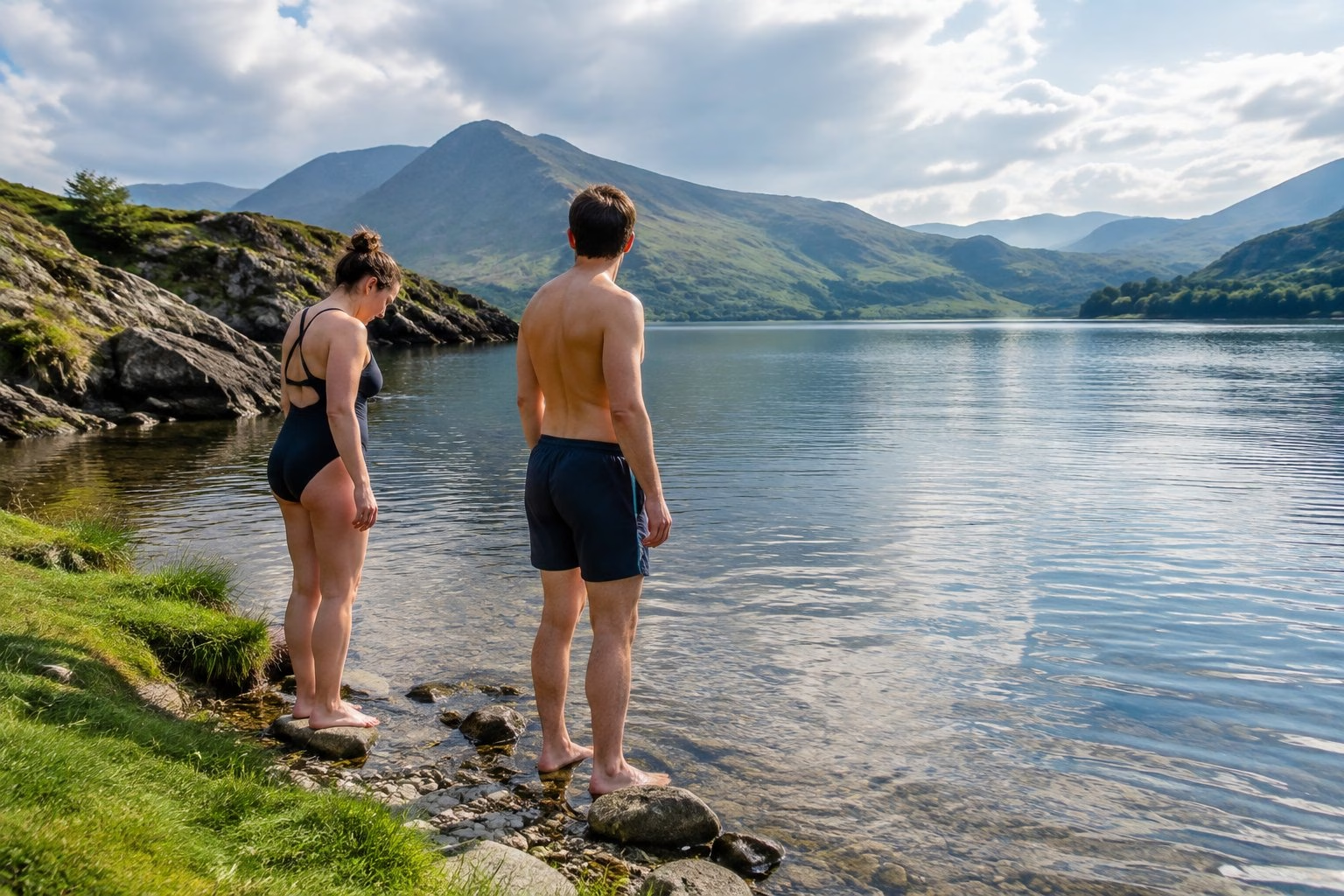
Pick your swim on the day, based on access and conditions. Rydal Water, Grasmere and Buttermere suit you if you want calm, boat-free water and short walks.
Windermere, Ullswater, Coniston and Derwentwater give you more facilities, but you need a bright cap and a tow float. River pools like Black Moss Pot, Tongue Pot and Birks Bridge are best after a few dry days. Tarns pair well with a fell walk if you carry extra warm kit.
Before you set off, run through this quick check:
- Is swimming allowed at this spot?
- Is there any sign of blue-green algae?
- Has it rained heavily in the last 48 hours?
- Where will you park, and where will you get out?
- Who is swimming with you?
Among the wild swimming locations across the national park, the right one is the place you can reach, enter and leave safely today. If you want to compare other regions, try wild swimming in North Wales or the best lakes for open swimming in the UK.
Frequently Asked Questions
Where is the best place for a first outdoor swim in the Lake District?
Rydal Water is the best place for a first outdoor swim. It is small, shallow and free of powered boats, with gentle pebble shores a short walk from parking. Grasmere is a good second choice nearby.
Is wild swimming free in the Lake District?
Yes, swimming itself is free in most lakes, tarns and rivers. You will pay for parking at most car parks, though National Trust members park free at many sites, including Fell Foot. Commercial groups and organised events need permission from the landowner.
Which Lake District lake has the cleanest water?
No lake holds an official “cleanest” title, but the quieter western lakes such as Wastwater, Buttermere and Crummock Water are known for very clear water. Water quality changes with rain and weather, so check Environment Agency updates before you go. Our guide to the cleanest rivers and lakes in the UK covers more options.
Are there fairy pools in the Lake District?
Yes, the Lake District has many small, clear “fairy pools” on its becks. The best known include Tongue Pot in Eskdale, the Fairy Glen pools near Stonethwaite and the Wasdale emerald pool on Lingmell Gill. Most need a walk and stay very cold.
Can you swim in Buttermere lake?
Yes, you can swim in Buttermere lake, and it is one of the most popular spots in the park. Powered craft are banned, so the water stays calm. Get in from the shingle near the village or at Gatesgarth Farm.
When is the best time of year to swim in the Lake District?
June to September is the best time, when the lakes reach about 13 to 16°C. Cold water swimming carries on all year for experienced swimmers with the right kit. Avoid swimming after heavy rain, and watch for algae in long, dry spells.