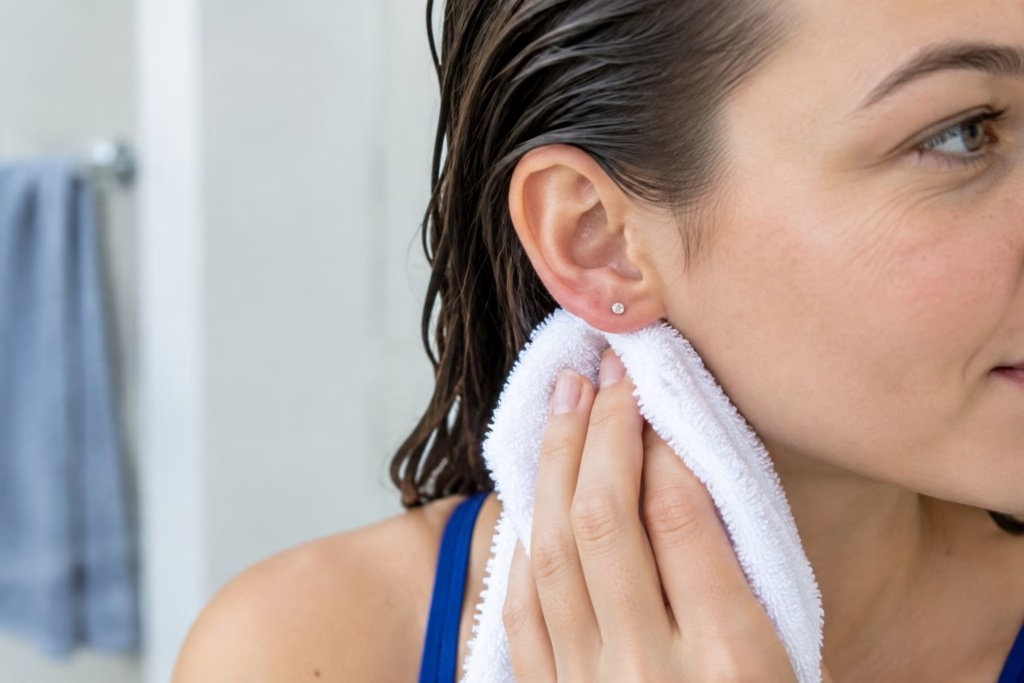
You should wait until your new ear piercing has fully healed before you swim. For most earlobe piercings that means at least six to eight weeks, and for cartilage piercings it can mean several months to a year. A fresh piercing is an open wound, and pool, sea, lake and hot tub water can all carry germs into it.
That wait can feel long if you swim every week or have a holiday booked. Some short guides say a day is enough, and some piercers only ask you to stay dry for the first two weeks. Those numbers describe the earliest stage of healing, not the point where your ear can safely sit in shared water.
Once you know the real timelines, you can plan your swims, lessons and trips around them with confidence. If you are keen to get back in the water, use the healing weeks to plan where and how you will swim once your ear is ready.
How Long Should You Wait Before Swimming?
Wait until the piercing is fully healed, which takes weeks for a lobe and months for cartilage. Lobes have a good blood supply and heal fastest, while the firmer cartilage at the top of the ear heals slowly and stays tender for longer.
Earlobe Piercings: Usually at Least 6–8 Weeks to Heal
The soft lobe is the quickest part of the ear to heal. UK piercers give lobes a healing time of around 6 to 9 weeks, and the NHS suggests about six weeks for a lobe.
During that time, keep your ear out of pools, hot tubs, lakes, rivers and the sea. If your lobe was pierced at the start of the summer holidays, you would be looking at late July or August before a safe swim.
Count from the day of the piercing, not from when the soreness stops. Pain fades well before the inside of the hole has finished healing.
Cartilage Piercings: Several Months to a Year
Cartilage piercings include the helix, tragus, conch, rook and daith. These take far longer, with healing times of around six to nine months and sometimes up to a year.
Cartilage has less blood flow than the lobe. That means it fights germs more slowly, and an infection in cartilage can be harder to treat.
If you swim a lot, think about timing. Getting a helix done in autumn means it has the winter to heal before the outdoor swimming season begins.
Why Looking Healed Does Not Mean Fully Healed
A piercing heals from the outside in. The skin around the hole can look calm and pink within a couple of weeks, while the channel through your ear is still raw.
Signs that your piercing is still healing include:
- Tenderness when you touch or bump it
- Crusty build-up on the jewellery
- Redness or swelling that comes and goes
- Clear or pale yellow fluid
If any of these are still there, your ear is not ready for the pool. When in doubt, ask your piercer to check it before your first swim.
Why Do Pools, Open Water and Hot Tubs Pose Risks?
Every type of swimming water can carry germs into a new ear piercing, and some types carry far more than others. Pools are the least risky option, the sea and fresh water come next, and hot tubs are the worst place for a healing piercing.
Does Chlorine Make Pool Water Safe for a Healing Piercing?
Chlorine kills many germs, but it does not make pool water clean enough for an open wound. Some bugs survive normal chlorine levels for a while, and busy pools have sweat, skin and other dirt in the water.
Chlorine also dries and irritates healing skin. Irritated skin heals more slowly, so the piercing stays open for longer.
Changing rooms and shared towels add more risk. A quick dip can mean wet hair dripping onto your ear for an hour afterwards.
Why Seawater Is Not the Same as Sterile Saline
You clean a new piercing with sterile saline, so it is easy to think the sea does the same job. It does not. Saline spray is salt water that is free of germs, while seawater contains bacteria, sand, algae and, near some beaches, sewage.
Salt levels in the sea are also higher and vary, which can sting and dry the skin. If you love the coast, knowing the safest time to sea swim will help once your ear has healed.
Bacteria in Lakes, Rivers and Hot Tubs
Lakes and rivers are not treated at all. After heavy rain, run-off can raise bacteria levels quickly, which is why outdoor and wild swimming fans check water quality before they get in.
Hot tubs are the highest risk. Warm water helps bacteria grow fast, and the heat softens the skin around your piercing.
Even with your head above the bubbles, steam and splashes reach your ears. Skip the hot tub completely until healing is done, and save open water swimming near you for after that point too.
Can You Reliably Keep a Healing Piercing Dry?
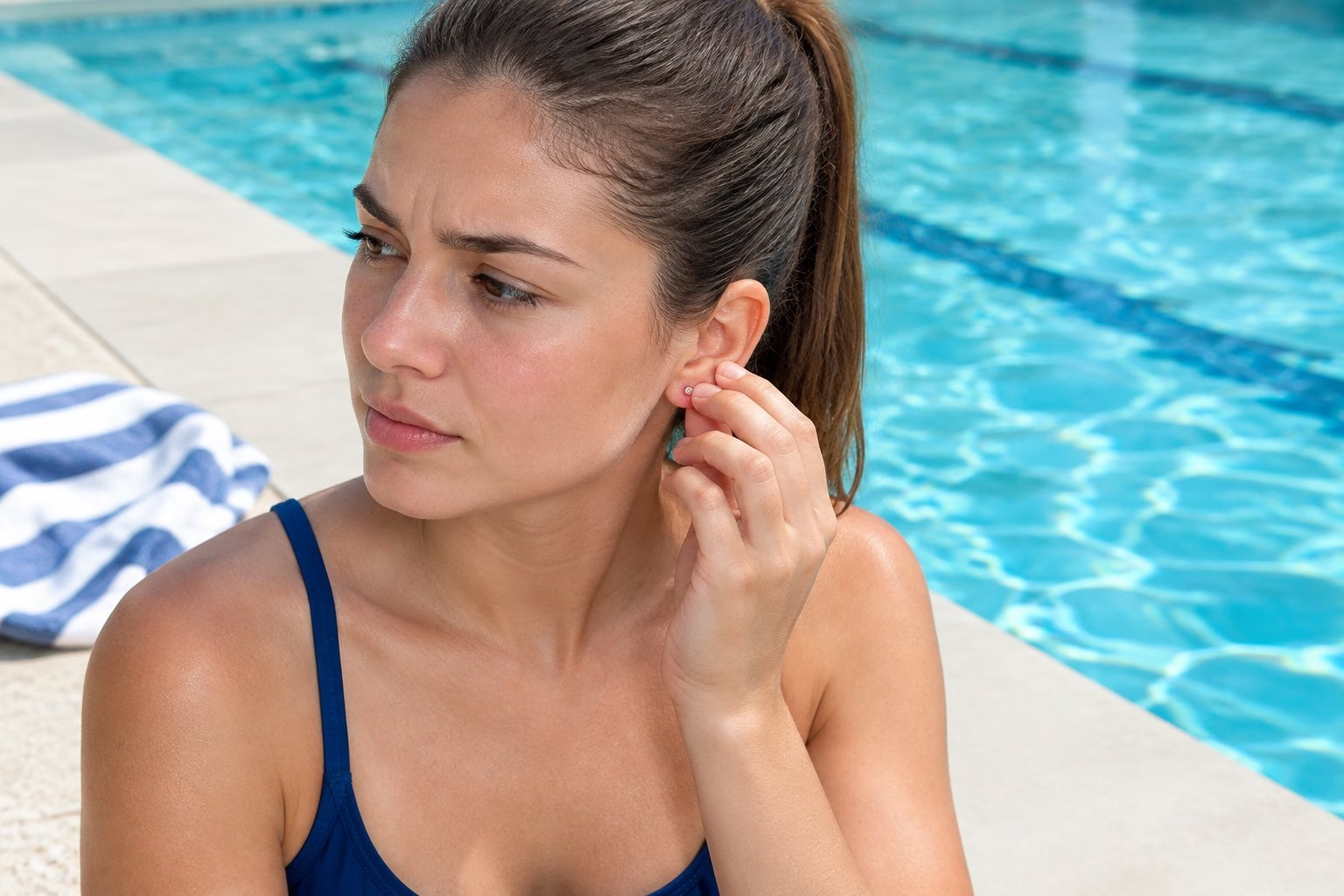
You cannot reliably keep an ear piercing dry while swimming. Waterproof bandages, swim caps and earplugs all reduce contact with water, but none of them form a perfect seal around jewellery that sticks out from the ear.
Why Waterproof Bandages May Not Seal Around Earrings
Waterproof bandages work best on flat skin. An ear is curved, and a stud or hoop creates a bump that lifts the edges.
Guidance on covering a piercing advises that you test the bandage under water to check the seal, which shows how easily they leak. Once water gets under a bandage, it sits against your piercing for your whole swim.
Pulling the bandage off can also tug on the jewellery. Peel it slowly, holding the skin still with a clean finger.
Can a Swim Cap or Earplugs Keep Water Away?
A silicone swim cap pulled down over your ears keeps out a lot of water. It also presses on the earrings, which can rub and irritate a fresh piercing, and water still creeps in at the edges.
Earplugs protect the ear canal, not the lobe or cartilage. They help with problems inside the ear, and ear plugs for swimmer’s ear are worth having once you return to regular swims.
Neoprene ear bands give another layer, but treat any of these as backup for a short, unavoidable swim.
Planning Swimming Lessons and Holidays Around Healing
The simplest fix is timing. Book your piercing after your holiday or at the end of a swim term.
If your child has weekly lessons, wait for a natural break such as the end of summer. A lobe pierced in early September should be ready by late October or early November.
Got a beach trip in six weeks? Delay the piercing or plan land-based fun. It is easier than nursing an infected ear abroad.
What Should You Do if Your Piercing Gets Wet?
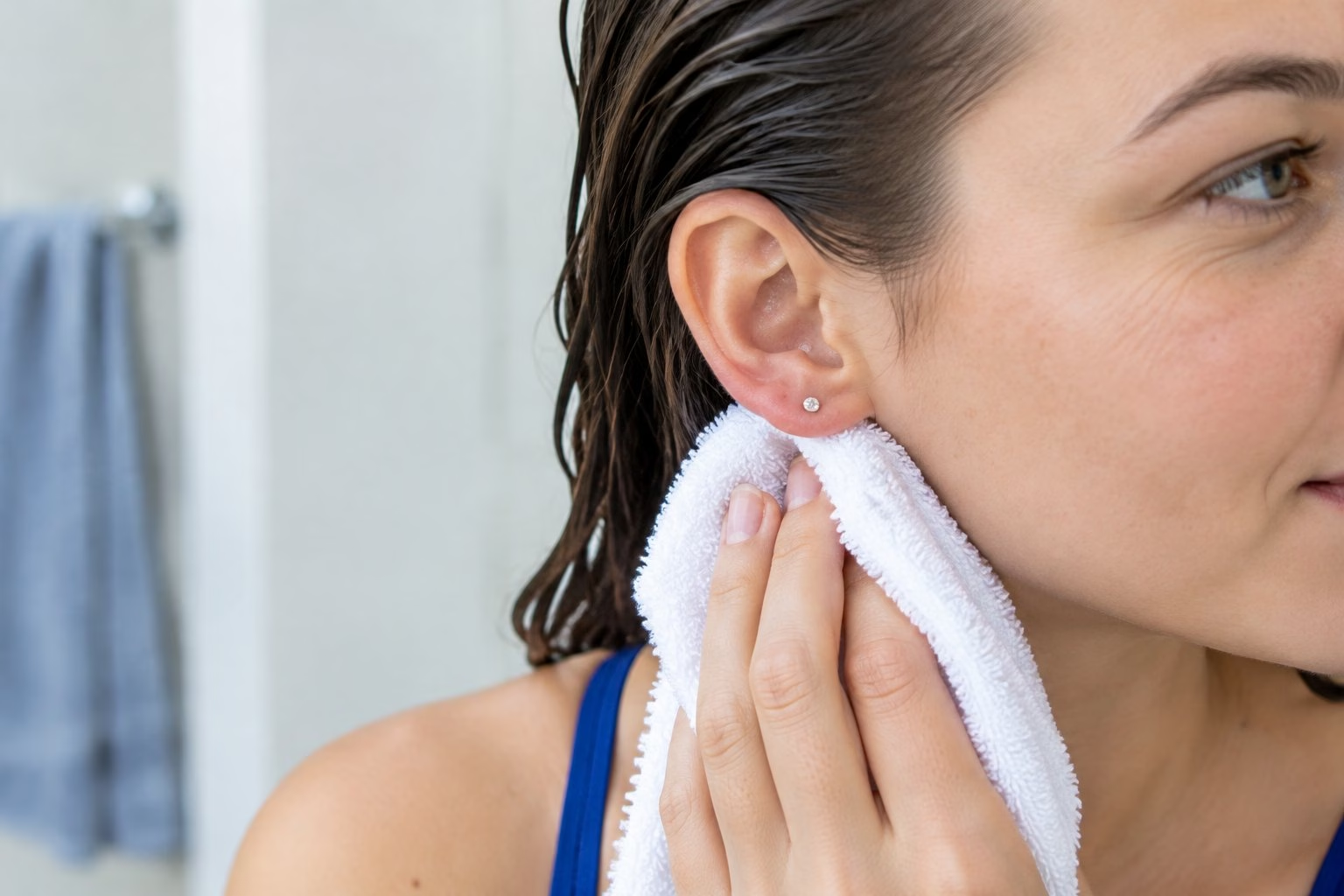
If your piercing gets wet, clean it gently, dry it and keep a close eye on it for the next few days. Most splashes cause no harm when you act quickly, but you need to know which changes mean you should see a doctor.
Rinse Gently and Resume Your Usual Aftercare
As soon as you can, rinse the area with clean tap water to wash off pool or sea water. Then spray both sides with sterile saline.
Pat dry with a clean paper towel or gauze. Bath towels hold germs and can snag the jewellery.
Carry on with your normal piercing aftercare, such as saline twice a day. Do not add strong products like alcohol, hydrogen peroxide or antiseptic creams, as these damage healing skin.
Leave Jewellery in Place and Avoid Twisting
Keep your earrings in. Removing them can let the hole close around trapped germs, and a new piercing can shrink fast.
Do not twist or turn the jewellery either. Twisting moves crust and dirt into the channel and tears the fresh skin inside.
Wash your hands before you touch your ear at all. Then touch it only when cleaning.
Why Hypoallergenic Earrings Do Not Prevent Waterborne Infection
Hypoallergenic earrings, such as implant-grade titanium or surgical steel, lower the chance of a metal allergy. That helps healing, but it does nothing against bacteria in water.
Germs get in through the open wound around the post. Good metal and good ear piercing aftercare work together, but the jewellery cannot block an infection on its own.
Which Warning Signs Need Prompt Medical Attention?
Some swelling and tenderness is normal for a new piercing. These signs need a GP, pharmacist or NHS 111 soon:
- Pain, swelling or redness that gets worse after a few days
- Thick yellow or green pus
- The area feels hot or the redness spreads
- A high temperature or feeling unwell
- Severe pain or swelling in cartilage
Cartilage infections can move fast, so get help the same day. This advice is not a diagnosis; a health professional needs to look at your ear.
Let Healing Set Your Return to the Water

Your piercing’s healing, not the calendar alone, decides when you can swim. Plan for at least six to eight weeks for a lobe and many months for cartilage, then check that the ear is no longer tender, crusty or weeping.
Covers and caps lower risk for a short swim but cannot seal out water. If your ear does get wet, rinse it, dry it, keep up your ear piercing aftercare and watch for warning signs.
When you are cleared to swim, start with a clean pool before moving to open water. Check the best ways to stay warm and safe in open water, pack the right wild swimming safety gear, and enjoy the wellbeing benefits of open water swimming with a fully healed ear.
Frequently Asked Questions
Can I swim two weeks after getting my ears pierced?
No, two weeks is too early for most piercings. Some piercers ask you to stay dry for the first two weeks, but that is the bare minimum, and lobes need about six to eight weeks to heal.
Does NHS advice mean swimming is safe after 24 hours?
No. The 24-hour figure appears in some online tips, but NHS guidance says to avoid pools, hot tubs, lakes, rivers and the sea while your lobe heals, which takes around six weeks.
Can I shower or wash my hair after an ear piercing?
Yes, you can shower, as running water does not soak the piercing the way swimming does. Rinse off shampoo well, then pat your ear dry and keep wet hair off it.
Can I swim if I keep my head above water?
It still carries risk. Splashes, wet hair and steam all reach your ears, so it is best to wait until the piercing has healed.
Should I remove my earrings before swimming?
No, leave new earrings in place. Taking them out can let the hole close or trap germs inside, so keep the jewellery in and clean the area after any contact with water.