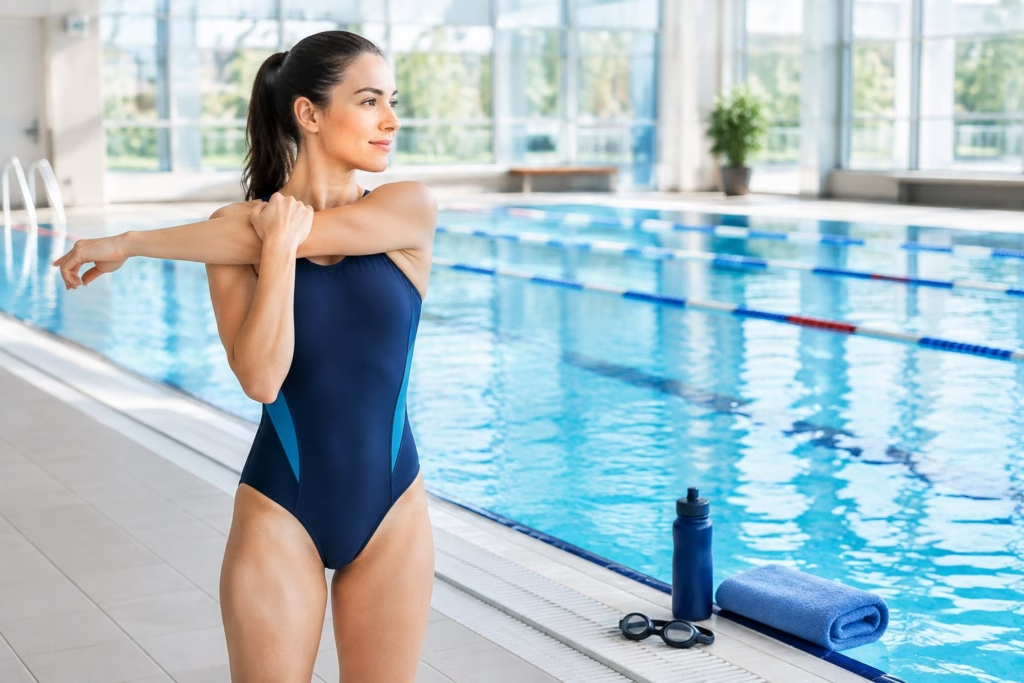
A good swimming warm-up takes about 10 to 15 minutes: roughly five minutes of dryland work on the poolside, then 300 to 700 metres of easy swimming, kick and drills that build gradually into your main set. That sequence suits everyone from a nervous beginner doing their first few lengths to a club swimmer preparing for a hard threshold session.
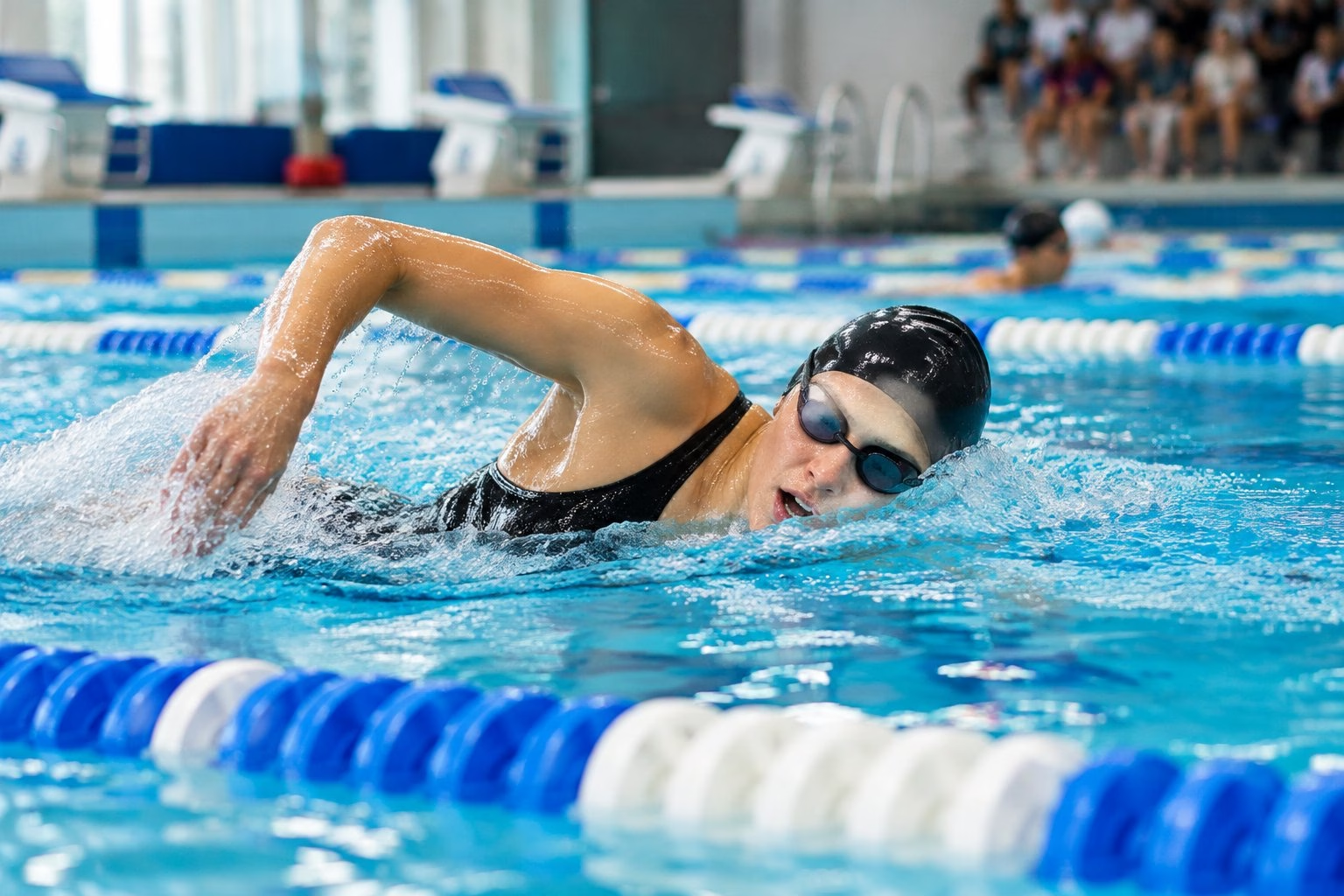
The reason matters more than the ritual. Cold muscles are stiffer and slower to fire, and cold shoulders asked to spin through hundreds of overhead strokes are the main route to swimmer’s shoulder. Swimmers who complete a structured warm-up before a maximal effort swim 2 to 4 percent faster over 100m and 200m than those who barely prepare at all.
Ten minutes of preparation buys you a first 200 metres that feels loose instead of laboured. If you want more ideas for the drill portion of your warm-up, our library of swimming drills pairs neatly with the routines below.
Why Prepare Before the First Length?
Warming up changes your body in three measurable ways: it lifts body temperature and heart rate, it widens the range of motion at your shoulders and hips, and it switches on the muscles that hold your body line. Skip it and your first few hundred metres do that job for you, slowly and badly.
How a Gradual Start Raises Heart Rate and Body Temperature
A gentle start pushes blood towards the working muscles and away from areas that can wait, such as your digestive system. Warmer muscle contracts faster and with more force, and the enzymes driving your energy systems work quicker too.
A 10-minute warm-up raises muscle temperature by 1 to 2 degrees Celsius and increases blood flow to the working muscles by 50 to 70 percent. That is why lap one feels heavy when you jump straight in.
How Mobility and Muscle Activation Support Stroke Efficiency
Blood circulation and warmth let your muscles reach their working length, which improves flexibility and lets your stroke lengthen. Core activation gives your arms something solid to pull against.
Without it, your hips drop, your kick works overtime, and stroke efficiency falls away. Rehearsing good stroke mechanics early, before fatigue arrives, teaches your nervous system the pattern you want to repeat all session.
Why Shoulder Preparation Matters for Repetitive Strokes
Shoulder impingement is the most common overuse injury in swimming, and cold rotator cuff tendons handle thousands of overhead reps far worse than warm ones. Gentle arm circles and band work cost you two minutes.
Competitive swimmers who consistently performed a structured warm-up including dynamic shoulder mobilisation had a 35 percent lower incidence of shoulder pain across a 12-month season. If a shoulder already hurts, treat that as a signal to stop and get it looked at.
Five Minutes on Deck: Raise, Mobilise, Activate, Prime
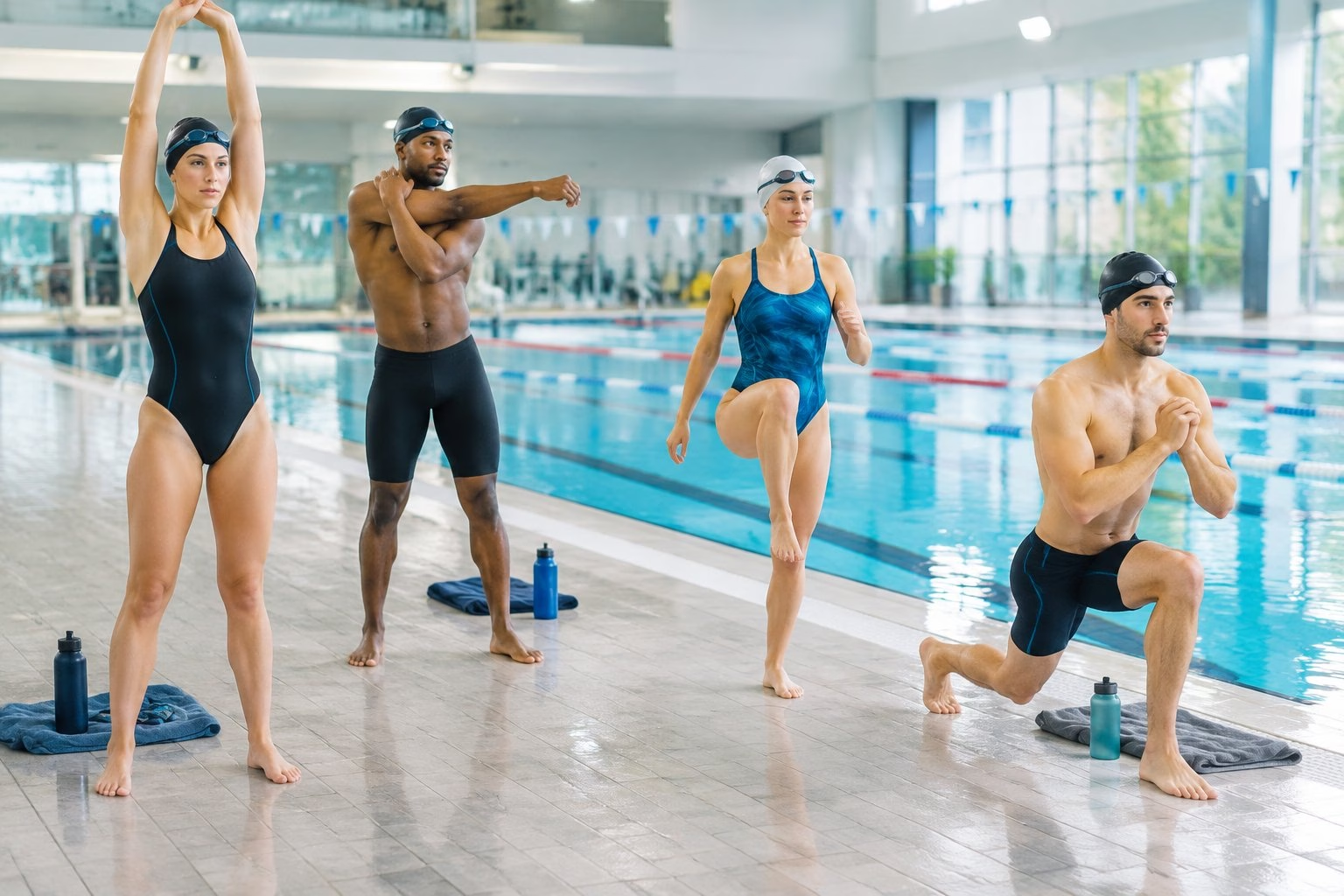
Swim England and British Swimming teach a four-stage dryland warm-up in a fixed order: Raise, Mobilise, Activate and Prime. Work through three to five repetitions of two to four exercises per stage and the whole thing fits inside five minutes on the poolside.
Raise: Skipping, Jump Rope, or Jumping Jacks
Start with 60 seconds of easy whole-body movement to lift your heart rate and body temperature. Jumping jacks, light jogging on the spot, or skipping all work.
Jump rope has a bonus: it builds ankle stability and proprioception you will use on starts and turns. Keep the effort conversational. Your shoulders should stay relaxed, and you should still be able to breathe through your nose.
Mobilise: Arm Circles, Shoulder Rolls, and Torso Twists
Move each joint through a comfortable range without forcing a stretch. Eight to ten arm circles each direction, a set of shoulder rolls, then six to eight torso twists per side.
Build arm circles from small to large. Keep your ribs down instead of leaning back to fake extra range, and save fast, forceful swings until the shoulders are warm.
Activate: Hip Circles, Leg Swings, Squats, and Lunges
Give the lower body a job before it has to kick. Hip circles and leg swings open the hip flexors, then squats and lunges wake up the glutes and hamstrings.
Add ankle rotations, five each way. Loose ankles make a real difference to flutter kick, and stiff ones turn your feet into brakes. A lunge with a gentle torso rotation covers hip mobility and thoracic rotation in one movement.
Prime: Shoulder Activation and Core Stability
Finish with light band pull-aparts or scapular push-ups, 10 to 12 reps, to switch on the rotator cuff, deltoids and serratus anterior. Use light resistance. This is activation, not a strength test.
Then hold a front plank for 20 to 30 seconds, or do dead bugs, to link the kinetic chain from shoulders to hips. Good core strength here shows up as a flatter body position in the water. Our guide to swim strength training exercises covers the longer-term work.
A Progressive In-Pool Routine Before Your Main Set
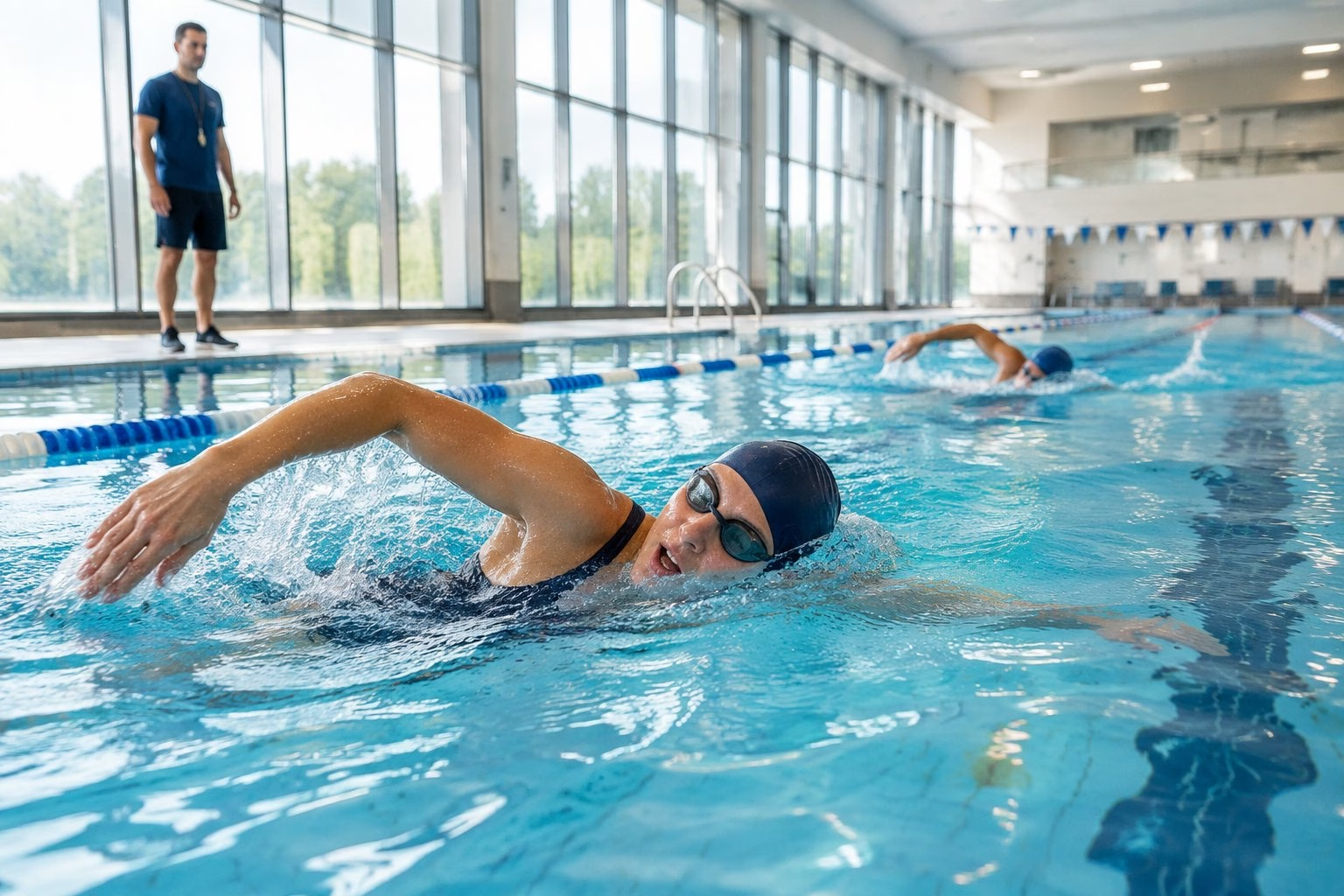
The water warm-up bridges the gap between deck work and hard swimming, and it should start almost embarrassingly easy. A 400m swim warm-up suits a short session; 600 to 700m suits a longer one, built from easy swimming, kick, drill work and a short pace ramp.
Start With Easy Swimming and Controlled Breathing
Swim 200 to 300m of relaxed freestyle at conversation pace. Count your strokes per length and keep the number steady.
If you are anxious about the water, shallow water walking for a minute first helps you feel the water resistance and buoyancy before you commit. Two minutes of box breathing on the deck, five seconds in, five hold, five out, five hold, settles the nerves before a race.
Add Kick Work to Find Your Body Position
Do 4 × 25m flutter kick with a kickboard, 20 seconds rest. Face down, arms extended, small fast kicks driven from the hip with loose ankles.
Build the effort across the four: easy, moderate, strong, then fast but controlled. Fins exaggerate the feel of a good kick if your ankles are tight. A pull buoy later in the warm-up isolates the catch instead.
Use Drill Work to Rehearse Efficient Technique
Swim 4 × 25m drill / 25m swim with 15 seconds rest. Rotate through the catch-up drill, fist drill and single-arm freestyle so you rehearse catch timing and body rotation while your technique is fresh.
Drills done at the end of a session mostly reinforce tired form. Swapping in some backstroke or breaststroke also stops your shoulders locking into one pattern.
Build Pace Gradually Before Harder Swimming
Close with four 25s, the first easy and the last near main set pace, with enough rest to hold technique. Before a sprint session, add one or two short fast efforts with full recovery to wake up the fast-twitch fibres.
Before an aerobic session, keep it steady and skip the sprints. A 100m of easy IM order, 25m each of butterfly, backstroke, breaststroke and freestyle, is a neat way to touch every stroke plus dolphin kick.
How Should Beginners and Competitive Swimmers Adjust It?
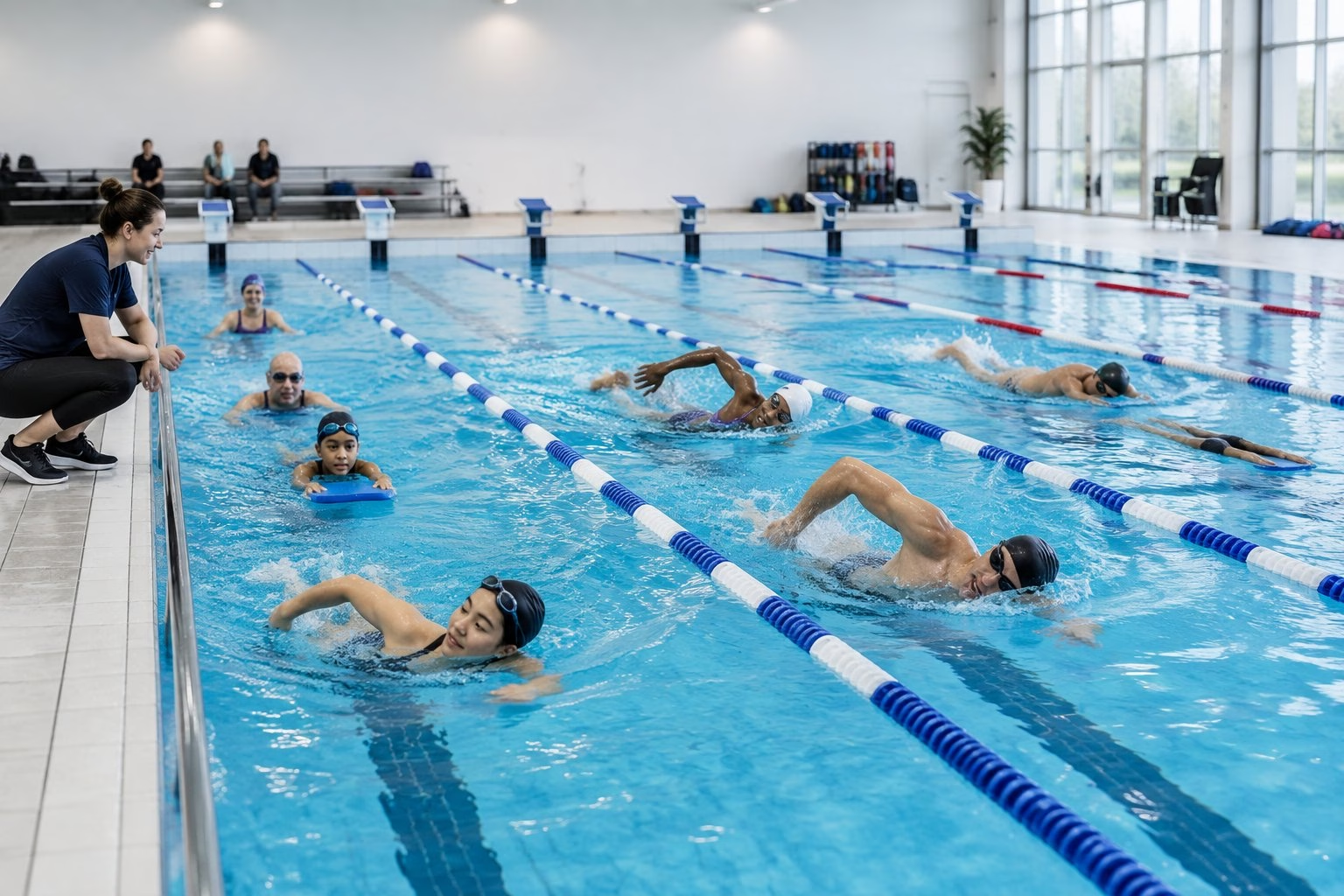
The structure stays identical across levels; only the distance and the top-end intensity change. A beginner needs 400m and no fast swimming at all, while a competitive swimmer preparing for a race may need close to 1000m with race-pace efforts built in.
A Simple Routine for Beginners and Swimming Lessons
Keep it to 400m total: 200m easy freestyle, 4 × 25m kick with a board, then 100m of backstroke or breaststroke. No hard efforts, no clock watching.
If you are in adult swimming lessons or new to lap swimming, treat the warm-up as practice time. Our swimming drills for beginners fit perfectly into those first 100 metres, and the 30 minute swimming workout for beginners shows how it slots into a full session.
A Race-Ready Build for Training and Swim Meets
At swim meets, do the dryland routine first, then a pool warm-up of roughly 1000m at 60 percent of maximum oxygen consumption or less. Keep the gap between finishing and racing under 15 minutes so your body temperature stays up.
Add race-pace 25s, starts and turns if a lane is set aside. Then do a short land re-activation in the marshalling area if the wait drags on. Pyramid sets and sprint intervals belong in the main set, not here.
How to Use Pace, Training Zones, and a Swim Watch
Match the warm-up to the work ahead. Before threshold work, finish with a few lengths just under threshold; before aerobic pace sets, stay steady and longer.
A swim watch or waterproof heart rate monitor tells you whether you have lifted your heart rate at all. If it has barely moved from resting, your warm-up was too gentle to count. For structured swim workouts for intermediate swimmers, the warm-up should leave you ready, never tired.
Start Warm, Finish Ready for the Session
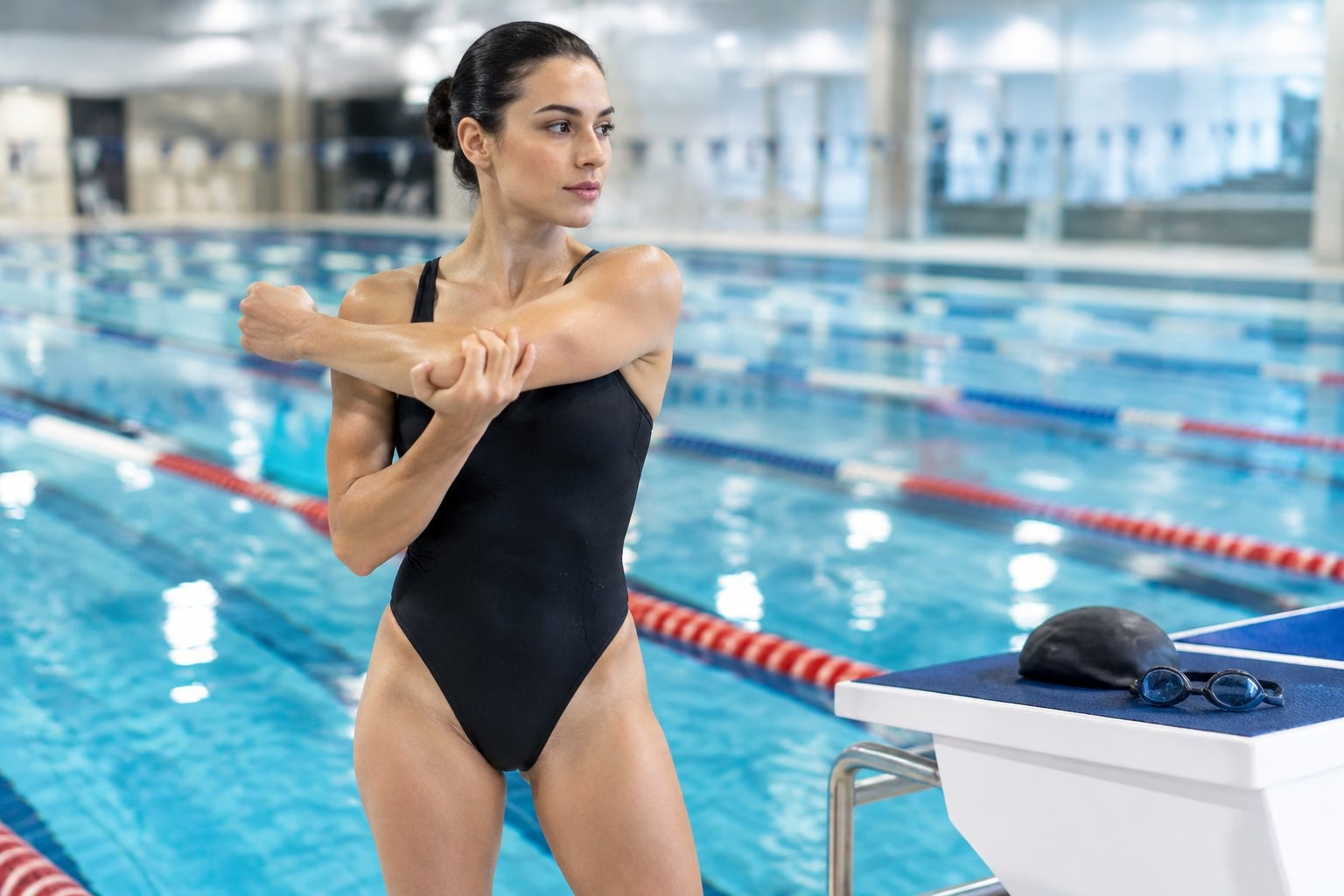
Five minutes of Raise, Mobilise, Activate and Prime on deck, followed by 400 to 700m of easy swimming, kick and drills, is enough to lift swimming performance and protect your shoulders. Save static stretching for afterwards, when longer holds help flexibility instead of dulling your power.
Give the cool-down the same respect. Push straight into 200m of easy swimming when the main set ends, because active recovery clears metabolic waste such as lactate faster and leaves you with less muscle soreness the next morning.
One rule sits above all the others: sharp pain during the warm-up means stop. Swimming through a painful shoulder turns a two-week problem into a two-month one.
Frequently Asked Questions
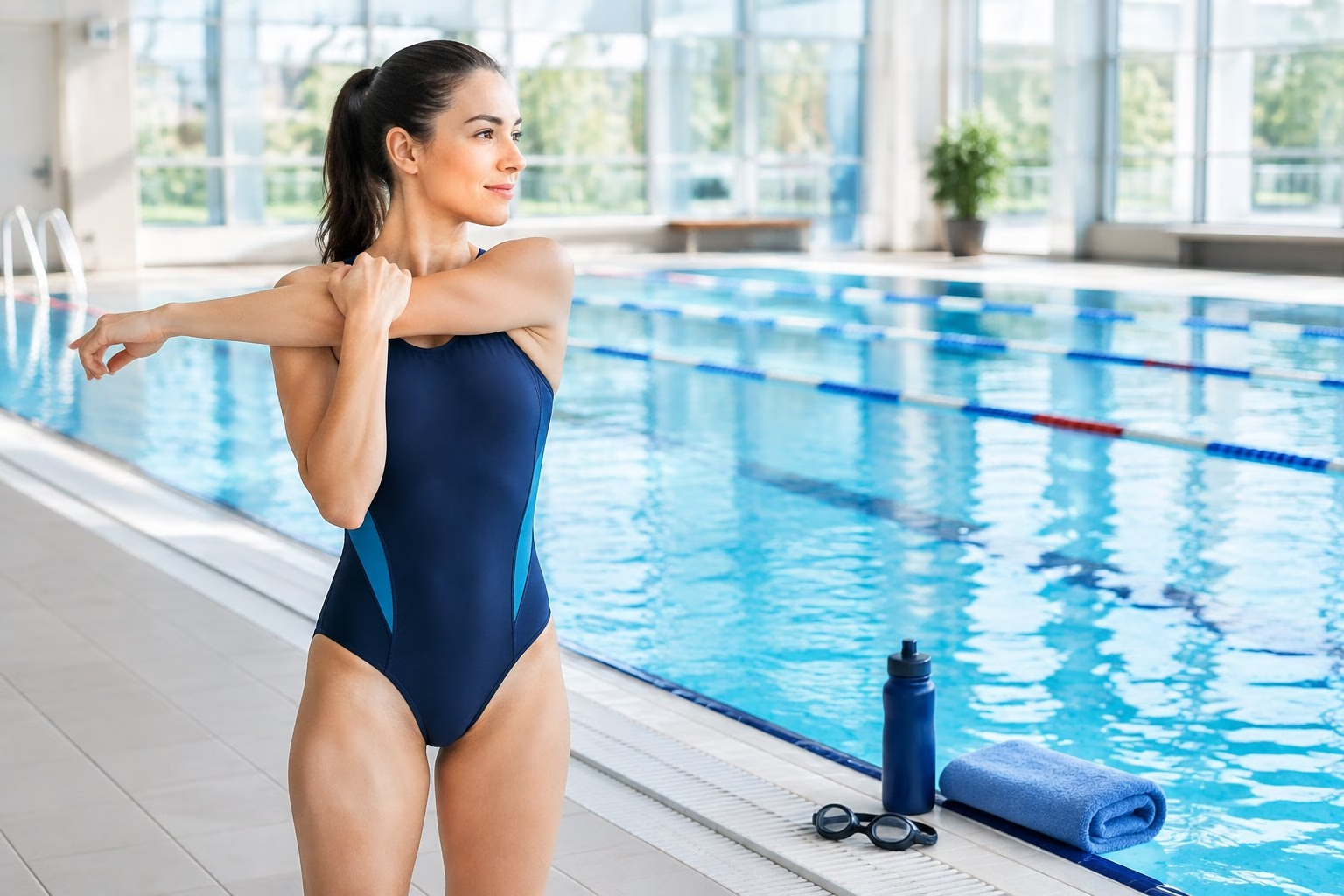
What are the best warm-up exercises before swimming?
Jumping jacks or skipping for 60 seconds, arm circles, torso twists, leg swings, squats, band pull-aparts and a short front plank cover every joint swimming uses. Follow them with easy swimming, kick with a board and a couple of drills in the pool.
How long should a swimming warm-up take?
Around 10 to 15 minutes in total: five minutes of dryland work and 400 to 700m in the water. Scale the swimming portion to your session, so a 1,500m workout needs about 300 to 400m of warm-up and a 4,000m session needs 600 to 800m.
What is a good swimming warm-up for beginners?
Swim 200m of easy freestyle, then 4 × 25m kick with a board resting 20 seconds, then 100m of backstroke or breaststroke. Stay at conversation pace throughout and use the time to settle your breathing.
Should I do static stretching before swimming?
Save long static holds of 20 seconds or more for after your swim. Dynamic movement through a controlled range prepares your joints better beforehand, though a brief, comfortable stretch of one tight area is fine.
What should competitive swimmers do before a race?
Do the dryland routine, then roughly 1000m of pool warm-up at moderate effort, including drills, a few race-pace 25s, and starts and turns where permitted. Keep the transition to your race under 15 minutes so you stay warm.
Should I swim if my shoulder hurts during the warm-up?
Stop and do not push through it. Shoulder impingement is the most common swimming overuse injury, and pain that appears during a warm-up needs assessment from a physiotherapist before you load the joint with thousands more strokes.