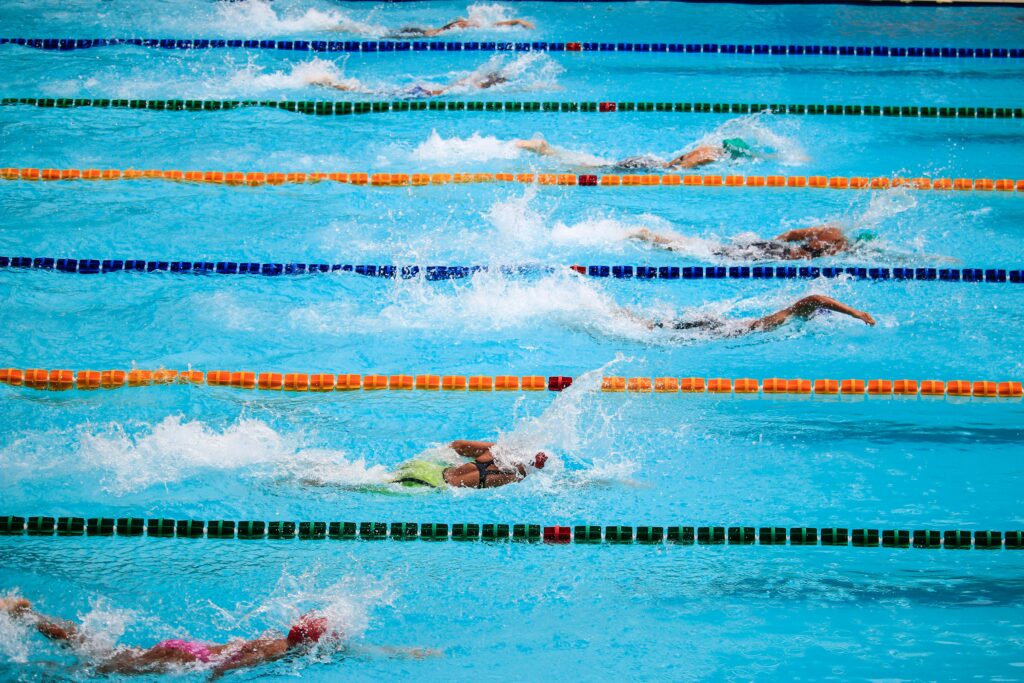
Many swimmers log countless metres in the pool without seeing the speed improvements they expect. The missing ingredient often isn’t more training volume but rather more focused, intentional work at specific speeds. Race pace training is a swimming methodology where you practise swimming at the exact speed you plan to race, conditioning your body to sustain that pace through proper technique and physiological adaptation.
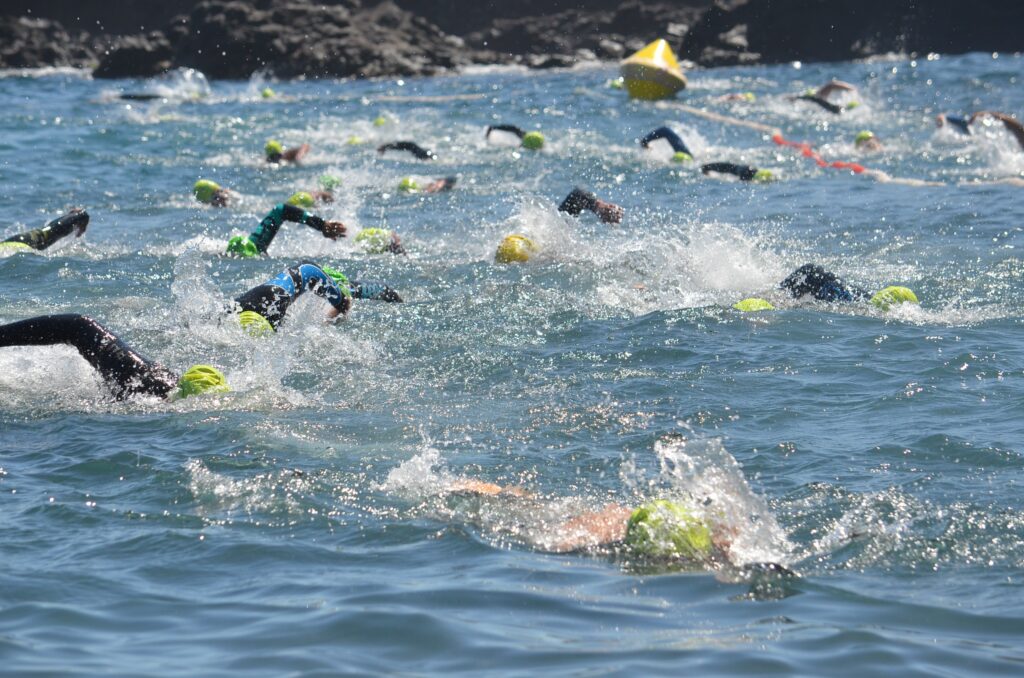
Unlike traditional high-volume training where you simply accumulate distance, race pace training helps swimmers execute their race strategy by experiencing the specific demands of their target event. You’ll learn how fast turns should feel, how to maintain stroke efficiency under fatigue, and how to manage the discomfort that comes with racing. This approach works for any distance, from 50-metre sprints to open water events.
The beauty of race pace work lies in its specificity. When you train at the speed you intend to race, you’re not just building fitness—you’re teaching your neuromuscular system the exact movement patterns needed for competition. Training your body at race pace conditions both your aerobic and anaerobic systems to perform at that intensity for extended periods.
Key Takeaways
- Race pace training involves swimming at your target race speed rather than simply accumulating training volume
- This method improves stroke efficiency, pacing awareness, and physiological adaptation specific to your racing demands
- Race pace sets can be tailored to any distance or stroke through proper interval design and progression
Understanding Race Pace in Swimming
Race pace represents the specific velocity you aim to maintain during competition, serving as the foundation for targeted swim training that prepares your body for the exact demands of race day. This speed differs fundamentally from other training intensities and creates distinct physiological adaptations that elite swimmers rely upon for optimal performance.
Definition of Race Pace
Race pace is the speed you intend to sustain throughout your target competitive event. For a swimmer pursuing a 1:00 minute 100-metre freestyle, race pace training involves swimming at exactly 15 seconds per 25 metres to replicate race conditions.
This velocity remains fixed based on your goal time rather than your current fitness level. The approach requires calculating your target splits and training your body to reproduce that exact swimming velocity consistently. Whether you’re preparing for a 50-metre sprint or a 1500-metre distance event, race pace provides a measurable benchmark that guides your training decisions and progression.
How Race Pace Differs from Other Training Speeds
Race pace sits distinctly apart from other training intensities in your programme. Threshold training typically occurs at 85-90% of maximum effort, whilst endurance work may hover around 70-75% intensity. Race pace demands you swim at precisely 100% of your goal race speed—no faster, no slower.
Unlike traditional training sets such as 10 x 400 metres that condition you for non-race distances, race pace work maintains specificity. Recovery swimming operates at comfortable speeds to promote blood flow, and sprint work often exceeds race pace for short bursts. Race pace training requires exact velocity control, teaching your body the precise tempo and stroke rate needed on race day.
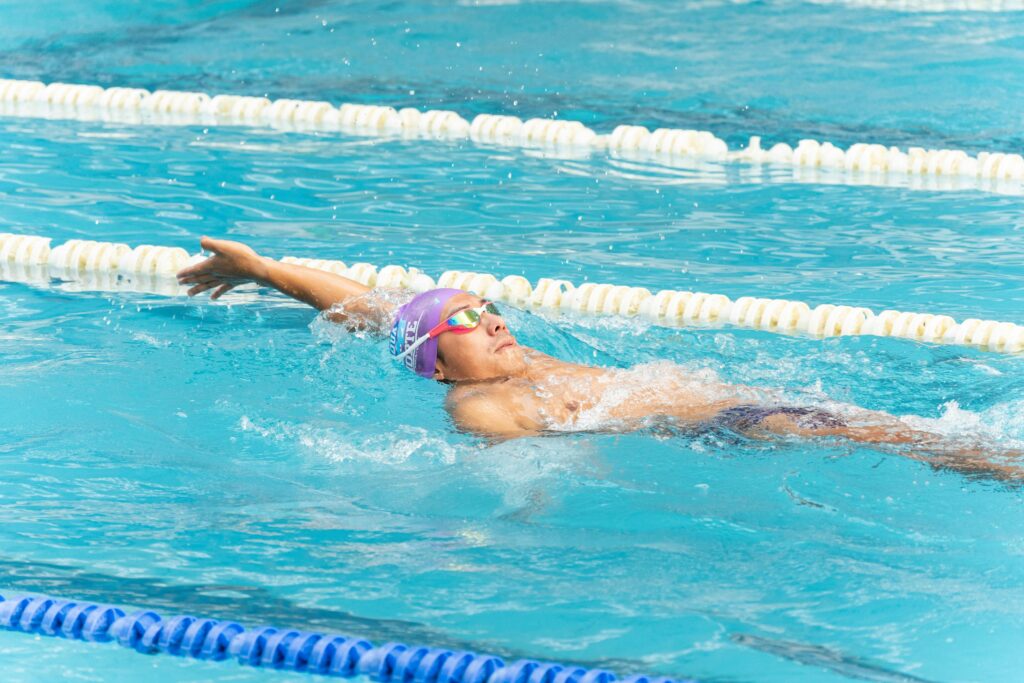
This specificity extends to stroke mechanics as well. Every movement you practise at race pace should mirror your intended race technique, creating neuromuscular patterns that translate directly to competition.
Physiological Foundations of Race Pace
Race pace training engages your aerobic and anaerobic systems at the specific intensity you’ll experience during competition. This dual engagement conditions your body to clear lactate efficiently whilst maintaining the required swimming velocity.
The training method enhances myelination—the process by which nerve fibres develop insulating sheaths that accelerate signal transmission. When you repeatedly swim at race pace, motor neurons controlling those specific movements become more efficient through increased myelination. Your muscles develop the exact endurance characteristics needed for your target distance and speed.
Energy system development occurs along a precise continuum. A 50-metre race relies heavily on phosphocreatine stores, whilst an 800-metre event demands robust aerobic capacity. Training at race pace ensures you develop the appropriate energy pathway dominance for your specific event demands.
Significance for Competitive Swimmers
Elite swimmers incorporate race pace work to build specific endurance at their target velocity. This approach eliminates wasted training time on speeds that don’t directly transfer to race performance. You learn precisely how your body responds to race demands—how your breathing patterns shift, when fatigue arrives, and what stroke adjustments maintain efficiency.
The methodology helps swimmers execute their race strategy effectively, including managing underwaters off every wall and handling race-specific discomfort. For championship meets, this preparation proves invaluable. You develop confidence knowing your body has successfully maintained race pace numerous times in training.
Race pace training also provides objective feedback. When you can complete 30 x 25 metres at goal pace with minimal rest, you possess concrete evidence that your target time is achievable rather than speculative.
Key Components of Race Pace Training
Effective race pace training requires mastering three interconnected elements that directly influence your swimming velocity. These components work together to help you maintain target speeds whilst building the physiological adaptations needed for competitive performance.
Stroke Rate and Tempo Control
Your stroke rate determines how many complete stroke cycles you perform per minute. This metric directly impacts your ability to maintain consistent tempo and efficiency throughout a race.
Most competitive swimmers operate within specific stroke rate ranges for different events. Sprint events typically require 50-60 strokes per minute, whilst distance events settle around 40-50 strokes per minute. Finding your optimal tempo involves testing different rates at race pace during training.
Key tempo considerations include:
- Consistency: Maintaining the same stroke rate throughout your race distance
- Event specificity: Adjusting tempo based on whether you’re training for 50m sprints or 1500m events
- Rhythm patterns: Developing a natural cadence that doesn’t require conscious counting
You should use a tempo trainer during practice sets to programme your target stroke rate. This device provides audible beeps that guide your stroke timing, helping you internalise the correct rhythm for race day.
Distance per Stroke
Distance per stroke (DPS) measures how far you travel with each complete stroke cycle. Maximising this metric whilst maintaining your target stroke rate creates optimal swimming velocity.
Efficient swimmers typically achieve 1.8-2.2 metres per stroke in freestyle events. However, this varies based on your height, wingspan, and technical proficiency. Monitoring your DPS during race pace sets reveals whether you’re overreaching or slipping water.
The relationship between stroke rate and DPS creates your overall speed. Increasing one without decreasing the other improves performance, but most swimmers face a trade-off. Taking more strokes per minute often reduces distance per stroke if technique breaks down under fatigue.
Count your strokes per length during race pace training to calculate your average DPS. If you notice increasing stroke counts whilst maintaining the same times, your efficiency is declining and technical adjustments are needed.
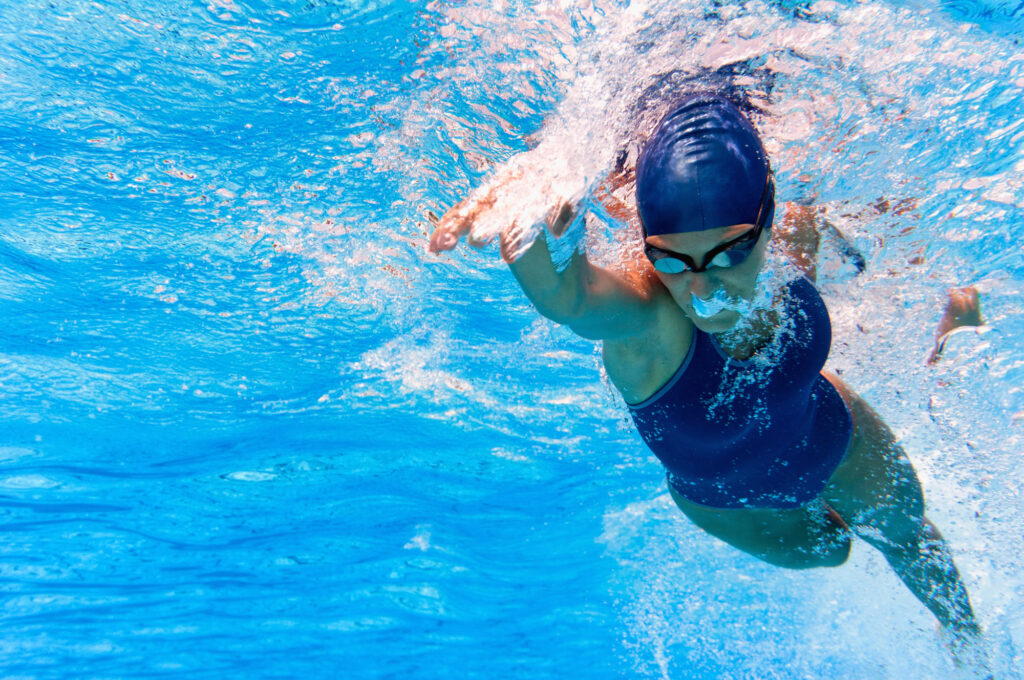
Lactate Tolerance and Adaptation
Race pace training develops your body’s ability to buffer and clear lactate accumulation during high-intensity swimming. This anaerobic adaptation allows you to sustain faster speeds without premature fatigue.
Swimming at race pace with controlled rest intervals trains both your aerobic and anaerobic energy systems simultaneously. The rest periods must be short enough to prevent full recovery, forcing your body to adapt to elevated lactate levels.
Typical race pace sets involve 25-100m repeats at target speed with 10-30 seconds rest. These intervals create metabolic stress similar to actual race conditions, teaching your muscles to function efficiently in acidic environments.
Your lactate threshold improves through consistent exposure to race pace efforts. Initial sessions may feel extremely difficult, but adaptation occurs within 4-6 weeks of regular training.
Designing Effective Race Pace Sets
Successful race pace training requires careful attention to interval length, rest periods, and total volume to match your specific race demands. The goal is to train your body to hold target speed without accumulating excessive fatigue that compromises technique.
Selecting Appropriate Intervals and Rest
Your interval length should reflect your race distance whilst allowing you to maintain precise pace control. For a 100m race, training with 25m or 50m repeats at target pace provides enough distance to replicate race conditions without causing premature fatigue. Shorter intervals of 15-25 seconds work effectively for sprint events, whilst longer distance swimmers might use 100m repeats.
Rest intervals typically range from 10 to 20 seconds between repeats. This brief recovery allows partial lactate clearance whilst maintaining elevated heart rate and metabolic stress. You should aim for a work-to-rest ratio that challenges your ability to hold pace without causing complete breakdown.
If you cannot maintain your target pace for two consecutive repeats, the set should end. This failure point indicates your current conditioning limit and prevents reinforcement of slower movement patterns.
Determining Training Volume
Training volume in race pace sets depends on your race distance and current fitness level. A typical session might include 20-30 repeats for sprint-focused training, accumulating 500-750m of race pace work. Distance swimmers performing 100m repeats might complete 2,000-3,000m total.
You should start conservatively with lower volumes and gradually increase repetitions as your capacity improves. Adding 2-3 repeats per week represents sustainable progression. The total distance at race pace should not exceed your race distance by more than 20-30 times for sprint events or 5-10 times for middle-distance races.
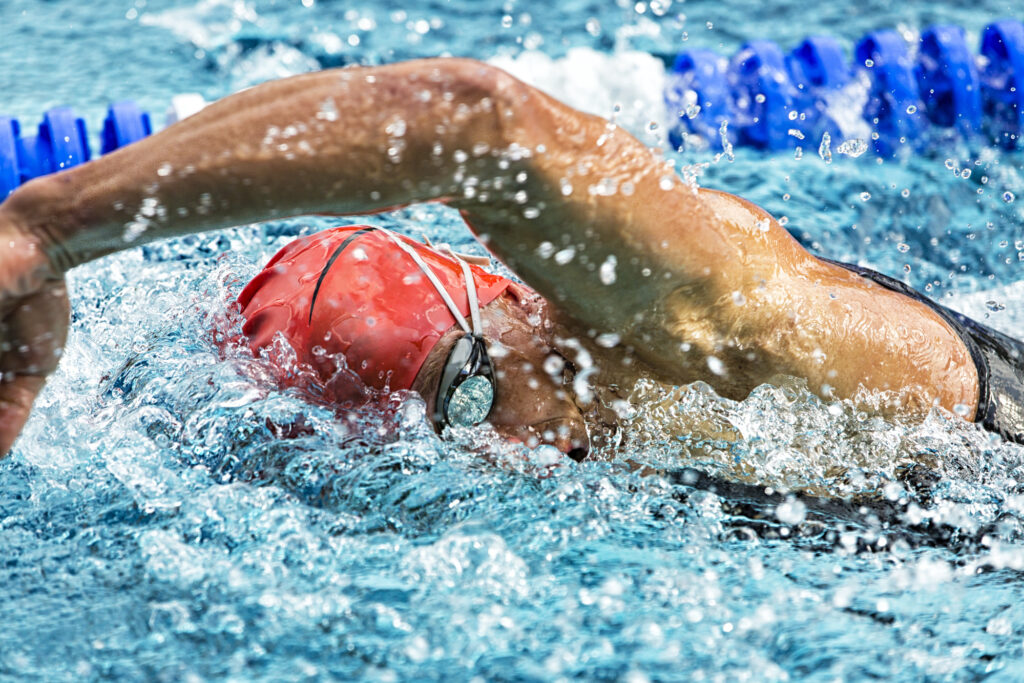
Balancing Intensity and Recovery
Race pace training sits at submaximal intensity—demanding but sustainable for multiple repeats. You should feel controlled effort rather than all-out exertion on each interval. This intensity level trains your aerobic and anaerobic systems to support race pace without the excessive fatigue of maximum effort work.
Schedule race pace sessions 2-3 times weekly with at least one recovery day between sessions. Combining aerobic swimming with race pace intervals in the same workout helps develop the energy system transitions required during competition. Your weekly training should include easier aerobic sessions alongside these higher-intensity race pace sets to promote adaptation whilst preventing overtraining.
Ultra-Short Race Pace Training (USRPT) Explained
Ultra-short race pace training represents a high-volume approach using submaximal intensity with brief rest periods to accustom swimmers to event-specific pacing. This method challenges traditional training through its focus on short, intense repetitions rather than lengthy aerobic sets.
Principles and Methodology of USRPT
USRPT involves swimming short distance-specific bouts of 15-100 metres at your target race pace with minimal recovery between repetitions. The training typically uses rest intervals of 15-25 seconds, significantly shorter than conventional interval training.
A typical USRPT session might include 20-30 repetitions of 25 metres or 50 metres at your goal pace. For example, a set of 30 x 25s with a target time of 12.5 seconds on a 30-second interval demonstrates this approach. The total volume often reaches 5-10 times your targeted event distance.
The methodology emphasizes quality over quantity by reducing overall yardage whilst focusing on maintaining race-specific speed. The brief rest intervals don’t allow full recovery, forcing your aerobic system to contribute significantly to energy replenishment. This creates lactate tolerance whilst training your neuromuscular system to maintain proper technique at race pace.
Benefits and Limitations of USRPT
USRPT offers specific advantages for developing race-specific fitness and pacing awareness. Research shows blood lactate levels reach 8.7-13.6 mmol/L during sets, creating significant anaerobic adaptation. The method trains your body to handle metabolic demands at precise race speeds.
However, concerns about this training method include potential psychological strain from excessive daily use. Studies indicate heart rates during USRPT (173-180 bpm) remain lower than traditional high-intensity interval training (196 bpm), yet perceived exertion rates higher. This disconnect suggests considerable mental fatigue.
The training also reduces distance per stroke whilst increasing swimming velocity, which may impact technical efficiency. Excessive daily use is discouraged due to psychological burden, and exclusive reliance on USRPT without incorporating varied training stimuli limits overall development.
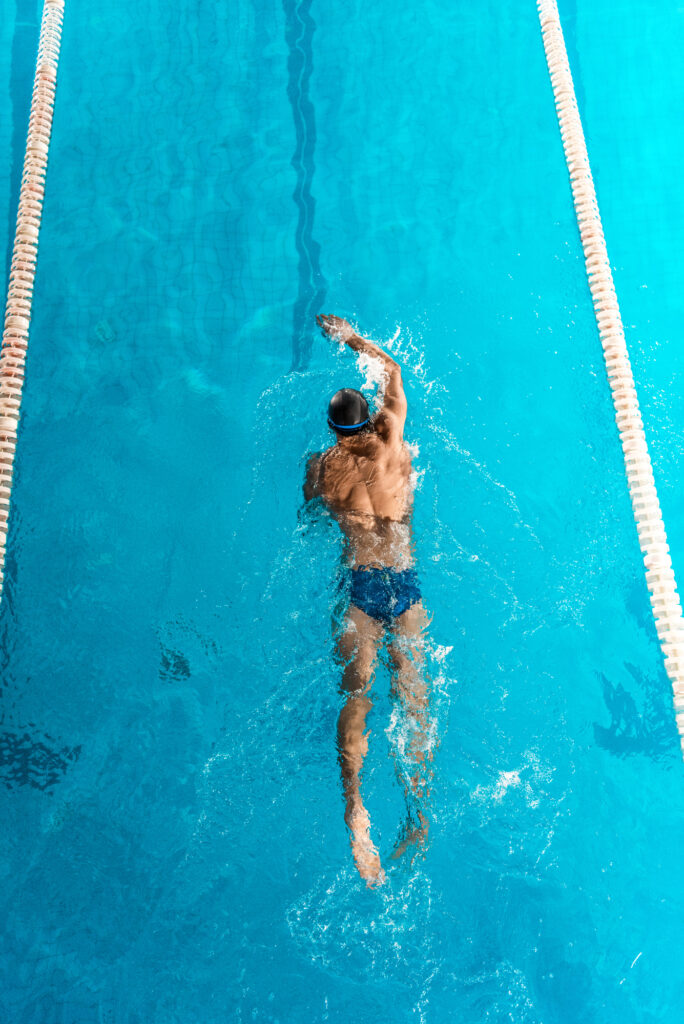
Implementing USRPT in Swim Programmes
For effective implementation, match your work-to-rest ratio to event demands. Short-distance events (50-100m) benefit from 1:1 or 1:2 ratios, allowing adequate aerobic contribution to energy replenishment. A 50-metre event might use 20 x 25m with 20-25 second rest intervals at your target 100m pace.
Integrate USRPT as part of a periodised programme rather than using it exclusively. Combine it with other training methods including traditional high-intensity intervals and aerobic work. Adjust variables like intensity and interval length when reaching failure rather than simply repeating identical sets.
Monitor both physiological markers (lactate levels, heart rate) and technical parameters (stroke rate, distance per stroke) during sessions. This ensures you maintain proper form whilst achieving metabolic objectives. Start conservatively with lower volumes before progressing to higher repetition counts as adaptation occurs.
Monitoring and Adapting Race Pace Training
Successful race pace training requires systematic tracking of your performance data and physiological responses to ensure you’re progressing towards your goals whilst avoiding burnout. Adjusting your training based on objective metrics and subjective feedback allows you to optimise results and maintain consistency.
Tracking Performance Metrics
You need to record specific data from each race pace set to identify trends and measure improvement over time. Document your target pace, actual splits achieved, total repetitions completed, and rest intervals used for every session.
Create a training log that includes the following metrics:
- Target pace per 25m or 50m (e.g., 15 seconds per 25m for a sub-60 second 100m freestyle)
- Number of successful repetitions before pace failure
- Stroke count per length to monitor efficiency
- Heart rate recovery during rest intervals
- Session completion rate (percentage of planned set completed)
Compare your performance week to week rather than day to day. A gradual increase in repetitions completed at target pace indicates positive adaptation. If you fail to maintain pace on two consecutive repetitions, the set should be terminated as continued attempts may reinforce incorrect pacing patterns.
Your stroke rate serves as a valuable indicator of technical efficiency at race pace. An increasing stroke count at the same speed suggests fatigue or form breakdown.
Using RPE and Swim Technology
Rating of perceived exertion (RPE) provides crucial subjective data that complements objective measurements. Use a 1-10 scale to assess how hard each race pace set feels, with your goal pace ideally sitting at 7-8 RPE during training.
Monitor RPE alongside your pace data to identify discrepancies. If your usual race pace suddenly feels significantly harder (9-10 RPE) despite adequate rest, this signals inadequate recovery or approaching overtraining. Effort levels should remain relatively consistent as your fitness improves.
Wearable technology offers real-time feedback during sets. Waterproof smartwatches and tempo trainers can alert you when pace deviates from target, allowing immediate corrections. Some devices track stroke rate and distance per stroke, helping you maintain technical consistency throughout demanding sets.
Recognising Signs of Overtraining
Watch for specific warning signs that indicate your body needs additional recovery time. Persistent inability to hit target paces despite proper rest between repetitions suggests accumulated fatigue.
Physical indicators include:
- Elevated resting heart rate (5-10 beats above normal)
- Difficulty falling asleep or disrupted sleep patterns
- Decreased appetite
- Persistent muscle soreness lasting beyond 48 hours
- Increased susceptibility to minor illnesses
Performance markers of overtraining include consistently failing race pace sets you previously completed, deteriorating stroke technique, and declining motivation to train. If you experience multiple symptoms simultaneously, reduce training volume by 30-50% for one week whilst maintaining intensity at race pace for shorter durations.
If you’re consistently feeling much better than expected during workouts, you can gradually increase pace targets. However, dramatic improvements or sudden declines both warrant attention and possible training adjustments.

Practical Applications and Sample Workouts
Building race pace into your training requires structured progression, distance-specific sets, and careful integration with technique work. These elements work together to develop the speed endurance and pacing control needed for consistent racing.
Progression Strategies for Race Pace Sets
Start by establishing your baseline through test sets at various distances. Swim a timed 400m or 800m at maximum sustainable effort, then calculate your average pace per 100m. This becomes your initial race pace target for training sets.
Progress gradually by manipulating three variables: set volume, rest intervals, and pace targets. Begin with shorter repeats—such as 8 x 50m at race pace with 20 seconds rest—before advancing to longer intervals. Once you can complete a set comfortably, reduce rest by 5 seconds or increase the number of repeats.
Elite swimmers often expand their stroke bandwidth by adding 2-3 strokes per minute each week whilst maintaining form. This approach prevents the common mistake of attempting excessive volume or intensity too quickly.
Track your performance across multiple sessions. If you consistently hit your targets with good technique, tighten the pace by 1-2 seconds per 100m. If you’re struggling to maintain form or missing intervals, scale back rather than compromising efficiency.
Sample Swim Sessions Across Different Distances
For sprint events (50m-100m), focus on high-quality repeats:
- 12 x 50m at race pace, 15-20 seconds rest
- 8 x 75m at race pace, 20 seconds rest
- 6 x 100m at race pace, 30 seconds rest
For middle distance (200m-400m), build threshold capacity:
- 10 x 100m at race pace, 15 seconds rest
- 6 x 200m at race pace, 30 seconds rest
- 3 x 400m at race pace, 45 seconds rest
For distance events (800m+), emphasise sustained efforts:
- 8 x 200m at race pace, 20 seconds rest
- 4 x 400m at race pace, 30-45 seconds rest
- 2 x 800m at race pace, 60 seconds rest
Include a proper warm-up (400-600m technique and drills) and cooldown (200m easy swimming) with each session. These race pace training sets help you execute race strategy and manage the physical demands of your target distance.
Integrating Race Pace Work with Technique and Recovery
Balance your race pace training within your weekly programme by scheduling high-intensity sessions 48-72 hours apart. This allows adequate recovery whilst maintaining fitness adaptations.
Alternate race pace days with low-aerobic technique work. Dedicate recovery sessions to drills, underwater work, and controlled breathing patterns at 60-70% effort. This prevents accumulated fatigue whilst reinforcing movement patterns that support faster swimming.
During race pace sets, monitor your stroke count and tempo. If your strokes per length increase by more than two compared to fresh swimming, you’re losing efficiency. Pull the set early rather than reinforcing poor habits under fatigue.
Combine swim training methods by using descending rest intervals—start with comfortable recovery, then gradually reduce rest as the season progresses. This mimics the increasing stress of competition whilst maintaining technical standards throughout each effort.
Frequently Asked Questions
Race pace training requires strategic planning, consistent execution, and reliable methods for tracking improvement. The following answers address common concerns about implementation frequency, performance benefits, and measurement techniques.
How can I effectively integrate race pace training into my swimming routine?
Start by establishing your baseline speed for your target event distance. Test yourself with a time trial at your goal distance, then calculate your average pace per 100m to determine your working race pace target.
Build race pace work progressively into your weekly schedule alongside aerobic base training and recovery sessions. Begin with shorter intervals at race pace, such as 4-6 x 100m with adequate rest, before advancing to longer repeats that more closely mirror your event demands.
Training with pace calculators and split analysis helps you monitor whether you’re maintaining consistent speeds throughout each interval. Balance your race pace sessions with technique work and threshold training to develop the complete physiological adaptations needed for race day performance.
What are the benefits of incorporating race pace drills into swim workouts?
Race pace training develops the specific energy systems your body uses during competition. You build lactate tolerance and aerobic power whilst training your neuromuscular system to maintain efficient mechanics at speed.
Pace-specific work sharpens your internal sense of effort and rhythm. You learn to recognise what race pace actually feels like, which prevents starting too fast or swimming too conservatively during competition.
Consistent ultra-short training at race pace produces performances that sustain fast twitch fibre use with greater amounts of oxygen, extending your ability to maintain target velocity with proper technique. This physiological adaptation translates directly to stronger finishes and better overall race execution.
How often should race pace sets be included in swim training sessions?
Most swimmers benefit from 1-2 dedicated race pace sessions per week during base training periods. This frequency allows adequate recovery whilst building the neuromuscular patterns and metabolic adaptations specific to your goal speed.
During peak training phases leading up to important competitions, you might increase race pace work to 2-3 sessions weekly. However, these higher-intensity weeks should be balanced with reduced overall volume to prevent accumulated fatigue.
Recovery matters as much as the work itself. Space race pace sessions at least 48 hours apart, filling the gaps with aerobic conditioning, technique drills, and easy recovery swims to promote adaptation without overtraining.
Can race pace training improve my swimming performance during competitions?
Race pace work directly enhances your ability to sustain target speeds under fatigue. By repeatedly swimming at your goal pace during training, you develop the physiological capacity to maintain that speed when it matters most.
Mental preparation improves alongside physical conditioning. Pace awareness separates consistent performers from those who fade halfway through a race, as you learn to distribute effort appropriately rather than burning out early.
The specificity principle applies directly here. Training at race pace creates adaptations that transfer immediately to competition, improving your speed endurance, stroke efficiency under pressure, and confidence in executing your race strategy.
What are the key components of a successful race pace training session for swimmers?
Proper warm-up prepares your body for quality work. Include 400-600m of easy swimming, technique drills, and progressive build sets to elevate heart rate and activate neuromuscular pathways before starting your main set.
The main set should feature intervals at your verified race pace with rest periods that match your training goal. Shorter rest intervals build lactate tolerance, whilst longer recovery allows you to maintain higher quality repetitions that reinforce proper mechanics.
Stroke tempo control plays a crucial role in maintaining efficient race pace. Fast triathletes often race between 70-90 strokes per minute, and training with tempo trainers helps lock in the rhythm that matches your speed goals.
How can I measure progress and ensure I am swimming at my true race pace during training?
Track your splits consistently using pace clocks, waterproof watches, or pool-based timing systems. Record each interval’s time and compare it against your target pace to identify whether you’re maintaining consistency or drifting faster or slower.
Using real split data and evidence-based target splits from elite performances helps you set realistic benchmarks for your goal times. Calculate your per-100m pace and monitor whether you can hold it across multiple repetitions within a single session.
Regular time trials every 3-4 weeks provide objective measurements of improvement. Swimming silent sets without looking at the clock develops your internal pacing sense, whilst timed efforts reveal whether your perceived exertion matches actual performance gains.