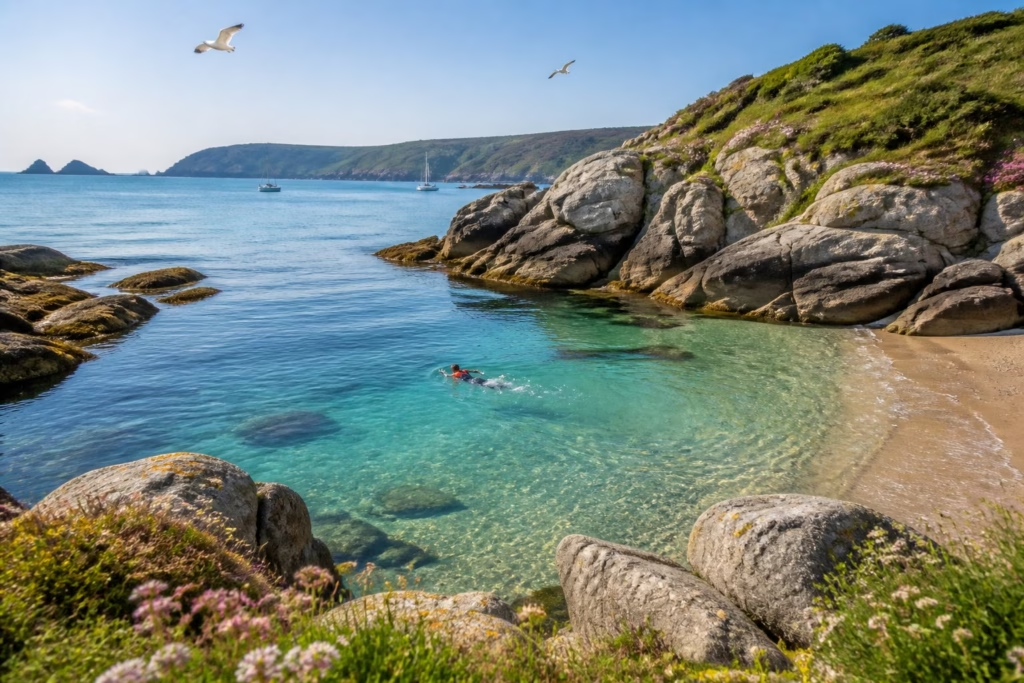
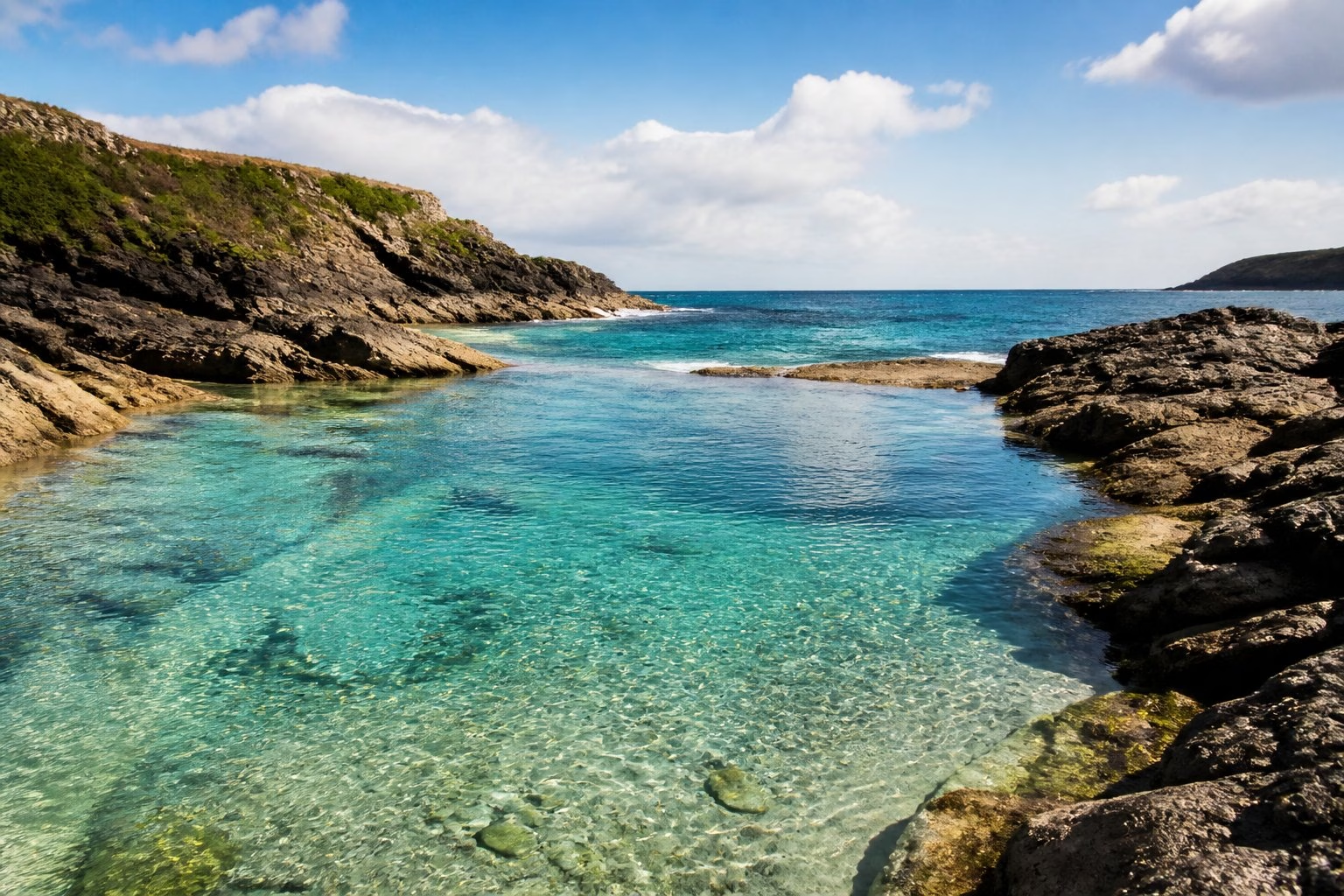
Cornwall offers some of the finest wild swimming in the UK, and that is not an exaggeration. With over 400 miles of coastline, hidden coves, tidal pools carved by centuries of Atlantic swells, and freshwater quarries tucked into the moors, the county is a playground for outdoor swimming at every level.
Whether you are after a sheltered sea pool, a dramatic cliff-backed beach, or a spring-fed quarry on Bodmin Moor, this guide covers the best wild swimming Cornwall has to offer, with practical details on parking, access, tides, and safety for every spot. The water is rarely warm, even in summer, but that is part of the appeal. Cold water has a way of sharpening your senses and leaving you buzzing for hours afterwards.
This guide draws on years of swimming in Cornwall’s waters across seasons and conditions. You will find spots suited to first-timers and seasoned open-water swimmers alike, along with the safety knowledge you need to enjoy each swim confidently. Grab your towel, check the tide times, and start planning your next wild swim in Cornwall.
How To Choose The Right Swim Spot In Cornwall
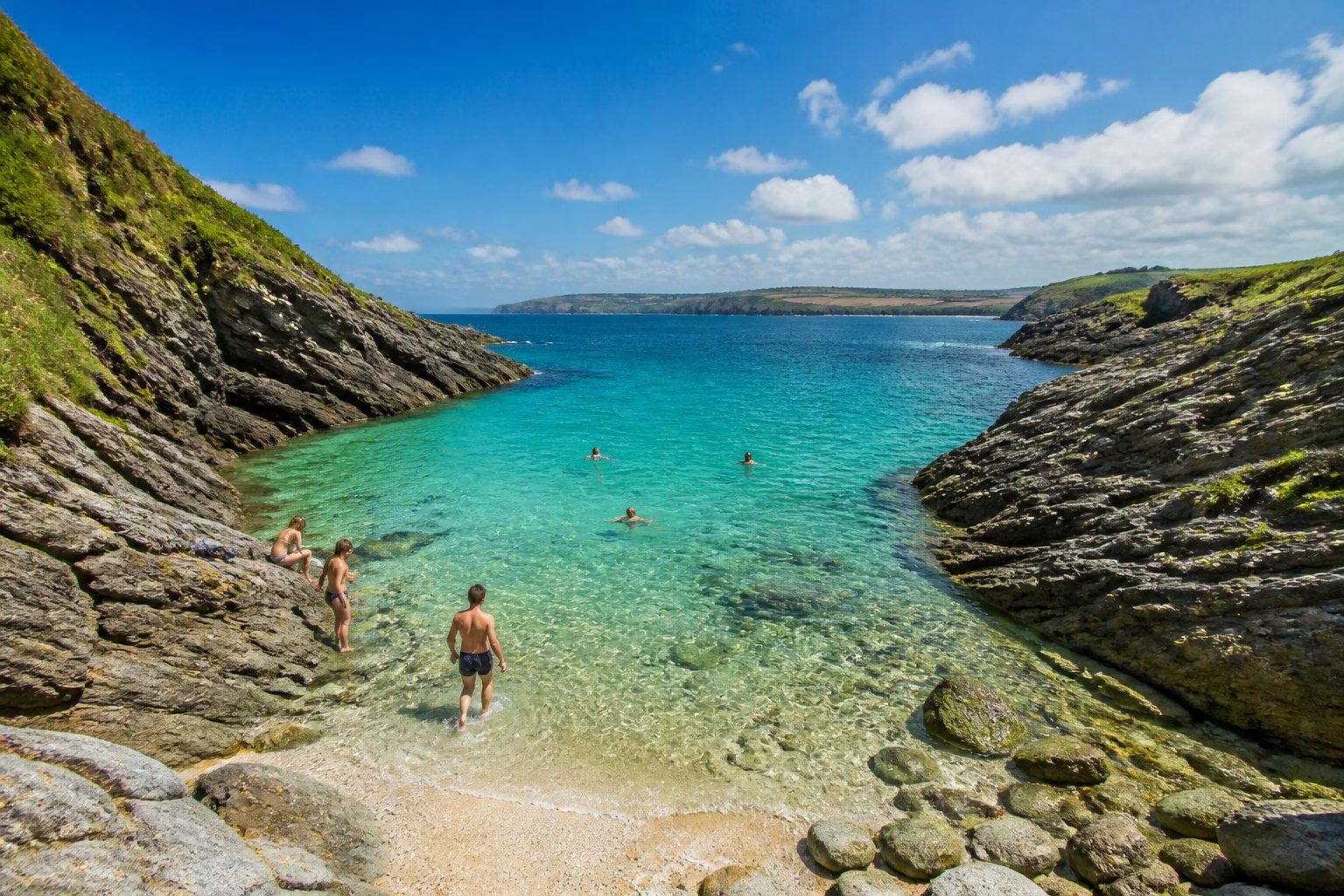
Cornwall’s coastline varies enormously from one stretch to the next. The difference between a safe wild swimming spot and a dangerous one often comes down to swell direction, tide state, and how well you know your own limits. Picking the right location for your ability is the single most important decision you will make.
Best For First-Time Sea Swimmers
If you are new to swimming in the sea, start with sheltered beaches that have gentle gradients and lifeguard cover during summer months. Gyllyngvase Beach in Falmouth is one of the most accessible options, with calm water, a sandy bottom, and nearby facilities. Bude Sea Pool at Summerleaze Beach is another excellent choice because the semi-enclosed pool protects you from waves and currents while still giving you a genuine sea swimming experience.
Avoid exposed north-coast beaches on your first outing. The Atlantic swell can be powerful and unpredictable, and cold water shock catches even confident pool swimmers off guard. Stick to south-facing bays where the water tends to be calmer.
Best For Confident Open-Water Swimmers
If you are comfortable in open water and can handle some swell, Cornwall’s more dramatic spots open up to you. Kynance Cove on the Lizard Peninsula offers turquoise waters between towering serpentine rock stacks. Porthcurno Beach and nearby Nanjizal deliver stunning swims beneath granite cliffs.
These locations often have stronger currents, limited exit points, and no lifeguard presence. Always check conditions before entering.
Best For Calm Dips And Short Swims
Tidal pools and hidden coves are ideal if you want a quick, sheltered dip without battling waves. Porthtowan Tidal Pool and the small pool at Mousehole both offer contained swimming in beautiful settings. They fill and empty with the tide, so timing your visit is essential.
Best For Scenic Inland Swimming
Cornwall is not all coastline. Goldiggins Quarry on Bodmin Moor provides deep, clear freshwater surrounded by granite cliffs, and Golitha Falls near Liskeard offers shaded river pools beneath a woodland canopy. Inland spots are perfect when the sea is rough or the wind is howling along the coast.
Standout Sea Pools And Tidal Swims
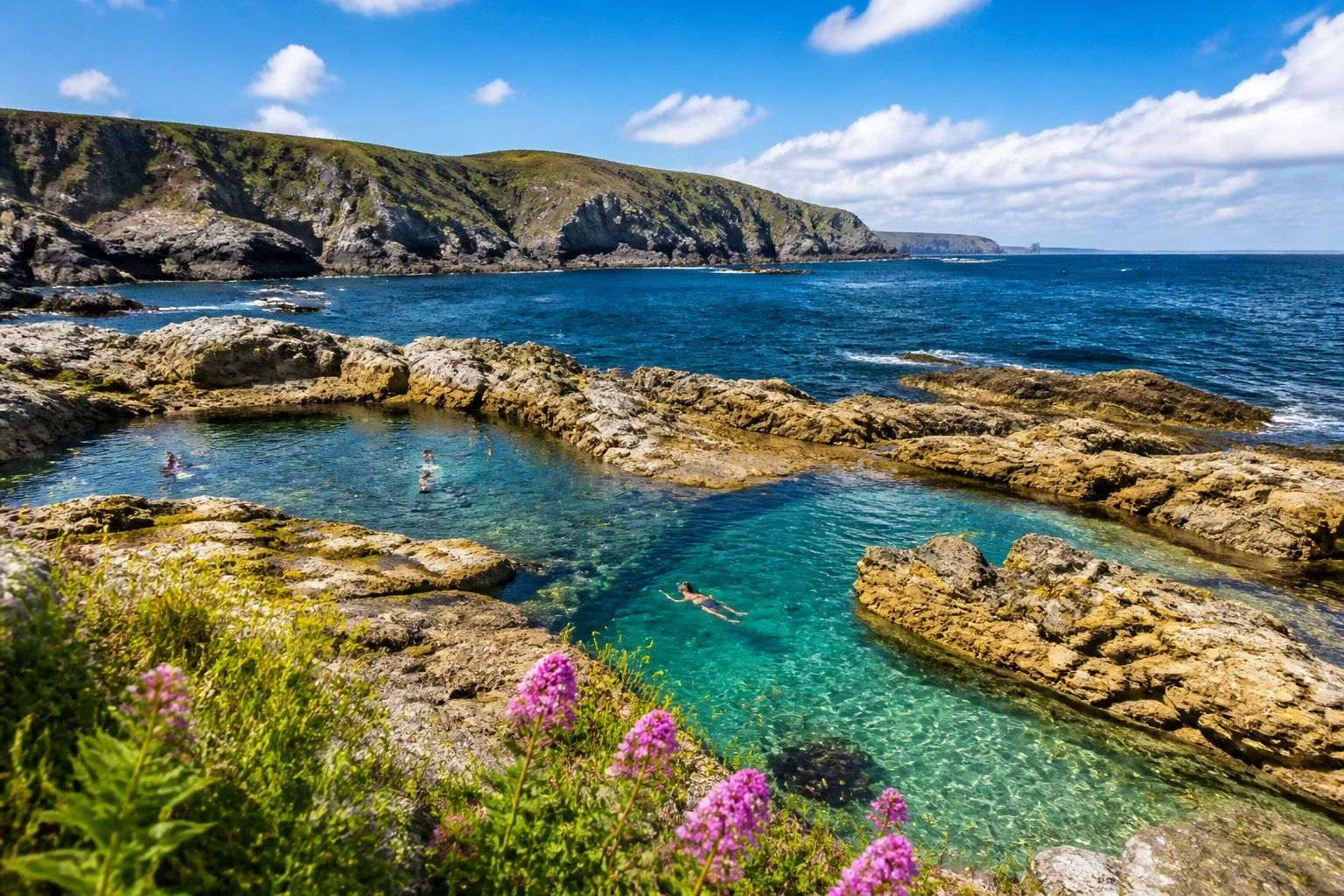
Cornwall’s tidal pools and sea pools sit in a category of their own. They give you the thrill of saltwater swimming with a level of shelter you will not find on an open beach, and several are accessible year-round.
Bude Sea Pool At Summerleaze Beach
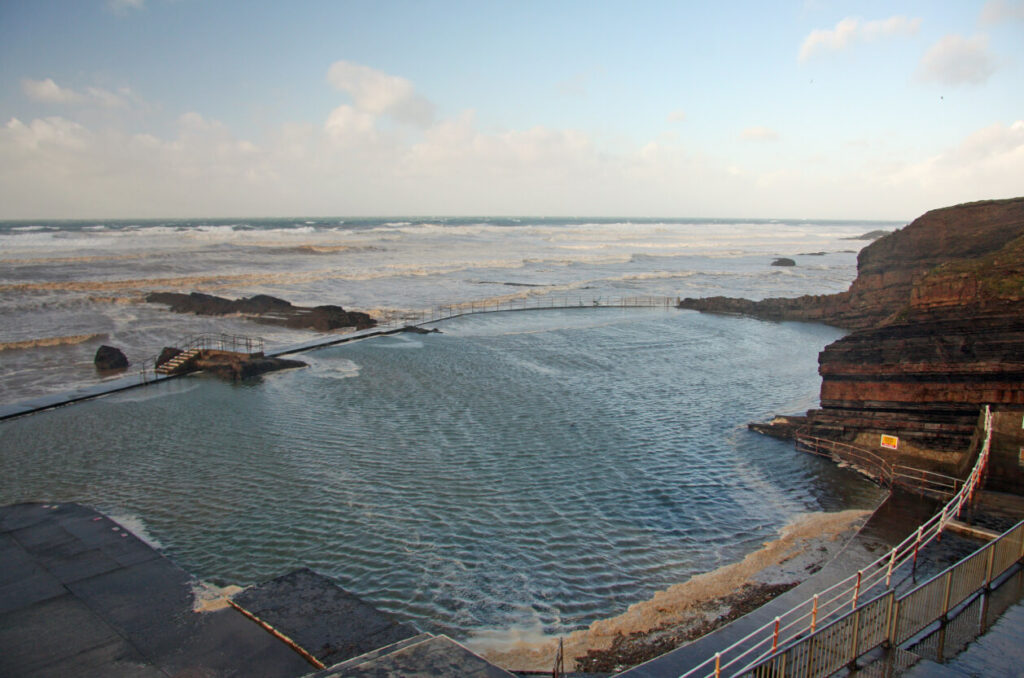
Bude Sea Pool is a large, semi-natural tidal pool built into the rocks at Summerleaze Beach. It fills with seawater at each high tide and provides a calm, contained area for swimming that is free to use all year. The pool is roughly 90 metres long, making it one of the largest sea pools in the UK.
The Friends of Bude Sea Pool maintain the site, and the surrounding area at Summerleaze Beach has toilets, parking, and cafés within easy walking distance. The pool is suitable for all abilities, including children and nervous swimmers.
Parking: Summerleaze Beach Car Park, a short walk from the pool.\
Best time: Swimming is possible at any tide state, but the pool is fullest around two to three hours after high tide.\
Safety: The pool floor can be slippery with algae, so wear aqua shoes if you have them.
Jubilee Pool In Penzance
Jubilee Pool is an Art Deco lido built in 1935, right on the seafront in Penzance. It is filled with seawater and includes a separately heated geothermal pool, making it one of the few spots in Cornwall where you can swim in genuinely warm water. The geothermal section uses heat drawn from deep underground, keeping it at around 35°C.
Entry is ticketed, and the pool operates seasonally, typically from late April through to September. It is a wonderful option on days when the open sea feels too cold or too rough.
Parking: Multiple pay-and-display car parks in Penzance town centre.\
Best time: Weekday mornings tend to be quieter.\
Safety: Lifeguard supervised. Suitable for all levels.
Porthtowan Tidal Pool
Tucked beneath the dramatic cliffs of the St Agnes headland, Porthtowan Tidal Pool only appears a few hours either side of low tide. A natural rock wall shields the pool from the full force of the Atlantic, creating a sheltered spot with a striking backdrop of ruined mine engine houses on the clifftops above.
Getting to the pool involves either walking along the beach at low tide or descending steep rocky steps from the coastal path. It is not the easiest access, so wear sturdy footwear for the approach.
Parking: Porthtowan Beach Car Park.\
Best time: Two hours before low tide to allow enough swimming time before the sea reclaims the pool.\
Safety: No lifeguard. Check tide times carefully and do not get caught out by a rising tide.
Chapel Rock At Perranporth Beach
Perranporth Beach is a vast, sandy stretch on the north coast, and at its southern end, Chapel Rock creates a natural tidal pool area. At low tide, rock pools form around the base of the rock, offering shallow, sheltered water that is great for paddling, exploring, and short swims.
The main beach has lifeguard cover in summer, and the village of Perranporth has shops, cafés, and parking close by. It is a good family-friendly option that combines a beach day with a bit of tidal pool exploration.
Parking: Perranporth Beach Car Park, directly behind the beach.\
Best time: Low tide for the best pool access.\
Safety: Watch for waves washing over the rocks at mid-tide. The transition from pool to open sea can catch you off guard.
Best Beaches And Coves For A Sea Dip
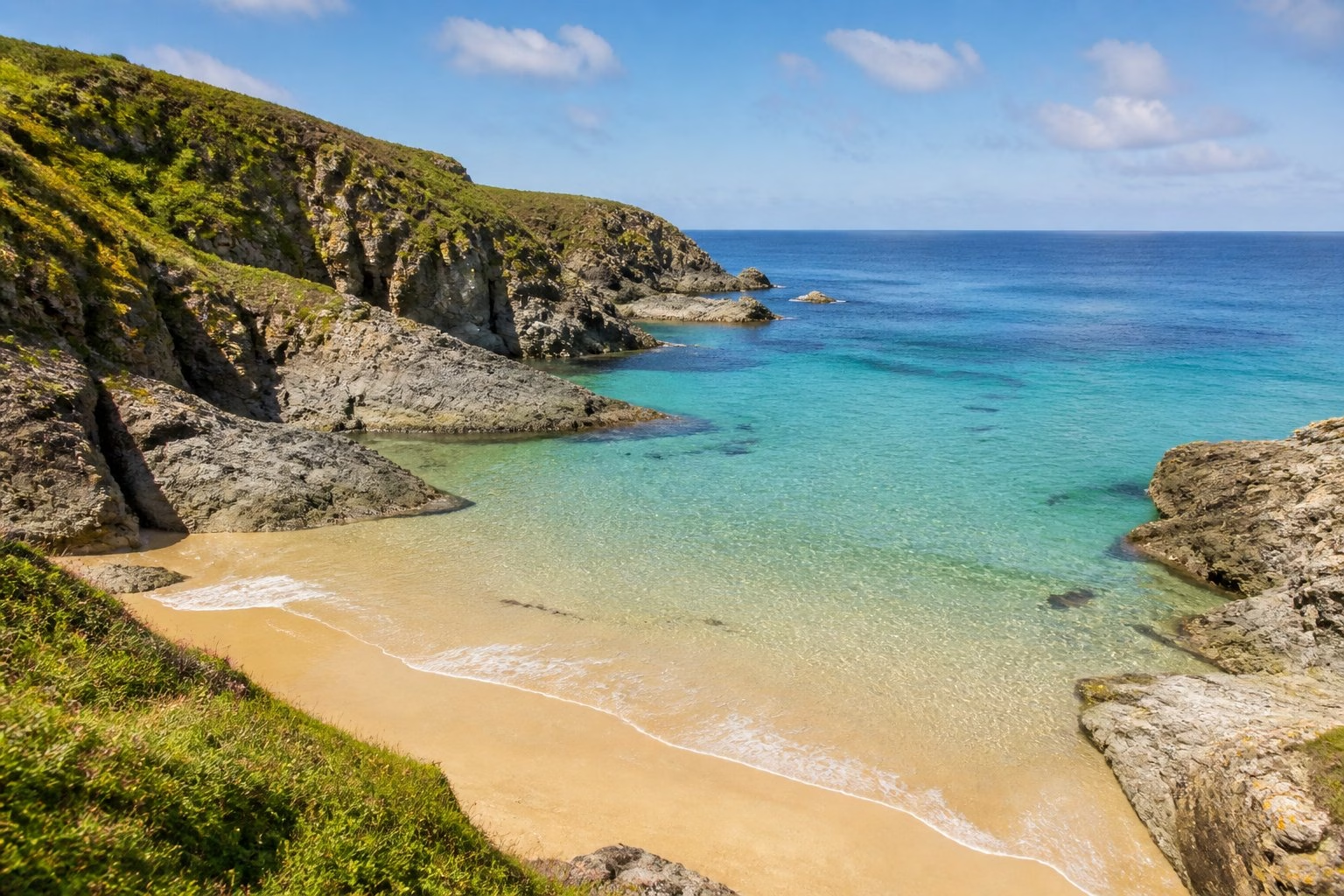
Cornwall’s beaches range from wide, accessible stretches of sand to tiny hidden coves you can only reach on foot. The best ones for swimming combine clear water, some natural shelter, and scenery that makes you forget you are still in England.
Gyllyngvase Beach For Easier Access
Gyllyngvase Beach in Falmouth is one of the most user-friendly swimming beaches in Cornwall. The water is sheltered by Pendennis Point, the gradient is gentle, and there are lifeguards on duty during the summer season. A promenade runs along the back of the beach with cafés, changing facilities, and accessible ramps.
If you want a no-fuss sea swim where you can park nearby, walk straight onto the sand, and get into calm water quickly, this is the spot. The bay faces south-east, so it is protected from the prevailing south-westerly winds that batter much of the Cornish coast.
Parking: Gyllyngvase Beach Car Park, directly behind the beach.\
Safety: Lifeguarded in summer. One of the calmest beaches in Cornwall for swimming.
Kynance Cove On The Lizard Peninsula
Kynance Cove is arguably the most photogenic swimming spot in Cornwall. Owned by the National Trust, the cove features towering serpentine rock stacks, golden sand, and turquoise waters that look more Caribbean than Cornish on a sunny day.
At low tide, you can swim between the rock formations, explore hidden caves, and find Mermaids Pool tucked into the cliff wall on the northern side. The pool is deep enough to jump into and crystal-clear for snorkelling.
Parking: National Trust Kynance Cove Car Park (arrives early in summer as it fills fast).\
Best time: One to two hours after high tide, when the beaches start to appear.\
Safety: No lifeguard. Currents can run between the rock stacks, so stay within the sheltered areas unless you are a confident swimmer.
Porthcurno Beach And Nearby Nanjizal
Porthcurno Beach sits at the base of steep cliffs near the famous Minack Theatre. The water here is remarkably clear, and the beach, though small, is sheltered enough for a good swim on calmer days.
A 45-minute walk along the coast path from Porthcurno takes you to Nanjizal Beach, sometimes called Mill Bay. Nanjizal is far quieter, with a natural rock arch called the Song of the Sea that frames the ocean. The swimming here is best at lower tides when a sandy area forms between the rocks. Nanjizal has no facilities, no phone signal, and no lifeguard. It feels genuinely remote.
Parking: Porthcurno Beach Car Park for both spots.\
Safety: Nanjizal has strong currents near the rock arch. Swim parallel to the beach and stay within your depth.
Pedn Vounder And Its Hidden Coves
Pedn Vounder is one of those beaches that makes you catch your breath. Set beneath enormous granite cliffs near Treen, the beach only reveals itself fully at low tide, when a wide sandbar emerges from the turquoise water. There are several hidden coves to explore by wading through shallow water just off the main beach.
The descent to the beach is steep and requires scrambling down a rocky path. This is not a spot for anyone with mobility concerns. The waves beyond the sandbar can be strong, so keep your swimming within the sheltered area unless you are very experienced.
Parking: Treen Car Park, with a 20-minute walk to the beach.\
Best time: Two hours either side of low tide.\
Safety: The sandbar disappears at high tide, leaving no beach at all. Time your visit carefully and do not get stranded.
Portheras Cove And Prussia Cove
Portheras Cove is one of the most secluded beaches on Cornwall’s north coast, tucked between rocky headlands near Pendeen. The walk in takes about 15 minutes across farmland, and you are unlikely to share the beach with more than a handful of people. The swimming is good in settled conditions, though the exposed position means it catches swell.
Prussia Cove, on the south coast between Marazion and Praa Sands, is a collection of small, rocky coves with clear water and fascinating rock pools. Named after an 18th-century smuggler, the coves are reached by a footpath from a small car park. The swimming is best explored with a snorkel, poking around the rocky edges at low tide.
Parking: Small car parks near both locations. Neither has formal facilities.\
Safety: Both are unlifeguarded. Prussia Cove has slippery rocks at the water’s edge, so take your time getting in and out.
Freshwater And Sheltered Alternatives
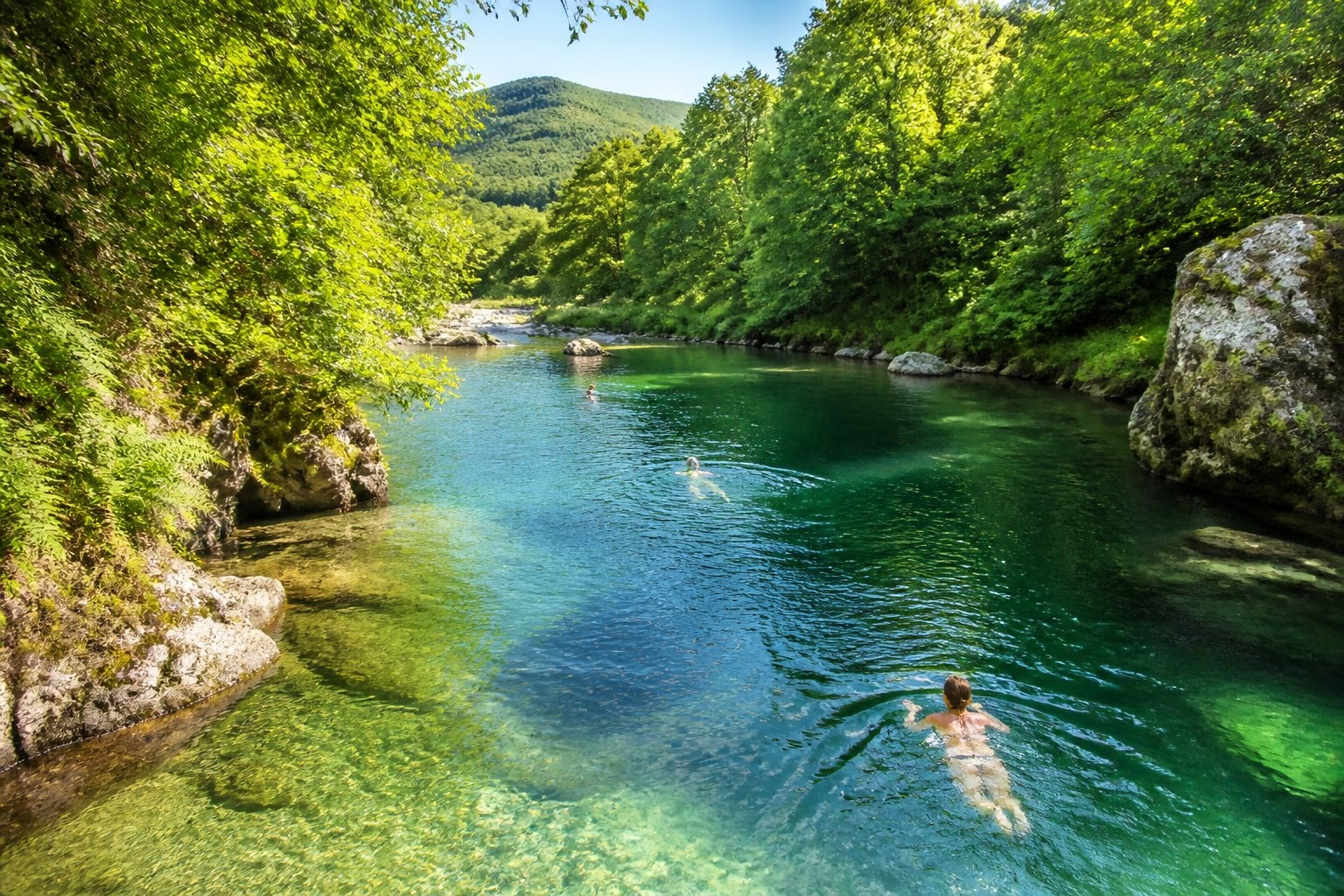
Not every great wild swim in Cornwall involves saltwater. The county has freshwater spots that offer something completely different from the coast, with calmer water, no tides to worry about, and woodland scenery in place of cliffs.
Goldiggins Quarry On Bodmin Moor
Goldiggins Quarry is a spring-fed former quarry high up on Bodmin Moor, near the village of Minions. The water is deep, clear, and cold, surrounded by granite walls that rise to varying heights around the edge. You can swim laps across the quarry, snorkel along the submerged rock faces, or use the lower ledges for jumping in.
The setting is wild and atmospheric. You walk past three Neolithic stone circles (The Hurlers) to reach it, and the ruins of old tin mines dot the surrounding moorland.
Parking: Hurlers Car Park in Minions, with a 20-minute walk to the quarry.\
Facilities: None at the quarry. A tea shop with toilets is available in Minions.\
Safety: The water is very cold even in summer. There is no shallow end; the quarry drops away quickly from the edges. Enter carefully and acclimatise slowly. Jumping from higher ledges carries real risk; check depth before you leap.
Golitha Falls Near Liskeard
Golitha Falls is a series of cascades on the River Fowey as it passes through ancient oak woodland near Liskeard. The pools beneath the falls are shallow in most places, but there are deeper sections where you can sit in the current and let the water rush past you.
This is more of a cooling dip than a swimming destination. The river level varies significantly with rainfall, and after heavy rain, the current can be surprisingly powerful. On a warm day, the shaded pools are a refreshing escape from the heat.
Parking: Golitha Falls Car Park (free), a short walk from the river.\
Facilities: Car park and footpath only. No toilets or café.\
Safety: Rocky riverbed. Wear water shoes and watch your footing. Avoid after heavy rainfall when the water runs fast and murky.
When Inland Spots Beat The Coast
Inland swimming spots come into their own when coastal conditions are poor. If the surf forecast shows large swells, strong onshore winds, or poor visibility, heading to a quarry or river pool is a smart choice. You avoid the risks of rough seas entirely and still get a proper cold-water swim.
Inland spots are also worth considering on bank holiday weekends when popular coastal car parks fill up by mid-morning. Goldiggins Quarry rarely feels crowded, even in peak summer.
Safety, Tides And Water Confidence
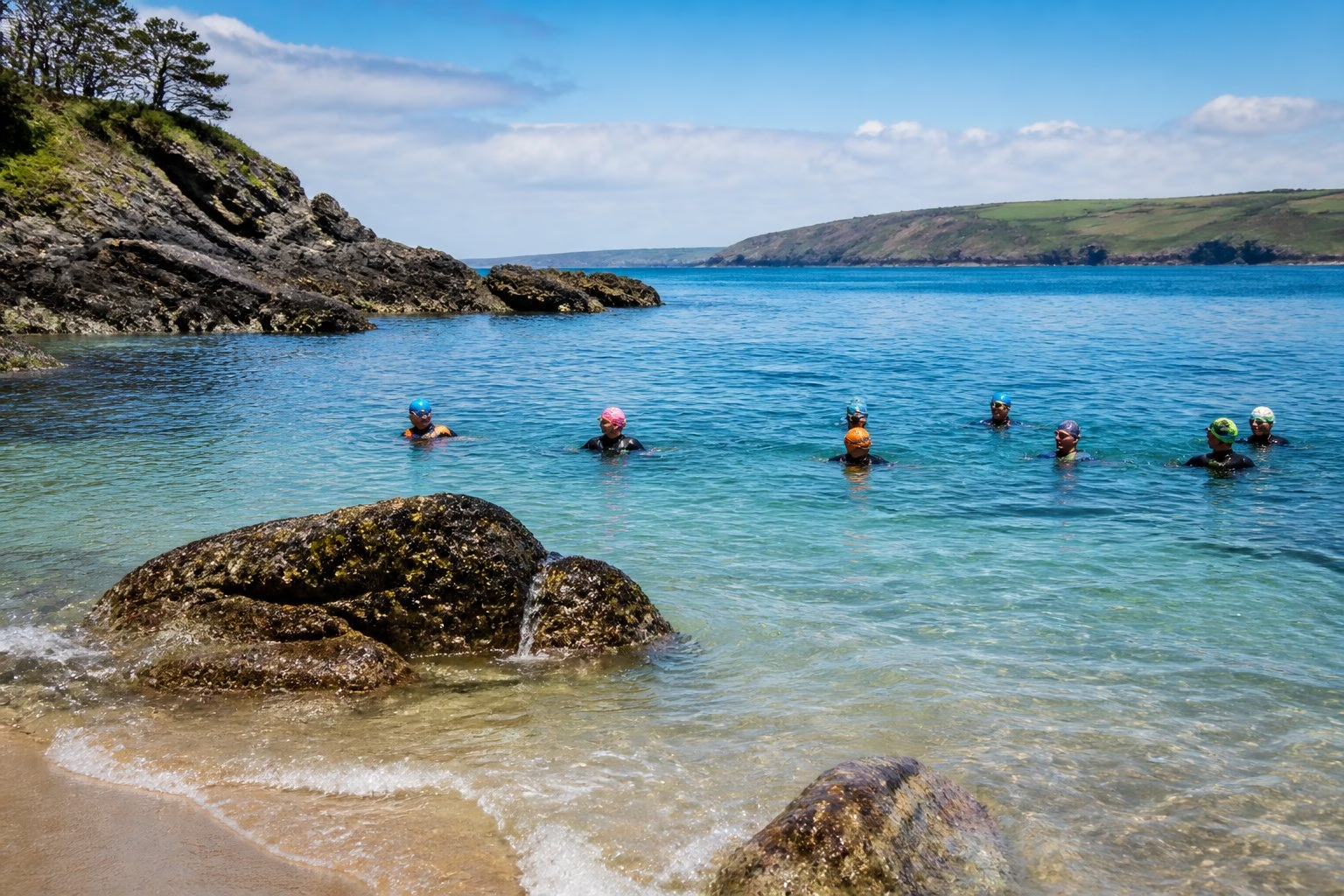
Safe wild swimming in Cornwall requires preparation. The county’s coastline is beautiful but unforgiving if you underestimate it. Every swim should start with a few minutes of research and observation before you get into the water.
Reading Tides, Swell And Wind
Tides dictate everything in Cornwall. Many of the best spots, including tidal pools, hidden coves, and sandbar beaches, are only accessible at certain tide states. Check tide times for the nearest port before you set out and know whether the tide is coming in or going out when you arrive.
Swell and wind matter just as much. A beach that is calm and inviting on a flat day can produce dangerous shore break when a 2-metre swell is running. Use the Magic Seaweed or Windy apps to check conditions. Offshore winds (blowing from land to sea) tend to flatten the water and create better swimming conditions, while onshore winds chop it up.
Managing Cold Water Shock
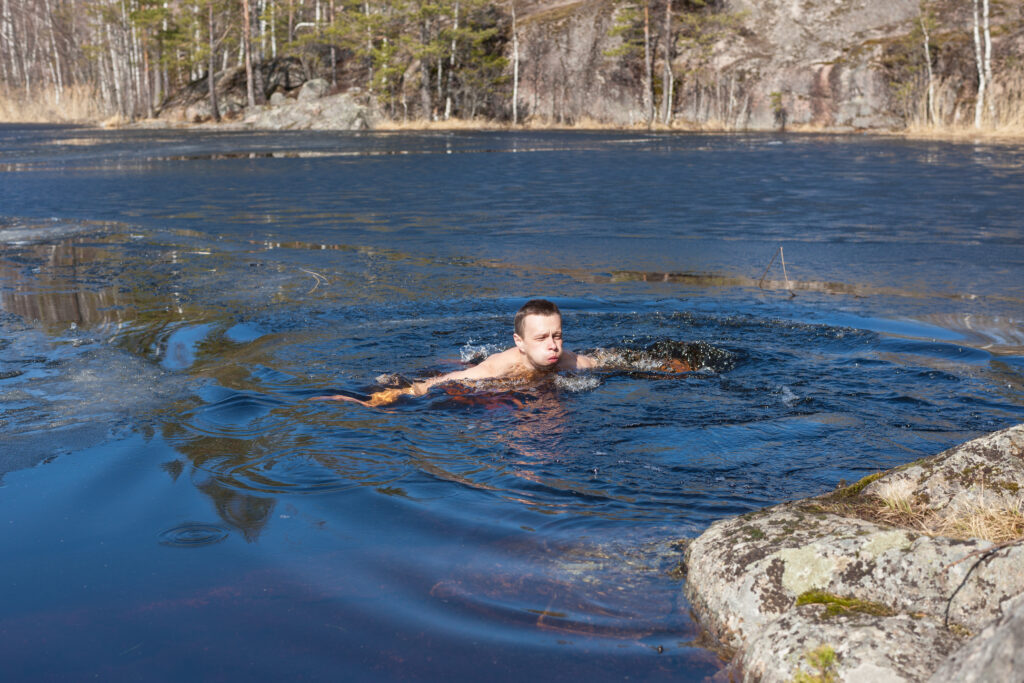
Cornwall’s sea temperatures range from about 8°C in late winter to around 17°C at peak summer. Even in August, the water feels cold when you first get in. Cold water shock is a real risk; it causes an involuntary gasp reflex and rapid breathing that can lead to panic.
Enter the water slowly. Wade in to waist depth and pause. Concentrate on controlling your breathing, exhaling slowly and steadily. Give yourself 60 to 90 seconds to adjust before you start swimming. A wetsuit extends your time in the water significantly and reduces the initial shock. At Swimmers World, the advice is always to build your cold-water tolerance gradually rather than forcing it.
Entry, Exit And Slippery Rocks
Many of Cornwall’s best swimming spots involve rocky entries and exits. Algae-covered rocks are treacherously slippery, particularly in tidal pools and around rock pools at the base of cliffs. Wear neoprene boots or aqua shoes whenever the entry is not sandy.
Scout your exit point before you get in. If the tide is rising, make sure your planned exit will still be accessible in 30 minutes. Getting out of the water onto a wave-washed rock ledge with tired arms is far harder than it sounds.
Swimming With A Buddy And Knowing When Not To Get In
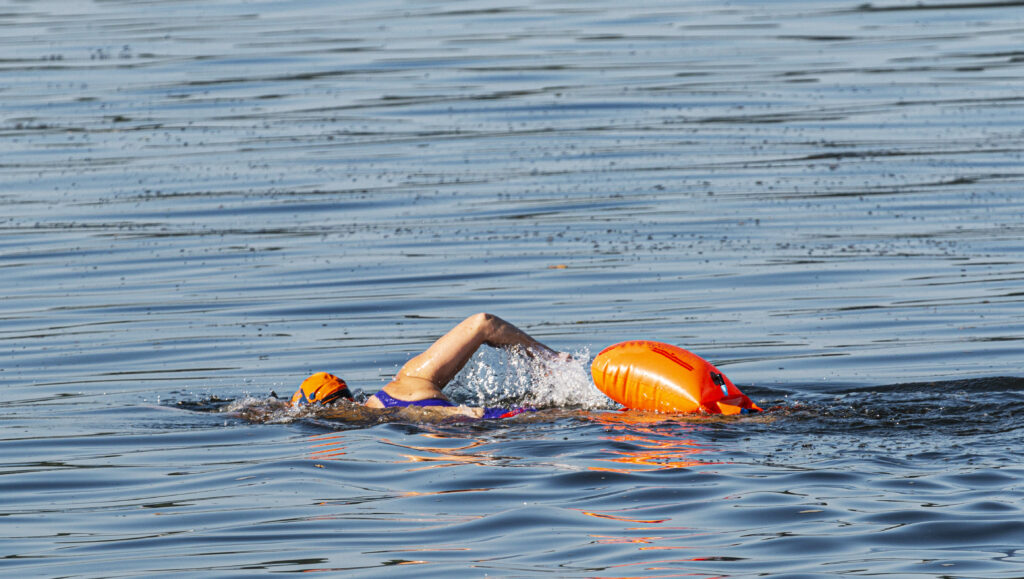
A tow float makes you visible to boats and other water users, and it gives you something to rest on if you get tired. Swimming with a buddy is the simplest safety measure available to you.
Know when to say no. If the sea looks rough, if you are unsure about the current, or if you feel cold and fatigued before you even get in, trust that instinct. There will always be another day to swim. Cornwall’s water is not going anywhere.
Planning Your Swim Day
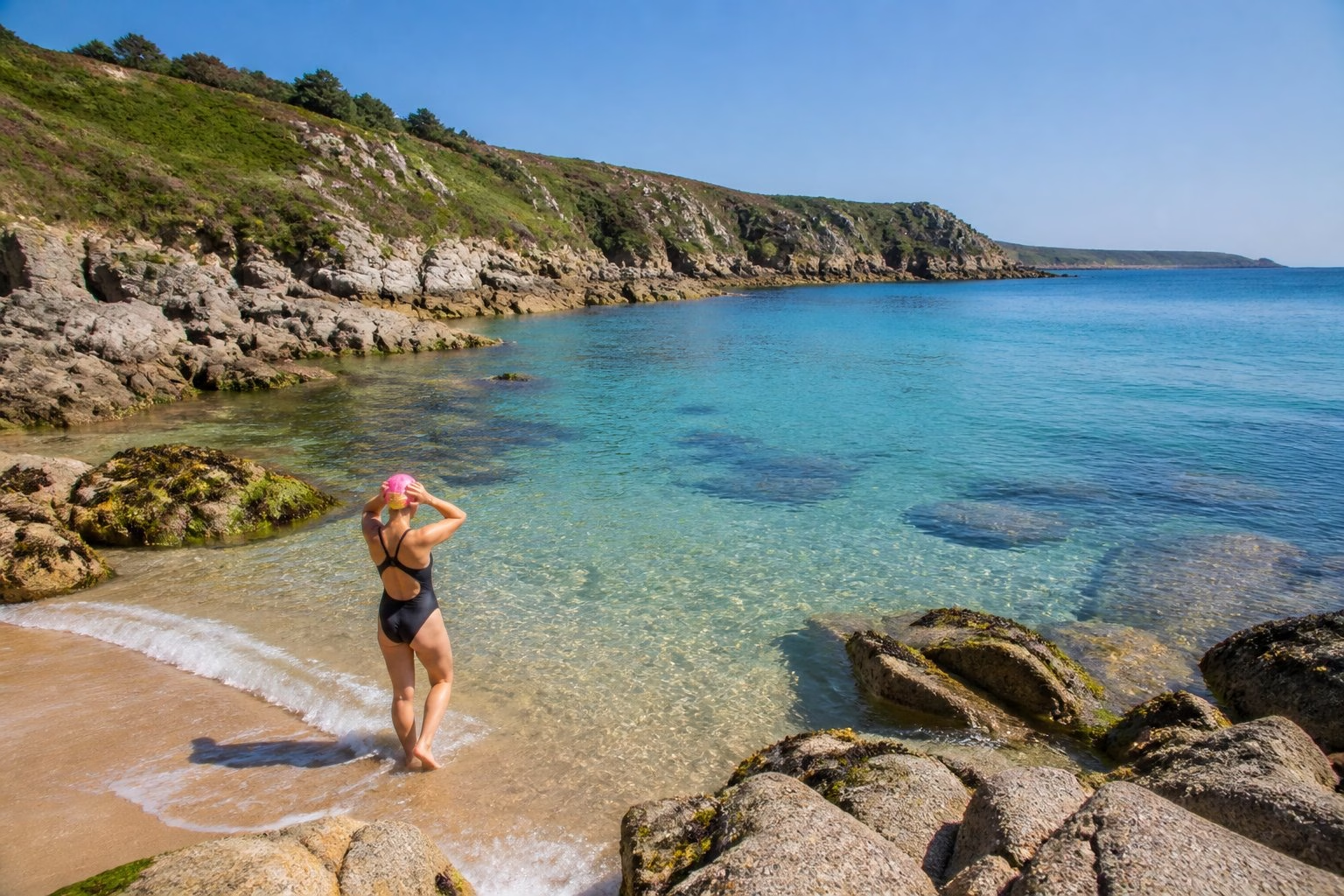
A successful swim day in Cornwall comes down to logistics. Getting the timing, parking, and packing right makes the difference between a brilliant experience and a frustrating one.
Parking, Walk-Ins And Accessibility
Parking at popular wild swimming spots in Cornwall fills up fast, especially during school holidays and bank holiday weekends. At spots like Kynance Cove and Porthcurno, arriving before 9am in peak season is essential.
Many of the best locations require a walk-in. Pedn Vounder is a 20-minute walk with a steep descent. Goldiggins Quarry involves a 20-minute moorland walk from Minions. Nanjizal is a 45-minute coastal path walk from Porthcurno. Factor this into your planning, particularly if you are carrying children’s gear or need wheelchair-accessible routes.
For easier access, Gyllyngvase Beach, Bude Sea Pool at Summerleaze Beach, and Jubilee Pool in Penzance all have car parks close to the water with paved paths and nearby facilities.
What To Pack For Cornwall Conditions
Cornwall’s weather can shift quickly. Pack for all possibilities, even on a sunny morning.
- Wetsuit (3/2mm for summer, 4/3mm or thicker for winter)
- Neoprene boots or aqua shoes for rocky entries
- Tow float for visibility in open water
- Warm layers and a changing robe for afterwards
- Hot drink in a flask (nothing beats it after a cold swim)
- Suncream and a hat (the Cornish sun reflects off the water and burns fast)
- Waterproof bag for valuables left on the beach
Best Times Of Year And Best Times Of Day
Sea temperatures peak in late August and September, when the water reaches 15-17°C along most of the coast. June and July offer the longest days and the best weather, but the water is still warming up.
For quieter swims, early morning is unbeatable. Arrive at a beach or tidal pool just after dawn, and you will often have the place to yourself. The light is softer, the wind is usually calmer, and the sense of solitude is something you cannot replicate at midday.
Winter swimming is increasingly popular, particularly around the Lizard Peninsula and along the south coast where conditions tend to be slightly milder. A good wetsuit, gloves, and boots make year-round swimming entirely manageable. Keep your swims shorter in colder months and always warm up slowly afterwards.
Frequently Asked Questions
Where are the safest places to swim outdoors in Cornwall?
Bude Sea Pool, Jubilee Pool in Penzance, and Gyllyngvase Beach in Falmouth are among the safest options. All three offer sheltered water, nearby facilities, and easy access. Lifeguard-patrolled beaches like Perranporth and Sennen also provide added safety during the summer season.
Is there a reliable map showing wild swimming spots across Cornwall?
Several online guides include interactive maps. The wild swimming Cornwall guide by Anywhere We Roam includes a detailed map with pinned locations, parking information, and walking directions for each spot.
Which rivers and freshwater pools in Cornwall are suitable for swimming?
Goldiggins Quarry on Bodmin Moor is the standout freshwater swimming location, offering deep, clear water in a dramatic setting. Golitha Falls on the River Fowey has shallow pools suitable for cooling off. In north Cornwall, St Nectan’s Kieve near Tintagel is a magical waterfall pool, though access can be limited.
Are there any local wild swimming groups in Cornwall that welcome beginners?
Yes. Several community groups organise regular swims across Cornwall, particularly around Falmouth, Penzance, and the north coast. Local Facebook groups and organisations such as the Bluetits Chill Swimmers have active Cornwall chapters that welcome all levels, including complete beginners.
What are the best wild swimming locations in North Cornwall?
Bude Sea Pool at Summerleaze Beach is one of the most popular. Holywell Bay offers a huge sweep of sheltered golden sand with good swimming conditions. Porthtowan Tidal Pool provides a dramatic cliff-side swim on the St Agnes headland, and Lantic Bay near Polruan is a quieter gem worth the walk.
Are there any recommended books or guides to wild swimming in Cornwall?
Wild Swimming by Daniel Start is one of the most widely used guidebooks covering Cornwall and the rest of the UK. The Cornish Horizons guide to wild swimming is a helpful free online resource, and local bookshops in towns like St Ives and Falmouth often stock regional swimming guides with detailed maps and safety advice.