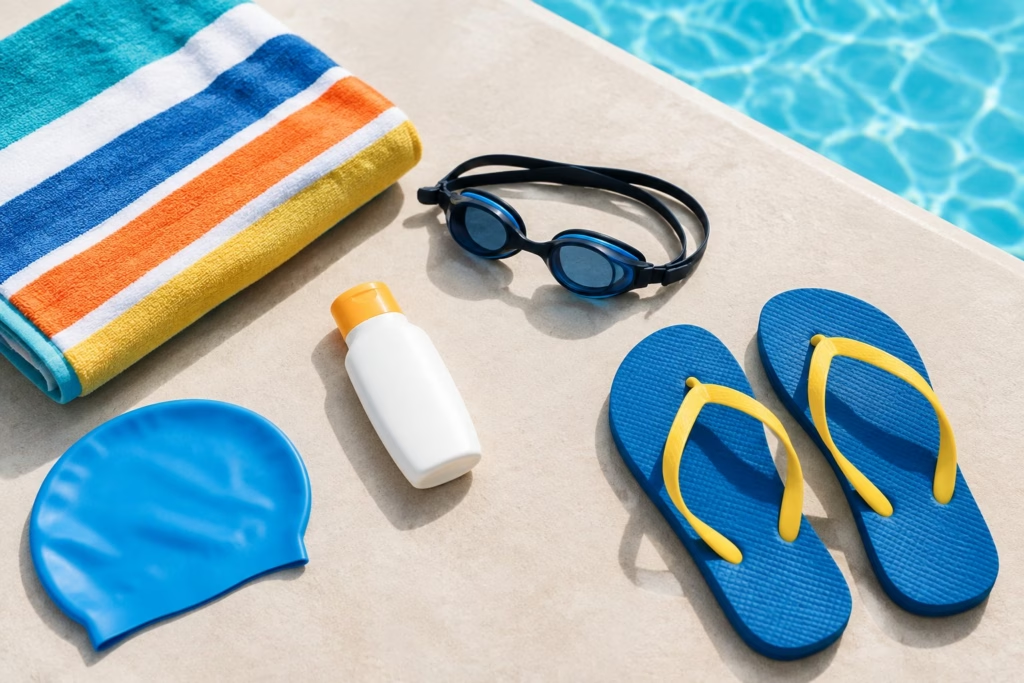
Every good swim starts with the same core kit: a well-fitting swimsuit, goggles, a towel and poolside flip-flops cover the pool, while open water adds a high-visibility cap, a tow float and, for weaker swimmers, a properly fitted lifejacket. Training aids such as a kickboard and pull buoy are useful extras once you want to build fitness or fix your technique.
Forgetting one item can cost you a session. Leave your goggles at home and chlorine stings your eyes for 40 lengths. Head to a lake without a bright cap and boat users may not spot you at all.
The checklist below splits into three groups. Items 1 to 4 are your pool essentials. Items 5 to 8 form your open-water safety kit. Items 9 and 10 are optional training gear. Pack it tonight, tick it off at the door, and your next swim will start calm and prepared.
1) Swimsuit
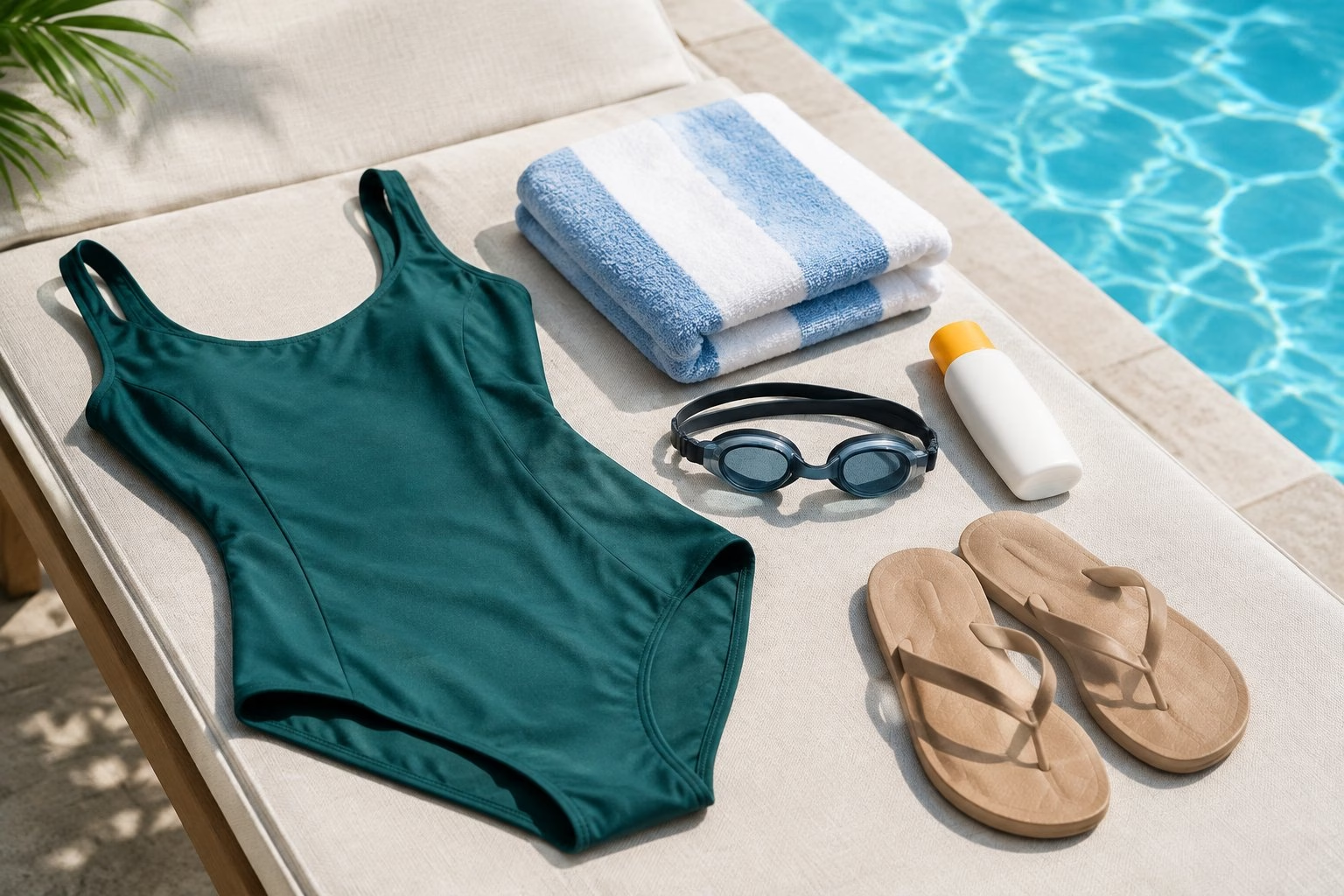
A snug, chlorine-resistant swimsuit is the one item every pool and beach demands. Loose costumes fill with water, drag you back and slip at the wrong moment.
For lane swimming, look for these features:
- Chlorine-resistant fabric, such as polyester or PBT blends, which hold their shape far longer than cotton-rich or high-Lycra fashion suits.
- A close fit with no gaping at the back or straps.
- Jammers or fitted trunks for men, since baggy board shorts create heavy drag.
- A racer or thin-strap back for women who swim front crawl often.
Rinse your suit in cold, fresh water after every swim and dry it flat in the shade. Wringing it hard or leaving it in a damp bag breaks down the fibres within weeks.
If you race, a tighter competition suit makes a small but real difference in the water. Browse more options in our swim wear reviews, or see why racing swim suits outperform traditional swim suits and shorts.
2) Swimming Goggles
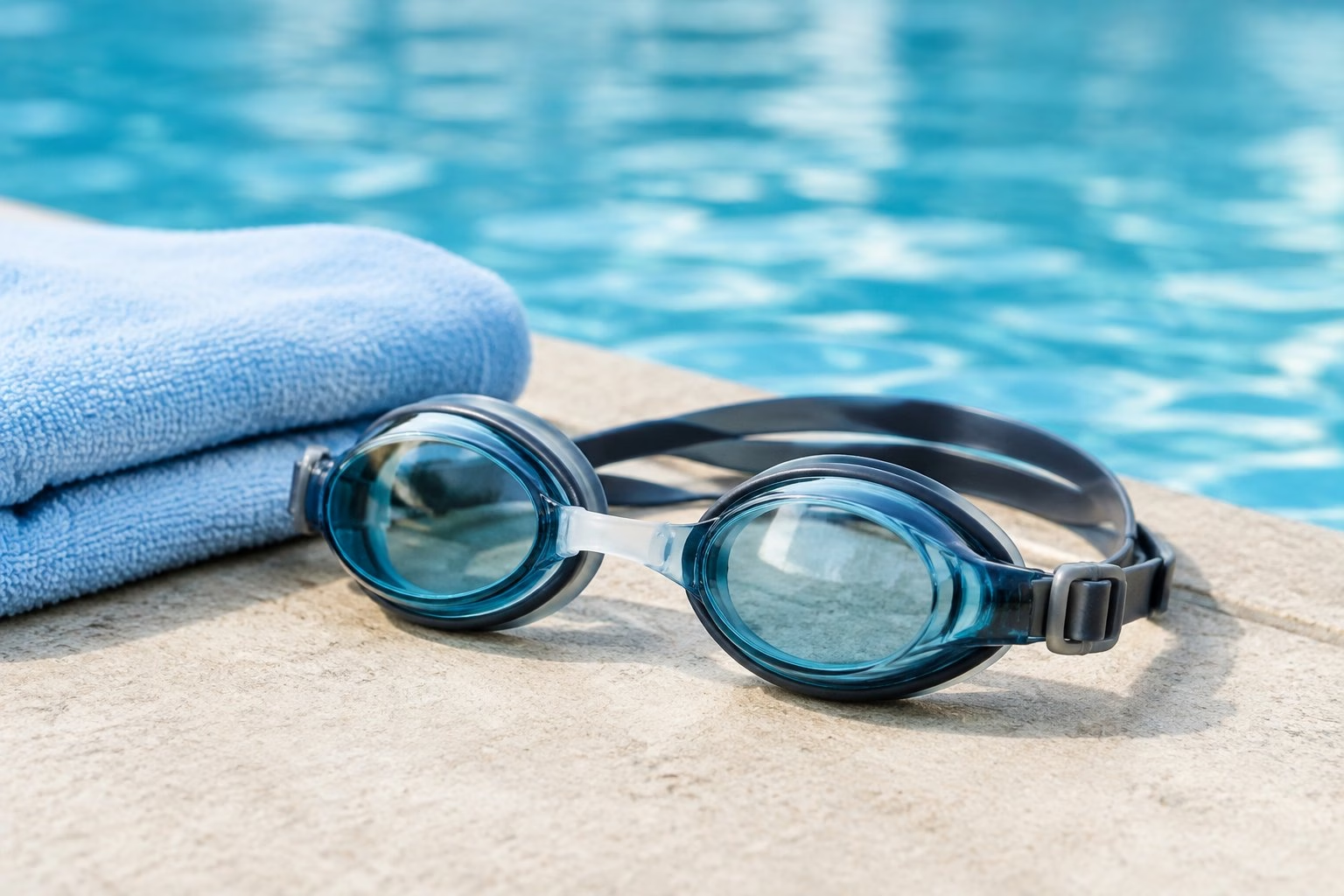
Goggles protect your eyes from chlorine and let you see the lane line, the wall and other swimmers. Without them, most people swim with their head lifted, which ruins body position.
Pick lenses to suit where you swim:
| Lens type | Best for |
|---|---|
| Clear | Indoor pools, dull days |
| Smoke or tinted | Bright outdoor pools, sunny lakes |
| Mirrored | Strong sun and glare on open water |
| Prescription | Short-sighted swimmers |
Test the seal before you buy. Press the goggles to your face without the strap; a good pair stays put for a second or two. If you wear glasses, prescription swimming goggles are worth the small extra cost.
Fogging is the most common complaint. Avoid touching the inside of the lens, and consider anti fog swimming goggles. Pack a spare pair in your bag, as straps snap without warning. If you are torn between styles, you can compare adult swimming goggles side by side.
3) Towel
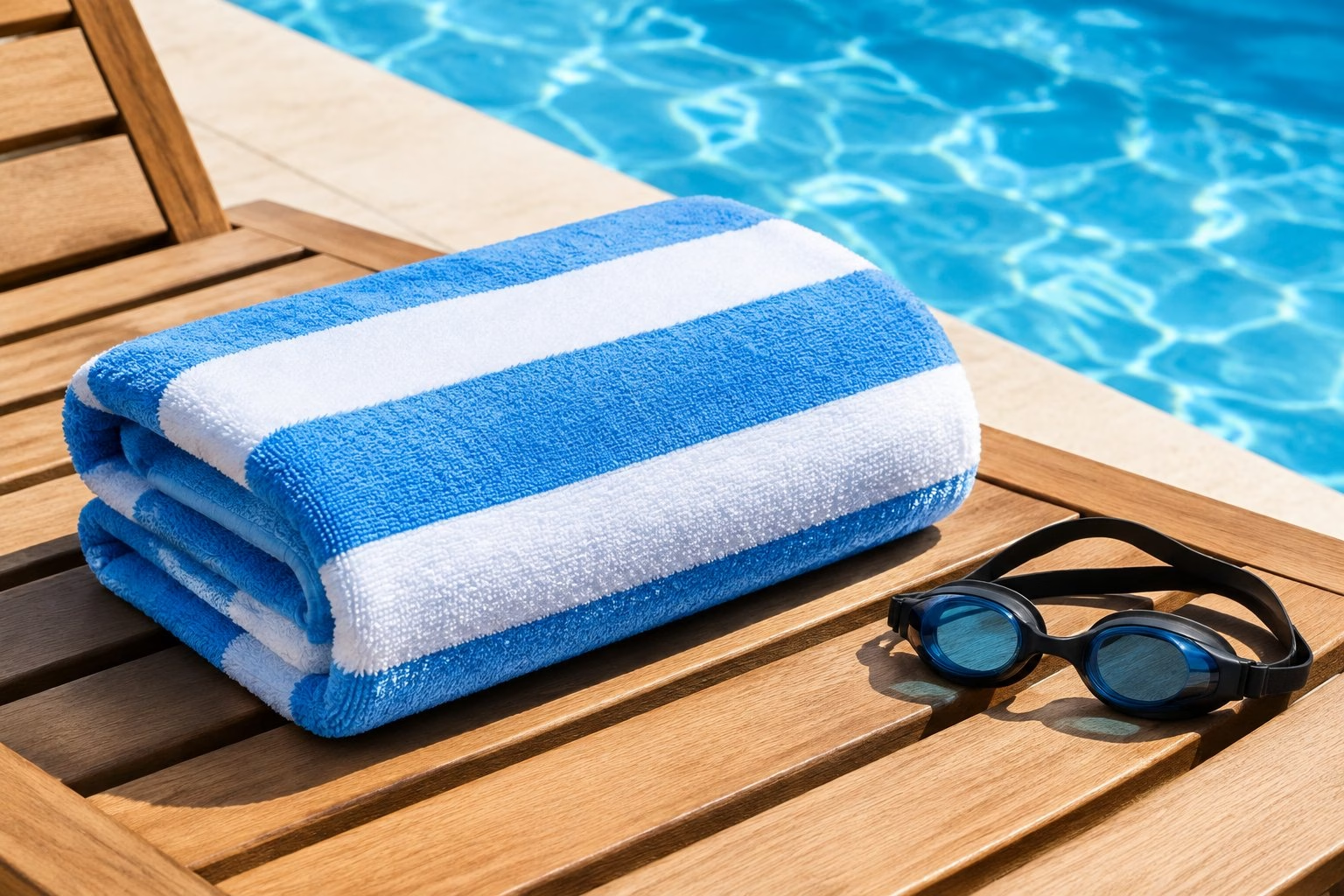
Drying off fast keeps you warm and stops you dripping across the changing room. For pool sessions, a lightweight microfibre towel wins because it folds small and dries between swims.
Cotton towels feel softer but hold water, get heavy and smell if you leave them in your bag. Microfibre soaks up well, then dries on a radiator in an hour or so.
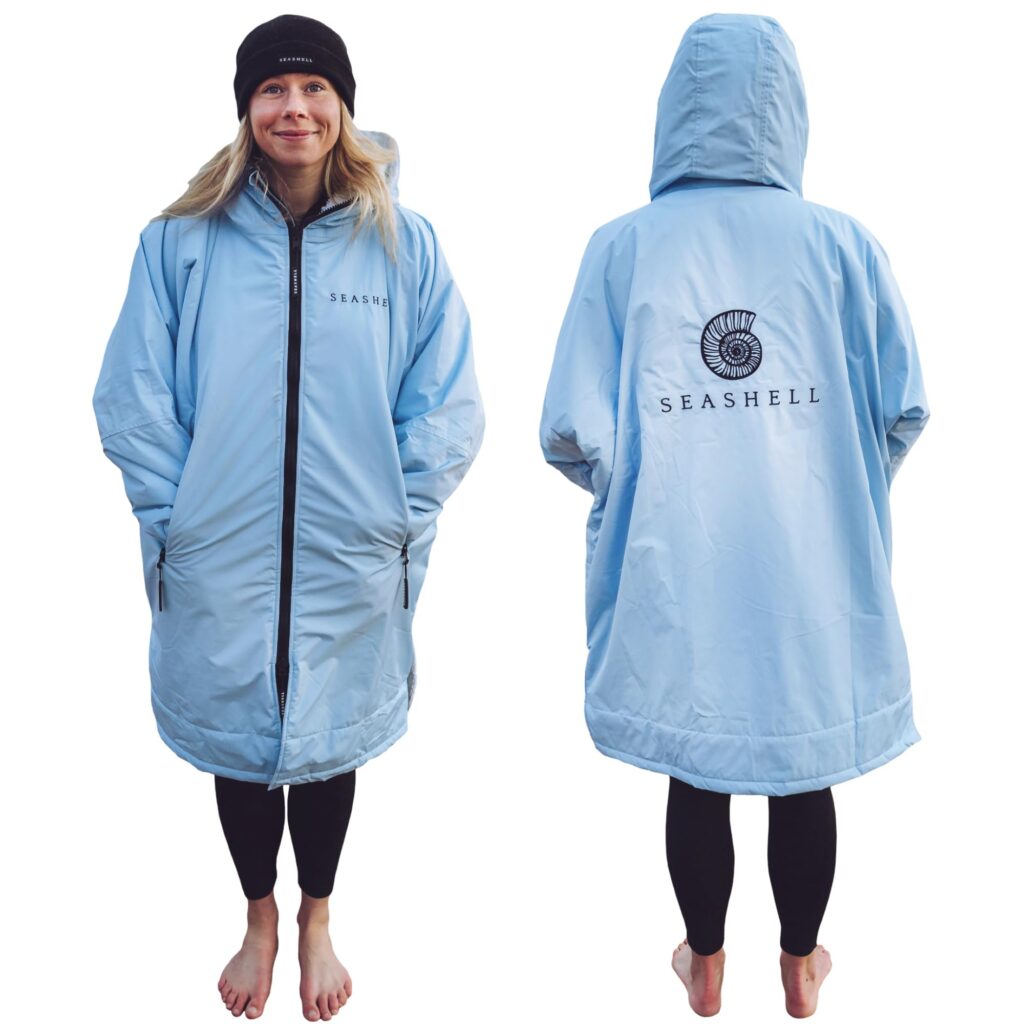
For open water, bring two towels: one to stand on and one to dry with. A changing robe helps even more after cold swims, since you can change under it on a windy beach. See the best swim changing robes for cold water swimmers if you plan to swim through autumn and winter.
Pack a spare carrier bag for your wet towel and suit so the rest of your kit stays dry.
4) Poolside Flip-Flops
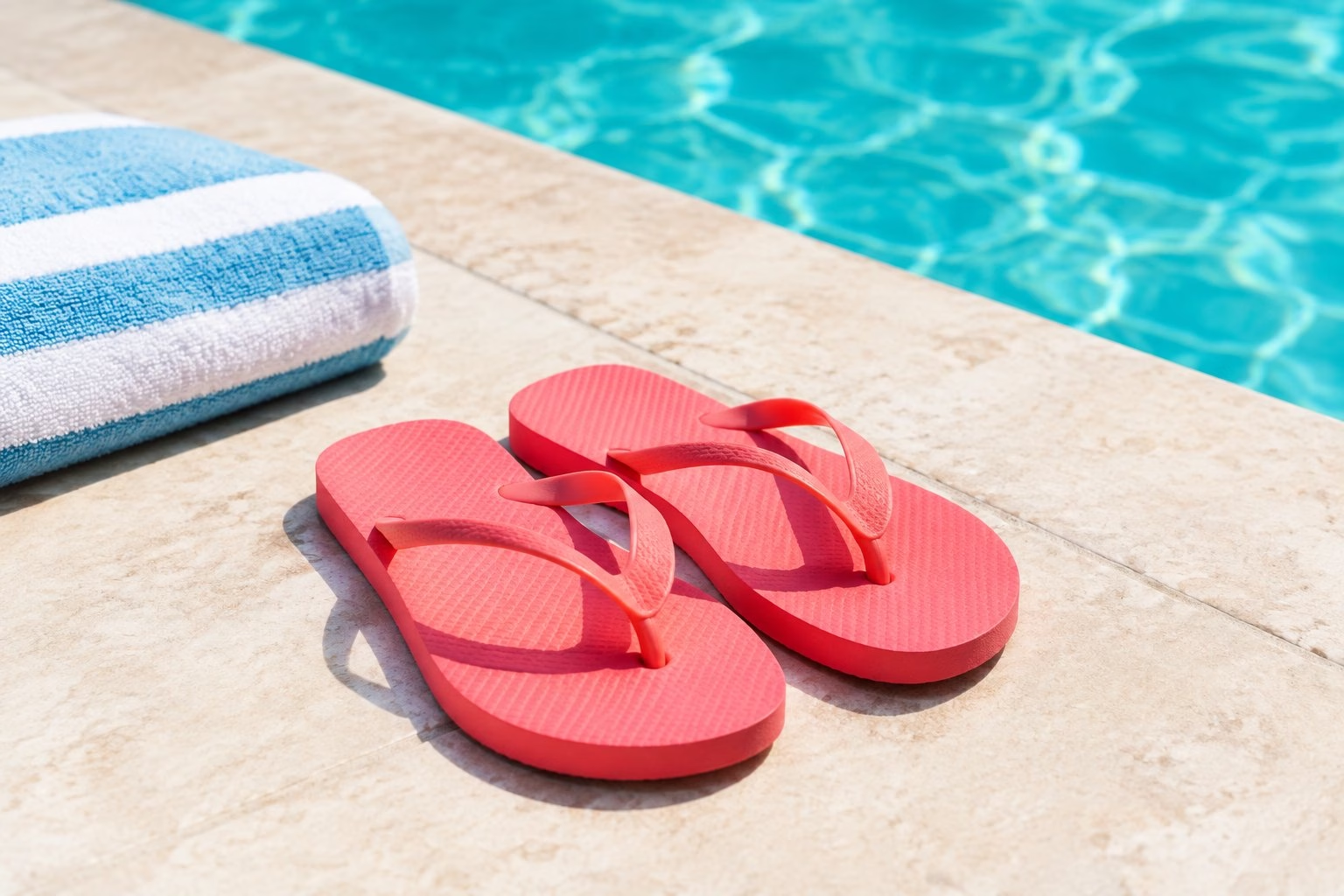
Flip-flops or pool sliders protect your feet from wet, slippery tiles and the fungi that cause verrucas and athlete’s foot. Changing room floors are warm and damp, which suits those germs well.
Choose a pair with:
- Rubber, grippy soles that hold on wet tiles.
- Quick-drying straps with no fabric lining.
- A slide or toe-post style, whichever you find easiest to walk in.
Leave them at the pool edge, never on the deck walkway where someone may trip. For lakes and the sea, swap them for neoprene swim shoes or old trainers. Rocky shores, sharp shells and cold stones are hard on bare feet.
5) Properly Fitted Lifejacket
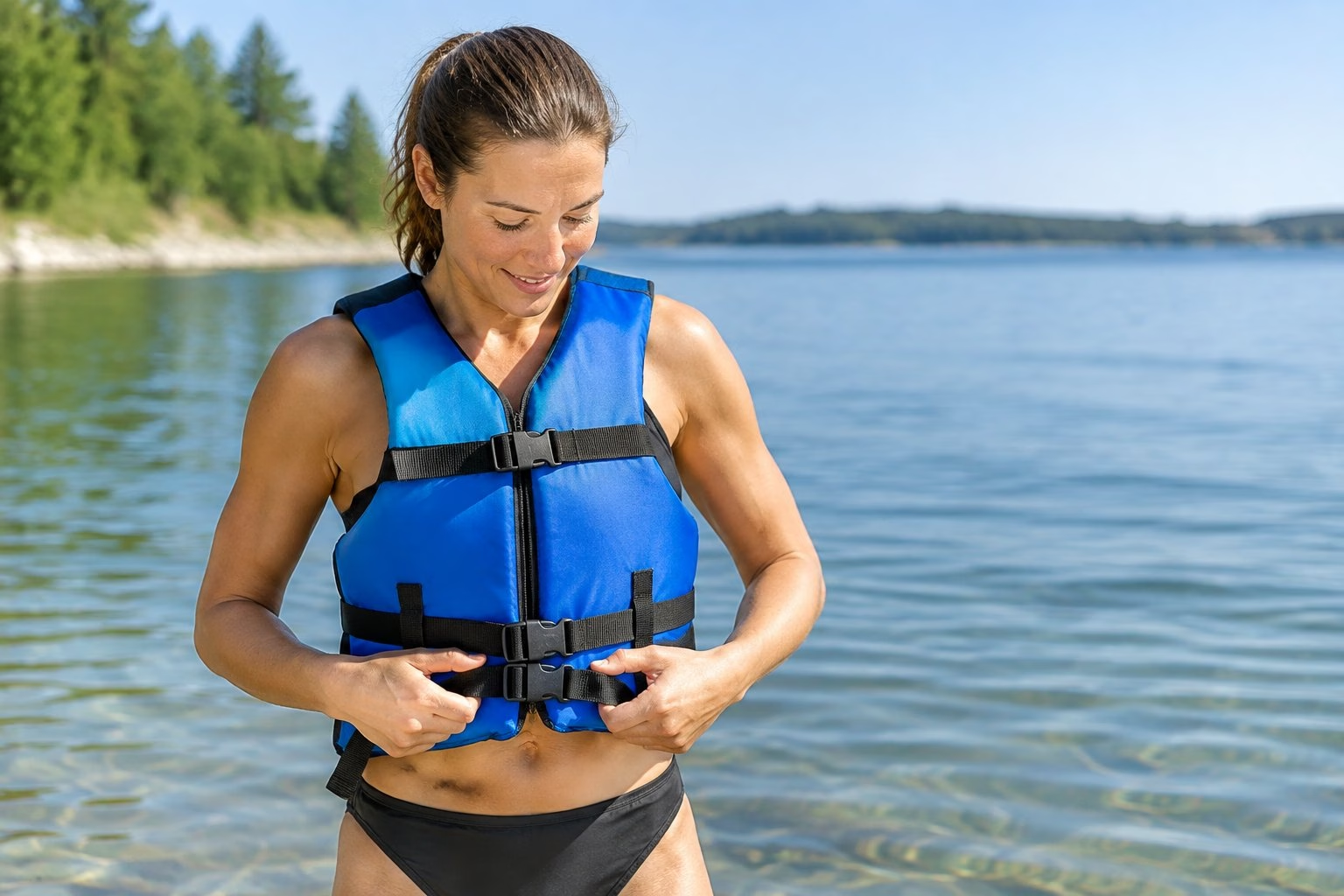
A lifejacket keeps your head above water if you tire, panic or suffer cold water shock. If you are a weak or new swimmer heading into open water, it is the most important item on this list.
Fit is everything. A loose jacket rides up around your ears and can slip off. Check it this way:
- Pick the size by your weight, as shown on the label.
- Fasten every strap and buckle, including any crotch strap.
- Ask a friend to lift the jacket at the shoulders. It should not rise past your chin.
- Test it in shallow water before going deeper.
Know the difference between a buoyancy aid and a lifejacket. A buoyancy aid helps you float while you swim or paddle; a lifejacket is designed to turn you onto your back and hold your face clear.
For children, armbands and swim seats help in shallow, supervised water, yet they are no substitute for a real lifejacket on open water. Our guide to swimming in the wild essential safety gear for beginners covers more first-timer kit.
6) High-Visibility Swim Cap
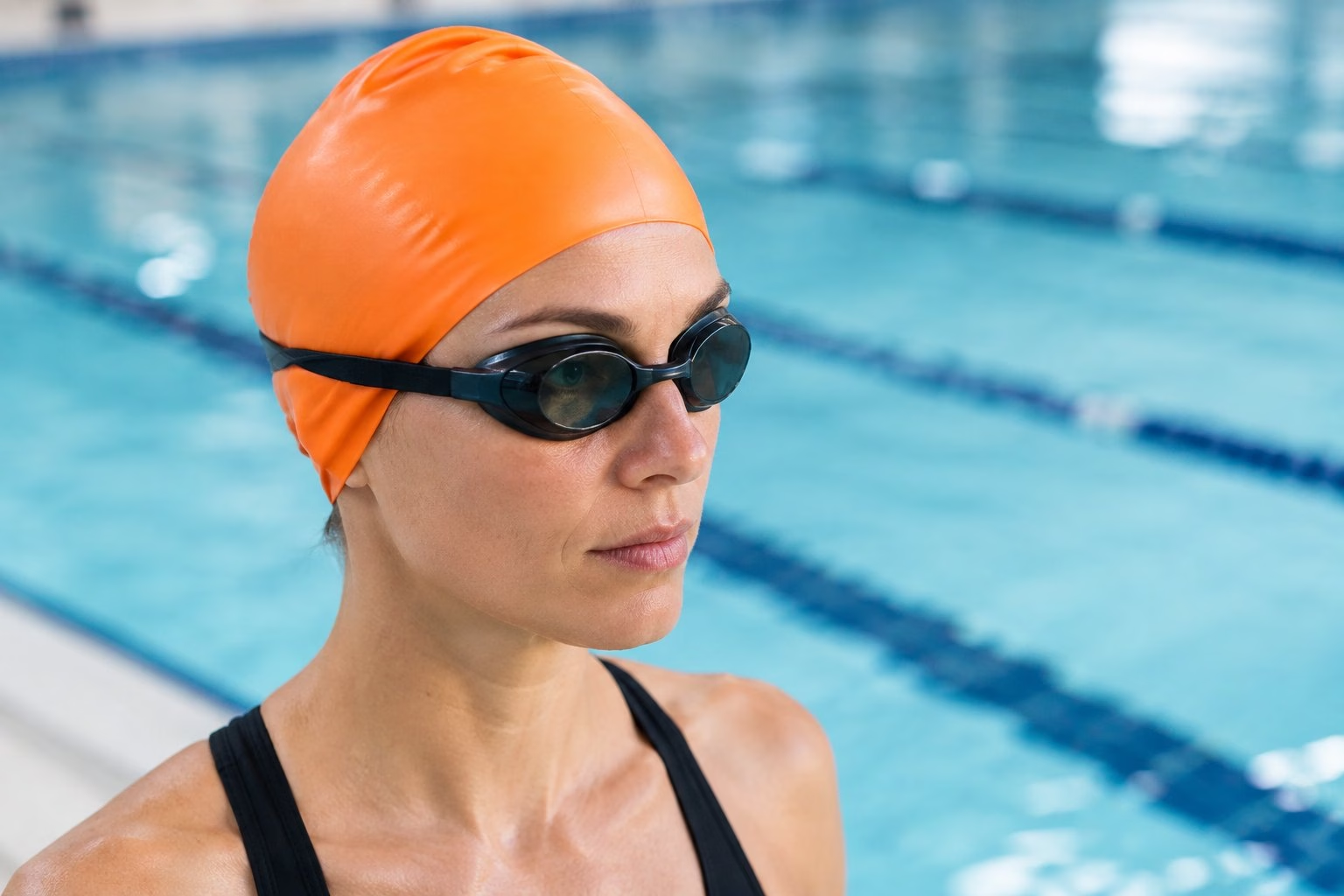
A bright cap makes your head visible to boats, kayakers, lifeguards and friends on the bank. In open water, your head is often the only part of you anyone can see.
Pick neon orange, bright yellow or hot pink. Dark blue and black blend into choppy water almost at once.
Material makes a difference:
- Silicone grips well, lasts longer and adds a touch of warmth.
- Latex is thinner and cheaper, yet tears more easily.
- Neoprene is best for cold water, as it keeps heat in your head.
In the pool, a cap keeps hair out of your face and protects it from chlorine. Wet your hair first, then pull the cap on from front to back. Dust it with talc after drying to stop the silicone sticking to itself.
7) Tow Float
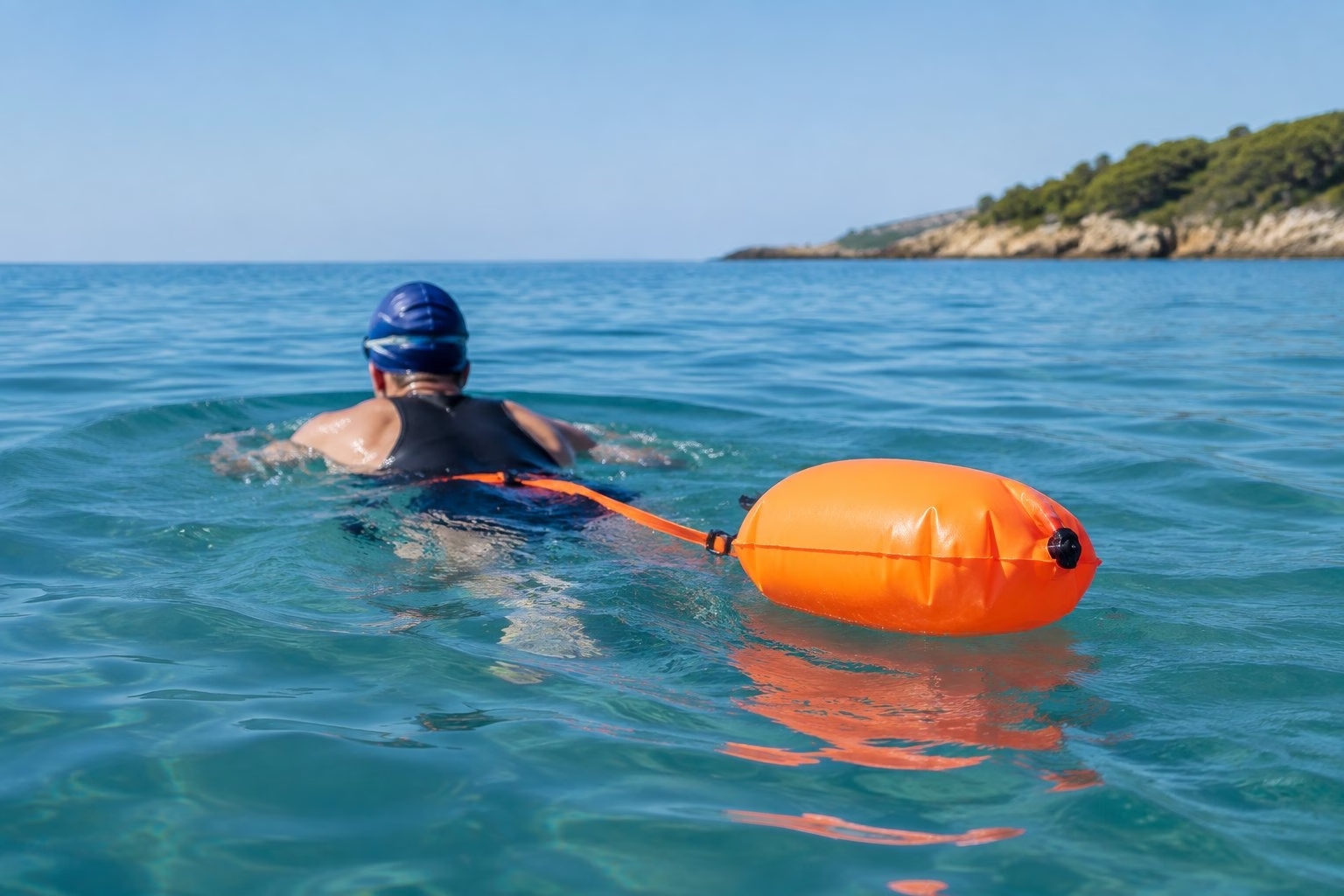
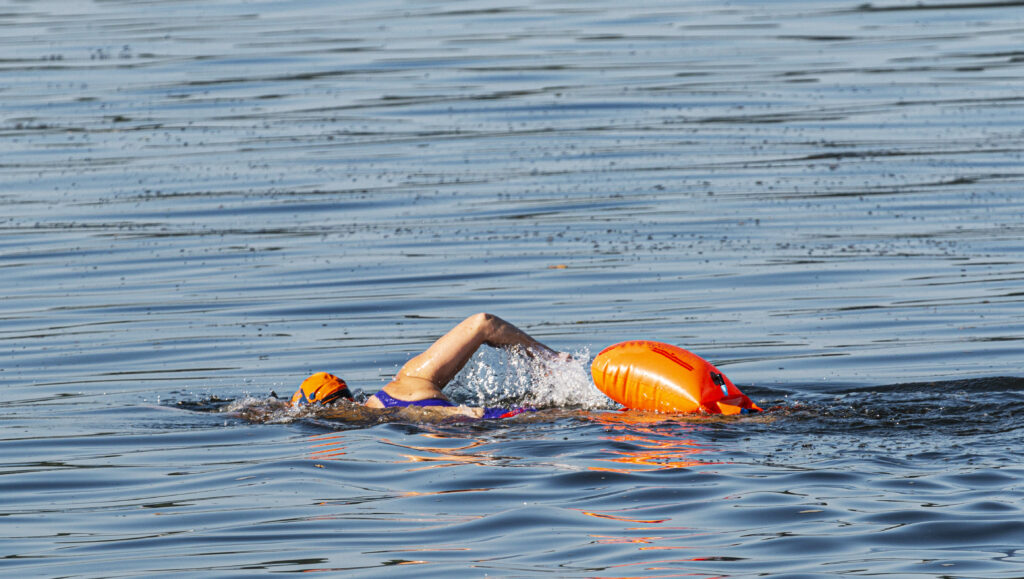
A tow float is a bright inflatable that clips to a waist belt and trails behind you. It makes you easy to spot and gives you something to rest on if you need a breather.
Most tow floats have two air chambers, so one can still float if the other leaks. Many also include a dry bag for your keys, phone and a small snack.
Set it up correctly:
- Inflate both chambers fully before you enter.
- Adjust the belt so it sits on your hips.
- Let out the leash so the float sits by your thighs, clear of your kick.
It drifts behind you without much drag once you get going. For more detail, read why safety buoy floats are a must-have for safe open water swimming.
8) Swimming Wetsuit
A swimming wetsuit keeps you warm, adds buoyancy and lifts your legs higher in the water. It turns cold UK lakes and seas into places you can swim for longer and with more comfort.
Swimming wetsuits differ from surfing ones. They use thinner, more flexible neoprene around the shoulders so you can reach forward freely, with thicker panels on the chest and legs for float.
Check these points when you try one on:
- Snug everywhere, with no water pockets at the lower back.
- Full shoulder movement when you swing your arms.
- A neck seal that is close but lets you breathe easily.
Put it on slowly, working the neoprene up from your ankles. Use your fingertips, never your nails, to avoid tearing it. Rub a little anti-chafe balm on your neck where the collar rubs.
For choice by budget and conditions, see the best wetsuits for wild swimming, and decide whether long wetsuits for winter open water swimming suit you.
9) Kickboard
A kickboard is a foam float you hold out in front of you so you can work on your legs alone. It builds leg strength and helps you feel how a good kick should move you forward.
Hold the board near the far end with your arms straight. Keep your hips high and kick from the hip, with loose ankles and small, quick kicks. If your legs sink, your knees are bending too much.
Ways to use it:
- Warm-up lengths of easy kick.
- Side kick drills with one arm on the board, breathing to the side.
- Rest support for new swimmers building confidence.
Most public pools lend kickboards, so check before you pack your own. Pair it with some swimming drills for beginners to get more from each session.
10) Pull Buoy
A pull buoy is a figure-of-eight foam float you grip between your thighs. It lifts your legs so you can focus on your arm stroke, catch and breathing.
Squeeze it gently high between your thighs and let your legs rest. Without a kick, weak arm technique shows up fast, which makes it a great teacher.
Use it for:
- Arm-only sets, such as 4 x 50 metres of front crawl pull.
- Breathing practice, as you have fewer things to think about.
- Recovery lengths after hard kick work.
Avoid using it for every length. Too much time with a buoy hides a sinking body position you need to fix. Mix it into the ultimate swimming workout routine for beginners once or twice a week.
Adjusting Your Kit to Conditions and Ability
Your core kit stays the same, but the extras change with the venue, the weather and your skill. Use this table as a quick packing guide:
| Item | Pool | Open water (confident) | Open water (beginner) |
|---|---|---|---|
| Swimsuit | Essential | Essential | Essential |
| Goggles | Essential | Essential (tinted) | Essential (tinted) |
| Towel | Essential | Essential + robe | Essential + robe |
| Flip-flops | Essential | Swim shoes | Swim shoes |
| Lifejacket | No | Optional | Essential |
| Bright cap | Often required | Essential | Essential |
| Tow float | No | Essential | Essential |
| Wetsuit | No | Below about 16°C | Below about 16°C |
| Kickboard / pull buoy | Optional | No | No |
How do pool rules affect what you pack?
Every pool sets its own rules, and they decide part of your packing list. Many UK leisure centres require swim caps for people with long hair, and some ask all swimmers to wear one.
Most pools ban loose clothing such as T-shirts or cotton shorts in the water, since fibres clog the filters. Some public sessions also limit training aids when lanes are busy, so a kickboard may stay in your bag.
Check the pool’s website or call ahead before your first visit. Also pack:
- A £1 coin for lockers that still take cash.
- Shampoo and shower gel to wash off chlorine.
- A water bottle, as you sweat in warm pools without noticing.
How do water temperature and visibility change your plans?
Cold water is the biggest risk in UK open water. Even in summer, lakes and the sea often sit well below pool temperature, and a sudden plunge causes cold water shock: gasping, fast breathing and panic.
Adjust to the temperature like this:
- Above about 18°C: most swimmers are fine in a costume and cap.
- Around 14 to 18°C: a wetsuit makes swims longer and safer.
- Below about 12°C: add a neoprene cap, gloves and socks, and keep swims short.
Walk in slowly and let your breathing settle before you start. Our guide to staying warm and safe in open water explains how to warm up afterwards.
Visibility matters as much for your eyes as for other people’s. On bright days, wear tinted or mirrored goggles so you can sight on buoys and landmarks. In fog, rain or poor light, stay closer to shore, keep your bright cap and tow float on, and skip the swim if you cannot see the far bank.
When should an inexperienced swimmer avoid open water?
Stay out of open water if you cannot swim 200 metres of steady front crawl or breaststroke in a pool without stopping. Open water has no wall to grab and no line on the floor to follow.
Avoid it, whatever your ability, when:
- You would be swimming alone with nobody watching from shore.
- There are strong currents, big waves or a rip.
- Rivers are running high and fast after heavy rain.
- Signs warn of poor water quality or pollution.
- You feel unwell, very tired or have been drinking.
Build up at a supervised venue first. Many lakes run guided sessions with lifeguards and marked loops, which is the safest way to learn sighting and cold water. Read more in swimming in the wild essential safety gear and tips.
Frequently Asked Questions
What are the essentials for a first trip to the swimming pool?
Pack a close-fitting swimsuit, goggles, a towel and flip-flops. Add a swim cap if the pool requires one, plus a padlock or coin for the locker and shampoo for your post-swim shower.
Do I need a swim cap at the pool?
Many UK pools require a cap for long hair, and some require one for everyone. Even where it is optional, a silicone cap keeps hair out of your eyes and protects it from chlorine.
Is a tow float a substitute for a lifejacket?
No, a tow float boosts visibility and gives you something to rest on, yet it will not hold an exhausted swimmer’s face out of the water. Weak or new swimmers in open water should wear a properly fitted lifejacket.
When do I need a wetsuit for open-water swimming?
Most swimmers benefit from a wetsuit when the water drops below about 16°C. It also helps newer swimmers at any temperature, as the added buoyancy makes floating and sighting easier.
Do beginners need a kickboard or pull buoy?
Neither is essential on day one, and most pools lend them free. Once you can swim a few lengths, a kickboard helps build your leg kick and a pull buoy lets you focus on arm technique.